Category: eGovernance

  • How GIS Companies in India Use Satellites and Drones to Improve Land Records & Property Management?

    How GIS Companies in India Use Satellites and Drones to Improve Land Records & Property Management?

    India, occupying just 2.4% of the world’s entire land area, accommodates 18% of the world’s population, resulting in congested land resources, high-speed urbanization, and loss of productive land. For sustainable land management, reliable land records, effective land use planning, and better property management are essential.

    To meet the demand, Geographic Information System (GIS) companies use satellite technology and drones to establish precise, transparent, and current land records while facilitating effective property management. The latest technologies are revolutionizing land surveying, cadastral mapping, property valuation, and land administration, enhancing decision-making immensely.

    This in-depth blog discussion addresses all steps involved in how GIS companies in India utilize satellites and drones to improve land records and property management.

    How Satellite Technology is Used in Land Records & Property Management

    Satellite imagery is the foundation of contemporary land management, as it allows for exact documentation, analysis, and tracking of land lots over massive regions. In contrast to error-prone, time-consuming ground surveys, satellite-based land mapping provides high-scale, real-time, and highly accurate knowledge.

    how satellite technology aids land records management

    The principal benefits of employing satellites in land records management are:

    • Extensive Coverage: Satellites can simultaneously cover entire states or the whole nation, enabling mass-scale mapping.
    • Availability of Historical Data: Satellite images taken decades ago enable monitoring of land-use patterns over decades, facilitating settlement of disputes relating to ownership.
    • Accessibility from Remote Locations: No requirement for physical field visits; the authorities can evaluate land even from remote areas.

    1. Cadastral Mapping – Determining Accurate Property Boundaries

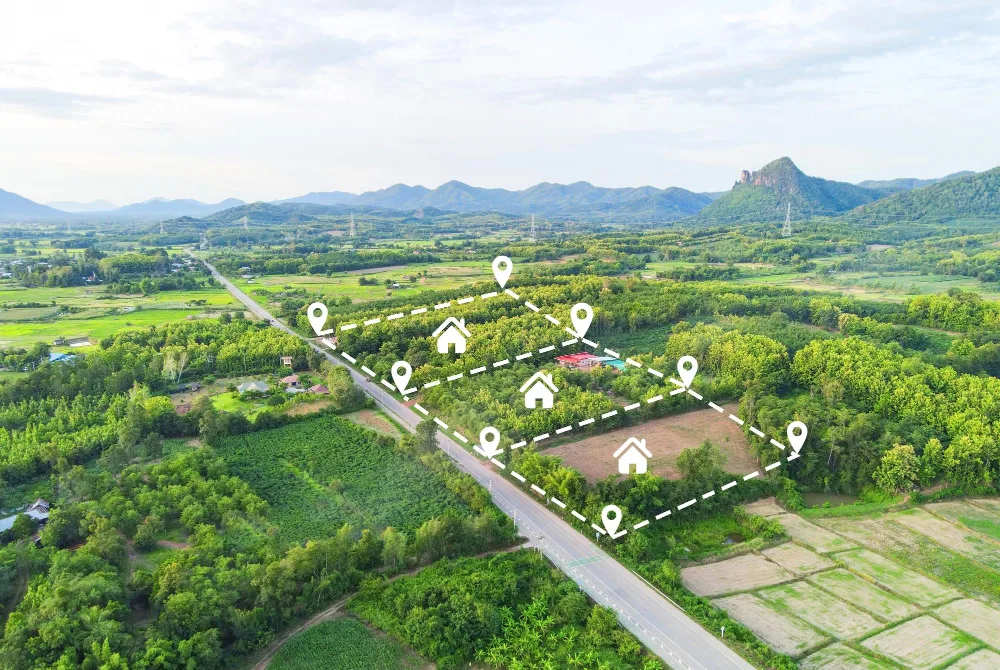
    Cadastral maps are the legal basis for property ownership. Traditionally, they were manually drafted, with the result that they contained errors, boundary overlap, and owner disputes. Employing satellite imaging, GIS companies in India can now:

    • Map land parcels digitally, depicting boundaries accurately.
    • Cross-check land titles by layering historical data over satellite-derived cadastral data.
    • Identify encroachments by matching old records against new high-resolution imagery.

    For example, a landowner asserting additional land outside their legal boundary can be easily located using satellite-based cadastral mapping, assisting local authorities in correcting such instances.

    2. Land Use and Land Cover Classification (LULC)

    Land use classification is essential for urban, conservation, and infrastructure planning. GIS companies in India examine satellite images to classify land, including:

    • Agricultural land
    • Forests and protected areas
    • Residential, commercial, and industrial areas
    • Water bodies and wetlands
    • Barren land

    Such a classification aids the government in regulating zoning laws, tracking illegal land conversions, and enforcing environmental rules.

    For instance, the illegal conversion of agricultural land into residential areas can be easily identified using satellite imagery, allowing regulatory agencies to act against unlawful real estate development simultaneously.

    3. Automated Change Detection – Tracking Illegal Construction & Encroachments

    One of the biggest challenges in land administration is the proliferation of illegal constructions and unauthorized encroachments. Satellite-based GIS systems offer automated change detection, wherein:

    • Regular satellite scans detect new structures that do not match approved plans.
    • Illegal mining, deforestation, or land encroachments are flagged in real-time.
    • Land conversion violations (e.g., illegally converting wetlands into commercial zones) are automatically reported to authorities.

    For example, a satellite monitoring system identified the unauthorized expansion of a residential colony into government land in Rajasthan, which prompted timely action and legal proceedings.

    4. Satellite-Based Property Taxation & Valuation

    Correct property valuation is critical for equitable taxation and the generation of revenues. Property valuation traditionally depended on physical surveys, but satellites have made it a streamlined process:

    • Location-based appraisal: Distance to highways, commercial centers, and infrastructure developments is included in the tax calculation.
    • Footprint building analysis: Machine learning-based satellite imaging calculates covered areas, avoiding tax evasion.
    • Market trend comparison: Satellite photos and property sale data enable the government to levy property taxes equitably.

    For example, the municipal government in Bangalore utilized satellite images to spot almost 30,000 properties that had not been appropriately reported in tax returns, and the property tax revenue went up.

    How Drone Technology is Applied to Land Surveys & Property Management

    While satellites give macro-level information, drones collect high-accuracy, real-time, and localized data. Drones are indispensable in regions where extreme precision is required, such as:

    • Urban land surveys with millimeter-level accuracy.
    • Land disputes demanding legally admissible cadastral records.
    • Surveying terrain in hilly, forested, or inaccessible areas.
    • Rural land mapping under government schemes such as SVAMITVA.

    1. Drone-Based Cadastral Mapping & Land Surveys

    Drones with LiDAR sensors, high-resolution cameras, and GPS technology undertake automated cadastral surveys, allowing:

    • Accurate land boundary mapping, dispelling disputes.
    • Faster surveying (weeks rather than months), cutting down administrative delays.
    • Low-cost operations compared to conventional surveying.

    For example, drones are being employed to map rural land digitally under the SVAMITVA Scheme, issuing official property titles to millions of landholders.

    2. 3D Modeling for Urban & Infrastructure Planning

    Drones produce precise 3D maps that offer:

    • Correct visualization of cityscapes for planning infrastructure projects.
    • Topography models that facilitate flood control and disaster management.
    • Better land valuation insights based on elevation, terrain, and proximity to amenities.

    For example, Mumbai’s urban planning department used drone-based 3D mapping to assess redevelopment projects, ensuring efficient use of land resources.

    3. AI-Powered Analysis of Drone Data

    Modern GIS software integrates Artificial Intelligence (AI) and Machine Learning (ML) to:

    • Detect unauthorized construction automatically.
    • Analyze terrain data for thoughtful city planning.
    • Classify land parcels for taxation and valuation purposes.

    For instance, a Hyderabad-based drone-based AI system identified illegal constructions and ensured compliance with urban planning regulations.

    Integration of GIS, Satellites & Drones into Land Information Systems

    Satellite and drone data are integrated into Intelligent Land Information Systems (ILIS) by GIS companies in India that encompass:

    A. System of Record (Digital Land Registry)

    • Geospatial database correlating land ownership, taxation, and legal titles.
    • Blockchain-based digital land records resistant to tampering.
    • Uninterrupted connectivity with legal and financial organizations.

    B. System of Insight (Automated Land Valuation & Analytics)

    • Artificial intelligence-based property valuation models based on geography, land topology, and urbanization.
    • Automated taxation ensures equitable revenue collection.

    C. System of Engagement (Public Access & Governance)

    • Internet-based GIS portals enable citizens to confirm property ownership electronically.
    • Live dashboards monitor land transactions, conflicts, and valuation patterns.

    Conclusion

    GIS, satellite imagery, and drones have transformed India’s land records and property management by making accurate mapping, real-time tracking, and valuation efficient. Satellites give high-level insights, while drones provide high-precision surveys, lowering conflicts and enhancing taxation.

    GIS companies in India like SCS Tech, with their high-end GIS strength, facilitate such data-based land administration, propelling India towards a transparent, efficient, and digitally integrated system of governance, guaranteeing equitable property rights, sustainable planning, and economic development.

  • What Role Does Blockchain Play in Streamlining Identity Verification for eGovernance Solutions?

    What Role Does Blockchain Play in Streamlining Identity Verification for eGovernance Solutions?

    What if identity verification didn’t mean endless waits, repeated paperwork, and constant data theft risks? These problems are the setbacks of outdated systems, slowing down public services and putting sensitive information at risk. Blockchain solves these issues by streamlining identity verification in eGovernance solutions. It reduces paperwork, speeds up validation, and ensures transparency and security in the process used by governments to verify citizens.

    Blockchain provides a real-time auditable record because of its unique, decentralized, and tamperproof architecture. By this, blockchains ensure clarity between citizens as well as governmental institutions.

    But how exactly does blockchain revolutionize identity verification in eGovernance? In this blog we will first look into its impact before taking a more detailed look at the key flaws of traditional identity systems and why an upgrade is long overdue.

    The Problems of Traditional Identity Verification in eGovernance

    1. Centralized Databases Are Easy Prey for Cyberattacks

    Most government identity verification systems rely on central databases, representing an attractive target for attackers. The recent OPM hack in the U.S. demonstrated this risk. Once hacked, sensitive citizen data is instantly available on the dark web.

    1. Data Silos and Repetitive Verification Processes

    Government agencies are not interlinked; each agency maintains a separate database of identities. This has created the need for citizens to continuously furnish the same information for services like health, social security, and driving licenses.

    1. Lack of Transparency and Trust

    Citizens do not know where and how their identity data is stored and accessed. An auditable system cannot be available; identity misuse and unauthorized access become widespread. The lack of public trust in the eGovernance solution prevails.

    1. High Costs and Inefficiencies

    Complex identity verification systems, fraud fighting and manual checking of documents impose a burden on government resources. Inefficiencies in service delivery and increased operational costs result.

    What Role Does Blockchain Play in Streamlining Identity Verification for eGovernance Solutions?

    Blockchain redefines the entire landscape of verification through identities. Let’s break it down as to how it solves the above issues:

    • Decentralized Identifiers (DIDs): Empowering Citizens

    DIDs allow people to be in control of their digital identity. Instead of government-issued IDs stored in centralized databases, users store their credentials on a blockchain. Citizens selectively disclose only the necessary information, which enhances privacy.

    • Verifiable Credentials (VCs): Instant and Secure Authentication

    VCs are cryptographically signed digital documents demonstrating identity attributes like age, citizenship, or educational qualifications. Governments can issue VCs to citizens and use them to access public services without excessive disclosure of personal data.

    • Zero-Knowledge Proofs (ZKPs): Privacy-Preserving Verification

    With ZKPs, a person may prove identity and conceal all details. For instance, one citizen can prove they are above 18 years old without revealing their birth date. This minimizes the data exposure and theft of one’s identity.

    • Smart Contracts: Automating Verification Processes

    Smart contracts enforce pre-defined verification rules without any human intervention. For example, a smart contract can immediately approve or reject citizen’s applications for government benefits based on the eligibility criteria by checking the VC.

    Role of Blockchain in Streamlining Identity Verification for eGovernance Solutions

    Real-Time eGovernance Blockchain Solutions

    1. Safe Digital Voting

    Blockchain ensures secure voting and increases the integrity of elections. Citizens get registered with a DID, receive a VC from an electoral commission, and vote anonymously on a tamper-proof ledger. ZKPs verify whether a voter is eligible to vote without disclosing their identity.

    1. Digital Identity Wallet for Social Welfare Programs

    Governments can provide VCs that prove their entitlement to welfare schemes. These are kept in digital purses, and the citizen will withdraw his benefit without requiring documents each time.

    1. Cross-Border Identity Verification

    The immigrants possess blockchain-verified credentials for identity, educational qualifications, and work experience. Immigration departments use smart contracts that authenticate credentials to help avoid tedious delays and paperwork over the authenticity of the same.

    Solution of Blockchain’s Issues in eGovernance

    Even though blockchain comes with many advantages, its significant concerns that need to be addressed are scalability, interoperability, and governance. Here’s how they are being addressed:

    1. Scalability Solutions

    Rollups and sidechains are some of the layer-2 scaling solutions that make it possible to achieve high transaction throughput and reduce congestion on the blockchain to increase efficiency.

    1. Interoperability Across Platforms

    Cross-chain bridges and atomic swaps protocols facilitate identity verification across multiple blockchain networks and jurisdictions to be integrated with existing eGovernance frameworks seamlessly.

    1. Privacy and Compliance

    Homomorphic encryption and secure multi-party computation further enhance data privacy while maintaining compliance with GDPR. The governance framework should be well-defined by governments to govern blockchain-based identity systems.

    1. Quantum-Resistant Cryptography

    With the evolution of quantum computing, blockchain networks have been moving towards quantum-resistant cryptographic algorithms for long-term security.

    Future of Blockchain Identity in eGovernance

    The adoption of blockchain for identity verification is just beginning. Future advancements will include:

    • Self-Sovereign Identity (SSI): Citizens will fully own and control their digital identities without intermediaries.
    • AI-Powered Identity Verification: AI will detect fraud, improve security, and enhance user experience.
    • Decentralized Autonomous Organizations (DAOs): It is the management of digital identities in a transparent, autonomous manner and decentralized one.
    • Metaverse Identities: Blockchain can facilitate secure identities maintained virtually in virtual worlds and digital transactions.

    Conclusion

    Blockchain for identity verification is revolutionizing eGovernance solutions. It eliminates centralized vulnerabilities, reduces verification costs, and enhances trust in blockchain-based identity solutions, opening avenues for efficient, transparent, and secure public services.

    The future digital identity will be decentralized, user-centric, and fraud-resistant for governments and institutions embracing this technology.

    SCS Tech is committed to create this future to help businesses and governments navigate this ever-changing digital landscape. Blockchain identity solutions aren’t just the future—they are the present.

  • Why Are Governments Using Blockchain in eGovernance Solutions for Land Records?

    Why Are Governments Using Blockchain in eGovernance Solutions for Land Records?

    What if you couldn’t prove the land you live on is actually yours? Sounds scary, right? That’s the reality for many people due to outdated land records. In India, only 69% of land has been mapped digitally under the Digital Land Record Management Program, leaving large gaps. This highlights the urgent need for a system in eGovernance solutions that is secure, transparent, and tamper-proof.

    This is where blockchain comes in. Its unparalleled ability to serve transparency, security, and efficiency puts it at the core of modern eGovernance solutions for land records. In this blog, let’s understand why blockchain is changing the face of this significant aspect of governance. But before let’s dive into the challenges that we faced due to traditional land record systems.

    Challenges in Traditional Land Record Systems

    The present system regarding the management of land records has significant flaws. Let’s take a closer look at them:

    Vulnerability to Fraud

    Traditional systems have fake documents, duplicate registrations, and unauthorized changes. Such issues bring legal disputes and make property transactions risky. Think of buying a property only to discover it had already been sold to another person based on forged papers. Blockchain can remove such risks because records are tamper-proof.

    Lack of Transparency

    Traditional systems often store records in centralized databases. Accessing these records is a bureaucratic maze, leading to confusion and mistrust. Blockchain’s open ledgers make records visible to all stakeholders, reducing disputes.

    Inefficiency and Bureaucracy

    Traditional processes are slow and costly, from waiting in long queues to paying multiple intermediaries. This inefficiency discourages investment and delays transactions. By streamlining processes, blockchain makes land transactions faster and more affordable.

    Data Integrity Issues

    Centralized systems are prone to natural disasters, cyberattacks, or human error. Blockchain’s decentralized nature ensures that data remains secure and accessible, no matter what.

    Why Are Governments Using Blockchain in eGovernance Solutions for Land Records?

    Governments are increasingly adopting blockchain technology to improve eGovernance solutions, particularly in managing land records. This transition is motivated by several critical factors:

    1. Immutable Ledger

    A significant need is reliable, tamper-proof records of land. More often, traditional systems are prone to fraud, such as forgery and unauthorized amendments. This kind of ledger ensures that records entered cannot be deleted or modified without consensus, thus increasing trust in the integrity of ownership documentation over land.

    Blockchain technology has a decentralized ledger where all the transactions concerning land ownership are permanently recorded. Each transaction is enclosed in a block that connects subsequent blocks, thus offering security regarding the chain of custody. This structure ensures that any kind of attempt to alter the record would require all the following blocks to be changed, making such attempts impracticable.

    2. Increased Transparency

    Transparency is essential in developing trust among all stakeholders involved in real estate transactions. Centralized databases can hide information, leading to confusion and disputes about property ownership in traditional systems. Governments can minimize misunderstandings and increase public confidence by providing transparent access to land records.


    Blockchain enables all parties involved, such as government agencies, property owners, and potential buyers, to access the same information about land ownership and transaction history in a shared ledger. Real-time access means all parties have up-to-date data, allowing them to verify ownership claims without intermediaries independently.

    3. Enhanced Security

    This is because land record management involves very sensitive information on property ownership, and therefore, security is a significant concern. With traditional systems, unauthorized access and data breaches can compromise the integrity of the land records.

    Blockchain allows all stakeholders including government agencies, property owners as well as potential buyers to view an agreed-to version of truth regarding land ownership and transactional history in a shared ledger. Real-time access will provide immediate data for all parties, and that’s how they will authenticate claims of ownership independently, without anyone’s interference.

    4. Simplified Process via Smart Contract

    The bureaucratic nature of traditional land registration processes often results in delays and increased costs for property transactions. Reducing reliance on intermediaries can expedite these processes and lower administrative burdens on government agencies.

    Smart contracts are self-executing contracts with all of the terms written directly into code. They automate many aspects of land transactions. For instance, they can automatically verify ownership during sales or transfers, eliminating the need for notaries or registrars. This automation accelerates transactions and improves operational efficiency within government agencies responsible for land registration.

    5. Decentralization

    Centralized control over land records poses risks such as data loss or manipulation due to individual malfeasance or systemic failures. Decentralization mitigates these risks by distributing data across multiple nodes.

    Blockchain runs on a decentralized network, storing data in multiple nodes instead of in a central database kept by a single entity. It minimizes the probability of losing or altering data and increases resistance against cyberattacks so that land records do not become inaccessible if some nodes go offline.

    Landmark Initiative for Land Records Modernization in Bihar

    The Bihar government is undertaking its first-ever state-wide land survey to modernize records. The project was launched in August 2023 and aimed at modifying the ownership records of around 44,000 villages by making them more transparent and reduced in terms of dispute.

    The exercise has been divided into two phases, one to be carried out on around 5,000 villages and the remaining in the next phase. However, due to complexities such as untransferred ownership and incomplete mutation processes, the deadline has been extended to July 2026. Landowners now have until March 2025 to submit claims online through a simplified self-declaration process.

    This initiative also includes plans for urban land surveys, with a pilot project proposed for six urban local bodies. Digitizing land records is the goal of the Bihar government in streamlining governance, making land ownership more transparent, and empowering citizens.

    These efforts are part of a broader vision of ensuring efficient land administration and reducing the potential conflicts that arise from ambiguous records. Once completed, this project is expected to transform land governance in the state, fostering trust and accountability among citizens while enabling smoother economic and legal transactions involving land.

    Conclusion

    In essence, blockchain in eGovernance solutions enhances transparency, security, and efficiency in transactions about the properties. Most significantly, the main challenges posed by traditional systems- fraud, inefficiency, and mistrust-could now be addressed and placed within a more substantial framework that enables better land administration.

    For successful adoption, governments must establish regulatory frameworks that validate blockchain records as official property documentation, ensure compatibility with existing systems, and promote public awareness of its advantages. Companies like SCS Tech are enabling these advancements by offering tailored blockchain solutions. By implementing blockchain effectively, governments can create more trustworthy governance structures, protect citizens’ property rights, and transform land record management into a secure and transparent process.

  • How Do Blockchain-Powered eGovernance Solutions Improve Public Service Delivery?

    How Do Blockchain-Powered eGovernance Solutions Improve Public Service Delivery?

    Do you hope for governments to be able to deliver faster, more transparent, and more efficient services in this digital world? Blockchain-powered eGovernance solutions are likely to help with this and become the foundational technology for 30% of the world’s customer base, from simple, everyday devices to commercial activities, by 2030. It will signal a fundamental shift in how public service delivery takes place and make governance smarter, safer, and more accessible.

    In this blog, we’ll explore how blockchain-powered eGovernance solutions improve public services. These advancements are reshaping how governments serve their citizens, from automating workflows to enhancing transparency.

    1. Decentralization: Building Resilient Systems

    Distributed Systems for Reliable Services

    Traditional systems are primarily based on centralized databases, prone to cyberattacks, downtime, and data breaches. With the power of Distributed Ledger Technology (DLT), blockchain changes this by distributing data across multiple nodes. This decentralization ensures that the system functions seamlessly if one part of the network fails. Governments can enhance service reliability and eliminate the risks associated with single points of failure.

    Faster and More Efficient Processes

    Centralized systems can create a bottleneck because they function off one control point. Blockchain removes the bottleneck because multiple departments can access and share real-time information. For example, processing permits or verifying applications becomes quicker if multiple agencies can update and access the record simultaneously. Such gives citizens less waiting time in government offices and more efficiency in their governments.

    2. Effectiveness Through Smart Contracts

    Automation Made Easy

    Imagine filing a tax return and processing the refund instantly without human intervention. Blockchain makes this possible through smart contracts—self-executing agreements coded to perform actions when certain conditions are met. These contracts automate fund disbursements, application approvals, or service verifications, significantly reducing delays and manual errors.

    Streamlining Government Workflows

    Governments would handle repetitive jobs, such as checking documents or issuing licenses. Through the rule and procedure codification in a smart contract, these jobs are automated, reducing errors and making them consistent. This saves time and allows employees to focus on more important things, increasing productivity and citizen satisfaction.

    3. Transparency: The Basis of Trust

    Open Access to Transactions

    Blockchain records every transaction on a public ledger accessible to all stakeholders. Citizens can see how public funds are allocated, ensuring accountability. For example, in infrastructure projects, blockchain can show how funds are spent at each stage, reducing doubts and fostering trust in government actions.

    Immutable Records for Audits

    This ensures that once recorded, data is immutable, hence unchangeable unless the network has agreed to its alteration. It makes auditing very simple and tamper-proof. The governments will be able to maintain records that are easy to verify but hard to alter, reducing further corruption and assuring ethical administration.

    4. Building Citizen Trust

    Reliable and Transparent Systems

    Blockchain’s design inherently fosters trust. Citizens know their data is secure, and their interactions with government entities are recorded transparently and immutable. For example, once a land ownership record is stored on the blockchain, it cannot be changed without alerting the entire network, ensuring property rights remain secure.

    Empowering Citizens through Accountability

    For example, transparency in the governance process allows citizens to hold officials responsible. If funds allocated to education or health are visible in a blockchain, citizens can check the discrepancies in the ledger and thus strengthen their trust in such public institutions; at the same time, these institutions will forge a collaborative relationship with citizens.

    5. Secure Digital Identities

    Self-Sovereign Identity for Privacy

    Blockchain facilitates self-sovereign identity (SSI). It gives individuals complete control of their personal information. Unlike systems that store secret information in centralized databases, blockchain stores information in blockchains. It puts citizens in the best position to decide who shall access their data and for what purpose. There is a reduced likelihood of identity theft, and personal privacy is amplified.

    Simplification of Accessibility to Services

    Using blockchain-powered eGovernance solutions, citizens will have secure digital IDs that facilitate verification faster. Rather than sending the same set of documents repeatedly for various services from the government, they will use a blockchain-based ID to check their eligibility on the go. This would reduce the access time to public services and enhance the convenience level with data safety.

    6. Cost Saving: A Wise Use of Resources

    Reducing Administrative Costs

    This kind of paper trail and manual procedure costs governments massive amounts. With blockchain, such paper trails do not exist. Records are digitalized, and workflows are automated. For example, property registration or certificate issuing on blockchain automatically reduces administrative overhead.

    Fraud Prevention and Elimination of Mistakes

    Fraudulent actions and human mistakes can be costly for governments. Blockchain’s openness and immutable ledger reduce these risks because it leaves a transparent and tamper-proof history of the transactions. Not only does it save money in investigations, but it also ensures accurate delivery of services with no rework or additional costs incurred.

    7. Improved Data Security

    Encryption for Stronger Safeguards

    Blockchain uses advanced cryptographic techniques to secure data. Each block is linked to the one before it, creating a nearly impossible chain to alter without detection. Sensitive information, such as health records or tax data, is protected from unauthorized access, ensuring citizen data remains secure.

    Defense Against Cyberattacks

    In traditional systems, hackers will always target centralized databases. With blockchain, data is spread across different nodes, meaning that cybercriminals will find it much more challenging to access large volumes of information or manipulate the same. Therefore, public services will remain accessible and trustworthy, even in cyber attacks.

    Conclusion

    It’s not just an upgrade in technology but rather the need for governance in modern society. Blockchain can solve all inefficiencies presented by traditional public administrations by decentralizing systems, automating workflows, facilitating transparent processes, and improving cost efficiency. The improvement in this technology develops citizens’ participation, engenders trust, and makes governance in a fast-to-be-digitized world robust.

    Companies like SCS Tech are leading the way by offering innovative blockchain-powered eGovernance solutions that help governments modernize their systems effectively. As governments worldwide continue exploring blockchain, the positive effects will stretch beyond improving service delivery. They will ensure they have developed transparent, efficient, and secure governance structures, hence meeting the demands of tech-savvy citizens today.

  • How E-Governance Solutions Are Enhancing Citizen Participation?

    How E-Governance Solutions Are Enhancing Citizen Participation?

    Have you noticed how technology changes how governments engage with citizens? E-governance solutions are no longer a buzzword but a movement rewriting the governance rules. From speeding up social benefit transfers, innovations such as DBT systems have sparked a 192% surge in efficiency. Such advancements make governance more innovative, inclusive, and genuinely citizen-centric.

    In this blog, let’s explore how e-governance solutions, powered by advancements in AI and robust IT infrastructure, are transforming governance. These solutions incorporate active citizen participation in administration, making public services more responsive.

    How E-Governance Solutions Are Enhancing Citizen Participation?

    E-Governance boosting citizen participation
    E-Governance boosting citizen participation

    1. Digital Platform for Communication

    One of the cornerstones of e-governance is utilizing a digital platform to bring governance closer to citizens. There are real-time engagements such that citizens are constantly and regularly informed and involved with the government:

    • Web Portals and Mobile Apps: These digital gateways provide instant access to services like bill payments, license applications, and complaint registrations. Citizens do not have to visit government offices to carry out these tasks, saving them time and effort. With mobile apps, users are provided with user-friendly interfaces through which they can register complaints, access public schemes, and get updates.
    • Social Media: It is the platform through which two-way communication takes place. Platforms include Twitter, Facebook, and Instagram. Governments can inform citizens about policies, events, and public initiatives at a very fast pace, and the citizens can voice their concerns and give feedback. Through social media, governments can keep track of public opinion and respond to concerns immediately.

    These digital platforms make interaction easier and make governance more accessible and inclusive. They bridge the gap between government agencies and citizens, ensuring that everyone, regardless of location, can stay connected.

    2. E-Participation Tools

    E-governance goes beyond one-way communication by actively involving citizens in decision-making through participatory tools.

    • Online Surveys and Polls: Governments conduct surveys to gather public opinions on new policies, projects, or initiatives. This direct feedback allows decision-makers to align policies with citizen needs and preferences. For example, before launching a new law, authorities can gauge its acceptance through online polls.
    • Discussion Forums: Structured forums provide avenues for citizens to discuss and deliberate on policy issues. Such avenues allow informed participation, so that people may share their ideas, develop solutions collectively, and input into shaping community projects.
    • Crowdsourcing Programs: The government invites citizens to submit innovative ideas or solutions for public challenges. This makes them feel owned and included. For instance, citizens can suggest improvements in infrastructure, education, or health systems through specific crowdsourcing platforms.

    These tools empower citizens to take an active role in governance, ensuring that policies reflect diverse voices and community needs.

    3. Data Transparency and Accessibility

    Building Trust is founded on transparency and e-governance creates solutions for providing the public sector operations much more transparent and accountable.

    • Open Data Portals: This allows citizens to explore the available data regarding budgets, projects, and expenses. Analyzing this information can help explain to people how funds for public services are allocated and utilized, holding authorities accountable.
    • Real-Time Tracking Systems: These allow citizens to keep track of how their applications, complaints, or government services are being carried out. A citizen could apply for welfare benefits or a building permit – the status could be kept online, eliminating frustration or uncertainty.

    Transparency through such tools will not only create trust but also enhance citizens’ ability to be more actively involved in governance processes. People’s participation is meaningful when they can see the processes of decision-making as well as resource allocation.

    How E-Governance Solutions for Improved Public Sector Efficiency?

    The new solutions for e-governance redefine the delivery of services within the public sector, relying on Information Technology (IT), then Information and Communication Technologies (ICTs), and web-based platforms to facilitate effective, transparent, and accessible governance. Whether it is health or transportation, urban development, or utilities, these new solutions are changing the experience of governance for citizens.

    Integrated Services through Centralized Systems

    One of the key features of e-governance is that it combines various government services on a single platform. Such centralized systems allow for:

    • Streamlined Service Delivery: Citizens can file taxes, apply for permits, and enroll in benefits from a single portal.
    • Improved Interdepartmental Coordination: Data sharing across departments results in faster responses and reduced redundancy.
    • User-Centric Design: Easy-to-use interfaces make it easier for people to find and use services.

    For instance, an integrated platform may offer the facility to pay property tax, lodge a complaint, and obtain a driving license in one place.

    Automated Document Processes

    The olden days of paperwork, along with electronic documents and workflow management, are long gone. Such software programs automate the document handling and approval process, and therefore lead to the following:

    • Quick Delivery of Services: Service delivery happens fast without being hindered by the time-consuming nature of manual processes.
    • Less Human Errors: Automated workflows help minimize human errors.
    • More Accurate Record Keeping: Digital records promote more accountability and easy accessibility for later use.

    These automations mean real-time benefits to citizens in terms of waiting time to receive permits or certification, for example.

    Safe and Smart City Solutions

    Governments are using the IoT (Internet of Things) and AI to create better cities. These solutions benefit by:

    • Optimized Resource Allocation: Smart sensors monitor traffic, energy use, and safety metrics in real-time.
    • Proactive Services: AI-powered analytics predict service demands, such as waste collection schedules or public transport requirements.
    • Improved Safety: IoT-enabled surveillance systems and emergency response tools create safer communities.

    For instance, smart traffic management systems can reduce congestion while improving road safety for citizens.

    Conclusion

    E-governance solutions change governance by making the processes more transparent, effective, and participatory. They can enhance service delivery and citizen involvement by incorporating AI technologies into IT infrastructure solutions. Then, problems like the digital divide and data privacy exist for these solutions to be fully exploited.

    E-government, therefore, helps governments achieve a strong democracy, build up trust, and empower their citizens to take an active role in shaping their surroundings. The future of governance is easy: inclusivity, adaptability, and true people-serving technology solutions. This change provides a backdrop for an enabling force like SCS Tech, offering cutting-edge IT infrastructure solutions that make this novel development possible.

  • The Impact of eGovernance Solutions on Government Efficiency

    The Impact of eGovernance Solutions on Government Efficiency

    Amidst the global surge of globalization, citizens worldwide are increasingly cognizant of their rights, pressing for transparency and efficiency from their governing bodies. To meet these burgeoning demands, traditional structures are no longer found ill-equipped to meet these burgeoning demands for streamlined public service delivery.

    In this dynamic landscape, the imperative for innovative models and systems like eGovernance has never been more pronounced. eGovernance solutions have fundamentally heralded a seismic shift in the efficiency and efficacy of governmental operations.

    This blog serves as a dedicated exploration into the transformative power of eGovernance solutions, illuminating how these advanced technologies redefine organizational performance, drive cost-efficiency, and ultimately shape a government sector that is not just efficient but also citizen-centric.

    Unveiling the Efficiency Powerhouse: eGovernance Solutions

    E-Governance, also called digital governance, focuses on using Information and Communication Technology to improve governmental processes, enhance transparency, and handle its operations and services. This encompasses a wide range of solutions, including:

    Online portals

    These simplified and easily accessible platforms create an opportunity for citizens to receive information and perform various tasks at any time. Whether it is getting a renewed license or applying for a permit, online portals enable citizens to do so as and when they want to do it.

    Data management systems

    Due to an intervention of an eGovernance solution, data is captured across departments to form a coherent database. This results in greater efficiency in handling requests, quick decision-making, and proper utilization of resources.

    Mobile applications

    Now that people are busier than ever, mobile apps are a useful way for citizens to interact with their government remotely. It can be very helpful for rural areas or those with little or no internet access in particular.

    Electronic Document Management (EDM)

    These are systems that help in the production, storage, and retrieval of documents. This cuts out paper-based systems, which reduces the time, money, and physical space required to store equipment.

    How eGovernance Solutions Enhance Efficiency?

    To understand it better let’s talk about India where the use of digital identification called Aadhaar has transformed the government services delivery system. Aadhaar verification has ensured that those in need of the welfare programs get the support they need through the right channels hence minimizing fraud instances and enhancing the targeting and delivery of social goods. According to estimates by the World Bank, Aadhaar saved over $1 billion of the Indian government’s expenses within a few years of its usage.

    Now let’s discuss in detail about how exactly eGovernance solutions enhance efficiency:

    Reduced Administrative Burden

    The eGovernance solutions replicate functions to reduce paperwork and manual data entry jobs. This saves considerable staff time, so they can handle many other issues and deliver better service to their customers.

    Faster Service Delivery

    By performing transactions online through different applications and portals, citizens can access the services without a problem. This has the effect of cutting the time clients spend waiting and enhancing service provision.

    Improved Decision-Making

    The experience gathered from the eGovernance systems helps governments to make decisions based on data analysis on current or real-time performance. It further helps in the efficient utilization of resources and the proper formulation of policies.

    Enhanced Transparency and Accountability

    One of the very important features of implementing eGovernance is that it provides citizens with easy access to government data and information. This also promotes honesty and efficiency in the public sector as the accountability is shifted to the citizens.

    Even though efficiency is a primary benefit, eGovernance has ripple effects. These solutions promote government-citizen interaction, cut down on government expenditure through the use of technology, and increase favorable conditions for businesses leading to an improved economy.

    The Road Ahead: Embracing the Future of Governance

    E-Governance is not a one-bullet solution; instead, it is an evolutionary model. While embracing the best practices in this field, eGovernance solutions must also adapt to the changes that accompany the progression of technology. Through incorporating innovation and encouraging learning within governmental organizations, governments need to be flexible to meet the continually demanding needs of the citizens within the digital era.

    Investing in eGovernance Solutions: A Wise Choice for a Brighter Future

    It is not only about the realization of eGovernance solutions but also about the creation of future governance landscapes. Technology, when adopted fully in the governance processes, provides a more efficient, accountable, and participative society. This, in turn, helps to strengthen the trust between the citizens and their government, which is the key to a better life and a more sustainable future.

    By investing in eGovernance solutions, governments can create a more efficient, transparent, and citizen-friendly environment.

    Contact us today to learn how SCS Tech India’s tailored solutions can enhance public sector service delivery.