Category: AI Technology Companies

  • How AI & ML Are Transforming Digital Transformation in 2026

    How AI & ML Are Transforming Digital Transformation in 2026

    Digital transformation has evolved from a forward-looking strategy into a fundamental requirement for operational success. As India moves deeper into 2026, organizations across industries are recognizing that traditional digital transformation approaches are no longer enough. What truly accelerates transformation today is the integration of Artificial Intelligence (AI) and Machine Learning (ML) into core business systems.

    Unlike earlier years, where AI was viewed as an advanced technology reserved for innovation labs, it is now embedded in everyday operational workflows. Whether it’s streamlining supply chains, automating customer interactions, predicting equipment failures, or enhancing cybersecurity, AI and ML are enabling organizations to move from reactive functioning to proactive, intelligent operations.

    In this blog, we explore how AI and ML are reshaping digital transformation in 2026, what trends are driving adoption, and how enterprises in India can leverage these technologies to build a future-ready business.

    AI & ML: The Foundation of Modern Digital Transformation

    AI and ML have become the backbone of digital transformation because they allow organizations to process large amounts of data, identify patterns, automate decisions, and optimize workflows in real time. Companies are no longer implementing AI as an “optional enhancement” — instead, AI is becoming the central engine of digital operations.

    At its core, AI-powered digital transformation enables companies to achieve what previously required human intervention, multiple tools, and considerable resources. Now, tasks that once took hours or days can be completed within minutes, and with far higher accuracy.

    AI & ML empower enterprises to:

    • Improve decision-making through real-time insights

    • Understand customer behavior with greater precision

    • Optimize resources and reduce operational waste

    • Enhance productivity through intelligent automation

    • Strengthen cybersecurity using predictive intelligence

    This shift toward AI-first strategies is defining the competitive landscape in 2026.

    Key AI & ML Trends Driving Digital Transformation in 2026

    AI capabilities are expanding rapidly, and these advancements are shaping how organizations modernize their digital ecosystems. The following trends are particularly influential this year.

    a) Hyper-Automation as the New Operational Standard

    Hyper-automation integrates AI, ML, and RPA to automate complex business processes end-to-end. Organizations are moving beyond basic automation to create fully intelligent workflows that require minimal manual oversight.

    Many enterprises are using hyper-automation to streamline back-office operations, accelerate service delivery, and reduce human errors. For instance, financial services companies can now process loan applications, detect fraud, and verify customer documents with near-perfect accuracy in a fraction of the usual time.

    Businesses rely on hyper-automation for:

    • Smart workflow routing

    • Automated document processing

    • Advanced customer onboarding

    • Predictive supply chain operations

    • Real-time process optimization

    The efficiency gains are substantial, often reducing operational costs by 20–40%.

    b) Predictive Analytics for Data-Driven Decision Making

    Data is the most valuable asset of modern enterprises — but it becomes meaningful only when organizations can interpret it accurately. Predictive analytics enables businesses to forecast events, trends, and behaviors using historical and real-time data.

    In 2026, predictive analytics will be used across multiple functions. Manufacturers rely on it to anticipate machine breakdowns before they occur. Retailers use it to forecast demand fluctuations. Financial institutions apply it to assess credit risks with greater accuracy.

    Predictive analytics helps organizations:

    • Reduce downtime

    • Improve financial planning

    • Understand market movements

    • Personalize customer experiences

    • Prevent operational disruptions

    Companies that adopt predictive analytics experience greater agility and competitiveness.

    c) AI-Driven Cybersecurity and Threat Intelligence

    As organizations expand digitally, cyber threats have grown more complex. With manual monitoring proving insufficient, AI-based cybersecurity solutions are becoming essential.

    AI enhances security by continuously analyzing network patterns, identifying anomalies, and responding to threats instantly. This real-time protection helps organizations mitigate attacks before they escalate.

    AI-powered cybersecurity enables:

    • Behavioral monitoring of users and systems

    • Automated detection of suspicious activity

    • Early identification of vulnerabilities

    • Prevention of data breaches

    • Continuous incident response

    Industries such as BFSI, telecom, and government depend heavily on AI-driven cyber resilience.

    d) Intelligent Cloud Platforms for Scalability and Efficiency

    The cloud is no longer just a storage solution — it has become an intelligent operational platform. Cloud service providers now integrate AI into the core of their services to enhance scalability, security, and flexibility.

    AI-driven cloud systems can predict demand, allocate resources automatically, and detect potential failures before they occur. This results in faster applications, reduced costs, and higher reliability.

    Intelligent cloud technology supports digital transformation by enabling companies to innovate rapidly without heavy infrastructure investments.

    e) Generative AI for Enterprise Productivity

    Generative AI (GenAI) has revolutionized enterprise workflows. Beyond creating text or images, GenAI now assists in tasks such as documentation, coding, research, and training.

    Instead of spending hours creating technical manuals, training modules, or product descriptions, employees can now generate accurate drafts within minutes and refine them as needed.

    GenAI enhances productivity through:

    • Automated content generation

    • Rapid prototyping and simulations

    • Code generation and debugging

    • Data summarization and analysis

    • Knowledge management

    Organizations using GenAI report productivity improvements of 35–60%.

    Generative AI Tools for Enterprise Productivity

    How AI Is Transforming Key Industries in India

    AI adoption varies across industries, but the impact is widespread and growing. Below are some sectors experiencing notable transformation.

    Healthcare

    AI is revolutionizing diagnostics, patient management, and clinical decision-making in India.
    Hospitals use AI-enabled tools to analyze patient records, medical images, and vital signs, helping doctors make faster and more accurate diagnoses.

    Additionally, predictive analytics helps healthcare providers anticipate patient needs and plan treatments more effectively. Automated hospital management systems further improve patient experience and reduce administrative workload.

    Banking & Financial Services (BFSI)

    The BFSI sector depends on AI for security, customer experience, and operational efficiency.
    Banks now use AI-based systems to detect fraudulent transactions, assess creditworthiness, automate customer service, and enhance compliance.

    With the rise of digital payments and online banking, AI enables financial institutions to maintain trust while delivering seamless customer experiences.

    Manufacturing

    Manufacturers in India are integrating AI into production lines, supply chain systems, and equipment monitoring.
    AI-driven predictive maintenance significantly reduces downtime, while computer vision tools perform real-time quality checks to maintain consistency across products.

    Digital twins — virtual replicas of physical systems — allow manufacturers to test processes and optimize performance before actual deployment.

    Retail & E-Commerce

    AI helps retail companies understand customer preferences, forecast demand, manage inventory, and optimize pricing strategies.
    E-commerce platforms use AI-powered recommendation engines to deliver highly personalized shopping experiences, leading to higher conversion rates and increased customer loyalty.

    Government & Smart Cities

    Smart city initiatives across India use AI for traffic management, surveillance, GIS mapping, and incident response.
    Government services are becoming more citizen-friendly by automating workflows such as applications, approvals, and public queries.

    Benefits of AI & ML in Digital Transformation

    AI brings measurable improvements across multiple aspects of business operations.

    Key benefits include:

    • Faster and more accurate decision-making

    • Higher productivity through automation

    • Reduction in operational costs

    • Enhanced customer experiences

    • Stronger security and risk management

    • Increased agility and innovation

    These advantages position AI-enabled enterprises for long-term success.

    Challenges Enterprises Face While Adopting AI

    Despite its potential, AI implementation comes with challenges.

    Common barriers include:

    • Lack of AI strategy or roadmap

    • Poor data quality or fragmented data

    • Shortage of skilled AI professionals

    • High initial implementation costs

    • Integration issues with legacy systems

    • Concerns around security and ethics

    Understanding these challenges helps organizations plan better and avoid costly mistakes.

    How Enterprises Can Prepare for AI-Powered Transformation

    Organizations must take a structured approach to benefit fully from AI.

    Steps to build AI readiness:

    • Define a clear AI strategy aligned with business goals

    • Invest in strong data management and analytics systems

    • Adopt scalable cloud platforms to support AI workloads

    • Upskill internal teams in data science and automation technologies

    • Start small—test AI in pilot projects before enterprise-wide rollout

    • Partner with experienced digital transformation providers

    A guided, phased approach minimizes risks and maximizes ROI.

    Why Partner with SCS Tech India for AI-Led Digital Transformation?

    SCS Tech India is committed to helping organizations leverage AI to its fullest potential. With expertise spanning digital transformation, AI/ML engineering, cybersecurity, cloud technology, and GIS solutions, the company delivers results-driven transformation strategies.

    Organizations choose SCS Tech India because of:

    • Proven experience across enterprise sectors

    • Strong AI and ML development capabilities

    • Scalable and secure cloud and data solutions

    • Deep expertise in cybersecurity

    • Tailored transformation strategies for each client

    • A mature, outcome-focused implementation approach

    Whether an enterprise is beginning its AI journey or scaling across departments, SCS Tech India provides end-to-end guidance and execution.

    Wrapping Up!

    AI and Machine Learning are redefining what digital transformation means in 2026. These technologies are enabling organizations to move faster, work smarter, and innovate continuously. Companies that invest in AI today will lead their industries tomorrow.

    Digital transformation is no longer just about adopting new technology — it’s about building an intelligent, agile, and future-ready enterprise. With the right strategy and partners like SCS Tech India, businesses can unlock unprecedented levels of efficiency, resilience, and growth.

  • Blockchain Applications in Supply Chain Transparency with IT Consultancy

    Blockchain Applications in Supply Chain Transparency with IT Consultancy

    The majority of supply chains use siloed infrastructures, unverifiable paper records, and multi-party coordination to keep things moving operationally. But as regulatory requirements become more stringent and source traceability is no longer optional, such traditional infrastructure is not enough without the right IT consultancy support.

    Blockchain fills this void by creating a common, tamper-evident layer of data that crosses suppliers, logistics providers, and regulatory authorities, yet does not replace current systems.

    This piece examines how blockchain technology is being used in actual supply chain settings to enhance transparency where traditional systems lack.

    Why Transparency in Supply Chains Is Now a Business Imperative

    Governments are making it mandatory. Investors are requiring it. And operational risks are putting into the spotlight firms that lack it. A digital transformation consultant can help organizations navigate these pressures, as supply chain transparency has shifted from a long-term aspiration to an instant priority.

    Here’s what’s pushing the change:

    • Regulations worldwide are getting stricter quickly. The Corporate Sustainability Due Diligence Directive (CSDDD) from the European Union will require large companies to monitor and report on. Environmental and Human Rights harm within their supply chains. If a company is found to be in contravention of the legislation, the fine could be up to 5% of global turnover.
    • Uncertainty about supply chains carries significant financial and reputational exposure.
    • Today’s consumers want assurance. Consumers increasingly want proof of sourcing, whether it be “organic,” “conflict-free,” or “fair trade.” Greenwashing or broad assurances will no longer suffice.

    Blockchain’s Role in Transparency of Supply Chains

    Blockchain is designed to address a key weakness of modern supply chains, however. The reality of fragmented systems, vendors, and borders is a lack of end-to-end visibility. 

    Here’s how it delivers that transparency in practice:

    1. Immutable Records at Every Step

    Each transaction, whether it’s raw material sourcing, shipping, or quality checks is logged as a permanent, timestamped entry.

    No overwriting. No backdating. No selective visibility. Every party sees a shared version of the truth.

    2. Real-Time Traceability

    Blockchain lets you track goods as they move through each checkpoint, automatically updating status, location, and condition. This prevents data gaps between systems and reduces time spent chasing updates from vendors.

    3. Supplier Accountability

    When records are tamper-proof and accessible, suppliers are less likely to cut corners.

    It’s no longer enough to claim ethical sourcing; blockchain makes it verifiable, down to the certificate or batch.

    4. Smart Contracts for Rule Enforcement

    Smart contracts automate enforcement:

    • Was the shipment delivered on time?
    • Did all customs documents clear?

    If not, actions can trigger instantly, with no manual approvals or bottlenecks.

    5. Interoperability Across Systems

    Blockchain doesn’t replace your ERP or logistics software. Instead, it bridges them, connecting siloed systems into a single, auditable record that flows across the supply chain.

    From tracking perishable foods to verifying diamond origins, blockchain has already proven its role in cleaning up opaque supply chains with results that traditional systems couldn’t match.

    Real-World Applications of Blockchain in Supply Chain Tracking

    Blockchain’s value in supply chains is being applied in industries where source verification, process integrity, and document traceability are non-negotiable. Below are real examples where blockchain has improved visibility at specific supply chain points.

    1. Food Traceability — Walmart & IBM Food Trust

    Challenge: Tracing food origins during safety recalls used to take Walmart 6–7 days, leaving a high contamination risk.

    Application: By using IBM’s blockchain platform, Walmart reduced trace time to 2.2 seconds.

    Outcome: This gives its food safety team near-instant visibility into the supply path, lot number, supplier, location, and temperature history, allowing faster recalls with less waste.

    2. Ethical Sourcing — De Beers with Tracr

    Challenge: Tracing diamonds back to ensure they are conflict-free has long relied on easily forged paper documents.

    Application: De Beers applied Tracr, a blockchain network that follows each diamond’s journey from mine to consumer.

    Outcome: Over 1.5 million diamonds are now digitally certified, with independently authenticated information for extraction, processing, and sale. This eliminates reliance on unverifiable supplier assurances.

    3. Logistics Documentation — Maersk’s TradeLens

    Challenge: Ocean freight involves multiple handoffs, ports, customs, and shippers, each using siloed paper-based documents, leading to fraud and delays.

    Application: Maersk and IBM launched TradeLens, a blockchain platform connecting over 150 participants, including customs authorities and ports.

    Outcome: Shipping paperwork is now in alignment among stakeholders near real-time, reducing delays and administrative charges in world trade.

    All of these uses revolve around a specific point of supply chain breakdown, whether that’s trace time, trust in supplier data, or document synchronisation. Blockchain does not solve supply chains in general. It solves traceability when systems, as they exist, do not.

    Business Benefits of Using Blockchain for Supply Chain Visibility

    For teams responsible for procurement, logistics, compliance, and supplier management, blockchain doesn’t just offer transparency; it simplifies decision-making and reduces operational friction.

    Here’s how:

    • Speedier vendor verification: Bringing on a new supplier no longer requires weeks of documentation review. With blockchain, you have access to pre-validated certifications, transaction history, and sourcing paths, already logged and transferred.
    • Live tracking in all tiers: No more waiting for updates from suppliers. You can follow product movement and status changes in real-time, from raw material to end delivery through every tier in your supply chain.
    • Less paper documentation: Smart contracts eliminate unnecessary paper documentation on shipment, customs clearance, and vendor pay. Less time reconciling data between systems, fewer errors, and no conflicts.
    • Better readiness for audits: When an audit comes or a regulation changes, you are not panicking. Your sourcing and shipping information is already time-stamped and locked in place, ready to be reviewed without cleanup.
    • Lower dispute rates with suppliers: Blockchain prevents “who said what” situations. When every shipment, quality check, and approval is on-chain, accountability is the default.
    • More consumer-facing claims: If sustainability is the core of your business, ethical sourcing, or authenticity of products, blockchain allows you to validate it. Instead of saying it, you show the data to support it.

    Conclusion 

    Blockchain evolved from a buzzword to an underlying force for supply chain transparency. And yet to introduce it into actual production systems, where vendors, ports, and regulators still have disconnected workflows, is not a plug-and-play endeavor—this is where expert IT consultancy becomes essential.

    That’s where SCS Tech comes in.

    We support forward-thinking teams, SaaS providers, and integrators with custom-built blockchain modules that slot into existing logistics stacks, from traceability tools to permissioned ledgers that align with your partners’ tech environments.

    FAQs 

    1. If blockchain data is public, how do companies protect sensitive supply chain details?

    Most supply chain platforms use permissioned blockchains, where only authorized participants can access specific data layers. You control what’s visible to whom, while the integrity of the full ledger stays intact.

    2. Can blockchain integrate with existing ERP or logistics software?

    Yes. Blockchain doesn’t replace your systems; it connects them. Through APIs or middleware, it links ERP, WMS, or customs tools so they share verified records without duplicating infrastructure.

    3. Is blockchain only useful for high-value or global supply chains?

    Not at all. Even regional or mid-scale supply chains benefit, especially where supplier verification, product authentication, or audit readiness are essential. Blockchain works best where transparency gaps exist, not just where scale is massive.

  • AI-Driven Smart Sanitation Systems in Urban Areas

    AI-Driven Smart Sanitation Systems in Urban Areas

    Urban sanitation management at scale needs something more than labor and fixed protocols. It calls for systems that can dynamically respond to real-time conditions, bin status, public cleanliness, route efficiency, and service accountability.

    That’s where AI-based sanitation enters the picture. Designed on sensor information, predictive models, and automation, these systems are already deployed in Indian cities to minimize waste overflow, optimize collection, and enhance public health results.

    This article delves into how these systems function, the underlying technologies that make them work, and why they’re becoming critical infrastructure for urban service providers and solution makers.

    What Is an AI-Driven Sanitation System?

    An AI sanitation system uses artificial intelligence to improve monitoring, management, and collection of urban waste. In contrast to traditional buildings that rely on pre-programmed schedules and visual checking, this system works by gathering real-time data from the ground and making more informed decisions based on it.

    Smart sensors installed in waste bins or street toilets detect fill levels, foul odours, or cleaning needs. This is transmitted to a central platform, where machine learning techniques scan patterns, e.g., how fast waste fills up in specific zones or where overflows are most likely to occur. From this, the system can automate alarms, streamline waste collection routes, and assist city staff in taking action sooner.

    Core Technologies That Power Smart Sanitation in Cities

    The development of a smart sanitation system begins with the knowledge of how various technologies converge to monitor, analyze, and react to conditions of waste in real time. Such systems are not isolated; they exist as an ecosystem.

    This is how the main pieces fit together:

    1. Smart Sensors and IoT Integration

    Sanitation systems depend on ultrasonic sensors, smell sensors, and environmental sensors placed in bins, toilets, and trucks. They monitor fill levels, gas release (such as ammonia or hydrogen sulfide), temperature, and humidity. Placed throughout a city once installed, they become the sensory layer, sensing the changes way before human inspections would.

    Each sensor is linked using Internet of Things (IoT) infrastructure, which permits the data to run continuously to a processing platform. Such sensors have been installed in more than 350 public toilets by cities like Indore to track hygiene in real-time.

    2. Cloud and Edge Data Processing

    Data must be acted upon as soon as it is captured. This is done with cloud-based analytics coupled with edge computing, which processes data close to the source. These layers enable data to be cleansed, structured, and organized in order to be understandably presented to AI. 

    This blend is capable of taking even high-volume, dispersed data from thousands of bins or collection vehicles and aggregating it with little latency and maximum availability.

    3. AI Algorithms for Prediction and Optimization

    This is the layer of intelligence. We develop machine learning models based on both historical and real-time data to understand at what times bins are likely to overflow, what areas will generate waste above the anticipated threshold, and how to reduce time and fuel in collection routes.

    In a recent research, the cities that adopted AI-driven route planning experienced over 28% decrease in collection time and over 13% reduction in costs against manual scheduling models.

    4. Citizen Feedback and Service Verification Tools

    Several systems also comprise QR code or RFID-based monitoring equipment that records every pickup and connects it to a particular home or stop. Residents can check if their bins were collected or report if they were not. Service accountability is enhanced, and governments have an instant service quality dashboard.

    Door-to-door waste collection in Ranchi, for instance, is now being tracked online, and contractors risk penalties for missed collections.

    These technologies operate optimally when combined, but as part of an integrated, AI-facilitated infrastructure. That’s what makes a sanitation setup a clever, dynamic city service.

    How Cities Are Already Using AI for Sanitation

    Many Indian cities are past pilot projects and, in effect, use it to rectify real, operational inefficiencies. 

    These examples indicate how AI is not simply a bag of data, but the data is being utilized for decision-making, problem-solving, and enhancing effectiveness on the ground.

    1. Real-Time Hygiene Monitoring

    Indore, one of India’s top-ranking cities under Swachh Bharat, has installed smart sensors in over 350 public toilets. These sensors monitor odour levels, air quality, water availability, and cleaning frequency.

    What is salient is not the sensors, but how the city is utilizing that data. Staff cleaning units, for example, get automated alerts when conditions fall below the city’s set thresholds (e.g., hours of rain), and instead of acting on expected days of service, they are doing services on need-derived data; used less water and improved experience.

    This is where AI plays its role, learning usage patterns over time and helping optimize cleaning cycles, even before complaints arise.

    2. Transparent Waste Collection

    Jharkhand has implemented QR-code and RFID-based tracking systems for doorstep waste collection. Every household pickup is electronically recorded, giving rise to a verifiable chain of service history.

    But AI kicks in when patterns start to set in. If specific routes have regularly skipped pickups, or if the frequency of collection falls below desired levels, the system can highlight irregularities and impose penalties on contractors.

    This type of transparency enables improved contract enforcement, resource planning, and public accountability, key issues in traditional sanitation systems.

    3. Fleet Optimization and Air Quality Goals

    In Lucknow, the municipal corporation introduced over 1,250 electric collection vehicles and AI-assisted route planning to reduce delays and emissions.

    While the shift to electric vehicles is visible, the invisible layer is where the real efficiency comes in. AI helps plan which routes need what types of vehicles, how to avoid congestion zones, and where to deploy sweepers more frequently based on dust levels and complaint data.

    The result? Cleaner streets, reduced PM pollution, and better air quality scores, all tracked and reported in near real-time.

    From public toilets to collection fleets, cities across India are using AI to respond faster, act smarter, and serve better, without adding manual burden to already stretched civic teams.

    Top Benefits of AI-Enabled Sanitation Systems for Urban Governments

    When sanitation systems start responding to real-time data, governments don’t just clean cities more efficiently; they run them more intelligently. AI brings visibility, speed, and structure to what has traditionally been a reactive and resource-heavy process.

    Here’s what that looks like in practice:

    • Faster issue detection and resolution – Know the problem before a citizen reports it, whether it’s an overflowing bin or an unclean public toilet.
    • Cost savings over manual operations – Reduce unnecessary trips, fuel use, and overstaffing through route and task optimization.
    • Improved public hygiene outcomes – Act on conditions before they create health risks, especially in dense or underserved areas.
    • Better air quality through cleaner operations – Combine electric fleets with optimized routing to reduce emissions in high-footfall zones.
    • Stronger Swachh Survekshan and ESG scores – Gain national recognition and attract infrastructure incentives by proving smart sanitation delivery.

    Conclusion

    Artificial intelligence is already revolutionizing the way urban sanitation is designed, delivered, and scaled. But for organizations developing these solutions, speed and flexibility are just as important as intelligence.

    Whether you are creating sanitation technology for city bodies or incorporating AI into your current civic services, SCSTech assists you in creating more intelligent systems that function in the field, in tune with municipal requirements, and deployable immediately. Reach out to us to see how we can assist with your next endeavor.

    FAQs

    1. How is AI different from traditional automation in sanitation systems?

    AI doesn’t just automate fixed tasks; it uses real-time data to learn patterns and predict needs. Unlike rule-based automation, AI can adapt to changing conditions, forecast bin overflows, and optimize operations dynamically, without needing manual reprogramming each time.

    2. Can small to mid-size city projects afford to have AI in sanitation?

    Yes. With scalable architecture and modular integration, AI-based sanitation solutions can be tailored to suit various project sizes. Most smart city vendors today use phased methods, beginning with the essential monitoring capabilities and adding full-fledged AI as budgets permit.

    3. What kind of data is needed to make an AI sanitation system work effectively?

    The system relies on real-time data from sensors, such as bin fill levels, odour detection, and GPS tracking of collection vehicles. Over time, this data helps the AI model identify usage patterns, optimize routes, and predict maintenance needs more accurately.

  • Can RPA Work With Legacy Systems? Here’s What You Need to Know!

    Can RPA Work With Legacy Systems? Here’s What You Need to Know!

    It’s a question more IT leaders are asking as automation pressures rise and modernization budgets lag behind. 

    While robotic process automation (RPA) promises speed, scale, and relief from manual drudgery, most organizations aren’t operating in cloud-native environments. They’re still tied to legacy systems built decades ago and not exactly known for playing well with new tech.

    So, can RPA actually work with these older systems? Short answer: yes, but not without caveats. This article breaks down how RPA fits into legacy infrastructure, what gets in the way, and how smart implementation can turn technical debt into a scalable automation layer.

    Let’s get into it.

    Understanding the Compatibility Between RPA and Legacy Systems

    Legacy systems aren’t built for modern integration, but that’s exactly where RPA finds its edge. Unlike traditional automation tools that depend on APIs or backend access, RPA Services works through the user interface, mimicking human interactions with software. That means even if a system is decades old, closed off, or no longer vendor-supported, RPA can still operate on it, safely and effectively.

    This compatibility isn’t a workaround — it’s a deliberate strength. For companies running mainframes, terminal applications, or custom-built software, RPA offers a non-invasive way to automate without rewriting the entire infrastructure.

    How RPA Maintains Compatibility with Legacy Systems:

    • UI-Level Interaction: RPA tools replicate keyboard strokes, mouse clicks, and field entries, just like a human operator, regardless of how old or rigid the system is.
    • No Code-Level Dependencies: Since bots don’t rely on source code or APIs, they work even when backend integration isn’t possible.
    • Terminal Emulator Support: Most RPA platforms include support for green-screen mainframes (e.g., TN3270, VT100), enabling interaction with host-based systems.
    • OCR & Screen Scraping: For systems that don’t expose readable text, bots can use optical character recognition (OCR) to extract and process data.
    • Low-Risk Deployment: Because RPA doesn’t alter the underlying system, it poses minimal risk to legacy environments and doesn’t interfere with compliance.

    Common Challenges When Connecting RPA to Legacy Environments

    While RPA is compatible with most legacy systems on the surface, getting it to perform consistently at scale isn’t always straightforward. Legacy environments come with quirks — from unpredictable interfaces to tight access restrictions — that can compromise bot reliability and performance if not accounted for early.

    Some of the most common challenges include:

    1. Unstable or Inconsistent Interfaces

    Legacy systems often lack UI standards. A small visual change — like a shifted field or updated window — can break bot workflows. Since RPA depends on pixel- or coordinate-level recognition in these cases, any visual inconsistency can cause the automation to fail silently.

    2. Limited Access or Documentation

    Many legacy platforms have little-to-no technical documentation. Access might be locked behind outdated security protocols or hardcoded user roles. This makes initial configuration and bot design harder, especially when developers need to reverse-engineer interface logic without support from the original vendor.

    3. Latency and Response Time Issues

    Older systems may not respond at consistent speeds. RPA bots, which operate on defined wait times or expected response behavior, can get tripped up by delays, resulting in skipped steps, premature entries, or incorrect reads.

    Advanced RPA platforms allow dynamic wait conditions (e.g., “wait until this field appears”) rather than fixed timers.

    4. Citrix or Remote Desktop Environments

    Some legacy apps are hosted on Citrix or RDP setups where bots don’t “see” elements the same way they would on local machines. This forces developers to rely on image recognition or OCR, which are more fragile and require constant calibration.

    5. Security and Compliance Constraints

    Many legacy systems are tied into regulated environments — banking, utilities, government — where change control is strict. Even though RPA is non-invasive, introducing bots may still require IT governance reviews, user credential rules, and audit trails to pass compliance.

    Best Practices for Implementing RPA with Legacy Systems

    Best Practices for Successful RPA in Legacy Systems

    Implementing RPA Development Services in a legacy environment is not plug-and-play. While modern RPA platforms are built to adapt, success still depends on how well you prepare the environment, design the workflows, and choose the right processes.

    Here are the most critical best practices:

    1. Start with High-Volume, Rule-Based Tasks

    Legacy systems often run mission-critical functions. Instead of starting with core processes, begin with non-invasive, rule-driven workflows like:

    • Data extraction from mainframe screens
    • Invoice entry or reconciliation
    • Batch report generation

    These use cases deliver ROI fast and avoid touching business logic, minimizing risk. 

    2. Use Object-Based Automation Where Possible

    When dealing with older apps, UI selectors (object-based interactions) are more stable than image recognition. But not all legacy systems expose selectors. Identify which parts of the system support object detection and prioritize automations there.

    Tools like UiPath and Blue Prism offer hybrid modes (object + image) — use them strategically to improve reliability.

    3. Build In Exception Handling and Logging from Day One

    Legacy systems can behave unpredictably — failed logins, unexpected pop-ups, or slow responses are common. RPA bots should be designed with:

    • Try/catch blocks for known failures
    • Timeouts and retries for latency
    • Detailed logging for root-cause analysis

    Without this, bot failures may go undetected, leading to invisible operational errors — a major risk in high-compliance environments.

    4. Mirror the Human Workflow First — Then Optimize

    Start by replicating how a human would perform the task in the legacy system. This ensures functional parity and easier stakeholder validation. Once stable, optimize:

    • Reduce screen-switches
    • Automate parallel steps
    • Add validations that the system lacks

    This phased approach avoids early overengineering and builds trust in automation.

    5. Test in Production-Like Environments

    Testing legacy automation in a sandbox that doesn’t behave like production is a common failure point. Use a cloned environment with real data or test after hours in production with read-only roles, if available.

    Legacy UIs often behave differently depending on screen resolution, load, or session type — catch this early before scaling.

    6. Secure Credentials with Vaults or IAM

    Hardcoding credentials for bots in legacy systems is a major compliance red flag. Use:

    • RPA-native credential vaults (e.g., CyberArk integrations)
    • Role-based access controls
    • Scheduled re-authentication policies

    This reduces security risk while keeping audit logs clean for governance teams.

    7. Loop in IT, Not Just Business Teams

    Legacy systems are often undocumented or supported by a single internal team. Avoid shadow automation. Work with IT early to:

    • Map workflows accurately
    • Get access permissions
    • Understand system limitations

    Collaboration here prevents automation from becoming brittle or blocked post-deployment.

    RPA in legacy environments is less about brute-force automation and more about thoughtful design under constraint. Build with the assumption that things will break — and then build workflows that recover fast, log clearly, and scale without manual patchwork.

    Is RPA a Long-Term Solution for Legacy Systems?

    Yes, but only when used strategically. 

    RPA isn’t a forever fix for legacy systems, but it is a durable bridge, one that buys time, improves efficiency, and reduces operational friction while companies modernize at their own pace.

    For utility, finance, and logistics firms still dependent on legacy environments, RPA offers years of viable value when:

    • Deployed with resilience and security in mind
    • Designed around the system’s constraints, not against them
    • Scaled through a clear governance model

    However, RPA won’t modernize the core, it enhances what already exists. For long-term ROI, companies must pair automation with a roadmap that includes modernization or system transformation in parallel.

    This is where SCSTech steps in. We don’t treat robotic process automation as a tool; we approach it as a tactical asset inside larger modernization strategy. Whether you’re working with green-screen terminals, aging ERP modules, or disconnected data silos, our team helps you implement automation that’s reliable now, but aligned with where your infrastructure needs to go.

  • The ROI of Sensor-Driven Asset Health Monitoring in Midstream Operations

    The ROI of Sensor-Driven Asset Health Monitoring in Midstream Operations

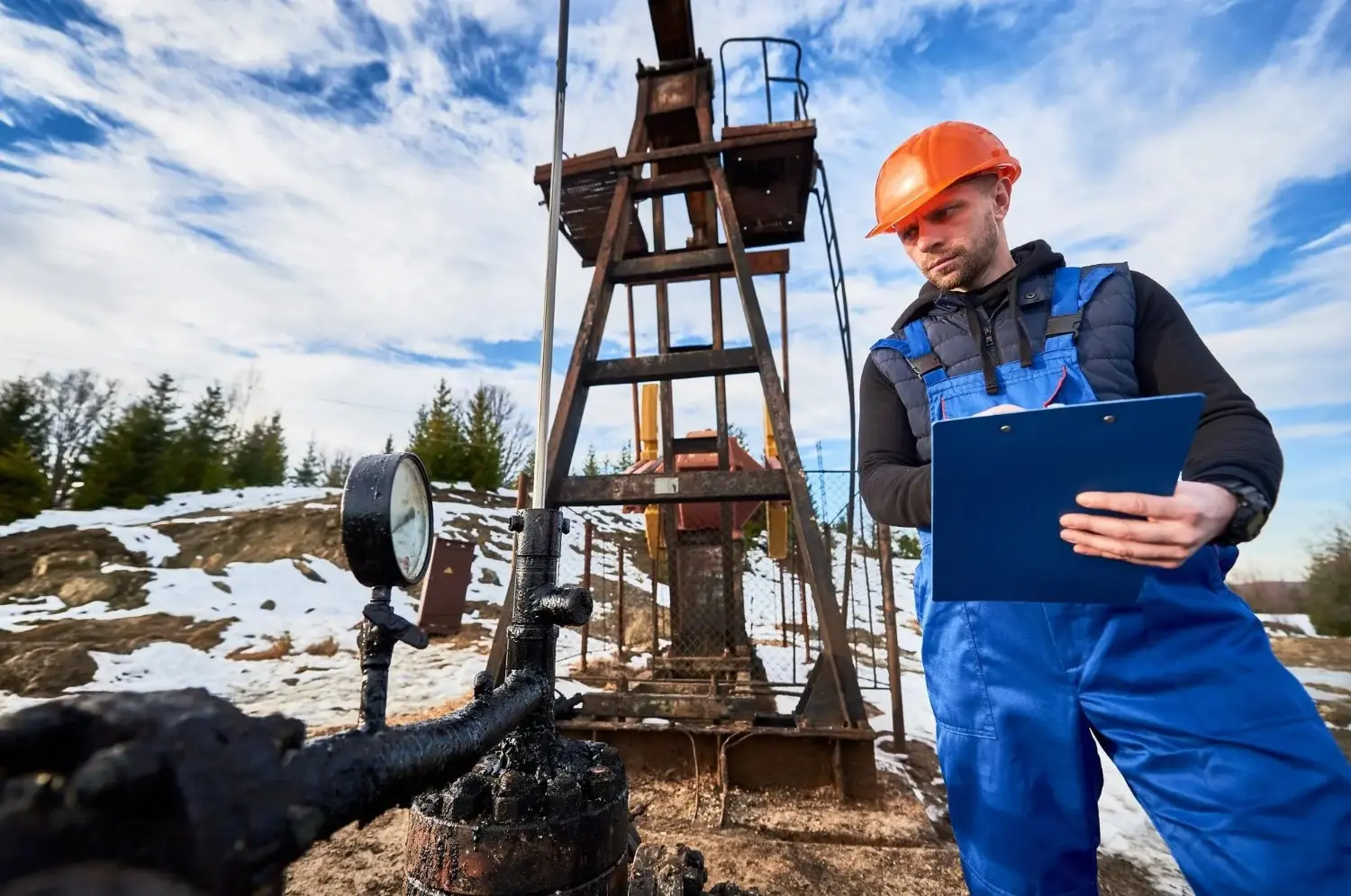
    In midstream, a single asset failure can halt operations and burn through hundreds of thousands in downtime and emergency response.

    Yet many operators still rely on time-based checks and manual inspections — methods that often catch problems too late, or not at all.

    Sensor-driven asset health monitoring flips the model. With real-time data from embedded sensors, teams can detect early signs of wear, trigger predictive maintenance, and avoid costly surprises. 

    This article unpacks how that visibility translates into real, measurable ROI. This article unpacks how that visibility translates into real, measurable ROI, especially when paired with oil and gas technology solutions designed to perform in high-risk, midstream environments.

    What Is Sensor-Driven Asset Health Monitoring in Midstream?

    In midstream operations — pipelines, storage terminals, compressor stations — asset reliability is everything. A single pressure drop, an undetected leak, or delayed maintenance can create ripple effects across the supply chain. That’s why more midstream operators are turning to sensor-driven asset health monitoring.

    At its core, this approach uses a network of IoT-enabled sensors embedded across critical assets to track their condition in real time. It’s not just about reactive alarms. These sensors continuously feed data on:

    • Pressure and flow rates
    • Temperature fluctuations
    • Vibration and acoustic signals
    • Corrosion levels and pipeline integrity
    • Valve performance and pump health

    What makes this sensor-driven model distinct is the continuous diagnostics layer it enables. Instead of relying on fixed inspection schedules or manual checks, operators gain a live feed of asset health, supported by analytics and thresholds that signal risk before failure occurs.

    In midstream, where the scale is vast and downtime is expensive, this shift from interval-based monitoring to real-time condition-based oversight isn’t just a tech upgrade — it’s a performance strategy.

    Sensor data becomes the foundation for:

    • Predictive maintenance triggers
    • Remote diagnostics
    • Failure pattern analysis
    • And most importantly, operational decisions grounded in actual equipment behavior

    The result? Fewer surprises, better safety margins, and a stronger position to quantify asset reliability — something we’ll dig into when talking ROI.

    Key Challenges in Midstream Asset Management Without Sensors

    Risk Without Sensor-Driven Monitoring

    Without sensor-driven monitoring, midstream operators are often flying blind across large, distributed, high-risk systems. Traditional asset management approaches — grounded in manual inspections, periodic maintenance, and lagging indicators — come with structural limitations that directly impact reliability, cost control, and safety.

    Here’s a breakdown of the core challenges:

    1. Delayed Fault Detection

    Without embedded sensors, operators depend on scheduled checks or human observation to identify problems.

    • Leaks, pressure drops, or abnormal vibrations can go unnoticed for hours — sometimes days — between inspections.
    • Many issues only become visible after performance degrades or equipment fails, resulting in emergency shutdowns or unplanned outages.

    2. Inability to Track Degradation Trends Over Time

    Manual inspections are episodic. They provide snapshots, not timelines.

    • A technician may detect corrosion or reduced valve responsiveness during a routine check, but there’s no continuity to know how fast the degradation is occurring or how long it’s been developing.
    • This makes it nearly impossible to predict failures or plan proactive interventions.

    3. High Cost of Unplanned Downtime

    In midstream, pipeline throughput, compression, and storage flow must stay uninterrupted.

    • An unexpected pump failure or pipe leak doesn’t just stall one site — it disrupts the supply chain across upstream and downstream operations.
    • Emergency repairs are significantly more expensive than scheduled interventions and often require rerouting or temporary shutdowns.

    A single failure event can cost hundreds of thousands in downtime, not including environmental penalties or lost product.

    4. Limited Visibility Across Remote or Hard-to-Access Assets

    Midstream infrastructure often spans hundreds of miles, with many assets located underground, underwater, or in remote terrain.

    • Manual inspections of these sites are time-intensive and subject to environmental and logistical delays.
    • Data from these assets is often sparse or outdated by the time it’s collected and reported.

    Critical assets remain unmonitored between site visits — a major vulnerability for high-risk assets.

    5. Regulatory and Reporting Gaps

    Environmental and safety regulations demand consistent documentation of asset integrity, especially around leaks, emissions, and spill risks.

    • Without sensor data, reporting is dependent on human records, often inconsistent and subject to audits.
    • Missed anomalies or delayed documentation can result in non-compliance fines or reputational damage.

    Lack of real-time data makes regulatory defensibility weak, especially during incident investigations.

    6. Labor Dependency and Expertise Gaps

    A manual-first model heavily relies on experienced field technicians to detect subtle signs of wear or failure.

    • As experienced personnel retire and talent pipelines shrink, this approach becomes unsustainable.
    • Newer technicians lack historical insight, and without sensors, there’s no system to bridge the knowledge gap.

    Reliability becomes person-dependent instead of system-dependent.

    Without system-level visibility, operators lack the actionable insights provided by modern oil and gas technology solutions, which creates a reactive, risk-heavy environment.

    This is exactly where sensor-driven monitoring begins to shift the balance, from exposure to control.

    Calculating ROI from Sensor-Driven Monitoring Systems

    For midstream operators, investing in sensor-driven asset health monitoring isn’t just a tech upgrade — it’s a measurable business case. The return on investment (ROI) stems from one core advantage: catching failures before they cascade into costs.

    Here’s how the ROI typically stacks up, based on real operational variables:

    1. Reduced Unplanned Downtime

    Let’s start with the cost of a midstream asset failure.

    • A compressor station failure can cost anywhere from $50,000 to $300,000 per day in lost throughput and emergency response.
    • With real-time vibration or pressure anomaly detection, sensor systems can flag degradation days before failure, enabling scheduled maintenance.

    If even one major outage is prevented per year, the sensor system often pays for itself multiple times over.

    2. Optimized Maintenance Scheduling

    Traditional maintenance is either time-based (replace parts every X months) or fail-based (fix it when it breaks). Both are inefficient.

    • Sensors enable condition-based maintenance (CBM) — replacing components when wear indicators show real need.
    • This avoids early replacement of healthy equipment and extends asset life.

    Lower maintenance labor hours, fewer replacement parts, and less downtime during maintenance windows.

    3. Fewer Compliance Violations and Penalties

    Sensor-driven monitoring improves documentation and reporting accuracy.

    • Leak detection systems, for example, can log time-stamped emissions data, critical for EPA and PHMSA audits.
    • Real-time alerts also reduce the window for unnoticed environmental releases.

    Avoidance of fines (which can exceed $100,000 per incident) and a stronger compliance posture during inspections.

    4. Lower Insurance and Risk Exposure

    Demonstrating that assets are continuously monitored and failures are mitigated proactively can:

    • Reduce risk premiums for asset insurance and liability coverage
    • Strengthen underwriting positions in facility risk models

    Lower annual risk-related costs and better positioning with insurers.

    5. Scalability Without Proportional Headcount

    Sensors and dashboards allow one centralized team to monitor hundreds of assets across vast geographies.

    • This reduces the need for site visits, on-foot inspections, and local diagnostic teams.
    • It also makes asset management scalable without linear increases in staffing costs.

    Bringing it together:

    Most midstream operators using sensor-based systems calculate ROI in 3–5 operational categories. Here’s a simplified example:

    ROI Area Annual Savings Estimate
    Prevented Downtime (1 event) $200,000
    Optimized Maintenance $70,000
    Compliance Penalty Avoidance $50,000
    Reduced Field Labor $30,000
    Total Annual Value $350,000
    System Cost (Year 1) $120,000
    First-Year ROI ~192%


    Over 3–5 years, ROI improves as systems become part of broader operational workflows, especially when data integration feeds into predictive analytics and enterprise decision-making.

    ROI isn’t hypothetical anymore. With real-time condition data, the economic case for sensor-driven monitoring becomes quantifiable, defensible, and scalable.

    Conclusion

    Sensor-driven monitoring isn’t just a nice-to-have — it’s a proven way for midstream operators to cut downtime, reduce maintenance waste, and stay ahead of failures. With the right data in hand, teams stop reacting and start optimizing.

    SCSTech helps you get there. Our digital oil and gas technology solutions are built for real-world midstream conditions — remote assets, high-pressure systems, and zero-margin-for-error operations.

    If you’re ready to make reliability measurable, SCSTech delivers the technical foundation to do it.

  • How AgTech Startups Use GIS to Optimize Irrigation and Crop Planning

    How AgTech Startups Use GIS to Optimize Irrigation and Crop Planning

    Farming isn’t uniform. In the evolving landscape of agriculture & technology, soil properties, moisture levels, and crop needs can change dramatically within meters — yet many irrigation strategies still treat fields as a single, homogenous unit.

    GIS (Geographic Information Systems) offers precise, location-based insights by layering data on soil texture, elevation, moisture, and crop growth stages. This spatial intelligence lets AgTech startups move beyond blanket irrigation to targeted water management.

    By integrating GIS with sensor data and weather models, startups can tailor irrigation schedules and volumes to the specific needs of micro-zones within a field. This approach reduces inefficiencies, helps conserve water, and supports consistent crop performance.

    Importance of GIS in Agriculture for Irrigation and Crop Planning

    Agriculture isn’t just about managing land. It’s about managing variation. Soil properties shift within a few meters. Rainfall patterns change across seasons. Crop requirements differ from one field to the next. Making decisions based on averages or intuition leads to wasted water, underperforming yields, and avoidable losses.

    GIS (Geographic Information Systems) is how AgTech startups leverage agriculture & technology innovations to turn this variability into a strategic advantage.

    GIS gives a spatial lens to data that was once trapped in spreadsheets or siloed systems. With it, agri-tech innovators can:

    • Map field-level differences in soil moisture, slope, texture, and organic content — not as general trends but as precise, geo-tagged layers.
    • Align irrigation strategies with crop needs, landform behavior, and localized weather forecasts.
    • Support real-time decision-making, where planting windows, water inputs, and fertilizer applications are all tailored to micro-zone conditions.

    To put it simply: GIS enables location-aware farming. And in irrigation or crop planning, location is everything.

    A one-size-fits-all approach may lead to 20–40% water overuse in certain regions and simultaneous under-irrigation in others. By contrast, GIS-backed systems can reduce water waste by up to 30% while improving crop yield consistency, especially in water-scarce zones.

    GIS Data Layers Used for Irrigation and Crop Decision-Making

    GIS Data Layers Powering Smarter Irrigation and Crop Planning

    The power of GIS lies in its ability to stack different data layers — each representing a unique aspect of the land — into a single, interpretable visual model. For AgTech startups focused on irrigation and crop planning, these layers are the building blocks of smarter, site-specific decisions.

    Let’s break down the most critical GIS layers used in precision agriculture:

    1. Soil Type and Texture Maps

    • Determines water retention, percolation rate, and root-zone depth
    • Clay-rich soils retain water longer, while sandy soils drain quickly
    • GIS helps segment fields into soil zones so that irrigation scheduling aligns with water-holding capacity

    Irrigation plans that ignore soil texture can lead to overwatering on heavy soils and water stress on sandy patches — both of which hurt yield and resource efficiency.

    2. Slope and Elevation Models (DEM – Digital Elevation Models)

    • Identifies water flow direction, runoff risk, and erosion-prone zones
    • Helps calculate irrigation pressure zones and place contour-based systems effectively
    • Allows startups to design variable-rate irrigation plans, minimizing water pooling or wastage in low-lying areas

    3. Soil Moisture and Temperature Data (Often IoT Sensor-Integrated)

    • Real-time or periodic mapping of subsurface moisture levels powered by artificial intelligence in agriculture
    • GIS integrates this with surface temperature maps to detect drought stress or optimal planting windows

    Combining moisture maps with evapotranspiration models allows startups to trigger irrigation only when thresholds are crossed, avoiding fixed schedules.

    4. Crop Type and Growth Stage Maps

    • Uses satellite imagery or drone-captured NDVI (Normalized Difference Vegetation Index)
    • Tracks vegetation health, chlorophyll levels, and biomass variability across zones
    • Helps match irrigation volume to crop growth phase — seedlings vs. fruiting stages have vastly different needs

    Ensures water is applied where it’s needed most, reducing waste and improving uniformity.

    5. Historical Yield and Input Application Maps

    • Maps previous harvest outcomes, fertilizer applications, and pest outbreaks
    • Allows startups to overlay these with current-year conditions to forecast input ROI

    GIS can recommend crop shifts or irrigation changes based on proven success/failure patterns across zones.

    By combining these data layers, GIS creates a 360° field intelligence system — one that doesn’t just react to soil or weather, but anticipates needs based on real-world variability.

    How GIS Helps Optimize Irrigation in Farmlands

    Optimizing irrigation isn’t about simply adding more sensors or automating pumps. It’s about understanding where, when, and how much water each zone of a farm truly needs — and GIS is the system that makes that intelligence operational.

    Here’s how AgTech startups are using GIS to drive precision irrigation in real, measurable steps:

    1. Zoning Farmlands Based on Hydrological Behavior

    Using GIS, farmlands are divided into irrigation management zones by analyzing soil texture, slope, and historical moisture retention.

    • High clay zones may need less frequent, deeper irrigation
    • Sandy zones may require shorter, more frequent cycles
    • GIS maps these zones down to a 10m x 10m (or even finer) resolution, enabling differentiated irrigation logic per zone

    Irrigation plans stop being uniform. Instead, water delivery matches the absorption and retention profile of each micro-zone.

    2. Integrating Real-Time Weather and Evapotranspiration Data

    GIS platforms integrate satellite weather feeds and localized evapotranspiration (ET) models — which calculate how much water a crop is losing daily due to heat and wind.

    • The system then compares ET rates with real-time soil moisture data
    • When depletion crosses a set threshold (say, 50% of field capacity), GIS triggers or recommends irrigation — tailored by zone

    3. Automating Variable Rate Irrigation (VRI) Execution

    AgTech startups link GIS outputs directly with VRI-enabled irrigation systems (e.g., pivot systems or drip controllers).

    • Each zone receives a customized flow rate and timing
    • GIS controls or informs nozzles and emitters to adjust water volume on the move
    • Even during a single irrigation pass, systems adjust based on mapped need levels

    4. Detecting and Correcting Irrigation Inefficiencies

    GIS helps track where irrigation is underperforming due to:

    • Blocked emitters or leaks
    • Pressure inconsistencies
    • Poor infiltration zones

    By overlaying actual soil moisture maps with intended irrigation plans, GIS identifies deviations — sometimes in near real-time.

    Alerts are sent to field teams or automated systems to adjust flow rates, fix hardware, or reconfigure irrigation maps.

    5. Enabling Predictive Irrigation Based on Crop Stage and Forecasts

    GIS tools layer crop phenology models (growth stage timelines) with weather forecasts.

    • For example, during flowering stages, water demand may spike 30–50% for many crops.
    • GIS platforms model upcoming rainfall and temperature shifts, helping plan just-in-time irrigation events before stress sets in.

    Instead of reactive watering, farmers move into data-backed anticipation — a fundamental shift in irrigation management.

    GIS transforms irrigation from a fixed routine into a dynamic, responsive system — one that reacts to both the land’s condition and what’s coming next. AgTech startups that embed GIS into their irrigation stack aren’t just conserving water; they’re building systems that scale intelligently with environmental complexity.

    Conclusion

    GIS is no longer optional in modern agriculture & technology — it’s how AgTech startups bring precision to irrigation and crop planning. From mapping soil zones to triggering irrigation based on real-time weather and crop needs, GIS turns field variability into a strategic advantage.

    But precision only works if your data flows into action. That’s where SCSTech comes in. Our GIS solutions help AgTech teams move from scattered data to clear, usable insights, powering smarter irrigation models and crop plans that adapt to real-world conditions.

  • Logistics Firms Are Slashing Fuel Costs with AI Route Optimization—Here’s How

    Logistics Firms Are Slashing Fuel Costs with AI Route Optimization—Here’s How

    Route optimization that are based on static data and human choice tend to fall short of possibilities to save money, resulting in inefficiencies and wasted fuel use.

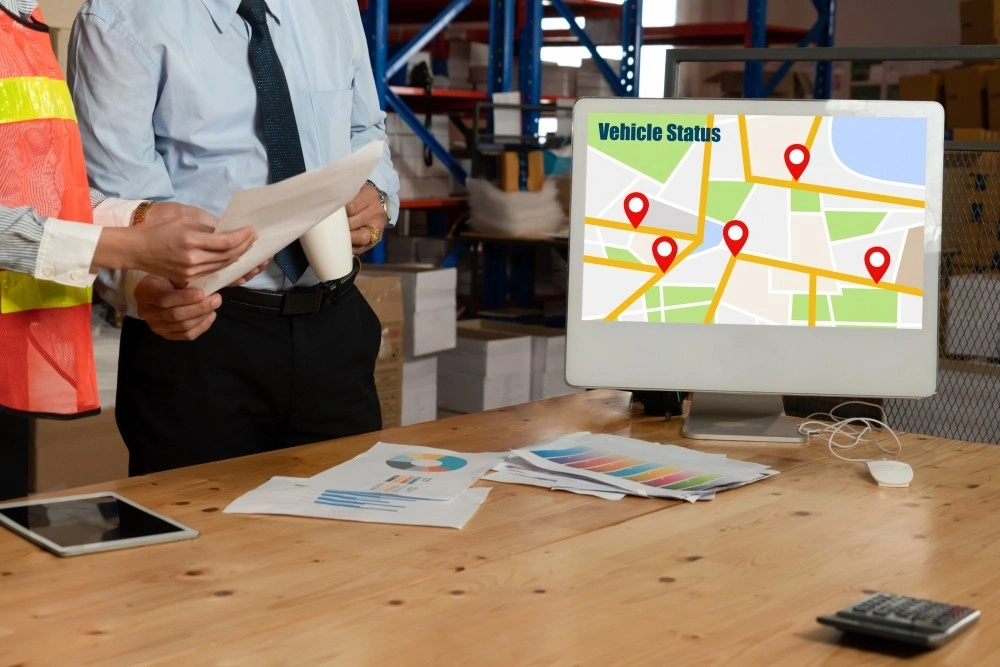
    Artificial intelligence route optimization fills the gap by taking advantage of real-time data, predictive algorithms, and machine learning that dynamically alter routes in response to current conditions, including changes in traffic and weather. Using this technology, logistics companies can not only improve delivery time but also save huge amounts of fuel—lessening costs as well as environmental costs.

    In this article, we’ll dive into how AI-powered route optimization is transforming logistics operations, offering both short-term savings and long-term strategic advantages.

    What’s Really Driving the Fuel Problem in Logistics Today?

    Per gallon of gasoline costs $3.15. But that’s not the problem logistics are dealing with. The problem is the inefficiency at multiple points in the delivery process. 

    Here’s a breakdown of the key contributors to the fuel problem:

    • Traffic and Congestion: Delivery trucks idle almost 30% of the time in traffic conditions in urban regions. Static route plans do not take into consideration real-time traffic congestion, which results in excess fuel consumption and late delivery.
    • Idling and Delays: Cumulative waiting times at the delivery points or loading/unloading stations. Idling raises the fuel consumption level and lowers productivity overall.
    • Inefficient Rerouting: Drivers often have to rely on outdated route plans, which fail to adapt to sudden changes like road closures, accidents, or detours, leading to inefficient rerouting and excess fuel use.
    • Poor Driver Habits: Poor driving habits—like speeding, harsh braking, or rapid acceleration—can reduce fuel efficiency by as much as 30% on highways and 10 – 40% in city driving.
    • Static Route Plans: Classical planning tends to presume that the first route is the optimal route, without considering actual-time environmental changes.

    While traditional route planning focuses solely on distance, the modern logistics challenge is far more complex.

    The problem isn’t just about distance—it’s about the time between decision-making moments. Decision latency—the gap between receiving new information (like traffic updates) and making a change—can have a profound impact on fuel usage. With every second lost, logistics firms burn more fuel.

    Traditional methods simply can’t adapt quickly enough to reduce fuel waste, but with the addition of AI, decisions can be automated in real-time, and routes can be adjusted dynamically to optimize the fuel efficiency.

    The Benefits of AI Route Optimization for Logistic Companies

    AI Route Optimization for Logistics Companies

    1. Reducing Wasted Miles and Excessive Idling

    Fuel consumption is heavily influenced by wasted time. 

    Unlike traditional systems that rely on static waypoints or historical averages, AI models are fed with live inputs from GPS signals, driver telemetry, municipal traffic feeds, and even weather APIs. These models use predictive analytics to detect emerging traffic patterns before they become bottlenecks and reroute deliveries proactively—sometimes before a driver even encounters a slowdown.

    What does this mean for logistics firms?

    • Fuel isn’t wasted reacting to problems—it’s saved by anticipating them.
    • Delivery ETAs stay accurate, which protects SLAs and reduces penalty risks.
    • Idle time is minimized, not just in traffic but at loading docks, thanks to integrations with warehouse management systems that adjust arrival times dynamically.

    The AI chooses the smartest options, prioritizing consistent movement, minimal stops, and smooth terrain. Over hundreds of deliveries per day, these micro-decisions lead to measurable gains: reduced fuel bills, better driver satisfaction, and more predictable operational costs.

    This is how logistics firms are moving from reactive delivery models to intelligent, pre-emptive routing systems—driven by real-time data, and optimized for efficiency from the first mile to the last.

    1. Smarter, Real-Time Adaptability to Traffic Conditions

    AI doesn’t just plan for the “best” route at the start of the day—it adapts in real time. 

    Using a combination of live traffic feeds, vehicle sensor data, and external data sources like weather APIs and accident reports, AI models update delivery routes in real time. But more than that, they prioritize fuel efficiency metrics—evaluating elevation shifts, average stop durations, road gradient, and even left-turn frequency to find the path that burns the least fuel, not just the one that arrives the fastest. This level of contextual optimization is only possible with a robust AI/ML service that can continuously learn and adapt from traffic data and driving conditions.

    The result?

    • Route changes aren’t guesswork—they’re cost-driven.
    • On long-haul routes, fuel burn can be reduced by up to 15% simply by avoiding high-altitude detours or stop-start urban traffic.
    • Over time, the system becomes smarter per region—learning traffic rhythms specific to cities, seasons, and even lanes.

    This level of adaptability is what separates rule-based systems from machine learning models: it’s not just a reroute, it’s a fuel-aware, performance-optimized redirect—one that scales with every mile logged.

    1. Load Optimization for Fuel Efficiency

    Whether a truck is carrying a full load or a partial one, AI adjusts its recommendations to ensure the vehicle isn’t overworking itself, driving fuel consumption up unnecessarily. 

    For instance, AI accounts for vehicle weight, cargo volume, and even the terrain—knowing that a fully loaded truck climbing steep hills will consume more fuel than one carrying a lighter load on flat roads. 

    This leads to more tailored, precise decisions that optimize fuel usage based on load conditions, further reducing costs.

    What Does AI Route Optimization Actually Work?

    AI route optimization is transforming logistics by addressing the inefficiencies that traditional routing methods can’t handle. It moves beyond static plans, offering a dynamic, data-driven approach to reduce fuel consumption and improve overall operational efficiency. Here’s a clear breakdown of how AI does this:

    Predictive vs. Reactive Routing

    Traditional systems are reactive by design: they wait for traffic congestion to appear before recalculating. By then, the vehicle is already delayed, the fuel is already burned, and the opportunity to optimize is gone.

    AI flips this entirely.

    It combines:

    • Historical traffic patterns (think: congestion trends by time-of-day or day-of-week),
    • Live sensor inputs from telematics systems (speed, engine RPM, idle time),
    • External data streams (weather services, construction alerts, accident reports),
    • and driver behavior models (based on past performance and route habits)

    …to generate routes that aren’t just “smart”—they’re anticipatory.

    For example, if a system predicts a 60% chance of a traffic jam on Route A due to a football game starting at 5 PM, and the delivery is scheduled for 4:45 PM, it will reroute the vehicle through a slightly longer but consistently faster highway path—preventing idle time before it starts.

    This kind of proactive rerouting isn’t based on a single event; it’s shaped by millions of data points and fine-tuned by machine learning models that improve with each trip logged. With every dataset processed, an AI/ML service gains more predictive power, enabling it to make even more fuel-efficient decisions in future deliveries. Over time, this allows logistics firms to build an operational strategy around predictable fuel savings, not just reactive cost-cutting.

    Real-Time Data Inputs (Traffic, Weather, Load Data)

    AI systems integrate:

    • Traffic flow data from GPS providers, municipal feeds, and crowdsourced platforms like Waze.
    • Weather intelligence APIs to account for storm patterns, wind resistance, and road friction risks.
    • Vehicle telematics for current load weight, which affects acceleration patterns and optimal speeds.

    Each of these feeds becomes part of a dynamic route scoring model. For example, if a vehicle carrying a heavy load is routed into a hilly region during rainfall, fuel consumption may spike due to increased drag and braking. A well-tuned AI system reroutes that load along a flatter, dryer corridor—even if it’s slightly longer in distance—because fuel efficiency, not just mileage, becomes the optimized metric.

    This data fusion also happens at high frequency—every 5 to 15 seconds in advanced systems. That means as soon as a new traffic bottleneck is detected or a sudden road closure occurs, the algorithm recalculates, reducing decision latency to near-zero and preserving route efficiency with no human intervention.

    Vehicle-Specific Considerations

    Heavy-duty trucks carrying full loads can consume up to 50% more fuel per mile than lighter or empty ones, according to the U.S. Department of Energy. That means sending two different trucks down the same “optimal” route—without factoring in grade, stop frequency, or road surface—can result in major fuel waste.

    AI takes this into account in real time, adjusting:

    • Route incline based on gross vehicle weight and torque efficiency
    • Stop frequency based on vehicle type (e.g., hybrid vs. diesel)
    • Fuel burn curves that shift depending on terrain and traffic

    This level of precision allows fleet managers to assign the right vehicle to the right route—not just any available truck. And when combined with historical performance data, the AI can even learn which vehicles perform best on which corridors, continually improving the match between route and machine.

    Automatic Rerouting Based on Traffic/Data Drift

    AI’s real-time adaptability means that as traffic conditions change, or if new data becomes available (e.g., a road closure), the system automatically reroutes the vehicle to a more efficient path. 

    For example, if a major accident suddenly clogs a key highway, the AI can detect it within seconds and reroute the vehicle through a less congested arterial road—without the driver needing to stop or call dispatch. 

    Machine Learning: Continuous Improvement Over Time

    The most powerful aspect of AI is its machine learning capability. Over time, the system learns from outcomes—whether a route led to a fuel-efficient journey or created unnecessary delays. 

    With this knowledge, it continuously refines its algorithms, becoming better at predicting the most efficient routes and adapting to new challenges. AI doesn’t just optimize based on past data; it evolves and gets smarter with every trip.

    Bottom Line

    AI route optimization is not just a technological upgrade—it’s a strategic investment. 

    Firms that adopt AI-powered planning typically cut fuel expenses by 7–15%, depending on fleet size and operational complexity. But the value doesn’t stop there. Reduced idling, smarter rerouting, and fewer detours also mean less wear on vehicles, better delivery timing, and higher driver output.

    If you’re ready to make your fleet leaner, faster, and more fuel-efficient, SCS Tech’s AI logistics suite is built to deliver exactly that. Whether you need plug-and-play solutions or a fully customised AI/ML service, integrating these technologies into your logistics workflow is the key to sustained cost savings and competitive advantage. Contact us today to learn how we can help you drive smarter logistics and significant cost savings.

  • Why AI/ML Models Are Failing in Business Forecasting—And How to Fix It

    Why AI/ML Models Are Failing in Business Forecasting—And How to Fix It

    You’re planning the next quarter. Your marketing spend is mapped. Hiring discussions are underway. You’re in talks with vendors for inventory.

    Every one of these moves depends on a forecast. Whether it’s revenue, demand, or churn—the numbers you trust are shaping how your business behaves.

    And in many organizations today, those forecasts are being generated—or influenced—by artificial intelligence and machine learning models.

    But here’s the reality most teams uncover too late: 80% of AI-based forecasting projects stall before they deliver meaningful value. The models look sophisticated. They generate charts, confidence intervals, and performance scores. But when tested in the real world—they fall short.

    And when they fail, you’re not just facing technical errors. You’re working with broken assumptions—leading to misaligned budgets, inaccurate demand planning, delayed pivots, and campaigns that miss their moment.

    In this article, we’ll walk you through why most AI/ML forecasting models underdeliver, what mistakes are being made under the hood, and how SCS Tech helps businesses fix this with practical, grounded AI strategies.

    Reasons AI/ML Forecasting Models Fail in Business Environments

    Let’s start where most vendors won’t—with the reasons these models go wrong. It’s not technology. It’s the foundation, the framing, and the way they’re deployed.

    1. Bad Data = Bad Predictions

    Most businesses don’t have AI problems. They have data hygiene problems.

    If your training data is outdated, inconsistent, or missing key variables, no model—no matter how complex—can produce reliable forecasts.

    Look out for these reasons: 

    • Mixing structured and unstructured data without normalization
    • Historical records that are biased, incomplete, or stored in silos
    • Using marketing or sales data that hasn’t been cleaned for seasonality or anomalies

    The result? Your AI isn’t predicting the future. It’s just amplifying your past mistakes.

    2. No Domain Intelligence in the Loop

    A model trained in isolation—without inputs from someone who knows the business context—won’t perform. It might technically be accurate, but operationally useless.

    If your forecast doesn’t consider how regulatory shifts affect your cash flow, or how a supplier issue impacts inventory, it’s just an academic model—not a business tool.

    At SCS Tech, we often inherit models built by external data teams. What’s usually missing? Someone who understands both the business cycle and how AI/ML models work. That bridge is what makes predictions usable.

    3. Overfitting on History, Underreacting to Reality

    Many forecasting engines over-rely on historical data. They assume what happened last year will happen again.

    But real markets are fluid:

    • Consumer behavior shifts post-crisis
    • Policy changes overnight
    • One viral campaign can change your sales trajectory in weeks
    • AI trained only on the past becomes blind to disruption.

    A healthy forecasting model should weigh historical trends alongside real-time indicators—like sales velocity, support tickets, sentiment data, macroeconomic signals, and more.

    4. Black Box Models Break Trust

    If your leadership can’t understand how a forecast was generated, they won’t trust it—no matter how accurate it is.

    Explainability isn’t optional. Especially in finance, operations, or healthcare—where decisions have regulatory or high-cost implications—“the model said so” is not a strategy.

    SCS Tech builds AI/ML services with transparent forecasting logic. You should be able to trace the input factors, know what weighted the prediction, and adjust based on what’s changing in your business.

    5. The Model Works—But No One Uses It

    Even technically sound models can fail because they’re not embedded into the way people work.

    If the forecast lives in a dashboard that no one checks before a pricing decision or reorder call, it’s dead weight.

    True forecasting solutions must:

    • Plug into your systems (CRM, ERP, inventory planning tools)
    • Push recommendations at the right time—not just pull reports
    • Allow for human overrides and inputs—because real-world intuition still matters

    How to Improve AI/ML Forecasting Accuracy in Real Business Conditions

    Let’s shift from diagnosis to solution. Based on our experience building, fixing, and operationalizing AI/ML forecasting for real businesses, here’s what actually works.


    How to Improve AI/ML Forecasting Accuracy

    Focus on Clean, Connected Data First

    Before training a model, get your data streams in order. Standardize formats. Fill the gaps. Identify the outliers. Merge your CRM, ERP, and demand data.

    You don’t need “big” data. You need usable data.

    Pair Data Science with Business Knowledge

    We’ve seen the difference it makes when forecasting teams work side by side with sales heads, finance leads, and ops managers.

    It’s not about guessing what metrics matter. It’s about modeling what actually drives margin, retention, or burn rate—because the people closest to the numbers shape better logic.

    Mix Real-Time Signals with Historical Trends

    Seasonality is useful—but only when paired with present conditions.

    Good forecasting blends:

    • Historical performance
    • Current customer behavior
    • Supply chain signals
    • Marketing campaign performance
    • External economic triggers

    This is how SCS Tech builds forecasting engines—as dynamic systems, not static reports.

    Design for Interpretability

    It’s not just about accuracy. It’s about trust.

    A business leader should be able to look at a forecast and understand:

    • What changed since last quarter
    • Why the forecast shifted
    • Which levers (price, channel, region) are influencing results

    Transparency builds adoption. And adoption builds ROI.

    Embed the Forecast Into the Flow of Work

    If the prediction doesn’t reach the person making the decision—fast—it’s wasted.

    Forecasts should show up inside:

    • Reordering systems
    • Revenue planning dashboards
    • Marketing spend allocation tools

    Don’t ask users to visit your model. Bring the model to where they make decisions.

    How SCS Tech Builds Reliable, Business-Ready AI/ML Forecasting Solutions

    SCS Tech doesn’t sell AI dashboards. We build decision systems. That means:

    • Clean data pipelines
    • Models trained with domain logic
    • Forecasts that update in real time
    • Interfaces that let your people use them—without guessing

    You don’t need a data science team to make this work. You need a partner who understands your operation—and who’s done this before. That’s us.

    Final Thoughts

    If your forecasts feel disconnected from your actual outcomes, you’re not alone. The truth is, most AI/ML models fail in business contexts because they weren’t built for them in the first place.

    You don’t need more complexity. You need clarity, usability, and integration.

    And if you’re ready to rethink how forecasting actually supports business growth, we’re ready to help. Talk to SCS Tech. Let’s start with one recurring decision in your business. We’ll show you how to turn it from a guess into a prediction you can trust.

    FAQs

    1. Can we use AI/ML forecasting without completely changing our current tools or tech stack?

    Absolutely. We never recommend tearing down what’s already working. Our models are designed to integrate with your existing systems—whether it’s ERP, CRM, or custom dashboards.

    We focus on embedding forecasting into your workflow, not creating a separate one. That’s what keeps adoption high and disruption low.

    1. How do I explain the value of AI/ML forecasting to my leadership or board?

    You explain it in terms they care about: risk reduction, speed of decision-making, and resource efficiency.

    Instead of making decisions based on assumptions or outdated reports, forecasting systems give your team early signals to act smarter:

    • Shift budgets before a drop in conversion
    • Adjust production before an oversupply
    • Flag customer churn before it hits revenue

    We help you build a business case backed by numbers, so leadership sees AI not as a cost center, but as a decision accelerator.

    1. How long does it take before we start seeing results from a new forecasting system?

    It depends on your use case and data readiness. But in most client scenarios, we’ve delivered meaningful improvements in decision-making within the first 6–10 weeks.

    We typically begin with one focused use case—like sales forecasting or procurement planning—and show early wins. Once the model proves its value, scaling across departments becomes faster and more strategic.

  • How Real-Time Data and AI are Revolutionizing Emergency Response?

    How Real-Time Data and AI are Revolutionizing Emergency Response?

    Imagine this: you’re stuck in traffic when suddenly, an ambulance appears in your rearview mirror. The siren’s blaring. You want to move—but the road is jammed. Every second counts. Lives are at stake.

    Now imagine this: what if AI could clear a path for that ambulance before it even gets close to you?

    Sounds futuristic? Not anymore.

    A city in California recently cut ambulance response times from 46 minutes to just 14 minutes using real-time traffic management powered by AI. That’s 32 minutes shaved off—minutes that could mean the difference between life and death.

    That’s the power of real-time data and AI in emergency response.

    And it’s not just about traffic. From predicting wildfires to automating 911 dispatches and identifying survivors in collapsed buildings—AI is quietly becoming the fastest responder we have. These innovations also highlight advanced methods to predict natural disasters long before they escalate.

    So the real question is:

    Are you ready to understand how tech is reshaping the way we handle emergencies—and how your organization can benefit?

    Let’s dive in.

    The Problem With Traditional Emergency Response

    Let’s not sugarcoat it—our emergency response systems were never built for speed or precision. They were designed in an era when landlines were the only lifeline and responders relied on intuition more than information.

    Even today, the process often follows this outdated chain:

    A call comes in → Dispatch makes judgment calls → Teams are deployed → Assessment happens on site.

    Before Before and After AI

    Here’s why that model is collapsing under pressure:

    1. Delayed Decision-Making in a High-Stakes Window

    Every emergency has a golden hour—a short window when intervention can dramatically increase survival rates. According to a study published in BMJ Open, a delay of even 5 minutes in ambulance arrival is associated with a 10% decrease in survival rate in cases like cardiac arrest or major trauma.

    But that’s what’s happening—because the system depends on humans making snap decisions with incomplete or outdated information. And while responders are trained, they’re not clairvoyants.

    2. One Size Fits None: Poor Resource Allocation

    A report by McKinsey & Company found that over 20% of emergency deployments in urban areas were either over-responded or under-resourced, often due to dispatchers lacking real-time visibility into resource availability or incident severity.

    That’s not just inefficient—it’s dangerous.

    3. Siloed Systems = Slower Reactions

    Police, fire, EMS—even weather and utility teams—operate on different digital platforms. In a disaster, that means manual handoffs, missed updates, or even duplicate efforts.

    And in events like hurricanes, chemical spills, or industrial fires, inter-agency coordination isn’t optional—it’s survival.

    A case study from Houston’s response to Hurricane Harvey found that agencies using interoperable data-sharing platforms responded 40% faster than those using siloed systems.

    Real-Time Data and AI: Your Digital First Responders

    Now imagine a different model—one that doesn’t wait for a call. One that acts the moment data shows a red flag.

    We’re talking about real-time data, gathered from dozens of touchpoints across your environment—and processed instantly by AI systems.

    But before we dive into what AI does, let’s first understand where this data comes from.

    Traditional data systems tell you what just happened.

    Predictive analytics powered by AI tells you what’s about to happen, offering reliable methods to predict natural disasters in real-time.

    And that gives responders something they’ve never had before: lead time.

    Let’s break it down:

    • Machine learning models, trained on thousands of past incidents, can identify the early signs of a wildfire before a human even notices smoke.
    • In flood-prone cities, predictive AI now uses rainfall, soil absorption, and river flow data to estimate overflow risks hours in advance. Such forecasting techniques are among the most effective methods to predict natural disasters like flash floods and landslides.
    • Some 911 centers now use natural language processing to analyze caller voice patterns, tone, and choice of words to detect hidden signs of a heart attack or panic disorder—often before the patient is even aware.

    What Exactly Is AI Doing in Emergencies?

    Think of AI as your 24/7 digital analyst that never sleeps. It does the hard work behind the scenes—sorting through mountains of data to find the one insight that saves lives.

    Here’s how AI is helping:

    • Spotting patterns before humans can: Whether it’s the early signs of a wildfire or crowd movement indicating a possible riot, AI detects red flags fast.
    • Predicting disasters: With enough historical and environmental data, AI applies advanced methods to predict natural disasters such as floods, earthquakes, and infrastructure collapse.
    • Understanding voice and language: Natural Language Processing (NLP) helps AI interpret 911 calls, tweets, and distress messages in real time—even identifying keywords like “gunshot,” “collapsed,” or “help.”
    • Interpreting images and video: Computer vision lets drones and cameras analyze real-time visuals—detecting injuries, structural damage, or fire spread.
    • Recommending actions instantly: Based on location, severity, and available resources, AI can recommend the best emergency response route in seconds.

    What Happens When AI Takes the Lead in Emergencies

    Let’s walk through real-world examples that show how this tech is actively saving lives, cutting costs, and changing how we prepare for disasters.

    But more importantly, let’s understand why these wins matter—and what they reveal about the future of emergency management.

    1. AI-powered Dispatch Cuts Response Time by 70%

    In Fremont, California, officials implemented a smart traffic management system powered by real-time data and AI. Here’s what it does: it pulls live input from GPS, traffic lights, and cameras—and automatically clears routes for emergency vehicles.

    Result? Average ambulance travel time dropped from 46 minutes to just 14 minutes.

    Why it matters: This isn’t just faster—it’s life-saving. The American Heart Association notes that survival drops by 7-10% for every minute delay in treating cardiac arrest. AI routing means minutes reclaimed = lives saved.

    It also means fewer traffic accidents involving emergency vehicles—a cost-saving and safety win.

    2. Predicting Wildfires Before They Spread

    NASA and IBM teamed up to build AI tools that analyze satellite data, terrain elevation, and meteorological patterns—pioneering new methods to predict natural disasters like wildfire spread. These models detect subtle signs—like vegetation dryness and wind shifts, well before a human observer could act.

    Authorities now get alerts hours or even days before the fires reach populated zones.

    Why it matters: Early detection means time to evacuate, mobilize resources, and prevent large-scale destruction. And as climate change pushes wildfire frequency higher, predictive tools like this could be the frontline defense in vulnerable regions like California, Greece, and Australia.

    3. Using Drones to Save Survivors

    The Robotics Institute at Carnegie Mellon University built autonomous drones that scan disaster zones using thermal imaging, AI-based shape recognition, and 3D mapping.

    These drones detect human forms under rubble, assess structural damage, and map the safest access routes—all without risking responder lives.

    Why it matters: In disasters like earthquakes or building collapses, every second counts—and so does responder safety. Autonomous aerial support means faster search and rescue, especially in areas unsafe for human entry.

    This also reduces search costs and prevents secondary injuries to rescue personnel.

    What all these applications have in common:

    • They don’t wait for a 911 call.
    • They reduce dependency on guesswork.
    • They turn data into decisions—instantly.

    These aren’t isolated wins. They signal a shift toward intelligent infrastructure, where public safety is proactive, not reactive.

    Why This Tech is Essential for Your Organization?

    Understanding and applying modern methods to predict natural disasters is no longer optional—it’s a strategic advantage. Whether you’re in public safety, municipal planning, disaster management, or healthcare, this shift toward AI-enhanced emergency response offers major wins:

    • Faster response times: The right help reaches the right place—instantly.
    • Fewer false alarms: AI helps distinguish serious emergencies from minor incidents.
    • Better coordination: Connected systems allow fire, EMS, and police to work from the same real-time playbook.
    • More lives saved: Ultimately, everything leads to fewer injuries, less damage, and more lives protected.

    If so, Where Do You Start?

    You don’t have to reinvent the wheel. But you do need to modernize how you respond to crises. And that starts with a strategy:

    1. Assess your current response tech: Are your systems integrated? Can they talk to each other in real time?
    2. Explore data sources: What real-time data can you tap into—IoT, social media, GIS, wearables?
    3. Partner with the right experts: You need a team that understands AI, knows public safety, and can integrate solutions seamlessly.

    Final Thought

    Emergencies will always demand fast action. But in today’s world, speed alone isn’t enough—you need systems built on proven methods to predict natural disasters, allowing them to anticipate, adapt, and act before the crisis escalates.

    This is where data steps in. And when combined with AI, it transforms emergency response from a reactive scramble to a coordinated, intelligent operation.

    The siren still matters. But now, it’s backed by a brain—a system quietly working behind the scenes to reroute traffic, flag danger, alert responders, and even predict the next move.

    At SCS Tech India, we help forward-thinking organizations turn that possibility into reality. Whether it’s AI-powered dispatch, predictive analytics, or drone-assisted search and rescue—we build custom solutions that turn seconds into lifesavers.

    Because in an emergency, every moment counts. And with the right technology, you won’t just respond faster. You’ll respond smarter.

    FAQs

    What kind of data should we start collecting right now to prepare for AI deployment in the future?

    Start with what’s already within reach:

    • Response times (from dispatch to on-site arrival)
    • Resource logs (who was sent, where, and how many)
    • Incident types and outcomes
    • Environmental factors (location, time of day, traffic patterns)

    This foundational data helps build patterns. The more consistent and clean your data, the more accurate and useful your AI models will be later. Don’t wait for the “perfect platform” to start collecting—it’s the habit of logging that pays off.

    Will AI replace human decision-making in emergencies?

    No—and it shouldn’t. AI augments, not replaces. What it does is compress time: surfacing the right information, highlighting anomalies, recommending actions—all faster than a human ever could. But the final decision still rests with the trained responder. Think of AI as your co-pilot, not your replacement.

    How can we ensure data privacy and security when using real-time AI systems?

    Great question—and a critical one. The systems you deploy must adhere to:

    • End-to-end encryption for data in transit
    • Role-based access for sensitive information
    • Audit trails to monitor every data interaction
    • Compliance with local and global regulations (HIPAA, GDPR, etc.)

    Also, work with vendors who build privacy into the architecture—not as an afterthought. Transparency in how data is used, stored, and trained is non-negotiable when lives and trust are on the line.

  • The Role of Predictive Analytics in Driving Business Growth in 2025

    The Role of Predictive Analytics in Driving Business Growth in 2025

    Consumer behaviour is shifting faster than ever. Algorithms are making decisions before you do. And your gut instinct? It’s getting outpaced by businesses that see tomorrow coming before it arrives.

    According to a 2024 Gartner survey, 79% of corporate strategists say analytics, AI, and automation are critical to their success over the next two years. Many are turning to specialised AI/ML services to operationalise these priorities at scale.

    Markets are moving too fast for backward-looking plans. Today’s winning companies aren’t just reacting to change — they’re anticipating it. Predictive analytics gives you the edge by turning historical data into future-ready decisions faster than your competition can blink.

    If you’ve ever timed a campaign based on last year’s buying cycle, you’ve already used predictive instinct. But in 2025, instinct isn’t enough. You need a system that scales it.

    Where It Actually Moves the Needle — And Where It Doesn’t

    Let’s get real—predictive analytics isn’t a plug-and-play miracle. It’s a tool. Its value comes from where and how you apply it. Some companies see 10x ROI. Others walk away unimpressed. The difference? Focus.

    Predictive Analytics Engine

    A McKinsey report noted that companies using predictive analytics in key operational areas see up to 6% improvement in profit margins and 10% higher customer satisfaction scores. However, these results only show up when the use case is aligned with actual friction points. Especially when backed by an integrated AI/ML service that aligns models with on-the-ground decision triggers.

    Here’s where prediction delivers outsized returns:

    1. Demand Forecasting (Relevant for: Manufacturing, retail, and healthcare): These industries lose revenue when supply doesn’t match demand, either through excess inventory that expires or stockouts that miss sales. It helps businesses align production with real demand patterns, often region-specific or seasonal.
    2. Customer Churn Prediction (Relevant for: Telecom and BFSI): When customers leave quietly, the business loses long-term value without warning. What prediction does: It flags small changes in user behavior that often go unnoticed, like a drop in usage or payment delays, so retention teams can intervene early.
    3. Predictive Maintenance (Relevant for: Heavy machinery, logistics, and energy sectors): Unplanned downtime halts operations and damages client trust. It uses machine data—often analysed through an AI/ML service—to identify early signs of failure, so teams can act before breakdowns happen.
    4. Fraud Detection (Relevant for: Banking and insurance): As digital transactions scale, fraud becomes harder to detect through manual checks alone. Algorithms analyse transaction patterns and flag anomalies in real time—often faster and more accurately than audits.

    But not every use case delivers.

    Where It Fails—or Flatlines

    • When data is sparse or irregular. Prediction thrives on patterns. No patterns? No value.
    • When you’re trying to forecast rare, one-off events—like a regulatory upheaval or leadership shift.
    • When departments work in silos, hoarding insights instead of feeding them back into models.
    • When you deploy tools before identifying problems, a common mistake with off-the-shelf dashboards.

    Key Applications of Predictive Analytics for Business Growth

    Predictive analytics becomes valuable only when it integrates with core decision systems—those that determine how, when, and where a business allocates its capital, people, and priorities. Used correctly, it transforms lagging indicators into real-time levers for operational clarity. Below are not categories—but impact zones—where the application of predictive intelligence changes how growth is executed, not just reported.

    1. Customer acquisition and retention

    Retention is not a loyalty problem. It’s an attention problem. Businesses lose customers not when value disappears—but when relevance lapses. Predictive analytics identifies these lapses early.

    • By leveraging behavioural clustering and time-series models, high-performing businesses can detect churn signals long before customers take action.
    • According to a Forrester study, companies that operationalized churn prediction frameworks reported up to 15–20% improvement in customer lifetime value (CLV) by deploying targeted interventions when disengagement patterns first emerge.

    This is not segmentation. It’s micro-forecasting—where response likelihood is recalculated in real time across interaction channels.

    In B2C models, these drives offer timing and personalization. In B2B SaaS, it influences renewal forecasts and account management priorities. Either way, the growth engine no longer runs on intuition. It runs on modeled intent.

    2. Marketing and revenue operations

    Campaigns fail not because of creative gaps—but because they’re misaligned with demand timing. Predictive analytics changes that by eliminating the lag between audience insight and go-to-market execution.

    • By integrating external signals—like macroeconomic indicators, sector-specific sentiment, and real-time intent data—into media planning systems, marketing teams shift from reactive attribution to predictive conversion modeling. Such insights often come faster when powered by a reliable AI/ML service capable of digesting external and internal data streams.
    • This reduces CAC volatility and improves budget elasticity.

    In sales, predictive scoring systems ingest CRM data, email trails, past deal cycles, and intent signals to identify not just who is likely to close, but when and at what cost to serve.

    A McKinsey study noted that sales teams with mature predictive analytics frameworks closed deals 12–15% faster and achieved 10–20% higher conversion rates than those using standard lead scoring.

    3. Product strategy and innovation

    The traditional model of product development—build, launch, measure—is fundamentally reactive. Predictive analytics shifts this flow by identifying undercurrents in customer need before they surface as requests or complaints.

    • NLP models—typically deployed through an AI/ML service—run across support tickets, online reviews, and feedback forms, and extract friction themes at scale.
    • Layered with usage telemetry, companies can model not just what customers want next, but what will reduce churn and increase NPS with the lowest development cost.

    In hardware and manufacturing, predictive analytics ties into field service data and defect logs to anticipate which design improvements will yield the greatest operational return—turning product development into a value optimization function, not a roadmap gamble.

    4. Supply chain and operations

    Supply chains break not because of a lack of planning, but because of dependence on static planning. Predictive models inject fluidity—adapting forecasts based on upstream and downstream fluctuations in near real-time.

    • One electronics OEM layered weather data, regional demand shifts, and supplier capacity metrics into its forecasting models—cutting inventory holding costs by 22% and avoiding stockouts in two consecutive holiday seasons.
    • Beyond demand, predictive analytics enables logistics risk profiling, flagging geographies, vendors, or nodes that show early signals of disruption.

    It also supports capacity-aware scheduling—adjusting throughput based on absenteeism, machine wear signals, or raw material inconsistencies. This doesn’t require full automation. It requires precision frameworks that make manual interventions smarter, faster, and more aligned with system constraints.

    5. Finance and risk management

    Financial models typically operate on the assumption of linearity. Predictive analytics exposes the reality—that financial health is event-driven and behavior-dependent.

    • Revenue forecasting systems embedding signals like interest rate changes, currency volatility, and regional policy shifts improved forecast accuracy by up to 25%, according to PwC.
    • In credit and fraud, supervised models don’t just look for rule violations—but for breaks in pattern coherence, even when individual inputs appear safe.

    This is why predictive risk systems are no longer limited to banks. Mid-sized enterprises exposed to global vendors, multi-currency transactions, or digital assets are embedding fraud detection into operational controls—not waiting for post-event audits.

    Challenges in Implementing Predictive Analytics

    The failure rate of predictive analytics initiatives remains high, not because the technology is insufficient, but because most organizations misdiagnose what prediction actually requires. It is not a data visualization problem. It’s an integration problem. Below are the real constraints that separate signal from noise.

    1. Data infrastructure

    Predictive accuracy depends on historical depth, temporal granularity, and data context. Most organizations underestimate how fragmented or unstructured their data is, until the model flags inconsistent inputs.

    • According to IDC, only 32% of organizations have enterprise-wide data governance sufficient to support cross-functional predictive models.
    • Without normalized pipelines, real-time ingestion, and tagging standards, even advanced models collapse under ambiguity.

    2. Model reliability and explainability

    In regulated industries—finance, healthcare, insurance—accuracy alone isn’t enough. Explainability becomes critical.

    • Stakeholders need to understand why a model flagged a transaction, rejected a claim, or reprioritized a lead.
    • Black-box models like deep learning demand interpretability frameworks (e.g., LIME or SHAP) or hybrid models that balance clarity with accuracy.

    Without this transparency, trust erodes—and regulatory non-compliance becomes a serious risk.

    3. Siloed ownership

    Prediction has no value if insight stays in a dashboard. Yet many organizations keep data science isolated from sales, ops, or finance.

    • This leads to what Gartner calls the “insight-to-action gap.”
    • Models generate accurate outputs, but no one acts on them—either due to unclear ownership or because workflows aren’t built to accept predictive triggers.

    To close this, predictions must be embedded into decision architecture—CRM systems, scheduling tools, pricing engines—not just reporting layers.

    4. Talent scarcity

    Most businesses conflate data analytics with predictive modeling. But statistical reports aren’t predictive systems.

    • You don’t need someone to report what happened—you need people who build systems that act on what will happen.
    • That means hiring data engineers, ML ops architects, and domain-informed modelers—not spreadsheet analysts.

    This mismatch leads to failed pilots and dashboards that look impressive but fail to drive business impact.

    5. Change management

    The biggest friction point isn’t technical—it’s cultural.

    • Predictive systems challenge intuition. They force leaders to trust data over experience.
    • This only works when there’s executive alignment—when leadership is willing to move from authority-based decisions to model-informed strategy.

    Adoption requires not just access to tools, but governance models, feedback loops, and measurable accountability.

    What Business Growth Looks Like with Prediction Built-In

    When predictive analytics is done right, growth doesn’t look like fireworks. It looks like precision.

    • You don’t over-hire.
    • You don’t overstock.
    • You don’t launch in the wrong quarter.
    • You don’t spend weeks figuring out why shipments are delayed—because you already fixed it two cycles ago.

    The power of prediction is in consistency.

    And in mid-sized businesses, consistency is the difference between making payroll comfortably and cutting corners to survive Q4.

    In public health systems, predictive models helped reduce patient wait times by anticipating post-holiday surges in outpatient visits. The result? Less crowding. Faster care. Better resource planning.

    No billion-dollar transformation. Just friction, removed.

    This is where SCS Tech earns its edge.

    They don’t sell dashboards—they offer a tailored AI/ML service that solves recurring friction points using AI/ML architectures tailored to your reality.

    • If your shipment delays always happen in the same two regions,
    • If your production overruns always start with the same raw material,
    • If your customer complaints always spike on certain weekdays—

    That’s where they begin. They don’t drop a model and leave. They build prediction into your process to the point where it stops you from losing money.

    What to Look for If You Want to Explore Further

    Before bringing in predictive analytics, ask yourself:

    • Where are we routinely late in making calls?
    • Which part of the business costs more than it should—because we’re always reacting?
    • Do we have enough historical data tied to that problem?

    If the answer is yes, you’re not early. You’re already behind.

    That’s the entry point for SCS Tech. They don’t lead with tools. They start by identifying high-friction, recurring events that can be modelled—and then make that logic part of your system.

    Their strength isn’t variety. It’s pattern recognition across sectors where delay costs money: logistics bottlenecks, vendor overruns, and churn without warning. SCS Tech knows how to operationalise prediction—not as a shiny overlay but as a layer that runs quietly behind the scenes.

    Final Thoughts

    Most business problems aren’t surprising—they just keep resurfacing because we’re too late to catch them. Prediction changes that. It gives you leverage, not hindsight.

    This isn’t about being futuristic. It’s about preventing wasted spend, lost hours, and missed quarters.

    If you’re running a mid-sized business and are tired of reacting late, talk to SCS Tech India. Start with one recurring issue. If it’s predictable, we’ll help you systemize the fix—and prove the return in weeks, not quarters.

    FAQs

    We already use dashboards and reports—how is this different?

    Dashboards tell you what has already happened. Predictive analytics tells you what’s likely to happen next. It moves you from reactive decision-making to proactive planning. Instead of seeing a sales dip after it occurs, prediction can flag the drop before it shows up on reports, giving you time to correct the course.

    Do we need a massive data science team to get started?

    No. You don’t need an in-house AI lab. Most companies start with external partners or off-the-shelf platforms tailored to their domain. The critical part isn’t the tool—it’s the clarity of the problem you’re solving. You’ll need clean data, domain insight, and a team that can translate the output into action. That’s more important than building everything from scratch.

    Can we apply predictive analytics to small or one-time projects?

    You can try—but it won’t deliver much value. Prediction is best suited for ongoing, high-volume decisions. Think of recurring purchases, ongoing maintenance, repeat fraud attempts, etc. If you’re testing a new product or entering a new market with no history to learn from, traditional analysis or experimentation will serve you better.