Category: Digital Transformation

  • What Are the Best Cybersecurity Practices for Small and Medium Enterprises (SMEs)?

    What Are the Best Cybersecurity Practices for Small and Medium Enterprises (SMEs)?

    With the threat of cyberattacks looming larger than ever, if you think that your small and medium-sized businesses are safe, think again. Alarmingly, a recent report published by The CyberPeace Foundation stated that approximately 43% of data breaches occurred in small businesses and startups. With cybercriminals increasingly targeting smaller businesses, SMEs must recognize the critical importance of fortifying their defenses.

    In this blog, we explore essential strategies to help SMEs thrive in an ever-evolving digital landscape.

    Essential  Cybersecurity Practices Every SMEs Must Implement

    SMEs must focus on building their Cybersecurity Service walls, as they are vulnerable to cyberattacks due to their limited resources. Let us discuss the various practices that small and medium enterprises must implement as security measures to safeguard their sensitive data and mitigate risks:

    • Updated Systems and Software: Managing updates of systems and software on a timely basis ensures the elimination of any security breaches, which further mitigates any chance of exploitation by attackers. It also promotes enhanced performance and compliance with all standards to eliminate any possibility of security compromises.
    • Limit Access to Sensitive Data: This practice gives role-based data access control, which helps safeguard data against unauthorized activities and potential threats. This further enhances data safety and privacy.
    • Secure Wi-Fi Networks: Transmission of sensitive data over wi-fi networks should be performed with complete security. This practice plays a crucial role in shielding data and maintaining network integrity. By using methods like strong encryption, timely updating of default settings, and solid passwords, we can substantially mitigate the risk of unwanted access and data breaches.
    • Data Encryption and Regular Backups: Systematic backups of data regularly ensure protection against loss of data in case of any cyberattacks. On the other hand, implementation methods of strong encryption safeguard data against any unauthorized access, even if it is stolen or intercepted.
    • Strong Password Policies and Multi-Factor Authentication: A solid password combined with multi-factor authentication (MFA), which involves more than one verification method to obtain access, guarantees an additional layer of security, which prevents any unauthorized access data in case of compromised passwords.
    • Performing Regular Risk Assessments: Supervising regular risk assessments promotes the identification and management of potential pitfalls and susceptibilities. It also helps businesses to have an edge over evolving threats, assuring that the security needs are synchronized with the present risk environment and business demands.
    • Firewalls and Antivirus Software: The implementation of proper firewalls acts as a shield between established internal networks and suspicious external networks and potential malware threats. On the other hand, antivirus software locates, defends, and eliminates any malicious content from systems and software.
    • Employee Training on Cybersecurity Awareness: Organizations must focus on building a security-conscious environment that educates employees to recognize and respond to cyber threats because they are the first line of defense. By cultivating an environment of shared responsibility amongst the employees for cybersecurity service, SMEs can remarkably refine their safeguards against advancing cyber risks.
    • Engaging with Third-Party Vendors: Working with trusted third-party vendors promotes the protection of sensitive data and reduces potential cyber risks through third-party systems. Organizations must ensure that these vendors work with stringent security protocols to prevent any data or security breaches.
    • Build an Incident Response Plan: Creating an effective incident response plan is extremely crucial for handling cybersecurity breaches or attacks. It is a standardized approach that ensures quick and adequate response to cyber threats by organizations while mitigating potential risks, reducing recovery time, and eliminating future cyber attacks. It also prevents any reputational damage by focusing on timely compliance with necessary protocols, which further builds customer trust.

    Emerging Cybersecurity Trends and Technologies for SMEs

    Emerging cybersecurity trends and technologies have started to pave the way for small and medium enterprises to engage in innovative methods to protect themselves from potential cyber risks. Let us explore these latest trends that SMEs should deploy to strengthen their cybersecurity structure:

    #1 Artificial Intelligence (AI) and Machine Learning (ML) in cybersecurity

    AI and ML services offer transformative benefits to SMEs by scrutinizing vast sets of data in no time while simultaneously analyzing the data for any security threats and early warnings.

    #2 Endpoint detection and response (EDR)

    With the rising demand for remote work, protection of endpoints ( laptops, mobiles, etc.) has become extremely important. EDR focuses on finding and scrutinizing any malicious activities on these endpoints and isolating the same to prevent further damage.

    #3 Zero Trust Architecture

    With hybrid work environments in trend, conventional defenses are not enough to strengthen the cybersecurity of SMEs. Zero trust engages the concept of not trusting anybody in the internal or external networks.

    #4 Security automation and orchestration (SOAR)

    SOAR is a boon for organizations with a finite IT staff as it uses automation of repetitive tasks which helps in detecting, evaluating, and responding to cyber threats by amalgamating different security tools.

    #5 Phishing awareness and training programs

    SMEs employees often lack the training and knowledge to adequately fight against phishing and other cyber attacks. Building awareness against phishing attacks can enhance employee retaliation to real threats.
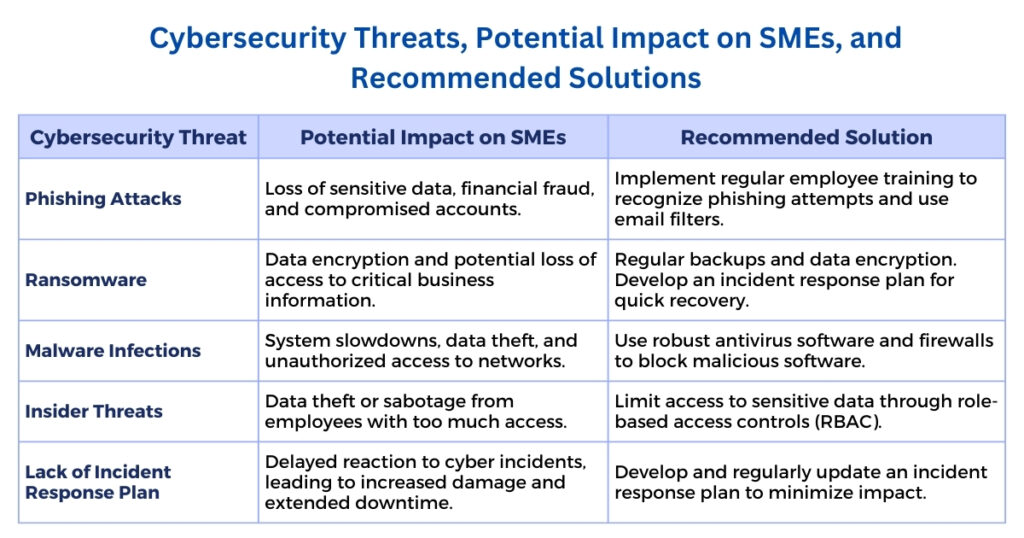
     

    Cybersecurity Threats, their potential impact on SMEs and solutions

    Conclusion 

    As cyber threats continue to rise, SMEs can no longer afford to remain complacent—especially with 46% of SMEs in India unaware of how to mitigate these risks. To safeguard sensitive and operational data while preserving customer trust, it’s crucial for organizations to adopt robust cybersecurity practices.

    Collaborating with custom cybersecurity solutions providers like SCS Tech can enhance protection by integrating advanced technology into their systems while promoting business growth and minimizing risks.

    FAQs

    • Do SMEs have the resources to implement solid cybersecurity protocols?

    Yes, SMEs can implement strong, cost-effective, and flexible cybersecurity measures with limited resources.

    • How does the principle of least privilege work in SMEs?

    The principle of least privilege involves allowing the user with minimum access rights to do their jobs to mitigate insider attacks and threats.

    • In what ways can SMEs protect their staff against phishing attacks?

    SMEs must ensure that employees have the knowledge to recognize suspicious emails, use spam filters, and encourage employees to report any phishing attempts.

    (more…)

  • How GIS Mapping Services is Transforming the Oil/Gas Sector?

    How GIS Mapping Services is Transforming the Oil/Gas Sector?

    Do you know the integration of GIS across various sectors, including oil and gas, is projected to grow at a CAGR of 12.5% and reach a market size of US $26.27 billion between the periods of 2024-30? With this growth, oil and gas companies are adopting GIS mapping services. GIS helps in optimizing pipeline routes and monitoring assets in real-time. It also improves safety protocols and analyzes large amounts of spatial data. This integration streamlines operations, reduces risks, and enhances decision-making.

    To know more about how GIS technology integration helps in achieving optimal results, read the blog that covers various aspects of the GIS mapping services integration with the oil and gas technology sector.

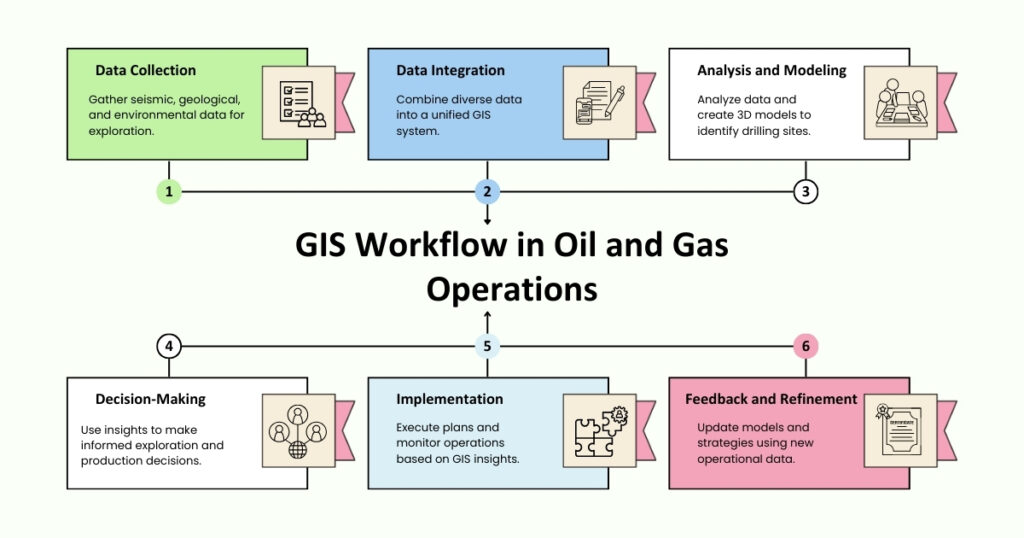
    GIS Workflow in Oil and Gas Operations

    What is the Role of GIS mapping services in the Oil and Gas Sector?

    GIS plays an important role in streamlining operations and saving costs in the oil and gas sector, we will discuss each factor in detail through the below-mentioned pointers:

    Exploration and Production (E&P)

    • This is the first stage in the oil and gas lifecycle; GIS here helps to integrate historical records, geological maps, seismic data, etc., to create effective reservoir modeling.
    • With these integrations, we identify locations for resource extraction and drilling. It helps in improving the accuracy of finding drilling locations and results in reduced exploration risks.
    • Reservoir modeling: a GIS mapping services feature helps visualize and model the size of the reservoir so accurate production estimates can be made.

    Asset Management and Infrastructure

    • Asset Management and Infrastructure in the Oil and Gas Sector with GIS is important for cost-effective infrastructure management, including storage, refineries, pipelines, rigs, etc.
    • Through spatial databases, GIS helps in asset maintenance and tracking. Operators can effectively determine on one single platform how the asset will be distributed across geographic locations, such as the exact location of pipelines, storage tanks, etc.
    • GIS technology also aids in optimized infrastructure planning by enabling optimal site selection, environmental considerations, and cost optimization. Additionally, it reduces risks through data integration from drones and satellites, allowing for in-depth inspections, particularly in offshore rigs and remote pipeline locations.

    Pipeline and Route Optimization

    • In the oil and gas sector, pipelines are the foundation for transporting crude oil, natural gas, and other petroleum products over long distances that can be challenging. Here, GIS plays a role in route optimization through planning and design, which is done by geospatial analysis of factors like terrain, land use, and environmental sensitivity. Route optimization is done for cost savings and less environmental disruption.
    • Listed below are a few important features offered by GIS for pipeline and route optimization.
      • Terrain and elevation analysis through slope stability analysis and analysis of elevation profiles
      • Integrating existing pipeline networks and faster access to maintenance facilities. Through predictive maintenance, one can perform a better assessment of temperature variations, terrain type, seismic activity, etc.
      • Enhancing risk management and safety through population density analysis, identification of high-risk zones, emergency response planning, etc.

    Field Data Collection and Remote Sensing

    • Integrating field data collection and remote sensing with GIS mapping enables remote data acquisition using satellite imagery, LiDAR, and aerial photography. This approach captures large-scale data over pipelines, refineries, and infrastructure. Additionally, UAVs equipped with GIS sensors provide in-depth data collection, enhancing overall accuracy.

    • Other key aspects include real-time field data collection through GPS integration and geotagging, environmental impact monitoring, sensitive ecosystem tracking, regulatory audits and inspections through data maps, etc.

    Seismic Data Analysis and Fault Line Mapping

    • Integrating GIS in India with seismic data analysis enhances vibrational data acquisition, and then we use geophones or hydrophone sensors to collect information on wave reflection.
    • Integration data also helps engineers analyze subsurface geological formations in 2D or 3D form.
    • GIS integrates seismic surveys, geological maps, and satellite imagery, which helps identify fault lines so that companies can make changes in drilling plans, develop stronger infrastructure, and develop safety protocols to mitigate the impact.

    Advantages of GIS mapping services in the Oil and Gas Sector

    The geographic information system helps the oil and gas sector by integrating tools that help in data management through data layering, emergency response planning, data sharing and collaboration, and more. Listed below are some key advantages:

    • Optimized Exploration and Drilling Operations
    • Supply Chain and Logistics Optimization
    • Enhanced Pipeline and Infrastructure Management
    • Sustainability through Optimized Resource Utilization
    • Reduction in Maintenance Costs
    • Enhanced Emergency Response and Incident Management
    • Enhanced Communication and Collaboration

    GIS Innovations and Trends Integrated by GIS Companies in India

    Listed below are a few upcoming GIS trends and innovations contributing to the transformation of the oil and gas industry:

    • Real-time data integration, such as satellite imagery and IoT sensors
    • AI and Machine learning for anomaly detection and optimization
    • Advanced geospatial analytics such as 3D modeling and spatial analysis
    • Blockchain for Data Security
    • Remote Sensing and UAVs through high-resolution aerial imagery and data collection
    • Enhanced reservoir modeling that helps in accurately predicting oil and gas reserves.

    Conclusion

    Integrating GIS technology in the oil and gas industry not only enhances operational efficiency but also transforms how we manage and ensure our resources and safety. By utilizing advanced spatial data analysis and innovative technologies, companies can achieve precise monitoring, proactive maintenance, and optimized resource usage. This strategic integration drives significant improvements, offering a competitive edge and unlocking new levels of operational excellence. Using these GIS capabilities could redefine your approach to industry challenges, setting the stage for future advancements and sustained success.

    If you are looking to capitalize on the benefits of GIS mapping services in the oil and gas industry solutions, then getting expert guidance from  SCS Tech India can be an optimal decision. Their solutions enhance precision, streamline management, and drive innovation, giving you a competitive edge while maximizing efficiency.


    FAQ

    • Can GIS help in predictive analytics in the oil and gas sector exploration?

    Yes, GIS technology helps in predictive analytics in the oil and gas sector exploration by integrating historical data with geospatial information, subsurface mapping, geological risk assessment, hydrocarbon movement prediction, and more.

    • Do GIS mapping services help in risk management in the oil and gas industry?

    Yes, GIS mapping services help in risk management by identifying high-risk zones, real-time monitoring of assets through drone and satellite monitoring, seismic risk prediction by spatial analysis, etc.

    • What are the innovations GIS companies in India are focusing on to transform the oil and gas sector in India?

    GIS companies in India are focusing on innovations like advanced remote sensing and satellite imagery, 3D reservoir modeling, seismic data integration, scalable cloud GIS platforms, hybrid energy systems, and more.

    • How can we use GIS technology in pipeline management in the oil and gas sector?

    GIS technology is important for pipeline management in the oil and gas sector as it helps detect leaks, corrosion, and pressure anomalies, ensure pipeline safety, reduce environmental risks, etc.

    (more…)

  • Can Disaster Management Software Protect Your Business from Unexpected Crises?

    Can Disaster Management Software Protect Your Business from Unexpected Crises?

    As per the Industry Growth Insight Report, the global emergency disaster management software market is expected to grow at a CAGR of 10.8% from 2018 to 2030. The global emergency disaster management software is divided into two segments, i.e., local deployment and cloud-based.

    As per the report, the cloud-based segment is expected to grow at a faster rate during the forecast year due to increased concerns in enterprises for potential crises that may occur due to natural disasters like hurricanes, earthquakes, and cyber attacks, which can result in severe damage and business losses.

    As businesses have started to understand the need to be prepared for the unexpected, the question arises: Can disaster management software predict natural disasters and shield your businesses from unanticipated catastrophes? This blog sheds light upon its various uses, advantages, disadvantages, and how disaster management software can play a significant role in safeguarding during times of crisis.

    Understanding Disaster Management Software 

    Disaster management software is a great tool to prepare, respond, and recover from situations of crisis by emphasizing decreased levels of risks, clear communication, synchronizing emergency responses, and supervising recovery efforts efficiently. It essentially serves as a unified platform for administering all aspects of crisis management.

    The key aspects of disaster management software comprise of:

    • Risk Assessment: Disaster management software offers tools and techniques for risk assessment like qualitative and quantitative assessment, risk mapping, scenario analysis, failure mode and effects analysis (FEMA), SWOT analysis, and more. Listed below are crucial steps integrated into disaster management software for risk assessment:
    • Threat Identification
    • Vulnerability Analysis
    • Risk Analysis and Score Generation
    • Visualization and Risk Mapping
    • Forecasting and Scenario Analysis
    • Risk Mitigation Planning
    • Monitoring and Alert Generation
    • Reporting and Compliance
    • Emergency Response Planning: This aspect focuses on creating and implementing strategies to manage the disaster effectively through customizable templates so the organization can plan out the action as per the scenario, simulation, drills, incident management software integration, plan adaptation, real-time updates, and focusing on post-incident review for identifying areas of improvement.
    • Communication Tools: Disaster management software includes various communication tools like mass notification systems, GIS for disaster management based communication, incident management platforms, etc., that help mitigate the risk by sharing real-time information and coordinating effectively.
    • Recovery Management: The software helps in reducing the intensity of damage and restarting the operations by adding supporting recovering management features that integrate the following solutions and tools:
    • Business Continuity Planning Tools
    • Resource Management Tools
    • Data Recovery and Backup Solutions
    • Recovery Point Objective (RPO) Tracking
    • Recovery Time Objective (RTO)

    Benefits of Disaster Management Software

    Disaster management software extends various advantages that are vital in maintaining the continuity of business operations, which are discussed below:

    • Efficient Response and Recovery: Disaster management software helps simplify the response and recovery phase by utilizing pre-defined response plans and related resources to subjugate any crisis successfully.
    • Compliance and Reporting: Several industries demand compliance with certain regulations concerning the management and reporting of crises. Disaster management software acts as an aid in the fulfillment of these requirements in reporting, documentation, and auditing.
    • Enhanced Communication: Disaster management software provides the necessary communication tools to ensure clear and consistent communication, which eliminates the risk of delayed response, thus resulting in a unified and collectively coordinated response.
    • Proactive Risk Management: This involves the engagement of advanced analytics and data visualization tools to recognize potential risks involved before they develop into a major crisis.  This approach promotes the advanced implementation of risk alleviation strategies.

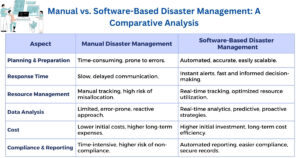
     Comparison of Manual vs. Software based disaster management

    Challenges And Limitations Of Disaster Management Software

    Let us understand the limitations of disaster management software that have a significant impact on the business’s decision-making ability and its implementation:

    • Human Factor: Human errors such as wrong data entry, misinterpreted information, etc. are a major risk in diminishing the efficacy of disaster management software. Therefore, businesses must ensure timely and appropriate training to employees to ensure a smoother resolution of the crisis involved.
    • Initial Costs and Implementation: The initial execution of this software can be costly for enterprises with budget constraints. These costs include integration, customization, and regular maintenance of the software.
    • Complexity and Training: Disaster management software emphasizes proper training of their employees to harness their true potential to the advantage of the organization. However, the complexity of this software often results in employees sticking to the old traditional ways to resolve crises.
    • Dependence on Technology: Technology is a powerful tool, but it can lead to various risks. Heavily relying on disaster management software can be concerning if all the software gets jeopardized. To avoid such difficult scenarios, businesses must have detailed backup plans to ensure smooth functioning.

    Future of Disaster Management Software

    Artificial intelligence (AI) and the Internet of Things (IoT) are becoming a crucial part of the evolving landscape of disaster management software due to the unique features they offer.

    AI helps in improving risk assessment by easy dissemination of large sets of data, which helps in predicting and preventing potential crises that may occur shortly. On the other hand, IoT devices offer the collection of real-time data which promotes quick and accurate responses.

    Businesses can expect to increase their potential manifold through the successful integration of these latest technologies into disaster management software.

    Conclusion

    Any enterprise can struggle with unexpected crises that can negatively impact its business operations. Disaster management software acts as a savior in navigating through such crises successfully by providing the necessary resources and solutions to safeguard assets and ensure the continuity of business operations, along with quick and informed decision-making.

    Partnering with a technology provider like SCS Tech India can significantly amplify your benefits of disaster management software while ensuring that the organizations are provided with innovative solutions and required tools to handle any unforeseen emergencies successfully, whilst focusing on speedy recovery and business continuity.

    FAQs

    Is disaster management software suitable for small businesses?
    Yes, disaster management software is suitable for businesses of all sizes, including small businesses.

    Does GIS help in natural disaster management?
    Yes, GIS in disaster management as it helps in giving real-time data, so efficient resource allocation can be done by mapping out the prone areas, predicting the impact level, and creating a recovery plan.

    How does disaster management software integrate with other systems?
    It is integrated into businesses through human resources, information technology, and communication platforms.

    (more…)

  • How AI Technology Companies Can Drive Digital Transformation in Enterprises

    How AI Technology Companies Can Drive Digital Transformation in Enterprises

    Is your business ready to capitalize on the AI revolution?

    In 2023, the artificial intelligence market was valued at USD 196.63 billion and is expected to grow at a CAGR of 36.6% from 2024 to 2030. This expeditious growth reflects the role of digital transformation and its significance for organizations to remain competitive in the market to survive and grow exponentially. As companies adapt to this evolving landscape, AI technology providers are emerging as pivotal players in facilitating smooth digital transitions.

    Artificial intelligence (AI) technology companies are providing the resources and expertise according to their specifications and requirements and establishing a smooth integration with the current systems of the organizations. This blog focuses on how these AI technology companies promote digital transformation and their significant impact on various industries.

    Understanding Digital Transformation

    Digital transformation involves incorporating digital technology in all facets of the business, which directly impacts the services provided to the customers and the day-to-day business operations.

    The significance of digital transformation cannot be underestimated because technological developments are happening at quite a fast pace. Such drastic advancements can be easily introduced in enterprises through digital transformation, which in turn enables fulfillment of customer expectations, streamlining business operations, taking data-focused decisions, and designing personalized experiences for the customers. However, implementing digital transformation has its shortcomings, which can be eliminated through artificial intelligence.

    The Role of AI in Digital Transformation

    Artificial intelligence is a great tool to enhance an enterprise’s efficiency, productivity, data management, and decision-making while also encouraging innovations and relevancy, further supporting growth and the creation of new opportunities across various industries, which can be seen as:

    1. Customer Service: AI is rebuilding customer service by providing AI-powered 24/7 ChatBot, to enhance customer experience and satisfaction.
    2. Automation: AI-driven automation decreases the time and effort to complete various tasks, thus reducing the human efforts to focus on strategic tasks and other complicated workflows.
    3. Data Analytics: Data is the new oil, and AI-driven data analytics helps businesses extract the best information to foresee trends and improve decision-making, playing a major role in industries like healthcare, finance, and retail.
    4. Predictive Maintenance: The manufacturing and logistics sectors benefit from AI as it helps in the maintenance of systems and machinery by forecasting the likelihood of failure through data sensors and other sources, which promotes timely preventative measures.

    How AI Technology Companies are Acting as a Catalyst

    AI technology companies act as catalysts because they have the resources, tools, and expertise for the successful integration of AI in enterprises. Here are some ways that AI technology companies are promoting digital transformation:

    1. Creating AI Ecosystems: AI technology companies are building ecosystems of partners, clients, and customers, which results in a network of creativity and teamwork, thus promoting the age of digital transformation.
    2. Providing Advanced AI Tools and Platforms: AI technology companies develop and provide such advanced resources to utilize the full potential of AI as well as promote smooth integration of AI in business operations.
    3. Providing Customized Solutions: AI caters to the distinctive objectives and challenges of each business and delivers appropriate solutions by closely administering those problems.
    4. Educating and Training Enterprise Teams: Correct knowledge and skills are equally significant as technology to implement AI effectively. AI technology companies organize various workshops and training sessions for such teams to advance their AI expertise.

    Key AI Technologies Promoting Digital Transformation

    Let us understand various AI technologies and their impact as a driving force in digital transformation:

    1. Computer Vision: This technology enables computers to comprehend visual information, just like human vision, from the external world and successfully streamline operations that depend on visual input. For example, facial recognition and quality checks in manufacturing units.
    2. Robotic Process Automation (RPA): This technology eliminates human error by automating redundant tasks such as data entry, etc., thus promoting accuracy and directing those extra efforts toward building customer satisfaction and innovation.
    3. Machine Learning and Predictive Analysis: This technology forecasts outcomes based on large datasets, which helps businesses predict future trends, resulting in enhanced decision-making, efficiency, and a notable competitive advantage.
    4. Natural Language Processing: This AI technology interprets human language, which enables the enterprise to transform its customer service by closely analyzing their comments, reviews, and sentiments, which further promotes clear communication and a better understanding of customer expectations.

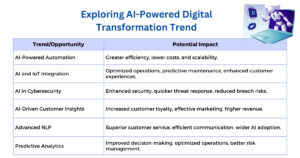
     AI-powered trends

    Conclusion

    AI technology companies are a major driving force in bridging the gap between human capabilities and technological innovations by engaging employees in various training and development programs to enhance their AI skills, thus cultivating an environment of continuous learning and innovation within the organization.

    In this age of digital transformation, SCS Tech India brings forth the right kind of opportunities, knowledge, and assistance to develop such effective AI systems that not only benefit the company’s goals but also focus on developing fair, transparent, and trustworthy systems that directly help in building and attracting a genuine and solid clientele and materialize lucrative opportunities.

    FAQs

    Do AI technology companies offer ethical AI integration?
    Yes, they strictly follow the laid down guidelines and practices which ultimately protect them from any legal or reputational hazards.

    Which sector benefits the most from digital transformation fueled by AI?
    It can be an excellent transformation for any sector but is favorable for the manufacturing, healthcare, finance, retail, and logistics sectors.

    What are the shortcomings that organizations face while implementing AI?
    Enterprises frequently encounter obstacles, including data integration, insufficient knowledge of AI, exorbitant implementation expenses, and worries about data ethics and privacy.

  • What to Look for When Choosing a GIS Mapping Service Provider

    What to Look for When Choosing a GIS Mapping Service Provider

    The GIS market is on track to hit $14.5 billion by 2025, fueled by its growing impact across sectors like transportation, space exploration, automotive design, and smart city planning. With such explosive growth, GIS is quickly becoming indispensable for industries looking to innovate and lead.

    This growth reflects that enterprises are now increasingly relying on GIS mapping services to enhance predictive modeling, optimize operations, and support strategic decision-making. As the demand for GIS solutions rises, selecting the right service provider becomes a critical focus on GIS mapping services that can offer precise geographic data to boost predictive modeling capabilities, optimize operations, and improve decision-making processes.

    Companies are focusing on GIS mapping service providers who not only offer robust systems that analyze, integrate, and display spatial or geographical data but also give tailored-based services as per the project demand to achieve business objectives. In this blog, we will focus on key factors that one should look for before selecting a GIS mapping services provider.

    Key Factors To Consider While Choosing A GIS Mapping Service Provider

    #1 Technical Expertise and Level of Qualification

    Delivering high-end GIS mapping services depends on skilled professionals who can efficiently handle GIS tools and technologies like big data handling, AI-driven geospatial analytics, etc., along with specialized projects like advanced spatial modeling. It is important to check that the service provider has a certification like GIS Professional (GISP).

    #2 Data Quality and Accuracy

    The data quality and accuracy are integral parts of GIS mapping as they impact the insights derived from spatial analysis. Poor-quality data can lead to increased GIS project costs and incorrect analysis, which can lead to wrong decisions.

    The following factors can be checked:

    • Check that the provider uses authoritative data sources and has a robust validation process, thereby maintaining quality and accuracy.
    • Look for providers offering in-depth metadata with information regarding data source, accuracy level, collection data, etc. to assess reliability.
    • Check whether the service provider is adhering to standards related to data accuracy set by various ISO or related bodies.
    • With a dynamic technological landscape, check that the provider is offering advanced data collection tools for better quality, like LiDAR, UAVs (Unmanned Aerial Vehicles), etc.

    #3 Service Offerings

    While choosing a GIS mapping service provider, it is important to explore what specialized and end-to-end services are offered and how they are aligned with your goal and can help you improve results. The key services offered by a GIS provider one can look for are given below:

    • End-to-end services, from the gathering of data to its processing, mapping, and final reporting for efficient project workflow, are the core services to be offered by GIS mapping service providers.
    • The service provider should offer integration of GIS data with other systems, such as CRM or ERP systems, for better utilization of data in enterprise operations.
    • Evaluate whether specialized services, like 3D modeling and visualization, are offered, mainly for urban planning/development and infrastructure-related projects. For projects involving customer mapping or asset management, the service provided should be able to provide geocoding and address matching.

    #4 Customer Service And Training

    The GIS mapping service provider should be able to offer the required customer service and training so that better utilization of GIS tools can be done to achieve the desired project outcomes. The key parameters to be looked at under the customer service and training component are

    • 24/7 Customer Support Service
    • Fast Response to Reduce Downtime
    • Comprehensive training programs, including workshops, webinars, etc.
    • Industry- or project-specific training
    • Training materials such as user manuals or video tutorials.
    • Effective feedback mechanism

    #5 Cost Structure

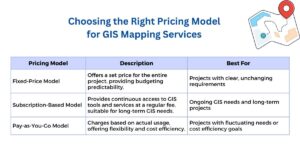
    While choosing a GIS mapping service provider, it is important to understand the different pricing models and how they align with your project and financial budget. In the chart below, different pricing models with key features and the right project alignment are mentioned.

    GIS Mapping services pricing model

    Other than the pricing models, cost transparency should be maintained by the service provider by highlighting the upfront fees and hidden costs like advanced customer support, data storage requirements, etc., so the organization can effectively manage contingency expenses.

    #6 Emerging Trends And Innovation Integration

    Staying updated with recent trends and innovations in GIS mapping that can be implemented in your enterprise and selecting the service provider as per the requirement is crucial for informed decision-making.

    Some of the latest innovations on the market are:

    • Real-time analytics
    • 3D GIS for better spatial visualization
    • Improved predictive analytics through machine learning and AI
    • Cloud-based GIS solution for scalability, better accessibility for remote teams, and flexibility
    • Geospatial Data Fusion to create comprehensive geospatial datasets by combining data from social media, satellites, and other sources.

    Conclusion

    The selection of the right GIS mapping service provider can be complex when you want to integrate specific requirements and advanced technologies.

    Evaluating the right GIS mapping service provider involves various factors, from technical qualification, customization, and integration to scalable solutions, as these factors help in making informed decisions that enhance an organization’s ability to leverage spatial information effectively.

    To ease out the process, consult experts from SCS Tech India to navigate the complexities and implement innovative approaches to optimize your spatial data management and have a competitive edge in the market by leveraging GIS technologies for your projects.

    FAQs

    1. What is the role of customer service when selecting a GIS mapping service provider?
      Customer service plays an important role when selecting a GIS mapping service provider for various factors like addressing issues promptly, offering required training, assisting in technical changes, and more to enhance the overall experience.
    2. What costs are involved in GIS mapping services?
      GIS mapping services include costs such as initial setup costs, software licenses, purchasing data, customizing the system, and fees involved in continuing support and maintenance.
    3. Are there any latest trends I should look after before choosing GIS mapping services?
      Yes, the current trends in GIS mapping services one should be aware of are real-time data processing, integration of machine learning for data analysis, 3D and VR mapping technologies, edge computing, and more.
    4. What are the core components of GIS mapping?
      The core components of GIS mapping include spatial data, hardware, GIS software, and database management. (more…)
  • The Role of GIS Companies in Smart City Initiatives

    The Role of GIS Companies in Smart City Initiatives

    With over 55% of the world’s population now living in urban areas, the success and sustainability of these regions depend heavily on how well cities can manage their resources and address contingencies. GIS technology provides the backbone for these efforts, offering comprehensive solutions for urban planning, infrastructure management, environmental monitoring, and public safety. 

    Geographical Information Systems (GIS) technology is a cornerstone of modern urban development and management. GIS companies in India leverage this sophisticated technology to undertake a wide array of critical tasks—from designing and planning new urban spaces to the redevelopment of heritage cities. 

    In this blog, we discuss the multifaceted roles of GIS companies in India, emphasizing their contributions to smart city development and the extensive benefits they offer to urban environments. From economic growth and business support to transportation management and disaster response, GIS technology is revolutionizing how cities operate and thrive in an increasingly complex world.

    Significance of GIS Companies in the Smart City Framework

    Both small and large GIS companies in India offer essential tools and services for smart city development. Smaller firms might focus on specific tasks like traffic management, while larger organizations provide a comprehensive range of services from a central hub. 

    The Geographical information system software technology enables the use of locational data to make informed decisions, significantly contributing to smart city initiatives.

    Supporting Local Businesses

    GIS technology assists local businesses in maintaining visibility to potential customers, thereby boosting the economic prosperity of cities. When combined with public utility, topographic, environmental, and demographic data, GIS becomes a powerful tool for various industries. 

    Image Source:

    Applications like Google Maps exemplify how GIS can update information on demographics, public utilities, networks, roads, and local businesses, aiding decision-making processes.

    Environmental Sustainability and Monitoring

    Smart cities strive to be environmentally sustainable, and GIS companies play a crucial role in this by providing environmental monitoring services. The different methods to predict natural disasters used by GIS companies are as follows: 

    • Managing natural resources
    • Tracking changes in green areas
    • Mapping pollution levels

    Additionally, GIS aids in planning water conservation, waste management, and renewable energy projects, fostering healthier urban environments.

    Tracking the Water Sources

    A city’s underground and overground water sources are known as the lifeline of its people. Instead of utilizing the invasive process, the GIS companies in India use remote sensors to track down the water flow in the city. This helps identify whether or not a drought or impending flood occurs because of construction work.

    Response to Emergencies and Public Safety

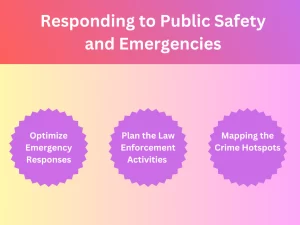
    GIS-based tools enhance public safety and emergency response capabilities by integrating spatial data with incident management systems. GIS companies enable authorities to: 

    • Optimizing the emergency responses
    • Planning out the law enforcement-related activities
    • Mapping all the crime hotspots

    If there is a natural disaster, the GIS companies in India will use the incident command system in disaster management to coordinate rescue efforts, resource allocation, and damage assessment. This will lead to an efficient and instant response, aid recovery, and reduce loss.

    Economic Developments

    Through a detailed spatial analysis, companies can use GIS technology to find the best opportunities for economic development. Cities can pull in businesses by displaying their market potential, demographic trends, and real estate.

    GIS will also help in supporting tourism as it can point out all the amenities and attractions in a city, which will contribute towards economic growth.

    Transportation and Traffic

    For all the smart cities, managing traffic is highly essential. GIS companies can use the GIS system to analyze traffic patterns, manage public transportation systems, and optimize routes.

    These companies will also be able to integrate the GIS devices into the GIS platforms to deliver live updates on the traffic. This will enhance mobility and alleviate congestion.

    Urban Development and Planning

    Image Source:

    With the help of GIS technology, companies can help with the interpretation of spatial data, analysis, and visualization. All these things are compulsory for urban planning.

    Many planners utilize this particular technology to map the present infrastructure, model upcoming developments, and assess land usage.

    By doing so, planners can make correct decisions on environmental management, public-related services, and zoning the transportation networks.

    Understanding the Benefits of GIS Technology

    The GIS technology is equipped with countless advantages, and the table below will give you detailed information on them.

    GIS Technology Benefits The Description
    Disaster Management Emergency planning and risk assessment can improve response and preparedness during natural disasters.
    Market Analysis  Analysis of spatial data and demographics will help support the marketing approaches and business locations.
    Visualization Offering a visual representation with maps can improve communication and understanding. 
    Agriculture Provides support for crop management and accurate farming and helps monitor all agricultural activities.
    Education Helps in offering various tools for teaching environmental science, geography and many other fields.
    Crime Mapping Aids in analyzing all the crime patterns to improve public safety and law enforcement.
    Utility Management Helps in managing the infrastructure with numerous utilities like gas, electricity and water.
    Historical Preservation Enables the management and preservation of all the cultural heritages and historical locations. 

    Final Thoughts

    The GIS companies in India play a completely multifaceted part In the smart city industries. The GIS-based devices and tools that they have in store are compulsory for creating livable, sustainable, and efficient cities. This will make the GIS companies indispensable partners in the smart city environment. 

    Furthermore, at SCS Tech India PVT Ltd, we offer GIS-based solutions and services across the globe. Leveraging avant-garde technology, our offerings include enterprise solutions, cloud computing, eGoverance, blockchain solutions, IT infrastructure, digital transformation, and utility and energy solutions. 

    Our innovative services and solutions establish a robust digital foundation in today’s transformed world. Take advantage of our services across diverse sectors, including agriculture, education, finance, and healthcare. Get in touch with us to learn more!

  • Digital Transformation and Cybersecurity: Mitigating Risks in the Digital Era

    Digital Transformation and Cybersecurity: Mitigating Risks in the Digital Era

    The digital transformation is in full swing, and the pace at which companies are moving to the age of automation, cloud services, and smart things seems unstoppable. As we have seen, this digital transformation, which propels efficiency, superior customer experiences, and competitive advantage, has given birth to a vast digital landscape teeming with opportunities for exploitation.

    Cyber criminals come up with more sophisticated modes of attack as new technologies emerge, this increases new avenues of attack. To adapt to such an environment, there is a clear need for organizations to focus on and uphold strong cybersecurity. 

    By employing carefully devised measures to manage risks and prevent adverse occurrences, companies can safely preserve vital information needed to sustainably advance digital transformation initiatives. Effective risk mitigation demands a holistic approach to cybersecurity, embedding robust security practices into every facet of digital transformation. 

    This blog offers insights into the critical interplay between digital transformation and cybersecurity, highlighting strategies to protect organizational assets and ensure a secure, resilient digital future.

    The Risks of Digital Transformation

    Digital transformation often involves:

    Cloud adoption

    This resulted in new considerations to data and application security when migrating them to the cloud since the cloud provides scalability and agility.

    Increased reliance on interconnected devices

    The use of IoT increases risks, as the number of connections and points of attack possibilities increases.

    Integration with third-party applications

     When using extensions one can also create loopholes through which unauthorized persons can access the network in case adequate measures have not been taken.

    Evolving business models

    New digital initiatives can bring new and unforeseen security threats to the floors which need to be addressed based on the current security measures.

    These factors contribute to a vast and dynamic landscape of potential targets for hackers and cyber attackers. Cybersecurity threats such as stolen data, malicious software invasions, and ransomware threats are a risk for business entities that participate in the digital transformation.

    Strategies for Mitigating Cybersecurity Risks

    Altogether despite these challenges, they are not challenges that cannot be overcome. Therefore, with an effective proactive cybersecurity plan in place, organizations can deal effectively with the challenges present in the connected business world. 

    Security by Design

    To mitigate risk in the context of digitalization, it is crucial to apply security concerns to every step of the process of transformation. Ensure an adequate level of security before integrating solutions and technologies into an organization.

    Zero Trust Architecture

    Adopt a Zero-Trust approach concerning the IT environment, thereby requiring the validation of every user and endpoint attempting to connect to the network no matter their location.

    Continuous Monitoring and Threat Detection

    Take cybersecurity to another level by employing security solutions for permanent vigilance of systems and networks. Invest in threat intelligence to keep up with emerging different threats that are common nowadays.

    Data Security and Encryption

     Formulate strong data security measures such as data encryption and proper access control measures. Always backup your important data and the company should have a disaster recovery plan.

    Employee Awareness and Training

     Most organizations must train employees as initial responders in case of a cyber threat. Ensure that the employees undergo constant security awareness training to inform them about the existing security hazards and how to prevent them from happening.

    Prioritize Patch Management

     It is also important to always update software and firmware on all the devices and systems to cover for the several cracks that the hackers may be liable for.

    Incident Response Planning

    Explain the guidelines of the incident response programs that consist of steps of how to detect, respond to, and deal with cyber incidents.

    To learn more about the security tips to avoid cyber breaches, visit this link.

    The Future of Digital Transformation: Security as a Competitive Advantage

    When cybersecurity is being given due consideration during the process of digital business transformation, companies not only protect themselves from more dangers but also gain an edge. Here’s how:

    Enhanced Brand Reputation

    Establishing and practicing a strong cybersecurity ethic from a company helps establish customer and partnering trust.

    Improved Business Continuity

    A good cybersecurity positioning keeps an organization from experiencing disruptions in business due to cyber incidents.

    Compliance with Regulations

    Various types of industries have some specifics regarding the protection of data privacy. Adopting sound cybersecurity controls can play a significant role in enabling organizations to address these regulations.

    Innovation and Growth

    Practical security solutions create the right environment that enables organizations to adapt to emerging technologies and foster digital transformation.

    Investing in a Secure Future

    The opportunities of the digital environment are vast and the world has not yet witnessed the full potential of the digital environment but, as we know it, along with these opportunities there are prevailing and growing threats of cyber security threats. Therefore, in undertaking the digital transformation journey, businesses have to be aware of these risks and then design a strong cybersecurity approach to counter them.

    Stay ahead in the digital era by prioritizing cybersecurity in your digital transformation journey. We offer digital transformation services and expert solutions to safeguard your organization against emerging threats. Contact us today to learn how we can help you build a secure and resilient digital future.


  • Overcoming Challenges: Implementing Robotic Process Automation Successfully

    Overcoming Challenges: Implementing Robotic Process Automation Successfully

    Implementing Robotic Process Automation (RPA) presents transformative opportunities for businesses aiming to streamline operations and enhance efficiency. When you think of a world in which every worker never gets tired and can do repetitive tasks with zero mistakes. RPA is no different, as it carries a similar tagline and guarantees businesses solutions that will make them run smoother and cost less. Sadly, the road towards RPA realization is not always lined with rainbows and butterflies. However, achieving successful RPA integration requires navigating a range of challenges, from selecting appropriate processes for automation to managing change within the organization. 

    Therefore, overcoming these technical difficulties such as process mapping, API integration, and error handling would create the foundation for RPA, thereby ensuring the achievement of excellence in automation.

    This blog delves into the strategies and best practices essential for overcoming these hurdles, providing a roadmap for harnessing the full potential of RPA to drive operational excellence and innovation.

    Challenges of Robotic Process Automation Implementation

    Even though RPA has great potential, a few challenges may hamper the successful implementation of RPA.

    Process Inefficiency

    It is crucial not to automate an inefficient process, as it makes pre-existing issues worse. A process in its optimal state should first be designed and structured to allow the technology in robotic process automation to work as efficiently as possible.

    Inadequate Skills and Resources

    Lacking a team of competent workers who have specialized in process analysis, RPA technology, and change management will be a letdown when it comes to implementing RPA. Lack of such skills may be a definitive threat to the success of the project.

    Integration Issues

    RPA bot integration with IT is possible, and companies may face some challenges while integrating bots with other systems of the enterprise. There are compatibility and data security issues that may hamper its proper functioning to be addressed.

    Resistance to Change

    Workers may fear that as automation advances, the job market will shrink and cut out positions for people to fill. Through discussions concerning training, communication, and emphasis programs that seek to reskill staff, incidences of resistance and non-adoption can be reduced.

    Data Security and Governance

    The important thing to note is that even in most RPA processes, the use of personal data is inevitable. To reduce security risks, it is essential to use prepared security measures, such as user rights, data security, and controls, as well as security updates and scans.

    Overcoming the Obstacles: A Roadmap to Successful RPA Implementation

    By proactively addressing these challenges, you can pave the way for a successful RPA implementation:

    Define a Clear Strategy

    Begin by developing an effective and strategic RPA framework. Suggest measurable and achievable objectives, determine the areas that could be best suited to automation, and carefully analyze the ROI.

    Focus on Process Optimization

    When using RPA as part of the robotic process automation strategy, it is crucial to assess the process to be automated and enhance it to achieve the best results with minimal glitches.

    Build a Strong Team

    Constitute a team with the ability to complete the project as planned. If the company does not have a strong internal team, then it might be a wise decision to hire RPA specialists or outsource the task to a provider that has the necessary experience.

    Prioritize Integration

    Assess existing functionalities and ensure the selected RPA tools are compatible with the IT infrastructure. Create a sound integration plan and work on integration issues especially those of data security.

    Embrace Change Management

    User adoption is crucial to every RPA implementation plan and strategy. One should ensure that change management practices such as communication, training, and tackling employee issues are exercised and should talk about how RPA will enable higher-value work.

    Start Small and Scale Up

    First, try to establish a well-understood, low-risk process to illustrate the potential of RPA and gain trust. Once you hit the initial levels of success, it is possible to invest in better systems to handle more advanced tasks.

    Moreover, A McKinsey report published in 2023 shows that 80% of executives interviewed argued that automation would likely disrupt their organizations and industries by 2030. This raises a bar showing the gradual realization that RPA is indeed a plausible way of enhancing productivity, minimizing errors, and enhancing staff happiness.

    The Benefits of Successful Robotic Process Automation Implementation

    By overcoming these challenges, you can discover the true potential of RPA and experience a range of benefits:

    Increased Efficiency

    Robotic process automation can work on monotonous tasks to reduce the burden on employees and utilize their time on more significant responsibilities. This means there is increased efficiency and hence better results are achieved.

    Reduced Errors

    RPA bots offer a means of reducing manual errors to enhance data credibility and procedures’ quality.

    Enhanced Employee Satisfaction

    Hounding routine tasks means employees can engage in more complex and interesting work to enhance their work satisfaction.

    Cost Savings

    Less time is required for processing, fewer mistakes occur, and the functioning of organizational processes becomes more smooth; all of these factors lead to decreased organizational costs.

    Improved Customer Satisfaction

    More efficiency and fewer mistakes mean shorter times while fulfilling orders and better interactions with customers.

    To learn about how these RPA Services are implemented, visit this link.

    Investing in Your Future – Embracing RPA for Success

    Robotic Process Automation is not an ultimate solution, but when effectively managed, it is a powerful tool for change. Likewise, when considering the challenges, following the guidelines of the recommended actions, and shifting towards the adoption of a user-centered strategy, one may integrate RPA into an organization and experience the benefits of a more efficient, productive, and prospective business.

    Get in touch with us to know more about how you can implement intelligent automation by utilizing the expertise of RPA tools and automation services


  • The Impact of eGovernance Solutions on Government Efficiency

    The Impact of eGovernance Solutions on Government Efficiency

    Amidst the global surge of globalization, citizens worldwide are increasingly cognizant of their rights, pressing for transparency and efficiency from their governing bodies. To meet these burgeoning demands, traditional structures are no longer found ill-equipped to meet these burgeoning demands for streamlined public service delivery.

    In this dynamic landscape, the imperative for innovative models and systems like eGovernance has never been more pronounced. eGovernance solutions have fundamentally heralded a seismic shift in the efficiency and efficacy of governmental operations.

    This blog serves as a dedicated exploration into the transformative power of eGovernance solutions, illuminating how these advanced technologies redefine organizational performance, drive cost-efficiency, and ultimately shape a government sector that is not just efficient but also citizen-centric.

    Unveiling the Efficiency Powerhouse: eGovernance Solutions

    E-Governance, also called digital governance, focuses on using Information and Communication Technology to improve governmental processes, enhance transparency, and handle its operations and services. This encompasses a wide range of solutions, including:

    Online portals

    These simplified and easily accessible platforms create an opportunity for citizens to receive information and perform various tasks at any time. Whether it is getting a renewed license or applying for a permit, online portals enable citizens to do so as and when they want to do it.

    Data management systems

    Due to an intervention of an eGovernance solution, data is captured across departments to form a coherent database. This results in greater efficiency in handling requests, quick decision-making, and proper utilization of resources.

    Mobile applications

    Now that people are busier than ever, mobile apps are a useful way for citizens to interact with their government remotely. It can be very helpful for rural areas or those with little or no internet access in particular.

    Electronic Document Management (EDM)

    These are systems that help in the production, storage, and retrieval of documents. This cuts out paper-based systems, which reduces the time, money, and physical space required to store equipment.

    How eGovernance Solutions Enhance Efficiency?

    To understand it better let’s talk about India where the use of digital identification called Aadhaar has transformed the government services delivery system. Aadhaar verification has ensured that those in need of the welfare programs get the support they need through the right channels hence minimizing fraud instances and enhancing the targeting and delivery of social goods. According to estimates by the World Bank, Aadhaar saved over $1 billion of the Indian government’s expenses within a few years of its usage.

    Now let’s discuss in detail about how exactly eGovernance solutions enhance efficiency:

    Reduced Administrative Burden

    The eGovernance solutions replicate functions to reduce paperwork and manual data entry jobs. This saves considerable staff time, so they can handle many other issues and deliver better service to their customers.

    Faster Service Delivery

    By performing transactions online through different applications and portals, citizens can access the services without a problem. This has the effect of cutting the time clients spend waiting and enhancing service provision.

    Improved Decision-Making

    The experience gathered from the eGovernance systems helps governments to make decisions based on data analysis on current or real-time performance. It further helps in the efficient utilization of resources and the proper formulation of policies.

    Enhanced Transparency and Accountability

    One of the very important features of implementing eGovernance is that it provides citizens with easy access to government data and information. This also promotes honesty and efficiency in the public sector as the accountability is shifted to the citizens.

    Even though efficiency is a primary benefit, eGovernance has ripple effects. These solutions promote government-citizen interaction, cut down on government expenditure through the use of technology, and increase favorable conditions for businesses leading to an improved economy.

    The Road Ahead: Embracing the Future of Governance

    E-Governance is not a one-bullet solution; instead, it is an evolutionary model. While embracing the best practices in this field, eGovernance solutions must also adapt to the changes that accompany the progression of technology. Through incorporating innovation and encouraging learning within governmental organizations, governments need to be flexible to meet the continually demanding needs of the citizens within the digital era.

    Investing in eGovernance Solutions: A Wise Choice for a Brighter Future

    It is not only about the realization of eGovernance solutions but also about the creation of future governance landscapes. Technology, when adopted fully in the governance processes, provides a more efficient, accountable, and participative society. This, in turn, helps to strengthen the trust between the citizens and their government, which is the key to a better life and a more sustainable future.

    By investing in eGovernance solutions, governments can create a more efficient, transparent, and citizen-friendly environment.

    Contact us today to learn how SCS Tech India’s tailored solutions can enhance public sector service delivery.

  • Role of AI in Agriculture & Technology – An Expert Overview!

    Role of AI in Agriculture & Technology – An Expert Overview!

    Agriculture, an indispensable pillar of our civilization, stands at a pivotal crossroad, brimming with opportunity amidst escalating challenges of nourishing billions and navigating the constraints of limited resources and climate changes. The Food and Agriculture Organization (FAO) projects that food production must double by 2050 to sustain an anticipated 9.1 billion people.

    In response to this staggering demand, the agricultural sector is embracing cutting-edge innovations, particularly in the realm of technology. At the forefront of this transformation is Artificial Intelligence (AI), driving the evolution of Precision Agriculture. AI’s advanced capabilities offer practical solutions to longstanding agricultural challenges, enhancing efficiency, sustainability, and productivity.

    This expert blog will delve into the pivotal role of AI in agriculture & technology, highlighting how this technology is reshaping farming practices and setting the stage for a more resilient and prosperous agricultural future.

    Power of AI in Precision Agriculture

    Artificial Intelligence (AI) in agriculture represents a significant leap forward in farm management and decision-making. AI encompasses advanced computer systems capable of learning, predicting, and optimizing to meet specific objectives. For farmers, this means unprecedented levels of insight and control over their operations.

    Here’s how AI is revolutionizing precision agriculture:

    Data-Driven Decision Making

    AI can retrieve a lot of information from different sources, such as weather, the state of the soil, and crops, through sensors. It assists in defining some pivotal characteristics in farming, for instance, when it is the best time to plant something, when it is possible to water the fields, and what concentrations of fertilizers have to be used.

    Enhanced Crop Monitoring and Disease Detection

    Some examples of the application of AI services in progressive agriculture methods would be image identification through imagery captured by drones or satellites that signals the early signs of diseases or pests. This becomes possible for the management of pests and thereby minimizes crop losses, as well as the utilization of wide-spectrum insecticides.

    Precision Irrigation Techniques

    Today, there are some possibilities for regulating irrigation systems with the assistance of real measurements of humidity and local prognosis of the weather. This is an advantage since it ensures that crops will only require the right amount of water to grow, and this reduces the wastage of this resource.

    Yield Prediction and Risk Management

    AI models are in a position to help you analyze the data and the condition to predict the yield outcome. It enables farmers to organize themselves more effectively, especially in the storage, transportation, and marketing of the produce. Also, it makes it possible to determine probable risks, which are connected with weather events, and make recommendations, which would help to minimize the impact of potential risks.

    One of the real-world examples to showcase the transformative potential of AI in precision agriculture is The Bayer FieldView Platform, which involves combining data from different platforms and a set of AI-generated analytics to present the farmers with essential information concerning soil quality, crop quality, and prevailing weather conditions. This makes it easy for them to manage efficiencies at the production in a data-driven manner.

    Beyond Efficiency: The Ripple Effect of AI in Agriculture

    The benefits of AI services in precision agriculture extend far beyond increased efficiency and yield:

    Improved Sustainability

    AI promotes the optimum use of resources by reducing the use of water, chemical fertilizer, and pesticides. This, in turn, leads to the improvement of farming technology and, at the same time, encourages environmentally friendly methods of farming.

    Reduced Food Waste

    With the help of artificial intelligence, farmers can find out when they should harvest their crops properly and store them in storage and transportation; this will help reduce wastage. This is because only food that meets the required quality standards is allowed to get to the consumer, and therefore, there is enhanced food security in the world.

    Empowering Smallholder Farmers

    Artificial intelligence is now trending and scalable to even smallholder farmers to capture the benefits of this type of technology. This may help them come to an informed decision, increase their yield, and get better access to markets.

    Creating a Data-Driven Future

    If one then considers the progression of AI services in agriculture & technology, it is critical to acknowledge the fact that the agricultural industry will benefit from a large amount of extremely valuable data. It, therefore, can be utilized to enhance the performance of AI models, which, with time, will help come up with even better solutions to future problems.

    The Future of Agriculture is Intelligent: A Call to Action

    The application of AI in farming is not the work of the distant future but rather the future that is already on the way. Thus, it is essential to acknowledge the possibilities of applying AI services to identify issues in the field of agriculture and construct a foundation for innovative and effective farming. Using the convergence of agriculture & technology will pave the way for a more prosperous and sustainable farming future.

    Are you looking to join the bandwagon of AI transforming agricultural operations? Contact us today to discuss your unique needs and learn how our AI solutions can boost your farm’s efficiency and profitability.