Category: Digital Transformation

  • Need your business to thrive? Learn about key benefits of Data Analysis

    Need your business to thrive? Learn about key benefits of Data Analysis

    Today’s global marketplaces revolve on data, making sense of that data is essential to a company’s success. Failing to do so can result in a company falling behind.

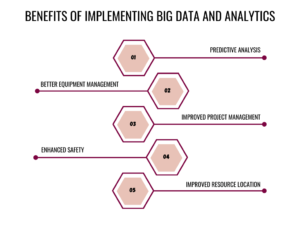
    On its own, raw data doesn’t have much value. To leverage data to their advantage, businesses must apply data analytics, a discipline that systematically examines data in order to discover insights, patterns, and trends. Most businesses are aware of the potential rewards of investing in big data analytics, which promise to increase productivity, reduce costs, and improve decision-making. A recent survey by Micro Strategy found that businesses all across the world use their data for:

    • According to 90% of the business users who took part, their organization’s digital transformation strategies revolve around data and analytics
    • To increase their operations’ cost-effectiveness and process efficiency by up to 60%
    • 57% of businesses say they use data analytics to inform strategy and transformation
    • 52% of businesses use business analytics to track and enhance their financial performance

    What is Data Analysis?

    As a broad phrase, the processing of unstructured data to discover business insights is referred to as data analytics. It makes use of a variety of methods, procedures, statistics, and models. By definition, it is essentially a procedure for looking into raw data in order to derive significant insights. However, the development of AI and ML has caused the area of data analytics to advance at a rapid rate, reaching new heights.

    Usually, the purpose of data analytics is to give a business operational insights. This procedure entails reviewing historical data before applying the lessons discovered within to address the challenging business issues of the present.

    Despite the fact that big data analytics delivers value in a variety of ways, the following are some of its main advantages:

    • Quicker and wiser decision-making: businesses may quickly analyse massive amounts of data and come to wise judgements.
    • Cost savings: using big data technology, businesses can find better methods to conduct their operations and offer a cost-effective data storage solution.
    • A deeper comprehension of customer’s needs: big data reveals insights that assist businesses in identifying customer requirements and assessing satisfaction. This provides businesses with the knowledge they require to create long-lasting client relationships and provide higher-quality goods and services.
    The current state of Data Analysis & Business Intelligence

    For businesses to succeed in the digital economy, data is becoming more and more important. Up to 80% of businesses rely on data for a variety of operations, including product management, fraud detection, finance, human resources, and manufacturing. Data dashboards and visualisations are common in the modern workplace, enabling users to quickly follow performance measures using pre-built reports and filters.

    Organisations could find a wealth of potential hidden in their current systems with the use of data integration technologies. There is a lot of friction in analytics right now. Spreadsheets are frequently used by data workers, who typically utilise four to seven different applications to manage data. This takes a lot of time and increases the risk of errors and data compliance problems. Organisations must find a solution that unifies all data-related activities into a single platform, provides end-to-end data protection and traceability, and is simple for employees to use if they are to reap the greatest benefits from big data.

    How to select right data analytic tools for your business?

    Due to innovative methods like machine learning algorithms, the field of data analytics is expanding to unprecedented heights. Four categories of business analytics currently are:

    • Descriptive analytics
    • Diagnostic analytics
    • Predictive analytics
    • Prescriptive analytics

    It’s challenging to compile a comprehensive list of selection criteria for big data because it applies to such a wide range of use cases, applications, and industries. Build your toolset around the main objectives by focusing on the few business issues or opportunities that will have the most impact, such as real-time asset monitoring or a deeper comprehension of what your customers want.

    Big Data integration tools assist businesses in dismantling data ecosystem silos. When working with data gathered from a variety of IoT endpoints, apps, and data kinds, they are an essential tool for managing and storing data clusters. Although data integration solutions occasionally include stream analytics functionality, they are typically more appropriate for data management.

    It is possible to transform new data into actions. Partner with us to know more about best practices in data analysis. To contact us visit SCS Tech India.

  • Ultimate guide to RPA and the industry response

    Ultimate guide to RPA and the industry response

    Robotic process automation, or RPA, is a crucial component of the digital transformation for corporations and business organisations regardless of their location or function. To comprehend why automation is so beneficial, let’s delve into this brand-new universe.

    • RPA Services: What Are They?
    • How do RPA Services function?
    • RPA – the best solutions for enterprises
    • RPA process benefits

    How do RPA Services work?

    Robotic process automation, or RPA, is a technology that enables businesses to automate some repetitive processes.

    RPA software uses a mix of cognitive processes, automation, and modern technologies (such machine learning and automation). It can be used to carry out straightforward operations like sending an email automatically as well as sophisticated ones that thousands of bots can carry out simultaneously.

    Robotic process automation as a service, or RPAaaS, is a cloud-based, outsourced service that involves the deployment of software robots to handle such repetitive operations without any input from the clients.

    According to recent data on the status of RPA implementation, 78% of those who have previously done so anticipate much more investment in RPA over the following three years. There is obviously a lot to do, and there is a big demand. Let’s examine why.

    How are RPA Services implemented?

    RPA services significantly influence how businesses change and grow. Software robots can navigate systems, identify data, and carry out a wide range of tasks that resemble those carried out by humans. They can complete jobs more quickly and reliably than humans since they are robots, which also don’t make mistakes, get weary, or need breaks. They don’t get side tracked by social media, and they don’t require extra encouragement to get things done.

    RPA technology boosts efficiency, productivity, and accuracy in many corporate operations thanks to these benefits. This is why it became so important for organisations that want to grow, expand, or improve their effectiveness.

    Benefits of RPA processes for businesses

    It is far preferable to adapt RPA and use it in daily work than to hire new workers to perform simple tasks or to assign highly competent employees to repetitive activities and so waste their expertise. Employees who are relieved of monotonous and simple tasks can concentrate on bringing innovation to the company and coming up with fresh ideas to increase its success.

    The main benefits of RPA processes for enterprises include:

    • increase in effectiveness
    • efficiency
    • productivity
    • client satisfaction
    • cost savings
    • revenue growth
    • work quality and quantity improvement
    • improved compliance
    • faster pace of digitalization are all desirable outcomes

    The best solutions for large enterprises involves RPA

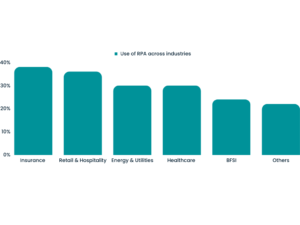
    53% of various firms use RPA services internationally, according to research. Depending on their demands, size, and industry, it is predicted that almost all businesses will use some form of automation within the next five years.

    Interested in learning more RPA?

    Consider putting it into practise in your business to advance it. Get in contact with our experts; we’d be pleased to assist you!


  • An introduction to Blockchain Technology and its potential uses

    An introduction to Blockchain Technology and its potential uses

    Even while blockchain technology is still in its nascent stages today, it is finding increasing use in important industries outside of the realm of digital currencies. Through the upkeep of immutable distributed ledgers in thousands of nodes, blockchain is the primary technology utilised to produce the digital currency, Bitcoin. The 21st century will see a huge impact from this disruptive technology on institutional operations, company operations, education, and our daily lives.  It has the power to alter the current Internet from “The Internet of Information Sharing” to “The Internet of Value Exchange.”

    Blockchain technology is anticipated to fundamentally alter how business, industry, and education operate while also accelerating the worldwide transition to a knowledge-based economy. This ground-breaking technology has numerous potential uses because of its immutability, transparency, and integrity for all transactions carried out in a blockchain network.

    The following structure illustrates a sample blockchain transaction flow. A peer-to-peer blockchain network is used by User A to start a transaction with User B. The network uses a cryptographic proof of identification (a set of public and private keys) to specifically identify users A and B. The transaction will then be published to the blockchain network’s memory pool while awaiting transaction validation and verification. Reaching consensus is the process of getting a predetermined number of approved nodes to create a new block. Following a consensus, a brand-new “block” is created across the entire blockchain network, and each node updates its individual copy of the blockchain ledger. All of the transactions that took place during this time are contained in this block.

    Advantages of blockchain technology

    Reliability: because blockchain networks are decentralised, the databases of all transaction records have changed from being closed, centralised ledgers maintained by a small number of recognised institutions to being open, distributed ledgers maintained by tens of thousands of nodes.

    Trust: blockchain network also decentralises trust. With organised ledgers, blockchain networks serve as new trust bearers. A group of tamper-proof nodes form a network that shares these ledgers.

    Security: the one-way hash function, a mathematical operation that transforms a variable-length input text into a fixed-length binary sequence, is used by the blockchain network. There is no obvious connection between the input and the output.

    Efficiency: every piece of data is automatically put through pre-defined processes. Blockchain technology can therefore both dramatically lower labour costs and increase productivity. Blockchain technology may hasten the clearing and settlement of some financial transactions, resulting in a quicker and more effective reconciliation procedure.

    Applications using blockchain technology

    • Blockchain offers a number of advantages in the financial and banking sectors in terms of improved record-keeping, security, and transparency. It makes it the ideal option for banking needs like fraud protection, client onboarding, and anti-money laundering.
    • By 2025, the worldwide blockchain market for healthcare is expected to reach $5.61 billion. Using blockchain technology could help resolve expensive and urgent issues in the healthcare sector. Such as inconsistent records, patient data loss or theft, banking information, and test results.
    • Blockchain can be a great solution for the insurance industry and aid in the reduction of underwriting, the identification of fraud, and the enhancement of cyber insurance plans. By 2023, the global insurance blockchain industry might reach $1.39 billion.
    • Businesses that spend a lot of money protecting themselves against breaches are also concerned about cyber security, not only SMEs. Blockchain system nodes automatically compare the data and warn any information that is falsified.
    • Blockchain technology is being used in education by some colleges and institutions, and the majority of them do so to support academic degree management and assumptive evaluation for learning outcomes.
    • Supply chain management can be challenging and involves a lot of data. Data storage using blockchain-based systems would guarantee quick access and strong security because altering the data would be impossible without reporting it as a result.
  • IoT the next big thing or already is? In perspective of Industry 4.O

    IoT the next big thing or already is? In perspective of Industry 4.O

    One of the key technology foundations of Industry 4.0 is the Internet of Things. The ability of machines to independently communicate with one another allows them to solve issues that would previously require human intervention.

    It is anticipated that the use of industrial IoT for predictive maintenance and a rise in the number of data centres would present sizable market expansion prospects. Additionally, the government’s promotion of industrial automation and the demand for high productivity & efficiency are the main factors propelling the growth of this market.

    The majority of firms have acquired a high degree of IoT maturity, and through 2024, enterprises from all industry sectors intend to invest an average of $2.8 million in IoT. Businesses anticipate spending 10% of their IT budgets on IoT initiatives during the next three years, up from the average 7% of an organization’s IT expenditure between 2017 and 2020.

    However, there are observable differences in the expected IoT investment levels across various business sectors. Over the next three years, oil and gas companies plan to invest the most in IoT ($3.2 million on average), followed by electrical utilities ($3.1 million), transportation and logistics ($3 million), mining operators ($2.7 million), and finally, agricultural industries ($2 million).

    Latest research conducted by Inmarsat Enterprise reveals IoT is now the primary Industry 4.0 technology in which companies are investing over the next three years. IoT is becoming a company investment priority, and businesses expect it to save them an increasing amount of money in the next years. This shows how well-established an industry IoT has become globally. Despite the fact that IoT adoption is already accelerating quickly, Covid-19 has stressed the value of Industry 4.0 technologies like IoT for maintaining business continuity. Companies who create digital twins of their supply chains and share data are reaping the rewards as the world’s manufacturing and supply chains become more integrated and digitalized.

    In the Indian Landscape –

    India is a hive of IoT provider potential, and the nation’s IoT ecosystem is anticipated to keep expanding to generate entirely new sources of income. To stay ahead of the curve and meet the growing demand for IoT solutions, vendors should collaborate with other members of the value ecosystem to take advantage of cutting-edge technologies like Big Data analytics, AI and machine learning, new connectivity protocols, and blockchain.

    Private long-term evolution for improved security: Indian tech organizations should concentrate on promoting the advantages of P-LTE to raise awareness and approach businesses with solutions tailored to specific verticals.

    Real-time operational intelligence for improved risk and compliance management: To deliver brand-neutral IoT solutions, suppliers must create hardware and software that is interoperable and pre-integrated.

    Visual matrix solutions for better CX: IoT providers should collaborate with OEMs of visual surveillance systems to offer in-store, real-time consumer analytics in addition to core security solutions.

    IoT as a Service for Smart Diagnostic Laboratories: By starting with open source IoT solutions, expenses can be significantly cut, which will promote the use of smart laboratories as a service.

    By using our global knowledge and top-class IoT solutions, we can assist your business with our digital transformation and automation services. If you’re looking for understanding partners which can deliver results, contact us now.

  • How technology is making our everyday better

    How technology is making our everyday better

    All technologies that have emerged and thrived thus far have been invented to meet the needs of society, as it is rightly said that necessity is the mother of invention. Without a doubt, technology has made our lives easier over the last two decades. Technology has made our lives better in a number of ways, from communicating with people around the world from the convenience of your home to operating a full-fledged business without a physical site.

    We live in a capitalist society, which means that many technological advances are made by businesses looking to improve their products/services or their ability to market their offerings. Over the years, new technology has emerged with the goal of making business operations more beneficial and effective.

    Business Efficiency

    The business world is being swept away by a tidal wave of exponential technological progress. Today’s marketplace provides numerous opportunities to improve, adapt, and advance using available technology. The use of business analytics has proven to be beneficial in improving the customer experience. Such technology-powered business tools have propelled various aspects of business to new heights. Personalized messaging and user behavior analysis have also assisted businesses in establishing a fruitful presence in the market.

    Fast track Communication

    The only certain answer to how technology has improved our lives is that it has changed the way we communicate with one another dramatically. It has resulted in the development of several modes of electronic communication, including smartphone communication and social media. Now that civilization has advanced, instantaneous, error-free communication is widely accessible. Speed is undeniably the most significant advancement that technology has made in communication. We can now converse quickly and effortlessly from the convenience of our homes.

    Advanced Lifestyle

    Throughout history, societies have been reshaped by technology. Technology has had a significant impact on how humans behave and operate in the world. Technological advancements all around us are ongoing. New innovations are appearing, and they are undoubtedly influencing our way of life. Because of technological advancements, our lives are now vastly different from those of previous generations Transportation, agriculture, and education are just a few areas where technology is present and having an impact. On the other hand, the Internet of Things (IoT) has greatly simplified our lives. Through the medium of IoT, smart homes and advanced electronic gadgets have significantly improved our daily routines. It has simplified many aspects of life.

    Superior Trade

    Transactions are much simpler and more efficient than they were previously. On the consumer side, innovations such as the credit card and the rise of e-commerce have made it easier than ever for businesses to sell goods and services to customers at their leisure. However, transactions on a large scale are much easier on a B2B level. Foreign transactions like these are now much easier – and they may become even easier as blockchain, an emerging technology, gains traction.

    Information Accessibility

    Technology has had a significant impact on how we transfer and access information. Nowadays, we can get any information we want at the touch of a button. We are constantly searching the internet for answers and gathering information. If one learns how to surf more skillfully, technology is readily available to us, both in terms of authenticity and relevancy.

    We’ve gotten to the point where it’s difficult to imagine life without technology. The quality of life for people has considerably increased. Technology has altered our behavior and operations by infiltrating every aspect of our lives. Technology has made our lives better in a number of areas, including networking, healthcare, and communication.

  • All you should know about Smart Spaces and its future impact

    All you should know about Smart Spaces and its future impact

    What are Smart Spaces?   

    Smart spaces are facilities or public areas outfitted with sensors to collect data that can be used to generate insights about its environmental conditions, the services it provides, and how occupants interact with their environment. These smart spaces insights can be captured in real-time and from historical data, and then used in improving safety, operations, and the experiences of the people using the space.

    When enabled by technologies like IoT and 5G wireless, which are now capable of monitoring municipal operations using real-time data to bring a level of service to citizens with uncharacteristic efficiency, smart space paradigms are also shared across regions, extending over cities.

    Use of Technology in creating smart spaces

    We can classify smart enabling technologies according to their purpose using this multi-layered approach to smart space environments (virtual, physical, and human levels).

    Virtual Computing Environment — This layer gives smart devices access to private network services or the internet, which enables them to connect to other components of the distributed systems that run the smart space environment.

    Physical Environment – The most diverse layer of smart spaces is the physical environment layer, which contains the embedded sensors, microprocessors, tracking tags, and other tangible components of the smart space.

    Human Environment — This layer is made up of gadgets that people use in conjunction with their environment, such as pacemakers, wearable smart devices, and smartphones. This means that humans can develop smart space environments using cell towers, cell networks, and smartphones to create a virtual, physical, and human environment that can be thought of as a large area smart space, similar to how route-planning apps can be used to create smart spaces.

    Benefits of Smart Spaces

    The deep integration of these technologies into our daily lives demonstrates how successfully they have achieved their general goals of enhancing efficiency, security, and safety.

    Any measurable aspect of efficiency is improved by smart space technology. Smart technology often focuses on lowering overall operational expenses of buildings by avoiding resource and utility waste. Meters for electricity or water may readily be equipped with sensors, making them prime candidates for smart monitoring.

    In places where there are risks of danger or accidents, smart spaces promote safety and risk mitigation. Smart technology, such as the use of intelligent robots in industrial applications, can replace human workers performing dangerous activities. By replacing humans with these robots in numerous tedious and repetitive jobs like moving inventory palettes, productivity has grown.

    Smart environments improve user experience by automating many of our daily “clerical” duties, including checking the lighting, that were previously performed by humans. Using smart space technology is now driven by the desire to enhance the experience of occupants within a space for business purposes. These buildings are becoming more collaborative, informative, and effective thanks to smart office technologies that can connect remote workers, smart conference rooms, scheduling systems, and sensors covering every component of the facility. Several manufacturers advertise a sizable central wall display that serves as a focal point for business activities and shows real-time information. For example, a hospital could use this display to show which doctors are present, which operations are planned, or which rooms are filled.

    Common technologies used in these are:

    • Artificial Intelligence and Machine Learning
    • Computer Vision
    • Speech Recognition
    • Blockchain
    • Cloud computing / Distributed systems
    • Wireless Connectivity
    • Motion and proximity sensors
    • Climate sensors (temperature, humidity, pressure)
    • Accelerometers and gyroscopic sensors
    • Optical and thermal sensors
    • Gas and level sensors
    • RFID tagging
    • Microprocessors
    • Smartphones, tablets, watches
    • Closed-loop insulin delivery systems
    • Ingestible sensors
    • Smart inhalers
    • Smart pacemakers


  • Facts about Artificial Intelligence you should know

    Facts about Artificial Intelligence you should know

    The adoption of intelligent, data-driven technology in enterprise applications is accelerating at an unprecedented rate in the digital age, challenging established workplace practices and fundamentally altering the business landscape.

    Artificial Intelligence (AI) and its subset, Machine Learning, are at the forefront of all disruptive technologies (ML). Business experts concur that artificial intelligence and machine learning are the two main forces behind the ‘Industry 4.0’ transformation.

    AI-enabled devices are everywhere. Nearly 77% of devices today use AI technology in one form or another. Virtual assistants, chat-bots, face recognition technology, voice search, and self-driving cars are just a few examples of services and solutions that use AI. These technologies are no longer the stuff of science fiction. They presently exist and have an impact on all facets of contemporary life.

    Things which will matter this year and onward

    1. Big Companies Will Most Likely Implement an AI Strategy

    Stats show that 75% of top CEOs think that AI will help their company expand and gain a competitive edge.

    1. The majority of consumers believe AI will enhance their lives

    In a poll conducted by Strategy Analytics, respondents from India, China, Western Europe, and the United States made up 41% of those who believed that new AI technology would improve their lives.

    1. Most people do not realize that they use AI platforms

    According to a survey, only 34% of consumers are aware that they are directly interacting with AI, which is one of the odd truths about artificial intelligence. But when asked about the technology they use, 84% admitted to using at least one AI-powered product or service.

    1. The voice-search function is becoming popular

    The AI-powered voice-search functionality on smartphones, smart speakers, and other voice-enabled devices is becoming more and more commonplace as a result of breakthroughs in speech recognition technology. According to recent statistics, 41% of smart device users use the voice-search function at least once every day.

    1. The future of AI automation is asset maintenance

    The most common AI use cases in the manufacturing industry, include predicting when machines are likely to break down and suggesting the optimum time to undertake maintenance. According to the survey, roughly 29% of AI applications in the manufacturing sector are used to maintain operational production assets.

    1. AI adoption helps businesses increase earnings

    AI continues the trend of technology generating returns. In a latest finding there has been a nearly 25% year-over-year growth in the use of AI in routine company operations, with a significant increase from the previous year in the number of businesses employing AI in numerous functional areas.

    1. Chat-bot use is growing already

    In a poll conducted of consumers around the world, 38% of respondents indicated that they had a favorable opinion of chat-bots. Only 11 percent of end customers had negative opinions, leaving 51 percent of them neutral.

    Research demonstrates that businesses now employ AI more frequently than not, suggesting that the technology has advanced to another level in the commercial world. Along with it, the need to expand AI among those just beginning their adoption journeys has increased. However, it also points to a way for lagging organizations to catch up, even while they show that other companies are further forward in comprehending the impact of AI.

  • A complete guide on Cloud Computing

    A complete guide on Cloud Computing

    One of the technologies influencing how we work and play is cloud computing. The cloud helps businesses eliminate IT problems and promotes security, productivity, and efficiency. It also enables small enterprises to utilize cutting-edge computing technologies at a significantly lesser cost. Here is what you need to know about the cloud and how it can benefit your company.

    On-Demand Computing

    The term “cloud” describes online-accessible servers and software that anyone can use. You are spared from hosting and managing your hardware and software as a result. Additionally, it implies that you can use these systems from any location where you have internet access.

    Every day, you encounter cloud computing. You are accessing data that is kept on a server somewhere in the world whenever you check your Gmail inbox, look at a photo on your Dropbox account, or watch your favorite shows on Netflix. Even though the emails, videos, or other files you require are not physically present on your computer, you may quickly, simply, and affordably access them owing to contemporary cloud computing technology.

    Public, Private, and Hybrid Cloud

    Private, public, and hybrid deployment strategies are the three main types of cloud computing. In the end, all three models will give customers access to their business-critical documents and software from any location, at any time. It all depends on how they approach the task. The kind of cloud you should use for your company depends on several variables, including the purposes for which you intend to use it, applicable laws on data storage and transmission, and other aspects.

    Private Cloud

    A single entity is served via private clouds. While some companies construct and manage their ecosystems, others rely on service providers to do so. In either case, private clouds are expensive and hostile to the cloud’s advantages for the economy and IT labor productivity. Private clouds, however, are their sole choice because certain organizations are subject to greater data privacy and regulatory constraints than others.

    Public Cloud

    Distributed across the open internet, public clouds are hosted by cloud service providers. Customers can avoid having to buy, operate, and maintain their own IT infrastructure by using the most widely used and least-priced public clouds.

    Hybrid Cloud

    A hybrid cloud combines one or more public clouds with private clouds. Imagine you operate in a sector where data privacy laws are extremely rigorous. While you don’t want to host legally required data in the cloud, you do want to be able to access it there. To access data saved in your private cloud, you also want to deploy your CRM in the cloud. Using a hybrid cloud is the most sensible choice under these circumstances.

    Everything as a Service

    The cloud “stack” is made up of numerous levels. The collection of frameworks, tools and other elements that make up the infrastructure supporting cloud computing is referred to as a stack. Software as a Service (SaaS), Platform as a Service (PaaS), and Infrastructure as a Service (IaaS) components are included in this. Customers that use these services have varied degrees of control and accountability over their cloud environment.


    Infrastructure as a Service

    The customer oversees managing everything with IaaS, including the OS, middle-ware, data, and applications. Other duties, including virtualization, servers, storage, and networking obligations, are handled by the service provider. Customers are charged by how many resources, including CPU cycles, memory, bandwidth, and others, they consume. Microsoft Azure and Amazon Web Services are two examples of IaaS products.

    Platform as a Service

    Customers can create, test, and host their applications using PaaS solutions. The consumer oversees managing their software and data; otherwise, the service provider takes care of everything. You don’t have to be concerned about operating systems, software upgrades, or storage requirements if you use PaaS solutions. Customers of PaaS pay for any computing resources they use. Google App Engine and SAP Cloud are a couple of examples of PaaS technologies.

    Software as a Service

    Customers acquire licenses to utilize an application hosted by the provider under the SaaS model. Customers often buy annual or monthly subscriptions per user instead of how much of a certain computer resource they consumed, unlike IaaS and PaaS models. Microsoft 365, Dropbox, and DocuSign are a few popular SaaS products. Small firms that lack the capital or IT resources to implement the most cutting-edge technologies would benefit greatly from SaaS solutions.

    Benefits of the Cloud

    Reduced IT costs: By using cloud computing services, recurrent costs for monitoring and maintaining an IT infrastructure can be greatly decreased.

    Scalability: When necessary, developers can increase storage and processing capability by using cloud services. Additionally, development teams do not have to spend time or money upgrading cloud computing services.

    Collaboration efficiency: For the agile technology sector, cooperation has always been a need. Professionals from all around the world may work and collaborate using current cloud services. With these functionalities, teams may communicate with clients or other teams online while collaborating in real-time and sharing resources.

    Flexibility: Cloud computing can provide a great deal of flexibility in addition to helping to lower operational costs. Developers and other key stakeholders now have easier access to crucial data metrics at any time and from any location.

    Automatic updates: Teams may use the most recent resources available while managing and meeting IT standards thanks to automatic updates. Cloud computing is a popular technology because it allows users to access the newest tools and resources without having to spend a fortune.


  • Connectivity in 2023 – 5G and beyond

    Connectivity in 2023 – 5G and beyond

    What is the future of connectivity? There’s a dramatic acceleration currently underway. Network-connected device types are multiplying, bringing important implications for the ecosystem of wired and wireless technologies, products, and services—all providing a foundation for tomorrow’s digital economy.

    5G is transforming connectivity. It can potentially change India’s socioeconomic fabric and transform society at large. Providing pan-India connectivity through Fixed Wireless Access (FWA) services could be a game changer, especially in rural areas. 5G is expected to spawn new avenues of economic growth through high-speed internet connectivity in households, improving fixed broadband penetration significantly. 5G has the potential to address some of the basic challenges owing to the lack of optimum infrastructure in sectors such as healthcare and education. 5G is likely to improve access to education and the quality of virtual learning.

    There is no doubt that commercial deployment of 5G will necessitate major ecosystem changes in terms of spectrum usage, network infrastructure, and devices. It is therefore imperative for the government to price spectrum reasonably and rationalize taxes so that 5G services can be implemented seamlessly. It will not only have use cases unique to the country, such as driver-less vehicles, smart healthcare, smart agriculture, smart transportation, etc, but it would also revolutionize business landscapes and networks.

    The transition to 5G will unlock new opportunities and revenue streams through innovative business models. It will bolster the start-up ecosystem and enable India to be an R&D hub for 5G technology and use cases. Developing 5G applications is likely to have a huge impact across industries.


    New customers, increased revenue

    Fundamentally, the main draw of 5G from an operator’s perspective is the potential to add a significant number of new subscribers, and as a result, greatly increase revenues. As interest grows amongst prospective customers and they begin to reach out and explore their options, customer care agents will need to be able to answer questions about coverage and serviceability which will require them to have access to accurate, real-time information.

    The arrival of 5G brings numerous advantages, but it will also place mobile operators in the unknown territory from a planning perspective. To help them navigate this environment they need the right support. The right tools are also helpful for addressing the technology hurdles commonly associated with FWA planning processes, including 5G outdoor and indoor fixed terminal placement. Simultaneously, such tools are also key to unlocking advanced coverage and traffic analysis, combined multi-technology planning, site selection, and ‘what-if’ scenarios.

    5G is undoubtedly a disruptive technology that will drive revenues and business growth in the years to come – to guarantee its success, operators will have to pay close attention to planning and optimization.

    India is on track of becoming a trillion-dollar digital economy and the evolving digital metrics are creating inroads for newer technologies and solutions. As digital adoption continues to grow phenomenally, India is all set to experience 5G and mobile-led technologies in a big way by being one of the few countries in the world that are ready to commercially adopt and deploy the 5G ecosystem.


    The future of connectivity

    Human augmentation is about highly immersive experiences and enhanced human-computer interfaces allowing humans to become a part of the internet, not just users of it. We’re increasingly moving away from the two-dimensional screen to devices driven by augmented reality, virtual reality and many other innovations.

    This technology will greatly impact how we perceive the world around us. We will be able to sense nearby pollution levels and know about safety risks in the workplace. Furthermore, it will allow people with the most serious mobility issues to walk unassisted.

    Digital-physical fusion is a separate but related idea that means connecting physical assets with digital versions of themselves, a technology already beginning to emerge. Advanced factories and logistics sites currently run digital twins of their production lines, warehouses and vehicles to increase productivity and lower operating costs. By 2030, the technology will spread, not only to other sectors – making dangerous environments, such as mines, much safer – but across society. You or I could have a digital twin of ourselves; the recent discussion around the “metaverse” gives a pretty good indication of where we may end up.

    Despite being more flexible, reliable and high-capacity than ever, today’s networks cannot provide the required level of service for these emerging technologies. As a result, the way networks are built and consumed will need to change significantly in the coming decade. Some requirements will be met naturally, as the technology cycle of telecom continues to turn and existing products and services are refined. Some needs will call for networks to adapt in three new and specific ways in the coming years.

  • Uprising of the Indian IT sector and it’s future

    Uprising of the Indian IT sector and it’s future

    The 21st century is commonly recognized as the era of technology. This Information Age is marked by newer technologies which are in regard toward problem-solving and critical thinking. As far as our country is concerned, the future of the IT industry in India is quite bright, given the tremendous rate of globalization and industrialization.

    The IT & BPM sector has become one of the most significant growth catalysts for the Indian economy, contributing significantly to the country’s GDP and public welfare. The IT industry accounted for 7.4% of India’s GDP in FY22, and it is expected to contribute 10% to India’s GDP by 2025.

    According to the National Association of Software and Service Companies (Nasscom), the Indian IT industry’s revenue touched US$ 227 billion in FY22, a 15.5% YoY growth. And according to Gartner estimates, IT spending in India is expected to increase to US$ 101.8 billion in 2022 from an estimated US$ 81.89 billion in 2021.

    The Indian software program product industry is predicted to attain US$ 100 billion by 2025. Indian organizations are focused on investing across the world to expand their global footprint and enhance their international delivery centers. The IT enterprise introduced 4.45 lac new employees in FY22, bringing the overall employment in the region to 50 lac personnel.

    Artificial intelligence and machine learning are set to determine the destiny of IT corporations in India. More and more corporations in India are opting for newer technologies to facilitate better functionality.

    Governance around IT

    Some of the major initiatives taken by the government to promote the IT and ITeS sector in India are as follows:

    • In August 2022, the Indian Computer Emergency Response Team (CERT-In), in collaboration with the Cyber Security Agency of Singapore (CSA), successfully planned and carried out the “Synergy” Cyber Security Exercise for 13 countries to build network resilience against ransomware attacks.
    • In June 2022, STPI Director General Mr. Arvind Kumar stated that exports through STPI units have increased from Rs. 17 crores (US$ 2.14 million) in FY92 to Rs. 5.69 lac crore (US$ 71.65 billion) in FY22.
    • In May 2022, it was announced that Indians can now avail of their Digi-locker services through WhatsApp to get easy access to their official documents.
    • In April 2022, the Indian Computer Emergency Response Team (CERT-In) issued Directions to strengthen cybersecurity in the country.
    • In the Union Budget 2022-23, the allocation for the IT and telecom sector stood at Rs. 88,567.57 crores (US$ 11.58 billion).
    • The government introduced the STP Scheme, which is a 100% export-oriented scheme for the development and export of computer software, including the export of professional services using communication links or physical media.

    The Road Forward

    India is the topmost offshoring destination for IT companies across the world. Having proven its capabilities in delivering both on-shore and off-shore services to global clients, emerging technologies now offer an entire new gamut of opportunities for top IT firms in India.

    The Indian IT & business services industry is expected to grow to around INR 1700 crores (US$ 19.93 billion) by 2025. Spending on information technology in India is expected to reach over INR 1200 crores (US$ 144 billion) in 2023. The cloud market in India is expected to grow threefold to over INR 580 crores (US$ 7.1 billion) by 2022 with the help of the growing adoption of big data, analytics, artificial intelligence, and the Internet of Things (IoT).

    As per a survey by Amazon Web Services (2021), India is expected to have nine times more digitally skilled workers by 2025.

    In November 2021, Mr. Piyush Goyal, Minister of Commerce and Industry, Consumer Affairs, Food, and Public Distribution and Textiles, lauded the Indian IT sector for excelling in its competitive strength with zero government interference. He further added that service exports from India have the potential to reach INR 83000 crores (US$ 1 trillion) by 2030.

    All in all, the future of the IT industry in India looks promising. While data security might be a big challenge, it will be exciting to witness the turn of events. Apart from the nation’s perspective, one can make the best of the changing IT industry by upskilling themselves.