Category: Digital Transformation

  • Digitization – the future of energy generation

    Digitization – the future of energy generation

    The world is going through a massive shift in the ways things used to be done. Now accomplishing set goals is not only a man’s job but is integrated with a fair amount of technology. Digital transformation in every industry is quite evident and can be seen in the power sector as well. From power plant management to consumer services, basically, now every step in the process utilizes digital resources.

    Post-Covid, power production is currently embracing digitization in its work process which includes production, dissemination, and consumption of energy. Some of the promising tech tools helping this sector are:

    MACHINE LEARNING

    Digital technology is establishing its roots right from the start of the process. In power plants, nowadays, management has become automated in terms of turbines, ranches, windmills, solar parks, and even in old hydroelectric systems. Here, sensors are installed which makes it feasible to gather data from a turbine, dam, or line continuously and send it to a unified control room. Here the utilization of imaginative programming empowers administrators to recognize odd information and this analysis helps in distinguishing threats, differences, and performance. This is known as predictive maintenance.

    This data-driven approach not only engages a particular plant but the other power-producing resources along with it and the client’s power system if involved in the business. These machine learning algorithms and advanced software rely on big data coming from all the sources put to compassion which results in better management of the system and efficient production.

    ARTIFICIAL INTELLIGENCE

    A possibility is the most valuable gift technology gave to mankind. AI has been a promising contributor which continuously works on the sighting of likely anomalies and shortcomings that, while not compromising the working of a plant, can decrease its efficiency. Therefore, actions can be advised to improve and handle the plant’s performance thus, fulfilling every short-term and long-term project goal.

    In field operations, instruments like robots and drones can establish assessments, decrease the required time, and expand precision and productivity while disposing of the dangers to individuals, who used to carry out these tasks themselves. Using digital simulations, technicians can receive comparable training which will enable them to tackle field situations with more tools made available to them.

    SMART GRIDS

    The most evident change and effect of digital transformation are seen on the grids which are utilized to distribute power. Electronic meters enable smart grids, which makes it possible to manage and balance the electricity system efficiently. Power circulation networks are open, adaptable, and comprehensive playing an important part in energy efficacy. In addition, a savvy board of the organization helps effectiveness and decreases wastage, and benefits the environment.

    The energy transition is a phenomenon that goes beyond the simple generation of clean electricity. Digitization, involves everyone, producers and consumers. A completely digitized power plant will focus on upgrading execution progressively and working in a protected and stable way — upheld via automated reporting, guided issue resolution, and digitized control strolls. Top-notch dependability can be kept up with while diminishing arranged blackout time and support costs. Data analytics and digital-process support are the actual keys.

    ROBOTICS PROCESS AUTOMATION

    RPA adoption lies at the center of many enterprises’ digital transformation efforts. Today, RPA is driving new efficiencies and freeing people from repetitive tedium across a broad swath of industries and processes. It streamlines workflows, which makes organizations more profitable, flexible, and responsive. It also increases employee satisfaction, engagement, and productivity by removing mundane tasks from their workdays. Even though there is still a skeptical opinion about digitization and automation in the Energy and Utility industry, automation front-runners and leading companies see the benefits of implementing RPA just in a few months and are expecting more promising results.

  • Key Role of Internet of Things Technology in Digital Transformation

    Key Role of Internet of Things Technology in Digital Transformation

    IoT solutions have already started to act as a game player in modern enterprises. Every year, more entrepreneurs tend to jump on the IoT bandwagon to leverage the benefits of this rapidly evolving technology.

    As per reports, there will be 75.44 billion connected devices globally by the year 2025. In such a scenario, it is interesting to see how IoT plays a role in accelerating enterprise digital transformation.

    In this article, we are going to see the impact of IoT on digital transformation. But, before moving forward, let’s understand the significance of enterprise digital transformation for your business.

    Importance of Digital Transformation in Modern Enterprise

    The State of Digital Transformation research has revealed that market pressure is one of the major factors for implementing digital transformation as market leaders also compete with technologically advanced and agile businesses.

    There is no exaggeration in mentioning that digital transformation is the best way to make your enterprise ready for the future while keeping it ready to face technological disruption.

    As customer requirements and expectations keep on changing rapidly, it is imperative for enterprises to change their traditional business processes with the help of advancements in emerging technologies.

    Be it handling internal processes or offering personalized customer experience, enterprise digital transformation has remained highly useful. Here are the top business benefits of digital transformation.

    Key Benefits of Enterprise Digital Transformation

    As mentioned above, digital transformation can assist entrepreneurs to improve their services and enhance customer experience significantly.

    Improved Customer Experience

    Today, tech-savvy customers want advanced and real-time assistance to resolve their queries. They always remain in search of advanced tools that make their lives more comfortable. As a result, enterprises need to come up with digital solutions based on updated technologies that can give their customers a better experience.

    Enhanced Efficiency

    Inventive tools and technologies can automate various processes in the company and as a result, you can improve efficiency over the period. Digital transformation solutions also bring cost savings and reduction in manual effort in the business over the period.

    Higher Security

    As compared to traditional processes, digital processes are more secure and robust. Organizations can secure their confidential and valuable data more effectively and securely using digital transformation solutions. It can help them keep the data safe and gain the customer’s trust over the period.

    Better Decision-making

    Digital transformation is designed to bring actionable insights to make informed decisions. In this data-driven age, all tools and techniques related to data analysis can assist companies to track performance metrics and better insights. It further assists in providing a better result.

    All digital transformation initiatives need a combination of emerging technologies including IoT, AI, and AR. Out of them, IoT plays a crucial role in making digital transformation solutions highly useful and user-friendly. Let’s go through the impact of IoT in digital transformation.

    Five Ways IoT Impacts Enterprise Digital Transformation Solution

    We can mention many benefits of IoT in modern enterprises. Numerous startups have built their entire business model around IoT technology. You can transform processes digitally using IoT solutions. Here are some of the major business benefits of IoT in digital transformation.

    Meaningful Customer Experience

    When it comes to improving customer experience based on their interests and expectations, connected devices can remain handy for enterprises. Thanks to IoT solutions, organizations can get deep insights into their customers’ behavior and shopping pattern.

    Entrepreneurs can customize customer experiences based on this data. In a way, enterprises can transform their processes digitally while keeping customers in the focus.

    More Efficiency in Business

    An IoT app development company can enable modern enterprises to merge rich data experiences using autonomous sensors. IoT-powered apps can improve productivity by bringing automation to various business processes. These apps can share useful data with AI or ML-based systems for effective and accurate analysis.

    Enterprises can streamline various processes including logistic and supply chain management, security, energy management, and stock management with the help of a proper data analysis.

    Reduced Operational Costs

    Process automation can eventually reduce operational costs while enabling entrepreneurs to use resources in a wise manner. IoT in digital transformation aims at improving utility consumption, waste disposal, and other ways to reduce various costs in modern enterprises.

    Optimized use of water and other natural resources also contribute to saving big for companies. Such reduction in operational costs can eventually increase ROI for your enterprise.

    Improved Employee Productivity

    A reputed mobile app development company integrates various features based on futuristic technologies. Talking about IoT technology, it can assist your company to keep your staff engaged while offering better experiences. It also makes the system available for employees in real-time from anywhere.

    Smart sensors can keep employees connected with one another all time and they can easily convey their experiences instantly. All such aspects can improve the employee’s productivity.

    Scope for Innovation

    IoT devices can fetch the user’s data including user behavior. This data can assist enterprises to understand the requirements, interests, preferences, and expectations of their customers more effectively. As a result, they can come up with innovative products over the period to cater to a huge customer base.

    Another key characteristic of IoT technology is it can readily combine with advancements of AI, AR, and Blockchain. Altogether, this technology opens the doors of creativity and innovation for enterprises. All you need to consult a reputed and reliable IoT app development company to come up with innovative app solutions.

    All these and several other benefits of IoT technology drive digital transformation in enterprises and increase the demand for IoT app development globally.

    Concluding Lines

    Simply put, the Internet of Things concept has a significant impact on digital transformation. On one hand, IoT solutions can enhance the customer’s purchasing experiences and on the other hand, they can enable businesses to remain connected to customers and employees on a 24/7 basis. We can certainly expect that IoT will enhance digital transformation in the coming years.

    Scs Tech is a leading enterprise mobility solutions that integrates features based on technological advancements in enterprise-level apps. We assist our global corporate clientele to make the most of digital transformation by developing robust and advanced solutions.

  • What Processes Does IT Service Management (ITSM) Foster and What Do They Do?

    What Processes Does IT Service Management (ITSM) Foster and What Do They Do?

    Editor’s note: This is a general overview of what ITSM processes are and what they can bring to a company.

    Here at SCS Tech, our ITSM consulting team believes that the less chaos in one’s IT infrastructure, the better. And this belief proves to be right with the fact that establishing stable and efficient IT operations is one of the reasons for companies from all over the world to adopt ITSM processes. But what are these ITSM processes and why else would a company want to adopt them? We will go through that in detail below, but let’s briefly clarify the difference between ITSM and ITIL first.

    ITSM is a widespread ideology – a “religion” as some of my colleagues say – of managing IT in an organization by delivering it as a service.

    ITIL is the most popular approach to ITSM, a documented set of best practices for running IT within an organization that is built around certain ITIL processes.

    ITIL processes are often dubbed “ITSM processes,” so for the sake of convenience, I’ll use the ITSM processes term throughout this article to refer to ITIL processes.

    What ITSM processes actually are

    SCS Tech team of ITILv3-certified experts applies ITSM processes in their daily work and implements them for our customers according to the following 5 stages:

    Service Strategy (SS) is the first and foremost stage. Here, you determine what exactly your IT does, explore what your users/customers need and verify whether the IT service is worth it financially. Broadly speaking, SS contributes to the overall understanding of your IT services. Some of the processes here: Service Portfolio, Financial Management, Business Relationship Management, etc.

    Service Description (SD) is the ‘helping hand’ of Service Strategy. It complements strategic findings with a detailed documented description of your services. SD ensures that your IT service delivery will meet the needed requirements, your company will have enough capacity to deliver the services, and these services will be available, secure, etc.

    Service Transition (ST) is responsible for the conversion of your services from paper into real action. Apart from that, ST maintains your services as stable and undisturbed as possible, while allowing them to be dynamic by carefully introducing changes. The processes at this stage, for instance, are Change, Release and Knowledge Management.

    Service Operation (SO) makes sure your services work, and disruptions get solved promptly. There are 5 main processes that help SO do that:

    • Event Management: Monitors how services run. In case of trouble, it notifies you and aims to resolve it.
    • Incident Management: Aims at restoring the normal flow of IT processes as soon as possible. If something isn’t working properly, IT guys implement a quick solution, for instance, a reboot.


    • Problem Management: Deals with the underlying cause of incidents. If any problem is detected, the IT team analyzes why it appeared and how it can be solved properly, so that no similar incidents occur in the future.


    • Request Fulfillment: Tries to take some load off Change Management in ST and deals with low-risk repeated and pre-defined situations. For example, when a newcomer needs a computer installed, an account created, etc.
    • Access Management: Deals with accounts and passwords. Since password resets are the most common inquiries within Access Management, this process can enable a company with, say, 600,000 annual password resets to save as much as $1,850,000 per year by automating the fulfillment of such inquiries. And such savings are not uncommon among our ITSM implementation customers.

    According to our experience of implementing and supporting ITSM solutions for our customers. Incident Management and Request Fulfillment are the most popular processes of the SO stage.

    Continual Service Improvement (CSI) is the last stage aimed at achieving the constant perfection of your services. To do that, your organization needs to monitor IT performance and react to its problem areas.

    Thinking Of Going ITSM?

    Grasping the theory behind ITSM processes is good, but now is the time for you to turn to SCS Tech and see for a fact what ITSM will bring to your organization!


    What ITSM processes bring

    Being a very structured approach to IT services, ITSM can bring lots of benefits. But the other side of the coin shouldn’t be neglected too.

    The Good

    The good side of ITSM processes is that they bring clarity and transparency to your IT structure. But is there something else behind these vague words? Yes, there is. Here is what customers cite as the most prominent outcomes of introducing ITSM in their orgs:


    • ITSM processes help IT departments stabilize IT service availability. Armed with clear what-and-how guidelines, IT teams reduce downtime (when disruptions in services occur) and increase service availability.
    • The decrease in IT teams’ reaction and resolve time, as well as the increase in overall service availability, improves user/customer satisfaction rate.
    • A more effective approach to daily operations and the automation of some of them reduce IT service management costs.
    • ITSM processes ensure that IT services are solid as a rock and at the same time aren’t resisting change. Release and Change Management help achieve ‘cautious’ IT dynamics within the enterprise.


    The Evil

    Although SCS Tech helped them in the end to find solutions to each point in the ‘dark side’ of ITSM, our customers do admit that often there was some resistance in their midst regarding the introduction of ITSM processes. Here are some of the ‘evil things’ about ITSM that caused this resistance:


    • Introducing ITSM processes was viewed as ‘too big of a change’ since it required a lot of time and effort. But most importantly, it required a change in their employees’ way of thinking. And so, learning the new workflows was met with considerable resistance. As a compulsory condition for success in such cases, we see not only the need to have the IT personnel change their approach but also the need to educate the company’s management.
    • Once our customers decided to adopt ITSM processes, they saw that the processes were actually expensive to introduce.
    • At some point, to support ITSM, a company needs to use specific software. Free tools don’t incorporate all ITSM processes and aren’t free to maintain. Mid-level platforms aren’t that expensive but still lack needed functionality. And comprehensive ITSM systems can cost a small fortune. The choice can be overwhelming, but having SCS Tech as an ITSM consultant at their side, our customers managed to easily find a fit solution.
    • A company needs to invest in organizing training for staff to teach them the core concepts of ITIL and also may have to additionally organize training for the users of the new ITSM platform.
    • Some of the ITSM processes (especially, Change Management) bring the element of ‘bureaucracy’ into the work of IT departments. It happens with practically every complex hierarchical structure and is an aftereffect of the IT process formalization.


    The Balance

    Despite all the ‘evil’ that ITSM processes can bring, SCS Tech customers are inclined to think that ITSM is on the light side of the force. Obviously, a company needs to invest in changing their IT structure while introducing ITSM processes. But the benefits (the improvement of IT service delivery and reduced IT support costs) will soon outweigh the difficulties of the implementation process.

    How SCS Tech introduces ITSM processes

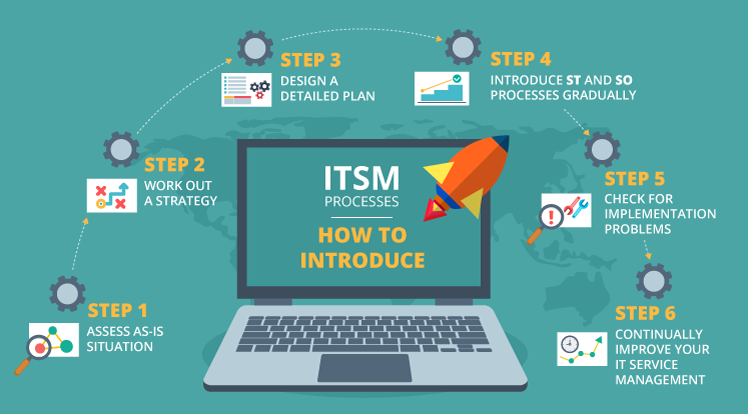
    Here is a high-level outline of how SCS Tech ITSM experts usually introduce ITSM processes in our customers’ organizations. Note that this outline does not apply to all cases of introducing ITSM and is subject to change under the specific conditions of a particular customer.

    Step 1: We assess the as-is situation.

    Step 2: We work out an ITSM introduction strategy.

    Step 3: We design a detailed plan.

    Step 4: We gradually introduce ST and SO processes (incident – problem – configuration – change – SLA).

    Step 5: We check for implementation problems (for example, set up mechanisms for controlling the usage of newly implemented processes so that all the effort isn’t in vain).

    Step 6: We continually improve IT service management and start to prepare for going to the next level of ITSM maturity when the customer is ready.

    SCS TECH ITSM PROCESS


    Our ITSM experts think that the key idea here is that no company should try to grasp it all at once. The transformation process has to happen carefully, with one step at a time, achieving specific small-scale goals (reducing operational costs or increasing first-response time). If you have trouble with that, turn to our ITSM consultants to identify your small-scale and forward-looking goals that would be a good place to start your ITSM journey.


  • Digital Transformation Services – Strategy & Framework for Company Transition

    Digital Transformation Services – Strategy & Framework for Company Transition

    What is Digital Transformation?

    The term digital transformation often gets associated with buzzwords like AI, blockchain, cloud, and automation. But what is it? Do you need it? And if so, what will be the benefits of implementing it in your organization.

    Digital transformation means something different for every organization. That’s why it’s a challenging task to provide a clear definition.

    Digital transformation is the integration of digital technology into all areas of a business, fundamentally changing how you operate and deliver value to customers. It’s also a cultural change that requires organizations to continually challenge the status quo, experiment, and get comfortable with failure.

    from this definition, you can clearly see that having a website and a social media presence is not enough anymore.

    There is just one thing we would like to stress. Digital transformation is a long and challenging journey. Arriving at the state from the above definition may take some time and effort.

    Why Companies Need Digital Transformation?

    In 2020 in the US, eCommerce grew by a stunning 44% and represented 21.3% of total retail sales for that year. You may say that year was special but look at the prognosis for the eCommerce market below. This trend is not going to stop.

    The transition of retail companies to the digital world is one of the best examples of what business benefits digital transformation can bring.

    And eCommerce is just the tip of an iceberg of digital transformation that’s taking place as we speak. Can you imagine a bank without online access to its services? The hotel that doesn’t allow for online bookings? Whether we like it or not, the digital world is already here. Soon, the businesses that don’t go along will be niches for enthusiasts. (Do you remember when you last used the paper map?)

    What are the Benefits of Digital Transformation?

    Digital Transformation is all about redefining processes and finding better ways to do business. The most straightforward gain from going down this path is saving resources and time.

    What are Digital Transformation Services?

    We already discussed what Digital Transformation is, but what are Digital Transformation Services? There’s going to be no surprise. They are all the services you can buy that help you take your business in the digital direction.  From collecting data about business processes to implementing chosen technology – external transformation experts can be of help.

    There are three main types of Digital Transformation services:

    • Digital transformation consulting
    • Digital transformation strategy
    • Digital transformation implementation

    Let’s discuss all of them in more detail.

    Digital Transformation Consulting

    While it might be a bit counter-intuitive to trust external experts with decisions about your organization, a fresh look at business processes can uncover hidden potential and help see new possibilities. Transformation consultants come equipped with knowledge about the industry, typical customer journey, and market dynamics.

    When they combine their domain expertise with insights they gain from the leaders and the team, they can come up with an effective transformation strategy with measurable business outcomes.

    However, consulting services don’t have to end there. Some providers offer comprehensive digital transformation solutions and take care of every part of the process.

    Digital Transformation Strategy and Framework

    Drafting a digital transformation strategy is the first step towards the real revolution. Such a document considers business processes and aligns them with technology, business needs, and customer expectations.  It examines the technology landscape to look for solutions that are best suited for the company’s expectations and budget.

    When working on digital transformation strategy, experts analyze three dimensions:

    • Current technological status
    • Business requirements
    • Internal IT experts’ capability

    Let’s take a closer look at each of them.

    Current Technological Status

    Transformation consultants take a look at all the technology that is used at the moment. They examine existing solutions paying attention to their use and effectiveness. They take into account what software is used by your clients and cooperators. Compatibility is vital.

    When they know everything about the current IT solutions implemented in your company, they are ready for the next step.

    SCS Tech can help you strategize your company current technological status.

    Collecting Business Requirements

    Organizations have different expectations regarding their digital transformation. It’s the consultants’ job to introduce innovation without disrupting daily operations.

    Once they gather data about technology in use and insights about the expected outcome, it’s time for them to draft the plan. Transformation services should align with the client’s needs and capabilities. A bespoke custom-built system is going to provide a better experience than even the best out-of-the-box solution.

    However, sometimes both approaches can be combined to provide the best experience at a competitive price.

    Maintaining Innovation

    There is one more thing that should be kept in mind during the digital transformation. Once all the new systems are built, they’ll need to be maintained. Is the organization ready for this? Does it have enough capacity, or will additional people be required?

    Thinking about HR issues when preparing the transformation roadmap can spare you unpleasant surprises at the implementation phase.

    Digital Transformation Implementation

    Digital transformation implementation is when the strategy comes to life. Digital transformation services that stay on paper don’t bring results. Sure, planning is essential, but only moving past the brainstorming phase can enhance clients and team experience.

    It’s important to remember that the development phase can falsify some assumptions made at the planning phase. IT leaders must rely on their experience to suggest the best solutions, even if it means deviating from the original strategy. After all, digital transformation is all about flexibility and experiments.

    What is the Best Place to Start the Digital Transformation in Your Company?

    Up to this place, this article mainly covered the theory of digital transformation solutions. From now on, we’re going to give you more practical advice.

    No two organizations are the same. Businesses differ, and so differ their needs. Hence the generic advice on where to start your digital transformation journey would be useless.

    However, we are sure that it’s worth hiring an external expert who will help with the preparation. His insight into a business landscape, the services you provide, operating models, your products, and the technology you use is priceless.

    Experts gather data, talk to people, and assess your business strategy. Coming from outside the industry, they can identify problems you weren’t aware of. At the same time, they may also suggest simple improvements for things that “have always been done this way.”

    Even if you decide your transformation is going to be done by the internal IT leaders, DT consulting should vastly enhance the overall experience.

    Identify Pain Points

    Another universal piece of advice for starting a digital transformation is:

    identify your organization’s pain points and aim to improve them.

    Depending on the type of your business, this might mean applying different solutions. Your sales team might welcome a new CRM. Maybe your website needs some extra care regarding UX? Or do the documents need to be printed and scanned repeatedly? Think of experiences you want to enhance.

    Typical digital transformation starts from cloud services and data integration. Those two basic steps open the gate for future digital services development.

    Practical Aspects of DT

    Companies starting the digital transformation journey need to take into consideration:

    • People
    • Budget
    • Expected results.

    This paragraph is going to answer the most common questions regarding the practical aspects of DT.

    How to Prepare your Organization for Digital Transformation?

    People

    Successful digital transformation starts from talking to people. No matter if you decide to collect data and do the talking yourself or hire an external expert. You need insights from the team. And you need your team to be cognizant of a change.

    Budget

    Budget is not a sexy thing to mention, but you need to know upfront how much you can spend. Plan your solutions accordingly. It’s better to have one small implementation than a lot of big plans.

    What to Expect During DT?

    The best way is to take the Agile approach and expect the unexpected. As they say, things have to get worse before they get better. Introducing new solutions tends to be painful. That’s why it’s so crucial to preparing organizations for a change before it starts. It gives you a chance to reduce pushback from the team, which is only natural when you disrupt the usual way.

    How to Measure the Outcome?

    This is how we arrived at the expected results section. As with any business process transformation, you have to find out KPIs to be monitored.

    Here is our list of suggestions:

    • the number of licenses in use vs. licenses bought
    • hours saved
    • revenue from new digital services
    • customer experience

    As with everything regarding digital transformation, the metrics should mirror the organization’s structure and needs.
     

  • Smart Factory: the Way to Smarter Manufacturing

    Smart Factory: the Way to Smarter Manufacturing

    What is a smart factory?

    The National Institute of Standards and Technology of the United States of America (NIST) defines smart manufacturing as “fully-integrated, collaborative manufacturing systems that respond in real time to meet changing demands and conditions in the factory, in the supply network, and in customer needs”.

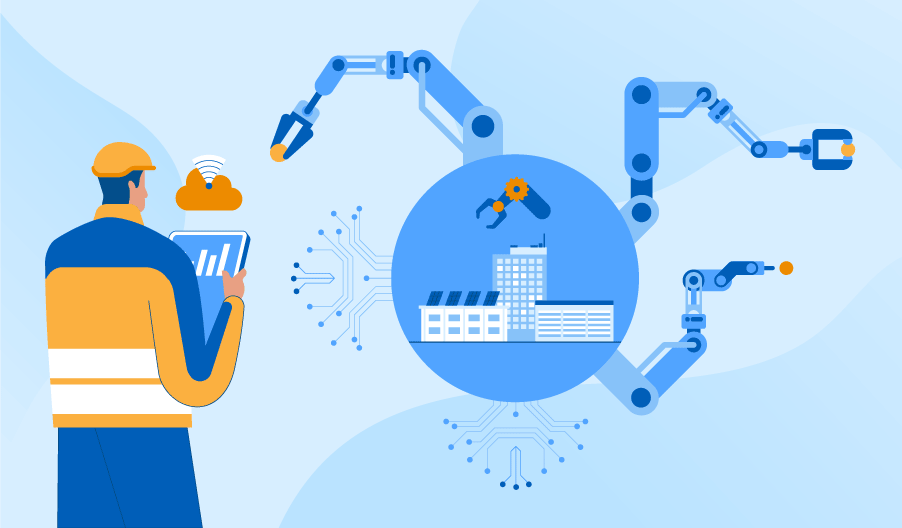
    A smart factory is a product of Industry 4.0, the fourth industrial revolution, where technologies like big data, Industrial Internet of Things (IIoT), and AI/machine learning are the driving force of digital manufacturing changes. A smart factory is the end goal of digitization in manufacturing.

    Smart factories are characterized by a high degree of complex manufacturing automation, which entails running manufacturing processes with minimal or no human intervention. Such automation is powered by industrial IoT technologies comprising hardware (sensors, actuators) and software (big data, machine learning tools).

    Benefits of a smart factory

    • Agile production process

    A smart factory allows manufacturers to quickly adapt to changing client needs, budget, product quality requirements, due to the connectivity of multiple systems, (e.g., an IIoT solution, ERP, MES, SCM) and powerful data analytics capabilities.

    • Improved efficiency of manufacturing operations

    The network of sensors allows for collecting data about the production process, environment, and equipment. This data is analyzed by the cloud software in near-real time, allowing manufacturers to make quick adjustments, for example, in equipment operating parameters. Further analysis of sensor-generated data helps spot trends and improvement opportunities through the entire production process.

    • Improved reliability of manufacturing operations

    In smart factories, the probability of human error in manufacturing operations is reduced due to high-level automation.

    • Improved product quality

    In smart factories, AI technologies are used for quality control. For example, cameras with computer vision algorithms can detect defects immediately, and advanced analytics software can help identify the cause of a problem.

    • Improved visibility into shop floor operations

    IIoT provides greater visibility into shop floor operations by providing manufacturers with continuous real-time updates on production operations and the status of industrial assets.

    • Information security

    Data security is ensured with the help of at-rest and in-transit data encryption, access control, AI-powered detection of abnormal user activity within a smart factory, and more

    • Predictive maintenance

    With the help of IIoT, data on various equipment parameters determining its health and performance is transmitted to the cloud in near-real time. There, combined with metadata, it is fed to machine learning algorithms, which help determine abnormal patterns. Thus, it becomes possible to predict potential equipment breakdown and take timely measures.

    • Improved worker safety

    Robots can replace human workers for dangerous tasks.

    Technologies used in a smart factory

    • Cloud computing

    Popular cloud platforms (e.g., AWS, Azure) allow processing, storing, and analyzing large amounts of data securely.

    • Radio Frequency Identification (RFID)

    RFID can help track industrial equipment and machinery, inventory, finished goods as well as objects and workers in smart factories.

    • Big data

    This technology is used for continuous collecting, storing, and analyzing large amounts of production-related data.

    • Artificial intelligence (AI) and machine learning (ML)

    AI and ML are employed for end-to-end automation of the production process, equipment monitoring, and more. What’s more, these technologies enable advanced analytics insights (e.g., predictive maintenance, detection of quality improvement opportunities)

    Make your manufacturing process smarter

    Switching to the smart factory model is an ambitious initiative that requires substantial time and money investments. To make the transformation smooth and get value early, SCS Tech suggests going in iterations. For example, it may be viable to start with introducing a cloud-based big data storage that will later become the basis for enterprise-wide analytics and provide insights for production planning and management, industrial asset management, and more. If you need advice on where to start or if you are ready to embark on the digital transformation journey, SCS Tech team is always ready to help.