Category: Urban planning

  • GIS Mapping: 9 Use Cases That Are Powering Smart Cities & Infrastructure

    GIS Mapping: 9 Use Cases That Are Powering Smart Cities & Infrastructure

    Smart cities are no longer futuristic ideas as they are actively being designed, funded, and built across India. With rapid urban growth, rising infrastructure demand, and increasing pressure on resources, city planners and government agencies need smarter ways to manage land, water, transport, public services, and emergency response. This is where GIS mapping (Geographic Information Systems) has become a game-changer.

    GIS mapping is more than just digital maps. It enables decision-makers to visualize real-world data geographically, analyze patterns, forecast risks, and plan smarter infrastructure development. Whether a city is planning new roads, managing flood-prone zones, tracking public assets, or improving traffic flow, GIS provides a single, powerful layer of intelligence that connects everything.

    In this blog, we’ll explore what GIS mapping is, why it’s essential for smart cities, and the most high-impact GIS use cases that are transforming infrastructure and urban planning in 2026.

    What Is GIS Mapping and Why Does It Matter Today?

    GIS mapping is a technology that collects, stores, analyzes, and visualizes geographical or location-based data. It combines traditional mapping with modern data analytics, enabling organizations to answer key questions like:

    Where are the problems occurring?

    Why are they happening in specific locations?

    What areas are most vulnerable in the future?

    How can we optimize infrastructure planning and public service delivery?

    In simple terms: GIS turns location data into actionable intelligence.

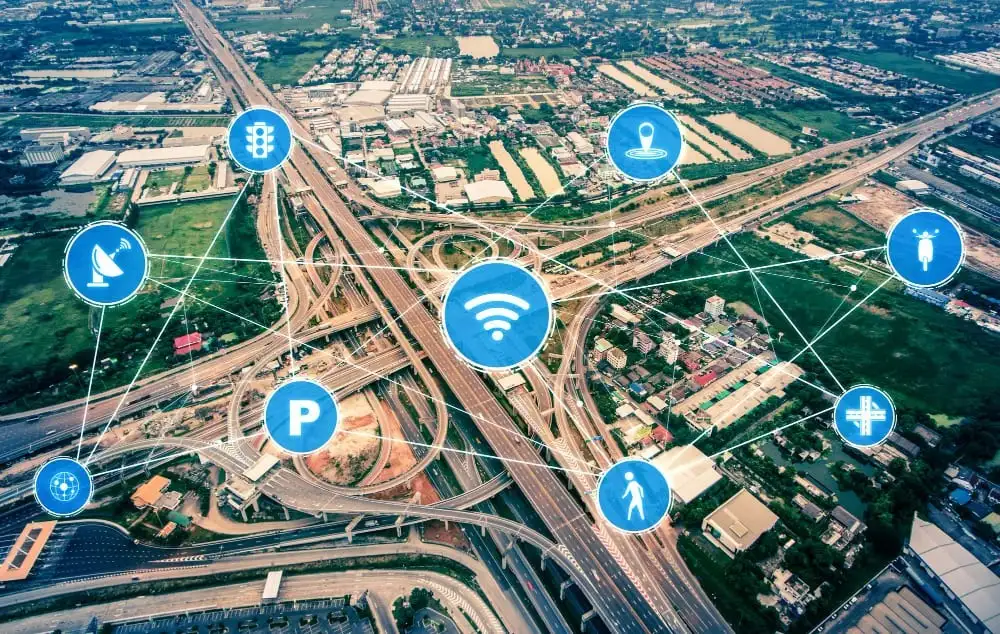
    For smart cities, GIS is essential because every urban system—roads, water pipelines, electricity networks, traffic signals, public safety, waste management—exists in a geographic space. GIS helps connect these systems and manage them more efficiently.

    How GIS Mapping Powers Smart City Development

    GIS mapping serves as the technological backbone of smart city development by synthesizing diverse, real-time data into a unified, actionable framework. By integrating layers such as transportation networks, land usage, and population distribution with critical utility infrastructure and environmental metrics, GIS allows urban planners to move beyond departmental silos.

    This multidimensional approach—further enriched by satellite and drone imagery—transforms the city into a visible, dynamic ecosystem where the relationship between streetlights, air quality, and traffic flow can be analyzed simultaneously. Ultimately, this geographic intelligence empowers leaders to make precise, data-driven decisions that improve efficiency and quality of life across the entire urban landscape.

    Top 9 GIS Mapping Use Cases Powering Smart Cities & Infrastructure

    Let’s look at the most impactful and practical GIS applications being used in smart cities and infrastructure projects today.

    1. Urban Planning and Land Use Management

    Urban development requires structured planning—where to build, what to build, and how to ensure long-term sustainability. GIS helps planners identify growth patterns, land availability, and development constraints.

    GIS enables:

    • Zoning and land-use planning

    • Master planning for city expansion

    • Identifying suitable land parcels for public projects

    • Mapping unauthorized constructions and encroachments

    • Impact analysis of new infrastructure projects

    Instead of relying on static reports, smart city planners can visualize development scenarios using interactive GIS dashboards.

    2. Smart Transportation and Traffic Management

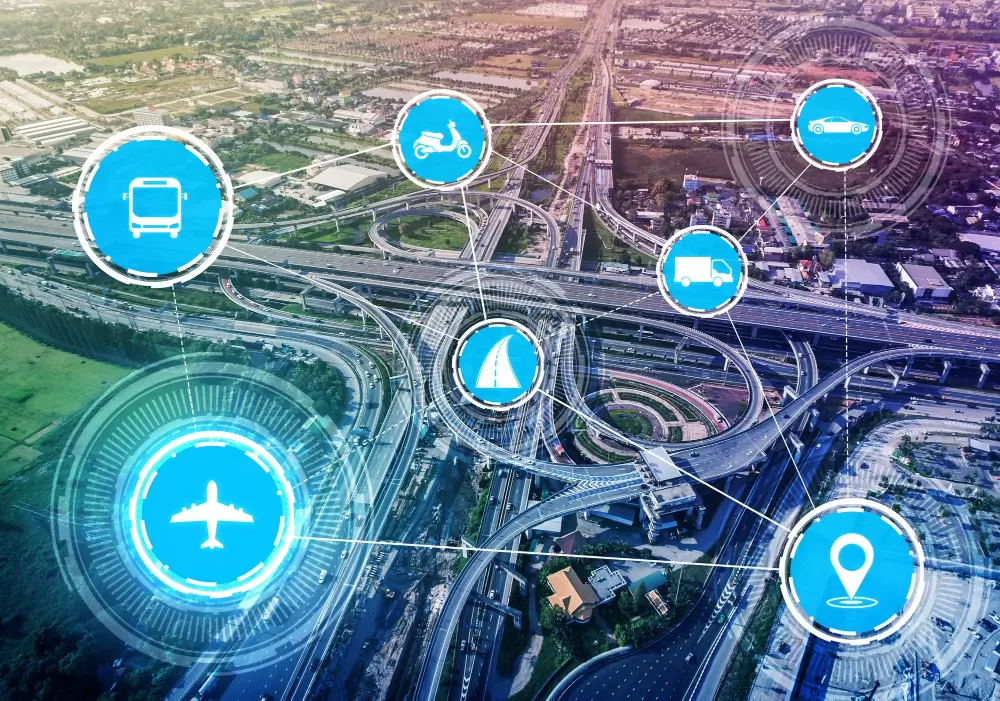
    Traffic congestion is one of the biggest challenges in urban India. Smart mobility depends on analyzing traffic flow, identifying bottlenecks, and optimizing routes for both private and public transport.

    With GIS mapping, authorities can:

    • Monitor congestion hotspots

    • Analyze accident-prone zones

    • Optimize traffic signals and junction layouts

    • Plan alternate routes and bypass corridors

    • Improve public transport route planning

    Over time, GIS can also support long-term initiatives such as integrated metro, bus, and multimodal transport networks by improving planning accuracy.

    3. Asset Management for Public Infrastructure

    Smart cities run on public assets: streetlights, water valves, power transformers, CCTV cameras, roads, bridges, signboards, and more. Managing these assets manually is costly and inefficient.

    GIS-based asset mapping helps governments and civic bodies:

    • Create an accurate inventory of city assets

    • Track asset condition and maintenance schedules

    • Identify asset gaps across regions

    • Reduce service downtime through faster repairs

    • Improve accountability through geo-tagged records

    This is one of the most practical and high-ROI uses of GIS, especially for municipal bodies focused on service delivery improvements.

    4. Water Supply and Pipeline Network Monitoring

    Water is one of the most critical—and stressed—resources for growing cities. Leakage, illegal connections, and poor monitoring can lead to heavy losses and supply disruption.

    GIS helps utilities manage water networks by enabling:

    • Mapping of pipeline networks and distribution zones

    • Leak detection and hotspot identification

    • Monitoring pressure zones and flow rates

    • Planning new water lines based on demand mapping

    • Visualizing real-time supply status across regions

    When integrated with IoT sensors, GIS becomes even more powerful, enabling real-time alerts and predictive maintenance.

    5. Disaster Management and Emergency Response

    Whether it’s floods, landslides, fires, earthquakes, or industrial incidents, emergency response depends on speed and accurate situational awareness. GIS enables authorities to respond faster and allocate resources efficiently.

    GIS can support:

    • Flood risk mapping and drainage analysis

    • Identifying evacuation routes and shelter locations

    • Real-time incident mapping and resource allocation

    • Tracking emergency vehicles and field teams

    • Monitoring disaster impact zones using satellite imagery

    This makes GIS an essential tool not only for smart cities but also for climate resilience planning.

    6. Solid Waste Management and Sanitation Planning

    Solid waste management is a major operational challenge in cities. Routes must be optimized, bins must be tracked, and collection schedules need to be managed efficiently.

    GIS helps by enabling:

    • Geo-tagging of bins and collection points

    • Route optimization for waste collection vehicles

    • Identifying missed pickups or underserved areas

    • Planning landfill sites and waste transfer stations

    • Monitoring sanitation performance across zones

    This use case supports cleaner cities while reducing fuel consumption and operational costs.

    7. Smart Street Lighting and Energy Optimization

    Street lighting is one of the biggest municipal electricity expenses. Smart street lighting projects are powered by GIS through mapping and monitoring of lighting infrastructure.

    GIS supports:

    • Mapping existing streetlight points

    • Identifying high-need areas (dark spots)

    • Monitoring faults and maintenance schedules

    • Optimizing energy usage through smart controls

    This results in improved public safety while keeping energy spending under control.

    8. Environmental Monitoring and Sustainability Projects

    Smart cities must also be sustainable cities. GIS plays a vital role in monitoring environmental conditions and planning eco-friendly interventions.

    Common GIS applications include:

    • Air quality mapping and pollution hotspot tracking

    • Mapping green spaces and urban forest projects

    • Heat map analysis for urban heat islands

    • Water body monitoring and restoration planning

    • Noise pollution and waste dumping monitoring

    These insights help cities plan long-term environmental action instead of reactive measures.

    9. Smart Governance and Citizen Service Delivery

    Citizens expect fast, transparent, and efficient service delivery. GIS enables governance teams to manage issues geographically and improve response times.

    With GIS-enabled citizen service models, authorities can:

    • Map citizen complaints by ward/zone

    • Prioritize areas with high service gaps

    • Allocate field teams efficiently

    • Track service completion with geo-tagged proof

    • Improve accountability with data-based monitoring

    This leads to better citizen satisfaction and measurable improvements in municipal services.

    Key Benefits of GIS Mapping for Smart Cities

    GIS brings value across planning, operations, and governance. Some of the most powerful benefits include:

    Key benefits of GIS mapping for smart cities including planning, cost reduction, resilience and public safety

    Wrapping Up!

    GIS mapping is no longer just a support tool—it has become a foundational technology driving smart city development and modern infrastructure planning. In 2026, cities that adopt GIS effectively gain a major advantage: they can plan smarter, respond faster, allocate resources efficiently, and deliver better public services.

    From transport and water management to disaster response and sustainability initiatives, GIS is empowering governments and enterprises to transform how cities function—making them more connected, resilient, and future-ready.

    For organizations working on smart city projects, partnering with a technology provider like SCS Tech India that understands GIS implementation at scale can make all the difference. With the right strategy, data systems, and deployment approach, GIS can become one of the highest-impact investments for infrastructure modernization.

  • What Happens When GIS Meets IoT: Real-Time Mapping for Smarter Cities

    What Happens When GIS Meets IoT: Real-Time Mapping for Smarter Cities

    Urban problems like traffic congestion and energy wastage are on the increase as cities get more connected. 

    While the Internet of Things (IoT) generates a great deal of data, it often lacks spatial awareness, so cities cannot respond in an effective manner. In practice, 74% of IoT projects are considered to fail, often due to issues like integration challenges, insufficient skills, and poorly defined business cases. 

    Including Geographic Information Systems (GIS) with IoT offers cities location-based real-time intelligence to make traffic, energy, and safety management decisions more informed. The integration of GIS with IoT is the key to transforming urban data into actionable intelligence that maximizes city operations.

    The Impact of IoT Without GIS Mapping: Why Spatial Context Matters

    In today’s intelligent cities, IoT devices are amassing enormous quantities of data regarding traffic, waste disposal, energy consumption, and others. Yet without the indispensable geographic context of GIS, such data can stay disconnected, rendering cities with siloed, uninterpretable data. 

    IoT data responds to the query of “what” is occurring, yet GIS responds to the all-important question of “where” it is occurring—and spatial awareness is fundamental for informed, timely decision-making.

    Challenges faced by cities without GIS mapping:

    • Limited Understanding of Data Location: IoT sensors can sense problems, such as an increase in traffic jams, but without GIS, one does not know where precisely the issue lies. Is it a concentrating bottleneck or a city-wide problem? Without geospatial context, deciding which routes to upgrade is a shot in the dark.
    • Inefficiency in Response Time: If the whereabouts of a problem are not known, it will take longer to respond to it. For example, waste collection vehicles can receive information about a full bin, but without GIS, it is not known which bin to service first. This can cause inefficiencies and delays.
    • Difficult Pattern Discovery: It’s difficult for urban planners to determine patterns if data isn’t geographically based. For instance, crime areas within a neighborhood won’t reveal themselves until you put crime data on top of traffic flow maps, retail maps, or other IoT maps.
    • Blind Data: Context-less data is worthless. IoT sensors are tracking all sorts of metrics, but without GIS to organize and visualize that data on a geographic basis, it’s often overwhelming and worthless. Cities may be tracking millions of data points with no discernible plan about how to react to them.

    By integrating GIS with IoT, cities can shift from reactive to proactive management, ensuring that urban dynamics are continuously improved in real-time.

    How Real-Time GIS Mapping Enhances Urban Management

    Edge + GIS Mapping

    IoT devices stream real-time telemetry—air quality levels, traffic flow, water usage—but without GIS, this data lacks geospatial context.

    GIS integrates these telemetry feeds into spatial data layers, enabling dynamic geofencing, hotspot detection, and live mapping directly on the city’s grid infrastructure. This allows city systems to trigger automated responses—such as rerouting traffic when congestion zones are detected via loop sensors, or dispatching waste trucks when fill-level sensors cross geofenced thresholds.

    Instead of sifting through unstructured sensor logs, operators get geospatial dashboards that localize problems instantly, speeding up intervention and reducing operational lag.

    That’s how GIS mapping services transform isolated IoT data points into a unified, location-aware command system for real-time, high-accuracy urban management.

    In detail, here’s how real-time GIS mapping improves urban management efficiency:

    1. Real-Time Decision Making

    With GIS, IoT data can be overlaid on a map, modern GIS mapping services enable cities to make on-the-fly decisions by integrating data streams directly into live, spatial dashboards, making responsiveness a built-in feature of urban operations. Whether it’s adjusting traffic signal timings based on congestion, dispatching emergency services during a crisis, or optimizing waste collection routes, real-time GIS mapping provides the spatial context necessary for precise, quick action.

    • Traffic Management: Real-time traffic data from IoT sensors can be displayed on GIS maps, enabling dynamic route optimization and better flow management. City officials can adjust traffic lights or divert traffic in real time to minimize congestion.
    • Emergency Response: GIS mapping enables emergency responders to access real-time data about traffic, weather conditions, and road closures, allowing them to make faster, more informed decisions.

    2. Enhanced Urban Planning and Resource Optimization

    GIS allows cities to optimize infrastructure and resources by identifying trends and patterns over time. Urban planners can examine data in a spatial context, making it easier to plan for future growth, optimize energy consumption, and reduce costs.

    • Energy Management: GIS can track energy usage patterns across the city, allowing for more efficient allocation of resources. Cities can pinpoint high-energy-demand areas and develop strategies for energy conservation.
    • Waste Management: By combining IoT data on waste levels with GIS, cities can optimize waste collection routes and schedules, reducing costs and improving service efficiency.

    3. Improved Sustainability and Liveability

    Cities can use real-time GIS mapping to make informed decisions that promote sustainability and improve liveability. With a clear view of spatial patterns, cities can address challenges like air pollution, water management, and green space accessibility more effectively.

    • Air Quality Monitoring: With real-time data from IoT sensors, GIS can map pollution hotspots and allow city officials to take corrective actions, like deploying air purifiers or restricting traffic in affected areas.
    • Water Management: GIS can help manage water usage by mapping areas with high consumption or leakage, ensuring that water resources are used efficiently and wastefully high-demand areas are addressed.

    4. Data-Driven Policy Making

    Real-time GIS mapping provides city officials with a clear, data-backed picture of urban dynamics. By analyzing data in a geographic context, cities can create policies and strategies that are better aligned with the actual needs of their communities.

    • Urban Heat Islands: By mapping temperature data in real-time, cities can identify areas with higher temperatures. This enables them to take proactive steps, such as creating more green spaces or installing reflective materials, to cool down the environment.
    • Flood Risk Management: GIS can help cities predict flood risks by mapping elevation data, rainfall patterns, and drainage systems. When IoT sensors detect rising water levels, real-time GIS data can provide immediate insight into which areas are at risk, allowing for faster evacuation or mitigation actions.

    Advancements in GIS-IoT Integration: Powering Smarter Urban Decisions

    The integration of GIS and IoT isn’t just changing urban management—it’s redefining how cities function in real time. At the heart of this transformation lies a crucial capability: spatial intelligence. Rather than treating it as a standalone concept, think of it as the evolved skill set cities gain when GIS and IoT converge.

    Spatial intelligence empowers city systems to interpret massive volumes of geographically referenced data—on the fly. And with today’s advancements, that ability is more real-time, accurate, and actionable than ever before. As this shift continues, GIS companies in India are playing a critical role in enabling municipalities to implement smart city solutions at scale.

    What’s Fueling This Leap in Capability?

    Here’s how recent technological developments are enhancing the impact of real-time GIS in urban management:

    • 5G Connectivity: Ultra-low latency enables IoT sensors—from traffic signals to air quality monitors—to stream data instantly. This dramatically reduces the lag between problem detection and response.
    • Edge Computing: By processing data at or near the source (like a traffic node or waste disposal unit), cities avoid central server delays. This results in faster analysis and quicker decisions at the point of action.
    • Cloud-Enabled GIS Platforms: Cloud integration centralizes spatial data, enabling seamless, scalable access and collaboration across departments.
    • AI and Predictive Analytics in GIS: With machine learning layered into GIS, spatial patterns can be not only observed but predicted. For instance, analyzing pedestrian density can help adjust signal timings before congestion occurs.
    • Digital Twins of Urban Systems: Many cities are now creating real-time digital replicas of their physical infrastructure. These digital twins, powered by GIS-IoT data streams, allow planners to simulate changes before implementing them in the real world.

    Why These Advancements Matter Now

    Urban systems are more complex than ever—rising populations, environmental stress, and infrastructure strain demand faster, smarter decision-making. What once took weeks of reporting and data aggregation now happens in real time. Real-time GIS mapping isn’t just a helpful upgrade—it’s a necessary infrastructure for:

    • Preemptively identifying traffic bottlenecks before they paralyze a city.
    • Monitoring air quality by neighborhood and deploying mobile clean-air units.
    • Allocating energy dynamically based on real-time consumption patterns.

    Rather than being an isolated software tool, GIS is evolving into a live, decision-support system. It is an intelligent layer across the city’s digital and physical ecosystems.

    For businesses involved in urban infrastructure, SCS Tech provides advanced GIS mapping services that take full advantage of these cutting-edge technologies, ensuring smarter, more efficient urban management solutions.

    Conclusion

    Smart cities aren’t built on data alone—they’re built on context. IoT can tell you what’s happening, but without GIS, you won’t know where or why. That’s the gap real-time mapping fills.

    When cities integrate GIS with IoT, they stop reacting blindly and start solving problems with precision. Whether it’s managing congestion, cutting energy waste, or improving emergency response, GIS and IoT are indeed gamechangers.

    At SCS Tech, we help city planners and infrastructure teams make sense of complex data through real-time GIS solutions. If you’re ready to turn scattered data into smart decisions, we’re here to help.

  • How GIS Companies in India Use Satellites and Drones to Improve Land Records & Property Management?

    How GIS Companies in India Use Satellites and Drones to Improve Land Records & Property Management?

    India, occupying just 2.4% of the world’s entire land area, accommodates 18% of the world’s population, resulting in congested land resources, high-speed urbanization, and loss of productive land. For sustainable land management, reliable land records, effective land use planning, and better property management are essential.

    To meet the demand, Geographic Information System (GIS) companies use satellite technology and drones to establish precise, transparent, and current land records while facilitating effective property management. The latest technologies are revolutionizing land surveying, cadastral mapping, property valuation, and land administration, enhancing decision-making immensely.

    This in-depth blog discussion addresses all steps involved in how GIS companies in India utilize satellites and drones to improve land records and property management.

    How Satellite Technology is Used in Land Records & Property Management

    Satellite imagery is the foundation of contemporary land management, as it allows for exact documentation, analysis, and tracking of land lots over massive regions. In contrast to error-prone, time-consuming ground surveys, satellite-based land mapping provides high-scale, real-time, and highly accurate knowledge.

    how satellite technology aids land records management

    The principal benefits of employing satellites in land records management are:

    • Extensive Coverage: Satellites can simultaneously cover entire states or the whole nation, enabling mass-scale mapping.
    • Availability of Historical Data: Satellite images taken decades ago enable monitoring of land-use patterns over decades, facilitating settlement of disputes relating to ownership.
    • Accessibility from Remote Locations: No requirement for physical field visits; the authorities can evaluate land even from remote areas.

    1. Cadastral Mapping – Determining Accurate Property Boundaries

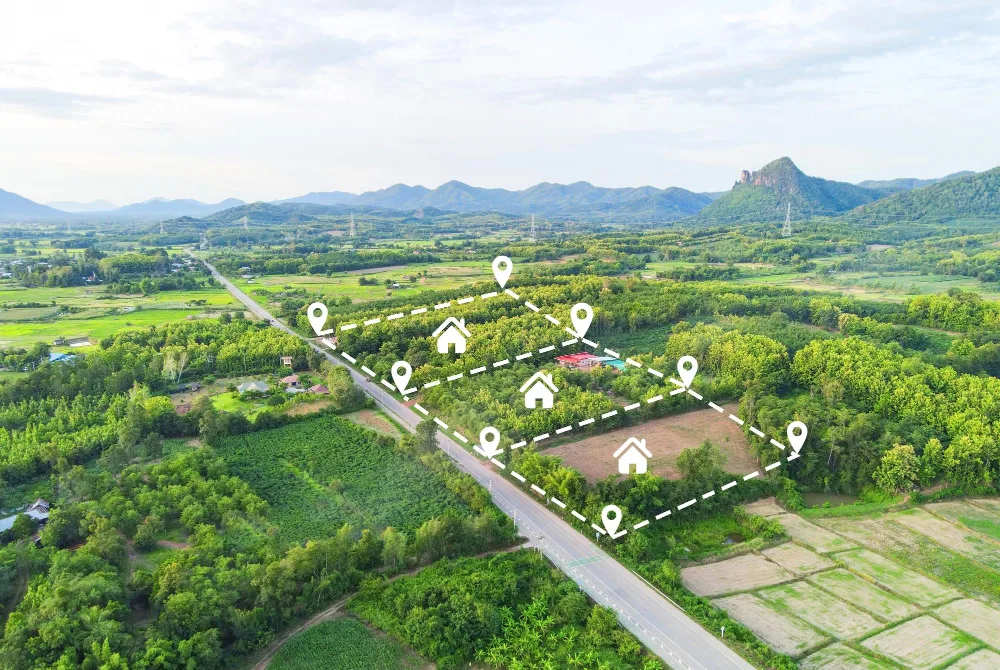
    Cadastral maps are the legal basis for property ownership. Traditionally, they were manually drafted, with the result that they contained errors, boundary overlap, and owner disputes. Employing satellite imaging, GIS companies in India can now:

    • Map land parcels digitally, depicting boundaries accurately.
    • Cross-check land titles by layering historical data over satellite-derived cadastral data.
    • Identify encroachments by matching old records against new high-resolution imagery.

    For example, a landowner asserting additional land outside their legal boundary can be easily located using satellite-based cadastral mapping, assisting local authorities in correcting such instances.

    2. Land Use and Land Cover Classification (LULC)

    Land use classification is essential for urban, conservation, and infrastructure planning. GIS companies in India examine satellite images to classify land, including:

    • Agricultural land
    • Forests and protected areas
    • Residential, commercial, and industrial areas
    • Water bodies and wetlands
    • Barren land

    Such a classification aids the government in regulating zoning laws, tracking illegal land conversions, and enforcing environmental rules.

    For instance, the illegal conversion of agricultural land into residential areas can be easily identified using satellite imagery, allowing regulatory agencies to act against unlawful real estate development simultaneously.

    3. Automated Change Detection – Tracking Illegal Construction & Encroachments

    One of the biggest challenges in land administration is the proliferation of illegal constructions and unauthorized encroachments. Satellite-based GIS systems offer automated change detection, wherein:

    • Regular satellite scans detect new structures that do not match approved plans.
    • Illegal mining, deforestation, or land encroachments are flagged in real-time.
    • Land conversion violations (e.g., illegally converting wetlands into commercial zones) are automatically reported to authorities.

    For example, a satellite monitoring system identified the unauthorized expansion of a residential colony into government land in Rajasthan, which prompted timely action and legal proceedings.

    4. Satellite-Based Property Taxation & Valuation

    Correct property valuation is critical for equitable taxation and the generation of revenues. Property valuation traditionally depended on physical surveys, but satellites have made it a streamlined process:

    • Location-based appraisal: Distance to highways, commercial centers, and infrastructure developments is included in the tax calculation.
    • Footprint building analysis: Machine learning-based satellite imaging calculates covered areas, avoiding tax evasion.
    • Market trend comparison: Satellite photos and property sale data enable the government to levy property taxes equitably.

    For example, the municipal government in Bangalore utilized satellite images to spot almost 30,000 properties that had not been appropriately reported in tax returns, and the property tax revenue went up.

    How Drone Technology is Applied to Land Surveys & Property Management

    While satellites give macro-level information, drones collect high-accuracy, real-time, and localized data. Drones are indispensable in regions where extreme precision is required, such as:

    • Urban land surveys with millimeter-level accuracy.
    • Land disputes demanding legally admissible cadastral records.
    • Surveying terrain in hilly, forested, or inaccessible areas.
    • Rural land mapping under government schemes such as SVAMITVA.

    1. Drone-Based Cadastral Mapping & Land Surveys

    Drones with LiDAR sensors, high-resolution cameras, and GPS technology undertake automated cadastral surveys, allowing:

    • Accurate land boundary mapping, dispelling disputes.
    • Faster surveying (weeks rather than months), cutting down administrative delays.
    • Low-cost operations compared to conventional surveying.

    For example, drones are being employed to map rural land digitally under the SVAMITVA Scheme, issuing official property titles to millions of landholders.

    2. 3D Modeling for Urban & Infrastructure Planning

    Drones produce precise 3D maps that offer:

    • Correct visualization of cityscapes for planning infrastructure projects.
    • Topography models that facilitate flood control and disaster management.
    • Better land valuation insights based on elevation, terrain, and proximity to amenities.

    For example, Mumbai’s urban planning department used drone-based 3D mapping to assess redevelopment projects, ensuring efficient use of land resources.

    3. AI-Powered Analysis of Drone Data

    Modern GIS software integrates Artificial Intelligence (AI) and Machine Learning (ML) to:

    • Detect unauthorized construction automatically.
    • Analyze terrain data for thoughtful city planning.
    • Classify land parcels for taxation and valuation purposes.

    For instance, a Hyderabad-based drone-based AI system identified illegal constructions and ensured compliance with urban planning regulations.

    Integration of GIS, Satellites & Drones into Land Information Systems

    Satellite and drone data are integrated into Intelligent Land Information Systems (ILIS) by GIS companies in India that encompass:

    A. System of Record (Digital Land Registry)

    • Geospatial database correlating land ownership, taxation, and legal titles.
    • Blockchain-based digital land records resistant to tampering.
    • Uninterrupted connectivity with legal and financial organizations.

    B. System of Insight (Automated Land Valuation & Analytics)

    • Artificial intelligence-based property valuation models based on geography, land topology, and urbanization.
    • Automated taxation ensures equitable revenue collection.

    C. System of Engagement (Public Access & Governance)

    • Internet-based GIS portals enable citizens to confirm property ownership electronically.
    • Live dashboards monitor land transactions, conflicts, and valuation patterns.

    Conclusion

    GIS, satellite imagery, and drones have transformed India’s land records and property management by making accurate mapping, real-time tracking, and valuation efficient. Satellites give high-level insights, while drones provide high-precision surveys, lowering conflicts and enhancing taxation.

    GIS companies in India like SCS Tech, with their high-end GIS strength, facilitate such data-based land administration, propelling India towards a transparent, efficient, and digitally integrated system of governance, guaranteeing equitable property rights, sustainable planning, and economic development.

  • Understanding Big Data in GIS Applications: How It Shapes Our World

    Understanding Big Data in GIS Applications: How It Shapes Our World

    What if we could predict traffic jams, track pollution spread, and optimize city planning—all in real-time? Significant data infusion into geographical information systems (GIS) and advanced GIS services has made all these possible. The geospatial data analytics market has been growing globally, valued at $88.3 billion since 2020. This growth shows how organizations are using big data in GIS applications to make smarter decision

    In this blog, let’s discuss how Big Data is revolutionizing GIS applications, from cloud-based platforms to drone mapping services in India, and how GIS and IoT solve real-world problems.

    What Is GIS and Why Big Data Matters?

    GIS is a tool that enables us to visualize, analyze, and interpret spatial data—that is, data associated with specific locations on Earth. Think of it as a map with multiple layers of information, showing everything from land use to population density. Paired with Big Data—massive datasets with variety and speed—GIS transforms into a powerhouse for understanding complex relationships.

    For instance:

    • Big Data from IoT Sensors: The sensors in smart cities monitor real-time air quality, traffic, and temperature and feed into GIS systems with updated knowledge.
    • Crowdsourced Data: Platforms like OpenStreetMap enable individuals to share local knowledge, which feeds into maps with detailed information and accuracy.

    How Big Data Empowers GIS Applications

    Big data in GIS applications transforming mapping
    Big data in GIS applications transforming mapping

    Big Data empowers GIS in ways that methods of the past could not. Here’s how:

    1. Urban Planning Made Smarter

    • Land Use Analysis: Satellite imagery coupled with socioeconomic data helps planners track changes in land use over time. This ensures cities grow sustainably.
    • Transportation Modeling: GPS data from vehicles helps optimize routes and reduce congestion. For example, public transport systems can change routes dynamically based on traffic patterns.
    • Community Engagement: Interactive maps allow citizens to visualize and comment on urban projects, fostering transparency.

    2. Disaster Management: Saving Lives

    • Risk Assessment: GIS analyzes weather patterns and historical data to pinpoint areas at risk of flooding or earthquakes.
    • Real-Time Monitoring: During disasters, data from IoT devices and social media feeds helps responders understand the situation instantly.
    • Post-Disaster Recovery: Aerial drone images provide clear visuals of affected areas, speeding up relief efforts.

    3. Environmental Monitoring: Protecting the Planet

    • Climate Studies: Long-term satellite data reveals how vegetation and glaciers change over time due to global warming.
    • Biodiversity Conservation: GIS maps endangered species’ habitats, helping identify critical areas that require conservation.
    • Pollution Tracking: Air quality sensors feed into GIS systems that track how pollution spreads throughout cities, helping policymakers take action.

    4. Public Health: Monitoring and Controlling Diseases

    • Outbreak Mapping: GIS helped to visualize the case patterns in the COVID-19 pandemic. It allowed authorities to focus their resources on high-risk areas.
    • Resource Allocation: Through GIS, hospitals and clinics analyze population density in the area to provide better services.

    5. Logistics and Transportation: Moving Smarter

    • Route Optimization: Companies like UPS apply GIS to analyze traffic and deliver packages faster.
    • Fleet Management: GPS-enabled trucks feed the GIS system with location data, thus enabling real-time tracking and efficient route planning.

    Cutting-edge technologies in GIS

    GIS is growing with exciting technologies that make it even more powerful:

    Cloud-Based GIS Platforms

    Cloud technology has revolutionized GIS, making it accessible and scalable:

    • Real-Time Data Processing: Platforms like Esri’s ArcGIS Online allow seamless spatial data sharing and processing.
    • Collaboration: Teams can work on the same map from anywhere, fostering innovation and efficiency.
    • Cost-Effectiveness: Cloud-based GIS eliminates the need for expensive hardware, making it ideal for organizations of all sizes.

    Drone Mapping Services in India

    India’s rapid adoption of drone technology is transforming GIS applications:

    • Precision Mapping: Drones take high-resolution images for infrastructure projects and agriculture.
    • Disaster Response: Drones provide critical aerial visuals to aid recovery after natural disasters.
    • Urban Planning: Cities like Bangalore use drone data to plan better transportation and housing.

    GIS and IoT Applications

    IoT devices, from weather stations to traffic sensors, feed GIS systems with valuable real-time data:

    • Smart Cities: Sensors monitor everything from electricity usage to water flow, making for more innovative and sustainable urban environments.
    • Agriculture: IoT-enabled sensors monitor soil moisture and crop health for farmers to optimize yields.
    • Environmental Monitoring: Networks of IoT devices measure air and water quality, feeding GIS with critical ecological data.

    Challenges in Integrating Big Data with GIS

    With all its benefits, big data in GIS applications is fraught with its challenges:

    • Data Quality: Inaccurate or out-of-date data can result in poor decisions. Validation is a continuous process.
    • Technical Expertise: Professionals must be trained in geospatial analysis and data science, which requires extensive training.
    • Privacy Issues: The use of personal location data raises ethical issues. Clear policies and transparency are critical to building public trust.

    Future Directions for Big Data in GIS

    The integration of emerging technologies will redefine GIS:

    • AI and Machine Learning: These technologies will further power predictive analytics in GIS, automating pattern recognition and forecasting.
    • Cloud-Based GIS Platforms: Cloud storage will make smaller organizations more accessible and collaborative.
    • Drone Mapping Services: Drones equipped with GIS technology will continue to provide high-resolution data for agriculture, urban planning, and disaster response in India.
    • GIS and IoT Applications: IoT networks expand the scope of real-time monitoring from innovative city management to wildlife conservation.

    Conclusion

    The intersection of big data in GIS applications has opened doors for new understanding and solutions to complex geographic problems. From improving urban planning to enhancing disaster response and protecting the environment, GIS in India is playing a vital role in shaping a more innovative and sustainable world.

    As cloud-based GIS platforms and drone mapping services in India continue to evolve, companies like SCS Tech play an important role in driving innovation and delivering robust solutions. By addressing challenges such as data quality and privacy, we can utilize the full potential of Big Data in GIS applications, creating solutions that truly make a difference.


  • How E-Governance Solutions Are Enhancing Citizen Participation?

    How E-Governance Solutions Are Enhancing Citizen Participation?

    Have you noticed how technology changes how governments engage with citizens? E-governance solutions are no longer a buzzword but a movement rewriting the governance rules. From speeding up social benefit transfers, innovations such as DBT systems have sparked a 192% surge in efficiency. Such advancements make governance more innovative, inclusive, and genuinely citizen-centric.

    In this blog, let’s explore how e-governance solutions, powered by advancements in AI and robust IT infrastructure, are transforming governance. These solutions incorporate active citizen participation in administration, making public services more responsive.

    How E-Governance Solutions Are Enhancing Citizen Participation?

    E-Governance boosting citizen participation
    E-Governance boosting citizen participation

    1. Digital Platform for Communication

    One of the cornerstones of e-governance is utilizing a digital platform to bring governance closer to citizens. There are real-time engagements such that citizens are constantly and regularly informed and involved with the government:

    • Web Portals and Mobile Apps: These digital gateways provide instant access to services like bill payments, license applications, and complaint registrations. Citizens do not have to visit government offices to carry out these tasks, saving them time and effort. With mobile apps, users are provided with user-friendly interfaces through which they can register complaints, access public schemes, and get updates.
    • Social Media: It is the platform through which two-way communication takes place. Platforms include Twitter, Facebook, and Instagram. Governments can inform citizens about policies, events, and public initiatives at a very fast pace, and the citizens can voice their concerns and give feedback. Through social media, governments can keep track of public opinion and respond to concerns immediately.

    These digital platforms make interaction easier and make governance more accessible and inclusive. They bridge the gap between government agencies and citizens, ensuring that everyone, regardless of location, can stay connected.

    2. E-Participation Tools

    E-governance goes beyond one-way communication by actively involving citizens in decision-making through participatory tools.

    • Online Surveys and Polls: Governments conduct surveys to gather public opinions on new policies, projects, or initiatives. This direct feedback allows decision-makers to align policies with citizen needs and preferences. For example, before launching a new law, authorities can gauge its acceptance through online polls.
    • Discussion Forums: Structured forums provide avenues for citizens to discuss and deliberate on policy issues. Such avenues allow informed participation, so that people may share their ideas, develop solutions collectively, and input into shaping community projects.
    • Crowdsourcing Programs: The government invites citizens to submit innovative ideas or solutions for public challenges. This makes them feel owned and included. For instance, citizens can suggest improvements in infrastructure, education, or health systems through specific crowdsourcing platforms.

    These tools empower citizens to take an active role in governance, ensuring that policies reflect diverse voices and community needs.

    3. Data Transparency and Accessibility

    Building Trust is founded on transparency and e-governance creates solutions for providing the public sector operations much more transparent and accountable.

    • Open Data Portals: This allows citizens to explore the available data regarding budgets, projects, and expenses. Analyzing this information can help explain to people how funds for public services are allocated and utilized, holding authorities accountable.
    • Real-Time Tracking Systems: These allow citizens to keep track of how their applications, complaints, or government services are being carried out. A citizen could apply for welfare benefits or a building permit – the status could be kept online, eliminating frustration or uncertainty.

    Transparency through such tools will not only create trust but also enhance citizens’ ability to be more actively involved in governance processes. People’s participation is meaningful when they can see the processes of decision-making as well as resource allocation.

    How E-Governance Solutions for Improved Public Sector Efficiency?

    The new solutions for e-governance redefine the delivery of services within the public sector, relying on Information Technology (IT), then Information and Communication Technologies (ICTs), and web-based platforms to facilitate effective, transparent, and accessible governance. Whether it is health or transportation, urban development, or utilities, these new solutions are changing the experience of governance for citizens.

    Integrated Services through Centralized Systems

    One of the key features of e-governance is that it combines various government services on a single platform. Such centralized systems allow for:

    • Streamlined Service Delivery: Citizens can file taxes, apply for permits, and enroll in benefits from a single portal.
    • Improved Interdepartmental Coordination: Data sharing across departments results in faster responses and reduced redundancy.
    • User-Centric Design: Easy-to-use interfaces make it easier for people to find and use services.

    For instance, an integrated platform may offer the facility to pay property tax, lodge a complaint, and obtain a driving license in one place.

    Automated Document Processes

    The olden days of paperwork, along with electronic documents and workflow management, are long gone. Such software programs automate the document handling and approval process, and therefore lead to the following:

    • Quick Delivery of Services: Service delivery happens fast without being hindered by the time-consuming nature of manual processes.
    • Less Human Errors: Automated workflows help minimize human errors.
    • More Accurate Record Keeping: Digital records promote more accountability and easy accessibility for later use.

    These automations mean real-time benefits to citizens in terms of waiting time to receive permits or certification, for example.

    Safe and Smart City Solutions

    Governments are using the IoT (Internet of Things) and AI to create better cities. These solutions benefit by:

    • Optimized Resource Allocation: Smart sensors monitor traffic, energy use, and safety metrics in real-time.
    • Proactive Services: AI-powered analytics predict service demands, such as waste collection schedules or public transport requirements.
    • Improved Safety: IoT-enabled surveillance systems and emergency response tools create safer communities.

    For instance, smart traffic management systems can reduce congestion while improving road safety for citizens.

    Conclusion

    E-governance solutions change governance by making the processes more transparent, effective, and participatory. They can enhance service delivery and citizen involvement by incorporating AI technologies into IT infrastructure solutions. Then, problems like the digital divide and data privacy exist for these solutions to be fully exploited.

    E-government, therefore, helps governments achieve a strong democracy, build up trust, and empower their citizens to take an active role in shaping their surroundings. The future of governance is easy: inclusivity, adaptability, and true people-serving technology solutions. This change provides a backdrop for an enabling force like SCS Tech, offering cutting-edge IT infrastructure solutions that make this novel development possible.

  • How GIS Mapping Services Is Changing Transport Planning for Smarter Roads and Railways?

    How GIS Mapping Services Is Changing Transport Planning for Smarter Roads and Railways?

    Are you aware that rising traffic congestion isn’t just slowing down commutes—it’s shortening lives? A study by the Harvard School of Public Health highlights the severity of this issue, highlighting the urgent need for advanced traffic management solutions. One promising approach is  (Geographic Information Systems) GIS mapping services.

    It offers innovative ways to optimize transport networks. But how are GIS technologies changing road and railway transport planning? How are they making roads and railways smarter and more sustainable?

    Read on further to learn how GIS significantly utilises data management, route optimization, asset management, and safety. GIS consultants play a key role in implementing these technologies effectively across industries. Also, discover how AI technology companies, through AI and cloud technology, can make future infrastructure smarter and more resilient.

    How GIS is Revolutionizing Transport Planning for Smarter Roads and Railways?


    How GIS mapping services enhance transport planning for smart roads and railways?

    #1. Improving Data Management in Transport Planning

    GIS mapping services provide a channel through which spatial data is essential to understanding the transport system and its planning. It can also be handled and analyzed crucially. It helps planners capture the big picture by combining multiple data sources, revealing insights into traffic patterns, land use, population distribution, etc.

    • Data Aggregation: GIS aggregates different data sources, such as satellite imagery, demographic data, and real-time traffic data. High-resolution satellite images reveal land use and infrastructure conditions. Meanwhile, demographic information highlights areas that need better connectivity. Traffic data from sensors and GPS devices help planners identify peak times and congestion hotspots.
    • Spatial Analysis: Utilizing GIS, planners can execute spatial analyses on how healthy regions are connected and the impact of new infrastructure. For example, they can determine service areas for public transportation or simulate how a new road would modify the local traffic patterns. Thus, it is possible to have improved investments in infrastructure and service planning.

    Enhanced data management by GIS mapping services helps planners understand transport networks holistically. It ensures that resources are applied where they are needed most.

    #2. Optimization of Routes in Roads and Railways

    Route optimization is one of the most potent applications of GIS in transport planning, thus helping to determine the best routes for new roads or railways. It makes route design easier because it can analyze the terrain, land use, and environmental features to minimize costs, avoid sensitive areas, and meet safety standards.

    • Terrain Analysis: Digital elevation models (DEMs) with GIS help planners review elevations and slopes to determine the least-cost construction routes. The process could be done using software like ArcGIS based on DEMs to look for steep slopes. This helps in creating alignments of new roads to increase safety.
    • Land Use and Environmental Mapping: Land use type mapping along the potential routes helps planners avoid sensitive environmental areas and comply with zoning regulations. Such analysis is essential in the design of routes that meet ecological and regulatory standards.
    • Traffic Simulation: GIS assists in traffic flow simulation, helping planners anticipate congestion and design better interventions. Real-time data on traffic will allow planners to foresee areas of congestion. This enables them to make infrastructure design adjustments that help avoid bottlenecks for more accessible and smoother traffic.

    These route optimizations ensure roads and railways are created with efficiency, sustainability, and reduced long-term costs.

    #3. Efficient Asset Management for Transport Infrastructure

    GIS mapping services serve as a means for transport agencies to handle their assets correctly, thereby keeping the transport infrastructure safe and reliable. Using GIS tools, one can provide detailed maps of assets like roads, bridges, and railways and then track and maintain their conditions.

    • Inventory Mapping: GIS asset databases will provide information on each asset’s condition, age, and maintenance history. For instance, ArcGIS’s Asset Management Module allows transport planners to visualize asset conditions so they can plan and schedule maintenance optimally.
    • Maintenance Scheduling: GIS can provide a basis for prioritizing maintenance based on urgency by analyzing historical data on asset wear and tear. This directs resources to the most critical areas. This approach to asset management through GIS enhances the lifespan of infrastructure and boosts overall safety and reliability.

    Asset management using GIS minimizes unexpected repairs but also maximizes investments in infrastructure, creating safer and more resilient transport networks.

    #4. Safety Improvements through GIS Mapping Services

    Safety in transport planning is one of the primary considerations, and through GIS mapping services, safety improvements can be ensured. As such, mapping identifies risk areas and designs effective responses in emergencies.

    • Hazard Mapping: With the help of GIS, hazardous places can be identified, like accident-prone zones or areas that are prone to natural disasters such as flooding. Accidents and environmental risks may be analyzed through GIS for patterns, which will help planners implement targeted safety improvements, like better signposting or road designs.
    • Emergency Response Planning: Transport agencies can support emergency planning by mapping critical infrastructures, hospitals, and fire stations using GIS. With real-time GPS, GIS enables transport agencies to make ready evacuation routes with quick responses towards emergencies.

    Safety through GIS-driven safety measures can reduce the possibility of accidents and improve preparedness for emergencies. This is achieved by creating transport systems that better protect the infrastructure and the community.

    Technological Innovations Towards Enhancing GIS in Transport Planning

    With the emergence of AI and cloud-based GIS solutions, the applications of GIS in transport planning are rapidly expanding.

    • AI and Predictive Analytics: AI-based GIS uses historical and real-time data to identify the need for maintenance and optimize traffic flow. Predictive models help transport planners forecast future traffic patterns, making it easier to design adaptable infrastructure.

    For instance, AI can analyze traffic and accident data to adjust signal timings or suggest new infrastructure that improves safety and flow.

    • Remote Sensing with Drones and Satellites: Drones capture high-resolution images of transport corridors with cameras and sensors. Rapid data gathering enhances the efficiency of planning and monitoring of infrastructure.

    Satellite imagery gives a broader view of land-use changes, providing valuable insights for planners. This helps them track how the expansion of urban areas is affecting transport needs.

    • Cloud-Based GIS for Collaborations: ArcGIS platforms offer the space to facilitate collaboration between transport planning projects. This includes collaboration from government agencies, private firms, and community organizations.

    The resource provisioning through the cloud is easily scalable as it can share the data without hassle. It also increases accessibility and flexibility to the GIS solutions.

    The above innovations make robust mapping services from GIS, ensuring accuracy in data, ease of collaboration, and efficiency of resources. This approach accounts for the complexities of transport planning.

    Conclusion

    As we look toward the future, GIS mapping services are set to transform transport planning, crafting road and rail networks that aren’t just routes but smart, sustainable pathways connecting us all. By integrating diverse data, route optimization, and asset management making it the bedrock of transport network design. This foundation will support both modern needs and future growth.

    GIS will play an even more vital role in shaping efficient and resilient transport systems as AI and cloud technologies advance. GIS companies in India like SCS Tech are at the forefront of this technology, and cities worldwide use GIS to create connected, future-proof networks. These networks are designed to be safe and sustainable.

  • 7 Key Features to Look for in Disaster Management Software for Urban Development

    7 Key Features to Look for in Disaster Management Software for Urban Development

    With expansion and growth comes an increase in the possibility of disaster occurrence, both natural and anthropogenic. There must be a designated focus on preparing cities for whatever nature brings. Leveraging technologies like natural disaster prediction can play a critical role in minimizing risks and enhancing preparedness. According to the Global Assessment Report (UNISDR, 2015), disasters cost an estimated $314 billion annually in the built environment alone.

    That’s where disaster management software steps into the scene, a crucial tool that helps cities plan, respond, and recover quickly in the face of crisis. But with so many out there, knowing what matters is what counts. Continue reading to learn the 7 essential characteristics to look for to deploy the most robust disaster management software for urban development.

    Here are 7 Key Features to Look for in Disaster Management Software

    7 Key Features to Look for in Disaster Management Software

    #1. Advanced GIS Mapping and Visualization

    The fundamental capabilities of disaster management software are GIS mapping services and visualization. The GIS functionalities provide a real-time view of affected areas, evacuation routes, and resources required in a disaster scenario.

    • Dynamic Mapping: The package will feature dynamic hotspot updates, enabling real-time tracking of disaster changes. It will support layered mapping, allowing users to visualize different data layers such as infrastructure, hazard zones, and population density on the provided maps.
    • Interactive and 3D Maps: Zoom, pan, and click on maps for more information with detailed views of the area. 3D visualization is particularly helpful in urban environments to assess the impacts of disasters such as floods or landslides on buildings and terrain.
    • Scenario Simulations: Software that simulates scenarios allows the user to model possible disaster situations. This feature is crucial for city planners while trying to predict the aftereffects of an inevitable disaster that could affect the infrastructure.

    #2. Comprehensive Incident and Resource Management

    The tracking of an incident and the management of resources effectively become crucial during a disaster response situation. Comprehensive incident management ensures that the responders are well-informed and that the procedure is carried out as quickly as possible to cause minimal damage.

    • Incident Logging: Incident management software should be logged in real time. In ideal ones, there should be standardized reporting templates for logging critical incident information, such as location, severity, and nature of the disaster. Attachments of multimedia photos and videos help enhance situational awareness.
    • Resource Tracking: Real-time tracking of resources like workforce, equipment, and supplies. More sophisticated systems will be able to geolocate all resources accurately so that positioning can be determined with high precision. The system will track the availability and status of critical assets, such as medical equipment, ambulances, or rescue people.
    • Task Management: The automation of task assignment through the skills available from responders ensures that the right personnel handle appropriate challenges. Features for tracking progress allow users to gauge the completion of tasks in real time, which increases coordination.

    #3. Situational Awareness in Real Time

    Situational awareness during disaster scenes is essential. The disaster management software must integrate live feeds of data from various sources so that updated information is gotten across to teams for appropriate decision-making.

    • Data Feeds Integration: The software should search for information from meteorological services, emergency broadcasts, and social media monitoring. Real-time weather updates and public sentiment tracking will help define emerging issues early.
    • Impact Assessment Tools: One can assess the immediate effects of a disaster if such capability is available. This includes modules that look into damage assessment from satellite or drone imagery and community impact metrics that quantify how populations are affected.
    • Alerts: Best disaster management software should automatically send alerts upon predetermined thresholds. Additionally, it should also allow for multi-language communication to respond to different communities’ multifaceted diversity appropriately.

    #4. Robust Data Collection/Analysis

    Effective decision-making in a disaster situation strictly depends on proper and integrated data collection. Incident management software must present flexible tools customized to suit data collection/analysis.

    • Self-Customizable Data Forms: It should allow the users to create their own data forms with any configuration suitable to the needs of the information required for the incident. First responders can use the field data collection app to enter their information on-site.
    • Predictive Analytics: It should provide advanced capabilities and methods to predict natural disasters or resource needs based on historical analysis. Trending analysis reports and the database on lessons learned track past performances to provide insight into future planning.

    #5. Improved Communication and Collaboration Tools

    Communication during a disaster may either save or consume lives. The disaster management software should ensure multi-channel communication and involve safe collaboration environments.

    • Multi-Channel Communication: Alerts and updates should be duly sent through SMS, email, and push notifications to reach as many people as possible. The social media integration with the software will enable teams to give news about updates to people quickly.
    • Secure Messaging Platforms: There is communication between teams; sensitive information has to be encrypted and only accessible to authorized personnel. Role-based access control (RBAC) ensures that information only reaches the right people.
    • Collaboration Workspaces: When disaster strikes, responders need immediate sharing of documents, images, and plans. Therefore, collaboration workspaces, with real-time editing features, allow teams to make decisions and make vital changes without delay.

    #6. Quick Activation

    Time is of the essence in disaster management. Rapid activation of the emergency personnel and response plans would make all the difference between quick and non-responsive organisations to a disaster. Incident management software should enable rapid deployment of emergency operations centres and allow teams to activate pre-configured response plans with a button.

    • Pre-Configured Action Plans: The software should enable organizations to establish and implement pre-configured action plans for different situations, reducing response delay.
    • Predefined Interfaces According to Role: The predefined interfaces, according to the role, will allow the responders to quickly access the tools and information they need, meaning fast and effective mobilization.

    That means that teams hit the ground running and are on time to make things effective in terms of the mobilization of resources.

    #7. Integration Capabilities with Other Systems

    Disaster management software needs to integrate with existing systems to be operational seamlessly.

    • API Support: The application should offer APIs to interface with existing emergency management systems, GIS platforms, and municipal databases. This helps ease data flow between different agencies involved in disaster management.
    • Data Migration Tools: Such software/systems should provide handy data migration tools to support the importing of historical data into the new system, and compliance with interoperability standards is maintained to ensure that the systems interoperate with national and regional emergency management frameworks.

    Key Takeaways

    Urban disaster management requires a tailored approach. By developing essential features such as advanced GIS mapping, real-time resource tracking, data collection, training simulations, and more, organizations can better prepare themselves for disasters and respond more quickly.

    The disaster management software selects the right opportunity for ready cities to face the growing urban development challenges. The most essential characteristics of cities using SCS Tech disaster management software include proactive preparation, rapid response, and quick recovery.