Blog

  • Smart Factory: the Way to Smarter Manufacturing

    Smart Factory: the Way to Smarter Manufacturing

    What is a smart factory?

    The National Institute of Standards and Technology of the United States of America (NIST) defines smart manufacturing as “fully-integrated, collaborative manufacturing systems that respond in real time to meet changing demands and conditions in the factory, in the supply network, and in customer needs”.

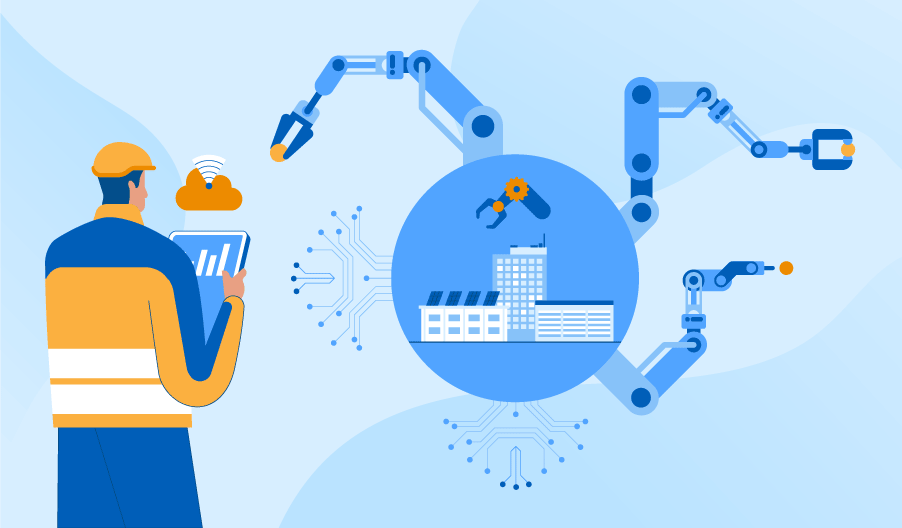
    A smart factory is a product of Industry 4.0, the fourth industrial revolution, where technologies like big data, Industrial Internet of Things (IIoT), and AI/machine learning are the driving force of digital manufacturing changes. A smart factory is the end goal of digitization in manufacturing.

    Smart factories are characterized by a high degree of complex manufacturing automation, which entails running manufacturing processes with minimal or no human intervention. Such automation is powered by industrial IoT technologies comprising hardware (sensors, actuators) and software (big data, machine learning tools).

    Benefits of a smart factory

    • Agile production process

    A smart factory allows manufacturers to quickly adapt to changing client needs, budget, product quality requirements, due to the connectivity of multiple systems, (e.g., an IIoT solution, ERP, MES, SCM) and powerful data analytics capabilities.

    • Improved efficiency of manufacturing operations

    The network of sensors allows for collecting data about the production process, environment, and equipment. This data is analyzed by the cloud software in near-real time, allowing manufacturers to make quick adjustments, for example, in equipment operating parameters. Further analysis of sensor-generated data helps spot trends and improvement opportunities through the entire production process.

    • Improved reliability of manufacturing operations

    In smart factories, the probability of human error in manufacturing operations is reduced due to high-level automation.

    • Improved product quality

    In smart factories, AI technologies are used for quality control. For example, cameras with computer vision algorithms can detect defects immediately, and advanced analytics software can help identify the cause of a problem.

    • Improved visibility into shop floor operations

    IIoT provides greater visibility into shop floor operations by providing manufacturers with continuous real-time updates on production operations and the status of industrial assets.

    • Information security

    Data security is ensured with the help of at-rest and in-transit data encryption, access control, AI-powered detection of abnormal user activity within a smart factory, and more

    • Predictive maintenance

    With the help of IIoT, data on various equipment parameters determining its health and performance is transmitted to the cloud in near-real time. There, combined with metadata, it is fed to machine learning algorithms, which help determine abnormal patterns. Thus, it becomes possible to predict potential equipment breakdown and take timely measures.

    • Improved worker safety

    Robots can replace human workers for dangerous tasks.

    Technologies used in a smart factory

    • Cloud computing

    Popular cloud platforms (e.g., AWS, Azure) allow processing, storing, and analyzing large amounts of data securely.

    • Radio Frequency Identification (RFID)

    RFID can help track industrial equipment and machinery, inventory, finished goods as well as objects and workers in smart factories.

    • Big data

    This technology is used for continuous collecting, storing, and analyzing large amounts of production-related data.

    • Artificial intelligence (AI) and machine learning (ML)

    AI and ML are employed for end-to-end automation of the production process, equipment monitoring, and more. What’s more, these technologies enable advanced analytics insights (e.g., predictive maintenance, detection of quality improvement opportunities)

    Make your manufacturing process smarter

    Switching to the smart factory model is an ambitious initiative that requires substantial time and money investments. To make the transformation smooth and get value early, SCS Tech suggests going in iterations. For example, it may be viable to start with introducing a cloud-based big data storage that will later become the basis for enterprise-wide analytics and provide insights for production planning and management, industrial asset management, and more. If you need advice on where to start or if you are ready to embark on the digital transformation journey, SCS Tech team is always ready to help.


  • How to Design a Network Operations Center in a Winning Way

    How to Design a Network Operations Center in a Winning Way

    A network operations center is an IT infrastructure management unit that has become a necessity for many companies, especially those who have to see to multiple networks on a regular basis. A NOC gives an opportunity of 24/7/365 IT infrastructure monitoring, troubleshooting and foreseeing network failures to ensure high network uptime and stable functioning of applications and databases. However, establishing an orderly NOC is quite challenging. The first step you should take is to choose the NOC’s structure that will determine your resource needs. Below, I explain how adopting a multi-tier model used in most of today’s large NOCs will help you build a structured and smoothly functioning NOC in your company.

    NOC design in tiers

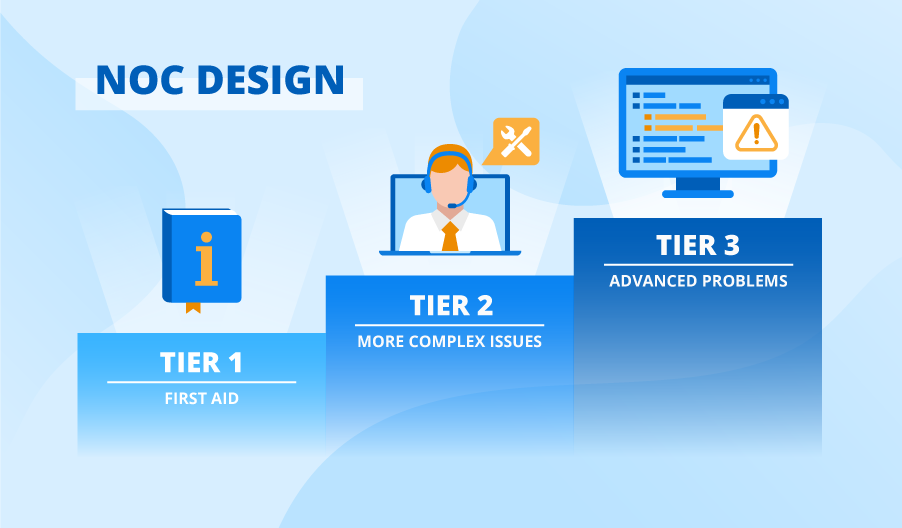
    A multi-tier model to network operations center design helps effectively distribute responsibilities among different NOC levels, according to the skills and experience of NOC engineers and the complexity of issues they deal with.

    NOC Tier 1 – First aid

    At this level, NOC staff receives infrastructure-related requests and deals with simple network issues, such as login problems, checking proper network configurations. NOC Tier 1 specialists can use problem-solving scripts containing step-by-step instructions on how to tackle issues quickly. Problems that require a higher level of technical expertise are escalated to NOC Tier 2 specialists.

    NOC Tier 2 – More complex issues

    This level is represented by more tech-savvy specialists who deal with thornier network issues, which often requires a deeper understanding of the supported IT infrastructure. Some common tasks at NOC Tier 2 include resolving configuration issues, account administration, services restart, etc. If an issue involves more detailed research on the code level, it is escalated to NOC Tier 3.

    NOC Tier 3 – Advanced problems

    Tier 3 serves as the top escalation point for NOC Tier 1 and Tier 2 specialists. Tier 3 engineers are responsible for handling issues on the code or database level and provide hot fixes. Resolving issues at NOC Tier 3 requires development skills, so you can either keep it in-house or outsource to a vendor who is ready to work at the backend level.

    Build an orderly NOC

    A properly chosen structure is the key to a smoothly functioning network operations center. By choosing a multi-tier model with proper escalation procedures for your NOC, you can resolve IT infrastructure issues of different complexity promptly and make your IT infrastructure truly reliable. If you’d like to entrust the design and management of your network operations center to a reliable service provider, feel free to contact us.


  • The 6 Most Important Technologies in Machine Learning

    The 6 Most Important Technologies in Machine Learning

    With the sudden technological boom within the IT and development organizations a couple of years ago, both Artificial Intelligence (AI) and Machine Learning have now become the trending careers for a lot of people to follow. With so many businesses coming up and clamouring for the best new talent, today, the industry is experiencing a shortage of skilled and qualified professionals. However, a plethora of tech professionals have rushed to fill in this gap by learning all of the technologies associated with machines learning and AI and adding them to their skillset.

    Since this is mainly limited to key learning languages and does not break new ground, most people in these industries are now beginning to realise the importance of looking beyond the learning languages as these will decide the future. There is no simple solution as to which technology to watch out for as things are in a constant state of flux and all the new and old frameworks are constantly evolving.

    However, since it has been established that AI is rapidly transforming every sphere of our life (think Siri and the like), there are certain key AI technologies to focus on so that one can take machine learning projects to the next level. Here is an informative list of the six best technologies one can use:-

    • Keras: This is an open source software library that focuses on simplifying the creation of deep learning models. Written in Python, it can also be deployed on top of many other AI technologies such as Theano and TensorFlow. It runs optimally on both CPUs and GPUs, plus it is known for its user-friendliness as well as fast prototyping.


    • Torch: One of the oldest such technologies released all the way back in 2002, it is a machine learning library that has a variety of algorithms to offer for deep learning. With an open source framework, you will be provided with the best speed and flexibility without having to worry about any complexities getting in the way.


    • Caffe: Being one of the more recent options, the best part about Caffe is that it inspires a degree of innovation with an expressive architecture along with the provision of a vibrant community. This machine learning framework primarily focuses on speed, expressiveness and modularity.


    • TensorFlow: With the initial release of this open source machine learning framework being 2015, it has been deployed across many different platforms and is easy to use. Created by Google at first, now all the top tech giants such as eBay, Dropbox, Intel and Uber use it extensively. With the help of flowgraphs, one can develop neural networks.


    • Theano: This is basically an open source Python library that you can use to fashion various machine learning models. Being one of the oldest libraries, it is regarded as an Industry standard. It simplifies the process of optimizing, defining and assessing mathematical expressions.


    • Microsoft Cognitive Toolkit: Initially released about three years back, this is an AI solution that you can use to take your machine learning projects to the next level in every way. Certain studies have revealed that the open source framework can train certain algorithms to function like the human brain.


    One has to take note of the fact that building a machine learning application is one thing, but selecting the ideal technology from the many options out there is another ball game altogether. It is anything but a simple task to achieve and evaluating many different options before selecting the final one is a must.

    Furthermore, learning how the various machine learning technologies work separately and with each other will be a key component of your decision-making process in totality. Most importantly, it will also play a decisive role in ensuring that you stay ahead of the pack with regard to your contemporaries.

  • GPS Tracking System For Ambulance Services

    GPS Tracking System For Ambulance Services

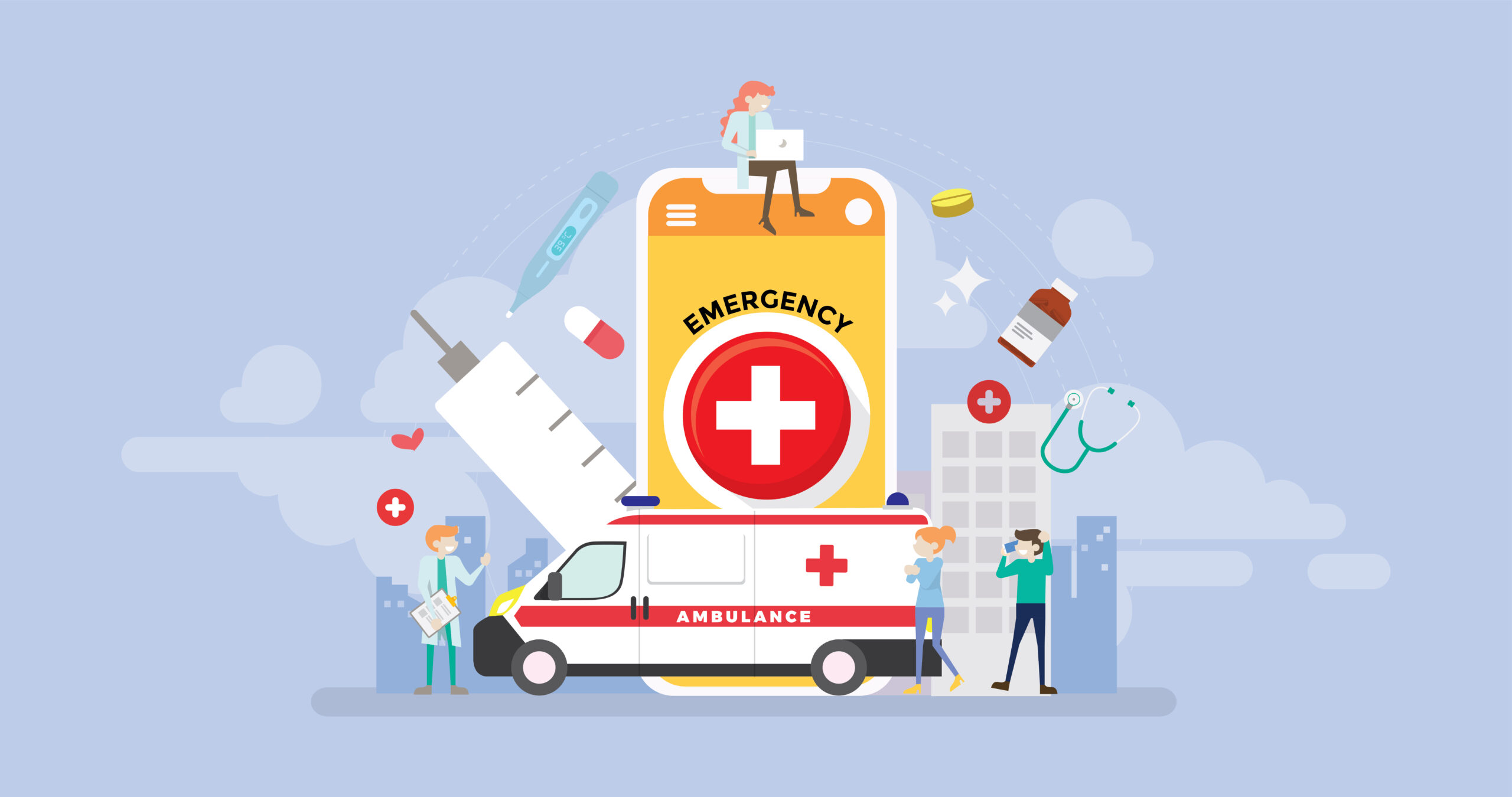
    We feel alert as soon as we hear the word Ambulance! Ambulances are always in pursuit of reaching to patients or carrying them to hospitals with least minimum time. Ambulance services, also called as ‘mini-hospitals’ or ‘mobile-hospitals’, can play a vital part in saving one’s life. In a life-death situation, each second counts for ambulance. As ambulances set out each day and night to serve the patients/victims and get them to nearest medical support, GPS tracking system can assist them with its live tracking and other multiple features, and save many more lives.

    Following are some of the important reasons why GPS tracking device is essential for ambulance services-

    • Assign the Nearest Ambulance

    In case of emergency where each second counts, the time needed to reach the patient for an ambulance should be least. GPS tracking system gives the manager ‘live tracking’ of every ambulance in their fleet. Thus, when the hospital gets a call for emergency ambulance service, the manager can assign an ambulance which is nearest to the location of emergency. The time for ambulance to reach to patient can thus be minimized.

    • Assess Driver’s behavior

    The admin or the manager can assess the driver’s behavior by the tracking feature, notifications & route history features. The manager can assess if the driver has taken the most optimal route, or if he/she has taken any unauthorized stops, or if the said instruction from authorities were followed or not, and the pattern of their driving can be assessed too. Also, the system can assist to determine the shortest or the most efficient route to reach the destination. This can save a lot of time which can be prove vital in cases of emergency.

    • Send Real-time Data to Hospital Authorities

    GPS tracking system, when installed on ambulances, gives its live location and the speed at which it is traveling, to the admin or manager from hospital. The hospital can take subsequent necessary measures and be prepared with the required equipment or medicines, by determining the accurate time required for ambulance to reach the hospital.

    • Curtail Unnecessary Expenses

    GPS tracking system can help drivers in assessing shortest route with its Trip History feature, & thus saving fleet’s fuel expenses. Also the system reminds the managers for upcoming maintenance of vehicle; making sure the vehicle is maintained properly. The GPS tracking system also gives a data of driver’s behavior, rash driving, harsh braking, etc. upon which the authorities can ask the drivers to drive cautiously or take any subsequent actions on it thus avoiding unnecessary maintenance costs.

    • Securing the ambulance

    The security of ambulance vehicles can be maintained as an alert is sent to the admin in case the vehicle crosses a virtually ‘user-set’ perimeter. Ambulances are equipped with high value & expensive machinery & equipment. Thus, authorities can protect their ambulances and save losses.

    • Maintain Recommended Temperature for Drugs or Medicines

    The ambulances carry with them life-saving equipment & machines in which even a minor variation in temperature can spoil the medication. Thus it is obligatory to maintain the recommended temperature. The GPS tracking systems have temperature sensors on the devices installed on ambulances that alert the admin through notifications, SMS’s for any temperature variation. Thus, any adverse circumstances can be avoided.

    • Multiple Admin Access

    In case wherein hospitals operate several ambulance services across various locations, the system can be used by multiple sub-managers assigned by the managers. The tasks of each sub manager can be assigned on the basis of number of ambulances, specific areas, etc.

    • SOS & alerts

    The GPS tracking system has an SOS button which can be triggered by driver in case of any emergency situations that alerts the admins or authorities. Necessary measures can be taken immediately by the admins by sending immediate help. Also the admins are alerted with many alarms and notifications like Vibration alert, over speed alert, harsh braking alert, etc thus keeping the admin updated instantly for any instance. The whole system can be managed from mobile or laptops. Thus, giving ease-of-use to admin and help them to take important decisions anytime, anywhere.

    When it is a matter of ‘life’ & ‘death’, every decision made by the medical authorities counts and so does every second of time. GPS tracking system can play a crucial role in saving one’s life by enabling the authorities to take informed decisions with the help of the right data provided by the system at the right time and optimize emergency response. With more innovations and evolving technology update, GPS tracking system will prove to be an integral part in ambulance service’s success.

    We understand the importance of knowing that your vehicle is secure and on your ease to track, that’s why we are providing One Stop Solution for all your safety and tracking problems. To know more about our services contact us on www.scstechindia.com/contact

  • What Is Cyber Risk Management?

    What Is Cyber Risk Management?

    Cyber risk management is the process by which you determine potential cyber threats, and then put measures into place to keep those threats at acceptable levels. Your cyber risk management efforts should be formalized into a plan, which should then be updated often to stay current with evolving cybersecurity threats.

    Considering just how dangerous cyber-criminals can be to your organization, a current cybersecurity framework is no longer just a good idea; it’s required. Cybersecurity risk management is so important that multiple organizations offer guidance and standards to mitigate cyber threats. The National Institute of Standards and Technology (NIST) is one; the International Organization for Standardization (ISO) is another.

    Cybersecurity risk is the likelihood your company might suffer damages because of a successful cyber-attack. This risk includes data breaches, loss of critical information, regulatory enforcement (including monetary penalties) due to a breach, or damage to your reputation after a cybersecurity event. Risk is different from uncertainty in that risk can be measured, and protected against. For example, you can block phishing attempts or build strong firewalls (a risk) but you cannot stop a hurricane from downing your WI-Fi networks for a whole day (uncertainty).

    This means you should evaluate your business several times a year to understand how your company adheres to current information security protocols, and what new threats may have developed since your last analysis. This evaluation is known as a cybersecurity risk assessment. Regular risk assessments will help in implementing a scalable cybersecurity framework for your business.

    What Are the Different Types of Cybersecurity Risk?

    Cybersecurity risks come in many forms, and CISOs should be aware of all them when developing your risk management process. To start, the four most common cyber-attacks are:

    Malware: Malicious software that installs itself that causes abnormal behavior within your information system;
    Phishing: Emails or messages that trick users into revealing personal or sensitive data;
    Man-in-the-Middle attack (MitM): Cyber-criminals eavesdrop on private conversations to steal sensitive information; and
    SQL injection: A string of code is inserted in the server, prompting it to leak private data.

    When building your risk management strategy, prioritize which common cyber incidents you want to prepare for. Strategizing for those most likely to occur within your business, or for those events where regulatory compliance obligates you to address them. Then you can move forward with creating an effective risk management program.

    Why Is Cyber Risk Management Important?

    Your business should always be learning how to adapt to changing cybersecurity standards while also monitoring potential threats.

    A cybersecurity event like an internal data breach or a successful cyber-attack can cause significant financial losses. It can also create disruptions in the day-to-day operations of your business, as you inform employees and customers of the breach and the steps you’ll take in response.

    By maintaining regular cyber risk management you can keep the chances of a cybersecurity event low, protecting your business for the long term.

    What Is the Cybersecurity Risk Management Process?

    Cybersecurity risk management is an ongoing process that involves regular monitoring and frequent analysis of existing security protocols. Generally, a cyber risk manager will work with key stakeholders and decision-makers across the business to draft a cybersecurity risk statement, where potential risks are identified as well as the company’s tolerance for each risk. Then, safety measures and training are matched with each cybersecurity risk.

    The organization then follows policies and procedures in its daily operations to keep cybersecurity threats at a minimum, and the cybersecurity risk manager monitors the overall security posture. From time to time the risk manager should also report on how well security protocols are helping to mitigate cyber risks and potential threats, and make recommendations as necessary to improve security for the evolving threat landscape.

    A follow-up risk assessment may be required to update the risk management strategy currently in place.

    SCS Tech offers cybersecurity services for Large Enterprises and SME’s. Our experts help you navigate your cybersecurity needs as your business scales, whether continuing your current cybersecurity program or building all-new network security.

    To know more about our cybersecurity service visit www.scstechindia.com/

  • How GIS Changed the Face of Modern Geography

    How GIS Changed the Face of Modern Geography

    There is no doubt about the fact that technology continues to transform the world in many immeasurable ways.

    But perhaps something that would grab everyone’s attention is how it has made the most complex things look easy. Take a case in point of schools and research centers, and further narrow down to a subject such as Geography. You will be awe-struck by some of the most cutting-edge development in modern times.

    Geographic information systems, also known as Geospatial information system (GIS) is a testament to how the integration of technology and academia is making it easy for students and researchers to study what would otherwise be impossible a few decades ago.

    A Brief History of GIS

    Many years ago, students of Geography depended on two-dimensional maps, something which made it difficult to explore the real world.  It meant things like Global Position Systems wouldn’t realize a lot of success, and people would be limited to studying areas of proximity.

    However, all this was to change when in the 1960s, a 28-year-old Canadian Geography student named Roger Tomlinson started developing what later became known as the first ever GIS software. The Canadian Land inventory embraced the approach.  At the same time, Howard Fisher, who was in Harvard at the same time was looking into prospects of bringing together data sets from map using statistic modeling software, shortly after which, the United States Census Bureau started applying his approach in demographic studies.

    What has changed in Geography?

    The following are notable facelifts that Geospatial information system has brought into modern Geographical studies:

    Widespread application in the study of planets (Astronomy Science)

    NASA can track the path of asteroids with greater ease than it was many years back. That’s not all. With Mars Orbiter Laser Altimeter (MOLA) onboard Mars Global Surveyor, scientists have been able to study the rugged terrain of a planet that has since shown traits of supporting human life. Talk about Mar Rover, Visible Earth, Google Earth, 3-Study of magnetic fields and many more; GIS is taking a toll on old approaches to Astronomy.

    Remote Sensing

    With the advent of GIS software, there was never going to be any doubt about how it would transform capabilities of remote sensing gadgets. Installation on the space station makes it easy to gather information about the outer space, include remotest parts on land.

    Demographics

    A lot has changed regarding demographic studies, or populations, thanks to the incorporation of GIS as an advanced computer technology for data collection. It is now easier to gather spatial statistics, simplify complex data and scale down the findings to dependable and precise findings. In this regard, researchers in this field of knowledge can realize the outcomes of their projects much faster and with more reliability using a data modeling approach.

    Improvement in tracking capabilities

    With GIS coming hot on the heels of the information age, tracking migrations of people, animals and weather changes has become easier than before.  Mapping, data analysis, and reporting are the mainstay activities in this approach.

    Meteorological studies

    Ever wondered how the weatherman knows about an impending hurricane, a potentially hazardous tornado or even a storm that is a few months away from flooding lowlands?  Well, it is all thanks to GIS impact on meteorology, a branch of geography that involves the study of climatic patterns.

    In summary, the Geospatial information system is changing the way people study the environment in which they live. And while its application is widespread in Geography, businesses also depend on it to satisfy the needs of clients.


  • Why digital transformation is the key to your survival in a competitive world

    Why digital transformation is the key to your survival in a competitive world

    Embracing Digital transformation is fast becoming essential for businesses to remain competitive and survive in a changing world.

    Change is the only constant. The father of the evolutionary theory, Charles Darwin famously said, “It is not the strongest of the species that survives, nor the most intelligent that survives. It is the one that is the most adaptable to change.”

    Indeed, this insight has never been truer than in the present times when firms stand at the cusp of the traditional ways of doing business versus the new. Analog versus digital. Offline versus online. The question is no longer of merely making a profit, it is the larger issue of survival in the long run.

    So, what is that bridge that will ensure the survival of the fittest in a competitive and ever-changing business world? The answer is simple. Digital transformation.

    Simply put, digital transformation is the integration of digital technology into all areas of a business, thereby changing how they operate and deliver value to customers At another level, it is also a change in mindset that requires organizations to persistently question the status quo, experiment, and embrace new technology.

    There are several reasons why a business may undergo digital transformation, but by far, the most likely reason is that they have no other choice. It is a matter of staying relevant or becoming obsolete.

    According to a Study by Microsoft, 80% of Asia’s business leaders believe they need to be a digital business to succeed. Ralph Haupter, President, Microsoft Asia said: “The Microsoft Asia Digital Transformation Study has shown that business leaders have started to act on the need for digital transformation to address the challenges and opportunities of the 4th Industrial Revolution in the region. Lessons from past industrial revolutions have taught us that organizations that do not evolve fast enough will be less competitive or even obsolete as they face disruptions in every industry.”

    Why should SMEs adopt digital transformation?

    SMEs, in particular, stand to gain tremendously by embracing digital transformation.

    1. Level-playing field with larger corporates

    Embracing digital opens up a host of opportunities to compete against larger organizations – an undertaking often perceived as challenging by these smaller businesses due to limited budgets and resources and fewer staff members. In his book, The New Small, Phil Simon explores how technology levels the playing field for small businesses versus the bigger players. SMEs that are agile and nimble are quicker to embrace technology than their larger counterparts and this gives them an early-mover advantage.

    1. Stay ahead of the competition

    SMEs can no longer afford to be complacent when it comes to adopting new technology, else they risk being overtaken by their competitors. As per a Forrester Research Report, executives predict that by 2025 nearly 87% of their revenue will be influenced by digital.

    1. Optimize operations

    Digital technology makes SMEs more efficient. Technology such as IoT enables SMEs to gather vast data and draw actionable insights through analytics, and then apply those learning’s to introduce enhancements on an ongoing basis. Organizations in the manufacture, retail, and healthcare can respond in real-time, or even pre-emptively solve customer issues. SMEs can benefit from quicker internal processes and fewer errors when collecting information, which in turn will equate to greater efficiency and accuracy.


    1. Empower workforce

    Technologies such as Artificial Intelligence (AI) enable the automation of time-consuming tasks. This allows employees to focus on more skilled and strategic tasks that increase revenue and reduce operating costs. Automating tasks also boost employee morale, as team members won’t be consumed by repetitive and time-consuming tasks.


    1. Engage customers

    Technology offers several opportunities to attract, engage and retain customers. From online stores where customers can conveniently shop, robust feedback mechanisms and customized loyalty programs – technology can make the user experience seamless and engaging.


    1. Increase profits

    Embracing digital technology makes SMEs more profitable. According to a survey by Gartner, 65% of the CEOs interviewed said that their digital investments have already improved profits.

    The bottom line remains that those who ignore digital transformation, do so at the cost of their very survival.

  • Current trends in Artificial Intelligence (AI) Application to Oil and Gas Industry

    Current trends in Artificial Intelligence (AI) Application to Oil and Gas Industry

    In recent years, artificial intelligence (AI), in its many integrated flavors from neural networks to
    genetic optimization to fuzzy logic, has made solid steps toward becoming more accepted in the mainstream of the oil and gas industry.On the basis of recent developments in the field of Oil & Gas upstream, it is becoming clear that petroleum industry has realized the immense potential offered by intelligent systems. Moreover, with the advent of new sensors that are permanently placed in the wellbore, very large amounts of data that carry important and vital information are now available.

    To make the most of these innovative hardware tools, an operator intervention is required to handle the software to process the data in real time. Intelligent systems are the only viable techniques capable of bringing real-time analysis and decision-making power to the new hardware.

    An integrated, intelligent software tool must have several important attributes, such as the ability to integrate hard (statistical) and soft (intelligent) computing and to integrate several AI
    techniques. The most used techniques in the Oil and Gas sector are:

    Genetic Algorithm (GA), inspired by the biological evolution of species in natural
    environment, consists of a stochastic algorithm in which three key parameters must be
    defined:
    1. Chromosomes, or better, vectors constituted by a fixed number of parameters
    (genes).
    2. A collection of chromosomes called genotype, which represents the individuals of
    a population.
    3. The operations of selection, mutation, and crossover to produce a population from
    one generation (parents) to the next (offspring).

    Fuzzy Logic (FL) is a mathematical tool able to covert crisp (discrete) information as
    input and to predict the correspondent crisp outlet by means of a knowledge base
    (database) and a specific reasoning mechanism. To achieve such goal, the crisp
    information is firstly converted into a continuous (fuzzy) form, secondly processed by an
    inference engine and at least re-converted to a crisp form.

    Artificial neural network (ANN) is constituted by a large number simple processing
    units, characterized by a state of activation, which communicate between them by sending
    signals of different weight. The overall interaction of the units produces, together with an external input, a processed output. The latter is also responsible of changing the state of
    activation of the units themselves.

    AI applications in Oil and Gas industry

    Exploration & Production (E&P) sector

    Most of the resources in the Oil and gas field is centered in drilling operation in which artificial
    intelligence finds natural application. Drilling success and safety are related to an accurate
    prediction of the likely performance of different factors such as:
    • Pre-drilling settings (rig, logistics and associated drilling risks)
    • Drilling equipment (casing and tubing pipes, drilling mud)
    • Downhole machinery behavior (vibrations, torque limits)

    The development of models, implemented by AI systems, permits to avoid the necessity of
    disposing of real-time data and to produce smart outcomes in order to quickly re-establish optimum operating conditions.

    Relatively to the selection of Drill bits, trained artificial neural networks (ANNs) have been used:
    they are able to suggest the best drill bit to select (roller cone, diamond insert or a hybrid) analyzing a user defined database. The latter should include information relative to the IADC bit codes correlated with specific geological data.

    Neural and network system (commonly GRNNs) gave accurate results in the prediction of mud
    the fracture gradient. As input parameters to the model, the depth of the well, the overburden
    gradient and the Poisson ratio must be provided. It is important to keep in mind that the results will strictly depend upon the range of the data set, and that extrapolations may loss in accuracy.

    In the planning stages of a well, drilling engineers are responsible for the establishment of the
    different depths at which the well must be cased to ensure an overall desired perforation depth. To avoid casing collapse, a neural network approach adopting a BPNN based spreadsheet program can be used. Back-propagating neural networks (BPNN) are constituted by a defined number of “layers”. Each layer is interconnected with the other: in particular, the input layer is connected with hidden layers which are in turn connected to the output layer. This neural net, provided of an historical well archive, is fed (input layer) with specific data of the well under consideration (i.e. location, depth, casing strength). Furthermore, the BPNN is able to estimate an “experienced”casing case probability.

    Another example of AI application is given by the real time drilling optimization in which
    artificial intelligence system are adopted to improved monitoring of downhole parameters
    optimizing the drilling operation.

    A crucial real-time operation is the Estimation of hole cleaning efficiency in terms of cutting
    concentration. During the drilling process, the wellbore is filled with many rock fragments
    (cuttings) generated by the mechanical action of the drill bit. In order to remove those cuttings
    from the well, a drilling fluid, or drilling mud, is pumped from the drill bit and exits from the
    wellhead: the cuttings are lifted and carried on the top of the well. According to this, the cutting concentration (expressed as a %) is the residual amount of rock fragments into the well after the cleaning action of the mud (Figure 5 gives a visual idea of the situation described). Inefficient removal of the drilled cuttings may lead, in some severe cases, to the loss of the well due to stuck pipe.

    For the estimation of the hole cleaning efficiency, artificial feed-forward neural network with
    back-propagation (BPNN) can be used. As input to the model all the parameters which affect the cutting concentration must be given. The latter are divided in specific parameters of the drilling (rate of penetration, inclination angle of the wellbore) or in parameters regarding the rheology conditions of the mud (viscosity, density).

    Future-proof your operations, onshore or offshore

    Whether you focus on exploration, extraction, transportation, storage, or production, at SCS Tech, we cater to all sectors of the oil and gas industry. From crude oil to natural gas and natural gas liquids, from refineries to gas treatment and petrochemical production, from pipelines to storage facilities, our service solutions and expertise give you the competitive edge. We ensure and boost the performance of the turbomachinery that lies at the heart of your value-adding process.


  • Top 5 Reasons Why Cybersecurity is Important

    Top 5 Reasons Why Cybersecurity is Important

    Cyber attacks are widespread, which can harm millions of people. Organizations can be shut down. Services can’t be provided to citizens. Widespread cyber attacks configuration of cloud services with increasing cybercriminal attacks risk the organization and its process.

    The days are gone for simple firewalls antivirus software which helped us to secure our data and identity.

    Cyber threats can arrive from any level of association. Cybersecurity is no longer something any company can ignore. Security regularly affects businesses of all sizes and makes them causing reversible reputational damage to the companies involved.

    Why is cybersecurity critical?

    Cybersecurity is the event or process of recovering and protecting computer systems, devices, networks, and programs from any cyber attack.

    Cyber attacks are increasingly causing danger to your sensitive data, as attackers employ new methods of artificial intelligence and social engineering to your traditional security controls.

    The world is frequently reliant on technology. This dependence will continue as we introduce the next generation of smart internet-enabled devices that have access to our networks via Wi-Fi and Bluetooth.

    Let’s explore its importance:

    1. Cyber-attacks affect all

    Cyber attacks can cause electrical power outages, the disappointment of military equipment, and breaches of national security privileged insights. They can bring about the theft of important, sensitive information like clinical records. They can upset telephone and PC organizations or paralyze frameworks, making information inaccessible.

    Cyber attacks can occur on a worldwide scale, also with programmers breaking government organizations. It is such a danger that atomic plants can be assaulted, causing a nuclear calamity with a considerable number of lives lost. These digital worms made centrifuges heat up and may have caused a blast costing human lives.

    1. Rapid technological change will benefit

    With the launch of the 5G network, a significant expansion of multidimensional cyber attack vulnerability increased. The new system requires a similar redefined cyber strategy. By further stating the increase in cyber attacks of the software, it will be challenging to retool how organizations would save the virtual network of the 21st century. Modern technologies like IoT are increasing the number of devices connected, and there will be approximately 400 billion connected devices by the end of 2022.

    1. Damage to organization and loss of jobs

    There has been a lot of breaches of companies in recent years. Organizations should conduct phishing simulation tests to test the awareness of employees. It should be done initially before and after training to measure the improvement areas of your employees. Creating an incident response strategy will allow organizations to stay ahead of the attack. It will ensure your quick response on the offense to keep the attackers from getting a hold of sensitive data.

    1. Cybersecurity threats faced by individuals

    Not just do countries and organizations face dangers from the actions and intentions of hackers, yet people face numerous risks too. Identity theft is a colossal issue, where hackers steal a person’s very own data and sell it for benefit.

    This likewise puts the individual security of an individual and their family in danger. This happened in various events, and a million of Rs was lost to the detriment of the person in question. In different cases, the programmers use coercion and blackmail in the wake of taking their identity and requesting recover cash to make no further move. This is particularly valid for high-profile identity theft cases of superstars or individuals with high net worth.

    1. Cyber concerns may result in increased regulation and legislation

    With cybersecurity threats increasing, new laws and regulations can be placed to protect the consumer from attacks. It means that increased legislation and regulations may soon become a reality. Citizens need to be made aware of laws that are passed and make sure that their organizations comply with the laws. The laws specified for cybersecurity will result in better functionality and process of the organization resulting in more safe and secure data-driven solutions for clients.

    SCS Tech specializes in designing, building, and running optimized security solutions which help the organization and individuals defend against all cybersecurity attacks. Write to us to learn more about how we can help: info@scstechindia.com


  • Why Conversational AI and Chatbots are Perfect for Digital Health

    Why Conversational AI and Chatbots are Perfect for Digital Health

    Over the last decade, the continued evolution of digital healthcare and the impact that next-generation technology will have on patient wellness and diagnostic outcomes has been a recurring conversation. Providers have been looking to make the most of the tech-centric tools that are increasingly available, while those in need of care or the right advice at the right time now expect the medical sector to be investing in digital solutions to physical problems.

    The integration of tech into public health and wellness is nothing new, but the demands of the connected society have only raised awareness of what is possible but also flagged up the opportunities for engagement in the digital space.

    Healthcare has never shied away from technology, albeit some recent improvements can be hit-and-miss – electronic health records are only as useful as the data that has been input, for example. However, there is a consensus among providers and medical professionals that the industry is willing to accept some disruption if it has a positive impact on the overall patient experience.

    In terms of technology with the power to both disrupt and improve the way that people engage with digital health, there is an argument to be made that conversational AI (which includes Machine Learning) and Natural Language Processing (NLP) can be the missing link. After all, if Alexa et al can answer questions about the weather, start your car in the morning and tell jokes, then there is no reason why virtual assistants can’t provide you with the medical advice that you need, when you need it.

    The Chatbot will See You Now

    According to the World Economic Forum, virtual assistants – and, by association, chatbots – are not only being used in a diverse set of industries (healthcare, education, retail, tourism, and more), but also offer opportunities for companies to integrate NLP into routine or mundane activities. For instance, Amazon’s Alexa is the chatbot that the average person associates with the tech, but the key element in every interaction is the ability of NLP to understand what it is being asked and respond with the appropriate information.

    The problem, the WEF said in a November 2021 blog post, is that building the chatbot is the easy part. Often, it is the conversational aspect that throws a digital spanner into the works. When you are talking to a finance bot or trying to return a pair of shoes, the stilted nature of these exchanges is rarely an issue. In a sector such as healthcare, it is the conversation and the information that is being dispensed that is a key part of how comfortable an end-user is with knowing that they are not engaged with a human being.

    In rural parts of the world, the use of so-called health bots has already helped alleviate some of the pressure on localized health providers.

    This is not limited to first-world or so-called developed countries, but their integration takes on a particular resonance in regions where access to tech is not easily available. In Rwanda, for example, there is often only one doctor and six healthcare workers per 10,000 people, with the WEF noting that these tools are allowing patients to have access to doctors, nurses, and relevant healthcare information.

    The caveat is that there is still some concern that a well-documented stigma surrounding chatbots in general could prevent people from interacting with them in the first place – for the record, this is also not unique to developing countries, there seems to be a global mistrust of chatbots as an accurate or effective engagement tool!

    Conversational AI and chatbots are not new per se, but they can suffer from falling under a broad definition of what they actually are. Simply put, a “chatbot” is AI software that simulates a human conversation with end-users – this can be text or voice – with the aim being to leverage machine learning algorithms and NLP to deliver required outcomes.

    The healthcare sector has been experimenting with these solutions for some time, with Mobile Health News reporting in May 2020 that a leading healthcare provider was integrating bots into its Emergency Department EHR system. More recently, the World Health Organization launched a women’s health chatbot dedicated to breast cancer messaging – for context, this new digital experience follows hot on the heels of bots that delivered information on COVID-19, mental health and smoking cessation.

    So, the bots are already here, but the question that we need to address is how we can use conversational AI and/or chatbots in addressing not only patient concerns but also alleviate the worry or concerns that a person has. Additionally, we should consider both the challenges to overcome and the advantages of using virtual assistants to deliver care and wellness.

    The Future is Already Here

    We all interact with digital experiences every day of our lives, so it makes perfect sense that the technologies we often use without thinking should be mirrored in the healthcare sector. And while the industry still relies far too much on legacy technology (disparate IT systems, pagers instead of wearables), the integration of digital health solutions is picking up pace.

    Conversational AI has been part of the digital landscape for at least five years, although the average person is likely to only know these virtual assistants as Alexa, Siri and Google Assistant (useful tool, unimaginative name). Chatbots fit into the same category, but their integration into the connected society is less heralded and, arguably, overlooked in terms of the access to knowledge and the assistance they can provide.

    However, these tools are here to stay and there is a defined need for them to become not only part of the digital health landscape but also a familiar resource for people to turn to. The effective use of chatbots to provide the right medical or clinical information at the right time is not a futuristic concept, these solutions are here now. What matters is how healthcare and life sciences companies choose to use them.

    To learn more about SCS Tech Expertise, click here