Blog

  • How GIS Mapping Services is Transforming the Oil/Gas Sector?

    How GIS Mapping Services is Transforming the Oil/Gas Sector?

    Do you know the integration of GIS across various sectors, including oil and gas, is projected to grow at a CAGR of 12.5% and reach a market size of US $26.27 billion between the periods of 2024-30? With this growth, oil and gas companies are adopting GIS mapping services. GIS helps in optimizing pipeline routes and monitoring assets in real-time. It also improves safety protocols and analyzes large amounts of spatial data. This integration streamlines operations, reduces risks, and enhances decision-making.

    To know more about how GIS technology integration helps in achieving optimal results, read the blog that covers various aspects of the GIS mapping services integration with the oil and gas technology sector.

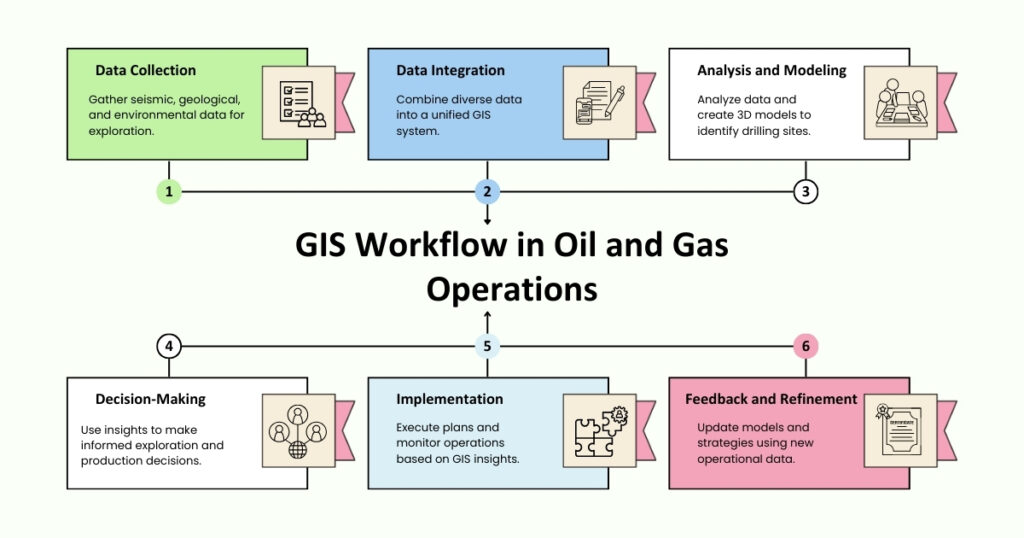
    GIS Workflow in Oil and Gas Operations

    What is the Role of GIS mapping services in the Oil and Gas Sector?

    GIS plays an important role in streamlining operations and saving costs in the oil and gas sector, we will discuss each factor in detail through the below-mentioned pointers:

    Exploration and Production (E&P)

    • This is the first stage in the oil and gas lifecycle; GIS here helps to integrate historical records, geological maps, seismic data, etc., to create effective reservoir modeling.
    • With these integrations, we identify locations for resource extraction and drilling. It helps in improving the accuracy of finding drilling locations and results in reduced exploration risks.
    • Reservoir modeling: a GIS mapping services feature helps visualize and model the size of the reservoir so accurate production estimates can be made.

    Asset Management and Infrastructure

    • Asset Management and Infrastructure in the Oil and Gas Sector with GIS is important for cost-effective infrastructure management, including storage, refineries, pipelines, rigs, etc.
    • Through spatial databases, GIS helps in asset maintenance and tracking. Operators can effectively determine on one single platform how the asset will be distributed across geographic locations, such as the exact location of pipelines, storage tanks, etc.
    • GIS technology also aids in optimized infrastructure planning by enabling optimal site selection, environmental considerations, and cost optimization. Additionally, it reduces risks through data integration from drones and satellites, allowing for in-depth inspections, particularly in offshore rigs and remote pipeline locations.

    Pipeline and Route Optimization

    • In the oil and gas sector, pipelines are the foundation for transporting crude oil, natural gas, and other petroleum products over long distances that can be challenging. Here, GIS plays a role in route optimization through planning and design, which is done by geospatial analysis of factors like terrain, land use, and environmental sensitivity. Route optimization is done for cost savings and less environmental disruption.
    • Listed below are a few important features offered by GIS for pipeline and route optimization.
      • Terrain and elevation analysis through slope stability analysis and analysis of elevation profiles
      • Integrating existing pipeline networks and faster access to maintenance facilities. Through predictive maintenance, one can perform a better assessment of temperature variations, terrain type, seismic activity, etc.
      • Enhancing risk management and safety through population density analysis, identification of high-risk zones, emergency response planning, etc.

    Field Data Collection and Remote Sensing

    • Integrating field data collection and remote sensing with GIS mapping enables remote data acquisition using satellite imagery, LiDAR, and aerial photography. This approach captures large-scale data over pipelines, refineries, and infrastructure. Additionally, UAVs equipped with GIS sensors provide in-depth data collection, enhancing overall accuracy.

    • Other key aspects include real-time field data collection through GPS integration and geotagging, environmental impact monitoring, sensitive ecosystem tracking, regulatory audits and inspections through data maps, etc.

    Seismic Data Analysis and Fault Line Mapping

    • Integrating GIS in India with seismic data analysis enhances vibrational data acquisition, and then we use geophones or hydrophone sensors to collect information on wave reflection.
    • Integration data also helps engineers analyze subsurface geological formations in 2D or 3D form.
    • GIS integrates seismic surveys, geological maps, and satellite imagery, which helps identify fault lines so that companies can make changes in drilling plans, develop stronger infrastructure, and develop safety protocols to mitigate the impact.

    Advantages of GIS mapping services in the Oil and Gas Sector

    The geographic information system helps the oil and gas sector by integrating tools that help in data management through data layering, emergency response planning, data sharing and collaboration, and more. Listed below are some key advantages:

    • Optimized Exploration and Drilling Operations
    • Supply Chain and Logistics Optimization
    • Enhanced Pipeline and Infrastructure Management
    • Sustainability through Optimized Resource Utilization
    • Reduction in Maintenance Costs
    • Enhanced Emergency Response and Incident Management
    • Enhanced Communication and Collaboration

    GIS Innovations and Trends Integrated by GIS Companies in India

    Listed below are a few upcoming GIS trends and innovations contributing to the transformation of the oil and gas industry:

    • Real-time data integration, such as satellite imagery and IoT sensors
    • AI and Machine learning for anomaly detection and optimization
    • Advanced geospatial analytics such as 3D modeling and spatial analysis
    • Blockchain for Data Security
    • Remote Sensing and UAVs through high-resolution aerial imagery and data collection
    • Enhanced reservoir modeling that helps in accurately predicting oil and gas reserves.

    Conclusion

    Integrating GIS technology in the oil and gas industry not only enhances operational efficiency but also transforms how we manage and ensure our resources and safety. By utilizing advanced spatial data analysis and innovative technologies, companies can achieve precise monitoring, proactive maintenance, and optimized resource usage. This strategic integration drives significant improvements, offering a competitive edge and unlocking new levels of operational excellence. Using these GIS capabilities could redefine your approach to industry challenges, setting the stage for future advancements and sustained success.

    If you are looking to capitalize on the benefits of GIS mapping services in the oil and gas industry solutions, then getting expert guidance from  SCS Tech India can be an optimal decision. Their solutions enhance precision, streamline management, and drive innovation, giving you a competitive edge while maximizing efficiency.


    FAQ

    • Can GIS help in predictive analytics in the oil and gas sector exploration?

    Yes, GIS technology helps in predictive analytics in the oil and gas sector exploration by integrating historical data with geospatial information, subsurface mapping, geological risk assessment, hydrocarbon movement prediction, and more.

    • Do GIS mapping services help in risk management in the oil and gas industry?

    Yes, GIS mapping services help in risk management by identifying high-risk zones, real-time monitoring of assets through drone and satellite monitoring, seismic risk prediction by spatial analysis, etc.

    • What are the innovations GIS companies in India are focusing on to transform the oil and gas sector in India?

    GIS companies in India are focusing on innovations like advanced remote sensing and satellite imagery, 3D reservoir modeling, seismic data integration, scalable cloud GIS platforms, hybrid energy systems, and more.

    • How can we use GIS technology in pipeline management in the oil and gas sector?

    GIS technology is important for pipeline management in the oil and gas sector as it helps detect leaks, corrosion, and pressure anomalies, ensure pipeline safety, reduce environmental risks, etc.

    (more…)

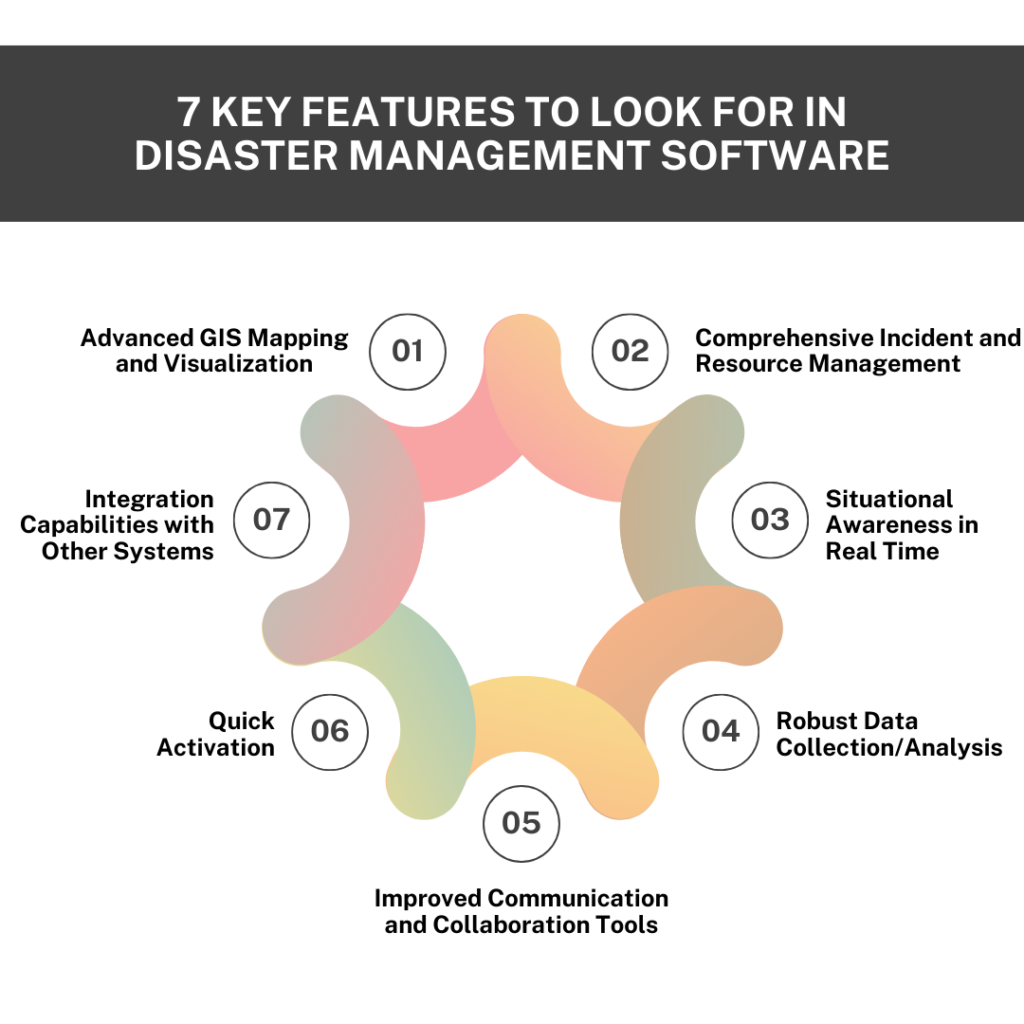
  • Can Disaster Management Software Protect Your Business from Unexpected Crises?

    Can Disaster Management Software Protect Your Business from Unexpected Crises?

    As per the Industry Growth Insight Report, the global emergency disaster management software market is expected to grow at a CAGR of 10.8% from 2018 to 2030. The global emergency disaster management software is divided into two segments, i.e., local deployment and cloud-based.

    As per the report, the cloud-based segment is expected to grow at a faster rate during the forecast year due to increased concerns in enterprises for potential crises that may occur due to natural disasters like hurricanes, earthquakes, and cyber attacks, which can result in severe damage and business losses.

    As businesses have started to understand the need to be prepared for the unexpected, the question arises: Can disaster management software predict natural disasters and shield your businesses from unanticipated catastrophes? This blog sheds light upon its various uses, advantages, disadvantages, and how disaster management software can play a significant role in safeguarding during times of crisis.

    Understanding Disaster Management Software 

    Disaster management software is a great tool to prepare, respond, and recover from situations of crisis by emphasizing decreased levels of risks, clear communication, synchronizing emergency responses, and supervising recovery efforts efficiently. It essentially serves as a unified platform for administering all aspects of crisis management.

    The key aspects of disaster management software comprise of:

    • Risk Assessment: Disaster management software offers tools and techniques for risk assessment like qualitative and quantitative assessment, risk mapping, scenario analysis, failure mode and effects analysis (FEMA), SWOT analysis, and more. Listed below are crucial steps integrated into disaster management software for risk assessment:
    • Threat Identification
    • Vulnerability Analysis
    • Risk Analysis and Score Generation
    • Visualization and Risk Mapping
    • Forecasting and Scenario Analysis
    • Risk Mitigation Planning
    • Monitoring and Alert Generation
    • Reporting and Compliance
    • Emergency Response Planning: This aspect focuses on creating and implementing strategies to manage the disaster effectively through customizable templates so the organization can plan out the action as per the scenario, simulation, drills, incident management software integration, plan adaptation, real-time updates, and focusing on post-incident review for identifying areas of improvement.
    • Communication Tools: Disaster management software includes various communication tools like mass notification systems, GIS for disaster management based communication, incident management platforms, etc., that help mitigate the risk by sharing real-time information and coordinating effectively.
    • Recovery Management: The software helps in reducing the intensity of damage and restarting the operations by adding supporting recovering management features that integrate the following solutions and tools:
    • Business Continuity Planning Tools
    • Resource Management Tools
    • Data Recovery and Backup Solutions
    • Recovery Point Objective (RPO) Tracking
    • Recovery Time Objective (RTO)

    Benefits of Disaster Management Software

    Disaster management software extends various advantages that are vital in maintaining the continuity of business operations, which are discussed below:

    • Efficient Response and Recovery: Disaster management software helps simplify the response and recovery phase by utilizing pre-defined response plans and related resources to subjugate any crisis successfully.
    • Compliance and Reporting: Several industries demand compliance with certain regulations concerning the management and reporting of crises. Disaster management software acts as an aid in the fulfillment of these requirements in reporting, documentation, and auditing.
    • Enhanced Communication: Disaster management software provides the necessary communication tools to ensure clear and consistent communication, which eliminates the risk of delayed response, thus resulting in a unified and collectively coordinated response.
    • Proactive Risk Management: This involves the engagement of advanced analytics and data visualization tools to recognize potential risks involved before they develop into a major crisis.  This approach promotes the advanced implementation of risk alleviation strategies.

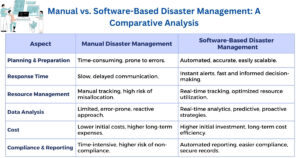
     Comparison of Manual vs. Software based disaster management

    Challenges And Limitations Of Disaster Management Software

    Let us understand the limitations of disaster management software that have a significant impact on the business’s decision-making ability and its implementation:

    • Human Factor: Human errors such as wrong data entry, misinterpreted information, etc. are a major risk in diminishing the efficacy of disaster management software. Therefore, businesses must ensure timely and appropriate training to employees to ensure a smoother resolution of the crisis involved.
    • Initial Costs and Implementation: The initial execution of this software can be costly for enterprises with budget constraints. These costs include integration, customization, and regular maintenance of the software.
    • Complexity and Training: Disaster management software emphasizes proper training of their employees to harness their true potential to the advantage of the organization. However, the complexity of this software often results in employees sticking to the old traditional ways to resolve crises.
    • Dependence on Technology: Technology is a powerful tool, but it can lead to various risks. Heavily relying on disaster management software can be concerning if all the software gets jeopardized. To avoid such difficult scenarios, businesses must have detailed backup plans to ensure smooth functioning.

    Future of Disaster Management Software

    Artificial intelligence (AI) and the Internet of Things (IoT) are becoming a crucial part of the evolving landscape of disaster management software due to the unique features they offer.

    AI helps in improving risk assessment by easy dissemination of large sets of data, which helps in predicting and preventing potential crises that may occur shortly. On the other hand, IoT devices offer the collection of real-time data which promotes quick and accurate responses.

    Businesses can expect to increase their potential manifold through the successful integration of these latest technologies into disaster management software.

    Conclusion

    Any enterprise can struggle with unexpected crises that can negatively impact its business operations. Disaster management software acts as a savior in navigating through such crises successfully by providing the necessary resources and solutions to safeguard assets and ensure the continuity of business operations, along with quick and informed decision-making.

    Partnering with a technology provider like SCS Tech India can significantly amplify your benefits of disaster management software while ensuring that the organizations are provided with innovative solutions and required tools to handle any unforeseen emergencies successfully, whilst focusing on speedy recovery and business continuity.

    FAQs

    Is disaster management software suitable for small businesses?
    Yes, disaster management software is suitable for businesses of all sizes, including small businesses.

    Does GIS help in natural disaster management?
    Yes, GIS in disaster management as it helps in giving real-time data, so efficient resource allocation can be done by mapping out the prone areas, predicting the impact level, and creating a recovery plan.

    How does disaster management software integrate with other systems?
    It is integrated into businesses through human resources, information technology, and communication platforms.

    (more…)

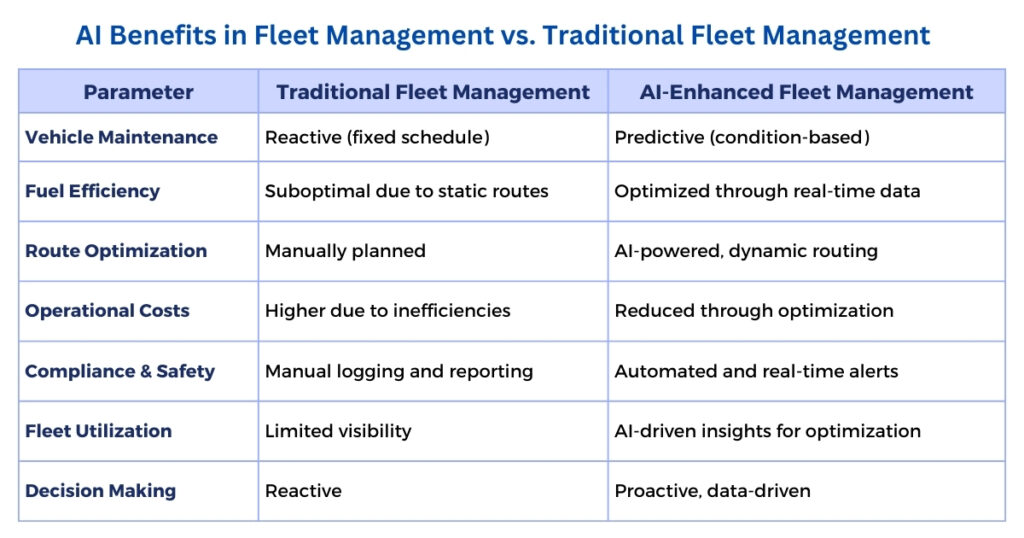
  • How AI Technology Companies Can Drive Digital Transformation in Enterprises

    How AI Technology Companies Can Drive Digital Transformation in Enterprises

    Is your business ready to capitalize on the AI revolution?

    In 2023, the artificial intelligence market was valued at USD 196.63 billion and is expected to grow at a CAGR of 36.6% from 2024 to 2030. This expeditious growth reflects the role of digital transformation and its significance for organizations to remain competitive in the market to survive and grow exponentially. As companies adapt to this evolving landscape, AI technology providers are emerging as pivotal players in facilitating smooth digital transitions.

    Artificial intelligence (AI) technology companies are providing the resources and expertise according to their specifications and requirements and establishing a smooth integration with the current systems of the organizations. This blog focuses on how these AI technology companies promote digital transformation and their significant impact on various industries.

    Understanding Digital Transformation

    Digital transformation involves incorporating digital technology in all facets of the business, which directly impacts the services provided to the customers and the day-to-day business operations.

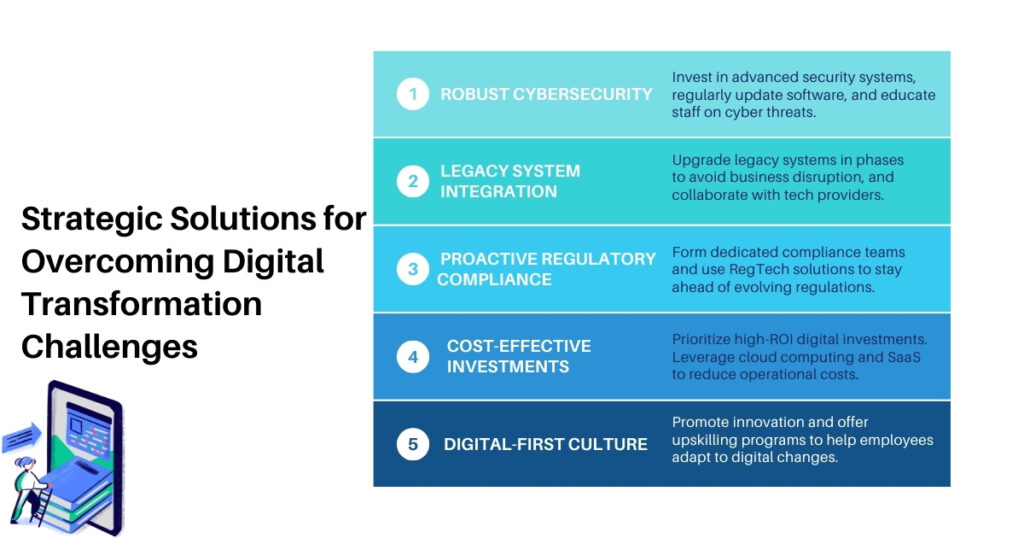
    The significance of digital transformation cannot be underestimated because technological developments are happening at quite a fast pace. Such drastic advancements can be easily introduced in enterprises through digital transformation, which in turn enables fulfillment of customer expectations, streamlining business operations, taking data-focused decisions, and designing personalized experiences for the customers. However, implementing digital transformation has its shortcomings, which can be eliminated through artificial intelligence.

    The Role of AI in Digital Transformation

    Artificial intelligence is a great tool to enhance an enterprise’s efficiency, productivity, data management, and decision-making while also encouraging innovations and relevancy, further supporting growth and the creation of new opportunities across various industries, which can be seen as:

    1. Customer Service: AI is rebuilding customer service by providing AI-powered 24/7 ChatBot, to enhance customer experience and satisfaction.
    2. Automation: AI-driven automation decreases the time and effort to complete various tasks, thus reducing the human efforts to focus on strategic tasks and other complicated workflows.
    3. Data Analytics: Data is the new oil, and AI-driven data analytics helps businesses extract the best information to foresee trends and improve decision-making, playing a major role in industries like healthcare, finance, and retail.
    4. Predictive Maintenance: The manufacturing and logistics sectors benefit from AI as it helps in the maintenance of systems and machinery by forecasting the likelihood of failure through data sensors and other sources, which promotes timely preventative measures.

    How AI Technology Companies are Acting as a Catalyst

    AI technology companies act as catalysts because they have the resources, tools, and expertise for the successful integration of AI in enterprises. Here are some ways that AI technology companies are promoting digital transformation:

    1. Creating AI Ecosystems: AI technology companies are building ecosystems of partners, clients, and customers, which results in a network of creativity and teamwork, thus promoting the age of digital transformation.
    2. Providing Advanced AI Tools and Platforms: AI technology companies develop and provide such advanced resources to utilize the full potential of AI as well as promote smooth integration of AI in business operations.
    3. Providing Customized Solutions: AI caters to the distinctive objectives and challenges of each business and delivers appropriate solutions by closely administering those problems.
    4. Educating and Training Enterprise Teams: Correct knowledge and skills are equally significant as technology to implement AI effectively. AI technology companies organize various workshops and training sessions for such teams to advance their AI expertise.

    Key AI Technologies Promoting Digital Transformation

    Let us understand various AI technologies and their impact as a driving force in digital transformation:

    1. Computer Vision: This technology enables computers to comprehend visual information, just like human vision, from the external world and successfully streamline operations that depend on visual input. For example, facial recognition and quality checks in manufacturing units.
    2. Robotic Process Automation (RPA): This technology eliminates human error by automating redundant tasks such as data entry, etc., thus promoting accuracy and directing those extra efforts toward building customer satisfaction and innovation.
    3. Machine Learning and Predictive Analysis: This technology forecasts outcomes based on large datasets, which helps businesses predict future trends, resulting in enhanced decision-making, efficiency, and a notable competitive advantage.
    4. Natural Language Processing: This AI technology interprets human language, which enables the enterprise to transform its customer service by closely analyzing their comments, reviews, and sentiments, which further promotes clear communication and a better understanding of customer expectations.

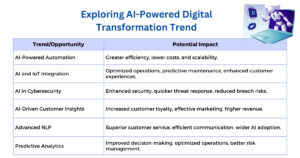
     AI-powered trends

    Conclusion

    AI technology companies are a major driving force in bridging the gap between human capabilities and technological innovations by engaging employees in various training and development programs to enhance their AI skills, thus cultivating an environment of continuous learning and innovation within the organization.

    In this age of digital transformation, SCS Tech India brings forth the right kind of opportunities, knowledge, and assistance to develop such effective AI systems that not only benefit the company’s goals but also focus on developing fair, transparent, and trustworthy systems that directly help in building and attracting a genuine and solid clientele and materialize lucrative opportunities.

    FAQs

    Do AI technology companies offer ethical AI integration?
    Yes, they strictly follow the laid down guidelines and practices which ultimately protect them from any legal or reputational hazards.

    Which sector benefits the most from digital transformation fueled by AI?
    It can be an excellent transformation for any sector but is favorable for the manufacturing, healthcare, finance, retail, and logistics sectors.

    What are the shortcomings that organizations face while implementing AI?
    Enterprises frequently encounter obstacles, including data integration, insufficient knowledge of AI, exorbitant implementation expenses, and worries about data ethics and privacy.

  • Why Robust IT Infrastructure Solutions Are the Backbone of Successful Enterprises?

    Why Robust IT Infrastructure Solutions Are the Backbone of Successful Enterprises?

    As per Harvard Business Review, almost forty percent of companies view IT infrastructure solutions as a leading reason for overall enterprise efficiency gain in order for businesses to stand out from one another in the marketplace.

    In the modern world of digitalization, an effective IT structure solution is no longer a luxury but a necessity for any enterprise that has to compete for its existence in the market. In this blog, we will define what it means to integrate IT infrastructure solutions into business processes, as well as strategies to develop sound IT infrastructure solutions.

    Comprehensive Insight on Benefits of IT Infrastructure Solutions for Enterprise Success

    Improved Operational Efficiency

    A robust IT infrastructure helps in improving operational efficiency by utilizing the resources optimally, reducing errors, and downtime.

    Listed below are key factors of an IT infrastructure solution that contribute to improved operational efficiency:

    • IT infrastructure solutions help streamline business processes by automating the business workflow, resulting in a reduction in manual tasks and errors.
    • A robust IT infrastructure solution enhances work collaboration through various cloud-based platforms so employees can access real-time data, share documents, and seamlessly collaborate on projects.
    • For strategic decision-making, IT infrastructure solutions offer advanced solutions for data storage via cloud storage and database management systems.
    • Integrating data analytics tools like Power BI, Google Data Studio, QlikSense, etc. for making timely decisions according to operational and market changes.

    Robust Security and Compliance

    A strong IT infrastructure not only improves operational efficiency but also makes sure the valuable assets of the organization are safeguarded from having network security solutions to data encryption solutions. Below listed are key IT infrastructure solutions that facilitate security and compliance:

    • To safeguard from potential disruption resulting from cyber-attacks or technical failures, IT infrastructure solutions offer a comprehensive recovery plan that includes data backup, testing and drills, business impact analysis, and re-establishing networking connectivity.
    • Network security solutions like virtual private networks, firewalls, intrusion detection and prevention systems (IDPS), etc., act as key solutions for enhancing data security.
    • A robust IT infrastructure solution integrates data encryption solutions through tools like BitLocker (for Windows) or FileVault (for Mac) and a public key infrastructure solution for safeguarding digital certificates and encryption keys.
    • Other key security and compliance solutions include identity and access management solutions, compliance management solutions, including data governance tools to make sure the business is securing and managing data as per regulatory compliance, endpoint security solutions, and more.

    Cost Efficiency

    Cost efficiency plays a crucial role in an enterprise’s long-term success, which can be achieved by integrating IT infrastructure solutions that can eliminate waste, streamline business operations, and allocate resources effectively.

    Below listed are the benefits offered by robust IT infrastructure solutions to achieve cost efficiency.

    • Automation of routine tasks helps enterprises utilize the skills of employees in more effective areas.
    • Helps in effective resource management by removing underutilized assets and automated scaling through tools like Microsoft Azure’s Virtual Machine Scale Sets, AWS Autoscaling, etc., so resources are allocated based on demand, resulting in reduced cost.
    • IT infrastructure management tools help in better cost visibility through 3 key aspects:
      • Energy consumption reduction by optimizing power usage
      • Storage optimization by integrating techniques like tiering, deduplication, and compression.
      • Cost savings via server consolidation, where underutilized servers can be identified and consolidated, reducing hardware costs and energy consumption.

    Improved Customer Experience

    In the evolving market, the shift towards enhancing the customer experience has become a key parameter, and enterprises can integrate the following IT infrastructure solutions to improve customer experience:

    • Streamline communication and service by adding automated response services like Chatbot or voice-enabled technology solutions.
    • Add advanced data analytics tools that can evaluate customer preferences and offer personalized customer interaction.
    • IT infrastructure solutions like CDNs (Content Delivery Networks) can be implemented to increase reliability by offering faster load time. It helps businesses in scaling as a high volume of traffic can be managed with high performance.

    Fosters Gaining Edge in Competitive Market by Constant Innovation

    Investing in IT infrastructure solutions is a backbone to drive success given market changes and the evolving landscape of technologies. Listed below are a few advantages enterprises can gain from integrating innovative approaches to IT infrastructure solutions in their business processes:

    • IT infrastructure solutions help businesses with scalable and cost-effective solutions so businesses can respond to sudden market demands and offer seamless delivery.
    • Supports cutting-edge technologies like artificial intelligence, machine learning, and the Internet of Things (IoT).
    • Improves agility and speed so businesses can rapidly deploy new services/applications and grab the right market opportunity.
    • Helps in digital transformation by integrating ERP systems like SAP, CRM software like Hubspot, and collaboration tools like Microsoft Teams.
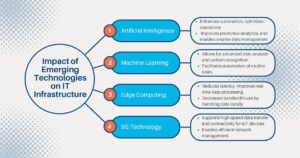
    • The digital transformation is also achieved by deploying innovative applications like AI-powered analytics (Tableau, Power BI) and IoT platforms (AWS IoT, Google Cloud IoT).Impact of emerging technologies on IT infrastructure

      Tips on Building a Robust IT Infrastructure Solutions

      • Understand business requirements and evaluate pain points to align IT infrastructure strategies.
      • Focus on scalability and flexibility through cloud-based solutions and modular design for long-term growth.
      • Improve network reliability by removing redundant systems and investing in high-speed connectivity for seamless communication.
      • Invest in advanced monitoring and management tools like SolarWinds and focus on centralized management.
      • Partner with reliable IT infrastructure solutions partner like SCS Tech India for comprehensive services like infrastructure management, cloud services, cybersecurity, etc.

      Conclusion

      Robust IT infrastructure solutions are crucial for successful enterprises, ensuring seamless operations and driving innovation. A well-structured IT structure enhances scalability and improves productivity, leading to a competitive advantage. At SCS Tech India, we understand the importance of this parameter and offer tailored services like cloud computing integration and cybersecurity to meet these needs.

      Our expertise in IoT consulting, IoT application development, wearable app development, voice-enabled technology solutions, and IT implementation and support helps enterprises build a robust IT infrastructure. Enterprises can achieve agility and efficiency by integrating these services and sustaining long-term in the market.

      FAQs

      1. What is the role of IT infrastructure in API management?

      IT infrastructure in API management focuses on seamless communication between applications and services, enabling businesses to create, manage, and track the performance of API along with detecting issues.

      1. What IT infrastructure solutions does SCS Tech India specialize in?

      SCS Tech India provides IT infrastructure solutions like network design, cloud computing, data center management, and cybersecurity services.

      1. What best practices can enterprises follow to design a robust IT infrastructure?

      Enterprises can focus on practices like scalability, assessing business needs, cloud integration, strong security measures, solid backup systems to remove redundancy, and more.

    (more…)

  • What to Look for When Choosing a GIS Mapping Service Provider

    What to Look for When Choosing a GIS Mapping Service Provider

    The GIS market is on track to hit $14.5 billion by 2025, fueled by its growing impact across sectors like transportation, space exploration, automotive design, and smart city planning. With such explosive growth, GIS is quickly becoming indispensable for industries looking to innovate and lead.

    This growth reflects that enterprises are now increasingly relying on GIS mapping services to enhance predictive modeling, optimize operations, and support strategic decision-making. As the demand for GIS solutions rises, selecting the right service provider becomes a critical focus on GIS mapping services that can offer precise geographic data to boost predictive modeling capabilities, optimize operations, and improve decision-making processes.

    Companies are focusing on GIS mapping service providers who not only offer robust systems that analyze, integrate, and display spatial or geographical data but also give tailored-based services as per the project demand to achieve business objectives. In this blog, we will focus on key factors that one should look for before selecting a GIS mapping services provider.

    Key Factors To Consider While Choosing A GIS Mapping Service Provider

    #1 Technical Expertise and Level of Qualification

    Delivering high-end GIS mapping services depends on skilled professionals who can efficiently handle GIS tools and technologies like big data handling, AI-driven geospatial analytics, etc., along with specialized projects like advanced spatial modeling. It is important to check that the service provider has a certification like GIS Professional (GISP).

    #2 Data Quality and Accuracy

    The data quality and accuracy are integral parts of GIS mapping as they impact the insights derived from spatial analysis. Poor-quality data can lead to increased GIS project costs and incorrect analysis, which can lead to wrong decisions.

    The following factors can be checked:

    • Check that the provider uses authoritative data sources and has a robust validation process, thereby maintaining quality and accuracy.
    • Look for providers offering in-depth metadata with information regarding data source, accuracy level, collection data, etc. to assess reliability.
    • Check whether the service provider is adhering to standards related to data accuracy set by various ISO or related bodies.
    • With a dynamic technological landscape, check that the provider is offering advanced data collection tools for better quality, like LiDAR, UAVs (Unmanned Aerial Vehicles), etc.

    #3 Service Offerings

    While choosing a GIS mapping service provider, it is important to explore what specialized and end-to-end services are offered and how they are aligned with your goal and can help you improve results. The key services offered by a GIS provider one can look for are given below:

    • End-to-end services, from the gathering of data to its processing, mapping, and final reporting for efficient project workflow, are the core services to be offered by GIS mapping service providers.
    • The service provider should offer integration of GIS data with other systems, such as CRM or ERP systems, for better utilization of data in enterprise operations.
    • Evaluate whether specialized services, like 3D modeling and visualization, are offered, mainly for urban planning/development and infrastructure-related projects. For projects involving customer mapping or asset management, the service provided should be able to provide geocoding and address matching.

    #4 Customer Service And Training

    The GIS mapping service provider should be able to offer the required customer service and training so that better utilization of GIS tools can be done to achieve the desired project outcomes. The key parameters to be looked at under the customer service and training component are

    • 24/7 Customer Support Service
    • Fast Response to Reduce Downtime
    • Comprehensive training programs, including workshops, webinars, etc.
    • Industry- or project-specific training
    • Training materials such as user manuals or video tutorials.
    • Effective feedback mechanism

    #5 Cost Structure

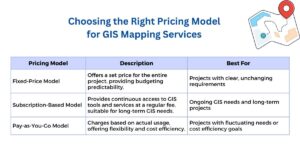
    While choosing a GIS mapping service provider, it is important to understand the different pricing models and how they align with your project and financial budget. In the chart below, different pricing models with key features and the right project alignment are mentioned.

    GIS Mapping services pricing model

    Other than the pricing models, cost transparency should be maintained by the service provider by highlighting the upfront fees and hidden costs like advanced customer support, data storage requirements, etc., so the organization can effectively manage contingency expenses.

    #6 Emerging Trends And Innovation Integration

    Staying updated with recent trends and innovations in GIS mapping that can be implemented in your enterprise and selecting the service provider as per the requirement is crucial for informed decision-making.

    Some of the latest innovations on the market are:

    • Real-time analytics
    • 3D GIS for better spatial visualization
    • Improved predictive analytics through machine learning and AI
    • Cloud-based GIS solution for scalability, better accessibility for remote teams, and flexibility
    • Geospatial Data Fusion to create comprehensive geospatial datasets by combining data from social media, satellites, and other sources.

    Conclusion

    The selection of the right GIS mapping service provider can be complex when you want to integrate specific requirements and advanced technologies.

    Evaluating the right GIS mapping service provider involves various factors, from technical qualification, customization, and integration to scalable solutions, as these factors help in making informed decisions that enhance an organization’s ability to leverage spatial information effectively.

    To ease out the process, consult experts from SCS Tech India to navigate the complexities and implement innovative approaches to optimize your spatial data management and have a competitive edge in the market by leveraging GIS technologies for your projects.

    FAQs

    1. What is the role of customer service when selecting a GIS mapping service provider?
      Customer service plays an important role when selecting a GIS mapping service provider for various factors like addressing issues promptly, offering required training, assisting in technical changes, and more to enhance the overall experience.
    2. What costs are involved in GIS mapping services?
      GIS mapping services include costs such as initial setup costs, software licenses, purchasing data, customizing the system, and fees involved in continuing support and maintenance.
    3. Are there any latest trends I should look after before choosing GIS mapping services?
      Yes, the current trends in GIS mapping services one should be aware of are real-time data processing, integration of machine learning for data analysis, 3D and VR mapping technologies, edge computing, and more.
    4. What are the core components of GIS mapping?
      The core components of GIS mapping include spatial data, hardware, GIS software, and database management. (more…)
  • Transform Your Business with Cutting-Edge IT Infrastructure Solutions

    Transform Your Business with Cutting-Edge IT Infrastructure Solutions

    Did you know that 85% of businesses report increased efficiency and competitive advantage after upgrading their IT infrastructure? With such a significant impact, isn’t it time your company explored these advancements too?

    Advanced IT infrastructure solutions are no longer optional—they’re essential for maintaining a competitive edge and boosting operational efficiency. 

    But what makes modern IT infrastructure so revolutionary?

    At its core, IT infrastructure integrates hyper-converged systems, cloud computing, and edge computing, reshaping traditional business models. These innovations drive powerful cybersecurity measures, seamless data integration, and real-time analytics, ensuring businesses operate with unmatched stability and agility. Moreover, embracing these cutting-edge solutions simplifies remote work, lays the groundwork for future technological advancements, and supports scalability.

    Read on as we delve deeper into how these IT infrastructure solutions are enhancing business operations. 

    Improving Operational Efficiency: Best IT Solutions to Opt For

    Image Source:

    You will come across many IT solutions that can aid in improving the functional efficiency of your business. In this section, you will receive a detailed explanation of the most crucial and popular IT infrastructure solutions.

    Git [Bitbucket, Gitlab, GitHub]

    Git, along with other platforms like Bitbucket, GitHub, and GitLab, is known as the cornerstone of proper source code management. It will do the following:

    • Code modification history maintenance
    • Change the tracking
    • Provide smooth collaboration.

    All these things are extremely vital for IT infrastructure services to become powerful so that they can help all types of businesses.

    Maven

    This is an important DevOps tool that can simplify project management and also create automation. From reporting and documentation to managing builds, Maven can easily boost the reliability and efficiency of all IT infrastructure services.

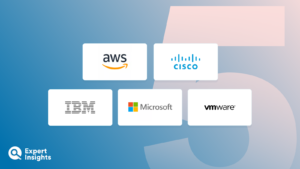
    Amazon Web Services Global Infrastructure

    AWS [Amazon Web Services] offers a network of data centers across the globe, which, in return, delivers a myriad range of cloud computing services. Through its worldwide data centers, AWS provides over 200 services.

    From storage solutions to virtual services, Amazon Web Service’s infrastructure is created to support the requirements of various businesses. These IT solutions will also offer businesses both scalability and flexibility, which is needed to meet all their IT-related demands.

    The presence of AWS infrastructure across the globe ensures high availability and less latency. For these reasons, AWS stands out as an exceptional choice for corporations with a global footprint. At present, AWS infrastructure is 245 nations and territories, 36 local zones, and 33 regions worldwide.

    AppDynamics

    This particular IT infrastructure solution provides all the important DevOps tools that can enhance observability and prompt delivery. The “Cloud Native App Observability” from AppDynamics will allow comprehensive monitoring, and it’s vital for preserving the best IT infrastructure services.

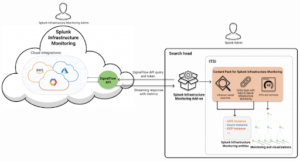
    Splunk Cloud

    Image Source:

    This is one of the best IT solutions that offers automation solutions for all DevOps processes, which includes deployment automation. Splunk Cloud’s Automated Deployment Helper can streamline deployments and improve the efficiency of IT infrastructure solutions.

    Cisco Meraki

    This IT infrastructure solution delivers a diverse range of management solutions, which include:

    • Wireless access points
    • Switches
    • Cloud-managed routers

    All these solutions can facilitate network management and improve security. This will enable all businesses to manage the network infrastructure across the globe. Cisco Meraki has a centralised dashboard that offers visibility into the network performance in real-time, which will make it much easier for all businesses to address and detect various problems.

    VMWare Global Infrastructure

    With the help of VMWare, businesses will get many visualisation solutions that can assist them in optimising their respective IT infrastructure. From virtual desktops to servers, the solutions from VMWare are created to enhance security, reduce expenses, and improve the system effectively.

    For this reason, Broadcom declared an acquisition deal of $61 million with VMWare in 2022. Apart from that, VMWare global infrastructure is an ideal option for businesses that aim to modernise their IT infrastructure.

    Besides that, its solution will also let businesses transfer all their workloads between the cloud and on-premises environments, offering both scalability and flexibility.

    IT Infrastructure: Getting to Know It’s Primary Components

    An outstanding IT infrastructure stands out as the backbone of a modern-day business and has some important components. Look at the table below to discover what these components are:

    Components Description
    Storage and Security Robust servers and high capacity and reliable storage solutions are compulsory for managing massive amounts of information and running complicated applications without lag or downtime. This includes options like Storage Area Network and Network Attached Storage.
    Virtualisation Efficiently using computing resources via virtual environments and machines will let all businesses run countless operating applications and systems on one physical server. This will help lessen the cost and improve the scalability.
    Network Powerful networking can simplify data transfer and communication outside and inside the company. Reliable and high-speed network connections will support real-time collaboration, remote access, and cloud services.
    Remote Access Efficient and safe remote working abilities will allow employees to gain access to all the important resources whenever they want. In return, it will improve flexibility and productivity. Solutions, such as VPN and SASE, will offer secure connections to remote user
    Security Exceptional security measures can shield all systems and data from cyber-related threats. This includes providing security updates, intrusion detection systems, firewalls, and encryption. A multi-layered security approach can identify and prevent attacks.
    Disaster Recovery Making sure all the data is properly backed up and retrieved easily during emergencies can prevent data loss. It will also allow the business to continue operating, and periodic off-site and on-site backups are essential for maintaining data integrity.

    Conclusion

    IT solutions play a pivotal role in enhancing global business operations, driving efficiency, and optimizing overall IT infrastructure. Businesses seeking robust IT infrastructure solutions can benefit from experts at SCS Tech India Pvt Ltd, who deliver exceptional solutions to our customers.

    In addition to IT infrastructure, we specialize in cybersecurity, eGovernance, AI/ML services, and digital transformation. Our expertise extends across diverse sectors including agriculture, education, oil and gas, urban development, and critical infrastructure, ensuring tailored solutions that meet specific business needs.

  • Smart Cities and e Governance Solutions: The Role of Advanced AI and ML Services in Urban Development

    Smart Cities and e Governance Solutions: The Role of Advanced AI and ML Services in Urban Development

    In recent years, the concept of “smart cities” has captured the imagination of urban planners and technologists alike. Today, such cities are the way of living.

    With investments in smart city technology expected to reach 65% by 2040, the impact is undeniable.

    But what exactly makes a city “smart”? At its core, a smart city leverages advanced technologies like Al and ML to enhance the quality of life for its citizens, improve efficiency in public services, and promote sustainable urban development.

    This article explores how smart cities leverage Al and ML to address urban challenges and drive sustainable development.

    Governance in Smart Cities: Who are the Stakeholders?

    Image Source:

    All stakeholders participate in the development of industries, decision-making, and planning work, and they resolve issues collaboratively with the correct technology. These smart cities have many stakeholders, such as:

    • Private sectors
    • Citizens
    • Public sectors
    • Government

    Understanding the Value of AI Technology for Smart Cities

    AI is not just a profitable sector but also has the power to improve cities. Due to the quick process of modern-day connectivity, growing demand for IoT (Internet of Things) technology, and the birth of 5G, AI software for smart cities has turned into a massive business.

    Back in 2019, the AI sector had a value of $673.8 million, but in 2025, those figures will stand at $4.9 billion. But it has become much easier for all the AI programs to process and analyze all the information because of the:

    • Interconnected data banks
    • 5G connectivity
    • Modern-day smart technologies

    All these things have helped in resolving various issues in city management. Having AI technology can also assist all cities in opting for the correct changes at an efficient and quick pace. 

    How to Handle the Development of Smart Cities?

    Image Source:

    Urban development is a challenging task, and all developments must be properly designed, tested, and researched to satisfy various stakeholders. When you plan to handle smart city development, you have to conduct many studies and check several boxes. 

    At times, the bureaucracy stands in front of effective problem-solving. For instance, German officials in Berlin declared that it took them several years to install a proper bicycle lane in the city.

    But these days, if APIs (Application Programming Interfaces), heat maps, and AI all together, the government will gain entry to an enormous amount of information. The government can use the information to make accurate changes and informed decisions to improve city life.

    How ML and AI Technologies Revolutionise Urban Settings?

    The AI ML services have a massive potential to revolutionize the urban setting, which can lead to transformative advancements in many areas of city life. Take a look at the table below to gain more information:

    Pointers Description
    Allowing Smart Services and Governance Both ML and AL can change the public and governance services within urban settings. AI-powered intelligent systems can enhance the decision-making process, citizen engagement, and virtual assistance. For instance, virtual assistants and chatbots can offer efficient and personalized egovernance solutions to all citizens by addressing all their needs and queries. The AI algorithm will analyse massive sets of information to help with making data-driven decisions in areas like policy formulation and urban planning.
    Encouraging the Resilient and Sustainable Cities Both machine learning and artificial intelligence can aid in making resilient and sustainable cities. The ML algorithms will examine the sensor data, historical records, and climatic changes that will help support the disaster response and environmental control adequately.  With the help of ML and AL, cities can easily improve the usage of resources, optimize waste management methods, and lessen the environmental influence.
    Improve the Urban Infrastructure Artificial intelligence and machine learning technologies can optimize urban infrastructure. It can do so by improving resource administration, sustainability, and efficacy. The ML algorithms will analyze the information from different sources to optimize the environmental impact of energy consumption at smart grips and even lessen the expenses. Besides that, AI techniques can be easily applied to optimize the flow of traffic and intelligent conveyance systems, reduce congestion, and improve mobility.
    Advancing Public Security and Safety ML and AI technologies can improve the safety of the general public in various urban settings. AI algorithms will use intelligent monitoring methods to analyze the video feeds and identify all the real-time suspicious activities or threats. Training the machine learning models will assist law enforcement and predict crime patterns in bold crime deterrence effectively.
    Improvements in the Healthcare Industry AI technologies provide many possibilities for the healthcare sector. It will allow you to manage all the medical records, check the bed status, schedule online appointments in private and government hospitals, use smart inventory handling of medical supplies, and offer surgical assistance. AI technologies will not just aid in curing various health ailments but also stop them via early predictions and detections.

    Wrapping Up

    Both AI and ML technologies play pivotal roles in advancing smart city development, impacting critical areas such as traffic monitoring, advanced security systems, waste management, and urban governance. Collaborating with innovators and startups across private and public sectors is essential for creating effective IT solutions that enhance societal enjoyment, safety, comfort, and livability.

    SCS Tech India Pvt Ltd excels in delivering top-tier IT infrastructure solutions tailored for urban planning and development. Additionally, the company offers a comprehensive range of services, including enterprise solutions, e-governance, robotic process automation, and geographic information systems (GIS), reinforcing its commitment to shaping sustainable and efficient urban environments.

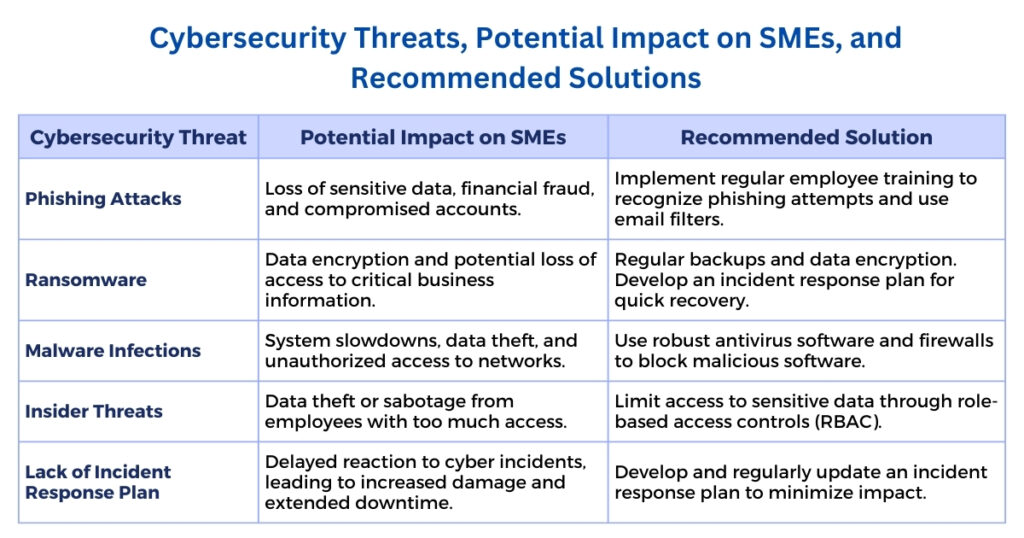
  • Cybersecurity Solutions Groups: Strategies for Threat Mitigation

    Cybersecurity Solutions Groups: Strategies for Threat Mitigation

    A staggering statistic reveals that cyber incidents can lead to revenue losses of up to 20%, with 38% of companies reporting turnover declines that surpass this alarming threshold.

    Is your company next? As cybercriminals grow more sophisticated, the financial repercussions of inaction can be devastating, not only impacting the bottom line but also eroding customer trust and brand reputation. 

    In this blog, we will learn about advanced cybersecurity solutions and the strategic approaches organisations must adopt to effectively mitigate risks and safeguard their financial future in an increasingly perilous digital landscape.

    The Cyber Threat Landscape: A Brief Understanding

    The threat landscape is known as all the recognised and potential cybersecurity threats that have an impact on certain sectors, companies, a specific time, or user groups. Back in 2023, 72% of businesses across the globe fell victim to ransomware attacks. Through this stat, you can clearly see that cyber threats keep on emerging on a regular basis. Based on that, the threat landscape keeps changing. However, certain facets contribute to the cyber threat landscape:

    • The increase in sophisticated attack procedures and tools
    • All those networks that distribute all the cybercrime profits are like the “dark web”.
    • There is a great reliance on data technology services and products like “SaaS offerings.”
    • Development of new hardware like the IoT (Interest of Things) devices
    • The availability of funds, personnel, and skills to drive the cyber attacks
    • Quick releases of software equipped with functionality
    • External aspects like the financial crisis and the global pandemic

    Apart from that, the experts from the cybersecurity solutions group have pointed out certain aspects of the cyber threat landscape that can be risky for every entity in their contexts. Here, context refers to specific components that can affect the level of danger that a specific sector, company, or user group might experience, which are:

    • The geopolitical aspects – various threat actors aim at individuals or groups from a certain region or nation, such as the APTs (Advanced Persistent Threats)
    • The value of all the personal data that is available
    • The level of security placed to protect sensitive data.

    Best Threat Mitigation Strategies to Opt for in Today’s Time

    Image Source:

    The cybersecurity solution group has countless approaches that are ideal for threat mitigation. You will find some of the crucial ones listed in this section:

    Risk-Related Assessments to Determine the Vulnerabilities

    Under the cybersecurity threat mitigation plan, you first have to perform a risk evaluation. This can help you discover all the loopholes present in your organisation’s security controls. Risk evaluations can provide you with information on the current security controls and the resources that need to be ensured.

    Apart from that, risk evaluation will also direct you to help your company’s IT security team detect all the weaknesses that can be taken advantage of. It will also let the team keep their focus on the steps that should be taken first. The “network safety appraisals” are an outstanding procedure that will let you check out your firm’s cybersecurity posture.

    Make a Patch Management Schedule

    Many application and software providers release patches continuously, of which all cybercriminals are well aware. They instantly decide how they can take advantage of such patches. You must pay close attention to the patch releases and then make an outstanding management schedule. This can help your organisation’s IT security group remain one step ahead of all cybercriminals.

    Make a Plan for Incident Response

    Image Source:

    You must guarantee that every individual, which includes the non-technical workers and IT cloud cyber security team, is well aware that they will be responsible if there is an information assault or break. This will make things straightforward and let you set up the assets.

    This is known as an “occurrence reaction plan,” and it’s a vital aspect of alleviating cyber-attacks in your enterprise. Dangers can show up from any area and will not cease up themselves. So, the experts from the cybersecurity solutions group recommend that businesses create a response plan to remediate all problems proactively.

    Security Training and Awareness

    In today’s world, human error is still one of the primary vulnerabilities in cybersecurity. The advanced cybersecurity solutions group views training programs and security awareness as essential as they can aid in educating all employees about various cyber-related threats and the best strategies.

    All these programs will cover certain topics, such as

    • Safe internet usage
    • Password hygiene
    • Phishing awareness

    Creating a culture of cybersecurity awareness will allow businesses to empower their employees to act as a defence against all cyber threats.

    Taking a Look at the Advantages of Cyber Threat Mitigation

    Image Source:

    The cyber threats mitigation comes with many unique benefits, which are briefly explained in the table below:

    The Benefits Brief Description
    Increases the Revenue Significantly By opting for cyber threat mitigation strategies, you can detect all types of vulnerabilities and various problems. This will help your company to prevent downtime and avoid revenue losses from all compromised systems and data.
    Excellent Security Compliance Cyber threat mitigation will let you implement correct security technologies, policies and processes for your firm. This will make it much easier to meet all the regulatory standards, adhere to security needs, and prevent expensive fines and penalties.
    Improves Brand Reputation Through cyber threat mitigation, you can keep your firm’s reputation well-protected. Opting for risk mitigation technologies, methods and policies will keep your information shielded and help you gain loyalty and trust from the customers.
    Identifying and Mitigating Cyber Threats on Time With cyber threat mitigation, you can detect all the risks on time. Doing so will help you decide where all the threats are located in the network and make sure all the critical systems are secure. This includes monitoring the systems, assessing vulnerabilities, etc.
    Reduces the Vulnerabilities You can detect all the cyber threats during the early stages via cyber threat mitigation. That way, your company will have enough time to terminate all these threats right before they get exploited by all the black hat hackers or cybercriminals.

    Conclusion

    It’s crucial to safeguard all your business systems and sensitive information from cyberattacks to prevent them from falling into the hands of cybercriminals or hackers for illicit purposes.

    Opting for effective threat mitigation strategies is the best approach to thwart such attacks. These strategies not only facilitate the timely identification of vulnerabilities but also mitigate their escalation.

    Moreover, at SCS Tech India Pvt Ltd we specialise in providing top-tier custom cybersecurity solutions designed to prevent cyberattacks and ensure comprehensive security of client information. In addition to cybersecurity services, we also offer GIS solutions, AI/ML services, and robust IT infrastructure solutions.

  • Evaluating Incident Management Software: Features and Performance Metrics

    Evaluating Incident Management Software: Features and Performance Metrics

    Downtime isn’t just a nuisance—it’s a costly affair. 

    With system downtime costing companies an average of $300,000 per hour in lost revenue, employee productivity, and maintenance charges, the financial impact is staggering. 

    For instance, an e-commerce giant facing a server outage during a major sale event can experience frustrated customers and significant revenue loss. This is one among the many situations that underscores the critical need for efficient incident management software.

    In this blog, we will delve into the essential features and performance metrics that define top-tier incident management software, helping you make informed decisions to safeguard your business operations.

    Incident Management Software: A Brief Overview

    With Incident management software, corporations can efficiently respond to and manage all kinds of incidents. The software can collaborate on resolutions, simplify the interaction with the stakeholders and track down all incidents.

    Furthermore, it can also automate various tasks like incident escalation and alerting. Besides that, the necessity of this particular software leans on the complexity and scale of your business operations and IT infrastructure.

    Small IT frameworks and SMEs with simple operations can manage all incidents without software. However, bigger and more complicated IT setups need powerful incident response systems to handle all incidents effectively.

    The Features of Incident Management Software

    Image Source:

    Before you choose an ideal Incident management software for your business, it’s crucial to understand all its features. Checking out the features beforehand will certainly help you make a smart choice. The features are:

    • Customisable Workflows: The software offers workflow customisation so that you can align incident management with the company’s certain procedures.
    • Intuitive User Interface: Having a user-friendly interface will lead to instant incident resolution. Incident management software comes with a minimal learning curve and uncomplicated navigation.
    • Collaboration Tools: This type of software comes with real-time collaboration and communication features so that you can take a unified approach when it comes to handling all sorts of incidents.
    • Automated Capabilities: Having a powerful automation feature can lessen human errors and speed up response times during severe incidents.
    • Multiple Channel Alerting: This software also has the multi-channel alerting feature to make sure no incidents go unnoticed by you and your team.
    • Scalability: The software will scale the business growth and also increase the demand and the complexity along with it.
    • Comprehensive Analytics and Reporting: The powerful analytics and reporting tools can give insights into the performance and various incident trends.
    • Mobile Accessibility: Many Incident management software come with a mobile accessibility feature so that you can receive responses on time regardless of your location.
    • Integration Capabilities: This software can integrate perfectly with all your current platforms and tools. The feature can stop information silos.
    • Incident Response Tool: The incident management system comes with an outstanding incident response feature, which makes the entire platform quite powerful.
    • Security Measures and Compliance: Incident management systems meet all the compliance standards of the industry and also have robust security measures to keep all sensitive information secure.

    Value of Incident Management Software for the IT Sector

    Incident management software plays a vital part in many sectors, including Information Technology (IT). Using this software in an IT setting can help you take a systematic approach to managing all unexpected emergencies, incidents, and events. There are other reasons that prove this software is important for the IT industry. Check out the table below:

    The Pointers The Reasons
    Analysing the Root Cause Simplifies the entire analysis of various incidents to detect all the underlying issues for long-term enhancements.
    Reducing the Downtime Assist in smoothly resolving all cyber-related attacks and system failures. This helps reduce all the software disruptions.
    SLAs [Service Level Assessments] Tracks down the incident resolution times to maintain customer satisfaction and guarantee SLA compliance.

    The Performance Metrics of Incident Management Software

    The Incident management software has many performance metrics, and you will find out about the important ones in this section.

    Uptime

    This metric is known as the percentage of times a system functions correctly. Uptime is extremely straightforward as it will show you how reliable the service can be. If the uptime is close to 100%, it means your customers are happy. Based on the industry standards, an uptime of 99.9% is viewed as pretty good, but 99.99% is considered excellent. Even though perfection is not possible, try to keep this particular number higher.

    MTTR [Mean Time to Resolution]

    This metric is known as the average time taken to resolve or respond to a specific incident. Mean Time to Resolution will show you how fast your team resolves or responds to various problems that take place.

    First Touch Resolution Rate

    This is a rate at which all incidents get resolved without repeat alerts when they take place for the first time. The First Touch Resolution Rate displays how effective the management system has become over time. A first touch and high-resolution rate means the system is mature and properly configured.

    MTTA [Mean Time to Acknowledge]

    MTTA is known as the average time between the team member who acknowledges the problem and the system alert. This metric will show you how effectively and instantly your team members respond and manage the latest system alerts.

    Conclusion

    Incident management software is crucial not only for the marketing and healthcare sectors but also for the IT, power, gas, oil and various other incident-prone industries. It enables swift responses and system alerts and enhances team collaboration effectively.

    Implementing such software enables proactive incident detection and timely response to unforeseen events. For tailored incident management solutions for your business, consider consulting experts at SCS Tech India Pvt Ltd.

    SCS Tech India Pvt Ltd specializes in delivering cutting-edge IT solutions globally, including Cyber Security, Blockchain Solutions, and Enterprise Solutions. Serving diverse sectors such as Agriculture, Finance, Education, and Healthcare, they are committed to providing innovative IT-based solutions to meet varied client needs.

  • The Role of GIS Companies in Smart City Initiatives

    The Role of GIS Companies in Smart City Initiatives

    With over 55% of the world’s population now living in urban areas, the success and sustainability of these regions depend heavily on how well cities can manage their resources and address contingencies. GIS technology provides the backbone for these efforts, offering comprehensive solutions for urban planning, infrastructure management, environmental monitoring, and public safety. 

    Geographical Information Systems (GIS) technology is a cornerstone of modern urban development and management. GIS companies in India leverage this sophisticated technology to undertake a wide array of critical tasks—from designing and planning new urban spaces to the redevelopment of heritage cities. 

    In this blog, we discuss the multifaceted roles of GIS companies in India, emphasizing their contributions to smart city development and the extensive benefits they offer to urban environments. From economic growth and business support to transportation management and disaster response, GIS technology is revolutionizing how cities operate and thrive in an increasingly complex world.

    Significance of GIS Companies in the Smart City Framework

    Both small and large GIS companies in India offer essential tools and services for smart city development. Smaller firms might focus on specific tasks like traffic management, while larger organizations provide a comprehensive range of services from a central hub. 

    The Geographical information system software technology enables the use of locational data to make informed decisions, significantly contributing to smart city initiatives.

    Supporting Local Businesses

    GIS technology assists local businesses in maintaining visibility to potential customers, thereby boosting the economic prosperity of cities. When combined with public utility, topographic, environmental, and demographic data, GIS becomes a powerful tool for various industries. 

    Image Source:

    Applications like Google Maps exemplify how GIS can update information on demographics, public utilities, networks, roads, and local businesses, aiding decision-making processes.

    Environmental Sustainability and Monitoring

    Smart cities strive to be environmentally sustainable, and GIS companies play a crucial role in this by providing environmental monitoring services. The different methods to predict natural disasters used by GIS companies are as follows: 

    • Managing natural resources
    • Tracking changes in green areas
    • Mapping pollution levels

    Additionally, GIS aids in planning water conservation, waste management, and renewable energy projects, fostering healthier urban environments.

    Tracking the Water Sources

    A city’s underground and overground water sources are known as the lifeline of its people. Instead of utilizing the invasive process, the GIS companies in India use remote sensors to track down the water flow in the city. This helps identify whether or not a drought or impending flood occurs because of construction work.

    Response to Emergencies and Public Safety

    GIS-based tools enhance public safety and emergency response capabilities by integrating spatial data with incident management systems. GIS companies enable authorities to: 

    • Optimizing the emergency responses
    • Planning out the law enforcement-related activities
    • Mapping all the crime hotspots

    If there is a natural disaster, the GIS companies in India will use the incident command system in disaster management to coordinate rescue efforts, resource allocation, and damage assessment. This will lead to an efficient and instant response, aid recovery, and reduce loss.

    Economic Developments

    Through a detailed spatial analysis, companies can use GIS technology to find the best opportunities for economic development. Cities can pull in businesses by displaying their market potential, demographic trends, and real estate.

    GIS will also help in supporting tourism as it can point out all the amenities and attractions in a city, which will contribute towards economic growth.

    Transportation and Traffic

    For all the smart cities, managing traffic is highly essential. GIS companies can use the GIS system to analyze traffic patterns, manage public transportation systems, and optimize routes.

    These companies will also be able to integrate the GIS devices into the GIS platforms to deliver live updates on the traffic. This will enhance mobility and alleviate congestion.

    Urban Development and Planning

    Image Source:

    With the help of GIS technology, companies can help with the interpretation of spatial data, analysis, and visualization. All these things are compulsory for urban planning.

    Many planners utilize this particular technology to map the present infrastructure, model upcoming developments, and assess land usage.

    By doing so, planners can make correct decisions on environmental management, public-related services, and zoning the transportation networks.

    Understanding the Benefits of GIS Technology

    The GIS technology is equipped with countless advantages, and the table below will give you detailed information on them.

    GIS Technology Benefits The Description
    Disaster Management Emergency planning and risk assessment can improve response and preparedness during natural disasters.
    Market Analysis  Analysis of spatial data and demographics will help support the marketing approaches and business locations.
    Visualization Offering a visual representation with maps can improve communication and understanding. 
    Agriculture Provides support for crop management and accurate farming and helps monitor all agricultural activities.
    Education Helps in offering various tools for teaching environmental science, geography and many other fields.
    Crime Mapping Aids in analyzing all the crime patterns to improve public safety and law enforcement.
    Utility Management Helps in managing the infrastructure with numerous utilities like gas, electricity and water.
    Historical Preservation Enables the management and preservation of all the cultural heritages and historical locations. 

    Final Thoughts

    The GIS companies in India play a completely multifaceted part In the smart city industries. The GIS-based devices and tools that they have in store are compulsory for creating livable, sustainable, and efficient cities. This will make the GIS companies indispensable partners in the smart city environment. 

    Furthermore, at SCS Tech India PVT Ltd, we offer GIS-based solutions and services across the globe. Leveraging avant-garde technology, our offerings include enterprise solutions, cloud computing, eGoverance, blockchain solutions, IT infrastructure, digital transformation, and utility and energy solutions. 

    Our innovative services and solutions establish a robust digital foundation in today’s transformed world. Take advantage of our services across diverse sectors, including agriculture, education, finance, and healthcare. Get in touch with us to learn more!