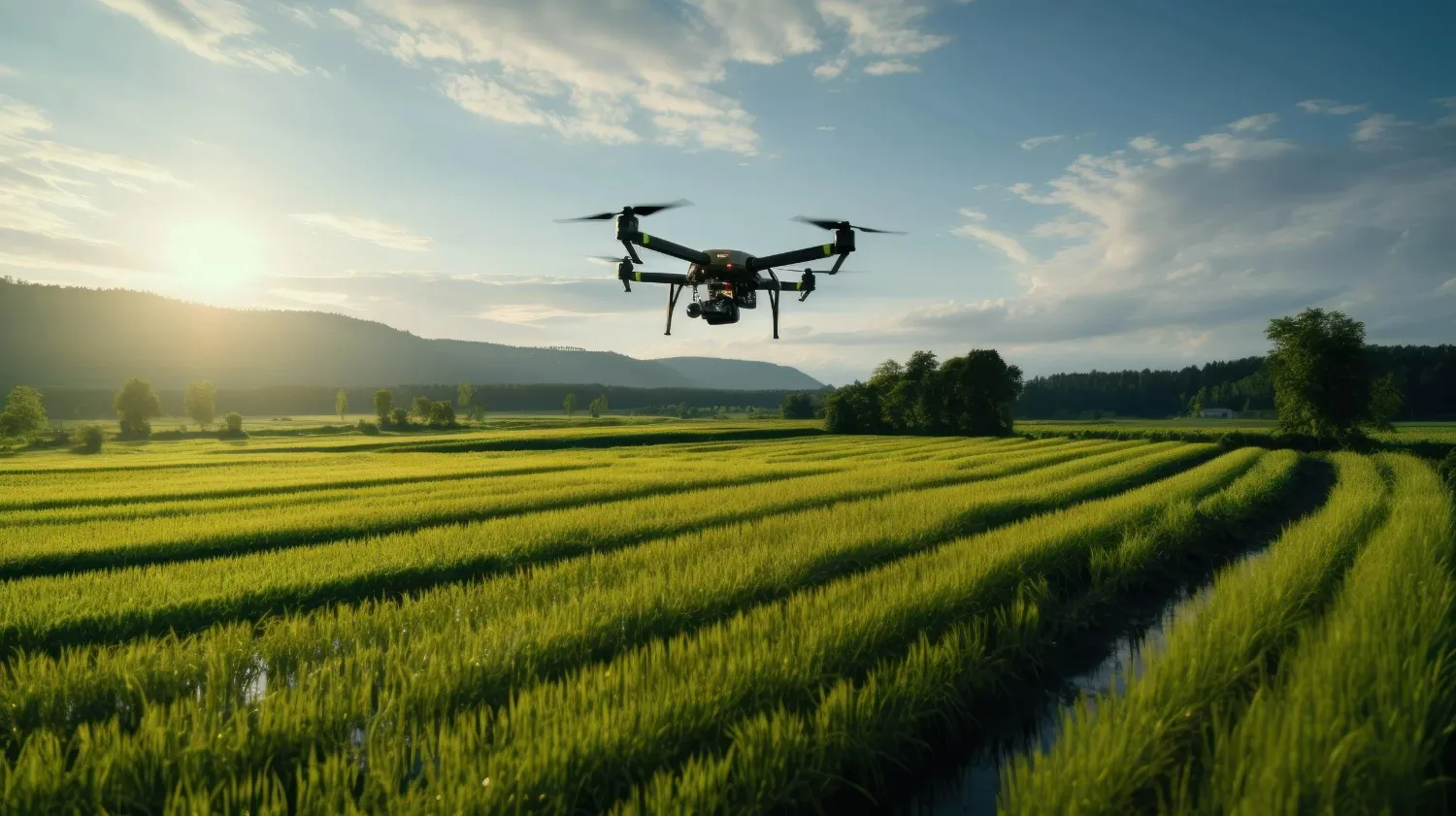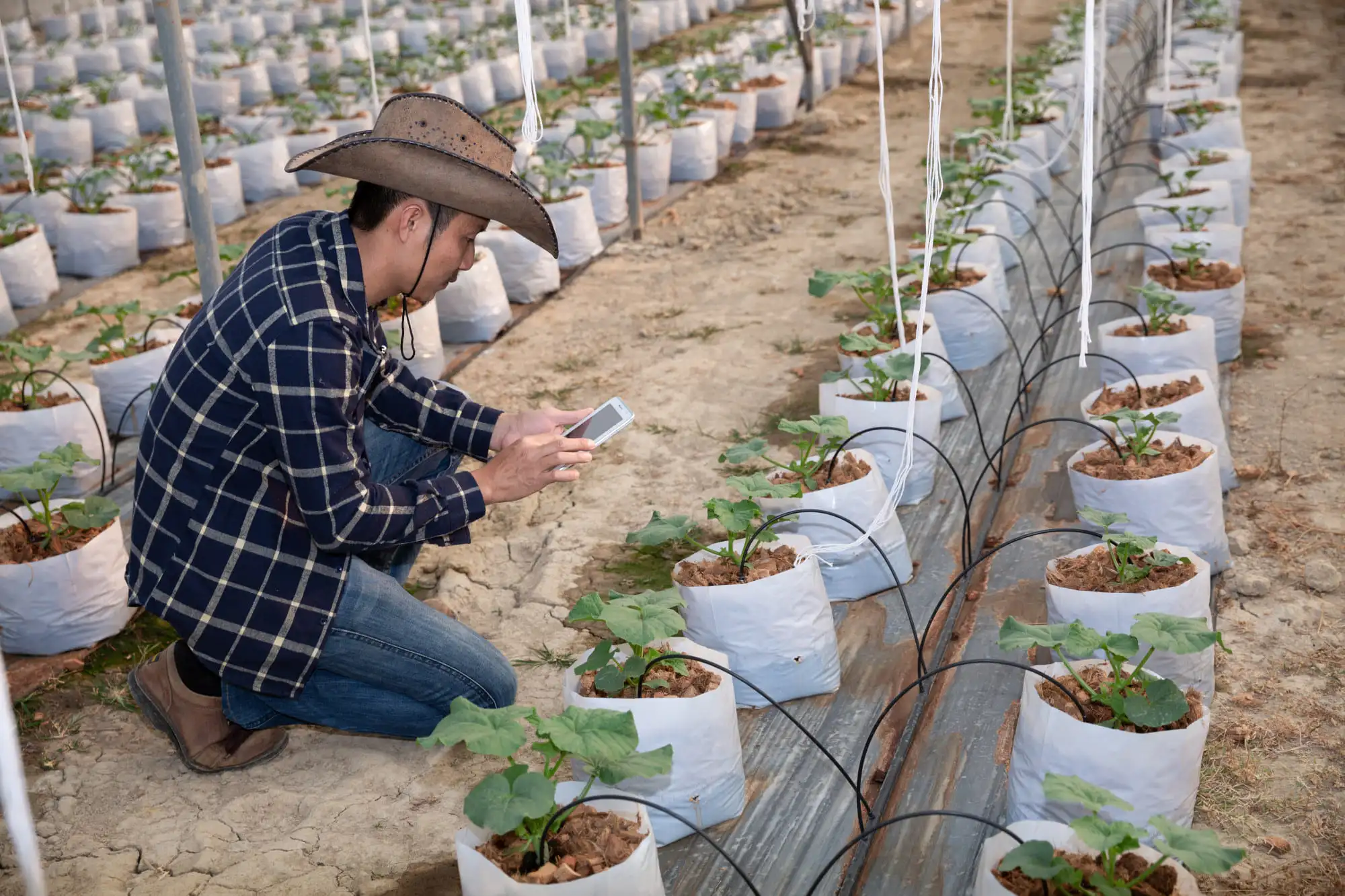
Farming isn’t uniform. In the evolving landscape of agriculture & technology, soil properties, moisture levels, and crop needs can change dramatically within meters — yet many irrigation strategies still treat fields as a single, homogenous unit.
GIS (Geographic Information Systems) offers precise, location-based insights by layering data on soil texture, elevation, moisture, and crop growth stages. This spatial intelligence lets AgTech startups move beyond blanket irrigation to targeted water management.
By integrating GIS with sensor data and weather models, startups can tailor irrigation schedules and volumes to the specific needs of micro-zones within a field. This approach reduces inefficiencies, helps conserve water, and supports consistent crop performance.
Importance of GIS in Agriculture for Irrigation and Crop Planning
Agriculture isn’t just about managing land. It’s about managing variation. Soil properties shift within a few meters. Rainfall patterns change across seasons. Crop requirements differ from one field to the next. Making decisions based on averages or intuition leads to wasted water, underperforming yields, and avoidable losses.
GIS (Geographic Information Systems) is how AgTech startups leverage agriculture & technology innovations to turn this variability into a strategic advantage.
GIS gives a spatial lens to data that was once trapped in spreadsheets or siloed systems. With it, agri-tech innovators can:
- Map field-level differences in soil moisture, slope, texture, and organic content — not as general trends but as precise, geo-tagged layers.
- Align irrigation strategies with crop needs, landform behavior, and localized weather forecasts.
- Support real-time decision-making, where planting windows, water inputs, and fertilizer applications are all tailored to micro-zone conditions.
To put it simply: GIS enables location-aware farming. And in irrigation or crop planning, location is everything.
A one-size-fits-all approach may lead to 20–40% water overuse in certain regions and simultaneous under-irrigation in others. By contrast, GIS-backed systems can reduce water waste by up to 30% while improving crop yield consistency, especially in water-scarce zones.
GIS Data Layers Used for Irrigation and Crop Decision-Making

The power of GIS lies in its ability to stack different data layers — each representing a unique aspect of the land — into a single, interpretable visual model. For AgTech startups focused on irrigation and crop planning, these layers are the building blocks of smarter, site-specific decisions.
Let’s break down the most critical GIS layers used in precision agriculture:
1. Soil Type and Texture Maps
- Determines water retention, percolation rate, and root-zone depth
- Clay-rich soils retain water longer, while sandy soils drain quickly
- GIS helps segment fields into soil zones so that irrigation scheduling aligns with water-holding capacity
Irrigation plans that ignore soil texture can lead to overwatering on heavy soils and water stress on sandy patches — both of which hurt yield and resource efficiency.
2. Slope and Elevation Models (DEM – Digital Elevation Models)
- Identifies water flow direction, runoff risk, and erosion-prone zones
- Helps calculate irrigation pressure zones and place contour-based systems effectively
- Allows startups to design variable-rate irrigation plans, minimizing water pooling or wastage in low-lying areas
3. Soil Moisture and Temperature Data (Often IoT Sensor-Integrated)
- Real-time or periodic mapping of subsurface moisture levels powered by artificial intelligence in agriculture
- GIS integrates this with surface temperature maps to detect drought stress or optimal planting windows
Combining moisture maps with evapotranspiration models allows startups to trigger irrigation only when thresholds are crossed, avoiding fixed schedules.
4. Crop Type and Growth Stage Maps
- Uses satellite imagery or drone-captured NDVI (Normalized Difference Vegetation Index)
- Tracks vegetation health, chlorophyll levels, and biomass variability across zones
- Helps match irrigation volume to crop growth phase — seedlings vs. fruiting stages have vastly different needs
Ensures water is applied where it’s needed most, reducing waste and improving uniformity.
5. Historical Yield and Input Application Maps
- Maps previous harvest outcomes, fertilizer applications, and pest outbreaks
- Allows startups to overlay these with current-year conditions to forecast input ROI
GIS can recommend crop shifts or irrigation changes based on proven success/failure patterns across zones.
By combining these data layers, GIS creates a 360° field intelligence system — one that doesn’t just react to soil or weather, but anticipates needs based on real-world variability.
How GIS Helps Optimize Irrigation in Farmlands
Optimizing irrigation isn’t about simply adding more sensors or automating pumps. It’s about understanding where, when, and how much water each zone of a farm truly needs — and GIS is the system that makes that intelligence operational.
Here’s how AgTech startups are using GIS to drive precision irrigation in real, measurable steps:
1. Zoning Farmlands Based on Hydrological Behavior
Using GIS, farmlands are divided into irrigation management zones by analyzing soil texture, slope, and historical moisture retention.
- High clay zones may need less frequent, deeper irrigation
- Sandy zones may require shorter, more frequent cycles
- GIS maps these zones down to a 10m x 10m (or even finer) resolution, enabling differentiated irrigation logic per zone
Irrigation plans stop being uniform. Instead, water delivery matches the absorption and retention profile of each micro-zone.
2. Integrating Real-Time Weather and Evapotranspiration Data
GIS platforms integrate satellite weather feeds and localized evapotranspiration (ET) models — which calculate how much water a crop is losing daily due to heat and wind.
- The system then compares ET rates with real-time soil moisture data
- When depletion crosses a set threshold (say, 50% of field capacity), GIS triggers or recommends irrigation — tailored by zone
3. Automating Variable Rate Irrigation (VRI) Execution
AgTech startups link GIS outputs directly with VRI-enabled irrigation systems (e.g., pivot systems or drip controllers).
- Each zone receives a customized flow rate and timing
- GIS controls or informs nozzles and emitters to adjust water volume on the move
- Even during a single irrigation pass, systems adjust based on mapped need levels
4. Detecting and Correcting Irrigation Inefficiencies
GIS helps track where irrigation is underperforming due to:
- Blocked emitters or leaks
- Pressure inconsistencies
- Poor infiltration zones
By overlaying actual soil moisture maps with intended irrigation plans, GIS identifies deviations — sometimes in near real-time.
Alerts are sent to field teams or automated systems to adjust flow rates, fix hardware, or reconfigure irrigation maps.
5. Enabling Predictive Irrigation Based on Crop Stage and Forecasts
GIS tools layer crop phenology models (growth stage timelines) with weather forecasts.
- For example, during flowering stages, water demand may spike 30–50% for many crops.
- GIS platforms model upcoming rainfall and temperature shifts, helping plan just-in-time irrigation events before stress sets in.
Instead of reactive watering, farmers move into data-backed anticipation — a fundamental shift in irrigation management.
GIS transforms irrigation from a fixed routine into a dynamic, responsive system — one that reacts to both the land’s condition and what’s coming next. AgTech startups that embed GIS into their irrigation stack aren’t just conserving water; they’re building systems that scale intelligently with environmental complexity.
Conclusion
GIS is no longer optional in modern agriculture & technology — it’s how AgTech startups bring precision to irrigation and crop planning. From mapping soil zones to triggering irrigation based on real-time weather and crop needs, GIS turns field variability into a strategic advantage.
But precision only works if your data flows into action. That’s where SCSTech comes in. Our GIS solutions help AgTech teams move from scattered data to clear, usable insights, powering smarter irrigation models and crop plans that adapt to real-world conditions.