Tag: #ai #artificialintelligence

  • What Are the Key Services Offered by Top Digital Transformation Services?

    What Are the Key Services Offered by Top Digital Transformation Services?

    In today’s dynamic digital landscape, businesses face the ongoing challenge of adapting to technological advancements and meeting the ever-expanding demands of consumers.

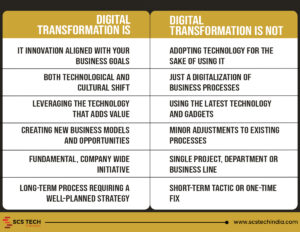
    That’s where digital transformation comes in— a strategic effort to integrate digital tools and strategies to revolutionize business operations and enhance customer experiences.


    Importance of Digital Transformation

    Digital transformation is indispensable for organizations in today’s fast-changing world. It’s a strategic necessity that helps companies maintain competitiveness, enhance efficiency, and drive growth. By embracing digital tools and adopting innovative approaches, businesses can deliver personalized customer experiences, gain a competitive edge, and respond swiftly to market changes.

    Experts are forecasting a staggering growth rate of over 58% between 2021 and 2026, with the market value expected to reach a whopping USD 124.95 billion by 2026 (source). By leveraging digital tools and strategies, you’re not only streamlining operations and boosting efficiency but also tapping into new revenue streams and enhancing the customer experience.

    Benefits of Digital Transformation

    Digital transformation brings numerous benefits to businesses in various industries, helping them succeed in today’s digital era. Here are some important advantages

    1. Enhanced Efficiency: By automating manual processes and streamlining operations, digital transformation enables businesses to work more efficiently. This leads to reduced turnaround times, increased productivity, and cost savings.
    2. Improved Customer Experiences: It allows businesses to deliver personalized and seamless experiences to their customers. Through digital channels, companies can engage with customers in real-time, tailor offerings to their preferences, and provide superior service.
    3. Increased Agility: It equips businesses with the agility to respond quickly to market changes and customer needs. By adopting flexible technologies and agile methodologies, organizations can adapt their strategies and processes in real-time,

    Core Services Offered by Top Digital Transformation Service Providers

    Digital transformation service providers offer a diverse range of solutions tailored to meet the evolving needs of businesses in the digital age. Here are some key services provided by these industry-leading firms:

    1. Cloud Computing Solutions: One of the foundational services offered by digital transformation service providers is cloud computing. These providers offer a range of cloud-based solutions, including Infrastructure as a Service (IaaS), Platform as a Service (PaaS), and Software as a Service (SaaS). Cloud computing enables businesses to access computing resources providing scalability, flexibility, and cost-effectiveness.
    2. Data Analytics and Insights: Digital transformation service providers help businesses unlock the value of their data by offering expertise in data collection, storage, processing, and analysis. By harnessing the power of data, businesses can make informed decisions, optimize operations, and drive strategic growth initiatives.
    3. Artificial Intelligence (AI) and Machine Learning (ML): AI MI services are transformative technological services that play a crucial role in digital transformation initiatives. AI and ML solutions helps to automate processes, enhance decision-making, and drive innovation. These solutions encompass a wide range of applications, including natural language processing, computer vision, etc, to unlock new opportunities and stay ahead of the curve.
    4. Internet of Things (IoT) Integration: IoT is revolutionizing industries by connecting devices, sensors, and machines to the internet, enabling real-time data collection and analysis. From smart manufacturing and connected healthcare to smart cities and intelligent transportation, IoT integration enables businesses to optimize processes, improve efficiency, and deliver innovative products and services.

    Choosing the Right Digital Transformation Services

    Selecting the right digital transformation services is paramount for successful business evolution. Here’s a simplified guide:

    1. Assess Business Needs: Understand your organization’s challenges, identify areas for improvement, and define clear objectives for the digital transformation initiative.  Ensure the provider understands your industry dynamics, compliance requirements, and business challenges, offering tailored solutions that meet your specific needs.

    2. Evaluate Service Providers:

    • Expertise and Experience: Prioritize providers with a proven track record in digital transformation across various industries.
    • Range of Services and Technology Capabilities: Choose a provider offering expertise in key areas such as cloud computing, data analytics, AI, IoT, cybersecurity, and digital marketing.
    • Reputation and Client Testimonials: Research the provider’s reputation, review client testimonials, case studies, and industry awards to gauge their reliability and success in delivering results.
    1. Collaborate and Conduct Due Diligence: Establish open communication channels with potential partners, discuss expectations, and request detailed proposals outlining scope, timelines, deliverables, and pricing.

    Conclusion

    So, if you’re a business owner or leader, here’s the bottom line: digital transformation isn’t just some fancy trend—it’s your ticket to future-proofing your business. By embracing digital innovation and partnering with the right experts, you can unlock new opportunities, drive efficiency, and deliver exceptional value to your customers.

    But here’s the thing: choosing the right digital transformation services is key. It’s not just about jumping on the latest tech bandwagon—it’s about finding solutions that align with your business goals and objectives.At SCS Tech India, we  offer tailored solutions to meet your specific needs and drive your business forward. So, take the time to assess your needs, evaluate service providers.

  • Process Automation – a business lifesaver

    Process Automation – a business lifesaver

    In today’s highly competitive and rapidly evolving business environment, leaders face numerous hurdles. With customers and market demands constantly shifting, companies must remain ahead of the curve to gain a competitive edge. One crucial way to achieve this is through Process Automation, which can streamline operations, boost profitability, and enhance resilience and agility in the face of ever-evolving challenges.

    Understanding the significance of Process Automation
    Discovering the different forms of Process Automation and its benefits

    Process automation is a valuable tool for businesses to reduce costs, minimize risk, and enhance operations. By relying on automation, companies can prevent human errors that could result in significant losses and also streamline processes to improve service delivery. Process automation promises faster task completion, more efficiency, and minimal errors, enabling businesses to stay competitive.

    Understanding the significance of Process Automation

    Process automation refers to the use of technology to perform tasks without the need for human intervention. In today’s fast-paced business environment, it is a crucial element that can lead to increased efficiency, reduced errors, lower costs, and improved productivity.

    By automating routine and repetitive tasks, companies can enable their employees to concentrate on more strategic and value-adding activities such as innovation and problem-solving. This approach can improve the efficient and effective use of resources, ultimately resulting in increased competitiveness and profitability. Moreover, process automation can enhance data processing accuracy, minimize manual errors, and provide a consistent, standardized approach to tasks, resulting in improved quality control.

    Discovering the different forms of Process Automation and its Benefits

    Process automation is transforming businesses by streamlining workflows, reducing costs, and enhancing efficiency. However, with several automation types available, choosing the right one can be daunting. Here are five essential process automation types to consider.

    1. Marketing Automation

    Marketing automation is an essential tool for businesses that frees up time and resources. It streamlines marketing efforts and delivers desired results, creating a better customer experience. Automated email campaigns target specific audiences and deliver tailored messages, with real-time adjustments to improve the marketing strategy. Marketing automation increases customer satisfaction and drives higher conversions, making it the future of marketing.

    2. IT Asset Management Automation

    IT asset management automation saves time, ensures accuracy, and reduces costs by automating tracking and management of IT assets. Automated solutions optimize the IT supply chain, streamline processes, and keep the IT team up-to-date on the latest hardware updates. Refine and optimize IT processes and keep tech running smoothly with the power of automation.

    3. Accounting Automation

    Accounting automation can streamline financial processes, saving time, and boosting accuracy. It simplifies tasks like creating purchase orders and managing contracts, providing clear and accurate records. Automation frees up the finance team’s time, allowing them to work smarter and provides a higher ROI for businesses.

    4. HR Automation

    HR automation can streamline traditional HR processes such as sifting through resumes, managing payroll and benefits, and handling contracts, tax data, and training programs. This can help ensure accuracy, mitigate the risk of errors, comply with employment laws, and allow HR teams to focus on other important responsibilities. Finding the right candidate and the entire offer process can be automated, saving time and effort.

    5. Customer Support Automation

    Customer support automation offers a solution to streamline customer service and create a seamless and efficient customer experience. Automated processes can help businesses attend to customer needs quickly and effectively, reducing mistakes and miscommunications while boosting efficiency levels. Embracing customer support automation can differentiate a business from the competition and create loyal customers.


  • Tech enabled workplace – The futuristic view

    Tech enabled workplace – The futuristic view

    As we consider the future of the workplace, and more especially, the post-pandemic office experience, it is obvious that technology will play a key role in what these spaces provide, how they appear, and how they operate. Workspaces provide more than just a place to sit and work; they also foster a sense of belonging to the organisation. Sitting alongside co-workers and brainstorming new ideas develops a sense of belonging, which leads to increased productivity and commitment.

    In this article, we explore the future of the workplace and what it means for tech-enabled spaces.

    Exploring the Concept of the “Office of the Future”

    The future of work is heavily influenced by technology. With tech-enabled workspaces, offices are becoming more advanced and secure. After a prolonged period of remote work, technology has been utilized for everything from communication to work to shopping to emergency commutes. As a result, a whole new world of possibilities has opened up regarding where people work and new methods of working that we hadn’t foreseen before. It’s no longer enough to simply show up, do your job, go home, and repeat the process.

    A Glimpse into the Future of Technology-Driven Workspaces

    The introduction of tech-enabled workspaces is disrupting the traditional workplace, bringing about a significant shift in work culture. With technological advancements, the possibilities are endless, and it’s easy to see how they can positively impact various areas of business emphasis. These areas include productivity, sustainability, cost efficiency, employee satisfaction, and overall well-being.

    Technological Advancements and Their Influence on Future Workspaces

    According to a study by Harvard Business Review, up to 65% of tasks are expected to be automated by 2025. As a result, technology will have a significant impact on the future of workspaces. Here are some key areas where technology is expected to revolutionize workspaces:

    • Augmented Reality (AR) and Virtual Reality (VR): These technologies will facilitate virtual meetings, training sessions, and simulations, making it easier for teams to collaborate and learn together, regardless of their physical locations.
    • Internet of Things (IoT) Integration: The integration of IoT devices into workspaces will enable better automation, data collection, and analysis. Smart office systems will optimize energy consumption, monitor equipment performance, and enhance employee comfort.
    • Artificial Intelligence (AI) and Automation: AI will increasingly take over repetitive and mundane tasks, freeing up employees to focus on more creative and strategic aspects of their jobs. Robotic process automation (RPA) will become more prevalent in various industries, streamlining workflows and improving efficiency.
    • Flexible and Modular Workspaces: Office designs will become more flexible, with modular furniture and adaptable layouts. Technology will play a role in creating versatile spaces that can be easily reconfigured to suit different work styles and needs.
    • Collaboration and Communication Tools: Communication and collaboration tools will become even more sophisticated, enabling seamless information sharing, real-time collaboration, and project management across distributed teams.
    • Cloud Computing: Cloud-based services will continue to dominate the workplace, offering secure storage, accessibility, and scalability. This will facilitate remote work and allow teams to access data and applications from anywhere with an internet connection.
    • Remote Monitoring and Surveillance: With the increasing adoption of remote work, companies may rely more on monitoring and surveillance technologies. These may include tracking employee performance, attendance, and behaviour, raising concerns about privacy and ethics.
    • Enhanced Cyber security Measures: As workspaces become more digital and distributed, cyber security will be of paramount importance. Advanced security measures will be implemented to protect sensitive data and networks from cyber threats.
    • Data-Driven Decision Making: Technology will enable better data collection and analysis, empowering businesses to make informed decisions based on real-time insights and trends.


  • A go to guide on Conversational AI & it applications

    A go to guide on Conversational AI & it applications

    The conversational AI industry is anticipated to reach $1.3 billion by 2025, increasing at a 24% CAGR. Conversational AI capabilities have significantly improved in the 2020s. New generation chatbots are more successful than first generation conversational technologies. As a result, they may successfully improve both internal and external consumer experiences.

    What is conversational AI?

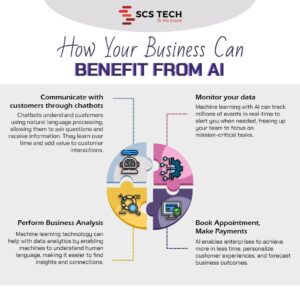
    Conversational AI (artificial intelligence) refers to systems such as virtual assistants or chatbots that can “talk” to people (answer questions, for example).

    Conversational AI apps are frequently utilised in customer support. They are available on websites, online retailers, and social media platforms. AI technology can significantly improve the speed and efficiency with which consumer inquiries are answered and routed. The ultimate goal of conversational AI is to become indistinguishable from a human being or a computer.

    How does it work?

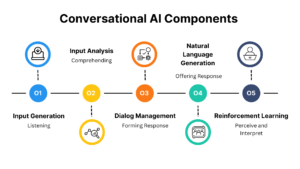
    Conversational AI is essentially powered by two functions. The first of these is machine learning. Simply said, machine learning means that the technology “learns” and improves as it is used. It gathers data from its own exchanges. It then uses that knowledge to develop itself over time.

    The second is known as natural language processing, or NLP. This is the method by which artificial intelligence comprehends language. It can progress to natural language generation after learning to recognise words and phrases. This is how it communicates with your customers.

    Structures that provide specified outputs to specific inputs are the most basic example of conversational platforms. Conversational platforms, on the other hand, can handle a broader range of queries thanks to machine learning. Furthermore, conversational AI systems can take into account the context (i.e. the remainder of the conversation) when determining the users’ intent and reaction.

    The top 5 benefits of using conversational AI tools

    1. Save time

    In the ideal scenario, every one of your clients would receive comprehensive customer service. However, some consumers will come to you with significantly simpler questions than others. A chatbot or virtual assistant is an excellent approach to ensure that everyone’s demands are met without overburdening yourself and your staff.

    1. Increased accessibility

    You cannot be available to your customers 24 hours a day, seven days a week. This issue can be solved by equipping your social media platform with conversational AI. If a consumer requires assistance outside of typical business hours, a chatbot can assist them. It solves a logistical issue and contributes to how chatbots can save time, but there’s more to it.

    While a virtual assistant cannot fix every problem, conversational AI allows clients like these to get the assistance they require.

    1. No more language barriers

    One underappreciated feature of conversational AI is that it removes language boundaries. The majority of chatbots and virtual assistants include language translation software. This enables them to recognise, interpret, and produce nearly any language with ease. As a result, no customer service encounter is hampered by language limitations. A multilingual chatbot makes your company more inviting and accessible to a broader range of clients.

    1. Versatility

    It is widely considered that conversational assistants are only employed for customer service. The potential of conversational AI allows businesses to cover a wide range of areas, from customer interactions to sales and marketing activities.

    1. Personalization

    Conversational assistants record every interaction, allowing for more precise customer behaviour analysis. As a result, the organisation is more educated about the demands of each group of its target audience and is able to personalise customer interactions.

    Applications of Conversational AI

    • Financial Services

    Financial institutions are unquestionably among the leaders in conversation AI adoption. Given the multiple areas for improvement that AI-powered technology can address, the desire for conversational AI chatbots and assistants in the BFSI sector is unsurprising.

    • Human resource management

    Conversational AI chatbots, although suitable to businesses, became HR managers’ helpers, managing employee inquiries and turning monotonous chores like on boarding, ticket generation, and data updates into self-service.

    • Learning

    Conversational AI chatbots can also be used to improve staff education by providing a more structured and personalised experience for each participant. Conversational AI may track employee performance, keep track of their overall course progress, and provide performance reports.

    • Healthcare

    Patients also anticipate spending less time dealing with issues such as scheduling visits, verifying insurance, and keeping medical papers. Using the analytical data obtained from conversational AI chatbots, healthcare practitioners may determine which experts to recruit more of, which equipment to purchase, and which procedures are in great demand.