
Tag: #benefits

  • Process Automation – a business lifesaver

    Process Automation – a business lifesaver

    In today’s highly competitive and rapidly evolving business environment, leaders face numerous hurdles. With customers and market demands constantly shifting, companies must remain ahead of the curve to gain a competitive edge. One crucial way to achieve this is through Process Automation, which can streamline operations, boost profitability, and enhance resilience and agility in the face of ever-evolving challenges.

    Understanding the significance of Process Automation
    Discovering the different forms of Process Automation and its benefits

    Process automation is a valuable tool for businesses to reduce costs, minimize risk, and enhance operations. By relying on automation, companies can prevent human errors that could result in significant losses and also streamline processes to improve service delivery. Process automation promises faster task completion, more efficiency, and minimal errors, enabling businesses to stay competitive.

    Understanding the significance of Process Automation

    Process automation refers to the use of technology to perform tasks without the need for human intervention. In today’s fast-paced business environment, it is a crucial element that can lead to increased efficiency, reduced errors, lower costs, and improved productivity.

    By automating routine and repetitive tasks, companies can enable their employees to concentrate on more strategic and value-adding activities such as innovation and problem-solving. This approach can improve the efficient and effective use of resources, ultimately resulting in increased competitiveness and profitability. Moreover, process automation can enhance data processing accuracy, minimize manual errors, and provide a consistent, standardized approach to tasks, resulting in improved quality control.

    Discovering the different forms of Process Automation and its Benefits

    Process automation is transforming businesses by streamlining workflows, reducing costs, and enhancing efficiency. However, with several automation types available, choosing the right one can be daunting. Here are five essential process automation types to consider.

    1. Marketing Automation

    Marketing automation is an essential tool for businesses that frees up time and resources. It streamlines marketing efforts and delivers desired results, creating a better customer experience. Automated email campaigns target specific audiences and deliver tailored messages, with real-time adjustments to improve the marketing strategy. Marketing automation increases customer satisfaction and drives higher conversions, making it the future of marketing.

    2. IT Asset Management Automation

    IT asset management automation saves time, ensures accuracy, and reduces costs by automating tracking and management of IT assets. Automated solutions optimize the IT supply chain, streamline processes, and keep the IT team up-to-date on the latest hardware updates. Refine and optimize IT processes and keep tech running smoothly with the power of automation.

    3. Accounting Automation

    Accounting automation can streamline financial processes, saving time, and boosting accuracy. It simplifies tasks like creating purchase orders and managing contracts, providing clear and accurate records. Automation frees up the finance team’s time, allowing them to work smarter and provides a higher ROI for businesses.

    4. HR Automation

    HR automation can streamline traditional HR processes such as sifting through resumes, managing payroll and benefits, and handling contracts, tax data, and training programs. This can help ensure accuracy, mitigate the risk of errors, comply with employment laws, and allow HR teams to focus on other important responsibilities. Finding the right candidate and the entire offer process can be automated, saving time and effort.

    5. Customer Support Automation

    Customer support automation offers a solution to streamline customer service and create a seamless and efficient customer experience. Automated processes can help businesses attend to customer needs quickly and effectively, reducing mistakes and miscommunications while boosting efficiency levels. Embracing customer support automation can differentiate a business from the competition and create loyal customers.

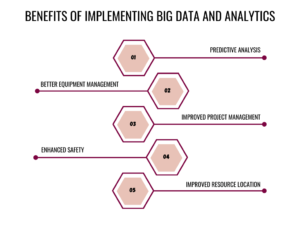
     

  • Need your business to thrive? Learn about key benefits of Data Analysis

    Need your business to thrive? Learn about key benefits of Data Analysis

    Today’s global marketplaces revolve on data, making sense of that data is essential to a company’s success. Failing to do so can result in a company falling behind.

    On its own, raw data doesn’t have much value. To leverage data to their advantage, businesses must apply data analytics, a discipline that systematically examines data in order to discover insights, patterns, and trends. Most businesses are aware of the potential rewards of investing in big data analytics, which promise to increase productivity, reduce costs, and improve decision-making. A recent survey by Micro Strategy found that businesses all across the world use their data for:

    • According to 90% of the business users who took part, their organization’s digital transformation strategies revolve around data and analytics
    • To increase their operations’ cost-effectiveness and process efficiency by up to 60%
    • 57% of businesses say they use data analytics to inform strategy and transformation
    • 52% of businesses use business analytics to track and enhance their financial performance

    What is Data Analysis?

    As a broad phrase, the processing of unstructured data to discover business insights is referred to as data analytics. It makes use of a variety of methods, procedures, statistics, and models. By definition, it is essentially a procedure for looking into raw data in order to derive significant insights. However, the development of AI and ML has caused the area of data analytics to advance at a rapid rate, reaching new heights.

    Usually, the purpose of data analytics is to give a business operational insights. This procedure entails reviewing historical data before applying the lessons discovered within to address the challenging business issues of the present.

    Despite the fact that big data analytics delivers value in a variety of ways, the following are some of its main advantages:

    • Quicker and wiser decision-making: businesses may quickly analyse massive amounts of data and come to wise judgements.
    • Cost savings: using big data technology, businesses can find better methods to conduct their operations and offer a cost-effective data storage solution.
    • A deeper comprehension of customer’s needs: big data reveals insights that assist businesses in identifying customer requirements and assessing satisfaction. This provides businesses with the knowledge they require to create long-lasting client relationships and provide higher-quality goods and services.

    The current state of Data Analysis & Business Intelligence

    For businesses to succeed in the digital economy, data is becoming more and more important. Up to 80% of businesses rely on data for a variety of operations, including product management, fraud detection, finance, human resources, and manufacturing. Data dashboards and visualisations are common in the modern workplace, enabling users to quickly follow performance measures using pre-built reports and filters.

    Organisations could find a wealth of potential hidden in their current systems with the use of data integration technologies. There is a lot of friction in analytics right now. Spreadsheets are frequently used by data workers, who typically utilise four to seven different applications to manage data. This takes a lot of time and increases the risk of errors and data compliance problems. Organisations must find a solution that unifies all data-related activities into a single platform, provides end-to-end data protection and traceability, and is simple for employees to use if they are to reap the greatest benefits from big data.

    How to select right data analytic tools for your business?

    Due to innovative methods like machine learning algorithms, the field of data analytics is expanding to unprecedented heights. Four categories of business analytics currently are:

    • Descriptive analytics
    • Diagnostic analytics
    • Predictive analytics
    • Prescriptive analytics

    It’s challenging to compile a comprehensive list of selection criteria for big data because it applies to such a wide range of use cases, applications, and industries. Build your toolset around the main objectives by focusing on the few business issues or opportunities that will have the most impact, such as real-time asset monitoring or a deeper comprehension of what your customers want.

    Big Data integration tools assist businesses in dismantling data ecosystem silos. When working with data gathered from a variety of IoT endpoints, apps, and data kinds, they are an essential tool for managing and storing data clusters. Although data integration solutions occasionally include stream analytics functionality, they are typically more appropriate for data management.

    It is possible to transform new data into actions. Partner with us to know more about best practices in data analysis. To contact us visit SCS Tech India.