Tag: #businesssolution

  • How Do Digital Oilfields Improve Oil and Gas Technology Solutions?

    How Do Digital Oilfields Improve Oil and Gas Technology Solutions?

    Are you aware of the oil and gas technology that is transforming the industry? There’s an operation so bright that it reduces costs by 25%, increases production rates by 4%, and enhances recovery by 7%, all within just a few years. This is, says CERA, the actual effect of applying digital oilfield technologies. The digital oilfield applies advanced tools to transform oilfield operations’ efficiency, cost-effectiveness, and sustainability.

    Read further to understand how digital oilfields change oil and gas industry solutions.

    What Are Digital Oilfields?

    Digital oilfields are a technological revolution in oil and gas operations. Using IoT, AI, and ML, they make processes more efficient and cost-effective and provide better decision-making capabilities. From real-time data collection to advanced analytics and automation, digital oilfields integrate every operational aspect into a seamless, optimized ecosystem.

    Key Components of Digital Oilfields

    1. Data Gathering and Surveillance

    Digital oilfields start with collecting enormous volumes of real-time data:

    • IoT Sensors: Scattered across drilling locations, these sensors track pressure, temperature, flow rates, and equipment status. For instance, sudden changes in sound pressure may alert operators to take corrective actions immediately.
    • Remote Monitoring: Operators can control geographically dispersed assets from centralized control rooms or remote locations. Telemetry systems ensure smooth data transmission for quick decision-making.
    1. Advanced Analytics

    The gathered data is processed and analyzed for actionable insights:

    • Machine Learning and AI: Predictive AI analytics identifies possible equipment failures and optimizes the maintenance schedule. For example, an AI system can predict when a pump will fail so proactive maintenance can be scheduled.
    • Data Integration: Advanced analytics combines geological surveys, production logs, and market trends to give a holistic view, which is helpful in strategic decisions.
    1. Automation

    Automation minimizes human intervention in repetitive tasks:

    • Automated Workflows: Drill rigs do real-time optimizations depending on sensor feedback to improve performance and reduce errors.
    • Robotics and Remote Operations: Robotics and ROVs execute tasks like underwater surveys, which can be executed safely without losing efficiency.
    1. Collaboration Tools

    Digital Oilfield streamlines communication and Teamwork.

    • Integrated Communication Platforms: Real-time information sharing between the teams, video conferencing tools, and centralized platforms facilitate efficient collaboration.
    • Cloud-Based Solutions: Geologists, engineers, and managers can access data from anywhere, which leads to better coordination.
    1. Visualization Technologies

    Visualization tools turn data into actionable insights:

    • Dashboards: KPIs are displayed in digestible formats, which enables operators to spot and address issues quickly.
    • Digital Twins: Virtual replicas of the physical assets enable simulations, which allow operators to test scenarios and implement improvements without risking real-world operations.

    How Digital Oilfields Improve Oil and Gas Technology Solutions

    Digital oilfields utilize modern technologies to make the oil and gas technology solutions operational landscape more efficient. This results in efficiency, improved safety, cost-effectiveness, and optimized production with better sustainability. The explanation below elaborates on how digital oilfields enhance technology solutions in the oil and gas industry.

    1. Improved Operative Efficiency

    Digital oilfields improve operational efficiency through the following:

    • Real-Time Data Monitoring: IoT sensors deployed across oilfield assets such as wells, pipelines, and drilling rigs collect real-time data on various parameters (pressure, temperature, flow rates). This data is transmitted to centralized systems for immediate analysis, allowing operators to detect anomalies quickly and optimize operations accordingly.
    • Predictive Maintenance: With the help of AI and machine learning algorithms, the digital oilfield can predict equipment failures before they happen. For instance, Shell’s predictive maintenance has resulted in a timely intervention that saves the company from costly downtimes. These systems could predict when maintenance should be performed based on historical performance data and current operating conditions by extending equipment lifespan and reducing operational interruptions.
    • Workflow Automation: Technologies automate workflow and reduce people’s manual interfaces with routine items like equipment checking and data typing, which conserve time and lead to fewer possible errors. Example: an automated system for drilling optimizes the entire process as sensors provide feedback from which it sets parameters for continuous drilling in the well.

    2. Improved Reservoir Management

    Digital oilfields add to reservoir management with superior analytical techniques.

    • AI-Driven Reservoir Modeling: Digital oilfields utilize high-end AI models to analyze geology data to predict the reservoir’s behavior. These models can provide insight into subsurface conditions, enabling better decisions about the location of a well and the method of extraction for operators. Thus, it makes hydrocarbon recovery more efficient while reducing the environmental footprint.
    • Improve Recovery Techniques: With a better characterization of reservoirs, these digital oilfields are set up to implement enhanced oil recovery techniques suited for specific reservoir conditions. For instance, real-time data analytics can allow data-driven optimization techniques in water flooding or gas injection strategies to recover maximum amounts.

    3. Cost Cut

    The financial benefits of digital oilfields are tremendous:

    • Lower Capital Expenditures: Companies can avoid the high costs of maintaining on-premises data centers by using cloud computing for data storage and processing. This shift allows for scalable operations without significant upfront investment.
    • Operational Cost Savings: Digital technologies have shown a high ROI by bringing down capital and operating expenses. For instance, automating mundane activities will reduce labor costs but enhance production quantity. According to research, companies have seen an operative cost reduction of as much as 25% within the first year after deploying digital solutions.

    4. Improved Production Rates

    Digital oilfields increase production rates through:

    • Optimized Drilling Operations: Real-time analytics allow operators to adjust drilling parameters based on immediate feedback from sensors dynamically. This capability helps avoid issues such as drill bit wear or unexpected geological formations that can slow down operations.
    • Data-Driven Decision Making: With big data analytics, companies can quickly process vast volumes of operational data. These analyses underpin strategic decisions to improve production performance along the value chain from exploration through extraction.

    5. Sustainability Benefits

    Digital oilfield technologies are essential contributors to sustainability.

    • Environmental Monitoring: Modern monitoring systems can sense the leakage or emission, enabling solutions to be implemented immediately. AI-based advanced predictive analytics can identify where environmental risk has the potential to arise before it becomes a significant problem.
    • Resource Optimization: Digital oilfields optimize resource extraction processes and minimize waste; this process reduces the ecological footprint of oil production. For example, optimized energy management practices reduce energy consumption during extraction processes.

    6. Improved Safety Standards

    Safety is improved through various digital technologies:

    • Remote Operations: Digital oilfields allow for the remote monitoring and control of operations, thus allowing less personnel exposure to hazardous conditions. This enables one to reduce exposure to risks associated with drilling activities.
    • Wearable Technology: Wearable devices equipped with biosensors enable real-time monitoring of workers in the field and their health status. The wearable devices can notify the management of a potential health risk or unsafe conditions that may cause an accident.

    Conclusion

    The digital oilfield is a revolutionary innovation introduced into the oil and gas industry, combining the latest technologies to improve operational efficiency, better manage a reservoir, cut costs, enhance production rates, foster sustainability, and raise safety levels. The comprehensive implementation of IoT sensors, AI-driven analytics, automated tools, and cloud computing not only optimizes existing operations but projects an industry toward a position of success for future challenges.

    As digital transformation continues to unfold within this sector, the implications for efficiency and sustainability will grow more profoundly. SCS Tech, with its expertise in advanced oil and gas technology solutions, stands as a trusted partner in enabling this transformation and helping businesses embrace the potential of digital oilfield technologies.

  • Embracing Hybrid Cloud IT Infrastructure Solutions as the New Norm

    Embracing Hybrid Cloud IT Infrastructure Solutions as the New Norm

    In today’s world, where data breaches are becoming alarmingly frequent, how can companies strike the right balance between ensuring robust security and maintaining the scalability required for growth?

    Well, hybrid cloud architectures might just be the answer to this! They provide a solution by enabling sensitive data to reside in secure private clouds while leveraging the expansive resources of public clouds for less critical operations.

    As hybrid cloud becomes the norm, it empowers organizations to optimize their IT infrastructure solutions, ensuring they remain competitive and agile in a continuously ever-changing digital landscape.

    This blog is about the importance of hybrid cloud solutions as the new norm in IT infrastructure solutions.

    Embracing Hybrid Cloud IT Infrastructure Solutions as the New Norm


    Hybrid cloud IT infrastructure solutions
    Hybrid cloud IT infrastructure solutions

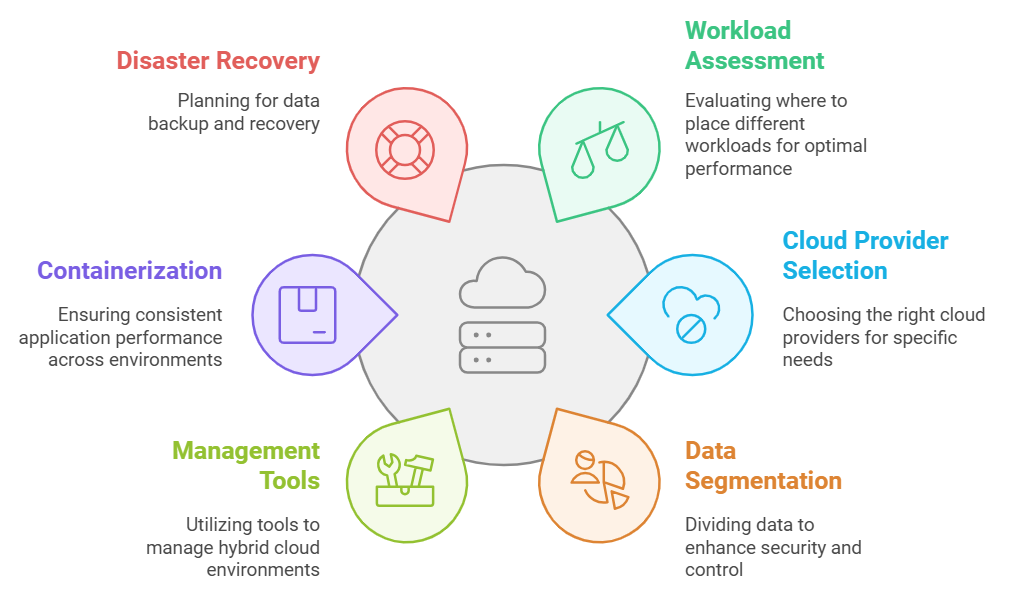
    1. Evaluating Organizational Needs and Goals

    • Assess Workloads: Determine which workloads best suit public clouds, private clouds, or on-premises environments. For example, latency-sensitive applications may remain on-premises, while scalable web applications thrive in public clouds.
    • Set Objectives: Define specific goals such as cost reduction, enhanced security, or improved scalability to effectively guide the hybrid cloud strategy.

    2. Designing a Tailored Architecture

    • Select Cloud Providers: Select public and private cloud providers based on features such as scalability, global reach, and compliance capabilities.
    • Integrate Platforms: Use orchestration tools or middleware to integrate public and private clouds with on-premises systems for smooth data flow and operations.

    3. Data Segmentation

    • Data Segmentation: Maintain sensitive data on private clouds or on-premises systems for better control.
    • Unified Security Policies: Define detailed frameworks for all environments, including encryption, firewalls, and identity management systems.
    • Continuous Monitoring: Utilize advanced monitoring tools to identify and mitigate threats in real-time.

    4. Embracing Advanced Management Tools

    • Hybrid Cloud Management Platforms: Solutions such as VMware vRealize, Microsoft Azure Arc, or Red Hat OpenShift make it easier to manage hybrid clouds.
    • AI-Driven Insights: Utilize AI & ML services to optimize resource utilization, avoid waste, and predict potential failures.

    5. Flexibility through Containerization

    • Containers: Docker and Kubernetes ensure that applications operate uniformly across different environments.
    • Microservices: Breaking an application into smaller, independent components allows for better scalability and performance optimization.

    6. Disaster Recovery and Backup Planning

    • Distribute Backups: Spread the backups across public and private clouds to prevent data loss during outages.
    • Failover Mechanisms: Configure the hybrid cloud with automatic failover systems to ensure business continuity.

    7. Audits and Updates

    • Audit Resources: Regularly assess resource utilization to remove inefficiencies and control costs.
    • Ensure Compliance: Periodically review data handling practices to comply with regulations like GDPR, HIPAA, or ISO standards.

    Emerging Trends Shaping the Future of Hybrid Cloud

    1. AI and Automation Integration

    Artificial Intelligence (AI) and automation are changing hybrid cloud environments to make them more innovative and efficient.

    • Automated Resource Allocation: AI dynamically adjusts resources according to the workload’s real-time demands for better performance. For example, AI & ML services can automatically reroute resources during traffic spikes to prevent service disruptions.
    • Predictive Analytics: Historical time series data analysis to predict potential failures to avoid faults and reduce downtime.
    • Improved monitoring: The AI-driven tools enable granular views of performance metrics, usage patterns, and cost analysis to help better make decisions.
    • AI for Security: AI detects anomalies, responds to potential threats, and strengthens hybrid environments’ security.

    2. Edge computing is on the rise

    Edging involves processing data near its sources; it combines well with hybrid cloud strategies, particularly in IoT and real-time applications.

    • Real-time Processing: Autonomous vehicles will benefit through edge computing, where sensor data is computed locally for instantaneous decisions.
    • Optimized Bandwidth: It conserves bandwidth as the critical data is processed locally, and the necessary information alone is sent to the cloud.
    • Better Resilience: With hybrid environments and edge devices, distributed workloads are more resilient when networks break.
    • Support for Emerging Tech: Hybrid systems use low-latency edge computing, especially for implementing AR and Industry 4.0 technologies.

    3. Sustainability Focus

    Hybrid cloud solutions would be crucial in aligning IT operations with and supporting environmental sustainability goals.

    • Effective utilization of resources: Hybrid could shift workloads into low-carbon environments like a public cloud provider powered by renewable sources.
    • Dynamic scaling: By scaling resources on demand through hybrid clouds, they keep energy wastage down over periods of low use
    • Green data centers: Harnessing sustainable IT infrastructure solutions by AWS and Microsoft Azure providers reduces carbon footprints.
    • Carbon Accounting: Analytics tools in hybrid platforms give accurate carbon emission measures, which allows organizations to reduce their carbon footprint.

    4. Unified Security Frameworks

    Hybrid cloud environments require consistent and robust security measures to protect distributed data.

    • Policy Enforcement: Unified frameworks apply security policies across all environments, ensuring consistency.
    • Integrated Tools: Data protection is enhanced by features like encryption, multi-factor authentication, and identity access management (IAM).
    • Threat Detection: Machine learning algorithms detect and prevent real-time threats, reducing vulnerability.
    • Compliance Simplification: Unified frameworks provide built-in auditing and reporting capabilities that simplify compliance with regulations.

    5. Hybrid Cloud and Multicloud Convergence

    Increasingly, hybrid cloud strategies are being used with multi-cloud to maximize flexibility and efficiency.

    • Diversification of vendors: Reduced dependency on one vendor can ensure resilience and help build more robust services.
    • Optimized Costs: Strategically spreading workloads across IT infrastructure solution providers can help leverage cost efficiencies and unique features.
    • Improved Interoperability: Tools such as Kubernetes ensure smooth operations across diverse cloud environments, thus enhancing flexibility and collaboration.

    Conclusion

    The future of hybrid cloud IT infrastructure solutions is shaped by transformative trends emphasizing agility, scalability, and innovation. As organizations embrace AI and automation, edge computing, sustainability, and unified security frameworks, they get better prepared to thrive in a fast-changing digital world.

    Proactively dealing with these trends can help achieve operational excellence and bring long-term growth and resilience in the age of digital transformation. SCS Tech enables businesses to navigate this evolution seamlessly, offering cutting-edge solutions tailored to modern hybrid cloud needs.

  • How Custom Cybersecurity Solutions Protect Cloud, Mobile, and On-Site Systems?

    How Custom Cybersecurity Solutions Protect Cloud, Mobile, and On-Site Systems?

    Just 39 seconds—that’s all it takes for a cyberattack to strike, faster than you can reply to your emails.

    This alarming frequency indicates the urgent need for cybersecurity solutions. With every company relying on cloud computing, mobile devices, and on-site infrastructure, the demand for robust protection has never been greater. While each environment has its own unique vulnerabilities, cyber security consulting services help organizations identify and address these gaps effectively. General security measures may cover major threats, but expert consulting ensures even the less obvious vulnerabilities are not overlooked.

    That is where custom cybersecurity solutions come in for each system, which are different, specified according to their needs, and used to counter specific threats.

    Let’s discuss, in detail, each of the challenges presented by cloud, mobile, and on-site systems. Understand how custom cybersecurity solutions overcome those challenges, and improve security in each.

    Security of Cloud Systems: Overcoming Unique Security Challenges

    With the advent of cloud computing, tremendous flexibility and scalability emerged for businesses, but they differ through unique risks. With various users sharing cloud environments and being managed by third parties, they pose unique security issues that vary from traditional systems.

    What Are the Challenges in Cloud Security?

    • Data Breach: When sensitive information is stored in the cloud, it is most vulnerable to unauthorized access, especially if it has weak credentials or is not configured correctly.
    • Account Hijacking: Compromise from phishing leads to allowing attackers access to valuable information.
    • Insecure API: An insecure API control can be equated to an open door for an attacker with services in the cloud.
    • Compliance Complexities: These are the complexities of the compliance cloud configurations that must be put into strict regulatory standards like GDPR or HIPAA. This is challenging to implement effectively.

    How Do Custom Cybersecurity Solutions Enhance Cloud Security?

    Discover how custom cybersecurity solutions provide tailored protection for secure cloud environments

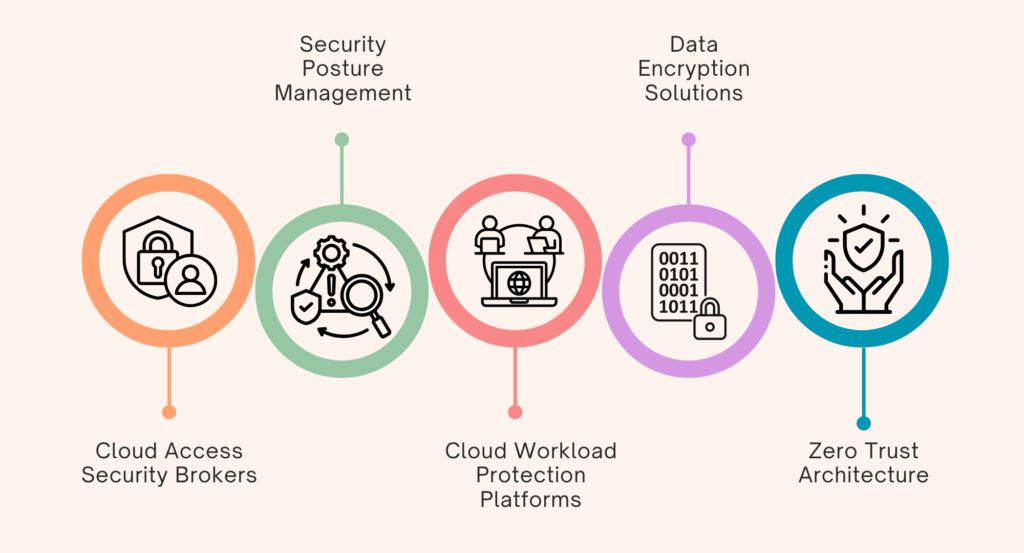
    1. Cloud Access Security Brokers (CASBs): CASBs serve as security layers between the cloud provider and the user base. It provides
      1. Data Protection: CASBs enforce data-loss-prevention policies through enforcing DLP policies by monitoring how data is transferred and blocking unauthorized access to sensitive information.
      2. Threat Detection: They use behavioral analytics to detect anomalies in user behavior that might suggest a breach.
      3. Compliance Management: CASBs help keep organizations compliant with all the appropriate industry regulations based on audit trails and reporting.
    2. Security Posture Management (SPM): SPM tools continuously watch for identifying vulnerabilities and misconfigurations in the cloud environments. This is done through:
      1. Vulnerability Scanning: Scanner tools that scan for all misconfigurations and known vulnerabilities in cloud resources.
      2. Compliance Audits: Periodic audits that the configurations adhere to best security practices and the appropriate regulations from the mandate.
    3. Cloud Workload Protection Platforms (CWPP): They protect the applications running in the cloud by analyzing activity in real-time and blocking unauthorized access attempts.
      1. Runtime Protection: The CWPP can detect real-time threats by protecting applications against malicious activity.
      2. Intrusion Prevention: The CWPP prevents any unauthorized access attempt and reduces the attack’s impact on workloads.
    4. Data Encryption Solutions: Encryption at rest, associated with the storage of data, and in motion, associated with the transfer of data utilise strong algorithms such as Advanced Encryption Standard (AES) coupled with Rivest-Shamir-Adleman (RSA) ensuring the integrity of data as it flows through all its stages of the life cycle.
      1. Encryption at Rest: With strong encryption algorithms such as AES-256, data is encrypted to secure those at rest in the cloud.
      2. Encryption in Transit: Encryption protocols, such as TLS/SSL, consist of specific ones that encrypt data between users and cloud services.
    5. Zero Trust Architecture: Zero Trust continuously verifies users and devices, limits network access, and controls lateral movement. This architectural model is designed so that not a single user or device should be trusted by default, regardless of whether they are inside or outside the network perimeter.
      1. Identity Verification: MFA ensures only the proper users can access cloud resources.
      2. Micro-Segmentation: This involves limiting lateral movement as the workload is segmented so multiple attack vectors remain inaccessible to the hackers if one resource is compromised.

    Mobile Systems: Unique Risks and Custom Solutions for Security

    The increasing use of mobile devices in the workplace has become a meaningful way to access company information. Still, they also pose vulnerabilities due to their portability and high connectivity. Among mobile security threats are malware attacks, phishing scams, and accidental data leaks in cases where information is mishandled.

    What Are the Issues in Mobile Security?

    • Threats of Malware: The mobile phone is highly vulnerable to malware that can steal away information or compromise system operations.
    • Phishing Attacks: Mobile phishing attacks target mobile users with fake messages that compel the victims to unveil sensitive information.
    • Leakage of Data: The leakage of data is facilitated by mishandling and storing some applications without appropriate security, thereby making them vulnerable.

    How Do Custom Cybersecurity Solutions Improve Mobile Security?

    How to Improve Mobile Security with Custom Cybersecurity Solutions

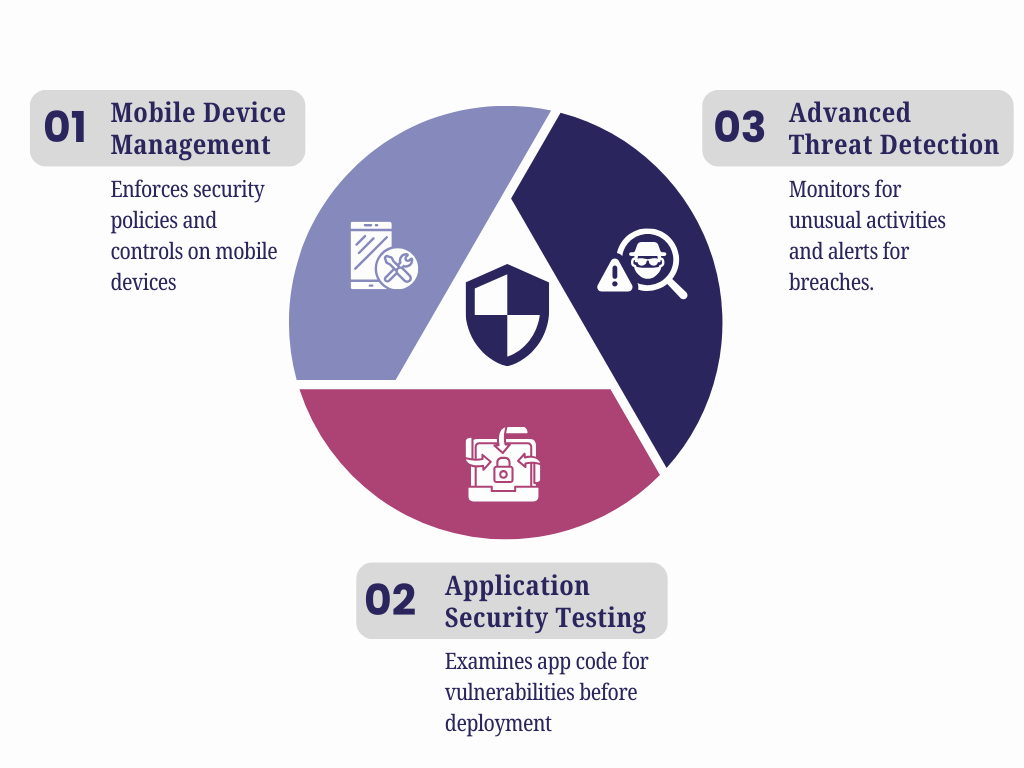
    1. Mobile Device Management (MDM): MDM will help enforce security policies across mobile devices and controls preventing the installation of unauthorized applications. This is done by:
      1. Wipe Remotely Ability: IT administrators can remotely wipe the data off lost or stolen devices so sensitive information cannot be accessed.
      2. Application Control: MDM enables organizations to mark applications as white lists or black lists depending on security policies to prevent malicious applications from being installed.
    2. Application Security Testing: This examines the code of a mobile application for potential vulnerabilities while simulating attacks to determine hidden weaknesses before deploying the app.
      1. Static Application Security Testing (SAST): It scans for possible weaknesses in the source code that may occur when executed.
      2. Dynamic Application Security Testing (DAST): Running applications are tested for vulnerability through simulated attacks that could reveal the exploits.
    3. Advanced Threat Detection: Behavioral analytics monitor mobile devices for unusual activities and enable an immediate response to potential breaches.
      1. Behavioral Analytics: These systems monitor patterns in the user behavior that signify a potential compromise.
      2. Real-Time Alerts: Instant alerting of suspicious events to allow for prompt investigation and action.

    On-Site Systems: Controlling Internal and Physical Threats through Custom Cybersecurity Solutions

    As businesses continue their digital transformation, on-site systems form the backbone of most organizations, since they provide a direct source of access to data coupled with control.

    They are always vulnerable to internal threats and intrusion by physical persons. Insiders and unauthorized physical intrusion are the main risks to on-site systems.

    What Are the Security Problems in On-Site Systems?

    • Insider Threat: The insiders compromised the security since those authorized to privilege access may misuse their rights.
    • Physical Violations: Unauthorized physical entities entering critical areas directly result in hardware or data exposure.

    How Do Custom Cybersecurity Solutions Improve On-Site Security?

    Learn how custom cybersecurity solutions enhance on-site security by addressing unique vulnerabilities.

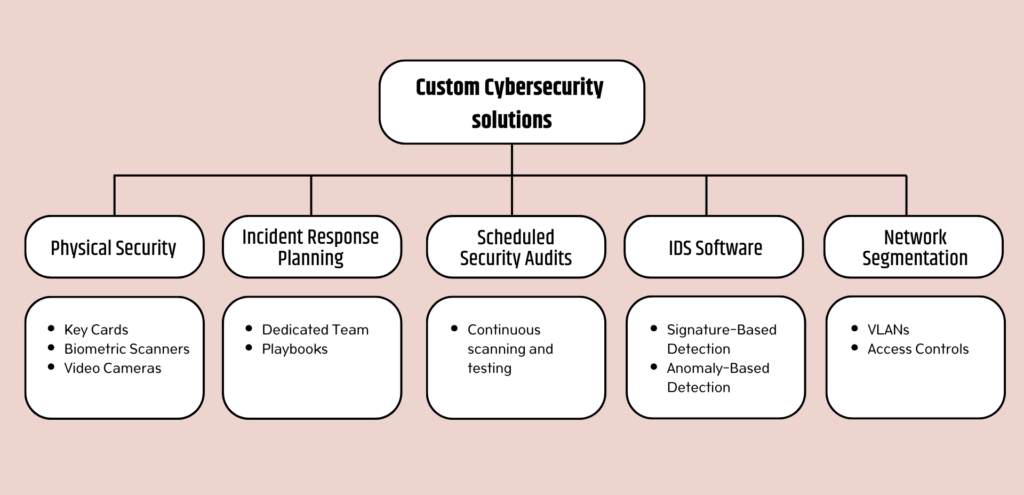
    1. Network Segmentation: Division of the network into sub-divisions. Segmentation limits the movement of attackers and restricts access to sensitive data. This format helps isolate breaches, thus protecting the rest of the network.
      1. Virtual Local Area Networks (VLANs): Separation of the different network-level departments reduces the likelihood of lateral movement by an attacker.
      2. Access Controls Between Segments: Strict access controls make sure that only authorized persons gain access to the sensitive segments.
    2. IDS Software: Intrusion Detection Systems (IDS) software keeps track of network traffic by detecting signatures and anomalies, which will notify of a threat in real-time.
      1. Signature-Based Detection: Predefined signatures of known threats are recognized and provide immediate responses to familiar attacks.
      2. Anomaly-Based Detection: This form of detection involves scanning for patterns that don’t fall under the usual traffic profile within the network. The method finds new threats that do not match existing signatures.
    3. Scheduled Security Audit: Periodic scanning for weaknesses and penetration testing will discover and remove all the possible vulnerabilities within the system before hackers take advantage of them.
    4. Incident Response Planning: A dedicated incident response team and a few playbooks for common scenarios ensure that breaches are fast and efficient and the eventual damage is reduced.
    5. Physical Security: Restrict access to building parts using key cards, biometric scanners, and video cameras.

    Conclusion

    Present-day generic solutions fail when unique challenges exist in cloud, mobile, and on-site systems. SCS Tech, a trusted name among the cybersecurity solutions group, provides targeted protection needed to keep data and operations safe.

    Whether planning a new security strategy or seeking to build upon and enhance the existing one, investing in custom cybersecurity solutions is paramount in these times of constant global changes and cyber threats.


  • How AI Technology Companies Can Drive Digital Transformation in Enterprises

    How AI Technology Companies Can Drive Digital Transformation in Enterprises

    Is your business ready to capitalize on the AI revolution?

    In 2023, the artificial intelligence market was valued at USD 196.63 billion and is expected to grow at a CAGR of 36.6% from 2024 to 2030. This expeditious growth reflects the role of digital transformation and its significance for organizations to remain competitive in the market to survive and grow exponentially. As companies adapt to this evolving landscape, AI technology providers are emerging as pivotal players in facilitating smooth digital transitions.

    Artificial intelligence (AI) technology companies are providing the resources and expertise according to their specifications and requirements and establishing a smooth integration with the current systems of the organizations. This blog focuses on how these AI technology companies promote digital transformation and their significant impact on various industries.

    Understanding Digital Transformation

    Digital transformation involves incorporating digital technology in all facets of the business, which directly impacts the services provided to the customers and the day-to-day business operations.

    The significance of digital transformation cannot be underestimated because technological developments are happening at quite a fast pace. Such drastic advancements can be easily introduced in enterprises through digital transformation, which in turn enables fulfillment of customer expectations, streamlining business operations, taking data-focused decisions, and designing personalized experiences for the customers. However, implementing digital transformation has its shortcomings, which can be eliminated through artificial intelligence.

    The Role of AI in Digital Transformation

    Artificial intelligence is a great tool to enhance an enterprise’s efficiency, productivity, data management, and decision-making while also encouraging innovations and relevancy, further supporting growth and the creation of new opportunities across various industries, which can be seen as:

    1. Customer Service: AI is rebuilding customer service by providing AI-powered 24/7 ChatBot, to enhance customer experience and satisfaction.
    2. Automation: AI-driven automation decreases the time and effort to complete various tasks, thus reducing the human efforts to focus on strategic tasks and other complicated workflows.
    3. Data Analytics: Data is the new oil, and AI-driven data analytics helps businesses extract the best information to foresee trends and improve decision-making, playing a major role in industries like healthcare, finance, and retail.
    4. Predictive Maintenance: The manufacturing and logistics sectors benefit from AI as it helps in the maintenance of systems and machinery by forecasting the likelihood of failure through data sensors and other sources, which promotes timely preventative measures.

    How AI Technology Companies are Acting as a Catalyst

    AI technology companies act as catalysts because they have the resources, tools, and expertise for the successful integration of AI in enterprises. Here are some ways that AI technology companies are promoting digital transformation:

    1. Creating AI Ecosystems: AI technology companies are building ecosystems of partners, clients, and customers, which results in a network of creativity and teamwork, thus promoting the age of digital transformation.
    2. Providing Advanced AI Tools and Platforms: AI technology companies develop and provide such advanced resources to utilize the full potential of AI as well as promote smooth integration of AI in business operations.
    3. Providing Customized Solutions: AI caters to the distinctive objectives and challenges of each business and delivers appropriate solutions by closely administering those problems.
    4. Educating and Training Enterprise Teams: Correct knowledge and skills are equally significant as technology to implement AI effectively. AI technology companies organize various workshops and training sessions for such teams to advance their AI expertise.

    Key AI Technologies Promoting Digital Transformation

    Let us understand various AI technologies and their impact as a driving force in digital transformation:

    1. Computer Vision: This technology enables computers to comprehend visual information, just like human vision, from the external world and successfully streamline operations that depend on visual input. For example, facial recognition and quality checks in manufacturing units.
    2. Robotic Process Automation (RPA): This technology eliminates human error by automating redundant tasks such as data entry, etc., thus promoting accuracy and directing those extra efforts toward building customer satisfaction and innovation.
    3. Machine Learning and Predictive Analysis: This technology forecasts outcomes based on large datasets, which helps businesses predict future trends, resulting in enhanced decision-making, efficiency, and a notable competitive advantage.
    4. Natural Language Processing: This AI technology interprets human language, which enables the enterprise to transform its customer service by closely analyzing their comments, reviews, and sentiments, which further promotes clear communication and a better understanding of customer expectations.

     AI-powered trends

    Conclusion

    AI technology companies are a major driving force in bridging the gap between human capabilities and technological innovations by engaging employees in various training and development programs to enhance their AI skills, thus cultivating an environment of continuous learning and innovation within the organization.

    In this age of digital transformation, SCS Tech India brings forth the right kind of opportunities, knowledge, and assistance to develop such effective AI systems that not only benefit the company’s goals but also focus on developing fair, transparent, and trustworthy systems that directly help in building and attracting a genuine and solid clientele and materialize lucrative opportunities.

    FAQs

    Do AI technology companies offer ethical AI integration?
    Yes, they strictly follow the laid down guidelines and practices which ultimately protect them from any legal or reputational hazards.

    Which sector benefits the most from digital transformation fueled by AI?
    It can be an excellent transformation for any sector but is favorable for the manufacturing, healthcare, finance, retail, and logistics sectors.

    What are the shortcomings that organizations face while implementing AI?
    Enterprises frequently encounter obstacles, including data integration, insufficient knowledge of AI, exorbitant implementation expenses, and worries about data ethics and privacy.

  • Why Robust IT Infrastructure Solutions Are the Backbone of Successful Enterprises?

    Why Robust IT Infrastructure Solutions Are the Backbone of Successful Enterprises?

    As per Harvard Business Review, almost forty percent of companies view IT infrastructure solutions as a leading reason for overall enterprise efficiency gain in order for businesses to stand out from one another in the marketplace.

    In the modern world of digitalization, an effective IT structure solution is no longer a luxury but a necessity for any enterprise that has to compete for its existence in the market. In this blog, we will define what it means to integrate IT infrastructure solutions into business processes, as well as strategies to develop sound IT infrastructure solutions.

    Comprehensive Insight on Benefits of IT Infrastructure Solutions for Enterprise Success

    Improved Operational Efficiency

    A robust IT infrastructure helps in improving operational efficiency by utilizing the resources optimally, reducing errors, and downtime.

    Listed below are key factors of an IT infrastructure solution that contribute to improved operational efficiency:

    • IT infrastructure solutions help streamline business processes by automating the business workflow, resulting in a reduction in manual tasks and errors.
    • A robust IT infrastructure solution enhances work collaboration through various cloud-based platforms so employees can access real-time data, share documents, and seamlessly collaborate on projects.
    • For strategic decision-making, IT infrastructure solutions offer advanced solutions for data storage via cloud storage and database management systems.
    • Integrating data analytics tools like Power BI, Google Data Studio, QlikSense, etc. for making timely decisions according to operational and market changes.

    Robust Security and Compliance

    A strong IT infrastructure not only improves operational efficiency but also makes sure the valuable assets of the organization are safeguarded from having network security solutions to data encryption solutions. Below listed are key IT infrastructure solutions that facilitate security and compliance:

    • To safeguard from potential disruption resulting from cyber-attacks or technical failures, IT infrastructure solutions offer a comprehensive recovery plan that includes data backup, testing and drills, business impact analysis, and re-establishing networking connectivity.
    • Network security solutions like virtual private networks, firewalls, intrusion detection and prevention systems (IDPS), etc., act as key solutions for enhancing data security.
    • A robust IT infrastructure solution integrates data encryption solutions through tools like BitLocker (for Windows) or FileVault (for Mac) and a public key infrastructure solution for safeguarding digital certificates and encryption keys.
    • Other key security and compliance solutions include identity and access management solutions, compliance management solutions, including data governance tools to make sure the business is securing and managing data as per regulatory compliance, endpoint security solutions, and more.

    Cost Efficiency

    Cost efficiency plays a crucial role in an enterprise’s long-term success, which can be achieved by integrating IT infrastructure solutions that can eliminate waste, streamline business operations, and allocate resources effectively.

    Below listed are the benefits offered by robust IT infrastructure solutions to achieve cost efficiency.

    • Automation of routine tasks helps enterprises utilize the skills of employees in more effective areas.
    • Helps in effective resource management by removing underutilized assets and automated scaling through tools like Microsoft Azure’s Virtual Machine Scale Sets, AWS Autoscaling, etc., so resources are allocated based on demand, resulting in reduced cost.
    • IT infrastructure management tools help in better cost visibility through 3 key aspects:
      • Energy consumption reduction by optimizing power usage
      • Storage optimization by integrating techniques like tiering, deduplication, and compression.
      • Cost savings via server consolidation, where underutilized servers can be identified and consolidated, reducing hardware costs and energy consumption.

    Improved Customer Experience

    In the evolving market, the shift towards enhancing the customer experience has become a key parameter, and enterprises can integrate the following IT infrastructure solutions to improve customer experience:

    • Streamline communication and service by adding automated response services like Chatbot or voice-enabled technology solutions.
    • Add advanced data analytics tools that can evaluate customer preferences and offer personalized customer interaction.
    • IT infrastructure solutions like CDNs (Content Delivery Networks) can be implemented to increase reliability by offering faster load time. It helps businesses in scaling as a high volume of traffic can be managed with high performance.

    Fosters Gaining Edge in Competitive Market by Constant Innovation

    Investing in IT infrastructure solutions is a backbone to drive success given market changes and the evolving landscape of technologies. Listed below are a few advantages enterprises can gain from integrating innovative approaches to IT infrastructure solutions in their business processes:

    • IT infrastructure solutions help businesses with scalable and cost-effective solutions so businesses can respond to sudden market demands and offer seamless delivery.
    • Supports cutting-edge technologies like artificial intelligence, machine learning, and the Internet of Things (IoT).
    • Improves agility and speed so businesses can rapidly deploy new services/applications and grab the right market opportunity.
    • Helps in digital transformation by integrating ERP systems like SAP, CRM software like Hubspot, and collaboration tools like Microsoft Teams.
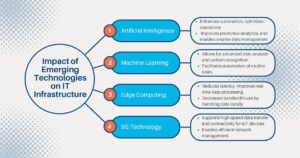
    • The digital transformation is also achieved by deploying innovative applications like AI-powered analytics (Tableau, Power BI) and IoT platforms (AWS IoT, Google Cloud IoT).Impact of emerging technologies on IT infrastructure

      Tips on Building a Robust IT Infrastructure Solutions

      • Understand business requirements and evaluate pain points to align IT infrastructure strategies.
      • Focus on scalability and flexibility through cloud-based solutions and modular design for long-term growth.
      • Improve network reliability by removing redundant systems and investing in high-speed connectivity for seamless communication.
      • Invest in advanced monitoring and management tools like SolarWinds and focus on centralized management.
      • Partner with reliable IT infrastructure solutions partner like SCS Tech India for comprehensive services like infrastructure management, cloud services, cybersecurity, etc.

      Conclusion

      Robust IT infrastructure solutions are crucial for successful enterprises, ensuring seamless operations and driving innovation. A well-structured IT structure enhances scalability and improves productivity, leading to a competitive advantage. At SCS Tech India, we understand the importance of this parameter and offer tailored services like cloud computing integration and cybersecurity to meet these needs.

      Our expertise in IoT consulting, IoT application development, wearable app development, voice-enabled technology solutions, and IT implementation and support helps enterprises build a robust IT infrastructure. Enterprises can achieve agility and efficiency by integrating these services and sustaining long-term in the market.

      FAQs

      1. What is the role of IT infrastructure in API management?

      IT infrastructure in API management focuses on seamless communication between applications and services, enabling businesses to create, manage, and track the performance of API along with detecting issues.

      1. What IT infrastructure solutions does SCS Tech India specialize in?

      SCS Tech India provides IT infrastructure solutions like network design, cloud computing, data center management, and cybersecurity services.

      1. What best practices can enterprises follow to design a robust IT infrastructure?

      Enterprises can focus on practices like scalability, assessing business needs, cloud integration, strong security measures, solid backup systems to remove redundancy, and more.

    (more…)

  • Custom Cybersecurity Solutions for Protecting Digital Assets

    Custom Cybersecurity Solutions for Protecting Digital Assets

    Various solutions for protecting digital assets with the help of custom cybersecurity 
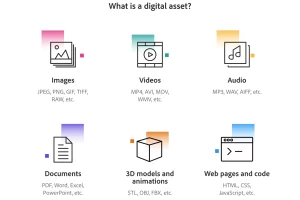
    In today’s interconnected digital landscape, the concept of digital assets has evolved beyond conventional boundaries, encompassing a vast array of valuables ranging from cryptocurrencies to sensitive financial data and proprietary information. As staggering statistics reveal, approximately 865 million individuals globally engage with digital assets, with a significant majority, 95%, navigating the complexities of crypto-assets.

    This surge underscores not only the pervasive adoption but also the critical need for robust cybersecurity solutions to safeguard these assets against an ever-evolving array of cyber threats.

    As many business operations are shifting to online platforms, digital assets have become not just valuable but also vulnerable to hacks and cyber threats. For such reasons, keeping digital assets well-protected is paramount. Doing so will let companies maintain business continuity, preserve the company’s reputation, and protect all sensitive data. 

    To make sure that the digital assets are safe, you must opt for some effective cybersecurity solutions, which we will be discussing in this blog.

    Best Cybersecurity Solutions to Safeguard Digital Assets

    The digital asset market will surely expand by 8.77% (2024-2028), which will lead to a market volume of $112100.00m. Despite all that, keeping them safe from unwanted cyber-attacks will be highly advantageous for all businesses.

    In this section, you will find out about some of the best  Custom Cybersecurity solutions, which will let you keep all your digital assets protected from online threats.

    Perform Cybersecurity Audits

    When planning for a risk prevention plan, you should begin by performing a cybersecurity audit. It’s because that’s the best way to discover all the risks and vulnerabilities your organization might experience.

    During the auditing session, you should look out for all cyber threats and dangers that might disrupt financials, sensitive information, data loss, or business operations. You should rank all the risks as high, medium, low and level zero.

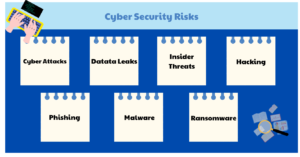
    Apart from that, there are some other dangers that you should flag while conducting the cybersecurity audit for your business:

    • Cyberattacks
    • Data Leaks
    • Insider Threats
    • Hacking
    • Phishing
    • Malware
    • Ransomware

    If performing a cybersecurity audit is quite overwhelming for you or you don’t know how to get it done, speak with a cybersecurity professional. Make sure to have protocols in place for all future audits.

    Virtual Desktops

    Virtual desktops provide a native-like experience while being hosted from a secure data center or cloud environment.

    When you utilize this type of desktop, you should opt for powerful monitoring solutions like “RDP Monitoring Software” that will track down user activities and also let you securely access information.

    Virtual desktops are ideal for individuals who don’t want to provide the equipment to their team physically. Some of the popular cloud-based desktops are Azure Virtual Desktops and Amazon WorkSpaces.

    Safe Management of Passcode

    Frequent password updates can pose challenges for team management. When you’re tired of finding the best ways to share logins with the team, you should use password management tools, such as “LastPass”. This tool will let you share, generate, manage and store passcodes with the team through SSO or single sign-on.

    Activating Cloud-Based Workflows

    The cloud-based workflows are perfect for all the cross-functional teams as they will increase their productivity. That’s not the only thing these workflows are known for. They can also safeguard the business-related processes by saving all the real-time updates.

    Through cloud-based workflows, you can save all the processes and tasks in the cloud. That way, you can reduce the chances of data loss and cyber threats.

    In contrast to traditional setups where data loss can occur if your local device unexpectedly shuts down during work, cloud-based workflows ensure all your work is securely stored and accessible from any device with an internet connection.

    The DAM [Digital Asset Management] Solution

    This particular solution will protect all the images and let you organize the digital asset library correctly. DAM solution can also let you manage the copyright of the stocks that you purchased and offer watermarking options.

    This will prevent the business-owned pictures from getting plagiarized. The DAM solution will provide user permissions, letting only the authorized members access all the information.

    Using vs Not Using Cybersecurity Solutions to Protect Digital Assets

    In this section, you will find out what happens when you use vs. don’t use custom cybersecurity solutions to keep digital assets safe. The table below will provide a proper explanation.

    The Category Using the Cybersecurity Solutions Not Using Cybersecurity Solutions
    Operational Efficiency Enhanced through the safe and streamlined methods Lessened because of all the security-related problems
    Chances of Data Breaches Greatly lessened because of preventive measures. Extremely high since the vulnerabilities are exploitable
    Reputation Management Improves the reputation and trust of the stakeholders Loss of consumer trust and causing reputational damage
    Identify All the Threats Offers responses and detection to threats Pretty slow, which can keep all the breaches undetected
    Business Continuity Assured via disaster recovery and backup solutions Changes in data loss and higher downtime
    Data Confidentiality and Integrity Maintaining it with access controls and encryption Gets compromised because no protective plans
    Incident Response Effective and rapid with all pre-defined response plans Chaotic and delayed, causing greater recovery time and
    Regulations and Compliances Following all the industry standards (PCI-DSS, HIPAA) Non-compliance will lead to financial and legal penalties

    Conclusion

    Opting for result-driven custom cybersecurity solutions will let all businesses secure their digital assets, prevent damage to reputation, and increase operational efficiency. This is exactly what we at SCS Tech India Pvt Ltd do for all our customers.

    We not only offer top-notch custom cybersecurity solutions but also services like cloud computing, blockchain solutions, robotic process automation, and so on. To find out more about us, get in touch with our experts right away!

  • How Digital Transformation Services Are Reinventing Customer Experiences

    How Digital Transformation Services Are Reinventing Customer Experiences

    In today’s digital era, businesses are undergoing transformative changes fueled by digital technologies. Central to this shift is digital transformation – a strategic approach that integrates digital tools to enhance operations and customer experiences. In this blog, we’ll explore how digital transformation services are revolutionizing customer experiences, empowering businesses to create personalized, seamless interactions that drive loyalty and growth.

    1. Understanding Digital Transformation:

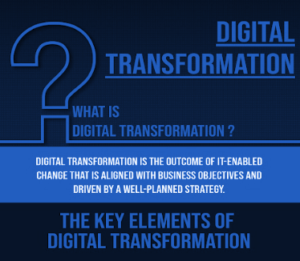
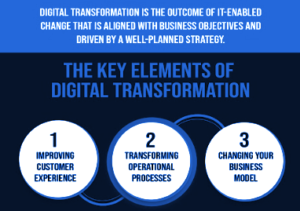
    Digital transformation goes beyond technology upgrades; it’s a holistic approach to redefining how businesses operate and engage with customers. It involves embracing innovation and agility to adapt to the evolving digital landscape.

    Think of it as more than just upgrading your software or implementing new tools. It’s about embracing a mindset of innovation and agility, where businesses continuously evolve to meet the changing needs and expectations of customers in the digital age.

    By leveraging technologies like AI and data analytics, businesses streamline operations, gain insights, and deliver personalized experiences. Digital transformation is about staying ahead, embracing change, and meeting customer expectations in a digital world.

    2. The Evolution of Customer Experiences:

    In the digital age, customer expectations have undergone a significant transformation. Gone are the days of traditional interactions; today’s consumers expect seamless, personalized experiences across all touch points. This shift is driven by advancements in technology and the widespread adoption of digital channels, which have empowered customers with greater choice and convenience.

    Businesses must adapt to this new reality by embracing digital transformation to meet the evolving needs of their customers. By leveraging data insights and technology-driven IT solutions, businesses can create tailored experiences that resonate with their audience, fostering loyalty and long-term relationships.

    3. Leveraging Digital Transformation Services:

    Digital transformation services play a pivotal role in helping businesses navigate the complexities of the digital landscape and elevate their customer experiences. These services encompass a wide range of capabilities, including data analytics, AI-driven personalization, and omnichannel integration, designed to enhance customer engagement and satisfaction.

    By partnering with digital transformation service providers, businesses gain access to expertise and technologies that enable them to deliver seamless, personalized experiences across all touch points. From analyzing customer data to automating processes, these services empower businesses to stay ahead of the competition and meet the ever-changing demands of their customers.

    4. Personalization and Customer Insights:

    Personalization has become a cornerstone of modern customer experiences, and digital transformation services enable businesses to deliver tailored interactions that resonate with their audience. By harnessing the power of data analytics and AI, businesses can gain valuable insights into customer behavior and preferences, allowing them to create hyper-targeted campaigns and offers.

    Furthermore, digital transformation companies enable businesses to go beyond surface-level personalization by anticipating customer needs and proactively addressing them. Whether it’s recommending products based on past purchases or providing relevant content at the right time, personalized experiences foster deeper connections and drive customer loyalty.

    5. Seamless Omnichannel Experiences:

    In today’s digital landscape, customers expect a seamless experience across all channels, whether they’re browsing online, using a mobile app, or visiting a physical store. Digital transformation services enable businesses to integrate these channels into a cohesive omnichannel strategy, ensuring consistency and continuity throughout the customer journey.

    By leveraging omnichannel capabilities, businesses can provide customers with the flexibility to interact with their brand wherever and whenever they choose. Whether it’s starting a transaction online and completing it in-store or receiving personalized recommendations across multiple touchpoints, seamless omnichannel experiences foster customer satisfaction and loyalty.

    6. Enhancing Customer Engagement and Satisfaction:

    Digital transformation companies empower businesses to engage with customers in meaningful ways, fostering stronger relationships and driving satisfaction. Through innovative strategies such as interactive content, chatbots, and social media listening, businesses can connect with customers on a deeper level, addressing their needs and preferences in real-time.

    Furthermore, these services enable businesses to gather feedback and insights from customers, allowing them to continually refine and improve their offerings. By actively listening to customer feedback and responding promptly, businesses can demonstrate their commitment to customer satisfaction and build a loyal customer base.

    Conclusion:

    In today’s digital landscape, customer experiences play a pivotal role in shaping the success of businesses. Digital transformation services have emerged as a key enabler in redefining these experiences, empowering businesses to deliver personalized, seamless interactions that drive satisfaction and loyalty.

    By leveraging advanced technologies and data-driven insights, businesses can gain a competitive edge and stay ahead in the ever-evolving market. As we look to the future, the importance of digital transformation services in enhancing customer experiences will only continue to grow, driving innovation and fueling business growth.

    Ready to transform your customer experiences with digital transformation services? Contact us today to learn how SCS Tech India’s tailored IT solutions can help elevate your business in the digital age!


  • Why Are IT Solutions Critical for Modern Business Success?

    Why Are IT Solutions Critical for Modern Business Success?

    In today’s digital age, IT solutions are indispensable for business success. They drive digital transformation, enhance efficiency, and secure data. Let’s explore the critical importance of IT solutions for modern businesses and their role in shaping the future of business.

    The Role of IT Solutions in Digital Transformation

    1. Navigating the Digital Landscape: Digital transformation companies act as guides, helping businesses navigate the complex terrain of the digital landscape. They offer a suite of services, from cloud computing to data analytics, tailored to each business’s unique needs.
    2. Empowering Adaptability: It empowers businesses to adapt to changing market conditions, customer demands, and technological advancements. This agility allows companies to seize new opportunities and stay ahead of the curve.
    3. Driving Innovation: Innovation is at the heart of digital transformation. IT solutions provide the tools and platforms necessary for innovation to flourish. Whether it’s developing new products, streamlining processes, or enhancing customer experiences,
    4. Enhancing Collaboration and communication: Collaboration is essential for driving digital transformation. It facilitates collaboration by breaking down silos, enabling seamless communication and information sharing across departments and teams.

    Leveraging IT Solutions for Enhanced Efficiency and Productivity

    1. Automation of Repetitive Tasks: IT solutions automate routine tasks, giving employees more time to concentrate on strategic activities.
    2. Streamlining Workflows: it enables smoother and more efficient operations by digitizing workflows and eliminating paper-based processes.
    3. Real-Time Data Insights:  it uses data analytics tools to provide real-time insights into business performance, allowing for informed decision-making.
    4. Integration of Business Functions: Enterprise resource planning (ERP) systems consolidate different business functions, such as finance, HR, and supply chain management, into one unified platform.

    Enhancing Customer Experience through IT Solutions

    1. Personalized Interactions: IT solutions enable businesses to personalize customer interactions based on preferences, purchase history, and behaviour.
    2. Streamlined Communication Channels: Omnichannel communication platforms allow businesses to communicate with customers seamlessly across multiple channels, including email, social media, and live chat.
    3. Centralized Customer Data: Customer relationship management (CRM) systems centralize customer data, offering a comprehensive view of each customer’s interactions and history.
    4. Tailored Services: With insights from data analytics tools, businesses can offer tailored services and recommendations to meet individual customer needs.

    Securing Business Data and Assets with IT Solutions

    1. Cybersecurity Solutions: IT solution providers offer a range of cybersecurity solutions, including network security, endpoint protection, and threat intelligence, to protect against cyber threats.
    2. Data Encryption Technologies: Data encryption technologies safeguard data during transmission and storage, thwarting unauthorized access and preserving confidentiality.
    3. Mitigating Risks: By deploying robust IT security measures, businesses can mitigate the risks linked with cyber threats, preserving their reputation, customer trust, and competitive edge.

    Future Trends and Opportunities in IT Solutions

    As technology progresses, IT solutions are evolving rapidly, opening up new avenues for business growth and innovation. Cloud computing offers scalable data storage, while AI and machine learning streamline automation and data analysis. The Internet of Things facilitates real-time data collection by connecting devices. In this digital landscape, partnering with IT infrastructure solution providers becomes vital for businesses to adapt and capitalize on these trends, ensuring their competitiveness in the digital realm.

    Choosing the Right IT Infrastructure Solution Provider

    Choosing the correct IT infrastructure solution provider is vital for the success of your digital transformation journey. Consider the following factors when choosing a provider:

    1. Expertise and Experience: Seek out an IT infrastructure solutions provider with a demonstrated history of successfully implementing IT solutions and leading digital transformation efforts.
    2. Range of Services: Consider a provider that offers a broad spectrum of digital transformation companies, encompassing cloud computing, cybersecurity, data analytics, and enterprise software solutions.
    3. Reputation and Client Testimonials: Research the provider’s reputation in the industry and seek feedback from past clients to ensure reliability and quality of service.
    4. Alignment with Business Goals: Select a provider that understands your business objectives and can tailor solutions to meet your needs and requirements.
    5. Industry Experience: Look for providers with industry experience. They’ll have a deeper understanding of your specific challenges and opportunities.

    Conclusion

    In conclusion, IT solutions are indispensable for modern businesses. They drive digital transformation, enhance efficiency, and secure data assets. With their help, companies can streamline operations, improve customer experiences, and stay competitive. Emerging trends like cloud computing, AI, and IoT offer exciting growth opportunities. To navigate these changes effectively, businesses must partner with reliable IT infrastructure solution providers to unlock their full potential in the digital age.

    Ready to take your business to the next level with cutting-edge IT solutions? Explore a range of services and solutions at SCS Tech India, your trusted IT infrastructure partner.


  • Choosing Your Ideal GIS Development Platform

    Choosing Your Ideal GIS Development Platform

    Geographic Information System (GIS) showcases data through maps, offering a platform for collecting, organizing, and examining real-life situations that impact our daily routines. Scientists, corporations, and governmental bodies utilize GIS technology to tackle emerging, critical, and intricate issues.

    Table of Contents

    • What is a GIS platform?
    • Things to keep in mind before the selection
    • Types of GIS Platforms
    • Selecting your Optimal GIS Development Platform

    What is a GIS platform?

    A Geographic Information System (GIS) platform is a potent tool that leverages location data to visually represent, analyze, and comprehend our world. Envision a digital map brimming with information, showcasing not only streets and landmarks but also multiple layers of data unveiling concealed patterns and valuable insights. This encapsulates the essence of a GIS platform.

    Imagine it as a digital workspace where you merge various data types such as census data, environmental layers, infrastructure networks, and social media trends, all linked to precise locations. This wealth of information enables you to conduct robust analyses, reveal spatial correlations, and craft engaging visual representations that narrate a story clearly and effectively. Whether you’re a city planner studying traffic flows, a conservationist monitoring endangered species, or a business identifying potential customer locations, a GIS platform enables you to make well-informed decisions by gaining a deeper insight into the spatial environment.

    Things to keep in mind before the selection

    Choosing the appropriate platform relies on carefully assessing your project objectives and operational requirements. Before opting for it, businesses should take into account crucial aspects such as business goals, scalability, integration, and more. Additionally, they should delve deeper into the following essentials to enhance their GIS mapping platform evaluation process. Our suggestion is for businesses to consider these vital fundamentals:

    • Functionality
    • Performance
    • Usability
    • Openness and Standards
    • Cost
    • Security
    • Vendor Stability and Support

    Types of GIS Platforms

    From a professional perspective, the GIS platform landscape is varied and can be classified according to various criteria.

    1. Based on Deployment:
    • Desktop GIS – Installed software with robust capabilities, necessitating local computing resources.
    • Web GIS – Cloud-based platforms accessible from any device with a web browser, typically featuring collaborative tools.
    • Mobile GIS – Applications tailored for tablets and smartphones, enabling data collection and analysis while on the move.
    1. Grouped by Functionality:
    • Geospatial Data Management: Mainly dedicated to storing, organizing, and manipulating geographical data.
    • Spatial Analysis: Providing sophisticated tools for examining spatial relationships, trends, and patterns.
    • Geospatial Visualization: Facilitating the development of engaging maps, charts, and other visual data representations.
    • Application-Specific Platforms: Customized for particular industries or purposes such as environmental monitoring, urban planning, or resource management.
    1. Open-Source vs. Proprietary:
    • Open-Source: Software that is freely available and modifiable, often providing customization options and community support.
    • Proprietary: Licensed software that usually comes with advanced features and professional support.
    1. Under Development Framework:
    • Platform-as-a-Service (PaaS) – Utilize cloud-based environments to create customized GIS applications.
    • Software Development Kits (SDKs) – Incorporate geospatial features into current applications using libraries and tools.

    Selecting your Optimal GIS Development Platform

    After considering key factors and exploring various platforms, keep in mind that the ideal choice lies at the intersection of your specific requirements and priorities. Assess your project against the outlined criteria.

    • Evaluate functionalities, performance, usability, and cost to make a well-informed decision.
    • Feel free to dig deeper into specific platforms based on your needs.
    • Use the keywords “GIS development platform” to steer your research.

    Remember, this journey is yours to embark on confidently! Selecting the appropriate GIS development platform is a pivotal step in ensuring the success of your project. By recognizing your needs, thoroughly assessing your choices, and utilizing the guidance provided, you can confidently navigate the realm of geospatial exploration. Rest assured, the perfect platform awaits to be your reliable companion on this captivating journey through spatial data.