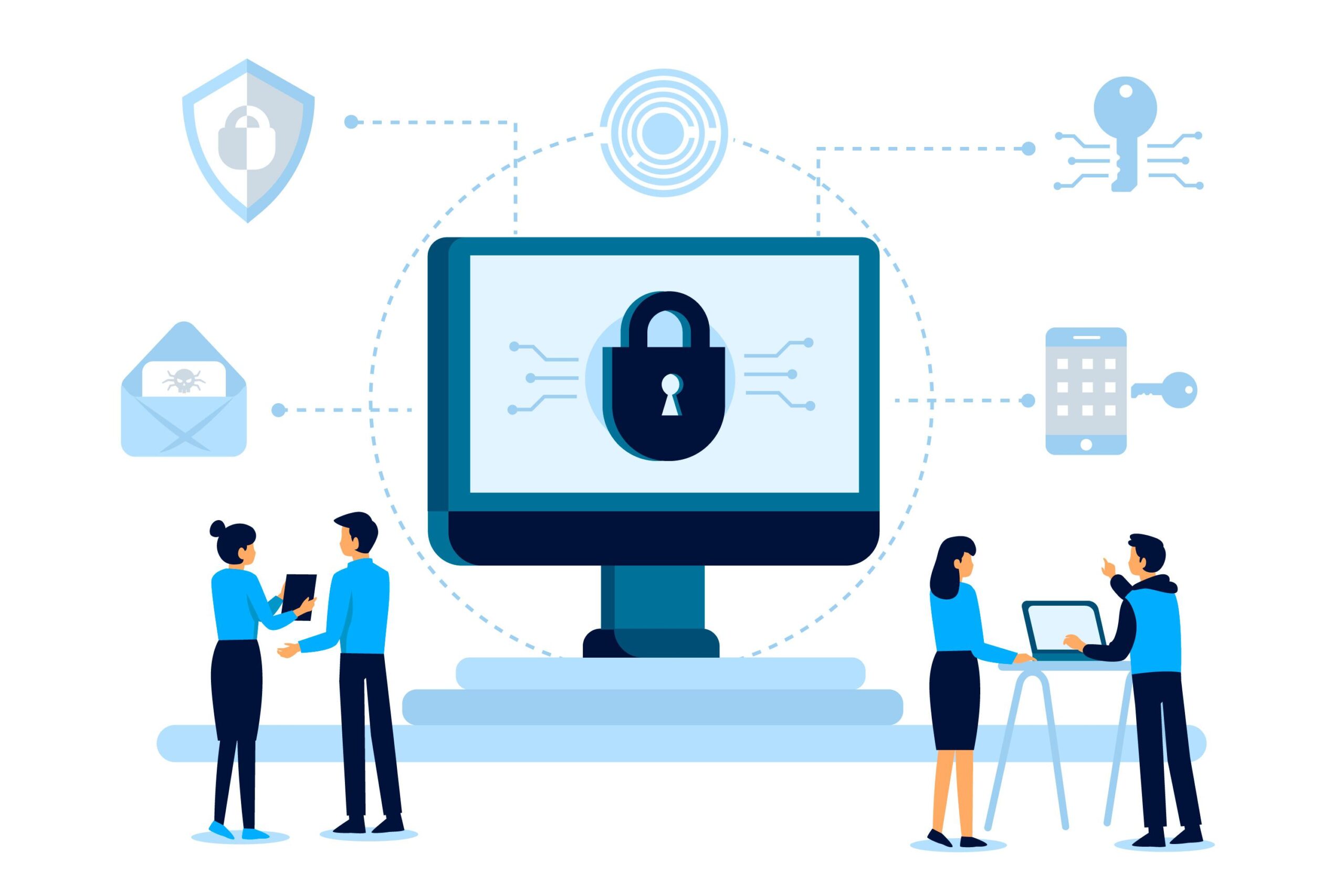
Tag: Cyber Security

  • Best security tips to avoid a cyber breach

    Best security tips to avoid a cyber breach

    Preventing cyber data breaches is the best defense against the nightmare and expense that comes with them. Nevertheless, you must first identify them in order to be able to stop a data breach. The sorts and costs of data breaches you could experience as a small- to medium-sized business owner are described below, along with tips on how to avoid them.

    When hackers gain access to data and sensitive information, data breaches occur. These breaches are very expensive. According to a data report, the average cost of a data breach is around $3.86 million that too in addition to the irreparable harm to an organization’s reputation. It costs time as well. The identifying of the cause and reprimanding it usually takes up to 280 days.

    You can use a variety of high-level security techniques, such as AI and prepared incident response teams, to stop a data breach. Let’s dig deep into that!

    Limit access to your valuable data –

    Every employee used to have access to all of the files on their computer back in the day. Companies today are discovering the hard way how important it is to restrict access to their most important data. A mailroom employee has no need to see a customer’s financial information, after all. By limiting who is permitted to read specific papers, you reduce the number of workers who might unintentionally click on a hazardous link. Expect to see all records partitioned off as organisations go into the future so that only those who specifically require access will have it. One of those obvious fixes that businesses probably ought to have implemented sooner rather than later.

    Security policy with third party vendors –

    Every firm interacts with a variety of outside vendors. The need to understand who these people are has never been greater. Even permitting visitors onto their property might expose businesses to legal action. It’s necessary to restrict the kinds of documents that these vendors can access.

    Although taking such steps can be a bother for the IT department, the alternative could be a data breach that costs millions of dollars. Demand transparency from the businesses that are permitted to access your sensitive information. Don’t just assume that they are abiding by privacy regulations; verify it. Request background checks for any outside contractors entering your business.

    Employee awareness training –

    Employees are the weakest link in the data security chain, according to recent research. Despite training, workers read dubious emails with the potential to download malware every day. Employers make the error of assuming that one cybersecurity training session is sufficient. Schedule frequent sessions every quarter or even monthly if you’re serious about protecting your crucial data.

    According to marketing studies, the majority of consumers must hear the same message at least seven times before their behaviour starts to change.

    Update Software Regularly–

    Experts advise routinely updating all operating systems and application software. When patches are available, install them. When programmes aren’t constantly patched and updated, your network is exposed. Baseline Security Analyzer, a software from Microsoft, may now be used to periodically check that all programmes are patched and current. This is a simple and affordable solution to fortify your network and thwart attacks before they start.

    Develop a cyber breach response plan –

    What would you do if you discovered a data breach when you arrived to work the following day? Surprisingly few businesses have a reliable breach response strategy in place. Both the company and the employees can understand the potential losses by creating a thorough breach preparedness strategy. Employees want to know the truth; therefore, an employer should be very open about the extent of the violation. A sound response strategy can reduce lost productivity and stop bad press.

    Setting strong passwords –

    One thing that security professionals will emphasise when they visit your organisation to train your staff is the importance of routinely changing all passwords. The majority of people are now aware of how crucial it is to make passwords challenging to crack. We have mastered the use of capital letters, numbers, and special characters when creating passwords, even on our home PCs. Make it as difficult as you can for hackers to enter and steal your belongings.



  • 4 ways AI can help us enter a new age of Cybersecurity

    4 ways AI can help us enter a new age of Cybersecurity

    • AI is helping companies recover from the pandemic more efficiently.
    • The growing uptake of AI is causing concern for data security in a time of escalating cyberthreats.
    • Well-deployed AI can be used to counter these cybersecurity threats.

    Global catastrophes have historically brought moments of truth for all fields of business. In such times, their inner workings, strengths and weaknesses are laid bare for the whole world to see, as organizations rapidly alter their processes to come to terms with the new reality.

    Businesses that can make bold moves during such challenging times can quickly turn the misfortune into a benefit. So early indications are that businesses that value information as a currency, and have been quick to adapt machine learning and advanced data analytics, have emerged better from the economic aftermath of the pandemic.

    AI and business optimization

    The coronavirus pandemic that continues to ravage the world has forced small businesses into building online ventures. It has also compelled them to adopt AI-enabled platforms that offer consumer insights and help enterprises to deliver “hyper-personalized” products to online buyers.

    Additionally, AI has so far helped companies that are struggling to create safe and contagion-free work environments by setting up on-demand online labour forces.

    In a business context, AI has the potential to perform automated, repetitive tasks that would otherwise have been left for humans. It helps improve efficiency, reduces cost and saves time that could be invested in other business functions.

    However, AI requires massive amounts of data to learn about consumer trends, predict consumer behaviour and find the “next best action” to enhance customer satisfaction and boost sales. But this predictive intelligence can also foresee demand and supply behaviours and help in quality control processes in manufacturing facilities

    The trouble is that gathering and storing this data securely while safeguarding the interests of your stakeholders is no easy task. In the age of digital transformation, where everything is interconnected and shared online, internet of things (IoT) security poses a significant risk for users.

    In recent years, there has been a dramatic increase – 15% to 21%, according to various estimates ­– in security breaches. Leading platforms such as Facebook, Twitter, and Yahoo have become victims, compromising millions of dollars’ worth of users’ data.

    This does not only mean people must set better passwords, but also mandates that these platforms have higher standards for cybersecurity. Since data science and AI will be shaping the next stages of IoT development, data-rich companies must create efficient and trustworthy approaches to turn data into useful and actionable insights.

    Cybersecurity in the age of AI

    Data collection and AI algorithms are becoming the cornerstone of the cybersecurity industry. Automated decision-making and evaluation processes provide a wider range of protection from malicious activity than legacy solutions. For instance, AI can be proactive and monitor devices for suspicious activity, instead of relying on slowly updated malware databases.

    AI developments in cybersecurity should emphasize on making systems safer and more secure for consumers to use. Let’s take a look at how to do this right:

    1. Identify threats early

    Combine conventional threat intelligence (a list of all known cyberthreats to date) and use machine learning to understand risks. This should result in a better, more efficient system of threat detection and prevention.

    This can also help to identify any loophole or threat present in the data.

    In fact, machine learning can also be used to spot any abnormality or potential vulnerability in the midst of “normal” activity and warn users of a threat before it could compromise essential data. With the right systems in place, your hackers won’t even realize that you know of their presence, so you can take immediate measures to ensure the safety of your digital infrastructure.

    1. Prevent credit-card fraud

    Unusual activity, such as purchases made from a different device or unusual transactions, can be instantly detected using AI-powered services that help verify the credit-card holder.

    Machine learning can also help users choose passwords by warning them if a password is not safe enough.

    1. Build on the blockchain

    In recent years, cryptocurrencies like Bitcoin and Ethereum have been rising in popularity. These cryptocurrencies are built upon blockchain, an innovative technical solution to store a secure, decentralized record of transactions.

    Blockchain can be used to enable medical records and help in security management by identifying criminal identity loopholes in the system.

    With blockchain technology, verification keys wouldn’t be required anymore. If someone tries to hack the data, the system analyzes the whole mass of data chains. Even if one data node is left uninterrupted by the hacker, the entire system can be restored successfully.

    This makes the entire system far more secure, ensuring that there is no discrete way of tampering with blocks in the chain, and the stored data can remain safe.

    1. Go deep into the data

    One of the main areas where AI can help cybersecurity is by responding to threats almost immediately. For example, in 2016 Google listed around 20,000 sites for having malware within their system. While humans can’t scrutinize millions of websites, machine learning can. It is possible to use relevant AI solutions to analyze every visit to the site, categorize visitors based on their threat level, and deal with them accordingly.

    We are entering an era of hypercomplexity, where all of our information is interconnected