Tag: cybersecurity

  • Cybersecurity Measures for Smart Grid Infrastructure with Custom Cybersecurity Solutions

    Cybersecurity Measures for Smart Grid Infrastructure with Custom Cybersecurity Solutions

    Smart grids are no longer future tech. They’re already running in many cities, silently balancing demand, managing renewable inputs, and automating fault recovery. But as this infrastructure gets smarter, it also becomes more exposed. Custom cybersecurity solutions are now essential to defend these networks. Cyber attackers are targeting data centers, probing energy infrastructure for weak entry points. A misconfigured substation, an unpatched smart meter, or a compromised third-party module can shut off power.

    In this article, you’ll find a clear breakdown of the real risks today’s grids face, and the specific cybersecurity layers that need to be in place before digital operations go live.

    Why Smart Grids Are Becoming a Target for Cyber Threats

    The move to smart grids brings real-time energy control, dynamic load balancing, and cost savings. But it also exposes utilities to threats they weren’t built to defend against. Here’s why smart grids are now a prime target:


    • The attack surface has multiplied. Each smart meter, sensor, and control point is a potential entry. Smart grids can involve millions of endpoints, and attackers only need one weak link.
    • Legacy systems are still in play. Many control centers still run SCADA systems using outdated protocols like Modbus or DNP3, often without encryption or proper authentication layers. These weren’t designed with cybersecurity in mind, just reliability.
    • Energy infrastructure is an impact target of high value. Compromises to energy grids have more than just outages; they can shut down hospitals, water treatment, and emergency services. That makes them a go-to for politically driven or state-sponsored attackers.
    • Malware is becoming more intelligent. Incidents such as Industroyer and TRITON have demonstrated how intelligent malware can be used to hack controls of breakers or shut down safety systems, without evading traditional perimeter security.

    Top Cybersecurity Risks Facing Smart Grid Infrastructure

    Even well-funded utilities are struggling to stay ahead of cyber threats. Below are the primary risk categories that demand immediate attention in any smart grid environment:

    • Unauthorized access to control systems: Weak credentials or remote access tools expose SCADA and substation systems to intruders.
    • Data tampering or theft: Latent attacks on sensor or control signal data can mislead operators and disrupt grid stability.
    • Malware for SCADA and ICS: Malicious code such as Industroyer can result in operational outages or unrecoverable equipment damage.
    • Denial of Service (DoS) attacks: DoS attacks of high volume or of a protocol nature can impede critical communications in grid monitoring or control systems
    • Supply chain vulnerabilities in grid components: Malware-infected or hardware-compromised firmware from suppliers may breach trust prior to systems being made live

    Key Cybersecurity Measures to Secure Smart Grids

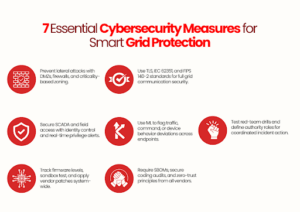
    Smart grid cybersecurity is an architecture of policy, protocols, and technology layers across the entire system. The following are the most important actions utilities and municipal planners must take into account when upgrading grid infrastructure:

    1. Network Segmentation

    IT (corporate) and OT (operational) systems must be fully segregated. If one segment gets hacked, others remain functional.

    • Control centers must not have open network paths in common with smart meters or field sensors.
    • Implement DMZs (Demilitarized Zones) and internal firewalls to block lateral movement.
    • Zone according to system criticality, not ease of access.

    2. Encryption Protocols

    Grid data needs encryption both in transit and at rest.

    • For legacy protocols (like Modbus/DNP3), wrap them with TLS tunnels or replace them with secure variants (e.g., IEC 62351).
    • Secure all remote telemetry, command, and firmware update channels.
    • Apply FIPS 140-2 validated algorithms for compliance and reliability.

    3. Multi-Factor Authentication & Identity Control

    Weak or default credentials are still a leading breach point.

    • Apply role-based access control (RBAC) for all users.
    • Enforce MFA for operators, field technicians, and vendors accessing SCADA or substation devices.
    • Monitor for unauthorized privilege escalations in real time.

    This is especially vital when remote maintenance or diagnostics is allowed through public networks.

    4. AI-Based Intrusion Detection

    Static rule-based firewalls are no longer enough.

    Deploy machine learning models trained to detect anomalies in:

    • Grid traffic patterns
    • Operator command sequences
    • Device behavior baselines

    AI can identify subtle irregularities that humans and static logs may miss, especially across distributed networks with thousands of endpoints.

    5. Regular Patching and Firmware Updates

    Firmware without patches in smart meters, routers, or remote terminal units (RTUs) can become silent attack points.

    Continue patching on a strict timeline:

    • Take inventory of all field and control equipment, including firmware levels.
    • Test patches in sandboxed testing before grid-wide deployment.
    • Establish automated patch policies where feasible, particularly for third-party IoT subcomponents.

    6. Third-Party Risk Management

    Your network is only as strong as its weakest vendor.

    • Audit the secure coding and code-signing practices of supplier development.
    • Enforce SBOMs (Software Bills of Materials) to monitor embedded dependencies.
    • Confirm vendors implement zero-trust principles into device and firmware design.

    7. Incident Response Planning

    Detection alone won’t protect you without a tested response plan.

    At a minimum:

    • Define escalation protocols for cyber events that affect load, control, or customer systems.
    • Run red-team or tabletop exercises quarterly.
    • Appoint a cross-functional team (cybersecurity, ops, legal, comms) with clear authority to act during live incidents.

    These measures only work when applied consistently across hardware, software, and people. For cities and utilities moving toward digitalized infrastructure, building security in from the beginning is no longer a choice; it’s a requirement.

    What Urban Energy Planners Should Consider Before Grid Digitization

    Smart grid digitization is a strategic transformation that alters the way energy is provided, monitored, and protected. Urban planners, utility boards, and policymakers need to think beyond infrastructure and pose this question: Is the system prepared to mitigate new digital threats from day one?

    This is what needs to be on the table prior to mass rollout:

    • Risk Assessment First: Perform a complete inventory of current OT and IT systems. Determine what legacy components are unable to support contemporary encryption, remote access control, or patch automation.
    • Vendor Accountability: Make each vendor or integrator involved in grid modernization possess demonstrated security protocols, patch policies, and zero-trust infrastructure by design.
    • Interoperability Standards: Don’t digitize in isolation. Make sure new digital components (like smart meters or grid-edge devices) can securely communicate with central SCADA systems using standardized protocols.
    • Legal and Regulatory Alignment: Local, state, or national compliance frameworks (like NCIIPC, CERT-In, or IEC 62443) must be factored into system design from day one.

    Conclusion

    Cyberattacks on smart grids are already testing vulnerabilities in aging infrastructure in cities. And protecting these grids isn’t a matter of plugging things in. It takes highly integrated systems and custom cybersecurity solutions that can grow with the threat environment. That’s where SCS Tech comes in. We assist energy vendors, system integrators, and city tech groups with AI-infused development services tailored to critical infrastructure. If you’re building the next phase of digital grid operations, start with security.

    That’s where SCS Tech comes in.

    We assist energy vendors, system integrators, and city tech groups with AI-infused development services tailored to critical infrastructure.

    If you’re building the next phase of digital grid operations, start with security.

    FAQs 

    1. How do I assess if my current grid infrastructure is ready for smart cybersecurity upgrades?

    Begin with a gap analysis through your OT (Operational Technology) and IT layers. See what legacy elements are missing encryption, patching, and segmentation. From there, walk through your third-party dependencies and access points; those tend to be the weakest links.

    2. We already have firewalls and VPNs. Why isn’t that enough for securing a smart grid?

    Firewalls and VPNs are fundamental perimeter protections. Smart grids require stronger controls, such as segmentation in real time, anomaly detection, authentication at the device level, secure firmware pipelines that are secure, and so on. Most grid attacks originate within the network or from trusted vendors.

    3. How can we test if our grid’s cybersecurity plan will actually work during an attack?

    Conduct red-team or tabletop training simulations with technical and non-technical teams participating. These simulations reveal escalation, detection, or decision-making breakdowns far better found in practice runs than in actual incidents.

  • Choosing Between MDR vs. EDR: What Fits Your Security Maturity Level?

    Choosing Between MDR vs. EDR: What Fits Your Security Maturity Level?

    If you’re weighing MDR versus EDR, you probably know what each provides, but deciding between the two isn’t always easy. The actual challenge is determining which one suits your security maturity, internal capabilities, and response readiness. 

    Some organizations already have analysts, 24×7 coverage, and SIEM tools, so EDR could play well there. Others are spread thin, suffering from alert fatigue or gaps in threat response; that’s where MDR is more appropriate.

    This guide takes you through that decision step by step, so you can match the correct solution with how your team actually functions today.

    Core Differences Between MDR and EDR

    Both MDR and EDR enhance your cybersecurity stance, but they address different requirements based on the maturity and resources of your organization. They represent two levels of cybersecurity services, offering either internal control or outsourced expertise, depending on your organization’s readiness.

    EDR offers endpoints for continuous monitoring, alerting on suspicious behavior. It gives your team access to rich forensic data, but your security staff must triage alerts and take action.

    MDR includes all EDR functions and adds a managed service layer. A dedicated security team handles alert monitoring, threat hunting, and incident response around the clock.

    Here’s a clear comparison:

    Feature  EDR  MDR 
    Core Offering Endpoint monitoring & telemetry EDR platform + SOC-led threat detection & response
    Internal Skill Needed High analysts, triage, and response Low–Moderate oversight, not 24×7 operational burden
    Coverage Endpoint devices Endpoints and often network/cloud visibility
    Alert Handling Internal triage and escalation Provider triages and escalates confirmed threats
    Response Execution Manual or semi-automated Guided or remote hands-on response by experts
    Cost Approach Licensing + staffing Subscription service with bundled expertise


    Security Maturity and Internal Capabilities

    Before choosing EDR or MDR, assess your organization’s security maturity, your team’s resources, expertise, and operational readiness.

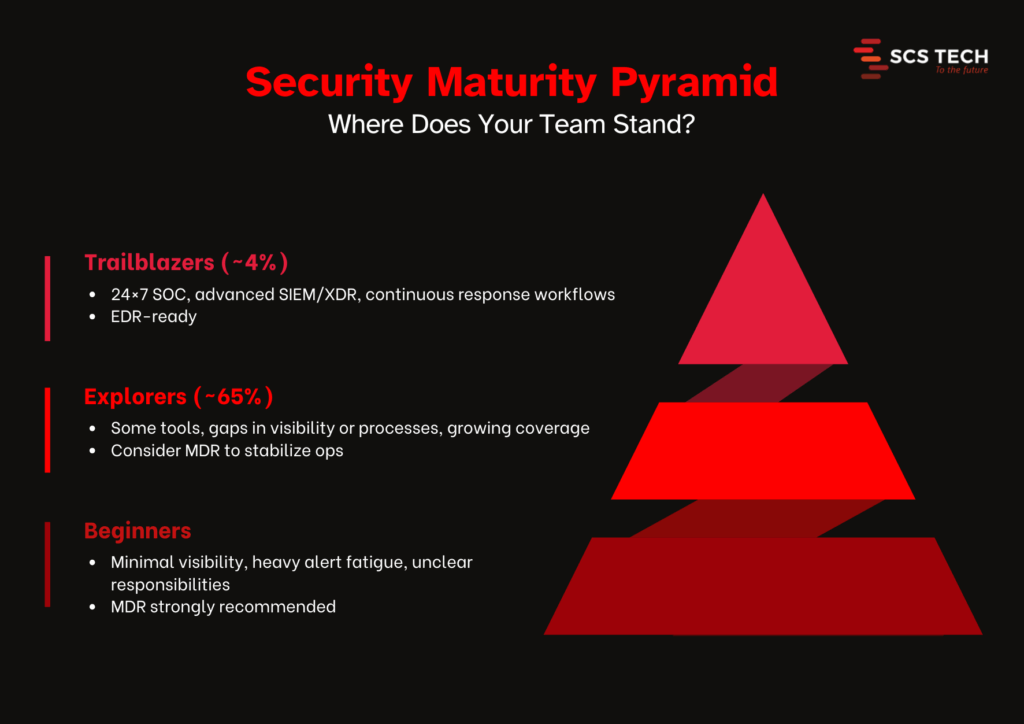
    Security Maturity Pyramid

    How Mature Is Your Security Program?

    A recent Kroll study reveals that 91% of companies overestimate their detection-and-response maturity, but only 4% are genuinely “Trailblazers” in capability. Most fall into the “Explorer” category, awareness exists, but full implementation lags behind.  

    That’s where cybersecurity consulting adds value, bridging the gap between awareness and execution through tailored assessments and roadmaps.

    Organizations with high maturity (“Trailblazers”) experience 30% fewer major security incidents, compared to lower-tier peers, highlighting the pay-off of well-executed cyber defenses

    When EDR Is a Better Fit

    EDR suits organizations that already have a capable internal security team and tools and can manage alerts and responses themselves:

    According to Trellix, 84% of critical infrastructure organizations have adopted EDR or XDR, but only 35% have fully deployed capabilities, leaving room for internal teams to enhance operations

    EDR is appropriate when you have a scalable IT security service in place that supports endpoint monitoring and incident resolution internally. 

    • 24×7 analyst coverage or strong on-call SOC support
    • SIEM/XDR systems and internal threat handling processes
    • The capacity to investigate and respond to alerts continuously

    An experienced SOC analyst put it this way:

    “It kills me when… low‑risk computers don’t have EDR … those blindspots let ransomware spread.”

    EDR delivers strong endpoint visibility, but its value depends on skilled staff to translate alerts into action.

    When MDR Is a Better Fit

    MDR is recommended when internal security capabilities are limited or stretched:

    • Integrity360 reports a global cybersecurity skills shortage of 3.1 million, with 60% of organizations struggling to hire or retain talent.
    • A WatchGuard survey found that only 27% of organizations have the resources, processes, and technology to handle 24×7 security operations on their own.
    • MDR adoption is rising fast: Gartner forecasts that 50% of enterprises will be using MDR by 2025.

    As demand for managed cybersecurity services increases, MDR is becoming essential for teams looking to scale quickly without increasing internal overhead.

    MDR makes sense if:

    • You lack overnight coverage or experienced analysts
    • You face frequent alert fatigue or overwhelming logs
    • You want SOC-grade threat hunting and guided incident response
    • You need expert support to accelerate maturity

    Choose EDR if you have capable in-house staff, SIEM/XDR tools, and the ability to manage alerts end-to-end. Choose MDR if your internal team lacks 24×7 support and specialist skills, or if you want expert-driven threat handling to boost maturity.

    MDR vs. EDR by Organization Type

    Not every business faces the same security challenges or has the same capacity to deal with them. What works for a fast-growing startup may not suit a regulated financial firm. That’s why choosing between EDR and MDR isn’t just about product features; it depends on your size, structure, and the way you run security today.

    Here’s how different types of organizations typically align with these two approaches.

    1. Small Businesses & Startups

    • EDR fit? Often challenging. Many small teams lack 24×7 security staff and deep threat analysis capabilities. Managing alerts can overwhelm internal resources.
    • MDR fit? Far better match. According to Integrity360, 60% of organizations struggle to retain cybersecurity talent, something small businesses feel intensely. MDR offers affordable access to SOC-grade expertise without overwhelming internal teams.

    2. Mid-Sized Organizations

    • EDR fit? Viable for those with a small IT/Security team (1–3 analysts). Many mid-size firms use SIEM and EDR to build internal detection capabilities. More maturity here means lower reliance on external services.
    • MDR fit? Still valuable. Gartner projects that 50% of enterprises will use MDR by 2025, indicating that even mature mid-size companies rely on it to strengthen SOC coverage and reduce alert fatigue.

    Many also use cybersecurity consulting services during transition phases to audit gaps before fully investing in internal tools or MDR contracts.

    3. Large Enterprises & Regulated Industries

    • EDR fit? Solid choice. Enterprises with in-house SOC, SIEM, and XDR solutions benefit from direct control over endpoints. They can respond to threats internally and integrate EDR into broader defense strategies.
    • MDR fit? Often used as a complementary service. External threat hunting and 24×7 monitoring help bridge coverage gaps without replacing internal teams.

    4. High-Risk Sectors (Healthcare, Finance, Manufacturing)

    • EDR fit? Offered compliance and detection coverage, but institutions report resource and skill constraints, and 84% of critical infrastructure organizations report partial or incomplete adoption.
    • MDR fit? Ideal for the following reasons:
      • Compliance: MDR providers usually provide support for standards such as HIPAA, PCI-DSS, and SOX.
      • Threat intelligence: Service providers consolidate knowledge from various sectors.
      • 24×7 coverage: Constant monitoring is very important for industries with high-value or sensitive information.

    In these sectors, having a layered IT security service becomes non-negotiable to meet compliance, visibility, and response needs effectively.

    Final Take: MDR vs. EDR

    Choosing between EDR and MDR should be made based on how ready your organization is to detect and respond to threats using internal resources.

    • EDR works if you have an expert security team that can address alerts and investigations in-house.
    • MDR is more appropriate if your team requires assistance with monitoring, analysis, and response to incidents.

    SCS Tech provides both advanced IT security service offerings and strategic guidance to align your cybersecurity technology with real-time operational capability. If you have the skills and coverage within your team, we offer sophisticated EDR technology that can be integrated into your current processes. If you require extra assistance, our MDR solution unites software and managed response to minimize risk without creating operational overhead.

    Whether your team needs endpoint tools or full-service cybersecurity services, the decision should align with your real-time capabilities, not assumptions. If you’re not sure where to go, SCS Tech is there to evaluate your existing configuration and suggest a solution suitable for your security maturity and resource levels. 

  • How Custom Cybersecurity Prevents HIPAA Penalties and Patient Data Leaks?

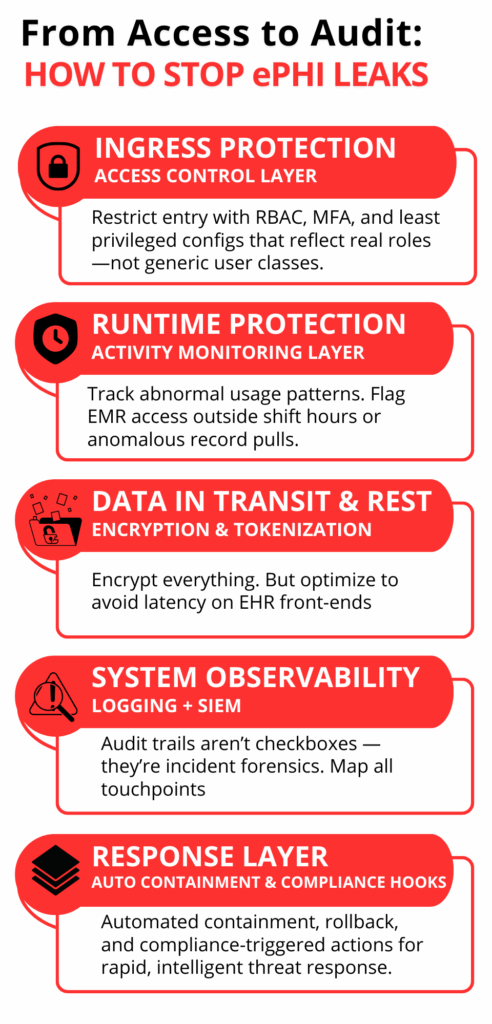
    How Custom Cybersecurity Prevents HIPAA Penalties and Patient Data Leaks?

    Every healthcare provider today relies on digital systems. 

    But too often, those systems don’t talk to each other in a way that keeps patient data safe. This isn’t just a technical oversight; it’s a risk that shows up in compliance audits, government penalties, and public breaches. In fact, most HIPAA violations aren’t caused by hackers, they stem from poor system integration, generic cybersecurity tools, or overlooked access logs.

    And when those systems fail to catch a misstep, the aftercoming cost can be severe: it will be more than six-figure fines, federal audits, and long-term reputational damage.

    That’s where custom cybersecurity solutions adds more tools to align security with the way your healthcare operations actually run. When security is designed around your clinical workflows, your APIs, and your data-sharing practices, it doesn’t just protect — it prevents.

    In this article, we’ll unpack how integrated, custom-built cybersecurity helps healthcare organizations stay compliant, avoid HIPAA penalties, and defend what matters most: patient trust.

    Understanding HIPAA Compliance and Its Real-World Challenges

    HIPAA isn’t just a legal framework, it’s a daily operational burden for any healthcare provider managing electronic Protected Health Information (ePHI). While the regulation is clear about what must be protected, it’s far less clear about how to do it, especially in systems that weren’t built with healthcare in mind.

    Here’s what makes HIPAA compliance difficult in practice:

    • Ambiguity in Implementation: The security rule requires “reasonable and appropriate safeguards,” but doesn’t define a universal standard. That leaves providers guessing whether their security setup actually meets expectations.
    • Fragmented IT Systems: Most healthcare environments run on a mix of EHR platforms, custom apps, third-party billing systems, and legacy hardware. Stitching all of this together while maintaining consistent data protection is a constant challenge.
    • Hidden Access Points: APIs, internal dashboards, and remote access tools often go unsecured or unaudited. These backdoors are commonly exploited during breaches, not because they’re poorly built, but because they’re not properly configured or monitored.
    • Audit Trail Blind Spots: HIPAA requires full auditability of ePHI, but without custom configurations, many logging systems fail to track who accessed what, when, and why.

    Even good IT teams struggle here, not because they’re negligent, but because most off-the-shelf cybersecurity solutions aren’t designed to speak HIPAA natively. That’s what puts your organization at risk: doing what seems secure, but still falling short of what’s required.

    That’s where custom cybersecurity solutions fill the gap, not by adding complexity, but by aligning every protection with real HIPAA demands.

    How Custom Cybersecurity Adapts to the Realities of Healthcare Environments

    Custom Cybersecurity

    Custom cybersecurity tailors every layer of your digital defense to match your exact workflows, compliance requirements, and system vulnerabilities.

    Here’s how that plays out in real healthcare environments:

    1. Role-Based Access, Not Just Passwords

    In many healthcare systems, user access is still shockingly broad — a receptionist might see billing details, a technician could open clinical histories. Not out of malice, just because default systems weren’t built with healthcare’s sensitivity in mind.

    That’s where custom role-based access control (RBAC) becomes essential. It doesn’t just manage who logs in — it enforces what they see, tied directly to their role, task, and compliance scope.

    For instance, under HIPAA’s “minimum necessary” rule, a front desk employee should only view appointment logs — not lab reports. A pharmacist needs medication orders, not patient billing history.

    And this isn’t just good practice — it’s damage control.

    According to Verizon’s Data Breach Investigations Report, over 29% of breaches stem from internal actors, often unintentionally. Custom RBAC shrinks that risk by removing exposure at the root: too much access, too easily given.

    Even better? It simplifies audits. When regulators ask, “Who accessed what, and why?” — your access map answers for you.

    1. Custom Alert Triggers for Suspicious Activity

    Most off-the-shelf cybersecurity tools flood your system with alerts — dozens or even hundreds a day. But here’s the catch: when everything is an emergency, nothing gets attention. And that’s exactly how threats slip through.

    Custom alert systems work differently. They’re not based on generic templates — they’re trained to recognize how your actual environment behaves.

    Say an EMR account is accessed from an unrecognized device at 3:12 a.m. — that’s flagged. A nurse’s login is used to export 40 patient records in under 30 seconds? That’s blocked. The system isn’t guessing — it’s calibrated to your policies, your team, and your workflow rhythm.

    1. Encryption That Works with Your Workflow

    HIPAA requires encryption, but many providers skip it because it slows down their tools. A custom setup integrates end-to-end encryption that doesn’t disrupt EHR speed or file transfer performance. That means patient files stay secure, without disrupting the care timeline.

    1. Logging That Doesn’t Leave Gaps

    Security failures often escalate due to one simple issue: the absence of complete, actionable logging. When logs are incomplete, fragmented, or siloed across systems, identifying the source of a breach becomes nearly impossible. Incident response slows down. Compliance reporting fails. Liability increases.

    A custom logging framework eliminates this risk. It captures and correlates activity across all touchpoints — not just within core systems, but also legacy infrastructure and third-party integrations. This includes:

    • Access attempts (both successful and failed)
    • File movements and transfers
    • Configuration changes across privileged accounts
    • Vendor interactions that occur outside standard EHR pathways

    The HIMSS survey underscores that inadequate monitoring poses significant risks, including data breaches, highlighting the necessity for robust monitoring strategies.

    Custom logging is designed to meet the audit demands of regulatory agencies while strengthening internal risk postures. It ensures that no security event goes undocumented, and no question goes unanswered during post-incident reviews.

    The Real Cost of HIPAA Violations — and How Custom Security Avoids Them

    HIPAA violations don’t just mean a slap on the wrist. They come with steep financial penalties, brand damage, and in some cases, criminal liability. And most of them? They’re preventable with better-fit security.

    Breakdown of Penalties:

    • Tier 1 (Unaware, could not have avoided): up to $50,000 per violation
    • Tier 4 (Willful neglect, not corrected): up to $1.9 million annually
    • Fines are per violation — not per incident. One breach can trigger dozens or hundreds of violations.

    But penalties are just the surface:

    • Investigation costs: Security audits, data recovery, legal reviews
    • Downtime: Systems may be partially or fully offline during containment
    • Reputation loss: Patients lose trust. Referrals drop. Insurance partners get hesitant.
    • Long-term compliance monitoring: Some organizations are placed under corrective action plans for years

    Where Custom Security Makes the Difference:

    Most breaches stem from misconfigured tools, over-permissive access, or lack of monitoring, all of which can be solved with custom security. Here’s how:

    • Precision-built access control prevents unnecessary exposure, no one gets access they don’t need.
    • Real-time monitoring systems catch and block suspicious behavior before it turns into an incident.
    • Automated compliance logging makes audits faster and proves you took the right steps.

    In short: custom security shifts you from reactive to proactive, and that makes HIPAA penalties exponentially less likely.

    What Healthcare Providers Should Look for in a Custom Cybersecurity Partner

    Off-the-shelf security tools often come with generic settings and limited healthcare expertise. That’s not enough when patient data is on the line, or when HIPAA enforcement is involved. Choosing the right partner for custom cybersecurity solution isn’t just a technical decision; it’s a business-critical one.

    What to prioritize:

    • Healthcare domain knowledge: Vendors should understand not just firewalls and encryption, but how healthcare workflows function, where PHI flows, and what technical blind spots tend to go unnoticed.
    • Experience with HIPAA audits: Look for providers who’ve helped other clients pass audits or recover from investigations — not just talk compliance, but prove it.
    • Custom architecture, not pre-built packages: Your EHR systems, patient portals, and internal communication tools are unique. Your security setup should mirror your actual tech environment, not force it into generic molds.
    • Threat response and simulation capabilities: Good partners don’t just build protections — they help you test, refine, and drill your incident response plan. Because theory isn’t enough when systems are under attack.
    • Built-in scalability: As your organization grows — new clinics, more providers, expanded services — your security architecture should scale with you, not become a roadblock.

    Final Note

    Cybersecurity in healthcare isn’t just about stopping threats, it’s about protecting compliance, patient trust, and uninterrupted care delivery. When HIPAA penalties can hit millions and breaches erode years of reputation, off-the-shelf solutions aren’t enough. Custom cybersecurity solutions allow your organization to build defense systems that align with how you actually operate, not a one-size-fits-all mold.

    At SCS Tech, we specialize in custom security frameworks tailored to the unique workflows of healthcare providers. From HIPAA-focused assessments to system-hardening and real-time monitoring, we help you build a safer, more compliant digital environment.

    FAQs

    1. Isn’t standard HIPAA compliance software enough to prevent penalties?

    Standard tools may cover the basics, but they often miss context-specific risks tied to your unique workflows. Custom cybersecurity maps directly to how your organization handles data, closing gaps generic tools overlook.

    2. What’s the difference between generic and custom cybersecurity for HIPAA?

    Generic solutions are broad and reactive. Custom cybersecurity is tailored, proactive, and built around your specific infrastructure, user behavior, and risk landscape — giving you tighter control over compliance and threat response.

    3. How does custom security help with HIPAA audits?

    It allows you to demonstrate not just compliance, but due diligence. Custom controls create detailed logs, clear risk management protocols, and faster access to proof of safeguards during an audit.


  • Why Custom Cybersecurity Solutions and Zero Trust Architecture Are the Best Defense Against Ransomware?

    Why Custom Cybersecurity Solutions and Zero Trust Architecture Are the Best Defense Against Ransomware?

    Are you aware that ransomware attacks worldwide increased by 87% in February 2025? The sharp peak highlights the need for organizations to review their cybersecurity strategies. Standard solutions, as often one-size-fits-all, cannot specifically address the vulnerabilities of individual organizations and cannot match evolving cybercriminal methods.

    In contrast, custom cybersecurity solutions are designed to address an organization’s requirements, yielding flexible defences bespoke to its infrastructure. When integrated with Zero Trust Architecture—built around ongoing verification and strict access control—such solutions create a comprehensive defence against increasingly advanced ransomware attacks.

    This blog will examine how custom cybersecurity solutions and Zero Trust Architecture come together to create a strong, dynamic defence against the increasing ransomware threat.

    Custom Cybersecurity Solutions – Targeted Defense Against Ransomware

    Unlike one-size-fits-all generic security tools, customized solutions target unique vulnerabilities and provide adaptive defences suited to the organization’s threat environment. This particularity is crucial in ransomware combat since ransomware frequently attacks specific system weaknesses.

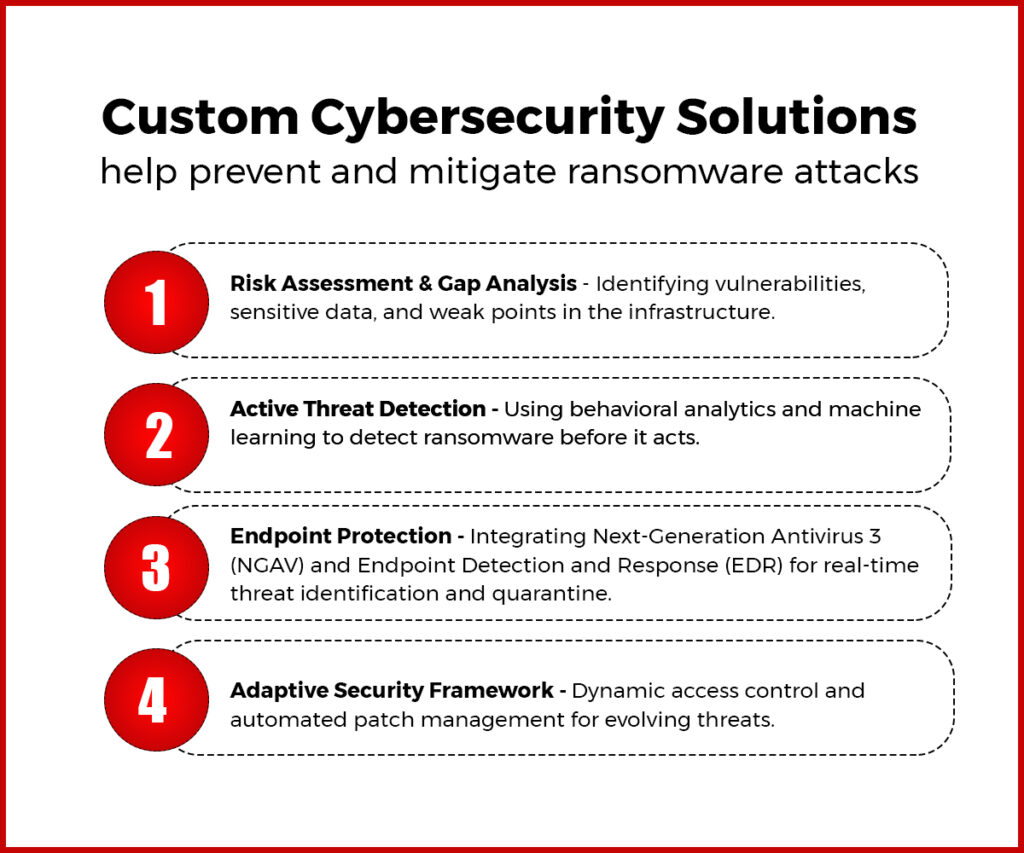
     how custom cybersecurity solutions help prevent and mitigate ransomware attacks?

    Key Features of Custom Cybersecurity Solutions That Fight Ransomware

    1. Risk Assessment and Gap Analysis

    Custom cybersecurity solutions start with thoroughly analysing an organization’s security position. This entails:

    • Asset Identification: Organizations must identify key data and systems that need increased security. These are sensitive customer data, intellectual property, and business data that, if breached, would have devastating effects.
    • Vulnerability Analysis: By doing this analysis, organizations determine vulnerabilities like old software, misconfiguration, or exposed endpoints that ransomware can target. This ensures that security solutions are designed to counter specific risks instead of general protection.

    The result of such intensive evaluation guides the creation of focused security measures that are more efficacious for countering ransomware attacks.

    2. Active Threat Detection

    Custom-made security solutions incorporate the best detection features designed to detect ransomware behaviour before its ability to act. The integral parts are:

    • Behavioral Analytics: These platforms track user and system activity for signs of anomalies suggesting ransomware attempts. For instance, unexpected peaks in file encryption activity or unusual access patterns may indicate a threat.
    • Machine Learning Models: Using machine learning algorithms, organizations can forecast patterns of attacks using historical data and developing trends. These models learn continuously from fresh data, and their capacity to identify threats improves with time.

    This proactive strategy allows organizations to recognize and break up ransomware attacks at the initial phases of the attack cycle, significantly reducing the likelihood of data loss or business disruption.

    3. Endpoint Protection

    Endpoints—laptops, desktops, and servers—are common entry points for ransomware attacks. Customized solutions utilize aggressive endpoint protection that involves:

    • Next-Generation Antivirus (NGAV): Compared to traditional signature-based detection-based antivirus solutions, NGAV applies behaviour-based detection mechanisms for identifying known and unknown threats. This is necessary to identify new ransomware strains that have not received signatures.
    • Endpoint Detection and Response (EDR): EDR solutions scan endpoints in real-time for any suspicious activity and can quarantine a compromised endpoint automatically from the network. Containing this way prevents ransomware from spreading throughout the networks of an organization.

    By putting endpoint security first, bespoke cybersecurity solutions protect against ransomware attacks by making possible entry points secure.

    4. Adaptive Security Framework

    Custom solutions are created to adapt to developing threats to maintain ongoing protection through:

    • Dynamic Access Controls: These controls modify users’ permissions according to up-to-the-minute risk evaluations. For instance, if a user is exhibiting unusual behaviour—such as looking at sensitive files outside regular working hours—the system can restrict their access temporarily until further verification is done.
    • Automated Patch Management: One must stay current with updates to address vulnerabilities that ransomware can exploit. Automated patch management maintains all systems up to the latest security patches without manual intervention.

    This dynamic system enables companies to defend themselves against changing ransomware strategies.

    Zero Trust Architecture (ZTA) – A Key Strategy Against Ransomware

    The Zero Trust Architecture cybersecurity functions on the “never trust, always verify” paradigm. It removes implicit network trust by insisting on ongoing authentication and rigorous access controls on all users, devices, and applications. This makes it highly effective against ransomware because of its focus on reducing trust and verifying all requests to access.

    Key Features of ZTA That Counteract Ransomware

    1. Least Privilege Access

    Ransomware usually takes advantage of over permissions to propagate within networks. ZTA implements least privilege policies through:

    • Limiting User Access: Users are given access only to resources required for their functions. This reduces the impact if an account is compromised.
    • Dynamic Permission Adjustments: Permissions are adjustable by contextual properties like location or device health. For instance, if a user is trying to view sensitive information from an unknown device or location, their access can be denied until additional verification is done.

    This tenet significantly lessens the chances of ransomware spreading within networks.

    2. Micro-Segmentation

    ZTA segments networks into smaller zones or segments; each segment must be authenticated separately. Micro-segmentation restricts the spread of ransomware attacks by:

    • Isolating Infected Systems: When a system is infected with ransomware, micro-segmentation isolates the system from other areas of the network, eliminating lateral movement and further infection.
    • Controlled Segmentation Between Segments: Each segment may have its access controls and monitoring mechanisms installed, enabling more detailed security controls specific to types of data or operations.

    By using micro-segmentation, organizations can considerably lower the risk of ransomware attacks.

    3. Continuous Verification

    In contrast to legacy models that authenticate users one time upon login, ZTA demands continuous verification throughout a session.

    • Real-Time Authentication Verifications: Ongoing checks ensure that stolen credentials cannot be utilized in the long term. If suspicious activity is noted within a user session—e.g., access to unexpected resources—the system may request re-authentication or even deny access.
    • Immediate Access Denial: If a device or user acts suspiciously with signs of a possible ransomware attack (e.g., unexpected file changes), ZTA policies can deny real-time access to stop the damage.

    This ongoing validation process strengthens security by ensuring only valid users retain access during their interactions with the network.

    4. Granular Visibility

    ZTA delivers fine-grained visibility into network activity via ongoing monitoring:

    • Early Ransomware Attack Detection: Through monitoring for off-the-book data transfers or unusual file access behaviour, organizations can recognize early indications of ransomware attacks before they become full-fledged incidents.
    • Real-Time Alerts: The design sends real-time alerts for anomalous activity so that security teams can react promptly to suspected threats and contain threats before they cause critical harm.

    This level of visibility is essential to ensuring an effective defence against advanced ransomware techniques.

    Why Custom Cybersecurity Solutions and Zero Trust Architecture Are Best Against Ransomware?

    1. Holistic Security Coverage

    Custom cybersecurity solutions target organization-specific threats by applying defences to individual vulnerabilities. Zero Trust Architecture delivers generic security guidelines for all users, devices, and applications. They offer complete protection against targeted attacks and more general ransomware campaigns.

    2. Proactive Threat Mitigation

    Custom solutions identify threats early via sophisticated analytics and machine learning algorithms. ZTA blocks unauthorized access completely via least privilege policies and ongoing verification. This two-layered method reduces opportunities for ransomware to enter networks or run successfully.

    3. Minimized Attack Surface

    Micro-segmentation in ZTA eliminates lateral movement opportunities across networks, and endpoint protection in bespoke solutions secures shared entry points against exploitation. Together, they cut the general attack surface for ransomware perpetrators drastically.

    4. Scalability and Flexibility

    Both models fit in perfectly with organizational expansion and evolving threat horizons:

    • Bespoke solutions change through dynamic security controls such as adaptive access controls.
    • ZTA scales comfortably across new users/devices while it enforces rigid verification processes.

    In tandem, they deliver strong defences regardless of organizational size or sophistication.

    Conclusion

    Ransomware threats are a serious concern as they target weaknesses in security systems to demand ransom for data recovery. To defend against these threats, organizations need a strategy that combines specific protection with overall security measures. Custom cybersecurity solutions from SCS Tech provide customised defenses that address these unique risks, using proactive detection and flexible security structures.

    At the same time, zero trust architecture improves security by requiring strict verification at every step. This reduces trust within the network and limits the areas that can be attacked through micro-segmentation and continuous authentication. When used together, these strategies offer a powerful defense against ransomware, helping protect organizations from threats and unauthorized access.

  • How AI/ML Services and AIOps Are Making IT Operations Smarter and Faster?

    How AI/ML Services and AIOps Are Making IT Operations Smarter and Faster?

    Are you seeking to speed up and make IT operations smarter? With infrastructure becoming increasingly complex and workloads dynamic, traditional approaches are insufficient. IT operations are vital to business continuity, and to address today’s requirements, organizations are adopting AI/ML services and AIOps (Artificial Intelligence for IT Operations).

    These technologies make work autonomous and efficient, changing how systems are monitored and controlled. Gartner says 20% of companies will leverage AI to automate operations—removing more than half of middle management positions by 2026.

    In this blog, let’s see how AI/ML services and AIOps are making organizations really work smarter, faster, and proactively.

    How Are AI/ML Services and AIOps Making IT Operations Faster?

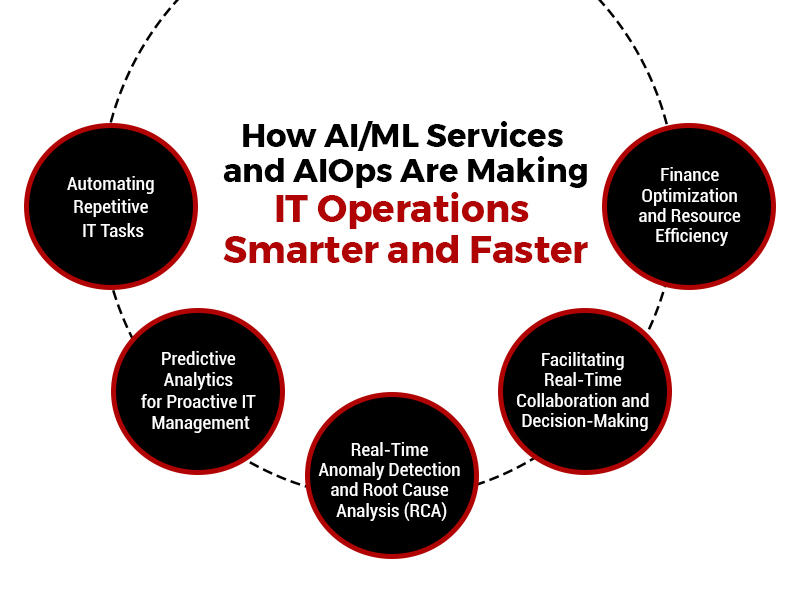
    1. Automating Repetitive IT Tasks

    AI/ML services apply models to transform operations into intelligent and quicker ones by identifying patterns and taking actions automatically—without human intervention. This eliminates IT teams’ need to manually read logs, answer alerts, or perform repetitive diagnostics.

    Through this, log parsing, alert verification, and restart of services that previously used hours can be achieved in an instant using AIOps platforms, vastly enhancing response time and efficiency. The key areas of automation include the following:

    A. Log Analysis

    Each layer of IT infrastructure, from hardware to applications, generates high-volume, high-velocity log data with performance metrics, error messages, system events, and usage trends.

    AI-driven log analysis engines use machine learning algorithms to consume this real-time data stream and analyze it against pre-trained models. These models can detect known patterns and abnormalities, do semantic clustering, and correlate behaviour deviations with historical baselines. The platform then exposes operational insights or passes incidents when deviations hit risk thresholds. This eliminates the need for human-driven parsing and cuts the diagnostic cycle time to a great extent.

    B. Alert Correlation

    Distributed environments have multiple systems that generate isolated alerts based on local thresholds or fault detection mechanisms. Without correlation, these alerts look unrelated and cannot be understood in their overall impact.

    AIOps solutions apply unsupervised learning methods and time-series correlation algorithms to group these alerts into coherent incident chains. The platform links lower-level events to high-level failures through temporal alignment, causal relationships, and dependency models, achieving an aggregated view of the incident. This makes the alerts much more relevant and speeds up incident triage.

    C. Self-Healing Capabilities

    After anomalies are identified or correlations are made, AIOps platforms can initiate pre-defined remediation workflows through orchestration engines. These self-healing processes are set up to run based on conditional logic and impact assessment.

    The system initially confirms whether the problem satisfies resolution conditions (e.g., severity level, impacted nodes, length) and subsequently engages in recovery procedures like service restarting, resource redimensioning, cache clearing, or reverting to baseline configuration. Everything gets logged, audited, and reported, so automated flows are being tweaked.

    2. Predictive Analytics for Proactive IT Management

    AI/ML services optimize operations to make them faster and smarter by employing historical data to develop predictive models that anticipate problems such as system downtime or resource deficiency well ahead of time. This enables IT teams to act early, minimizing downtime, enhancing uptime SLAs, and preventing delays usually experienced during live troubleshooting. These predictive functionalities include the following:

    A. Early Failure Detection

    Predictive models in AIOps platforms employ supervised learning algorithms trained on past incident history, performance logs, telemetry, and infrastructure behaviour. Predictive models analyze real-time telemetry streams against past trends to identify early-warning signals like performance degradation, unusual resource utilization, or infrastructure stress indicators.

    Critical indicators—like increasing response times, growing CPU/memory consumption, or varying network throughput—are possible leading failure indicators. The system then ranks these threats and can suggest interventions or schedule automatic preventive maintenance.

    B. Capacity Forecasting

    AI/ML services examine long-term usage trends, load variations, and business seasonality to create predictive models for infrastructure demand. With regression analysis and reinforcement learning, AIOps can simulate resource consumption across different situations, such as scheduled deployments, business incidents, or external dependencies.

    This enables the system to predict when compute, storage, or bandwidth demands exceed capacity. Such predictions feed into automated scaling policies, procurement planning, and workload balancing strategies to ensure infrastructure is cost-effective and performance-ready.

    3. Real-Time Anomaly Detection and Root Cause Analysis (RCA)

    AI/ML services render operations more intelligent by learning to recognize normal system behaviour over time and detect anomalies that could point to problems, even if they do not exceed fixed limits. They also render operations quicker by connecting data from metrics, logs, and traces immediately to identify the root cause of problems, lessening the requirement for time-consuming manual investigations.


     real-time anomaly detection and root cause analysis (RCA) using AI/ML

    The functional layers include the following:

    A. Anomaly Detection

    Machine learning models—particularly those based on unsupervised learning and clustering—are employed to identify deviations from established system baselines. These baselines are dynamic, continuously updated by the AI engine, and account for time-of-day behaviour, seasonal usage, workload patterns, and system context.

    The detection mechanism isolates anomalies based on deviation scores and statistical significance instead of fixed rule sets. This allows the system to detect insidious, non-apparent anomalies that can go unnoticed under threshold-based monitoring systems. The platform also prioritizes anomalies regarding severity, system impact, and relevance to historical incidents.

    B. Root Cause Analysis (RCA)

    RCA engines in AIOps platforms integrate logs, system traces, configuration states, and real-time metrics into a single data model. With the help of dependency graphs and causal inference algorithms, the platform determines the propagation path of the problem, tracing upstream and downstream effects across system components.

    Temporal analysis methods follow the incident back to its initial cause point. The system delivers an evidence-based causal chain with confidence levels, allowing IT teams to confirm the root cause with minimal investigation.

    4. Facilitating Real-Time Collaboration and Decision-Making

    AI/ML services and AIOps platforms enhance decision-making by providing a standard view of system data through shared dashboards, with insights specific to each team’s role. This gives every stakeholder timely access to pertinent information, resulting in faster coordination, better communication, and more effective incident resolution. These collaboration frameworks include the following:

    A. Unified Dashboards

    AIOps platforms consolidate IT-domain metrics, alerts, logs, and operation statuses into centralized dashboards. These dashboards are constructed with modular widgets that provide real-time data feeds, historical trend overlays, and visual correlation layers.

    The standard perspective removes data silos, enables quicker situational awareness, and allows for synchronized response by developers, system admins, and business users. Dashboards are interactive and allow deep drill-downs and scenario simulation while managing incidents.

    B. Contextual Role-Based Intelligence

    Role-based views are created by dividing operational data along with teams’ responsibilities. Runtime execution data, code-level exception reporting, and trace spans are provided to developers.

    Infrastructure engineers view real-time system performance statistics, capacity notifications, and network flow information. Business units can receive high-level SLA visibility or service availability statistics. This level of granularity is achieved to allow for quicker decisions by those most capable of taking the necessary action based on the information at hand.

    5. Finance Optimization and Resource Efficiency

    With AI/ML services, they conduct real-time and historical usage analyses of the infrastructure to suggest cost-saving resource deployment methods. With automation, scaling, budgeting, and resource tuning activities are carried out instantly, eliminating manual calculations or pending approvals and achieving smoother and more efficient operations.

    The optimization techniques include the following:

    A. Cloud Cost Governance

    AIOps platforms track usage metrics from cloud providers, comparing real-time and forecasted usage. Such information is cross-mapped to contractual cost models, billing thresholds, and service-level agreements.

    The system uses predictive modeling to decide when to scale up or down according to expected demand and flags underutilized resources for decommissioning. It also supports non-production scheduling and cost anomaly alerts—allowing the finance and DevOps teams to agree on operational budgets and savings goals.

    B. Labor Efficiency Gains

    By automating issue identification, triage, and remediation, AIOps dramatically lessen the number of manual processes that skilled IT professionals would otherwise handle. This speeds up time to resolution and frees up human capital for higher-level projects such as architecture design, performance engineering, or cybersecurity augmentation.

    Conclusion

    Adopting AI/ML services and AIOps is a significant leap toward enhancing IT operations. These technologies enable companies to transition from reactive, manual work to faster, more innovative, and real-time adaptive systems.

    This transition is no longer a choice—it’s required for improved performance and sustainable growth. SCS Tech facilitates this transition by providing custom AI/ML services and AIOps solutions that optimize IT operations to be more efficient, predictable, and anticipatory. Getting the right tools today can equip organizations to be ready, decrease downtime, and operate their systems with increased confidence and mastery.

  • How Custom Cybersecurity Solutions Protect Cloud, Mobile, and On-Site Systems?

    How Custom Cybersecurity Solutions Protect Cloud, Mobile, and On-Site Systems?

    Just 39 seconds—that’s all it takes for a cyberattack to strike, faster than you can reply to your emails.

    This alarming frequency indicates the urgent need for cybersecurity solutions. With every company relying on cloud computing, mobile devices, and on-site infrastructure, the demand for robust protection has never been greater. While each environment has its own unique vulnerabilities, cyber security consulting services help organizations identify and address these gaps effectively. General security measures may cover major threats, but expert consulting ensures even the less obvious vulnerabilities are not overlooked.

    That is where custom cybersecurity solutions come in for each system, which are different, specified according to their needs, and used to counter specific threats.

    Let’s discuss, in detail, each of the challenges presented by cloud, mobile, and on-site systems. Understand how custom cybersecurity solutions overcome those challenges, and improve security in each.

    Security of Cloud Systems: Overcoming Unique Security Challenges

    With the advent of cloud computing, tremendous flexibility and scalability emerged for businesses, but they differ through unique risks. With various users sharing cloud environments and being managed by third parties, they pose unique security issues that vary from traditional systems.

    What Are the Challenges in Cloud Security?

    • Data Breach: When sensitive information is stored in the cloud, it is most vulnerable to unauthorized access, especially if it has weak credentials or is not configured correctly.
    • Account Hijacking: Compromise from phishing leads to allowing attackers access to valuable information.
    • Insecure API: An insecure API control can be equated to an open door for an attacker with services in the cloud.
    • Compliance Complexities: These are the complexities of the compliance cloud configurations that must be put into strict regulatory standards like GDPR or HIPAA. This is challenging to implement effectively.

    How Do Custom Cybersecurity Solutions Enhance Cloud Security?

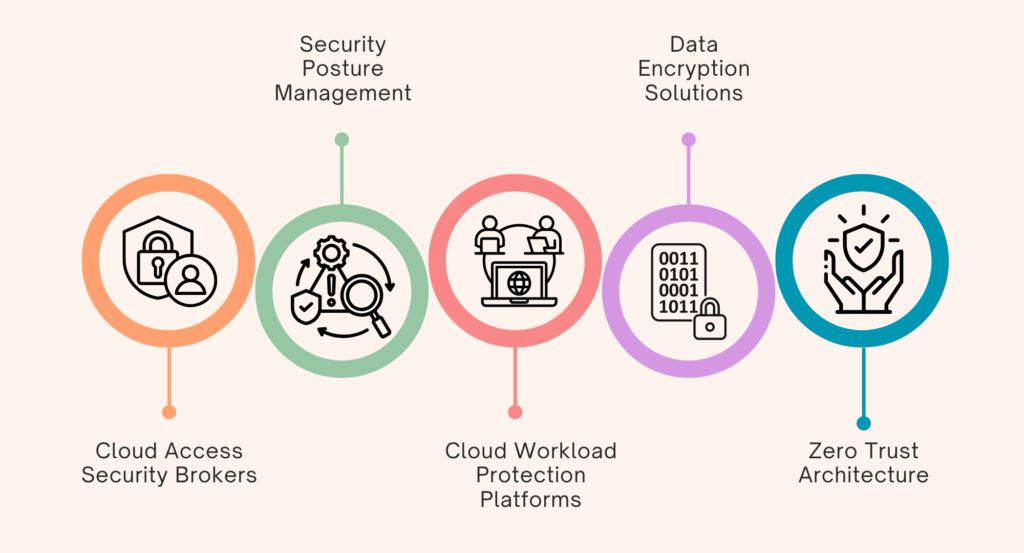
    Discover how custom cybersecurity solutions provide tailored protection for secure cloud environments

    1. Cloud Access Security Brokers (CASBs): CASBs serve as security layers between the cloud provider and the user base. It provides
      1. Data Protection: CASBs enforce data-loss-prevention policies through enforcing DLP policies by monitoring how data is transferred and blocking unauthorized access to sensitive information.
      2. Threat Detection: They use behavioral analytics to detect anomalies in user behavior that might suggest a breach.
      3. Compliance Management: CASBs help keep organizations compliant with all the appropriate industry regulations based on audit trails and reporting.
    2. Security Posture Management (SPM): SPM tools continuously watch for identifying vulnerabilities and misconfigurations in the cloud environments. This is done through:
      1. Vulnerability Scanning: Scanner tools that scan for all misconfigurations and known vulnerabilities in cloud resources.
      2. Compliance Audits: Periodic audits that the configurations adhere to best security practices and the appropriate regulations from the mandate.
    3. Cloud Workload Protection Platforms (CWPP): They protect the applications running in the cloud by analyzing activity in real-time and blocking unauthorized access attempts.
      1. Runtime Protection: The CWPP can detect real-time threats by protecting applications against malicious activity.
      2. Intrusion Prevention: The CWPP prevents any unauthorized access attempt and reduces the attack’s impact on workloads.
    4. Data Encryption Solutions: Encryption at rest, associated with the storage of data, and in motion, associated with the transfer of data utilise strong algorithms such as Advanced Encryption Standard (AES) coupled with Rivest-Shamir-Adleman (RSA) ensuring the integrity of data as it flows through all its stages of the life cycle.
      1. Encryption at Rest: With strong encryption algorithms such as AES-256, data is encrypted to secure those at rest in the cloud.
      2. Encryption in Transit: Encryption protocols, such as TLS/SSL, consist of specific ones that encrypt data between users and cloud services.
    5. Zero Trust Architecture: Zero Trust continuously verifies users and devices, limits network access, and controls lateral movement. This architectural model is designed so that not a single user or device should be trusted by default, regardless of whether they are inside or outside the network perimeter.
      1. Identity Verification: MFA ensures only the proper users can access cloud resources.
      2. Micro-Segmentation: This involves limiting lateral movement as the workload is segmented so multiple attack vectors remain inaccessible to the hackers if one resource is compromised.

    Mobile Systems: Unique Risks and Custom Solutions for Security

    The increasing use of mobile devices in the workplace has become a meaningful way to access company information. Still, they also pose vulnerabilities due to their portability and high connectivity. Among mobile security threats are malware attacks, phishing scams, and accidental data leaks in cases where information is mishandled.

    What Are the Issues in Mobile Security?

    • Threats of Malware: The mobile phone is highly vulnerable to malware that can steal away information or compromise system operations.
    • Phishing Attacks: Mobile phishing attacks target mobile users with fake messages that compel the victims to unveil sensitive information.
    • Leakage of Data: The leakage of data is facilitated by mishandling and storing some applications without appropriate security, thereby making them vulnerable.

    How Do Custom Cybersecurity Solutions Improve Mobile Security?

    How to Improve Mobile Security with Custom Cybersecurity Solutions

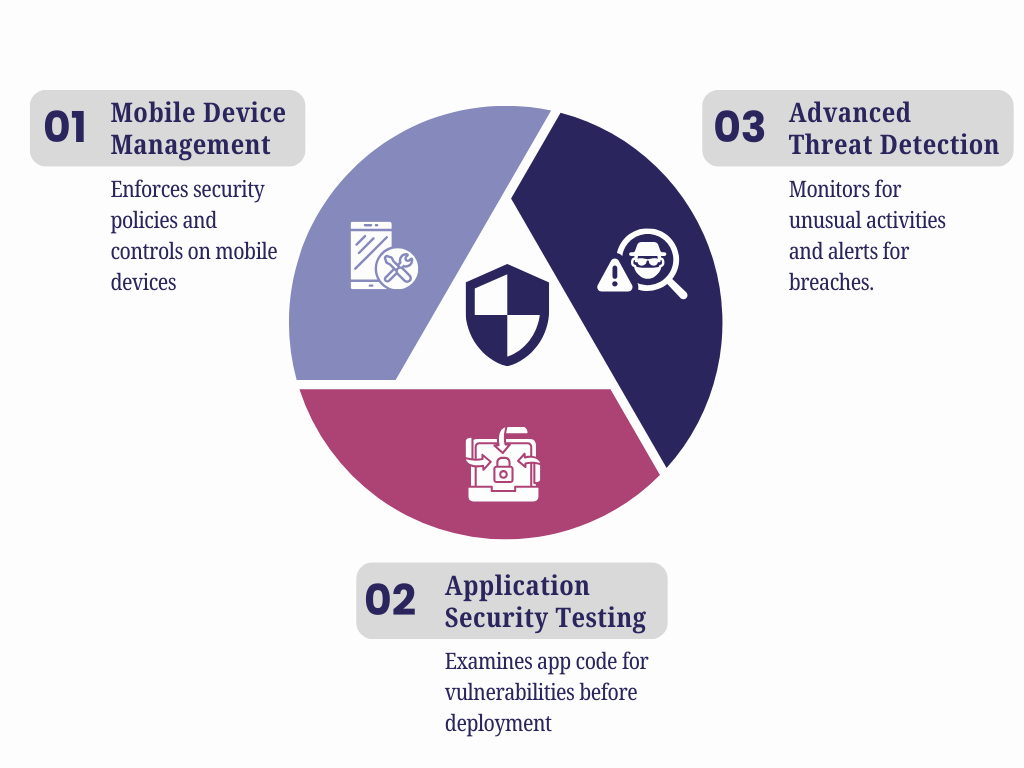
    1. Mobile Device Management (MDM): MDM will help enforce security policies across mobile devices and controls preventing the installation of unauthorized applications. This is done by:
      1. Wipe Remotely Ability: IT administrators can remotely wipe the data off lost or stolen devices so sensitive information cannot be accessed.
      2. Application Control: MDM enables organizations to mark applications as white lists or black lists depending on security policies to prevent malicious applications from being installed.
    2. Application Security Testing: This examines the code of a mobile application for potential vulnerabilities while simulating attacks to determine hidden weaknesses before deploying the app.
      1. Static Application Security Testing (SAST): It scans for possible weaknesses in the source code that may occur when executed.
      2. Dynamic Application Security Testing (DAST): Running applications are tested for vulnerability through simulated attacks that could reveal the exploits.
    3. Advanced Threat Detection: Behavioral analytics monitor mobile devices for unusual activities and enable an immediate response to potential breaches.
      1. Behavioral Analytics: These systems monitor patterns in the user behavior that signify a potential compromise.
      2. Real-Time Alerts: Instant alerting of suspicious events to allow for prompt investigation and action.

    On-Site Systems: Controlling Internal and Physical Threats through Custom Cybersecurity Solutions

    As businesses continue their digital transformation, on-site systems form the backbone of most organizations, since they provide a direct source of access to data coupled with control.

    They are always vulnerable to internal threats and intrusion by physical persons. Insiders and unauthorized physical intrusion are the main risks to on-site systems.

    What Are the Security Problems in On-Site Systems?

    • Insider Threat: The insiders compromised the security since those authorized to privilege access may misuse their rights.
    • Physical Violations: Unauthorized physical entities entering critical areas directly result in hardware or data exposure.

    How Do Custom Cybersecurity Solutions Improve On-Site Security?

    Learn how custom cybersecurity solutions enhance on-site security by addressing unique vulnerabilities.

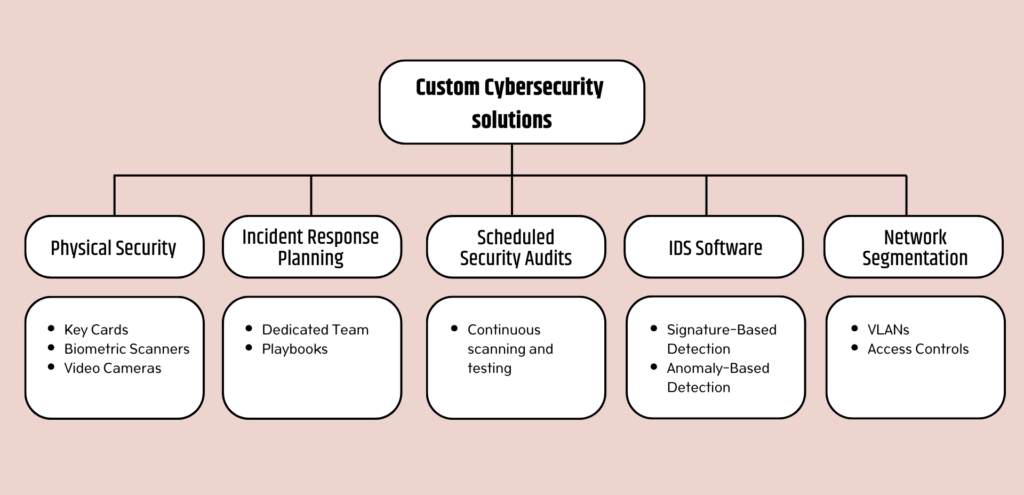
    1. Network Segmentation: Division of the network into sub-divisions. Segmentation limits the movement of attackers and restricts access to sensitive data. This format helps isolate breaches, thus protecting the rest of the network.
      1. Virtual Local Area Networks (VLANs): Separation of the different network-level departments reduces the likelihood of lateral movement by an attacker.
      2. Access Controls Between Segments: Strict access controls make sure that only authorized persons gain access to the sensitive segments.
    2. IDS Software: Intrusion Detection Systems (IDS) software keeps track of network traffic by detecting signatures and anomalies, which will notify of a threat in real-time.
      1. Signature-Based Detection: Predefined signatures of known threats are recognized and provide immediate responses to familiar attacks.
      2. Anomaly-Based Detection: This form of detection involves scanning for patterns that don’t fall under the usual traffic profile within the network. The method finds new threats that do not match existing signatures.
    3. Scheduled Security Audit: Periodic scanning for weaknesses and penetration testing will discover and remove all the possible vulnerabilities within the system before hackers take advantage of them.
    4. Incident Response Planning: A dedicated incident response team and a few playbooks for common scenarios ensure that breaches are fast and efficient and the eventual damage is reduced.
    5. Physical Security: Restrict access to building parts using key cards, biometric scanners, and video cameras.

    Conclusion

    Present-day generic solutions fail when unique challenges exist in cloud, mobile, and on-site systems. SCS Tech, a trusted name among the cybersecurity solutions group, provides targeted protection needed to keep data and operations safe.

    Whether planning a new security strategy or seeking to build upon and enhance the existing one, investing in custom cybersecurity solutions is paramount in these times of constant global changes and cyber threats.


  • How AI Technology Companies Power Security Operation Centers (SOC) to Enhance Threat Detection?

    How AI Technology Companies Power Security Operation Centers (SOC) to Enhance Threat Detection?

    What if the security system could foresee threats even before they arise?

    That is the power artificial intelligence brings to Security Operation Centers. The role of AI in SOCs is transforming how businesses start to detect and respond to cybersecurity.

    The statistical growth of AI adoption in significant sectors of India has already touched 48% in FY24, a clear pointer to AI’s role in today’s security landscape. This transformation is a trend and redefines cybersecurity for industries with better cyber threat countermeasures.

    This blog will explain to you how AI technology companies enable SOCs to improve in threat detection. We will also demystify some of the significant AI/ML service and trends that are helping improve efficiency in a SOC.

    How do AI Technology Companies help Improve Security Operation Centers Improve Threat Detection?

    Ways AI Technology Companies Improve Security Operation Centers Improve Threat Detection

    Deep Learning for Anomaly Detection

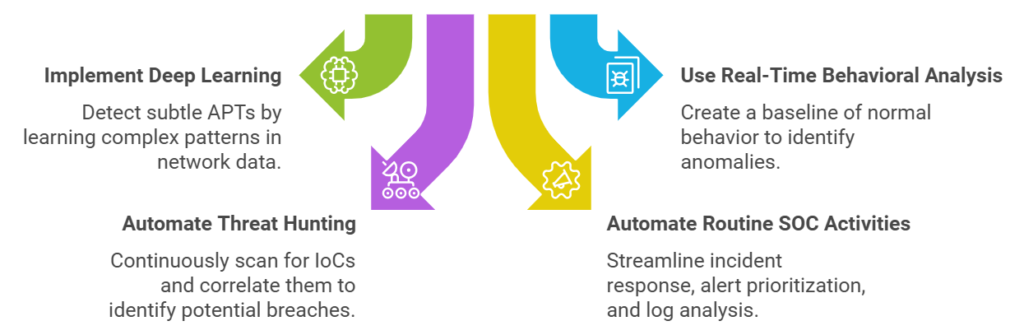
    AI technologies and intense learning are game changers in the identification of cyber threats. Traditional techniques do not typically detect the subtlest advanced persistent threats (APTs) because they mimic regular network traffic.

    Deep learning, particularly neural networks, can catch the latent patterns. For instance, CNNs represent one specific type of deep learning that processes network data as an image, thereby learning complex patterns associated with cyber attacks.

    This technology detects unusual network behavior that would otherwise escape the standard observation methods. Preventive detection made possible by AI technology companies will reveal exfiltration of data or lateral movements within the network, this is crucial in preventing breaches.

    Real-Time Behavioral Analysis

    Another powerful feature offered by AI & ML services for SOCs is real-time behavioral analysis. This technique creates a “normal” baseline of users and devices operating on the network so that AI can identify anomalies that could indicate a potential threat.

    These features help SOCs efficiently discover compromised accounts as well as insider threats. This is done through anomaly detection algorithms, User and Entity Behavior Analytics (UEBA), and Security Information and Event Management (SIEM) systems.

    Automating Threat Hunting

    Threat hunting by AI technology companies scans continuously for IoCs, which may indicate a compromise of unusual IP addresses or malware signatures from a feed from the threat intelligence.

    AI may be able to correlate IoCs across internal logs, identify potential breaches before they escalate, and then automatically create an alert for the SOCs.

    As a result, SOCs can proactively identify threats, reducing response time and improving the organization’s overall cybersecurity posture.

    Automation of Routine SOC Activities

    AI is crucial to automating routine SOC activities while allowing SOC analysts to focus on the most critical threats.

    Key areas in which IT infrastructure solution providers excel at automation include:

    • Automated Incident Response: AI can initiate incident response activities automatically. In case of malware detection on an endpoint, AI may lock the compromised device, notify the concerned people, and initiate forensic logging without a human’s intervention.
    • Intelligent Alert Prioritization: AI algorithms categorize alerts based on the threats’ potential impact and context. In this respect, SOC analysts face high-risk threats before discussing lesser-priority issues.
    • Log Correlation and Analysis: AI can correlate logs from multiple sources- say firewalls and intrusion detection systems in real time and discover patterns that unveil complex attacks. AI technology companies can correlate failed login attempts with successful ones from other locations to detect credential-stuffing attacks.

    These automation techniques make SOCs operate much more efficiently and keep on top of what matters in security without tedious work.

    Predictive Analytics for Threat Anticipation

    AI enables SOCs to predict threats even before they take place with predictive analytics.

    Based on the analysis of historical data and recent trends of threats, AI predicts possible attacks and takes proactive defenses.

    • Machine Learning for Predictive Threat Prediction: Machine learning models rely on past data to recognize earlier trends in the events in the system. These then predict vulnerabilities later in the organization’s infrastructure.
    • Risk Scoring Models: The AI generates risk scores for the assets, allotting relevant exposure and vulnerability levels. The higher the scores, the more attention is required from SOCs.
    • Threat Landscape Monitoring: AI monitors reports from external sources, such as news and social media, on emerging threats. If discussion over a new cyber exploit gains popularity over the Internet, AI has been poised to alert SOC teams to take precautionary measures long in advance.

    Predictive analytics enable SOCs always to be ahead of attackers, which drives overall cybersecurity resilience.

    Enabling AI Technology that Transforms the Capability of a SOC

    Some of the advanced AI & ML services, such as reinforcement learning, graph analytics, and federated learning, have far more capabilities for a SOC.

    • Reinforcement Learning: In reinforcement learning, AI discovers the best responses by simulating cyberattack scenarios. SOCs can leverage it to try out strategies for incident response and develop quicker response times.
    • Graph Analytics: Graph analytics helps visualize complicated relationships in a network by showing the connections between users, devices, and accounts. Thus, this can help SOCs identify previously latent threats that the traditional monitoring fails to perceive.
    • Federated Learning: Federated learning allows organizations to collaborate over training machine learning models without exposing sensitive data. This will enable SOCs to enhance their precision of the threats through gathered knowledge in a manner that ensures data privacy.

    These technologies equip SOCs with all the capabilities required to rapidly, accurately, and effectively react to emerging threats.

    Strategies for Effective Implementation of AI in a SOC

    While AI technology companies offer several benefits, the implementation of a SOC requires careful planning.

    Organizations will consider the following strategies:

    • Develop Data Strategy: An appropriate data collection, normalization, and storage strategy should be done. SOCs would necessitate a centralized logging solution for the AI model to appropriately parse data from disparate sources.
    • Testing and Verification of Model Before Deployment: The accuracy of the AI models must be tested before they are deployed. Repeated feedback from SOC analysts about their relative performance must be integrated into those models.
    • Cross-Functional Collaboration: Cross-functional collaboration between cybersecurity teams and data scientists is the best way to implement AI. Cross-functional teams ensure that AI models are developed with both technical expertise and security objectives in mind.

    Key Challenge Consideration for AI Adoption

    While the benefits are many, integrating AI in SOCs introduces several other challenges, like quality issues, ethical concerns, and compatibility issues related to already established infrastructures.

    • Data Quality: AI models require accurate data; hence, poor data quality may degrade the ability of the model to make precise or correct detections. Organizations should validate and ensure log completeness across all systems.
    • Ethical Considerations: AI systems must respect privacy rights and avoid bias. Regular audits can ensure that AI-driven decisions are fair and aligned with organizational values.
    • Complexity of Integration of AI: The integration of AI in existing SOCs is not that simple. In many cases, a phased rollout would be more effective as this does not disturb the workplace and allows compatibility problems to be efficiently resolved.

    Future of AI in SOCs

    AI at work in SOCs holds great promise, with the trend indicating:

    • Autonomous Security Operations: SOCs may get better at automation, handling specific incidents by themselves, human intervention being needed only according to requirement, and speeding up response times.
    • Integrate with Zero Trust Architectures: Ensuring continuous and ever-changing verification of the identity of users at access points, which thus reduces the possibility of unauthorized access.
    • Advanced sharing of Threat Intelligence: AI-powered applications may enable organizations to securely share any findings related to developed threats. These applications enhance collective defense beyond the boundaries of industries.

    Conclusion

    AI technology companies empower SOCs. SOCs can now do better, detect, and respond to advanced cyber threats through real-time analysis, automation, deep learning, and predictive analytics.

    With the constant evolution of AI, SOCs will get even better. This means businesses will feel more confident in securing their data and operations in a world of digitization.

    SCS Tech stands at the cutting edge in providing organizations with AI-driven solutions and improving their cybersecurity capabilities.

  • How Can Custom Cybersecurity Solutions Protect Finance from Fraud and Cybercrime?

    How Can Custom Cybersecurity Solutions Protect Finance from Fraud and Cybercrime?

    It was recently reported that the financial sector faced a staggering 3,348 reported cyber attacks in 2023—a sharp 83% increase from the 1,829 attacks in 2022. This alarming trend highlights the growing vulnerability of financial institutions to sophisticated cyber threats. As these attacks become more relentless, it’s evident that traditional security systems are no longer sufficient, underscoring the urgent need for advanced computer security services to safeguard critical financial data and infrastructure.

    To counter these rising threats, the financial industry must join hands with cybersecurity solutions group that offer a stronger, more adaptive defence. The question is no longer if but how quickly organizations can upgrade their security frameworks to safeguard their digital assets.

    Custom cybersecurity solutions specific to the finance sector provide advanced threat detection, real-time monitoring, and incident response strategies designed to protect finance from these frauds and cybercrimes in the constantly changing threat landscape. Read on further to understand how custom cybersecurity solutions protect finance from cybercrimes.

    Why do Custom Cybersecurity Solutions Matter to Financial Institutions?

    High-value targets for cybercriminals are financial institutions because of the sensitivity of their data and the volumes of money involved. Cybersecurity breaches can cause enormous financial fallout, damage to customer trust, and penalties due to regulatory noncompliance.

    Custom cybersecurity solutions provide tailored protection based on the unique vulnerabilities prevailing in financial operations. These solutions cater to specific needs and requirements toward regulatory compliance, operational challenges, and information security, which the institution faces.

    Another critical benefit custom solutions provide is the ability to keep up with emerging threats. As cyberattacks become even more complex, banks and financial organizations demand defences that grow just as intense. By integrating proactive risk management, threat detection, and incident response planning, custom solutions arm financial organizations with the capabilities to mitigate risks before they climax into costly incidents.

    How Custom Cybersecurity Solutions Help Protect Finance from Fraud and Cybercrime?

    Custom cybersecurity solutions are crucial because they involve dealing with very high-risk and sensitive information and transactions. Some areas that make the solutions effective in the finance sector include:

    Custom Cybersecurity Solutions for Fraud and Cybercrime Protection

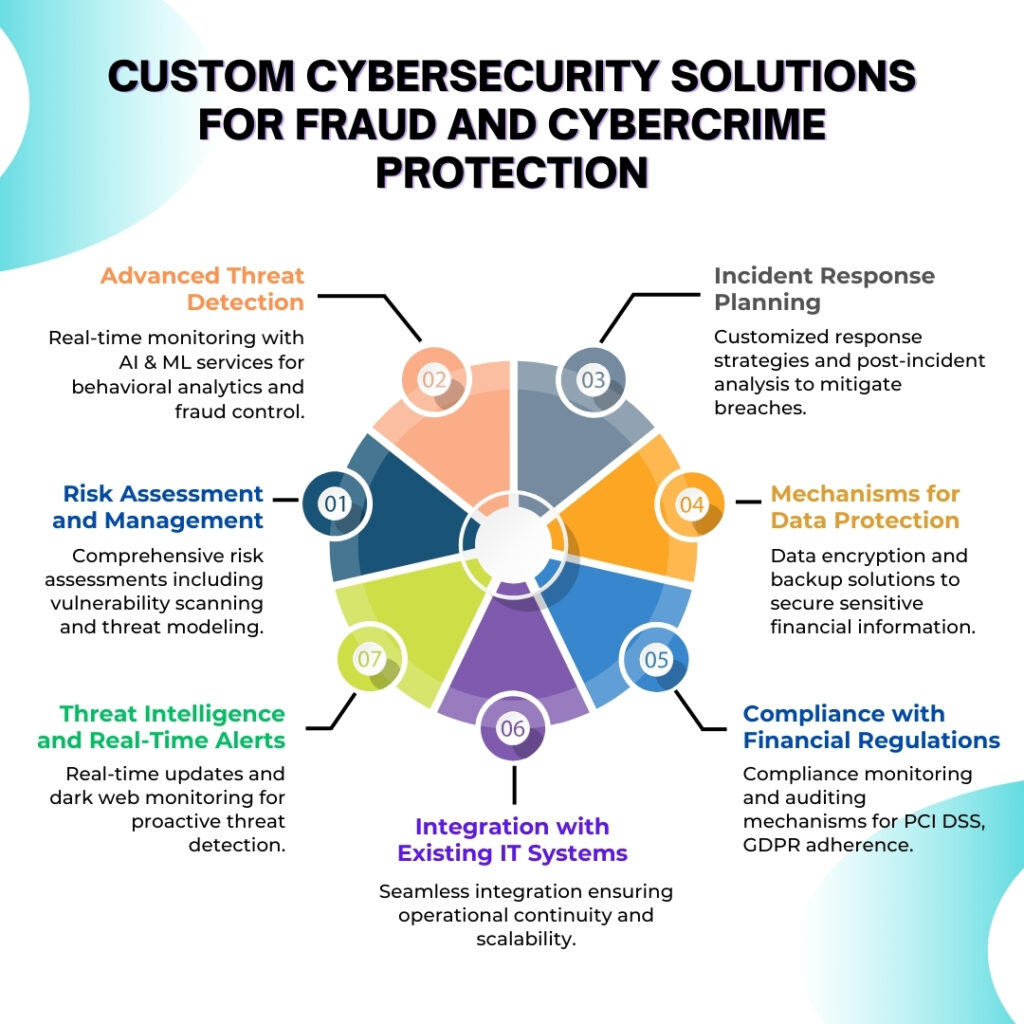
    1. Risk Assessment and Management

    In this case, the risk types refer to phishing attacks, ransomware, and insider threats, among others. Custom cybersecurity solutions imply starting with a comprehensive risk assessment.

    • Vulnerability scanning: To identify weaknesses in IT infrastructure that might be attacked.
    • Threat modelling: To predict threats that are unique to financial operations so the institution can prepare and defend itself.

    Effective risk management is the basis for preventing costly breaches and fraud, helping financial institutions receive a ranked list of their most critical vulnerabilities.

    2. Advanced Threat Detection

    Due to the volume of transactions and complexity, institutions must detect threats in real time. Advanced threat detection tools utilize:

    • Real-Time Monitoring: For networks and systems to capture suspicious activities as soon as they occur. A minute’s delay in financial institutions translates into losses at unprecedented levels.
    • AI and ML Services: The services and algorithms are used in behavioural and pattern analytics to detect possible intrusion as soon as possible before damage takes place. They draw anomalies, which otherwise might go unnoticed by traditional systems, with this controlling fraud and other kinds of breaches.

    3. Incident Response Planning

    A well-coordinated response to security breaches minimizes damage and restores normal operations promptly. Incident response planning incorporates:

    • Customised Response Strategies: Ensure that detail specific measures taken during a breach, such as isolating affected systems and protecting transactions.
    • Post-Incident Analysis: For what went wrong, how to improve future responses, and how to strengthen overall security.

    4. Mechanisms for Data Protection

    The protection of sensitive financial data is the prime focus. Two fundamental mechanisms are:

    • Encrypt: For encrypting data in rest and transit modes so that any sensitive information, including customer details and transaction records, remains secure.
    • Protect Data Backup Solutions: To help bring back critical financial data in case of a cyberattack or system crash and, therefore, help reduce downtime.

    5. Compliance with Financial Regulations

    All financial institutions should adhere to data protection and transaction regulations such as PCI DSS and GDPR. The custom-made cybersecurity solution ensures that adherence is followed.

    • Compliance monitoring and reporting: These tools are used to generate all documents required by the regulatory bodies.
    • Auditing mechanisms: Custom cybersecurity solutions can help identify and rectify compliance deficiencies before the imposition of penalties.

    6. Integration with Existing IT Systems

    Cybersecurity solutions should be built to fit into a financial institution’s infrastructure seamlessly, ensuring that operations run smoothly for the organization. Such integration will result in:

    • Least Disruption to Operations: Such measures should allow the routine activities of the day.
    • Scalability: Scale with growth or introduce new services like mobile banking without compromising on effectiveness in terms of security and without sacrificing performance.

    7. Threat Intelligence and Real-Time Alerts.

    Financial institutions can remain competitive through threat intelligence platforms which are present in custom cybersecurity solutions, which give:

    • Real-time updates: Custom cybersecurity solutions send updates on new vulnerabilities and cybercriminal tactics
    • Proactive monitoring of external sources: Scanning of external sources like dark web forums to catch threats when they happen.

    Few Methodologies for Efficient Cybersecurity in Finance

    Custom security solutions for financial institutions employ a variety of methodologies to guarantee complete security. Such methodologies are essential factors while dealing with the dynamic threat environment:

    1. Proactive Security Measures

    Cyber threats should be prevented before they occur. Key proactive measures include:

    • Penetration Testing: This emulates real-world attacks to find vulnerabilities in the system. This would make the defences of an institution strong ahead of any attack.
    • Continuous Threat Intelligence: Helps in gathering, and monitoring dark web forums for compromised credentials or other indicators of compromise, thus providing early intervention before breaches happen.

    2. Multi-Layered Defense Strategies

    Multi-layered defence provides extensive coverage across different types of cyber threats, including:

    • Layered Security Controls: This should be present across different levels of IT infrastructure to ensure that if one layer is breached, others will continue to protect the network.
    • Targeted Protection Solutions: This encompasses solutions that address identified emerging threats, such as phishing, ransomware, and insider threats, in a way that avoids a single point of failure.

    3. Compatibility with Current Systems

    To be most effective, custom cybersecurity solutions need to integrate with an institution’s current infrastructure, which means:

    • Seamless Implementation: Installations should be as smooth as possible not to disrupt continuing operations. Security deployment will in no way interfere with the daily running of the institution, nor affect customer service.
    • Interoperability: Custom cybersecurity solutions have to be compatible with current security tools and technologies. This compatibility enhances a harmonious ecosystem, which is centered on strengthening security posture as well as monitoring and response capabilities.

    Key Takeaways

    The rise of cyber-attacks like supply chain attacks, zero-day exploits, and credential stuffing makes custom cybersecurity solutions vital for financial institutions to protect their digital assets and operations. SCS Tech addresses these challenges by offering comprehensive services, including risk assessments, advanced threat detection, incident response planning, and compliance support.

    By implementing these solutions, financial institutions can protect their sensitive data, maintain client trust, and ensure the continuity of their operations. With SCS Tech, financial organizations can stay ahead of evolving cyber threats, paving the way for secure digital transformation.

  • What Are the Best Cybersecurity Practices for Small and Medium Enterprises (SMEs)?

    What Are the Best Cybersecurity Practices for Small and Medium Enterprises (SMEs)?

    With the threat of cyberattacks looming larger than ever, if you think that your small and medium-sized businesses are safe, think again. Alarmingly, a recent report published by The CyberPeace Foundation stated that approximately 43% of data breaches occurred in small businesses and startups. With cybercriminals increasingly targeting smaller businesses, SMEs must recognize the critical importance of fortifying their defenses.

    In this blog, we explore essential strategies to help SMEs thrive in an ever-evolving digital landscape.

    Essential  Cybersecurity Practices Every SMEs Must Implement

    SMEs must focus on building their Cybersecurity Service walls, as they are vulnerable to cyberattacks due to their limited resources. Let us discuss the various practices that small and medium enterprises must implement as security measures to safeguard their sensitive data and mitigate risks:

    • Updated Systems and Software: Managing updates of systems and software on a timely basis ensures the elimination of any security breaches, which further mitigates any chance of exploitation by attackers. It also promotes enhanced performance and compliance with all standards to eliminate any possibility of security compromises.
    • Limit Access to Sensitive Data: This practice gives role-based data access control, which helps safeguard data against unauthorized activities and potential threats. This further enhances data safety and privacy.
    • Secure Wi-Fi Networks: Transmission of sensitive data over wi-fi networks should be performed with complete security. This practice plays a crucial role in shielding data and maintaining network integrity. By using methods like strong encryption, timely updating of default settings, and solid passwords, we can substantially mitigate the risk of unwanted access and data breaches.
    • Data Encryption and Regular Backups: Systematic backups of data regularly ensure protection against loss of data in case of any cyberattacks. On the other hand, implementation methods of strong encryption safeguard data against any unauthorized access, even if it is stolen or intercepted.
    • Strong Password Policies and Multi-Factor Authentication: A solid password combined with multi-factor authentication (MFA), which involves more than one verification method to obtain access, guarantees an additional layer of security, which prevents any unauthorized access data in case of compromised passwords.
    • Performing Regular Risk Assessments: Supervising regular risk assessments promotes the identification and management of potential pitfalls and susceptibilities. It also helps businesses to have an edge over evolving threats, assuring that the security needs are synchronized with the present risk environment and business demands.
    • Firewalls and Antivirus Software: The implementation of proper firewalls acts as a shield between established internal networks and suspicious external networks and potential malware threats. On the other hand, antivirus software locates, defends, and eliminates any malicious content from systems and software.
    • Employee Training on Cybersecurity Awareness: Organizations must focus on building a security-conscious environment that educates employees to recognize and respond to cyber threats because they are the first line of defense. By cultivating an environment of shared responsibility amongst the employees for cybersecurity service, SMEs can remarkably refine their safeguards against advancing cyber risks.
    • Engaging with Third-Party Vendors: Working with trusted third-party vendors promotes the protection of sensitive data and reduces potential cyber risks through third-party systems. Organizations must ensure that these vendors work with stringent security protocols to prevent any data or security breaches.
    • Build an Incident Response Plan: Creating an effective incident response plan is extremely crucial for handling cybersecurity breaches or attacks. It is a standardized approach that ensures quick and adequate response to cyber threats by organizations while mitigating potential risks, reducing recovery time, and eliminating future cyber attacks. It also prevents any reputational damage by focusing on timely compliance with necessary protocols, which further builds customer trust.

    Emerging Cybersecurity Trends and Technologies for SMEs

    Emerging cybersecurity trends and technologies have started to pave the way for small and medium enterprises to engage in innovative methods to protect themselves from potential cyber risks. Let us explore these latest trends that SMEs should deploy to strengthen their cybersecurity structure:

    #1 Artificial Intelligence (AI) and Machine Learning (ML) in cybersecurity

    AI and ML services offer transformative benefits to SMEs by scrutinizing vast sets of data in no time while simultaneously analyzing the data for any security threats and early warnings.

    #2 Endpoint detection and response (EDR)

    With the rising demand for remote work, protection of endpoints ( laptops, mobiles, etc.) has become extremely important. EDR focuses on finding and scrutinizing any malicious activities on these endpoints and isolating the same to prevent further damage.

    #3 Zero Trust Architecture

    With hybrid work environments in trend, conventional defenses are not enough to strengthen the cybersecurity of SMEs. Zero trust engages the concept of not trusting anybody in the internal or external networks.

    #4 Security automation and orchestration (SOAR)

    SOAR is a boon for organizations with a finite IT staff as it uses automation of repetitive tasks which helps in detecting, evaluating, and responding to cyber threats by amalgamating different security tools.

    #5 Phishing awareness and training programs

    SMEs employees often lack the training and knowledge to adequately fight against phishing and other cyber attacks. Building awareness against phishing attacks can enhance employee retaliation to real threats.


    Cybersecurity Threats, their potential impact on SMEs and solutions

    Conclusion 

    As cyber threats continue to rise, SMEs can no longer afford to remain complacent—especially with 46% of SMEs in India unaware of how to mitigate these risks. To safeguard sensitive and operational data while preserving customer trust, it’s crucial for organizations to adopt robust cybersecurity practices.

    Collaborating with custom cybersecurity solutions providers like SCS Tech can enhance protection by integrating advanced technology into their systems while promoting business growth and minimizing risks.

    FAQs

    • Do SMEs have the resources to implement solid cybersecurity protocols?

    Yes, SMEs can implement strong, cost-effective, and flexible cybersecurity measures with limited resources.

    • How does the principle of least privilege work in SMEs?

    The principle of least privilege involves allowing the user with minimum access rights to do their jobs to mitigate insider attacks and threats.

    • In what ways can SMEs protect their staff against phishing attacks?

    SMEs must ensure that employees have the knowledge to recognize suspicious emails, use spam filters, and encourage employees to report any phishing attempts.

    (more…)

  • Cybersecurity Solutions Groups: Strategies for Threat Mitigation

    Cybersecurity Solutions Groups: Strategies for Threat Mitigation

    A staggering statistic reveals that cyber incidents can lead to revenue losses of up to 20%, with 38% of companies reporting turnover declines that surpass this alarming threshold.

    Is your company next? As cybercriminals grow more sophisticated, the financial repercussions of inaction can be devastating, not only impacting the bottom line but also eroding customer trust and brand reputation. 

    In this blog, we will learn about advanced cybersecurity solutions and the strategic approaches organisations must adopt to effectively mitigate risks and safeguard their financial future in an increasingly perilous digital landscape.

    The Cyber Threat Landscape: A Brief Understanding

    The threat landscape is known as all the recognised and potential cybersecurity threats that have an impact on certain sectors, companies, a specific time, or user groups. Back in 2023, 72% of businesses across the globe fell victim to ransomware attacks. Through this stat, you can clearly see that cyber threats keep on emerging on a regular basis. Based on that, the threat landscape keeps changing. However, certain facets contribute to the cyber threat landscape:

    • The increase in sophisticated attack procedures and tools
    • All those networks that distribute all the cybercrime profits are like the “dark web”.
    • There is a great reliance on data technology services and products like “SaaS offerings.”
    • Development of new hardware like the IoT (Interest of Things) devices
    • The availability of funds, personnel, and skills to drive the cyber attacks
    • Quick releases of software equipped with functionality
    • External aspects like the financial crisis and the global pandemic

    Apart from that, the experts from the cybersecurity solutions group have pointed out certain aspects of the cyber threat landscape that can be risky for every entity in their contexts. Here, context refers to specific components that can affect the level of danger that a specific sector, company, or user group might experience, which are:

    • The geopolitical aspects – various threat actors aim at individuals or groups from a certain region or nation, such as the APTs (Advanced Persistent Threats)
    • The value of all the personal data that is available
    • The level of security placed to protect sensitive data.

    Best Threat Mitigation Strategies to Opt for in Today’s Time

    Image Source:

    The cybersecurity solution group has countless approaches that are ideal for threat mitigation. You will find some of the crucial ones listed in this section:

    Risk-Related Assessments to Determine the Vulnerabilities

    Under the cybersecurity threat mitigation plan, you first have to perform a risk evaluation. This can help you discover all the loopholes present in your organisation’s security controls. Risk evaluations can provide you with information on the current security controls and the resources that need to be ensured.

    Apart from that, risk evaluation will also direct you to help your company’s IT security team detect all the weaknesses that can be taken advantage of. It will also let the team keep their focus on the steps that should be taken first. The “network safety appraisals” are an outstanding procedure that will let you check out your firm’s cybersecurity posture.

    Make a Patch Management Schedule

    Many application and software providers release patches continuously, of which all cybercriminals are well aware. They instantly decide how they can take advantage of such patches. You must pay close attention to the patch releases and then make an outstanding management schedule. This can help your organisation’s IT security group remain one step ahead of all cybercriminals.

    Make a Plan for Incident Response

    Image Source:

    You must guarantee that every individual, which includes the non-technical workers and IT cloud cyber security team, is well aware that they will be responsible if there is an information assault or break. This will make things straightforward and let you set up the assets.

    This is known as an “occurrence reaction plan,” and it’s a vital aspect of alleviating cyber-attacks in your enterprise. Dangers can show up from any area and will not cease up themselves. So, the experts from the cybersecurity solutions group recommend that businesses create a response plan to remediate all problems proactively.

    Security Training and Awareness

    In today’s world, human error is still one of the primary vulnerabilities in cybersecurity. The advanced cybersecurity solutions group views training programs and security awareness as essential as they can aid in educating all employees about various cyber-related threats and the best strategies.

    All these programs will cover certain topics, such as

    • Safe internet usage
    • Password hygiene
    • Phishing awareness

    Creating a culture of cybersecurity awareness will allow businesses to empower their employees to act as a defence against all cyber threats.

    Taking a Look at the Advantages of Cyber Threat Mitigation

    Image Source:

    The cyber threats mitigation comes with many unique benefits, which are briefly explained in the table below:

    The Benefits Brief Description
    Increases the Revenue Significantly By opting for cyber threat mitigation strategies, you can detect all types of vulnerabilities and various problems. This will help your company to prevent downtime and avoid revenue losses from all compromised systems and data.
    Excellent Security Compliance Cyber threat mitigation will let you implement correct security technologies, policies and processes for your firm. This will make it much easier to meet all the regulatory standards, adhere to security needs, and prevent expensive fines and penalties.
    Improves Brand Reputation Through cyber threat mitigation, you can keep your firm’s reputation well-protected. Opting for risk mitigation technologies, methods and policies will keep your information shielded and help you gain loyalty and trust from the customers.
    Identifying and Mitigating Cyber Threats on Time With cyber threat mitigation, you can detect all the risks on time. Doing so will help you decide where all the threats are located in the network and make sure all the critical systems are secure. This includes monitoring the systems, assessing vulnerabilities, etc.
    Reduces the Vulnerabilities You can detect all the cyber threats during the early stages via cyber threat mitigation. That way, your company will have enough time to terminate all these threats right before they get exploited by all the black hat hackers or cybercriminals.

    Conclusion

    It’s crucial to safeguard all your business systems and sensitive information from cyberattacks to prevent them from falling into the hands of cybercriminals or hackers for illicit purposes.

    Opting for effective threat mitigation strategies is the best approach to thwart such attacks. These strategies not only facilitate the timely identification of vulnerabilities but also mitigate their escalation.

    Moreover, at SCS Tech India Pvt Ltd we specialise in providing top-tier custom cybersecurity solutions designed to prevent cyberattacks and ensure comprehensive security of client information. In addition to cybersecurity services, we also offer GIS solutions, AI/ML services, and robust IT infrastructure solutions.