Tag: cybersecurity

  • Cybersecurity Solutions Groups: Strategies for Threat Mitigation

    Cybersecurity Solutions Groups: Strategies for Threat Mitigation

    A staggering statistic reveals that cyber incidents can lead to revenue losses of up to 20%, with 38% of companies reporting turnover declines that surpass this alarming threshold.

    Is your company next? As cybercriminals grow more sophisticated, the financial repercussions of inaction can be devastating, not only impacting the bottom line but also eroding customer trust and brand reputation. 

    In this blog, we will learn about advanced cybersecurity solutions and the strategic approaches organisations must adopt to effectively mitigate risks and safeguard their financial future in an increasingly perilous digital landscape.

    The Cyber Threat Landscape: A Brief Understanding

    The threat landscape is known as all the recognised and potential cybersecurity threats that have an impact on certain sectors, companies, a specific time, or user groups. Back in 2023, 72% of businesses across the globe fell victim to ransomware attacks. Through this stat, you can clearly see that cyber threats keep on emerging on a regular basis. Based on that, the threat landscape keeps changing. However, certain facets contribute to the cyber threat landscape:

    • The increase in sophisticated attack procedures and tools
    • All those networks that distribute all the cybercrime profits are like the “dark web”.
    • There is a great reliance on data technology services and products like “SaaS offerings.”
    • Development of new hardware like the IoT (Interest of Things) devices
    • The availability of funds, personnel, and skills to drive the cyber attacks
    • Quick releases of software equipped with functionality
    • External aspects like the financial crisis and the global pandemic

    Apart from that, the experts from the cybersecurity solutions group have pointed out certain aspects of the cyber threat landscape that can be risky for every entity in their contexts. Here, context refers to specific components that can affect the level of danger that a specific sector, company, or user group might experience, which are:

    • The geopolitical aspects – various threat actors aim at individuals or groups from a certain region or nation, such as the APTs (Advanced Persistent Threats)
    • The value of all the personal data that is available
    • The level of security placed to protect sensitive data.

    Best Threat Mitigation Strategies to Opt for in Today’s Time

    Image Source:

    The cybersecurity solution group has countless approaches that are ideal for threat mitigation. You will find some of the crucial ones listed in this section:

    Risk-Related Assessments to Determine the Vulnerabilities

    Under the cybersecurity threat mitigation plan, you first have to perform a risk evaluation. This can help you discover all the loopholes present in your organisation’s security controls. Risk evaluations can provide you with information on the current security controls and the resources that need to be ensured.

    Apart from that, risk evaluation will also direct you to help your company’s IT security team detect all the weaknesses that can be taken advantage of. It will also let the team keep their focus on the steps that should be taken first. The “network safety appraisals” are an outstanding procedure that will let you check out your firm’s cybersecurity posture.

    Make a Patch Management Schedule

    Many application and software providers release patches continuously, of which all cybercriminals are well aware. They instantly decide how they can take advantage of such patches. You must pay close attention to the patch releases and then make an outstanding management schedule. This can help your organisation’s IT security group remain one step ahead of all cybercriminals.

    Make a Plan for Incident Response
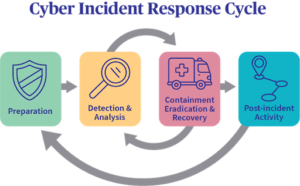
    Image Source:

    You must guarantee that every individual, which includes the non-technical workers and IT cloud cyber security team, is well aware that they will be responsible if there is an information assault or break. This will make things straightforward and let you set up the assets.

    This is known as an “occurrence reaction plan,” and it’s a vital aspect of alleviating cyber-attacks in your enterprise. Dangers can show up from any area and will not cease up themselves. So, the experts from the cybersecurity solutions group recommend that businesses create a response plan to remediate all problems proactively.

    Security Training and Awareness

    In today’s world, human error is still one of the primary vulnerabilities in cybersecurity. The advanced cybersecurity solutions group views training programs and security awareness as essential as they can aid in educating all employees about various cyber-related threats and the best strategies.

    All these programs will cover certain topics, such as

    • Safe internet usage
    • Password hygiene
    • Phishing awareness

    Creating a culture of cybersecurity awareness will allow businesses to empower their employees to act as a defence against all cyber threats.

    Taking a Look at the Advantages of Cyber Threat Mitigation
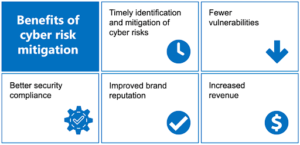
    Image Source:

    The cyber threats mitigation comes with many unique benefits, which are briefly explained in the table below:

    The Benefits Brief Description
    Increases the Revenue Significantly By opting for cyber threat mitigation strategies, you can detect all types of vulnerabilities and various problems. This will help your company to prevent downtime and avoid revenue losses from all compromised systems and data.
    Excellent Security Compliance Cyber threat mitigation will let you implement correct security technologies, policies and processes for your firm. This will make it much easier to meet all the regulatory standards, adhere to security needs, and prevent expensive fines and penalties.
    Improves Brand Reputation Through cyber threat mitigation, you can keep your firm’s reputation well-protected. Opting for risk mitigation technologies, methods and policies will keep your information shielded and help you gain loyalty and trust from the customers.
    Identifying and Mitigating Cyber Threats on Time With cyber threat mitigation, you can detect all the risks on time. Doing so will help you decide where all the threats are located in the network and make sure all the critical systems are secure. This includes monitoring the systems, assessing vulnerabilities, etc.
    Reduces the Vulnerabilities You can detect all the cyber threats during the early stages via cyber threat mitigation. That way, your company will have enough time to terminate all these threats right before they get exploited by all the black hat hackers or cybercriminals.

    Conclusion

    It’s crucial to safeguard all your business systems and sensitive information from cyberattacks to prevent them from falling into the hands of cybercriminals or hackers for illicit purposes.

    Opting for effective threat mitigation strategies is the best approach to thwart such attacks. These strategies not only facilitate the timely identification of vulnerabilities but also mitigate their escalation.

    Moreover, at SCS Tech India Pvt Ltd we specialise in providing top-tier custom cybersecurity solutions designed to prevent cyberattacks and ensure comprehensive security of client information. In addition to cybersecurity services, we also offer GIS solutions, AI/ML services, and robust IT infrastructure solutions.
  • Custom Cybersecurity Solutions for Protecting Digital Assets

    Custom Cybersecurity Solutions for Protecting Digital Assets

    Various solutions for protecting digital assets with the help of custom cybersecurity 
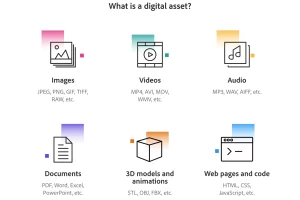
    In today’s interconnected digital landscape, the concept of digital assets has evolved beyond conventional boundaries, encompassing a vast array of valuables ranging from cryptocurrencies to sensitive financial data and proprietary information. As staggering statistics reveal, approximately 865 million individuals globally engage with digital assets, with a significant majority, 95%, navigating the complexities of crypto-assets.

    This surge underscores not only the pervasive adoption but also the critical need for robust cybersecurity solutions to safeguard these assets against an ever-evolving array of cyber threats.

    As many business operations are shifting to online platforms, digital assets have become not just valuable but also vulnerable to hacks and cyber threats. For such reasons, keeping digital assets well-protected is paramount. Doing so will let companies maintain business continuity, preserve the company’s reputation, and protect all sensitive data. 

    To make sure that the digital assets are safe, you must opt for some effective cybersecurity solutions, which we will be discussing in this blog.

    Best Cybersecurity Solutions to Safeguard Digital Assets

    The digital asset market will surely expand by 8.77% (2024-2028), which will lead to a market volume of $112100.00m. Despite all that, keeping them safe from unwanted cyber-attacks will be highly advantageous for all businesses.

    In this section, you will find out about some of the best  Custom Cybersecurity solutions, which will let you keep all your digital assets protected from online threats.

    Perform Cybersecurity Audits

    When planning for a risk prevention plan, you should begin by performing a cybersecurity audit. It’s because that’s the best way to discover all the risks and vulnerabilities your organization might experience.

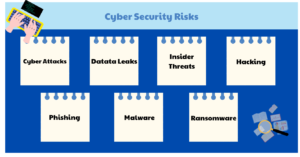
    During the auditing session, you should look out for all cyber threats and dangers that might disrupt financials, sensitive information, data loss, or business operations. You should rank all the risks as high, medium, low and level zero.

    Apart from that, there are some other dangers that you should flag while conducting the cybersecurity audit for your business:

    • Cyberattacks
    • Data Leaks
    • Insider Threats
    • Hacking
    • Phishing
    • Malware
    • Ransomware

    If performing a cybersecurity audit is quite overwhelming for you or you don’t know how to get it done, speak with a cybersecurity professional. Make sure to have protocols in place for all future audits.

    Virtual Desktops

    Virtual desktops provide a native-like experience while being hosted from a secure data center or cloud environment.

    When you utilize this type of desktop, you should opt for powerful monitoring solutions like “RDP Monitoring Software” that will track down user activities and also let you securely access information.

    Virtual desktops are ideal for individuals who don’t want to provide the equipment to their team physically. Some of the popular cloud-based desktops are Azure Virtual Desktops and Amazon WorkSpaces.

    Safe Management of Passcode

    Frequent password updates can pose challenges for team management. When you’re tired of finding the best ways to share logins with the team, you should use password management tools, such as “LastPass”. This tool will let you share, generate, manage and store passcodes with the team through SSO or single sign-on.

    Activating Cloud-Based Workflows

    The cloud-based workflows are perfect for all the cross-functional teams as they will increase their productivity. That’s not the only thing these workflows are known for. They can also safeguard the business-related processes by saving all the real-time updates.

    Through cloud-based workflows, you can save all the processes and tasks in the cloud. That way, you can reduce the chances of data loss and cyber threats.

    In contrast to traditional setups where data loss can occur if your local device unexpectedly shuts down during work, cloud-based workflows ensure all your work is securely stored and accessible from any device with an internet connection.

    The DAM [Digital Asset Management] Solution

    This particular solution will protect all the images and let you organize the digital asset library correctly. DAM solution can also let you manage the copyright of the stocks that you purchased and offer watermarking options.

    This will prevent the business-owned pictures from getting plagiarized. The DAM solution will provide user permissions, letting only the authorized members access all the information.

    Using vs Not Using Cybersecurity Solutions to Protect Digital Assets

    In this section, you will find out what happens when you use vs. don’t use custom cybersecurity solutions to keep digital assets safe. The table below will provide a proper explanation.

    The Category Using the Cybersecurity Solutions Not Using Cybersecurity Solutions
    Operational Efficiency Enhanced through the safe and streamlined methods Lessened because of all the security-related problems
    Chances of Data Breaches Greatly lessened because of preventive measures. Extremely high since the vulnerabilities are exploitable
    Reputation Management Improves the reputation and trust of the stakeholders Loss of consumer trust and causing reputational damage
    Identify All the Threats Offers responses and detection to threats Pretty slow, which can keep all the breaches undetected
    Business Continuity Assured via disaster recovery and backup solutions Changes in data loss and higher downtime
    Data Confidentiality and Integrity Maintaining it with access controls and encryption Gets compromised because no protective plans
    Incident Response Effective and rapid with all pre-defined response plans Chaotic and delayed, causing greater recovery time and
    Regulations and Compliances Following all the industry standards (PCI-DSS, HIPAA) Non-compliance will lead to financial and legal penalties

    Conclusion

    Opting for result-driven custom cybersecurity solutions will let all businesses secure their digital assets, prevent damage to reputation, and increase operational efficiency. This is exactly what we at SCS Tech India Pvt Ltd do for all our customers.

    We not only offer top-notch custom cybersecurity solutions but also services like cloud computing, blockchain solutions, robotic process automation, and so on. To find out more about us, get in touch with our experts right away!

  • Digital Transformation and Cybersecurity: Mitigating Risks in the Digital Era

    Digital Transformation and Cybersecurity: Mitigating Risks in the Digital Era

    The digital transformation is in full swing, and the pace at which companies are moving to the age of automation, cloud services, and smart things seems unstoppable. As we have seen, this digital transformation, which propels efficiency, superior customer experiences, and competitive advantage, has given birth to a vast digital landscape teeming with opportunities for exploitation.

    Cyber criminals come up with more sophisticated modes of attack as new technologies emerge, this increases new avenues of attack. To adapt to such an environment, there is a clear need for organizations to focus on and uphold strong cybersecurity. 

    By employing carefully devised measures to manage risks and prevent adverse occurrences, companies can safely preserve vital information needed to sustainably advance digital transformation initiatives. Effective risk mitigation demands a holistic approach to cybersecurity, embedding robust security practices into every facet of digital transformation. 

    This blog offers insights into the critical interplay between digital transformation and cybersecurity, highlighting strategies to protect organizational assets and ensure a secure, resilient digital future.

    The Risks of Digital Transformation

    Digital transformation often involves:

    Cloud adoption

    This resulted in new considerations to data and application security when migrating them to the cloud since the cloud provides scalability and agility.

    Increased reliance on interconnected devices

    The use of IoT increases risks, as the number of connections and points of attack possibilities increases.

    Integration with third-party applications

     When using extensions one can also create loopholes through which unauthorized persons can access the network in case adequate measures have not been taken.

    Evolving business models

    New digital initiatives can bring new and unforeseen security threats to the floors which need to be addressed based on the current security measures.

    These factors contribute to a vast and dynamic landscape of potential targets for hackers and cyber attackers. Cybersecurity threats such as stolen data, malicious software invasions, and ransomware threats are a risk for business entities that participate in the digital transformation.

    Strategies for Mitigating Cybersecurity Risks

    Altogether despite these challenges, they are not challenges that cannot be overcome. Therefore, with an effective proactive cybersecurity plan in place, organizations can deal effectively with the challenges present in the connected business world. 

    Security by Design

    To mitigate risk in the context of digitalization, it is crucial to apply security concerns to every step of the process of transformation. Ensure an adequate level of security before integrating solutions and technologies into an organization.

    Zero Trust Architecture

    Adopt a Zero-Trust approach concerning the IT environment, thereby requiring the validation of every user and endpoint attempting to connect to the network no matter their location.

    Continuous Monitoring and Threat Detection

    Take cybersecurity to another level by employing security solutions for permanent vigilance of systems and networks. Invest in threat intelligence to keep up with emerging different threats that are common nowadays.

    Data Security and Encryption

     Formulate strong data security measures such as data encryption and proper access control measures. Always backup your important data and the company should have a disaster recovery plan.

    Employee Awareness and Training

     Most organizations must train employees as initial responders in case of a cyber threat. Ensure that the employees undergo constant security awareness training to inform them about the existing security hazards and how to prevent them from happening.

    Prioritize Patch Management

     It is also important to always update software and firmware on all the devices and systems to cover for the several cracks that the hackers may be liable for.

    Incident Response Planning

    Explain the guidelines of the incident response programs that consist of steps of how to detect, respond to, and deal with cyber incidents.

    To learn more about the security tips to avoid cyber breaches, visit this link.

    The Future of Digital Transformation: Security as a Competitive Advantage

    When cybersecurity is being given due consideration during the process of digital business transformation, companies not only protect themselves from more dangers but also gain an edge. Here’s how:

    Enhanced Brand Reputation

    Establishing and practicing a strong cybersecurity ethic from a company helps establish customer and partnering trust.

    Improved Business Continuity

    A good cybersecurity positioning keeps an organization from experiencing disruptions in business due to cyber incidents.

    Compliance with Regulations

    Various types of industries have some specifics regarding the protection of data privacy. Adopting sound cybersecurity controls can play a significant role in enabling organizations to address these regulations.

    Innovation and Growth

    Practical security solutions create the right environment that enables organizations to adapt to emerging technologies and foster digital transformation.

    Investing in a Secure Future

    The opportunities of the digital environment are vast and the world has not yet witnessed the full potential of the digital environment but, as we know it, along with these opportunities there are prevailing and growing threats of cyber security threats. Therefore, in undertaking the digital transformation journey, businesses have to be aware of these risks and then design a strong cybersecurity approach to counter them.

    Stay ahead in the digital era by prioritizing cybersecurity in your digital transformation journey. We offer digital transformation services and expert solutions to safeguard your organization against emerging threats. Contact us today to learn how we can help you build a secure and resilient digital future.


  • How Can Cybersecurity Solutions Groups Protect Your Business in the Digital Era?

    How Can Cybersecurity Solutions Groups Protect Your Business in the Digital Era?

    Cybersecurity has become a cornerstone of modern business strategy, essential for safeguarding assets, maintaining trust, and ensuring continuity. That’s where cybersecurity solution groups come in, ready to swoop in with their expertise, resources, and proactive strategies to shield your business from all sorts of cyber threats. With them by your side, you can navigate the digital landscape with confidence, knowing your business is in good hands.

    The current cybersecurity landscape

    Cybercriminals are constantly innovating, employing tactics to exploit vulnerabilities and gain unauthorized access to sensitive information. The consequences of cyber attacks can be severe, ranging from financial losses and legal liabilities to damage to brand reputation and customer trust.

    According to reports, the global cost of cybercrime is projected to reach $10.5 Trillion Annually By 2025 (source), with businesses of all sizes and industries falling victim to attacks. Furthermore, the rise of remote work and cloud computing has expanded the attack surface, creating new challenges for organizations to secure their digital assets effectively.

    Now that we’ve got a grasp on the broader cybersecurity landscape, let’s narrow our focus and delve into some specific threats that businesses encounter in the digital realm.

    Common Cyber Threats Facing Businesses

    1. Malware: Malicious software designed to infiltrate and damage computer systems or steal sensitive information. Common types of malware include viruses, worms, trojans, and ransomware.
    2. Phishing: Phishing attacks involve fraudulent attempts to trick individuals into revealing sensitive information, such as login credentials or financial details, by masquerading as legitimate entities via email, text messages, or phone calls.
    3. Ransomware: Ransomware is a type of malware that encrypts files or locks users out of their systems, with attackers demanding payment (usually in cryptocurrency) to restore access. It can cause significant disruption and financial losses for businesses.
    4. DDoS Attacks: Distributed Denial of Service (DDoS) attacks aim to disrupt the availability of online services by overwhelming targeted systems or networks with a flood of traffic, rendering them inaccessible to legitimate users.

    The Role of Cybersecurity Solution Groups: How do they protect your business

    With cyber threats on the rise, businesses are increasingly relying on cybersecurity solution groups to strengthen their defenses and protect their digital assets. These specialized organizations offers a wide range of services such as

    1. Threat Detection and Prevention: Cybersecurity solution groups employ advanced technologies and methodologies to detect and prevent cyber threats before they can inflict harm. This includes monitoring network traffic, analyzing patterns and anomalies, and implementing proactive measures to thwart potential attacks.
    2. Incident Management software: Incident Management software helps In the event of a cyber attack or security breach, cybersecurity solution groups provide rapid incident response capabilities to mitigate the impact and minimize disruption.
    3. Vulnerability Management: Cybersecurity solution groups conduct comprehensive assessments of organizations’ IT infrastructure to identify vulnerabilities and weaknesses that could be exploited by cyber attackers. They then develop strategies and recommendations to remediate these vulnerabilities and strengthen defenses against potential threats.
    4. Security Consulting and Advisory Services: Beyond technical solutions, cybersecurity solution groups offer strategic guidance and advisory services to help businesses develop and implement robust cybersecurity strategies. This may include risk assessments, policy development, compliance assistance,etc.

    Benefits of Working with Cybersecurity Solution Groups

    Partnering with cybersecurity solution groups offers numerous advantages for businesses seeking to enhance their cybersecurity posture and protect their digital assets. Here are some key benefits:

    1. Expertise and Specialized Knowledge: Cybersecurity solution groups bring deep expertise and specialized knowledge, including emerging threats, best practices, and industry standards. By leveraging their experience and insights, businesses can gain valuable guidance and support in navigating the complexities of cybersecurity.
    2. Comprehensive Solutions: Cybersecurity solution groups offer comprehensive solutions tailored to the specific needs and requirements of businesses. From threat detection and incident response to vulnerability management and security consulting, these groups provide a wide range of services
    3. Proactive Threat Detection and Response: One of the primary advantages of partnering with cybersecurity solution groups is proactive threat detection and response. These groups employ advanced technologies and methodologies to identify and mitigate cyber threats before they can cause significant damage

    Conclusion

    Investing in cybersecurity solutions isn’t just a smart move—it’s crucial for safeguarding assets, fostering trust, and maintaining seamless business operations in our interconnected world. But selecting the right cybersecurity solutions Groups is crucial. It’s not just about following the crowd with the latest security trends—it’s about finding solutions that fit your business goals and objectives.

    So, invest time in assessing your requirements, scrutinizing service providers, and teaming up with reliable partners. With SCSTech India, you gain access to a comprehensive suite of cybersecurity services tailored to your specific needs and requirements.

    So don’t wait until it’s too late. Take proactive steps to protect your business with SCSTech India’s trusted cybersecurity solutions.

  • A definitive guide to cyber security – everything explained

    A definitive guide to cyber security – everything explained

    Networks, devices, programmes, and data are all protected from attack, damage, and unauthorised access by a variety of technologies, procedures, and best practises. These collectively are referred as “Cyber Security” or “IT security.”

    Importance of Cybersecurity

    Types of Cyberthreats

    Types of Cybersecurity 

    Tips for Cybersecurity

    Importance of Cyber Security

    Government, military, corporate, financial, and medical organisations collect, process, and store unprecedented quantities of data on computers and other devices, making cyber security crucial. Sensitive information, such as intellectual property, financial data, personal information, or other sorts of data for which unauthorised access or exposure could have unfavourable effects, can make up a sizeable amount of that data.

    In the course of conducting business, organisations transfer sensitive data across networks and to other devices; cyber security refers to the field devoted to safeguarding such data as well as the technology used to handle or store it. Companies and organisations, especially those responsible with protecting data related to national security, health, or financial records, must take action to defend their sensitive business and people information as the frequency and sophistication of cyber-attacks increase.

    Types of Cyber Threats

    The most common types of cyber threats include:

    • Hacking
    • Social Engineering
    • Physical Security Attacks
    • Viruses and Malware (malicious software)
    • Ransomware attacks

    Types of Cybersecurity

    A broad concept like cybersecurity can be further divided into more focused subcategories. We’ll go over the five main categories of cybersecurity below.

    Application Security

    The process of creating, integrating, and testing security measures within online applications in order to defend them against attacks is known as application security, or AppSec.

    Cloud Security

    A more recent subset of cybersecurity is cloud security. It is the practise of safeguarding cloud computing infrastructures, along with any programmes that operate there and any data kept there. ​

    Critical Infrastructure Security

    Protecting a country’s or a region’s essential infrastructure is known as critical infrastructure security. The networks, systems, and resources that ensure physical and economic security, as well as public health and safety, are included in this infrastructure.

    Internet of Things (IoT) security

    IoT security, or “Internet of Things” security, is the process of securing almost any connected device that may communicate with the network without the intervention of a human. This covers the billions of other devices—monitors, printers, security cameras, motion sensors—as well as the networks to which they’re linked.

    Network Security

    Protecting computer networks and data from internal and external dangers is the practise of network security. Firewalls, virtual private networks, and two-factor authentication are examples of identity and access controls that can be useful.

    Cybersecurity Tips

    Unless you act, defensive cybersecurity solutions won’t be effective. Adopt these sound cybersecurity practises throughout your company to secure the protection of your business and consumer data. Best practises and defensive cybersecurity methods are used to secure your data.

    Solutions for Defensive Cybersecurity

    Investments in proactive cybersecurity solutions should be made by all enterprises. Your network and computers will be shielded from external attacks if these systems are implemented and proper cybersecurity practises are adopted.

    Antivirus Software

    It’s a preventative measure that monitors for bugs. The job of antivirus software is to detect viruses on your computer and remove them. Antivirus software also alerts you to potentially unsafe web pages and software.

    Firewall

    A firewall is a virtual wall that prevents harmful individuals and programmes from accessing your computer. It employs a filter that evaluates the legitimacy and safety of every request to access your computer.

     Two-Factor Authentication (2FA)

    A username or pin number and access to an external device or account, such as an email address, phone number, or security software, are required for two-factor authentication.

    Virtual Private Network (VPN)

    Your data enters and exits a web server through a “tunnel” created by a virtual private network (VPN). Your data is encrypted and safeguarded in that tunnel so that hackers and harmful software cannot access it or spy on you.

    ​ Although cyberattacks might be frightening, learning about cybersecurity doesn’t have to be. It is crucial to be ready and equipped, especially if you are handling the data of others. Businesses should spend time and money protecting their computers, servers, networks, and software, and they should keep up with new technological developments. If you’re looking for experienced IT partners or need more information visit www.scstechindia.com


  • Best security tips to avoid a cyber breach

    Best security tips to avoid a cyber breach

    Preventing cyber data breaches is the best defense against the nightmare and expense that comes with them. Nevertheless, you must first identify them in order to be able to stop a data breach. The sorts and costs of data breaches you could experience as a small- to medium-sized business owner are described below, along with tips on how to avoid them.

    When hackers gain access to data and sensitive information, data breaches occur. These breaches are very expensive. According to a data report, the average cost of a data breach is around $3.86 million that too in addition to the irreparable harm to an organization’s reputation. It costs time as well. The identifying of the cause and reprimanding it usually takes up to 280 days.

    You can use a variety of high-level security techniques, such as AI and prepared incident response teams, to stop a data breach. Let’s dig deep into that!

    Limit access to your valuable data –

    Every employee used to have access to all of the files on their computer back in the day. Companies today are discovering the hard way how important it is to restrict access to their most important data. A mailroom employee has no need to see a customer’s financial information, after all. By limiting who is permitted to read specific papers, you reduce the number of workers who might unintentionally click on a hazardous link. Expect to see all records partitioned off as organisations go into the future so that only those who specifically require access will have it. One of those obvious fixes that businesses probably ought to have implemented sooner rather than later.

    Security policy with third party vendors –

    Every firm interacts with a variety of outside vendors. The need to understand who these people are has never been greater. Even permitting visitors onto their property might expose businesses to legal action. It’s necessary to restrict the kinds of documents that these vendors can access.

    Although taking such steps can be a bother for the IT department, the alternative could be a data breach that costs millions of dollars. Demand transparency from the businesses that are permitted to access your sensitive information. Don’t just assume that they are abiding by privacy regulations; verify it. Request background checks for any outside contractors entering your business.

    Employee awareness training –

    Employees are the weakest link in the data security chain, according to recent research. Despite training, workers read dubious emails with the potential to download malware every day. Employers make the error of assuming that one cybersecurity training session is sufficient. Schedule frequent sessions every quarter or even monthly if you’re serious about protecting your crucial data.

    According to marketing studies, the majority of consumers must hear the same message at least seven times before their behaviour starts to change.

    Update Software Regularly–

    Experts advise routinely updating all operating systems and application software. When patches are available, install them. When programmes aren’t constantly patched and updated, your network is exposed. Baseline Security Analyzer, a software from Microsoft, may now be used to periodically check that all programmes are patched and current. This is a simple and affordable solution to fortify your network and thwart attacks before they start.

    Develop a cyber breach response plan –

    What would you do if you discovered a data breach when you arrived to work the following day? Surprisingly few businesses have a reliable breach response strategy in place. Both the company and the employees can understand the potential losses by creating a thorough breach preparedness strategy. Employees want to know the truth; therefore, an employer should be very open about the extent of the violation. A sound response strategy can reduce lost productivity and stop bad press.

    Setting strong passwords –

    One thing that security professionals will emphasise when they visit your organisation to train your staff is the importance of routinely changing all passwords. The majority of people are now aware of how crucial it is to make passwords challenging to crack. We have mastered the use of capital letters, numbers, and special characters when creating passwords, even on our home PCs. Make it as difficult as you can for hackers to enter and steal your belongings.


  • What Is Cyber Risk Management?

    What Is Cyber Risk Management?

    Cyber risk management is the process by which you determine potential cyber threats, and then put measures into place to keep those threats at acceptable levels. Your cyber risk management efforts should be formalized into a plan, which should then be updated often to stay current with evolving cybersecurity threats.

    Considering just how dangerous cyber-criminals can be to your organization, a current cybersecurity framework is no longer just a good idea; it’s required. Cybersecurity risk management is so important that multiple organizations offer guidance and standards to mitigate cyber threats. The National Institute of Standards and Technology (NIST) is one; the International Organization for Standardization (ISO) is another.

    Cybersecurity risk is the likelihood your company might suffer damages because of a successful cyber-attack. This risk includes data breaches, loss of critical information, regulatory enforcement (including monetary penalties) due to a breach, or damage to your reputation after a cybersecurity event. Risk is different from uncertainty in that risk can be measured, and protected against. For example, you can block phishing attempts or build strong firewalls (a risk) but you cannot stop a hurricane from downing your WI-Fi networks for a whole day (uncertainty).

    This means you should evaluate your business several times a year to understand how your company adheres to current information security protocols, and what new threats may have developed since your last analysis. This evaluation is known as a cybersecurity risk assessment. Regular risk assessments will help in implementing a scalable cybersecurity framework for your business.

    What Are the Different Types of Cybersecurity Risk?

    Cybersecurity risks come in many forms, and CISOs should be aware of all them when developing your risk management process. To start, the four most common cyber-attacks are:

    Malware: Malicious software that installs itself that causes abnormal behavior within your information system;
    Phishing: Emails or messages that trick users into revealing personal or sensitive data;
    Man-in-the-Middle attack (MitM): Cyber-criminals eavesdrop on private conversations to steal sensitive information; and
    SQL injection: A string of code is inserted in the server, prompting it to leak private data.

    When building your risk management strategy, prioritize which common cyber incidents you want to prepare for. Strategizing for those most likely to occur within your business, or for those events where regulatory compliance obligates you to address them. Then you can move forward with creating an effective risk management program.

    Why Is Cyber Risk Management Important?

    Your business should always be learning how to adapt to changing cybersecurity standards while also monitoring potential threats.

    A cybersecurity event like an internal data breach or a successful cyber-attack can cause significant financial losses. It can also create disruptions in the day-to-day operations of your business, as you inform employees and customers of the breach and the steps you’ll take in response.

    By maintaining regular cyber risk management you can keep the chances of a cybersecurity event low, protecting your business for the long term.

    What Is the Cybersecurity Risk Management Process?

    Cybersecurity risk management is an ongoing process that involves regular monitoring and frequent analysis of existing security protocols. Generally, a cyber risk manager will work with key stakeholders and decision-makers across the business to draft a cybersecurity risk statement, where potential risks are identified as well as the company’s tolerance for each risk. Then, safety measures and training are matched with each cybersecurity risk.

    The organization then follows policies and procedures in its daily operations to keep cybersecurity threats at a minimum, and the cybersecurity risk manager monitors the overall security posture. From time to time the risk manager should also report on how well security protocols are helping to mitigate cyber risks and potential threats, and make recommendations as necessary to improve security for the evolving threat landscape.

    A follow-up risk assessment may be required to update the risk management strategy currently in place.

    SCS Tech offers cybersecurity services for Large Enterprises and SME’s. Our experts help you navigate your cybersecurity needs as your business scales, whether continuing your current cybersecurity program or building all-new network security.

    To know more about our cybersecurity service visit www.scstechindia.com/

  • Top 5 Reasons Why Cybersecurity is Important

    Top 5 Reasons Why Cybersecurity is Important

    Cyber attacks are widespread, which can harm millions of people. Organizations can be shut down. Services can’t be provided to citizens. Widespread cyber attacks configuration of cloud services with increasing cybercriminal attacks risk the organization and its process.

    The days are gone for simple firewalls antivirus software which helped us to secure our data and identity.

    Cyber threats can arrive from any level of association. Cybersecurity is no longer something any company can ignore. Security regularly affects businesses of all sizes and makes them causing reversible reputational damage to the companies involved.

    Why is cybersecurity critical?

    Cybersecurity is the event or process of recovering and protecting computer systems, devices, networks, and programs from any cyber attack.

    Cyber attacks are increasingly causing danger to your sensitive data, as attackers employ new methods of artificial intelligence and social engineering to your traditional security controls.

    The world is frequently reliant on technology. This dependence will continue as we introduce the next generation of smart internet-enabled devices that have access to our networks via Wi-Fi and Bluetooth.

    Let’s explore its importance:

    1. Cyber-attacks affect all

    Cyber attacks can cause electrical power outages, the disappointment of military equipment, and breaches of national security privileged insights. They can bring about the theft of important, sensitive information like clinical records. They can upset telephone and PC organizations or paralyze frameworks, making information inaccessible.

    Cyber attacks can occur on a worldwide scale, also with programmers breaking government organizations. It is such a danger that atomic plants can be assaulted, causing a nuclear calamity with a considerable number of lives lost. These digital worms made centrifuges heat up and may have caused a blast costing human lives.

    1. Rapid technological change will benefit

    With the launch of the 5G network, a significant expansion of multidimensional cyber attack vulnerability increased. The new system requires a similar redefined cyber strategy. By further stating the increase in cyber attacks of the software, it will be challenging to retool how organizations would save the virtual network of the 21st century. Modern technologies like IoT are increasing the number of devices connected, and there will be approximately 400 billion connected devices by the end of 2022.

    1. Damage to organization and loss of jobs

    There has been a lot of breaches of companies in recent years. Organizations should conduct phishing simulation tests to test the awareness of employees. It should be done initially before and after training to measure the improvement areas of your employees. Creating an incident response strategy will allow organizations to stay ahead of the attack. It will ensure your quick response on the offense to keep the attackers from getting a hold of sensitive data.

    1. Cybersecurity threats faced by individuals

    Not just do countries and organizations face dangers from the actions and intentions of hackers, yet people face numerous risks too. Identity theft is a colossal issue, where hackers steal a person’s very own data and sell it for benefit.

    This likewise puts the individual security of an individual and their family in danger. This happened in various events, and a million of Rs was lost to the detriment of the person in question. In different cases, the programmers use coercion and blackmail in the wake of taking their identity and requesting recover cash to make no further move. This is particularly valid for high-profile identity theft cases of superstars or individuals with high net worth.

    1. Cyber concerns may result in increased regulation and legislation

    With cybersecurity threats increasing, new laws and regulations can be placed to protect the consumer from attacks. It means that increased legislation and regulations may soon become a reality. Citizens need to be made aware of laws that are passed and make sure that their organizations comply with the laws. The laws specified for cybersecurity will result in better functionality and process of the organization resulting in more safe and secure data-driven solutions for clients.

    SCS Tech specializes in designing, building, and running optimized security solutions which help the organization and individuals defend against all cybersecurity attacks. Write to us to learn more about how we can help: info@scstechindia.com