Tag: #datasecurity

  • How Can Custom Cybersecurity Solutions Protect Finance from Fraud and Cybercrime?

    How Can Custom Cybersecurity Solutions Protect Finance from Fraud and Cybercrime?

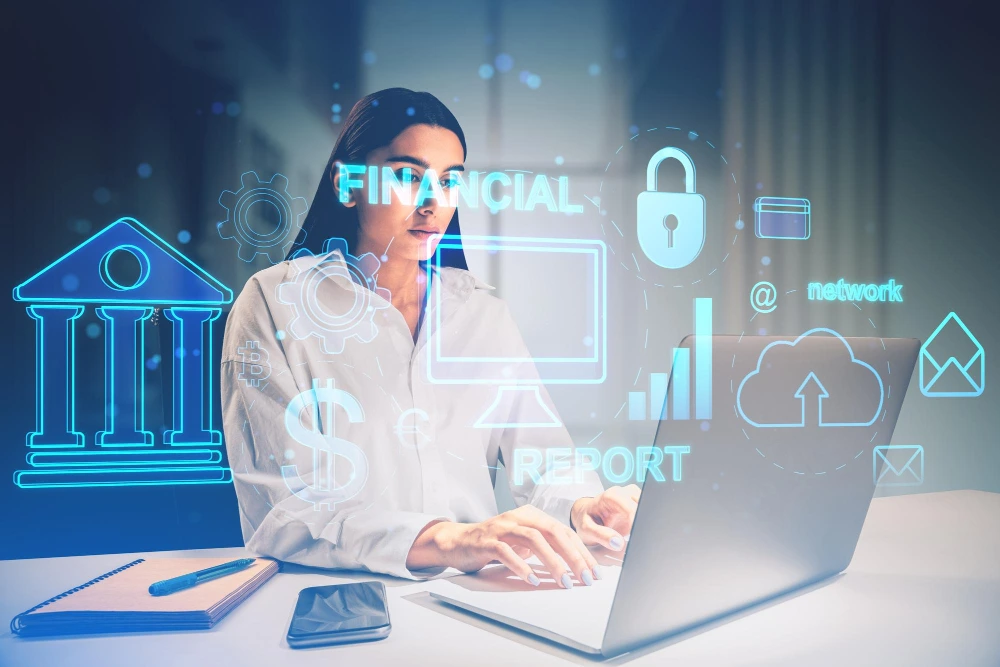
    It was recently reported that the financial sector faced a staggering 3,348 reported cyber attacks in 2023—a sharp 83% increase from the 1,829 attacks in 2022. This alarming trend highlights the growing vulnerability of financial institutions to sophisticated cyber threats. As these attacks become more relentless, it’s evident that traditional security systems are no longer sufficient, underscoring the urgent need for advanced computer security services to safeguard critical financial data and infrastructure.

    To counter these rising threats, the financial industry must join hands with cybersecurity solutions group that offer a stronger, more adaptive defence. The question is no longer if but how quickly organizations can upgrade their security frameworks to safeguard their digital assets.

    Custom cybersecurity solutions specific to the finance sector provide advanced threat detection, real-time monitoring, and incident response strategies designed to protect finance from these frauds and cybercrimes in the constantly changing threat landscape. Read on further to understand how custom cybersecurity solutions protect finance from cybercrimes.

    Why do Custom Cybersecurity Solutions Matter to Financial Institutions?

    High-value targets for cybercriminals are financial institutions because of the sensitivity of their data and the volumes of money involved. Cybersecurity breaches can cause enormous financial fallout, damage to customer trust, and penalties due to regulatory noncompliance.

    Custom cybersecurity solutions provide tailored protection based on the unique vulnerabilities prevailing in financial operations. These solutions cater to specific needs and requirements toward regulatory compliance, operational challenges, and information security, which the institution faces.

    Another critical benefit custom solutions provide is the ability to keep up with emerging threats. As cyberattacks become even more complex, banks and financial organizations demand defences that grow just as intense. By integrating proactive risk management, threat detection, and incident response planning, custom solutions arm financial organizations with the capabilities to mitigate risks before they climax into costly incidents.

    How Custom Cybersecurity Solutions Help Protect Finance from Fraud and Cybercrime?

    Custom cybersecurity solutions are crucial because they involve dealing with very high-risk and sensitive information and transactions. Some areas that make the solutions effective in the finance sector include:
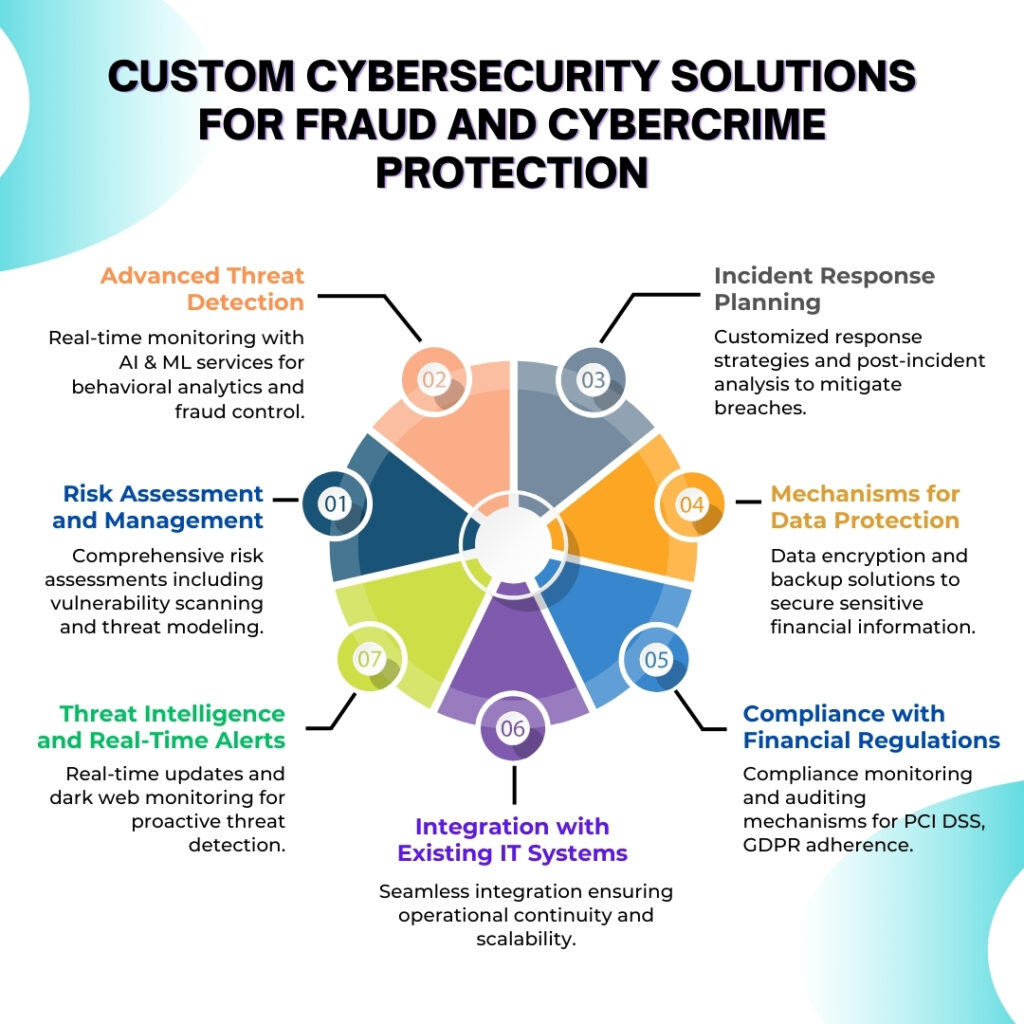
    Custom Cybersecurity Solutions for Fraud and Cybercrime Protection

    1. Risk Assessment and Management

    In this case, the risk types refer to phishing attacks, ransomware, and insider threats, among others. Custom cybersecurity solutions imply starting with a comprehensive risk assessment.

    • Vulnerability scanning: To identify weaknesses in IT infrastructure that might be attacked.
    • Threat modelling: To predict threats that are unique to financial operations so the institution can prepare and defend itself.

    Effective risk management is the basis for preventing costly breaches and fraud, helping financial institutions receive a ranked list of their most critical vulnerabilities.

    2. Advanced Threat Detection

    Due to the volume of transactions and complexity, institutions must detect threats in real time. Advanced threat detection tools utilize:

    • Real-Time Monitoring: For networks and systems to capture suspicious activities as soon as they occur. A minute’s delay in financial institutions translates into losses at unprecedented levels.
    • AI and ML Services: The services and algorithms are used in behavioural and pattern analytics to detect possible intrusion as soon as possible before damage takes place. They draw anomalies, which otherwise might go unnoticed by traditional systems, with this controlling fraud and other kinds of breaches.

    3. Incident Response Planning

    A well-coordinated response to security breaches minimizes damage and restores normal operations promptly. Incident response planning incorporates:

    • Customised Response Strategies: Ensure that detail specific measures taken during a breach, such as isolating affected systems and protecting transactions.
    • Post-Incident Analysis: For what went wrong, how to improve future responses, and how to strengthen overall security.

    4. Mechanisms for Data Protection

    The protection of sensitive financial data is the prime focus. Two fundamental mechanisms are:

    • Encrypt: For encrypting data in rest and transit modes so that any sensitive information, including customer details and transaction records, remains secure.
    • Protect Data Backup Solutions: To help bring back critical financial data in case of a cyberattack or system crash and, therefore, help reduce downtime.

    5. Compliance with Financial Regulations

    All financial institutions should adhere to data protection and transaction regulations such as PCI DSS and GDPR. The custom-made cybersecurity solution ensures that adherence is followed.

    • Compliance monitoring and reporting: These tools are used to generate all documents required by the regulatory bodies.
    • Auditing mechanisms: Custom cybersecurity solutions can help identify and rectify compliance deficiencies before the imposition of penalties.

    6. Integration with Existing IT Systems

    Cybersecurity solutions should be built to fit into a financial institution’s infrastructure seamlessly, ensuring that operations run smoothly for the organization. Such integration will result in:

    • Least Disruption to Operations: Such measures should allow the routine activities of the day.
    • Scalability: Scale with growth or introduce new services like mobile banking without compromising on effectiveness in terms of security and without sacrificing performance.

    7. Threat Intelligence and Real-Time Alerts.

    Financial institutions can remain competitive through threat intelligence platforms which are present in custom cybersecurity solutions, which give:

    • Real-time updates: Custom cybersecurity solutions send updates on new vulnerabilities and cybercriminal tactics
    • Proactive monitoring of external sources: Scanning of external sources like dark web forums to catch threats when they happen.

    Few Methodologies for Efficient Cybersecurity in Finance

    Custom security solutions for financial institutions employ a variety of methodologies to guarantee complete security. Such methodologies are essential factors while dealing with the dynamic threat environment:

    1. Proactive Security Measures

    Cyber threats should be prevented before they occur. Key proactive measures include:

    • Penetration Testing: This emulates real-world attacks to find vulnerabilities in the system. This would make the defences of an institution strong ahead of any attack.
    • Continuous Threat Intelligence: Helps in gathering, and monitoring dark web forums for compromised credentials or other indicators of compromise, thus providing early intervention before breaches happen.

    2. Multi-Layered Defense Strategies

    Multi-layered defence provides extensive coverage across different types of cyber threats, including:

    • Layered Security Controls: This should be present across different levels of IT infrastructure to ensure that if one layer is breached, others will continue to protect the network.
    • Targeted Protection Solutions: This encompasses solutions that address identified emerging threats, such as phishing, ransomware, and insider threats, in a way that avoids a single point of failure.

    3. Compatibility with Current Systems

    To be most effective, custom cybersecurity solutions need to integrate with an institution’s current infrastructure, which means:

    • Seamless Implementation: Installations should be as smooth as possible not to disrupt continuing operations. Security deployment will in no way interfere with the daily running of the institution, nor affect customer service.
    • Interoperability: Custom cybersecurity solutions have to be compatible with current security tools and technologies. This compatibility enhances a harmonious ecosystem, which is centered on strengthening security posture as well as monitoring and response capabilities.

    Key Takeaways

    The rise of cyber-attacks like supply chain attacks, zero-day exploits, and credential stuffing makes custom cybersecurity solutions vital for financial institutions to protect their digital assets and operations. SCS Tech addresses these challenges by offering comprehensive services, including risk assessments, advanced threat detection, incident response planning, and compliance support.

    By implementing these solutions, financial institutions can protect their sensitive data, maintain client trust, and ensure the continuity of their operations. With SCS Tech, financial organizations can stay ahead of evolving cyber threats, paving the way for secure digital transformation.
  • What Are the Key Challenges And Opportunities of Digital Transformation in Finance?

    What Are the Key Challenges And Opportunities of Digital Transformation in Finance?

    In an industry where precision and trust are paramount, finance is undergoing a seismic shift driven by digital transformation. The pressure to innovate and adapt is reshaping the very core of banking and financial services, forcing institutions to rethink how they operate, serve clients, and comply with ever-evolving regulations.

    It’s no longer just about adopting technology—it’s about harnessing it to create value, enhance customer experiences, and stay ahead in a fiercely competitive landscape. Yet, with transformation comes complexity.

    Cyber security threats, data management & integration, legal hindrances, and more stand in the way of progress. In this blog, we’ll explore these challenges and how financial institutions can leverage digital tools to overcome them, turning potential roadblocks into opportunities for long-term success.

    Key Challenges of Digital Transformation in Finance

    • Cybersecurity Threats: With the increase in digitization in the financial sector, the risk for increased data breaches like phishing attacks, ransomware attacks, and sensitive data targeting is the key challenge to look for, along with understanding the complexity of security measures.
    • Data Management and Integration: The key 3 issues in terms of data management and integration are scalability, complex integration, and data silos. The 3 subheads are explained below:
        • Data Silos: As the data is stored in different departments, it results in fragmented data storage, lack of unified view, and makes it difficult to share data. With data silos, the data governance gets complicated.
        • Scalability Issues: With growing data information, managing and scaling data infrastructure becomes complex, which also results in performance degradation.
        • Complex Integration: Data integration becomes complex due to diverse data sources, resulting in various technical challenges like data format discrepancies, inconsistent data quality, etc.
    • Legal System Integration: The integration faces various challenges, like compatibility challenges due to outdated technology, protocol and data format differences, etc. It also results in operational disruption as service delivery might get impacted, leading to dissatisfaction among customers. Upgrading or replacing legacy systems results in high costs, as the money is involved in training and development, and implementation of the system, which incurs costs like consulting fees, system customization, etc.
    • Managing Regulatory and Compliance Challenges: Evolving regulations can be challenging as they require extensive regulatory data requirements and demand a high level of accuracy. Efficient regulatory compliance requires investments in compliance management systems and data analytics tools with regular audits that can increase expenses.

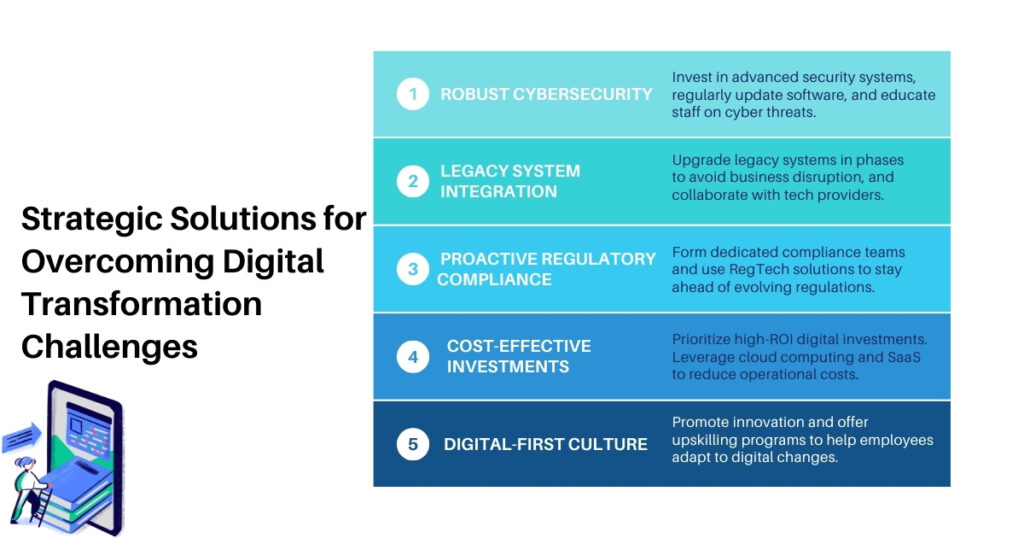
    Solutions to Overcome Digital Transformation Challenges in Finance

    Opportunities of Digital Transformation in Finance

    • Enhanced Risk Management: Digital transformation services like predictive analytics, real-time analytics solutions, fraud detection systems, Regtech solutions, compliance management platforms, etc., help in improving risk management related to finance aspects like fraud detection, refining credit score models, automating compliance tracking, and more.
    • Improved Operational Efficiency: In the finance field, digital transformation services help in operational efficiency through process automation, system integration, and cost reduction. Listed below explained are 3 key factors:
        • Process Automation: Digital transformation services like RPA tools for automated routine tasks like task automation, robotic process automation, and workflow automation help improve overall productivity through compliance checks, report generation, invoice processing, etc.
        • System Integration: Financial system integration with ERP helps in improved financial reporting, forecasting, etc. Other integrations, like APIs and data integration, help in real-time data exchange that improves decision-making.
        • Cost Reduction: Cloud computing and cost management tool integration help in cost management and efficient resource allocation.
    • Data-Driven Insights: Digital transformation services and technologies like big data analytics, behavioral analytics, data visualization, etc., help in offering tailored recommendations to customers and help in setting dynamic pricing. Do you know, as per the Infosys report, that approximately 76% of financial service executives say that customer experience is now the most integral part of digital transformation?

    For enhanced forecasting, various tools can be used for trend analysis and scenario analysis for mitigating risks.

    • Ability for Agility and Innovation by Leveraging Continuous Development in Financial Products and Services: Enterprises can focus on rapid development by implementing agile development practices like Jira or Trello for the gradual development of financial products. Along with agile practices, launching MVPs enables financial enterprises to test new ideas and features with real users rapidly. Other integrations, like modular banking platforms, microservices frameworks, and cloud computing, help give flexibility to operations.

    What is the Future of Digital Finance?

    Fintech plays a key role in transforming the future of digital finance with continuous implementation of technology to elevate the seamless outcome for both enterprises and customers. The fintech sector is projected to grow at a CAGR of 16.5% from 2024 to 2032. Listed below are some digital key integrations to look forward to in the field of finance:

    • Alternative Lending Platforms
    • Quantum Computing
    • Wealth Management Solutions
    • Collaboration with Traditional Banks
    • Open Banking and API Integration for Customer Control Over Data, Improved Competition, and Innovation
    • Sustainability and Green Finance
    • Rise of Decentralized Finance (DeFi)
    • Artificial Intelligence (AI) in Predictive Finance

    Conclusion

    The finance industry stands at a critical juncture where embracing digital transformation is no longer optional but imperative for future growth. Successfully tackling the complexities of cost management, cybersecurity, and regulatory compliance requires more than just technological adoption—it calls for a strategic, forward-thinking approach. By addressing these key challenges head-on, financial institutions can unlock new opportunities to enhance customer experiences, harness data for smarter decision-making, and drive sustainable innovation.

    At SCS Tech India, we recognize the need for integration of digital transformation services/technologies like IoT applications, AI-driven solutions, advanced cybersecurity services, etc., in navigating these complexities and challenges to drive innovation in enterprises. By partnering with SCS Tech India, organizations in the financial sector can build a resilient framework that improves agility and efficiency, helping them to capitalize on digital transformation opportunities and have a competitive edge in the dynamic financial landscape.

    FAQ

    • What is the key role of fintech in digital transformation?

    Fintech helps in digital transformation by offering real-time services, helping in cost efficiency, personalized financial advice, a focus on financial inclusion through micro-lending and digital wallets, collaboration with traditional institutions, etc., that helps in remaining competitive.

    • How do cloud-native architectures help in digital transformation in finance?

    Cloud-native architectures focus on scalability, agility, and innovation; disaster recovery and continuity; security; and compliance through inbuilt features like encryption, access controls, etc.

    • How does decentralized finance (DeFi) help in digital transformation in finance?

    Decentralized finance (DeFi) helps eliminate the need for traditional intermediaries. Transactions are recorded in the public blockchain, thereby ensuring transparency, giving access to financial services, and global accessibility.

    • What are a few challenges in AI-driven personalization in financial services?

    Challenges in AI-driven personalization in financial services include data privacy and security, biases of algorithms, customer trust, cost incurred in implementation, data integration complexity, evolving customer expectations, etc.

    (more…)

  • What Are the Best Cybersecurity Practices for Small and Medium Enterprises (SMEs)?

    What Are the Best Cybersecurity Practices for Small and Medium Enterprises (SMEs)?

    With the threat of cyberattacks looming larger than ever, if you think that your small and medium-sized businesses are safe, think again. Alarmingly, a recent report published by The CyberPeace Foundation stated that approximately 43% of data breaches occurred in small businesses and startups. With cybercriminals increasingly targeting smaller businesses, SMEs must recognize the critical importance of fortifying their defenses.

    In this blog, we explore essential strategies to help SMEs thrive in an ever-evolving digital landscape.

    Essential  Cybersecurity Practices Every SMEs Must Implement

    SMEs must focus on building their Cybersecurity Service walls, as they are vulnerable to cyberattacks due to their limited resources. Let us discuss the various practices that small and medium enterprises must implement as security measures to safeguard their sensitive data and mitigate risks:

    • Updated Systems and Software: Managing updates of systems and software on a timely basis ensures the elimination of any security breaches, which further mitigates any chance of exploitation by attackers. It also promotes enhanced performance and compliance with all standards to eliminate any possibility of security compromises.
    • Limit Access to Sensitive Data: This practice gives role-based data access control, which helps safeguard data against unauthorized activities and potential threats. This further enhances data safety and privacy.
    • Secure Wi-Fi Networks: Transmission of sensitive data over wi-fi networks should be performed with complete security. This practice plays a crucial role in shielding data and maintaining network integrity. By using methods like strong encryption, timely updating of default settings, and solid passwords, we can substantially mitigate the risk of unwanted access and data breaches.
    • Data Encryption and Regular Backups: Systematic backups of data regularly ensure protection against loss of data in case of any cyberattacks. On the other hand, implementation methods of strong encryption safeguard data against any unauthorized access, even if it is stolen or intercepted.
    • Strong Password Policies and Multi-Factor Authentication: A solid password combined with multi-factor authentication (MFA), which involves more than one verification method to obtain access, guarantees an additional layer of security, which prevents any unauthorized access data in case of compromised passwords.
    • Performing Regular Risk Assessments: Supervising regular risk assessments promotes the identification and management of potential pitfalls and susceptibilities. It also helps businesses to have an edge over evolving threats, assuring that the security needs are synchronized with the present risk environment and business demands.
    • Firewalls and Antivirus Software: The implementation of proper firewalls acts as a shield between established internal networks and suspicious external networks and potential malware threats. On the other hand, antivirus software locates, defends, and eliminates any malicious content from systems and software.
    • Employee Training on Cybersecurity Awareness: Organizations must focus on building a security-conscious environment that educates employees to recognize and respond to cyber threats because they are the first line of defense. By cultivating an environment of shared responsibility amongst the employees for cybersecurity service, SMEs can remarkably refine their safeguards against advancing cyber risks.
    • Engaging with Third-Party Vendors: Working with trusted third-party vendors promotes the protection of sensitive data and reduces potential cyber risks through third-party systems. Organizations must ensure that these vendors work with stringent security protocols to prevent any data or security breaches.
    • Build an Incident Response Plan: Creating an effective incident response plan is extremely crucial for handling cybersecurity breaches or attacks. It is a standardized approach that ensures quick and adequate response to cyber threats by organizations while mitigating potential risks, reducing recovery time, and eliminating future cyber attacks. It also prevents any reputational damage by focusing on timely compliance with necessary protocols, which further builds customer trust.

    Emerging Cybersecurity Trends and Technologies for SMEs

    Emerging cybersecurity trends and technologies have started to pave the way for small and medium enterprises to engage in innovative methods to protect themselves from potential cyber risks. Let us explore these latest trends that SMEs should deploy to strengthen their cybersecurity structure:

    #1 Artificial Intelligence (AI) and Machine Learning (ML) in cybersecurity

    AI and ML services offer transformative benefits to SMEs by scrutinizing vast sets of data in no time while simultaneously analyzing the data for any security threats and early warnings.

    #2 Endpoint detection and response (EDR)

    With the rising demand for remote work, protection of endpoints ( laptops, mobiles, etc.) has become extremely important. EDR focuses on finding and scrutinizing any malicious activities on these endpoints and isolating the same to prevent further damage.

    #3 Zero Trust Architecture

    With hybrid work environments in trend, conventional defenses are not enough to strengthen the cybersecurity of SMEs. Zero trust engages the concept of not trusting anybody in the internal or external networks.

    #4 Security automation and orchestration (SOAR)

    SOAR is a boon for organizations with a finite IT staff as it uses automation of repetitive tasks which helps in detecting, evaluating, and responding to cyber threats by amalgamating different security tools.

    #5 Phishing awareness and training programs

    SMEs employees often lack the training and knowledge to adequately fight against phishing and other cyber attacks. Building awareness against phishing attacks can enhance employee retaliation to real threats.


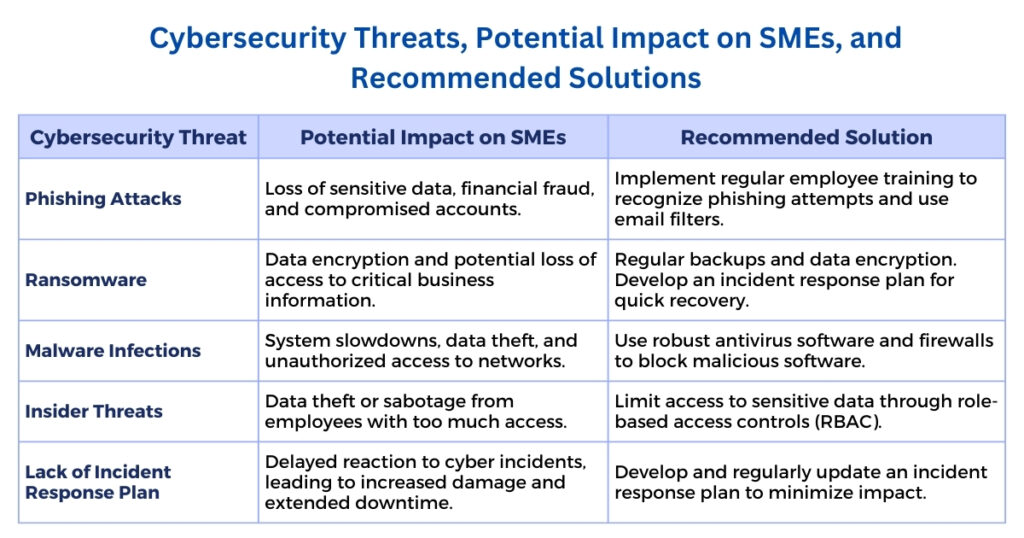
    Cybersecurity Threats, their potential impact on SMEs and solutions

    Conclusion 

    As cyber threats continue to rise, SMEs can no longer afford to remain complacent—especially with 46% of SMEs in India unaware of how to mitigate these risks. To safeguard sensitive and operational data while preserving customer trust, it’s crucial for organizations to adopt robust cybersecurity practices.

    Collaborating with custom cybersecurity solutions providers like SCS Tech can enhance protection by integrating advanced technology into their systems while promoting business growth and minimizing risks.

    FAQs

    • Do SMEs have the resources to implement solid cybersecurity protocols?

    Yes, SMEs can implement strong, cost-effective, and flexible cybersecurity measures with limited resources.

    • How does the principle of least privilege work in SMEs?

    The principle of least privilege involves allowing the user with minimum access rights to do their jobs to mitigate insider attacks and threats.

    • In what ways can SMEs protect their staff against phishing attacks?

    SMEs must ensure that employees have the knowledge to recognize suspicious emails, use spam filters, and encourage employees to report any phishing attempts.

    (more…)

  • Custom Cybersecurity Solutions for Protecting Digital Assets

    Custom Cybersecurity Solutions for Protecting Digital Assets

    Various solutions for protecting digital assets with the help of custom cybersecurity 
    In today’s interconnected digital landscape, the concept of digital assets has evolved beyond conventional boundaries, encompassing a vast array of valuables ranging from cryptocurrencies to sensitive financial data and proprietary information. As staggering statistics reveal, approximately 865 million individuals globally engage with digital assets, with a significant majority, 95%, navigating the complexities of crypto-assets.

    This surge underscores not only the pervasive adoption but also the critical need for robust cybersecurity solutions to safeguard these assets against an ever-evolving array of cyber threats.

    As many business operations are shifting to online platforms, digital assets have become not just valuable but also vulnerable to hacks and cyber threats. For such reasons, keeping digital assets well-protected is paramount. Doing so will let companies maintain business continuity, preserve the company’s reputation, and protect all sensitive data. 

    To make sure that the digital assets are safe, you must opt for some effective cybersecurity solutions, which we will be discussing in this blog.

    Best Cybersecurity Solutions to Safeguard Digital Assets

    The digital asset market will surely expand by 8.77% (2024-2028), which will lead to a market volume of $112100.00m. Despite all that, keeping them safe from unwanted cyber-attacks will be highly advantageous for all businesses.

    In this section, you will find out about some of the best  Custom Cybersecurity solutions, which will let you keep all your digital assets protected from online threats.

    Perform Cybersecurity Audits

    When planning for a risk prevention plan, you should begin by performing a cybersecurity audit. It’s because that’s the best way to discover all the risks and vulnerabilities your organization might experience.

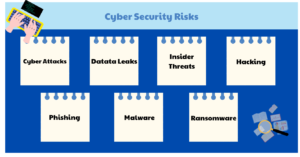
    During the auditing session, you should look out for all cyber threats and dangers that might disrupt financials, sensitive information, data loss, or business operations. You should rank all the risks as high, medium, low and level zero.

    Apart from that, there are some other dangers that you should flag while conducting the cybersecurity audit for your business:

    • Cyberattacks
    • Data Leaks
    • Insider Threats
    • Hacking
    • Phishing
    • Malware
    • Ransomware

    If performing a cybersecurity audit is quite overwhelming for you or you don’t know how to get it done, speak with a cybersecurity professional. Make sure to have protocols in place for all future audits.

    Virtual Desktops

    Virtual desktops provide a native-like experience while being hosted from a secure data center or cloud environment.

    When you utilize this type of desktop, you should opt for powerful monitoring solutions like “RDP Monitoring Software” that will track down user activities and also let you securely access information.

    Virtual desktops are ideal for individuals who don’t want to provide the equipment to their team physically. Some of the popular cloud-based desktops are Azure Virtual Desktops and Amazon WorkSpaces.

    Safe Management of Passcode

    Frequent password updates can pose challenges for team management. When you’re tired of finding the best ways to share logins with the team, you should use password management tools, such as “LastPass”. This tool will let you share, generate, manage and store passcodes with the team through SSO or single sign-on.

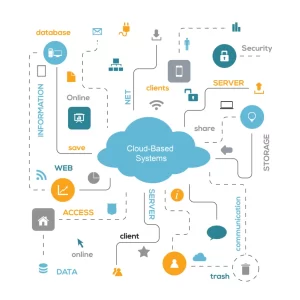
    Activating Cloud-Based Workflows

    The cloud-based workflows are perfect for all the cross-functional teams as they will increase their productivity. That’s not the only thing these workflows are known for. They can also safeguard the business-related processes by saving all the real-time updates.

    Through cloud-based workflows, you can save all the processes and tasks in the cloud. That way, you can reduce the chances of data loss and cyber threats.

    In contrast to traditional setups where data loss can occur if your local device unexpectedly shuts down during work, cloud-based workflows ensure all your work is securely stored and accessible from any device with an internet connection.

    The DAM [Digital Asset Management] Solution

    This particular solution will protect all the images and let you organize the digital asset library correctly. DAM solution can also let you manage the copyright of the stocks that you purchased and offer watermarking options.

    This will prevent the business-owned pictures from getting plagiarized. The DAM solution will provide user permissions, letting only the authorized members access all the information.

    Using vs Not Using Cybersecurity Solutions to Protect Digital Assets

    In this section, you will find out what happens when you use vs. don’t use custom cybersecurity solutions to keep digital assets safe. The table below will provide a proper explanation.

    The Category Using the Cybersecurity Solutions Not Using Cybersecurity Solutions
    Operational Efficiency Enhanced through the safe and streamlined methods Lessened because of all the security-related problems
    Chances of Data Breaches Greatly lessened because of preventive measures. Extremely high since the vulnerabilities are exploitable
    Reputation Management Improves the reputation and trust of the stakeholders Loss of consumer trust and causing reputational damage
    Identify All the Threats Offers responses and detection to threats Pretty slow, which can keep all the breaches undetected
    Business Continuity Assured via disaster recovery and backup solutions Changes in data loss and higher downtime
    Data Confidentiality and Integrity Maintaining it with access controls and encryption Gets compromised because no protective plans
    Incident Response Effective and rapid with all pre-defined response plans Chaotic and delayed, causing greater recovery time and
    Regulations and Compliances Following all the industry standards (PCI-DSS, HIPAA) Non-compliance will lead to financial and legal penalties

    Conclusion

    Opting for result-driven custom cybersecurity solutions will let all businesses secure their digital assets, prevent damage to reputation, and increase operational efficiency. This is exactly what we at SCS Tech India Pvt Ltd do for all our customers.

    We not only offer top-notch custom cybersecurity solutions but also services like cloud computing, blockchain solutions, robotic process automation, and so on. To find out more about us, get in touch with our experts right away!