Tag: #digitaltransformation

  • Process Automation – a business lifesaver

    Process Automation – a business lifesaver

    In today’s highly competitive and rapidly evolving business environment, leaders face numerous hurdles. With customers and market demands constantly shifting, companies must remain ahead of the curve to gain a competitive edge. One crucial way to achieve this is through Process Automation, which can streamline operations, boost profitability, and enhance resilience and agility in the face of ever-evolving challenges.

    Understanding the significance of Process Automation
    Discovering the different forms of Process Automation and its benefits

    Process automation is a valuable tool for businesses to reduce costs, minimize risk, and enhance operations. By relying on automation, companies can prevent human errors that could result in significant losses and also streamline processes to improve service delivery. Process automation promises faster task completion, more efficiency, and minimal errors, enabling businesses to stay competitive.

    Understanding the significance of Process Automation

    Process automation refers to the use of technology to perform tasks without the need for human intervention. In today’s fast-paced business environment, it is a crucial element that can lead to increased efficiency, reduced errors, lower costs, and improved productivity.

    By automating routine and repetitive tasks, companies can enable their employees to concentrate on more strategic and value-adding activities such as innovation and problem-solving. This approach can improve the efficient and effective use of resources, ultimately resulting in increased competitiveness and profitability. Moreover, process automation can enhance data processing accuracy, minimize manual errors, and provide a consistent, standardized approach to tasks, resulting in improved quality control.

    Discovering the different forms of Process Automation and its Benefits

    Process automation is transforming businesses by streamlining workflows, reducing costs, and enhancing efficiency. However, with several automation types available, choosing the right one can be daunting. Here are five essential process automation types to consider.

    1. Marketing Automation

    Marketing automation is an essential tool for businesses that frees up time and resources. It streamlines marketing efforts and delivers desired results, creating a better customer experience. Automated email campaigns target specific audiences and deliver tailored messages, with real-time adjustments to improve the marketing strategy. Marketing automation increases customer satisfaction and drives higher conversions, making it the future of marketing.

    2. IT Asset Management Automation

    IT asset management automation saves time, ensures accuracy, and reduces costs by automating tracking and management of IT assets. Automated solutions optimize the IT supply chain, streamline processes, and keep the IT team up-to-date on the latest hardware updates. Refine and optimize IT processes and keep tech running smoothly with the power of automation.

    3. Accounting Automation

    Accounting automation can streamline financial processes, saving time, and boosting accuracy. It simplifies tasks like creating purchase orders and managing contracts, providing clear and accurate records. Automation frees up the finance team’s time, allowing them to work smarter and provides a higher ROI for businesses.

    4. HR Automation

    HR automation can streamline traditional HR processes such as sifting through resumes, managing payroll and benefits, and handling contracts, tax data, and training programs. This can help ensure accuracy, mitigate the risk of errors, comply with employment laws, and allow HR teams to focus on other important responsibilities. Finding the right candidate and the entire offer process can be automated, saving time and effort.

    5. Customer Support Automation

    Customer support automation offers a solution to streamline customer service and create a seamless and efficient customer experience. Automated processes can help businesses attend to customer needs quickly and effectively, reducing mistakes and miscommunications while boosting efficiency levels. Embracing customer support automation can differentiate a business from the competition and create loyal customers.

     

  • Technology and Innovation – an update to encapsulate 2023

    Technology and Innovation – an update to encapsulate 2023

    Looking forward is never easy, but the New Year is a great time to revaluate your strategy and determine where to concentrate your efforts, particularly in technology. However, there are many regulatory incentives that could drive innovation and expansion in the coming years. In order to survive and prosper, tech businesses must recommit to enhancing their supply operations, upgrading infrastructure, and capitalizing on opportunities for growth.

    Embracing Technological Advancements: a response to global instability
    In the face of pandemics, inflation, geopolitical turmoil, supply problems, blockades, and other global uncertainties, it’s crucial to adapt the way we conduct business. This challenging landscape provides an opportunity to adopt new technology solutions that can help companies overcome these obstacles and transform them into a competitive edge. To stay ahead of the curve, let’s take a closer look at the technological advancements that have revolutionized the business landscape in 2023.

    Establishing a robust competitive position to ensure future success

    The pandemic has not only affected the world as a whole but also accelerated digital transformation and transformed work models, which has proven beneficial to the technology industry. However, in 2023, the tech industry is projected to face challenges concerning supply chains, workforce, and innovation, which are now compounded by significant macroeconomic and global uncertainties.

    In 2020-21, tech stocks performed exceptionally well during the pandemic. However, in 2022, the sector faced significant stock market declines. Now, the focus for tech companies will be to manage a potential economic slowdown by cutting costs, improving efficiency, and boosting revenue. Simultaneously, they will likely be searching for ways to remain innovative and establish a solid competitive footing for the future.

    Major Themes of 2023 and beyond-

    • Leading in Times of Macroeconomic Uncertainty

    In the face of economic challenges such as softening consumer spending, lower product demand, and falling market capitalizations, technology companies are pressured to improve margins and expand revenues.

    Here are some approaches that companies can take to address these challenges:

    • Streamlining business processes to improve efficiency
    • Increasing reliance on intelligent automation
    • Modernizing legacy architectures
    • Considering strategic mergers and acquisitions (M&A)

    These solutions can help overcome economic hurdles and ensure business continuity.

    • Strategies for Confronting Global Uncertainties in Technology Companies

    To reduce risks and improve system resilience, tech companies must navigate existing global challenges. Leaders should make strategic decisions regarding their choice of partners, location, and production methods.

    • The Tech Industry’s Impact on Other Sectors

    The technology sector is collaborating with other industries to identify new revenue streams and support innovation. By leveraging digital advancements, tech companies are striving to enhance efficiency and encourage innovation in sectors such as manufacturing, real estate, and retail, which are prime for transformation.

    • The Impact of New Regulations on Tech Companies

    As technology continues to evolve, our lives become increasingly intertwined with emerging tech trends. The Metaverse and AI have the potential to transform the world, much like the internet did, providing unparalleled opportunities for nimble businesses to gain an edge. Sustainable technology, AI, wireless engineering, cloud platforms, and other technologies have been at the forefront of technological innovation this year. The focus in the time ahead lies in tech innovation. It will be paramount that more immersive and experiential tech trends will be shaping the future.

  • A go to guide on Conversational AI & it applications

    A go to guide on Conversational AI & it applications

    The conversational AI industry is anticipated to reach $1.3 billion by 2025, increasing at a 24% CAGR. Conversational AI capabilities have significantly improved in the 2020s. New generation chatbots are more successful than first generation conversational technologies. As a result, they may successfully improve both internal and external consumer experiences.

    What is conversational AI?

    Conversational AI (artificial intelligence) refers to systems such as virtual assistants or chatbots that can “talk” to people (answer questions, for example).

    Conversational AI apps are frequently utilised in customer support. They are available on websites, online retailers, and social media platforms. AI technology can significantly improve the speed and efficiency with which consumer inquiries are answered and routed. The ultimate goal of conversational AI is to become indistinguishable from a human being or a computer.

    How does it work?

    Conversational AI is essentially powered by two functions. The first of these is machine learning. Simply said, machine learning means that the technology “learns” and improves as it is used. It gathers data from its own exchanges. It then uses that knowledge to develop itself over time.

    The second is known as natural language processing, or NLP. This is the method by which artificial intelligence comprehends language. It can progress to natural language generation after learning to recognise words and phrases. This is how it communicates with your customers.

    Structures that provide specified outputs to specific inputs are the most basic example of conversational platforms. Conversational platforms, on the other hand, can handle a broader range of queries thanks to machine learning. Furthermore, conversational AI systems can take into account the context (i.e. the remainder of the conversation) when determining the users’ intent and reaction.

    The top 5 benefits of using conversational AI tools
    1. Save time

    In the ideal scenario, every one of your clients would receive comprehensive customer service. However, some consumers will come to you with significantly simpler questions than others. A chatbot or virtual assistant is an excellent approach to ensure that everyone’s demands are met without overburdening yourself and your staff.

    1. Increased accessibility

    You cannot be available to your customers 24 hours a day, seven days a week. This issue can be solved by equipping your social media platform with conversational AI. If a consumer requires assistance outside of typical business hours, a chatbot can assist them. It solves a logistical issue and contributes to how chatbots can save time, but there’s more to it.

    While a virtual assistant cannot fix every problem, conversational AI allows clients like these to get the assistance they require.

    1. No more language barriers

    One underappreciated feature of conversational AI is that it removes language boundaries. The majority of chatbots and virtual assistants include language translation software. This enables them to recognise, interpret, and produce nearly any language with ease. As a result, no customer service encounter is hampered by language limitations. A multilingual chatbot makes your company more inviting and accessible to a broader range of clients.

    1. Versatility

    It is widely considered that conversational assistants are only employed for customer service. The potential of conversational AI allows businesses to cover a wide range of areas, from customer interactions to sales and marketing activities.

    1. Personalization

    Conversational assistants record every interaction, allowing for more precise customer behaviour analysis. As a result, the organisation is more educated about the demands of each group of its target audience and is able to personalise customer interactions.

    Applications of Conversational AI

    • Financial Services

    Financial institutions are unquestionably among the leaders in conversation AI adoption. Given the multiple areas for improvement that AI-powered technology can address, the desire for conversational AI chatbots and assistants in the BFSI sector is unsurprising.

    • Human resource management

    Conversational AI chatbots, although suitable to businesses, became HR managers’ helpers, managing employee inquiries and turning monotonous chores like on boarding, ticket generation, and data updates into self-service.

    • Learning

    Conversational AI chatbots can also be used to improve staff education by providing a more structured and personalised experience for each participant. Conversational AI may track employee performance, keep track of their overall course progress, and provide performance reports.

    • Healthcare

    Patients also anticipate spending less time dealing with issues such as scheduling visits, verifying insurance, and keeping medical papers. Using the analytical data obtained from conversational AI chatbots, healthcare practitioners may determine which experts to recruit more of, which equipment to purchase, and which procedures are in great demand.


  • A definitive guide to cyber security – everything explained

    A definitive guide to cyber security – everything explained

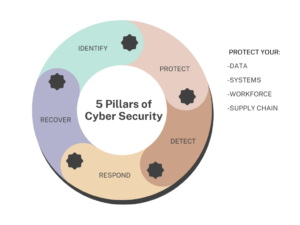
    Networks, devices, programmes, and data are all protected from attack, damage, and unauthorised access by a variety of technologies, procedures, and best practises. These collectively are referred as “Cyber Security” or “IT security.”

    Importance of Cybersecurity

    Types of Cyberthreats

    Types of Cybersecurity 

    Tips for Cybersecurity

    Importance of Cyber Security

    Government, military, corporate, financial, and medical organisations collect, process, and store unprecedented quantities of data on computers and other devices, making cyber security crucial. Sensitive information, such as intellectual property, financial data, personal information, or other sorts of data for which unauthorised access or exposure could have unfavourable effects, can make up a sizeable amount of that data.

    In the course of conducting business, organisations transfer sensitive data across networks and to other devices; cyber security refers to the field devoted to safeguarding such data as well as the technology used to handle or store it. Companies and organisations, especially those responsible with protecting data related to national security, health, or financial records, must take action to defend their sensitive business and people information as the frequency and sophistication of cyber-attacks increase.

    Types of Cyber Threats

    The most common types of cyber threats include:

    • Hacking
    • Social Engineering
    • Physical Security Attacks
    • Viruses and Malware (malicious software)
    • Ransomware attacks

    Types of Cybersecurity

    A broad concept like cybersecurity can be further divided into more focused subcategories. We’ll go over the five main categories of cybersecurity below.

    Application Security

    The process of creating, integrating, and testing security measures within online applications in order to defend them against attacks is known as application security, or AppSec.

    Cloud Security

    A more recent subset of cybersecurity is cloud security. It is the practise of safeguarding cloud computing infrastructures, along with any programmes that operate there and any data kept there. ​

    Critical Infrastructure Security

    Protecting a country’s or a region’s essential infrastructure is known as critical infrastructure security. The networks, systems, and resources that ensure physical and economic security, as well as public health and safety, are included in this infrastructure.

    Internet of Things (IoT) security

    IoT security, or “Internet of Things” security, is the process of securing almost any connected device that may communicate with the network without the intervention of a human. This covers the billions of other devices—monitors, printers, security cameras, motion sensors—as well as the networks to which they’re linked.

    Network Security

    Protecting computer networks and data from internal and external dangers is the practise of network security. Firewalls, virtual private networks, and two-factor authentication are examples of identity and access controls that can be useful.

    Cybersecurity Tips

    Unless you act, defensive cybersecurity solutions won’t be effective. Adopt these sound cybersecurity practises throughout your company to secure the protection of your business and consumer data. Best practises and defensive cybersecurity methods are used to secure your data.

    Solutions for Defensive Cybersecurity

    Investments in proactive cybersecurity solutions should be made by all enterprises. Your network and computers will be shielded from external attacks if these systems are implemented and proper cybersecurity practises are adopted.

    Antivirus Software

    It’s a preventative measure that monitors for bugs. The job of antivirus software is to detect viruses on your computer and remove them. Antivirus software also alerts you to potentially unsafe web pages and software.

    Firewall

    A firewall is a virtual wall that prevents harmful individuals and programmes from accessing your computer. It employs a filter that evaluates the legitimacy and safety of every request to access your computer.

     Two-Factor Authentication (2FA)

    A username or pin number and access to an external device or account, such as an email address, phone number, or security software, are required for two-factor authentication.

    Virtual Private Network (VPN)

    Your data enters and exits a web server through a “tunnel” created by a virtual private network (VPN). Your data is encrypted and safeguarded in that tunnel so that hackers and harmful software cannot access it or spy on you.

    ​ Although cyberattacks might be frightening, learning about cybersecurity doesn’t have to be. It is crucial to be ready and equipped, especially if you are handling the data of others. Businesses should spend time and money protecting their computers, servers, networks, and software, and they should keep up with new technological developments. If you’re looking for experienced IT partners or need more information visit www.scstechindia.com


  • The new era of energy industry empowered by technology

    The new era of energy industry empowered by technology


    Table of Content

    • Introduction
    • Innovation & Changes
    • Technical Empowerment
    • Renewable Resources

    An era of change

    The energy industry is going through a significant technological transition that will push the limits of the traditional energy delivery systems. In place of conventional fossil fuels, the new wave of technology is offering workable solutions that can maximise how much we use natural resources.

    These innovative options offer intelligent and data-driven solutions that encourage the development of smart infrastructure. These solutions include built-in digital intelligence that is changing how energy is produced, distributed, managed, and stored.

    The establishment of a new consumer model known as “Prosumer”—which depicts a situation where customers produce and consume energy while living outside of direct subsidy—came about as a result of consideration over efficient energy usage and consumer habits.

    The innovation that prompted the advent of energy 4.0

    The energy sector adopted rising tech trends including Internet of Things (IoT), Big Data, Blockchain, Machine Learning, Cloud Computing, and the Digital Twin technology without hesitation after realising the power of cutting-edge technology in other industries.

    The ways in which energy and utility businesses conduct business, connect with their customer bases, and engage with them have all being reinvented by the aforementioned technology. Technically speaking, it has greatly improved operation flow, performance optimisation, and the development of smart grids, better managed renewable energy sources, and cogently distributed power. These technological advancements have consequently led to a fresh round of ideas for integrating technology and the systems that enable it into (new) business models and strategies.

    “Simultaneously, hardware manufacturers and software development companies have been gathering experience in creating and integrating business-driven solutions with huge corporate systems, with an emphasis on internal reliability and ecological safety. As of now, with costs decreasing and technologies growing at an exponential pace, digitalization presents opportunities for Energy 4.0 companies to establish new business models and sustainable strategies of producing and delivering energy” – is stated in a research study conducted by MobiDev.

    The technological empowerment within the industry

    The idea of IoT and its capabilities have been extensively debated during the last ten years. The physical environment may be integrated with computer systems thanks to this intelligent “network of physical devices” that includes sensors, electronics, actuators, and connection resources.

    Energy 4.0 is the adoption of technologies like big data, artificial intelligence, and machine learning to take advantage of sensor data, automation, and machine-to-machine (M2M) communication to enhance operational performance. The industry is well on its way to transforming its operations into a global network of linked, standalone devices that are all delivering digital data to a platform that can gather, process, and share it in real time.

    Transparency within a platform that executes and records transactions is one of a ledger technology’s most potent advantages. Given how frequently assets change hands before a settlement is made, it is also useful for tracking ownership. As all parties are using the same platform, blockchain technology enables transactions like energy trading to be recorded and settled at the minute, without the need for an intermediary and with little to no requirement for reconciliation.

    The use of digital twins is expanding quickly and is becoming increasingly popular as an innovation trend. A digital twin is a depiction of a real-world thing or process that mimics it digitally without really replacing it. The digital twin allows for real-time KPI monitoring by utilising the data collected by an IoT system connected to its physical twin.

    Future energy will be renewable

    We are well on our way to a future where social innovation will integrate renewables into smart grids and produce clean and dependable energy sources, made possible by the digital transformation of the energy sector.

    Consumers are increasingly favouring renewable energy sources, which encourages the energy business to invest in more environmentally friendly technology. Greater opportunities are presented by digital innovation for businesses, consumers, and society as a whole since it motivates them to engage in environmentally friendly energy solutions that lower prices and give them more control over their energy use.


  • Need your business to thrive? Learn about key benefits of Data Analysis

    Need your business to thrive? Learn about key benefits of Data Analysis

    Today’s global marketplaces revolve on data, making sense of that data is essential to a company’s success. Failing to do so can result in a company falling behind.

    On its own, raw data doesn’t have much value. To leverage data to their advantage, businesses must apply data analytics, a discipline that systematically examines data in order to discover insights, patterns, and trends. Most businesses are aware of the potential rewards of investing in big data analytics, which promise to increase productivity, reduce costs, and improve decision-making. A recent survey by Micro Strategy found that businesses all across the world use their data for:

    • According to 90% of the business users who took part, their organization’s digital transformation strategies revolve around data and analytics
    • To increase their operations’ cost-effectiveness and process efficiency by up to 60%
    • 57% of businesses say they use data analytics to inform strategy and transformation
    • 52% of businesses use business analytics to track and enhance their financial performance

    What is Data Analysis?

    As a broad phrase, the processing of unstructured data to discover business insights is referred to as data analytics. It makes use of a variety of methods, procedures, statistics, and models. By definition, it is essentially a procedure for looking into raw data in order to derive significant insights. However, the development of AI and ML has caused the area of data analytics to advance at a rapid rate, reaching new heights.

    Usually, the purpose of data analytics is to give a business operational insights. This procedure entails reviewing historical data before applying the lessons discovered within to address the challenging business issues of the present.

    Despite the fact that big data analytics delivers value in a variety of ways, the following are some of its main advantages:

    • Quicker and wiser decision-making: businesses may quickly analyse massive amounts of data and come to wise judgements.
    • Cost savings: using big data technology, businesses can find better methods to conduct their operations and offer a cost-effective data storage solution.
    • A deeper comprehension of customer’s needs: big data reveals insights that assist businesses in identifying customer requirements and assessing satisfaction. This provides businesses with the knowledge they require to create long-lasting client relationships and provide higher-quality goods and services.

    The current state of Data Analysis & Business Intelligence

    For businesses to succeed in the digital economy, data is becoming more and more important. Up to 80% of businesses rely on data for a variety of operations, including product management, fraud detection, finance, human resources, and manufacturing. Data dashboards and visualisations are common in the modern workplace, enabling users to quickly follow performance measures using pre-built reports and filters.

    Organisations could find a wealth of potential hidden in their current systems with the use of data integration technologies. There is a lot of friction in analytics right now. Spreadsheets are frequently used by data workers, who typically utilise four to seven different applications to manage data. This takes a lot of time and increases the risk of errors and data compliance problems. Organisations must find a solution that unifies all data-related activities into a single platform, provides end-to-end data protection and traceability, and is simple for employees to use if they are to reap the greatest benefits from big data.

    How to select right data analytic tools for your business?

    Due to innovative methods like machine learning algorithms, the field of data analytics is expanding to unprecedented heights. Four categories of business analytics currently are:

    • Descriptive analytics
    • Diagnostic analytics
    • Predictive analytics
    • Prescriptive analytics

    It’s challenging to compile a comprehensive list of selection criteria for big data because it applies to such a wide range of use cases, applications, and industries. Build your toolset around the main objectives by focusing on the few business issues or opportunities that will have the most impact, such as real-time asset monitoring or a deeper comprehension of what your customers want.

    Big Data integration tools assist businesses in dismantling data ecosystem silos. When working with data gathered from a variety of IoT endpoints, apps, and data kinds, they are an essential tool for managing and storing data clusters. Although data integration solutions occasionally include stream analytics functionality, they are typically more appropriate for data management.

    It is possible to transform new data into actions. Partner with us to know more about best practices in data analysis. To contact us visit SCS Tech India.

  • Ultimate guide to RPA and the industry response

    Ultimate guide to RPA and the industry response

    Robotic process automation, or RPA, is a crucial component of the digital transformation for corporations and business organisations regardless of their location or function. To comprehend why automation is so beneficial, let’s delve into this brand-new universe.

    • RPA Services: What Are They?
    • How do RPA Services function?
    • RPA – the best solutions for enterprises
    • RPA process benefits

    How do RPA Services work?

    Robotic process automation, or RPA, is a technology that enables businesses to automate some repetitive processes.

    RPA software uses a mix of cognitive processes, automation, and modern technologies (such machine learning and automation). It can be used to carry out straightforward operations like sending an email automatically as well as sophisticated ones that thousands of bots can carry out simultaneously.

    Robotic process automation as a service, or RPAaaS, is a cloud-based, outsourced service that involves the deployment of software robots to handle such repetitive operations without any input from the clients.

    According to recent data on the status of RPA implementation, 78% of those who have previously done so anticipate much more investment in RPA over the following three years. There is obviously a lot to do, and there is a big demand. Let’s examine why.

    How are RPA Services implemented?

    RPA services significantly influence how businesses change and grow. Software robots can navigate systems, identify data, and carry out a wide range of tasks that resemble those carried out by humans. They can complete jobs more quickly and reliably than humans since they are robots, which also don’t make mistakes, get weary, or need breaks. They don’t get side tracked by social media, and they don’t require extra encouragement to get things done.

    RPA technology boosts efficiency, productivity, and accuracy in many corporate operations thanks to these benefits. This is why it became so important for organisations that want to grow, expand, or improve their effectiveness.

    Benefits of RPA processes for businesses

    It is far preferable to adapt RPA and use it in daily work than to hire new workers to perform simple tasks or to assign highly competent employees to repetitive activities and so waste their expertise. Employees who are relieved of monotonous and simple tasks can concentrate on bringing innovation to the company and coming up with fresh ideas to increase its success.

    The main benefits of RPA processes for enterprises include:

    • increase in effectiveness
    • efficiency
    • productivity
    • client satisfaction
    • cost savings
    • revenue growth
    • work quality and quantity improvement
    • improved compliance
    • faster pace of digitalization are all desirable outcomes

    The best solutions for large enterprises involves RPA

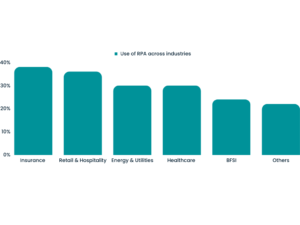
    53% of various firms use RPA services internationally, according to research. Depending on their demands, size, and industry, it is predicted that almost all businesses will use some form of automation within the next five years.

    Interested in learning more RPA?

    Consider putting it into practise in your business to advance it. Get in contact with our experts; we’d be pleased to assist you!


  • IoT the next big thing or already is? In perspective of Industry 4.O

    IoT the next big thing or already is? In perspective of Industry 4.O

    One of the key technology foundations of Industry 4.0 is the Internet of Things. The ability of machines to independently communicate with one another allows them to solve issues that would previously require human intervention.

    It is anticipated that the use of industrial IoT for predictive maintenance and a rise in the number of data centres would present sizable market expansion prospects. Additionally, the government’s promotion of industrial automation and the demand for high productivity & efficiency are the main factors propelling the growth of this market.

    The majority of firms have acquired a high degree of IoT maturity, and through 2024, enterprises from all industry sectors intend to invest an average of $2.8 million in IoT. Businesses anticipate spending 10% of their IT budgets on IoT initiatives during the next three years, up from the average 7% of an organization’s IT expenditure between 2017 and 2020.

    However, there are observable differences in the expected IoT investment levels across various business sectors. Over the next three years, oil and gas companies plan to invest the most in IoT ($3.2 million on average), followed by electrical utilities ($3.1 million), transportation and logistics ($3 million), mining operators ($2.7 million), and finally, agricultural industries ($2 million).

    Latest research conducted by Inmarsat Enterprise reveals IoT is now the primary Industry 4.0 technology in which companies are investing over the next three years. IoT is becoming a company investment priority, and businesses expect it to save them an increasing amount of money in the next years. This shows how well-established an industry IoT has become globally. Despite the fact that IoT adoption is already accelerating quickly, Covid-19 has stressed the value of Industry 4.0 technologies like IoT for maintaining business continuity. Companies who create digital twins of their supply chains and share data are reaping the rewards as the world’s manufacturing and supply chains become more integrated and digitalized.

    In the Indian Landscape –

    India is a hive of IoT provider potential, and the nation’s IoT ecosystem is anticipated to keep expanding to generate entirely new sources of income. To stay ahead of the curve and meet the growing demand for IoT solutions, vendors should collaborate with other members of the value ecosystem to take advantage of cutting-edge technologies like Big Data analytics, AI and machine learning, new connectivity protocols, and blockchain.

    Private long-term evolution for improved security: Indian tech organizations should concentrate on promoting the advantages of P-LTE to raise awareness and approach businesses with solutions tailored to specific verticals.

    Real-time operational intelligence for improved risk and compliance management: To deliver brand-neutral IoT solutions, suppliers must create hardware and software that is interoperable and pre-integrated.

    Visual matrix solutions for better CX: IoT providers should collaborate with OEMs of visual surveillance systems to offer in-store, real-time consumer analytics in addition to core security solutions.

    IoT as a Service for Smart Diagnostic Laboratories: By starting with open source IoT solutions, expenses can be significantly cut, which will promote the use of smart laboratories as a service.

    By using our global knowledge and top-class IoT solutions, we can assist your business with our digital transformation and automation services. If you’re looking for understanding partners which can deliver results, contact us now.