Tag: #disastermanagement

  • Evaluating Incident Management Software: Features and Performance Metrics

    Evaluating Incident Management Software: Features and Performance Metrics

    Downtime isn’t just a nuisance—it’s a costly affair. 

    With system downtime costing companies an average of $300,000 per hour in lost revenue, employee productivity, and maintenance charges, the financial impact is staggering. 

    For instance, an e-commerce giant facing a server outage during a major sale event can experience frustrated customers and significant revenue loss. This is one among the many situations that underscores the critical need for efficient incident management software.

    In this blog, we will delve into the essential features and performance metrics that define top-tier incident management software, helping you make informed decisions to safeguard your business operations.

    Incident Management Software: A Brief Overview

    With Incident management software, corporations can efficiently respond to and manage all kinds of incidents. The software can collaborate on resolutions, simplify the interaction with the stakeholders and track down all incidents.

    Furthermore, it can also automate various tasks like incident escalation and alerting. Besides that, the necessity of this particular software leans on the complexity and scale of your business operations and IT infrastructure.

    Small IT frameworks and SMEs with simple operations can manage all incidents without software. However, bigger and more complicated IT setups need powerful incident response systems to handle all incidents effectively.

    The Features of Incident Management Software
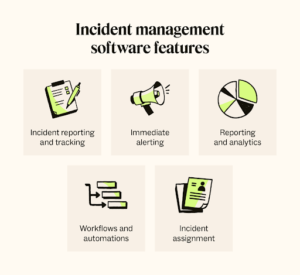
    Image Source:

    Before you choose an ideal Incident management software for your business, it’s crucial to understand all its features. Checking out the features beforehand will certainly help you make a smart choice. The features are:

    • Customisable Workflows: The software offers workflow customisation so that you can align incident management with the company’s certain procedures.
    • Intuitive User Interface: Having a user-friendly interface will lead to instant incident resolution. Incident management software comes with a minimal learning curve and uncomplicated navigation.
    • Collaboration Tools: This type of software comes with real-time collaboration and communication features so that you can take a unified approach when it comes to handling all sorts of incidents.
    • Automated Capabilities: Having a powerful automation feature can lessen human errors and speed up response times during severe incidents.
    • Multiple Channel Alerting: This software also has the multi-channel alerting feature to make sure no incidents go unnoticed by you and your team.
    • Scalability: The software will scale the business growth and also increase the demand and the complexity along with it.
    • Comprehensive Analytics and Reporting: The powerful analytics and reporting tools can give insights into the performance and various incident trends.
    • Mobile Accessibility: Many Incident management software come with a mobile accessibility feature so that you can receive responses on time regardless of your location.
    • Integration Capabilities: This software can integrate perfectly with all your current platforms and tools. The feature can stop information silos.
    • Incident Response Tool: The incident management system comes with an outstanding incident response feature, which makes the entire platform quite powerful.
    • Security Measures and Compliance: Incident management systems meet all the compliance standards of the industry and also have robust security measures to keep all sensitive information secure.

    Value of Incident Management Software for the IT Sector

    Incident management software plays a vital part in many sectors, including Information Technology (IT). Using this software in an IT setting can help you take a systematic approach to managing all unexpected emergencies, incidents, and events. There are other reasons that prove this software is important for the IT industry. Check out the table below:

    The Pointers The Reasons
    Analysing the Root Cause Simplifies the entire analysis of various incidents to detect all the underlying issues for long-term enhancements.
    Reducing the Downtime Assist in smoothly resolving all cyber-related attacks and system failures. This helps reduce all the software disruptions.
    SLAs [Service Level Assessments] Tracks down the incident resolution times to maintain customer satisfaction and guarantee SLA compliance.

    The Performance Metrics of Incident Management Software

    The Incident management software has many performance metrics, and you will find out about the important ones in this section.

    Uptime

    This metric is known as the percentage of times a system functions correctly. Uptime is extremely straightforward as it will show you how reliable the service can be. If the uptime is close to 100%, it means your customers are happy. Based on the industry standards, an uptime of 99.9% is viewed as pretty good, but 99.99% is considered excellent. Even though perfection is not possible, try to keep this particular number higher.

    MTTR [Mean Time to Resolution]

    This metric is known as the average time taken to resolve or respond to a specific incident. Mean Time to Resolution will show you how fast your team resolves or responds to various problems that take place.

    First Touch Resolution Rate

    This is a rate at which all incidents get resolved without repeat alerts when they take place for the first time. The First Touch Resolution Rate displays how effective the management system has become over time. A first touch and high-resolution rate means the system is mature and properly configured.

    MTTA [Mean Time to Acknowledge]

    MTTA is known as the average time between the team member who acknowledges the problem and the system alert. This metric will show you how effectively and instantly your team members respond and manage the latest system alerts.

    Conclusion

    Incident management software is crucial not only for the marketing and healthcare sectors but also for the IT, power, gas, oil and various other incident-prone industries. It enables swift responses and system alerts and enhances team collaboration effectively.

    Implementing such software enables proactive incident detection and timely response to unforeseen events. For tailored incident management solutions for your business, consider consulting experts at SCS Tech India Pvt Ltd.

    SCS Tech India Pvt Ltd specializes in delivering cutting-edge IT solutions globally, including Cyber Security, Blockchain Solutions, and Enterprise Solutions. Serving diverse sectors such as Agriculture, Finance, Education, and Healthcare, they are committed to providing innovative IT-based solutions to meet varied client needs.

  • Implementing Incident Management Software for Effective Disaster Response

    Implementing Incident Management Software for Effective Disaster Response

    Incident management software is a fundamental component in coordinating incident responses across various types of events. Its role is especially crucial in today’s world, where the frequency and intensity of natural disasters have significantly increased compared to the past.

    Effective disaster management, encompassing both natural and man-made incidents, involves substantial risks. A proper response can prevent loss of life, minimize property damage, and facilitate a swift return to normalcy for affected communities.

    This blog discusses the critical importance of Incident Management Software (IMS) in disaster response, detailing its features, benefits, and implementation strategies.

    Understanding Incident Management Software

    Incident Management Software (IMS) is designed to enable organizations to handle emergencies efficiently. This system is essential for reporting, monitoring, and managing incidents across various fields. It acts as a command center for disaster management, integrating functionalities like communication, information dissemination, resource management, data interpretation, and analysis to enhance response rates.


    Understanding Incident Management Software 
    Feature Characteristics 
    Real-time Communication and Coordination Alert the senders and receivers of data and thus controllers and administrators of responses
    Resource Management  Helps to effectively allocate resources all through a given chain
    Incident Tracking and Reporting  Track and report all the specific occurrences
    Integration with other Systems  Function together with other helpful systems


    Let us identify the salient features of IMS and how an IT infrastructure solution provider can help in detail:

    • Real-time Communication & Coordination

    Disaster response management depends on positive communication hence it is important to adopt effective communication platforms. IMS founded Interactive Distance Education and e-learning tools such as messaging systems, video conferencing, and an alert system. These features alert the senders and receivers of data and thus controllers and administrators of responses coordinate timeously.

    • Resource Management

    Resource management is vital in a disaster and should be managed efficiently for the best results. IMS can be used to track and distribute work such as the distribution of human resources, machinery, facilities, and other materials. It also helps to effectively allocate resources all through a given chain, to ensure that demand for a certain resource in a certain sector is met. 

    • Incident Tracking and Reporting

    Another aspect is the efforts to track and report all the specific occurrences that may have occurred during a particular phase of the incident. IMS allows for the thorough record-keeping of details, maps and the status, which are critical in near-shore and post-impact scenarios.

    • Integration with Other Systems

    Today’s IMS solutions can function together with other helpful systems like a Geographic Information System, Meteo System, and Public Address System. It also gives a holistic approach to the occurrence of incidents when it has been integrated, hence improving the decision-making process.

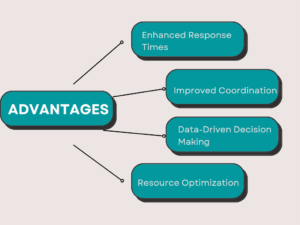
    Advantages of Incident Management Software

    A few of the advantages of incident management software are listed below:

    • Enhanced Response Times

    IMS significantly reduces the time required to respond to inquiries and emergencies. With features like real-time feeds and dispatch options, responders gain rapid situational awareness and can mobilize relevant resources quickly, thereby minimizing the disaster’s impact.

    • Improved Coordination

    Disaster response often involves multiple agencies and organizations. IMS facilitates better coordination among these entities by providing a shared platform for communication and resource management. This common ground improves the overall efficiency and effectiveness of the response.

    • Data-Driven Decision Making

    Disaster response often involves multiple agencies and organizations. IMS facilitates better coordination among these entities by providing a shared platform for communication and resource management. This common ground improves the overall efficiency and effectiveness of the response.

    • Resource Optimisation

    IMS helps organizations optimize the utilization of their resources. By keeping track of available human resources, equipment, and materials, IT solutions like IMS ensures that resources are used efficiently and effectively. This optimization minimizes resource wastage and ensures timely emergency responses.

    Implementing Incident Management Software

    By keeping in mind the following aspects, we can successfully implement incident management software:

    • Assessing Organisational Needs

    Before one can start to implement IMS certain prerequisites need to be met. It’s about determining the kind of incidents that will be claimed, the tools to be used, and other systems that IMS will be interfacing with. The choice of the software and its features will be informed by the needs of the organisation undergoing the audit.

    • Selecting the Right Software

    In the present world market, there are numerous IMS solutions available with their advantages and disadvantages. Choosing the right software might be based on characteristics such as convenience, capacity for expansion, compatibility with other systems, and the availability of further services. 

    • Customise and Integrate the System

    If an IMS solution has been chosen, the next step is to make it compliant with your specific needs. You need to adopt the applications to meet the unique requirements of your company and its business management. Also on dependability, the ability to interface with other systems is important for the response functions.

    • Training and Drills

    IMS, from the prospect of their implementation, is not only a question of technology but rather of people as well. Make sure all users who are expected to be on the system are trained well on how to handle it. Essential frequent exercises also include drills and simulations. Both assist in evaluating the performance of the system and examining the level of awareness of the responders.

    Conclusion

    The application of Incident Management Software can be considered as a key strategy to strengthen the resilience of an organisation in the face of disaster situations. Through enhanced communication, resource dispatch and other analytical solutions, IMS enhances real-time reactions and responses to emergencies. 

    We, at SCS Tech India PVT Ltd offer leading-edge, advanced software IT infrastructure solutions for managing incidents and ensuring smooth, efficient operations. Our exceptional technologies are designed for swift and efficient responses to critical events. Our software provides real-time data, communication systems, and automated workflows to enhance emergency planning and enable quick, efficient actions by the emergency teams. 

    Contact us today to boost your organisation’s disaster management capabilities, increasing your safety and preparedness for any emergency.

  • The Role of GIS in Natural Disaster Management

    The Role of GIS in Natural Disaster Management

    For business owners, preparing for natural disasters is paramount to safeguarding their operations and employees. That’s where Geographic Information Systems (GIS) come into play.

    In this blog, we’ll explore how geographical information system software, especially the solutions offered by companies in India, plays a vital role in disaster management. It provides invaluable support, from predicting where disasters might strike to guiding emergency responses.

    Join us as we uncover how GIS can empower businesses to protect their assets and ensure continuity during natural calamities.

    Understanding GIS and Its Applications in Natural Disaster Management

    Natural disasters can have devastating effects on communities and businesses alike. However, geographical information system software offers a powerful tool set to help mitigate these risks and manage the aftermath more effectively.

    What is GIS?

    At its core, GIS is a technology that captures, analyzes, and presents spatial or geographical data. This includes information such as maps, satellite imagery, and geographic coordinates.

    Applications in Disaster Management

    GIS plays a crucial role in various stages of disaster management:

    1. Prevention and Preparedness: Geographical information system software helps authorities identify risks and develop mitigation strategies by mapping potential hazards, vulnerable areas, and critical infrastructure. For example, it can be used to map flood zones, earthquake fault lines, and areas prone to wildfires.
    2. Response and Relief: it enables real-time monitoring and coordination of response efforts during a disaster. Emergency responders can use GIS to track the movement of a hurricane, identify affected areas, and deploy resources where needed most. GIS also helps establish temporary shelters, evacuation routes, and medical facilities.
    3. Recovery and Reconstruction: After the disaster has passed, it plays a vital role in assessing damages and planning reconstruction efforts. By mapping out the extent of destruction, it helps prioritize areas for recovery and allocate resources effectively. Additionally, it aids in monitoring environmental impacts, such as soil erosion or pollution, and planning restoration projects.

    GIS Methods to Predict Natural Disasters

    GIS technology is crucial in predicting and forecasting and in natural disaster management, enabling proactive decision-making and resource allocation.

    1. Remote Sensing and Satellite Imagery: geographical information system software utilizes satellite imagery to monitor environmental changes and indicators of impending disasters.
    2. Modelling and Simulation: it models analyze historical data and environmental factors to forecast hurricanes, floods, and landslides.
    3. Early Warning Systems: it integrates real-time data to develop early warning systems for timely alerts and proactive measures.

    Real-Time Monitoring and Response with GIS

    Timely response to natural disasters is critical for minimizing damage and saving lives. GIS technology enables real-time monitoring and coordinated response efforts.

    1. Data Integration: GIS platforms integrate real-time data from various sources, providing up-to-date insights into evolving disaster scenarios.
    2. Situational Awareness: it visualizes critical information on interactive maps, enhancing situational awareness for emergency response teams.
    3. Resource Allocation: it helps prioritize response efforts by efficiently identifying areas at the most significant risk and allocating resources.
    4. Coordination: it facilitates collaboration among multiple agencies, ensuring a unified and effective disaster response.

    GIS Companies in India: Leading in Disaster Management

    India boasts several GIS companies specializing in disaster management solutions. These companies offer tailored expertise and innovative technologies to effectively predict, monitor, and respond to natural disasters management.

    1. Expert Solutions: GIS companies in India provide cutting-edge solutions for flood mapping, landslide prediction, and more, enhancing disaster resilience.
    2. Government Collaboration: They collaborate closely with government agencies, integrating GIS into disaster management frameworks to streamline response efforts.
    3. Capacity Building: These companies offer training programs to equip officials and responders with GIS skills, empowering communities to mitigate disaster impact.
    4. Community Engagement: Through outreach programs, they raise awareness and promote preparedness measures among local communities.
    5. Innovation: These companies are leaders in innovation. They invest in research to develop new disaster prediction and response technologies.

    Conclusion

    In conclusion, geographical information system software(GIS) play a pivotal role in every phase of disaster management, from prediction to recovery. Through advanced technologies and innovative solutions, GIS empowers communities and authorities to anticipate, monitor, and respond to natural disasters precisely and efficiently. GIS companies in India are at the forefront of this effort in India, offering expertise, solutions, and collaboration to enhance disaster resilience nationwide.

    As businesses navigate the complexities of disaster management, leveraging GIS technology becomes increasingly essential. By partnering with GIS companies in India and embracing innovative solutions, businesses can strengthen their disaster preparedness, protect their assets, and contribute to the safety and well-being of their communities.

    Visit SCS Tech India’s website today to explore how its GIS solutions can support your disaster management initiatives.

    Together, let us harness the power of GIS to build a safer, more resilient future for all.