Tag: #egovernance

  • What Role Does Blockchain Play in Streamlining Identity Verification for eGovernance Solutions?

    What Role Does Blockchain Play in Streamlining Identity Verification for eGovernance Solutions?

    What if identity verification didn’t mean endless waits, repeated paperwork, and constant data theft risks? These problems are the setbacks of outdated systems, slowing down public services and putting sensitive information at risk. Blockchain solves these issues by streamlining identity verification in eGovernance solutions. It reduces paperwork, speeds up validation, and ensures transparency and security in the process used by governments to verify citizens.

    Blockchain provides a real-time auditable record because of its unique, decentralized, and tamperproof architecture. By this, blockchains ensure clarity between citizens as well as governmental institutions.

    But how exactly does blockchain revolutionize identity verification in eGovernance? In this blog we will first look into its impact before taking a more detailed look at the key flaws of traditional identity systems and why an upgrade is long overdue.

    The Problems of Traditional Identity Verification in eGovernance

    1. Centralized Databases Are Easy Prey for Cyberattacks

    Most government identity verification systems rely on central databases, representing an attractive target for attackers. The recent OPM hack in the U.S. demonstrated this risk. Once hacked, sensitive citizen data is instantly available on the dark web.

    1. Data Silos and Repetitive Verification Processes

    Government agencies are not interlinked; each agency maintains a separate database of identities. This has created the need for citizens to continuously furnish the same information for services like health, social security, and driving licenses.

    1. Lack of Transparency and Trust

    Citizens do not know where and how their identity data is stored and accessed. An auditable system cannot be available; identity misuse and unauthorized access become widespread. The lack of public trust in the eGovernance solution prevails.

    1. High Costs and Inefficiencies

    Complex identity verification systems, fraud fighting and manual checking of documents impose a burden on government resources. Inefficiencies in service delivery and increased operational costs result.

    What Role Does Blockchain Play in Streamlining Identity Verification for eGovernance Solutions?

    Blockchain redefines the entire landscape of verification through identities. Let’s break it down as to how it solves the above issues:

    • Decentralized Identifiers (DIDs): Empowering Citizens

    DIDs allow people to be in control of their digital identity. Instead of government-issued IDs stored in centralized databases, users store their credentials on a blockchain. Citizens selectively disclose only the necessary information, which enhances privacy.

    • Verifiable Credentials (VCs): Instant and Secure Authentication

    VCs are cryptographically signed digital documents demonstrating identity attributes like age, citizenship, or educational qualifications. Governments can issue VCs to citizens and use them to access public services without excessive disclosure of personal data.

    • Zero-Knowledge Proofs (ZKPs): Privacy-Preserving Verification

    With ZKPs, a person may prove identity and conceal all details. For instance, one citizen can prove they are above 18 years old without revealing their birth date. This minimizes the data exposure and theft of one’s identity.

    • Smart Contracts: Automating Verification Processes

    Smart contracts enforce pre-defined verification rules without any human intervention. For example, a smart contract can immediately approve or reject citizen’s applications for government benefits based on the eligibility criteria by checking the VC.
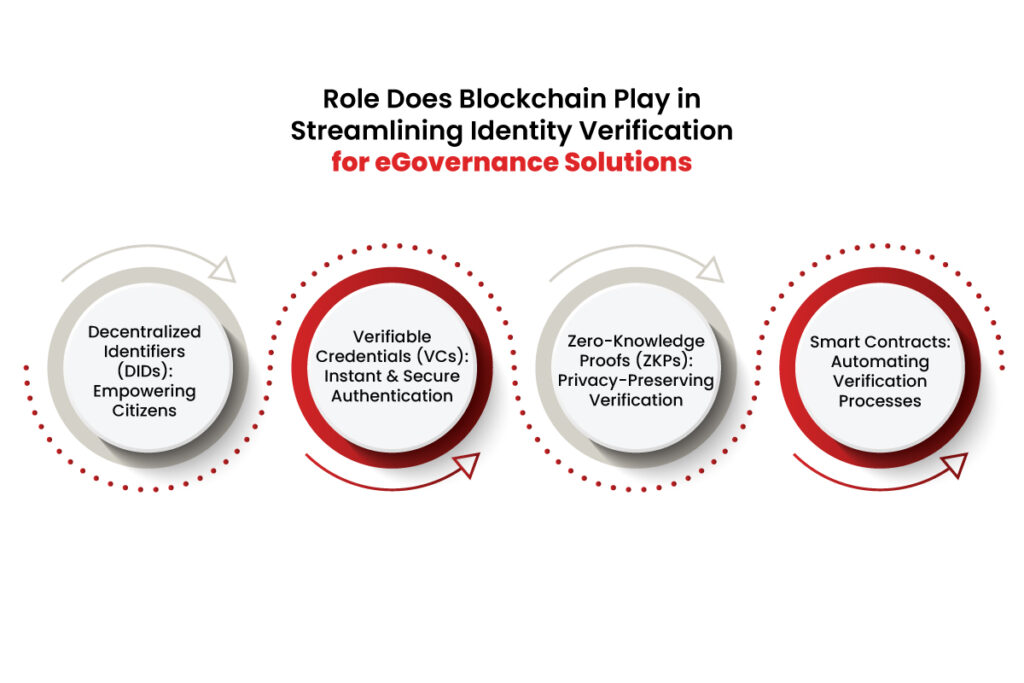
    Role of Blockchain in Streamlining Identity Verification for eGovernance Solutions

    Real-Time eGovernance Blockchain Solutions

    1. Safe Digital Voting

    Blockchain ensures secure voting and increases the integrity of elections. Citizens get registered with a DID, receive a VC from an electoral commission, and vote anonymously on a tamper-proof ledger. ZKPs verify whether a voter is eligible to vote without disclosing their identity.

    1. Digital Identity Wallet for Social Welfare Programs

    Governments can provide VCs that prove their entitlement to welfare schemes. These are kept in digital purses, and the citizen will withdraw his benefit without requiring documents each time.

    1. Cross-Border Identity Verification

    The immigrants possess blockchain-verified credentials for identity, educational qualifications, and work experience. Immigration departments use smart contracts that authenticate credentials to help avoid tedious delays and paperwork over the authenticity of the same.

    Solution of Blockchain’s Issues in eGovernance

    Even though blockchain comes with many advantages, its significant concerns that need to be addressed are scalability, interoperability, and governance. Here’s how they are being addressed:

    1. Scalability Solutions

    Rollups and sidechains are some of the layer-2 scaling solutions that make it possible to achieve high transaction throughput and reduce congestion on the blockchain to increase efficiency.

    1. Interoperability Across Platforms

    Cross-chain bridges and atomic swaps protocols facilitate identity verification across multiple blockchain networks and jurisdictions to be integrated with existing eGovernance frameworks seamlessly.

    1. Privacy and Compliance

    Homomorphic encryption and secure multi-party computation further enhance data privacy while maintaining compliance with GDPR. The governance framework should be well-defined by governments to govern blockchain-based identity systems.

    1. Quantum-Resistant Cryptography

    With the evolution of quantum computing, blockchain networks have been moving towards quantum-resistant cryptographic algorithms for long-term security.

    Future of Blockchain Identity in eGovernance

    The adoption of blockchain for identity verification is just beginning. Future advancements will include:

    • Self-Sovereign Identity (SSI): Citizens will fully own and control their digital identities without intermediaries.
    • AI-Powered Identity Verification: AI will detect fraud, improve security, and enhance user experience.
    • Decentralized Autonomous Organizations (DAOs): It is the management of digital identities in a transparent, autonomous manner and decentralized one.
    • Metaverse Identities: Blockchain can facilitate secure identities maintained virtually in virtual worlds and digital transactions.

    Conclusion

    Blockchain for identity verification is revolutionizing eGovernance solutions. It eliminates centralized vulnerabilities, reduces verification costs, and enhances trust in blockchain-based identity solutions, opening avenues for efficient, transparent, and secure public services.

    The future digital identity will be decentralized, user-centric, and fraud-resistant for governments and institutions embracing this technology.

    SCS Tech is committed to create this future to help businesses and governments navigate this ever-changing digital landscape. Blockchain identity solutions aren’t just the future—they are the present.

  • Why Are Governments Using Blockchain in eGovernance Solutions for Land Records?

    Why Are Governments Using Blockchain in eGovernance Solutions for Land Records?

    What if you couldn’t prove the land you live on is actually yours? Sounds scary, right? That’s the reality for many people due to outdated land records. In India, only 69% of land has been mapped digitally under the Digital Land Record Management Program, leaving large gaps. This highlights the urgent need for a system in eGovernance solutions that is secure, transparent, and tamper-proof.

    This is where blockchain comes in. Its unparalleled ability to serve transparency, security, and efficiency puts it at the core of modern eGovernance solutions for land records. In this blog, let’s understand why blockchain is changing the face of this significant aspect of governance. But before let’s dive into the challenges that we faced due to traditional land record systems.

    Challenges in Traditional Land Record Systems

    The present system regarding the management of land records has significant flaws. Let’s take a closer look at them:

    Vulnerability to Fraud

    Traditional systems have fake documents, duplicate registrations, and unauthorized changes. Such issues bring legal disputes and make property transactions risky. Think of buying a property only to discover it had already been sold to another person based on forged papers. Blockchain can remove such risks because records are tamper-proof.

    Lack of Transparency

    Traditional systems often store records in centralized databases. Accessing these records is a bureaucratic maze, leading to confusion and mistrust. Blockchain’s open ledgers make records visible to all stakeholders, reducing disputes.

    Inefficiency and Bureaucracy

    Traditional processes are slow and costly, from waiting in long queues to paying multiple intermediaries. This inefficiency discourages investment and delays transactions. By streamlining processes, blockchain makes land transactions faster and more affordable.

    Data Integrity Issues

    Centralized systems are prone to natural disasters, cyberattacks, or human error. Blockchain’s decentralized nature ensures that data remains secure and accessible, no matter what.

    Why Are Governments Using Blockchain in eGovernance Solutions for Land Records?

    Governments are increasingly adopting blockchain technology to improve eGovernance solutions, particularly in managing land records. This transition is motivated by several critical factors:

    1. Immutable Ledger

    A significant need is reliable, tamper-proof records of land. More often, traditional systems are prone to fraud, such as forgery and unauthorized amendments. This kind of ledger ensures that records entered cannot be deleted or modified without consensus, thus increasing trust in the integrity of ownership documentation over land.

    Blockchain technology has a decentralized ledger where all the transactions concerning land ownership are permanently recorded. Each transaction is enclosed in a block that connects subsequent blocks, thus offering security regarding the chain of custody. This structure ensures that any kind of attempt to alter the record would require all the following blocks to be changed, making such attempts impracticable.

    2. Increased Transparency

    Transparency is essential in developing trust among all stakeholders involved in real estate transactions. Centralized databases can hide information, leading to confusion and disputes about property ownership in traditional systems. Governments can minimize misunderstandings and increase public confidence by providing transparent access to land records.


    Blockchain enables all parties involved, such as government agencies, property owners, and potential buyers, to access the same information about land ownership and transaction history in a shared ledger. Real-time access means all parties have up-to-date data, allowing them to verify ownership claims without intermediaries independently.

    3. Enhanced Security

    This is because land record management involves very sensitive information on property ownership, and therefore, security is a significant concern. With traditional systems, unauthorized access and data breaches can compromise the integrity of the land records.

    Blockchain allows all stakeholders including government agencies, property owners as well as potential buyers to view an agreed-to version of truth regarding land ownership and transactional history in a shared ledger. Real-time access will provide immediate data for all parties, and that’s how they will authenticate claims of ownership independently, without anyone’s interference.

    4. Simplified Process via Smart Contract

    The bureaucratic nature of traditional land registration processes often results in delays and increased costs for property transactions. Reducing reliance on intermediaries can expedite these processes and lower administrative burdens on government agencies.

    Smart contracts are self-executing contracts with all of the terms written directly into code. They automate many aspects of land transactions. For instance, they can automatically verify ownership during sales or transfers, eliminating the need for notaries or registrars. This automation accelerates transactions and improves operational efficiency within government agencies responsible for land registration.

    5. Decentralization

    Centralized control over land records poses risks such as data loss or manipulation due to individual malfeasance or systemic failures. Decentralization mitigates these risks by distributing data across multiple nodes.

    Blockchain runs on a decentralized network, storing data in multiple nodes instead of in a central database kept by a single entity. It minimizes the probability of losing or altering data and increases resistance against cyberattacks so that land records do not become inaccessible if some nodes go offline.

    Landmark Initiative for Land Records Modernization in Bihar

    The Bihar government is undertaking its first-ever state-wide land survey to modernize records. The project was launched in August 2023 and aimed at modifying the ownership records of around 44,000 villages by making them more transparent and reduced in terms of dispute.

    The exercise has been divided into two phases, one to be carried out on around 5,000 villages and the remaining in the next phase. However, due to complexities such as untransferred ownership and incomplete mutation processes, the deadline has been extended to July 2026. Landowners now have until March 2025 to submit claims online through a simplified self-declaration process.

    This initiative also includes plans for urban land surveys, with a pilot project proposed for six urban local bodies. Digitizing land records is the goal of the Bihar government in streamlining governance, making land ownership more transparent, and empowering citizens.

    These efforts are part of a broader vision of ensuring efficient land administration and reducing the potential conflicts that arise from ambiguous records. Once completed, this project is expected to transform land governance in the state, fostering trust and accountability among citizens while enabling smoother economic and legal transactions involving land.

    Conclusion

    In essence, blockchain in eGovernance solutions enhances transparency, security, and efficiency in transactions about the properties. Most significantly, the main challenges posed by traditional systems- fraud, inefficiency, and mistrust-could now be addressed and placed within a more substantial framework that enables better land administration.

    For successful adoption, governments must establish regulatory frameworks that validate blockchain records as official property documentation, ensure compatibility with existing systems, and promote public awareness of its advantages. Companies like SCS Tech are enabling these advancements by offering tailored blockchain solutions. By implementing blockchain effectively, governments can create more trustworthy governance structures, protect citizens’ property rights, and transform land record management into a secure and transparent process.

  • How Do Blockchain-Powered eGovernance Solutions Improve Public Service Delivery?

    How Do Blockchain-Powered eGovernance Solutions Improve Public Service Delivery?

    Do you hope for governments to be able to deliver faster, more transparent, and more efficient services in this digital world? Blockchain-powered eGovernance solutions are likely to help with this and become the foundational technology for 30% of the world’s customer base, from simple, everyday devices to commercial activities, by 2030. It will signal a fundamental shift in how public service delivery takes place and make governance smarter, safer, and more accessible.

    In this blog, we’ll explore how blockchain-powered eGovernance solutions improve public services. These advancements are reshaping how governments serve their citizens, from automating workflows to enhancing transparency.

    1. Decentralization: Building Resilient Systems

    Distributed Systems for Reliable Services

    Traditional systems are primarily based on centralized databases, prone to cyberattacks, downtime, and data breaches. With the power of Distributed Ledger Technology (DLT), blockchain changes this by distributing data across multiple nodes. This decentralization ensures that the system functions seamlessly if one part of the network fails. Governments can enhance service reliability and eliminate the risks associated with single points of failure.

    Faster and More Efficient Processes

    Centralized systems can create a bottleneck because they function off one control point. Blockchain removes the bottleneck because multiple departments can access and share real-time information. For example, processing permits or verifying applications becomes quicker if multiple agencies can update and access the record simultaneously. Such gives citizens less waiting time in government offices and more efficiency in their governments.

    2. Effectiveness Through Smart Contracts

    Automation Made Easy

    Imagine filing a tax return and processing the refund instantly without human intervention. Blockchain makes this possible through smart contracts—self-executing agreements coded to perform actions when certain conditions are met. These contracts automate fund disbursements, application approvals, or service verifications, significantly reducing delays and manual errors.

    Streamlining Government Workflows

    Governments would handle repetitive jobs, such as checking documents or issuing licenses. Through the rule and procedure codification in a smart contract, these jobs are automated, reducing errors and making them consistent. This saves time and allows employees to focus on more important things, increasing productivity and citizen satisfaction.

    3. Transparency: The Basis of Trust

    Open Access to Transactions

    Blockchain records every transaction on a public ledger accessible to all stakeholders. Citizens can see how public funds are allocated, ensuring accountability. For example, in infrastructure projects, blockchain can show how funds are spent at each stage, reducing doubts and fostering trust in government actions.

    Immutable Records for Audits

    This ensures that once recorded, data is immutable, hence unchangeable unless the network has agreed to its alteration. It makes auditing very simple and tamper-proof. The governments will be able to maintain records that are easy to verify but hard to alter, reducing further corruption and assuring ethical administration.

    4. Building Citizen Trust

    Reliable and Transparent Systems

    Blockchain’s design inherently fosters trust. Citizens know their data is secure, and their interactions with government entities are recorded transparently and immutable. For example, once a land ownership record is stored on the blockchain, it cannot be changed without alerting the entire network, ensuring property rights remain secure.

    Empowering Citizens through Accountability

    For example, transparency in the governance process allows citizens to hold officials responsible. If funds allocated to education or health are visible in a blockchain, citizens can check the discrepancies in the ledger and thus strengthen their trust in such public institutions; at the same time, these institutions will forge a collaborative relationship with citizens.

    5. Secure Digital Identities

    Self-Sovereign Identity for Privacy

    Blockchain facilitates self-sovereign identity (SSI). It gives individuals complete control of their personal information. Unlike systems that store secret information in centralized databases, blockchain stores information in blockchains. It puts citizens in the best position to decide who shall access their data and for what purpose. There is a reduced likelihood of identity theft, and personal privacy is amplified.

    Simplification of Accessibility to Services

    Using blockchain-powered eGovernance solutions, citizens will have secure digital IDs that facilitate verification faster. Rather than sending the same set of documents repeatedly for various services from the government, they will use a blockchain-based ID to check their eligibility on the go. This would reduce the access time to public services and enhance the convenience level with data safety.

    6. Cost Saving: A Wise Use of Resources

    Reducing Administrative Costs

    This kind of paper trail and manual procedure costs governments massive amounts. With blockchain, such paper trails do not exist. Records are digitalized, and workflows are automated. For example, property registration or certificate issuing on blockchain automatically reduces administrative overhead.

    Fraud Prevention and Elimination of Mistakes

    Fraudulent actions and human mistakes can be costly for governments. Blockchain’s openness and immutable ledger reduce these risks because it leaves a transparent and tamper-proof history of the transactions. Not only does it save money in investigations, but it also ensures accurate delivery of services with no rework or additional costs incurred.

    7. Improved Data Security

    Encryption for Stronger Safeguards

    Blockchain uses advanced cryptographic techniques to secure data. Each block is linked to the one before it, creating a nearly impossible chain to alter without detection. Sensitive information, such as health records or tax data, is protected from unauthorized access, ensuring citizen data remains secure.

    Defense Against Cyberattacks

    In traditional systems, hackers will always target centralized databases. With blockchain, data is spread across different nodes, meaning that cybercriminals will find it much more challenging to access large volumes of information or manipulate the same. Therefore, public services will remain accessible and trustworthy, even in cyber attacks.

    Conclusion

    It’s not just an upgrade in technology but rather the need for governance in modern society. Blockchain can solve all inefficiencies presented by traditional public administrations by decentralizing systems, automating workflows, facilitating transparent processes, and improving cost efficiency. The improvement in this technology develops citizens’ participation, engenders trust, and makes governance in a fast-to-be-digitized world robust.

    Companies like SCS Tech are leading the way by offering innovative blockchain-powered eGovernance solutions that help governments modernize their systems effectively. As governments worldwide continue exploring blockchain, the positive effects will stretch beyond improving service delivery. They will ensure they have developed transparent, efficient, and secure governance structures, hence meeting the demands of tech-savvy citizens today.

  • Understanding Big Data in GIS Applications: How It Shapes Our World

    Understanding Big Data in GIS Applications: How It Shapes Our World

    What if we could predict traffic jams, track pollution spread, and optimize city planning—all in real-time? Significant data infusion into geographical information systems (GIS) and advanced GIS services has made all these possible. The geospatial data analytics market has been growing globally, valued at $88.3 billion since 2020. This growth shows how organizations are using big data in GIS applications to make smarter decision

    In this blog, let’s discuss how Big Data is revolutionizing GIS applications, from cloud-based platforms to drone mapping services in India, and how GIS and IoT solve real-world problems.

    What Is GIS and Why Big Data Matters?

    GIS is a tool that enables us to visualize, analyze, and interpret spatial data—that is, data associated with specific locations on Earth. Think of it as a map with multiple layers of information, showing everything from land use to population density. Paired with Big Data—massive datasets with variety and speed—GIS transforms into a powerhouse for understanding complex relationships.

    For instance:

    • Big Data from IoT Sensors: The sensors in smart cities monitor real-time air quality, traffic, and temperature and feed into GIS systems with updated knowledge.
    • Crowdsourced Data: Platforms like OpenStreetMap enable individuals to share local knowledge, which feeds into maps with detailed information and accuracy.

    How Big Data Empowers GIS Applications

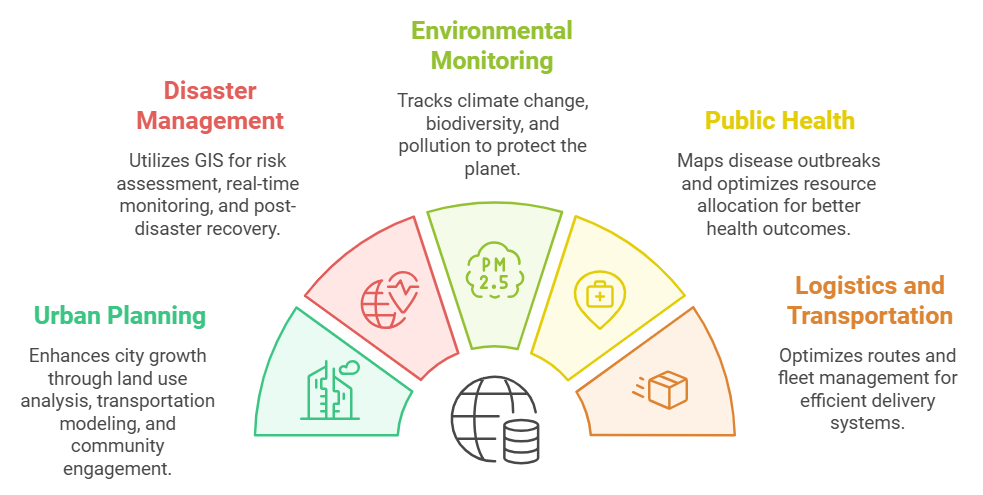
    Big data in GIS applications transforming mapping
    Big data in GIS applications transforming mapping

    Big Data empowers GIS in ways that methods of the past could not. Here’s how:

    1. Urban Planning Made Smarter

    • Land Use Analysis: Satellite imagery coupled with socioeconomic data helps planners track changes in land use over time. This ensures cities grow sustainably.
    • Transportation Modeling: GPS data from vehicles helps optimize routes and reduce congestion. For example, public transport systems can change routes dynamically based on traffic patterns.
    • Community Engagement: Interactive maps allow citizens to visualize and comment on urban projects, fostering transparency.

    2. Disaster Management: Saving Lives

    • Risk Assessment: GIS analyzes weather patterns and historical data to pinpoint areas at risk of flooding or earthquakes.
    • Real-Time Monitoring: During disasters, data from IoT devices and social media feeds helps responders understand the situation instantly.
    • Post-Disaster Recovery: Aerial drone images provide clear visuals of affected areas, speeding up relief efforts.

    3. Environmental Monitoring: Protecting the Planet

    • Climate Studies: Long-term satellite data reveals how vegetation and glaciers change over time due to global warming.
    • Biodiversity Conservation: GIS maps endangered species’ habitats, helping identify critical areas that require conservation.
    • Pollution Tracking: Air quality sensors feed into GIS systems that track how pollution spreads throughout cities, helping policymakers take action.

    4. Public Health: Monitoring and Controlling Diseases

    • Outbreak Mapping: GIS helped to visualize the case patterns in the COVID-19 pandemic. It allowed authorities to focus their resources on high-risk areas.
    • Resource Allocation: Through GIS, hospitals and clinics analyze population density in the area to provide better services.

    5. Logistics and Transportation: Moving Smarter

    • Route Optimization: Companies like UPS apply GIS to analyze traffic and deliver packages faster.
    • Fleet Management: GPS-enabled trucks feed the GIS system with location data, thus enabling real-time tracking and efficient route planning.

    Cutting-edge technologies in GIS

    GIS is growing with exciting technologies that make it even more powerful:

    Cloud-Based GIS Platforms

    Cloud technology has revolutionized GIS, making it accessible and scalable:

    • Real-Time Data Processing: Platforms like Esri’s ArcGIS Online allow seamless spatial data sharing and processing.
    • Collaboration: Teams can work on the same map from anywhere, fostering innovation and efficiency.
    • Cost-Effectiveness: Cloud-based GIS eliminates the need for expensive hardware, making it ideal for organizations of all sizes.

    Drone Mapping Services in India

    India’s rapid adoption of drone technology is transforming GIS applications:

    • Precision Mapping: Drones take high-resolution images for infrastructure projects and agriculture.
    • Disaster Response: Drones provide critical aerial visuals to aid recovery after natural disasters.
    • Urban Planning: Cities like Bangalore use drone data to plan better transportation and housing.

    GIS and IoT Applications

    IoT devices, from weather stations to traffic sensors, feed GIS systems with valuable real-time data:

    • Smart Cities: Sensors monitor everything from electricity usage to water flow, making for more innovative and sustainable urban environments.
    • Agriculture: IoT-enabled sensors monitor soil moisture and crop health for farmers to optimize yields.
    • Environmental Monitoring: Networks of IoT devices measure air and water quality, feeding GIS with critical ecological data.

    Challenges in Integrating Big Data with GIS

    With all its benefits, big data in GIS applications is fraught with its challenges:

    • Data Quality: Inaccurate or out-of-date data can result in poor decisions. Validation is a continuous process.
    • Technical Expertise: Professionals must be trained in geospatial analysis and data science, which requires extensive training.
    • Privacy Issues: The use of personal location data raises ethical issues. Clear policies and transparency are critical to building public trust.

    Future Directions for Big Data in GIS

    The integration of emerging technologies will redefine GIS:

    • AI and Machine Learning: These technologies will further power predictive analytics in GIS, automating pattern recognition and forecasting.
    • Cloud-Based GIS Platforms: Cloud storage will make smaller organizations more accessible and collaborative.
    • Drone Mapping Services: Drones equipped with GIS technology will continue to provide high-resolution data for agriculture, urban planning, and disaster response in India.
    • GIS and IoT Applications: IoT networks expand the scope of real-time monitoring from innovative city management to wildlife conservation.

    Conclusion

    The intersection of big data in GIS applications has opened doors for new understanding and solutions to complex geographic problems. From improving urban planning to enhancing disaster response and protecting the environment, GIS in India is playing a vital role in shaping a more innovative and sustainable world.

    As cloud-based GIS platforms and drone mapping services in India continue to evolve, companies like SCS Tech play an important role in driving innovation and delivering robust solutions. By addressing challenges such as data quality and privacy, we can utilize the full potential of Big Data in GIS applications, creating solutions that truly make a difference.


  • How E-Governance Solutions Are Enhancing Citizen Participation?

    How E-Governance Solutions Are Enhancing Citizen Participation?

    Have you noticed how technology changes how governments engage with citizens? E-governance solutions are no longer a buzzword but a movement rewriting the governance rules. From speeding up social benefit transfers, innovations such as DBT systems have sparked a 192% surge in efficiency. Such advancements make governance more innovative, inclusive, and genuinely citizen-centric.

    In this blog, let’s explore how e-governance solutions, powered by advancements in AI and robust IT infrastructure, are transforming governance. These solutions incorporate active citizen participation in administration, making public services more responsive.

    How E-Governance Solutions Are Enhancing Citizen Participation?

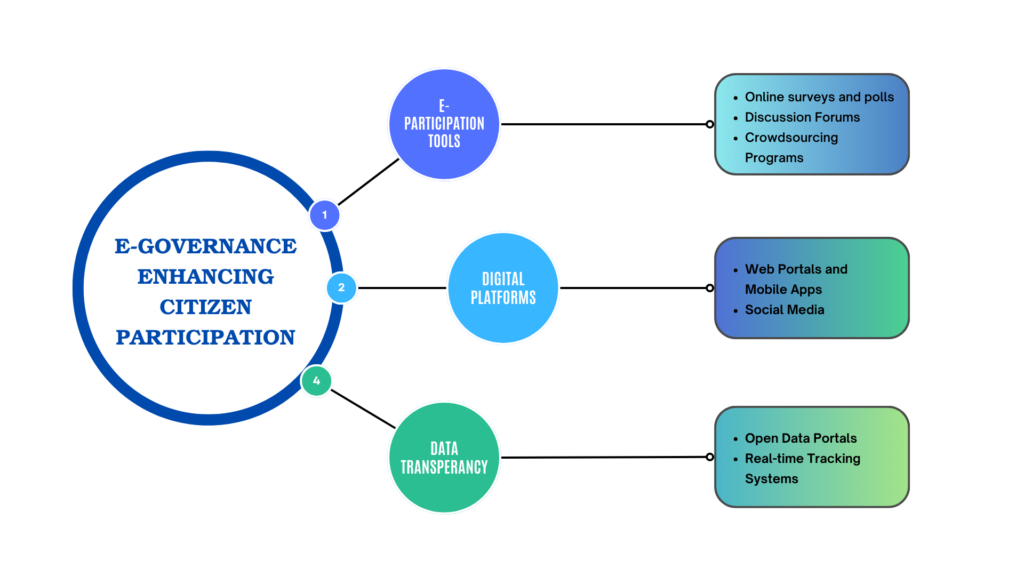
    E-Governance boosting citizen participation
    E-Governance boosting citizen participation

    1. Digital Platform for Communication

    One of the cornerstones of e-governance is utilizing a digital platform to bring governance closer to citizens. There are real-time engagements such that citizens are constantly and regularly informed and involved with the government:

    • Web Portals and Mobile Apps: These digital gateways provide instant access to services like bill payments, license applications, and complaint registrations. Citizens do not have to visit government offices to carry out these tasks, saving them time and effort. With mobile apps, users are provided with user-friendly interfaces through which they can register complaints, access public schemes, and get updates.
    • Social Media: It is the platform through which two-way communication takes place. Platforms include Twitter, Facebook, and Instagram. Governments can inform citizens about policies, events, and public initiatives at a very fast pace, and the citizens can voice their concerns and give feedback. Through social media, governments can keep track of public opinion and respond to concerns immediately.

    These digital platforms make interaction easier and make governance more accessible and inclusive. They bridge the gap between government agencies and citizens, ensuring that everyone, regardless of location, can stay connected.

    2. E-Participation Tools

    E-governance goes beyond one-way communication by actively involving citizens in decision-making through participatory tools.

    • Online Surveys and Polls: Governments conduct surveys to gather public opinions on new policies, projects, or initiatives. This direct feedback allows decision-makers to align policies with citizen needs and preferences. For example, before launching a new law, authorities can gauge its acceptance through online polls.
    • Discussion Forums: Structured forums provide avenues for citizens to discuss and deliberate on policy issues. Such avenues allow informed participation, so that people may share their ideas, develop solutions collectively, and input into shaping community projects.
    • Crowdsourcing Programs: The government invites citizens to submit innovative ideas or solutions for public challenges. This makes them feel owned and included. For instance, citizens can suggest improvements in infrastructure, education, or health systems through specific crowdsourcing platforms.

    These tools empower citizens to take an active role in governance, ensuring that policies reflect diverse voices and community needs.

    3. Data Transparency and Accessibility

    Building Trust is founded on transparency and e-governance creates solutions for providing the public sector operations much more transparent and accountable.

    • Open Data Portals: This allows citizens to explore the available data regarding budgets, projects, and expenses. Analyzing this information can help explain to people how funds for public services are allocated and utilized, holding authorities accountable.
    • Real-Time Tracking Systems: These allow citizens to keep track of how their applications, complaints, or government services are being carried out. A citizen could apply for welfare benefits or a building permit – the status could be kept online, eliminating frustration or uncertainty.

    Transparency through such tools will not only create trust but also enhance citizens’ ability to be more actively involved in governance processes. People’s participation is meaningful when they can see the processes of decision-making as well as resource allocation.

    How E-Governance Solutions for Improved Public Sector Efficiency?

    The new solutions for e-governance redefine the delivery of services within the public sector, relying on Information Technology (IT), then Information and Communication Technologies (ICTs), and web-based platforms to facilitate effective, transparent, and accessible governance. Whether it is health or transportation, urban development, or utilities, these new solutions are changing the experience of governance for citizens.

    Integrated Services through Centralized Systems

    One of the key features of e-governance is that it combines various government services on a single platform. Such centralized systems allow for:

    • Streamlined Service Delivery: Citizens can file taxes, apply for permits, and enroll in benefits from a single portal.
    • Improved Interdepartmental Coordination: Data sharing across departments results in faster responses and reduced redundancy.
    • User-Centric Design: Easy-to-use interfaces make it easier for people to find and use services.

    For instance, an integrated platform may offer the facility to pay property tax, lodge a complaint, and obtain a driving license in one place.

    Automated Document Processes

    The olden days of paperwork, along with electronic documents and workflow management, are long gone. Such software programs automate the document handling and approval process, and therefore lead to the following:

    • Quick Delivery of Services: Service delivery happens fast without being hindered by the time-consuming nature of manual processes.
    • Less Human Errors: Automated workflows help minimize human errors.
    • More Accurate Record Keeping: Digital records promote more accountability and easy accessibility for later use.

    These automations mean real-time benefits to citizens in terms of waiting time to receive permits or certification, for example.

    Safe and Smart City Solutions

    Governments are using the IoT (Internet of Things) and AI to create better cities. These solutions benefit by:

    • Optimized Resource Allocation: Smart sensors monitor traffic, energy use, and safety metrics in real-time.
    • Proactive Services: AI-powered analytics predict service demands, such as waste collection schedules or public transport requirements.
    • Improved Safety: IoT-enabled surveillance systems and emergency response tools create safer communities.

    For instance, smart traffic management systems can reduce congestion while improving road safety for citizens.

    Conclusion

    E-governance solutions change governance by making the processes more transparent, effective, and participatory. They can enhance service delivery and citizen involvement by incorporating AI technologies into IT infrastructure solutions. Then, problems like the digital divide and data privacy exist for these solutions to be fully exploited.

    E-government, therefore, helps governments achieve a strong democracy, build up trust, and empower their citizens to take an active role in shaping their surroundings. The future of governance is easy: inclusivity, adaptability, and true people-serving technology solutions. This change provides a backdrop for an enabling force like SCS Tech, offering cutting-edge IT infrastructure solutions that make this novel development possible.

  • Smart Cities and e Governance Solutions: The Role of Advanced AI and ML Services in Urban Development

    Smart Cities and e Governance Solutions: The Role of Advanced AI and ML Services in Urban Development

    In recent years, the concept of “smart cities” has captured the imagination of urban planners and technologists alike. Today, such cities are the way of living.

    With investments in smart city technology expected to reach 65% by 2040, the impact is undeniable.

    But what exactly makes a city “smart”? At its core, a smart city leverages advanced technologies like Al and ML to enhance the quality of life for its citizens, improve efficiency in public services, and promote sustainable urban development.

    This article explores how smart cities leverage Al and ML to address urban challenges and drive sustainable development.

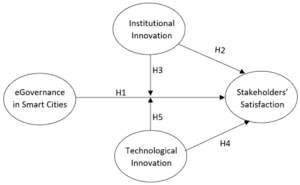
    Governance in Smart Cities: Who are the Stakeholders?

    Image Source:

    All stakeholders participate in the development of industries, decision-making, and planning work, and they resolve issues collaboratively with the correct technology. These smart cities have many stakeholders, such as:

    • Private sectors
    • Citizens
    • Public sectors
    • Government

    Understanding the Value of AI Technology for Smart Cities

    AI is not just a profitable sector but also has the power to improve cities. Due to the quick process of modern-day connectivity, growing demand for IoT (Internet of Things) technology, and the birth of 5G, AI software for smart cities has turned into a massive business.

    Back in 2019, the AI sector had a value of $673.8 million, but in 2025, those figures will stand at $4.9 billion. But it has become much easier for all the AI programs to process and analyze all the information because of the:

    • Interconnected data banks
    • 5G connectivity
    • Modern-day smart technologies

    All these things have helped in resolving various issues in city management. Having AI technology can also assist all cities in opting for the correct changes at an efficient and quick pace. 

    How to Handle the Development of Smart Cities?

    Image Source:

    Urban development is a challenging task, and all developments must be properly designed, tested, and researched to satisfy various stakeholders. When you plan to handle smart city development, you have to conduct many studies and check several boxes. 

    At times, the bureaucracy stands in front of effective problem-solving. For instance, German officials in Berlin declared that it took them several years to install a proper bicycle lane in the city.

    But these days, if APIs (Application Programming Interfaces), heat maps, and AI all together, the government will gain entry to an enormous amount of information. The government can use the information to make accurate changes and informed decisions to improve city life.

    How ML and AI Technologies Revolutionise Urban Settings?

    The AI ML services have a massive potential to revolutionize the urban setting, which can lead to transformative advancements in many areas of city life. Take a look at the table below to gain more information:

    Pointers Description
    Allowing Smart Services and Governance Both ML and AL can change the public and governance services within urban settings. AI-powered intelligent systems can enhance the decision-making process, citizen engagement, and virtual assistance. For instance, virtual assistants and chatbots can offer efficient and personalized egovernance solutions to all citizens by addressing all their needs and queries. The AI algorithm will analyse massive sets of information to help with making data-driven decisions in areas like policy formulation and urban planning.
    Encouraging the Resilient and Sustainable Cities Both machine learning and artificial intelligence can aid in making resilient and sustainable cities. The ML algorithms will examine the sensor data, historical records, and climatic changes that will help support the disaster response and environmental control adequately.  With the help of ML and AL, cities can easily improve the usage of resources, optimize waste management methods, and lessen the environmental influence.
    Improve the Urban Infrastructure Artificial intelligence and machine learning technologies can optimize urban infrastructure. It can do so by improving resource administration, sustainability, and efficacy. The ML algorithms will analyze the information from different sources to optimize the environmental impact of energy consumption at smart grips and even lessen the expenses. Besides that, AI techniques can be easily applied to optimize the flow of traffic and intelligent conveyance systems, reduce congestion, and improve mobility.
    Advancing Public Security and Safety ML and AI technologies can improve the safety of the general public in various urban settings. AI algorithms will use intelligent monitoring methods to analyze the video feeds and identify all the real-time suspicious activities or threats. Training the machine learning models will assist law enforcement and predict crime patterns in bold crime deterrence effectively.
    Improvements in the Healthcare Industry AI technologies provide many possibilities for the healthcare sector. It will allow you to manage all the medical records, check the bed status, schedule online appointments in private and government hospitals, use smart inventory handling of medical supplies, and offer surgical assistance. AI technologies will not just aid in curing various health ailments but also stop them via early predictions and detections.

    Wrapping Up

    Both AI and ML technologies play pivotal roles in advancing smart city development, impacting critical areas such as traffic monitoring, advanced security systems, waste management, and urban governance. Collaborating with innovators and startups across private and public sectors is essential for creating effective IT solutions that enhance societal enjoyment, safety, comfort, and livability.

    SCS Tech India Pvt Ltd excels in delivering top-tier IT infrastructure solutions tailored for urban planning and development. Additionally, the company offers a comprehensive range of services, including enterprise solutions, e-governance, robotic process automation, and geographic information systems (GIS), reinforcing its commitment to shaping sustainable and efficient urban environments.

  • The Impact of eGovernance Solutions on Government Efficiency

    The Impact of eGovernance Solutions on Government Efficiency

    Amidst the global surge of globalization, citizens worldwide are increasingly cognizant of their rights, pressing for transparency and efficiency from their governing bodies. To meet these burgeoning demands, traditional structures are no longer found ill-equipped to meet these burgeoning demands for streamlined public service delivery.

    In this dynamic landscape, the imperative for innovative models and systems like eGovernance has never been more pronounced. eGovernance solutions have fundamentally heralded a seismic shift in the efficiency and efficacy of governmental operations.

    This blog serves as a dedicated exploration into the transformative power of eGovernance solutions, illuminating how these advanced technologies redefine organizational performance, drive cost-efficiency, and ultimately shape a government sector that is not just efficient but also citizen-centric.

    Unveiling the Efficiency Powerhouse: eGovernance Solutions

    E-Governance, also called digital governance, focuses on using Information and Communication Technology to improve governmental processes, enhance transparency, and handle its operations and services. This encompasses a wide range of solutions, including:

    Online portals

    These simplified and easily accessible platforms create an opportunity for citizens to receive information and perform various tasks at any time. Whether it is getting a renewed license or applying for a permit, online portals enable citizens to do so as and when they want to do it.

    Data management systems

    Due to an intervention of an eGovernance solution, data is captured across departments to form a coherent database. This results in greater efficiency in handling requests, quick decision-making, and proper utilization of resources.

    Mobile applications

    Now that people are busier than ever, mobile apps are a useful way for citizens to interact with their government remotely. It can be very helpful for rural areas or those with little or no internet access in particular.

    Electronic Document Management (EDM)

    These are systems that help in the production, storage, and retrieval of documents. This cuts out paper-based systems, which reduces the time, money, and physical space required to store equipment.

    How eGovernance Solutions Enhance Efficiency?

    To understand it better let’s talk about India where the use of digital identification called Aadhaar has transformed the government services delivery system. Aadhaar verification has ensured that those in need of the welfare programs get the support they need through the right channels hence minimizing fraud instances and enhancing the targeting and delivery of social goods. According to estimates by the World Bank, Aadhaar saved over $1 billion of the Indian government’s expenses within a few years of its usage.

    Now let’s discuss in detail about how exactly eGovernance solutions enhance efficiency:

    Reduced Administrative Burden

    The eGovernance solutions replicate functions to reduce paperwork and manual data entry jobs. This saves considerable staff time, so they can handle many other issues and deliver better service to their customers.

    Faster Service Delivery

    By performing transactions online through different applications and portals, citizens can access the services without a problem. This has the effect of cutting the time clients spend waiting and enhancing service provision.

    Improved Decision-Making

    The experience gathered from the eGovernance systems helps governments to make decisions based on data analysis on current or real-time performance. It further helps in the efficient utilization of resources and the proper formulation of policies.

    Enhanced Transparency and Accountability

    One of the very important features of implementing eGovernance is that it provides citizens with easy access to government data and information. This also promotes honesty and efficiency in the public sector as the accountability is shifted to the citizens.

    Even though efficiency is a primary benefit, eGovernance has ripple effects. These solutions promote government-citizen interaction, cut down on government expenditure through the use of technology, and increase favorable conditions for businesses leading to an improved economy.

    The Road Ahead: Embracing the Future of Governance

    E-Governance is not a one-bullet solution; instead, it is an evolutionary model. While embracing the best practices in this field, eGovernance solutions must also adapt to the changes that accompany the progression of technology. Through incorporating innovation and encouraging learning within governmental organizations, governments need to be flexible to meet the continually demanding needs of the citizens within the digital era.

    Investing in eGovernance Solutions: A Wise Choice for a Brighter Future

    It is not only about the realization of eGovernance solutions but also about the creation of future governance landscapes. Technology, when adopted fully in the governance processes, provides a more efficient, accountable, and participative society. This, in turn, helps to strengthen the trust between the citizens and their government, which is the key to a better life and a more sustainable future.

    By investing in eGovernance solutions, governments can create a more efficient, transparent, and citizen-friendly environment.

    Contact us today to learn how SCS Tech India’s tailored solutions can enhance public sector service delivery.