Tag: IDA

  • Implementing Incident Management Software for Effective Disaster Response

    Implementing Incident Management Software for Effective Disaster Response

    Incident management software is a fundamental component in coordinating incident responses across various types of events. Its role is especially crucial in today’s world, where the frequency and intensity of natural disasters have significantly increased compared to the past.

    Effective disaster management, encompassing both natural and man-made incidents, involves substantial risks. A proper response can prevent loss of life, minimize property damage, and facilitate a swift return to normalcy for affected communities.

    This blog discusses the critical importance of Incident Management Software (IMS) in disaster response, detailing its features, benefits, and implementation strategies.

    Understanding Incident Management Software

    Incident Management Software (IMS) is designed to enable organizations to handle emergencies efficiently. This system is essential for reporting, monitoring, and managing incidents across various fields. It acts as a command center for disaster management, integrating functionalities like communication, information dissemination, resource management, data interpretation, and analysis to enhance response rates.


    Understanding Incident Management Software 
    Feature Characteristics 
    Real-time Communication and Coordination Alert the senders and receivers of data and thus controllers and administrators of responses
    Resource Management  Helps to effectively allocate resources all through a given chain
    Incident Tracking and Reporting  Track and report all the specific occurrences
    Integration with other Systems  Function together with other helpful systems


    Let us identify the salient features of IMS and how an IT infrastructure solution provider can help in detail:

    • Real-time Communication & Coordination

    Disaster response management depends on positive communication hence it is important to adopt effective communication platforms. IMS founded Interactive Distance Education and e-learning tools such as messaging systems, video conferencing, and an alert system. These features alert the senders and receivers of data and thus controllers and administrators of responses coordinate timeously.

    • Resource Management

    Resource management is vital in a disaster and should be managed efficiently for the best results. IMS can be used to track and distribute work such as the distribution of human resources, machinery, facilities, and other materials. It also helps to effectively allocate resources all through a given chain, to ensure that demand for a certain resource in a certain sector is met. 

    • Incident Tracking and Reporting

    Another aspect is the efforts to track and report all the specific occurrences that may have occurred during a particular phase of the incident. IMS allows for the thorough record-keeping of details, maps and the status, which are critical in near-shore and post-impact scenarios.

    • Integration with Other Systems

    Today’s IMS solutions can function together with other helpful systems like a Geographic Information System, Meteo System, and Public Address System. It also gives a holistic approach to the occurrence of incidents when it has been integrated, hence improving the decision-making process.

    Advantages of Incident Management Software
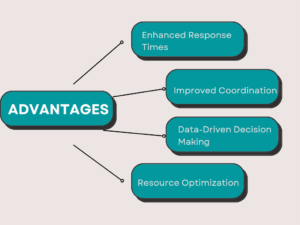
    A few of the advantages of incident management software are listed below:

    • Enhanced Response Times

    IMS significantly reduces the time required to respond to inquiries and emergencies. With features like real-time feeds and dispatch options, responders gain rapid situational awareness and can mobilize relevant resources quickly, thereby minimizing the disaster’s impact.

    • Improved Coordination

    Disaster response often involves multiple agencies and organizations. IMS facilitates better coordination among these entities by providing a shared platform for communication and resource management. This common ground improves the overall efficiency and effectiveness of the response.

    • Data-Driven Decision Making

    Disaster response often involves multiple agencies and organizations. IMS facilitates better coordination among these entities by providing a shared platform for communication and resource management. This common ground improves the overall efficiency and effectiveness of the response.

    • Resource Optimisation

    IMS helps organizations optimize the utilization of their resources. By keeping track of available human resources, equipment, and materials, IT solutions like IMS ensures that resources are used efficiently and effectively. This optimization minimizes resource wastage and ensures timely emergency responses.

    Implementing Incident Management Software

    By keeping in mind the following aspects, we can successfully implement incident management software:

    • Assessing Organisational Needs

    Before one can start to implement IMS certain prerequisites need to be met. It’s about determining the kind of incidents that will be claimed, the tools to be used, and other systems that IMS will be interfacing with. The choice of the software and its features will be informed by the needs of the organisation undergoing the audit.

    • Selecting the Right Software

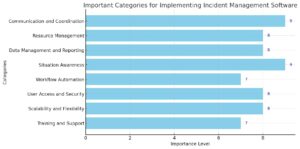
    In the present world market, there are numerous IMS solutions available with their advantages and disadvantages. Choosing the right software might be based on characteristics such as convenience, capacity for expansion, compatibility with other systems, and the availability of further services. 
    • Customise and Integrate the System

    If an IMS solution has been chosen, the next step is to make it compliant with your specific needs. You need to adopt the applications to meet the unique requirements of your company and its business management. Also on dependability, the ability to interface with other systems is important for the response functions.

    • Training and Drills

    IMS, from the prospect of their implementation, is not only a question of technology but rather of people as well. Make sure all users who are expected to be on the system are trained well on how to handle it. Essential frequent exercises also include drills and simulations. Both assist in evaluating the performance of the system and examining the level of awareness of the responders.

    Conclusion

    The application of Incident Management Software can be considered as a key strategy to strengthen the resilience of an organisation in the face of disaster situations. Through enhanced communication, resource dispatch and other analytical solutions, IMS enhances real-time reactions and responses to emergencies. 

    We, at SCS Tech India PVT Ltd offer leading-edge, advanced software IT infrastructure solutions for managing incidents and ensuring smooth, efficient operations. Our exceptional technologies are designed for swift and efficient responses to critical events. Our software provides real-time data, communication systems, and automated workflows to enhance emergency planning and enable quick, efficient actions by the emergency teams. 

    Contact us today to boost your organisation’s disaster management capabilities, increasing your safety and preparedness for any emergency.

  • The new era of energy industry empowered by technology

    The new era of energy industry empowered by technology


    Table of Content

    • Introduction
    • Innovation & Changes
    • Technical Empowerment
    • Renewable Resources

    An era of change

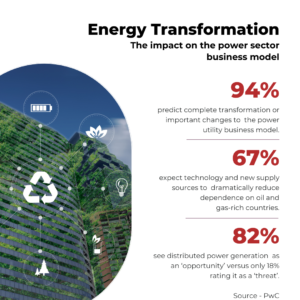
    The energy industry is going through a significant technological transition that will push the limits of the traditional energy delivery systems. In place of conventional fossil fuels, the new wave of technology is offering workable solutions that can maximise how much we use natural resources.

    These innovative options offer intelligent and data-driven solutions that encourage the development of smart infrastructure. These solutions include built-in digital intelligence that is changing how energy is produced, distributed, managed, and stored.

    The establishment of a new consumer model known as “Prosumer”—which depicts a situation where customers produce and consume energy while living outside of direct subsidy—came about as a result of consideration over efficient energy usage and consumer habits.

    The innovation that prompted the advent of energy 4.0

    The energy sector adopted rising tech trends including Internet of Things (IoT), Big Data, Blockchain, Machine Learning, Cloud Computing, and the Digital Twin technology without hesitation after realising the power of cutting-edge technology in other industries.

    The ways in which energy and utility businesses conduct business, connect with their customer bases, and engage with them have all being reinvented by the aforementioned technology. Technically speaking, it has greatly improved operation flow, performance optimisation, and the development of smart grids, better managed renewable energy sources, and cogently distributed power. These technological advancements have consequently led to a fresh round of ideas for integrating technology and the systems that enable it into (new) business models and strategies.

    “Simultaneously, hardware manufacturers and software development companies have been gathering experience in creating and integrating business-driven solutions with huge corporate systems, with an emphasis on internal reliability and ecological safety. As of now, with costs decreasing and technologies growing at an exponential pace, digitalization presents opportunities for Energy 4.0 companies to establish new business models and sustainable strategies of producing and delivering energy” – is stated in a research study conducted by MobiDev.

    The technological empowerment within the industry

    The idea of IoT and its capabilities have been extensively debated during the last ten years. The physical environment may be integrated with computer systems thanks to this intelligent “network of physical devices” that includes sensors, electronics, actuators, and connection resources.

    Energy 4.0 is the adoption of technologies like big data, artificial intelligence, and machine learning to take advantage of sensor data, automation, and machine-to-machine (M2M) communication to enhance operational performance. The industry is well on its way to transforming its operations into a global network of linked, standalone devices that are all delivering digital data to a platform that can gather, process, and share it in real time.

    Transparency within a platform that executes and records transactions is one of a ledger technology’s most potent advantages. Given how frequently assets change hands before a settlement is made, it is also useful for tracking ownership. As all parties are using the same platform, blockchain technology enables transactions like energy trading to be recorded and settled at the minute, without the need for an intermediary and with little to no requirement for reconciliation.

    The use of digital twins is expanding quickly and is becoming increasingly popular as an innovation trend. A digital twin is a depiction of a real-world thing or process that mimics it digitally without really replacing it. The digital twin allows for real-time KPI monitoring by utilising the data collected by an IoT system connected to its physical twin.

    Future energy will be renewable

    We are well on our way to a future where social innovation will integrate renewables into smart grids and produce clean and dependable energy sources, made possible by the digital transformation of the energy sector.

    Consumers are increasingly favouring renewable energy sources, which encourages the energy business to invest in more environmentally friendly technology. Greater opportunities are presented by digital innovation for businesses, consumers, and society as a whole since it motivates them to engage in environmentally friendly energy solutions that lower prices and give them more control over their energy use.


  • Intelligent Debriefing with Analytics

    Intelligent Debriefing with Analytics

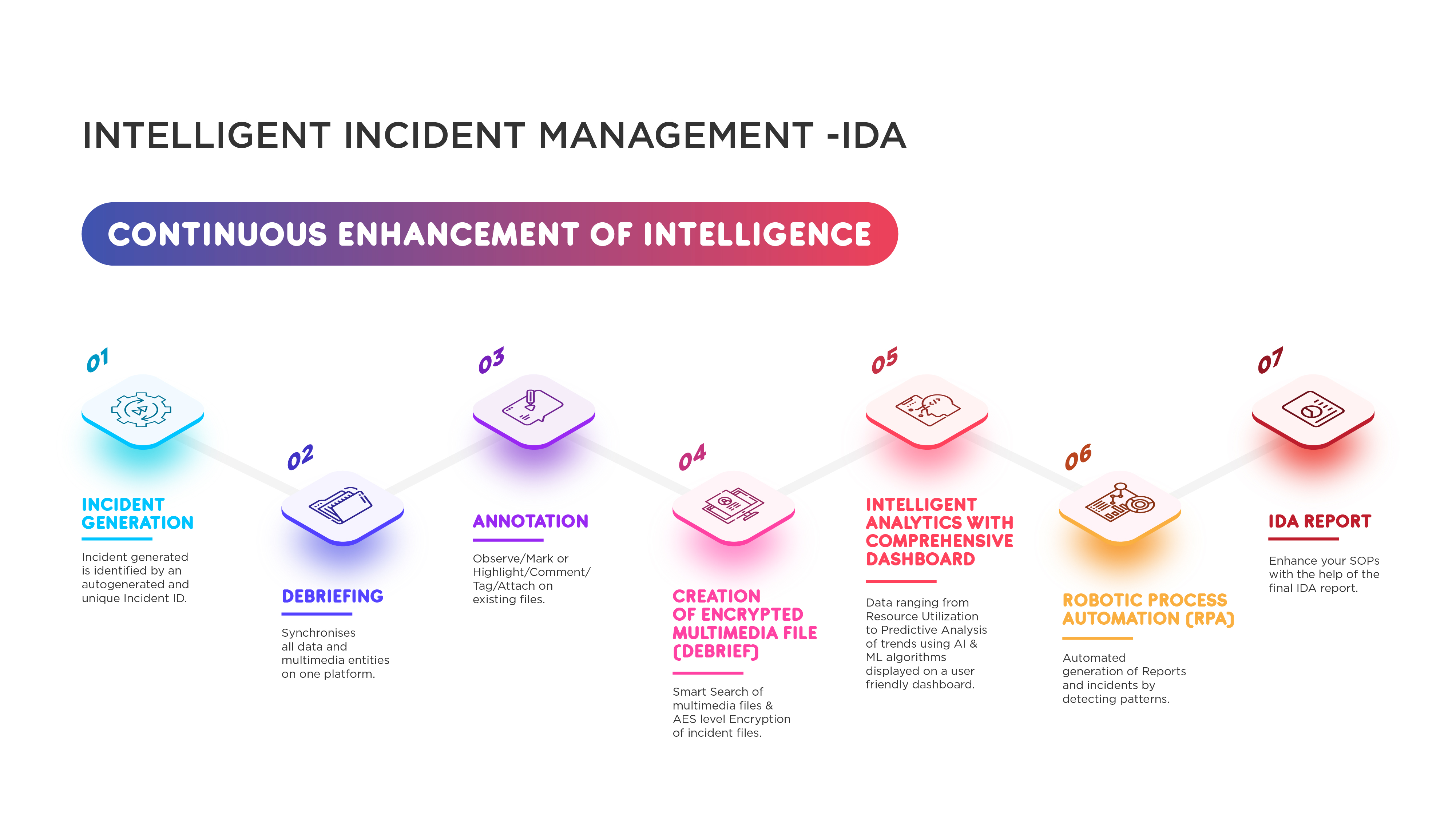
    As of today, SCS Tech Systems has launched the Debriefing Solution, a system designed to evaluate the level of service delivered across a comprehensive emergency incident. The solution is aimed at providing a unique value for emergency service agencies such as fire brigades, EMS, police, etc.

    The application can be used to evaluate both single calls and complete incidents, including the processing of multimedia input, such as maps, videos, and CAD screens.

    The fire department command and control operation center can reconstruct incidents by integrating multimedia data from various capture platforms into one comprehensive timeline. This provides a full picture of the incident for investigation, debriefing, and training purposes.

    Debriefing is now equipped with quality assurance tools, further enhancing its capabilities.

    With SCS Tech Systems’ experience in command-and-control systems, these tools are designed to help organizations identify knowledge gaps and opportunities for training during incidents, improving future responses.

    In Integration with the CAD System the solution has following features

    • Modules such as this one allow them to measure the performance of call takers based on pre-defined KPIs and to set up training programs for them to improve their skills.
    • Using behavioral analytics, managers can gain insight into behavior patterns in the control room and track how call takers and dispatchers acquire and utilize new skills.
    • Using this module, managers have a better understanding of the volume of incoming calls and other multimedia communications, which they can use to control staffing.
    • Additionally, reports indicate where existing communication resources are being stretched, indicating that additional radio or telephone channels, for instance, are needed.

    Our latest Debriefing release is designed to improve the performance of current public safety solutions”, explains General Manager of SCS Tech India Pvt. Ltd.

    By capturing this information, we gain valuable insights into how dispatchers and call takers handle incidents, as well as a holistic view of the incident so that we can improve the response process.

    With the integrated solution, a unique debriefing and reconstruction solution is created. Multimedia sources can now be captured and synced to synchronize step-by-step operator actions and comprehensive incident reconstructions, which can now be incorporated into debriefing sessions for investigations, training, planning and prevention.

    With our Security solutions, organizations can capture, analyze and leverage big data to anticipate, manage and mitigate security and safety risks, improve operations, and make the world a safer place.

    Enterprises and governments can gain valuable insights from the security, intelligence, and cyber offerings by analyzing structured and unstructured data from multiple sensors and channels, detecting irregular patterns, and recognizing trends.

    our Security solutions can be used by customers worldwide, including transportation systems, critical infrastructure, city centers, banks, enterprises and government agencies.