Tag: #innovation

  • Tech enabled workplace – The futuristic view

    Tech enabled workplace – The futuristic view

    As we consider the future of the workplace, and more especially, the post-pandemic office experience, it is obvious that technology will play a key role in what these spaces provide, how they appear, and how they operate. Workspaces provide more than just a place to sit and work; they also foster a sense of belonging to the organisation. Sitting alongside co-workers and brainstorming new ideas develops a sense of belonging, which leads to increased productivity and commitment.

    In this article, we explore the future of the workplace and what it means for tech-enabled spaces.

    Exploring the Concept of the “Office of the Future”

    The future of work is heavily influenced by technology. With tech-enabled workspaces, offices are becoming more advanced and secure. After a prolonged period of remote work, technology has been utilized for everything from communication to work to shopping to emergency commutes. As a result, a whole new world of possibilities has opened up regarding where people work and new methods of working that we hadn’t foreseen before. It’s no longer enough to simply show up, do your job, go home, and repeat the process.

    A Glimpse into the Future of Technology-Driven Workspaces

    The introduction of tech-enabled workspaces is disrupting the traditional workplace, bringing about a significant shift in work culture. With technological advancements, the possibilities are endless, and it’s easy to see how they can positively impact various areas of business emphasis. These areas include productivity, sustainability, cost efficiency, employee satisfaction, and overall well-being.

    Technological Advancements and Their Influence on Future Workspaces

    According to a study by Harvard Business Review, up to 65% of tasks are expected to be automated by 2025. As a result, technology will have a significant impact on the future of workspaces. Here are some key areas where technology is expected to revolutionize workspaces:

    • Augmented Reality (AR) and Virtual Reality (VR): These technologies will facilitate virtual meetings, training sessions, and simulations, making it easier for teams to collaborate and learn together, regardless of their physical locations.
    • Internet of Things (IoT) Integration: The integration of IoT devices into workspaces will enable better automation, data collection, and analysis. Smart office systems will optimize energy consumption, monitor equipment performance, and enhance employee comfort.
    • Artificial Intelligence (AI) and Automation: AI will increasingly take over repetitive and mundane tasks, freeing up employees to focus on more creative and strategic aspects of their jobs. Robotic process automation (RPA) will become more prevalent in various industries, streamlining workflows and improving efficiency.
    • Flexible and Modular Workspaces: Office designs will become more flexible, with modular furniture and adaptable layouts. Technology will play a role in creating versatile spaces that can be easily reconfigured to suit different work styles and needs.
    • Collaboration and Communication Tools: Communication and collaboration tools will become even more sophisticated, enabling seamless information sharing, real-time collaboration, and project management across distributed teams.
    • Cloud Computing: Cloud-based services will continue to dominate the workplace, offering secure storage, accessibility, and scalability. This will facilitate remote work and allow teams to access data and applications from anywhere with an internet connection.
    • Remote Monitoring and Surveillance: With the increasing adoption of remote work, companies may rely more on monitoring and surveillance technologies. These may include tracking employee performance, attendance, and behaviour, raising concerns about privacy and ethics.
    • Enhanced Cyber security Measures: As workspaces become more digital and distributed, cyber security will be of paramount importance. Advanced security measures will be implemented to protect sensitive data and networks from cyber threats.
    • Data-Driven Decision Making: Technology will enable better data collection and analysis, empowering businesses to make informed decisions based on real-time insights and trends.



  • Technology and Innovation – an update to encapsulate 2023

    Technology and Innovation – an update to encapsulate 2023

    Looking forward is never easy, but the New Year is a great time to revaluate your strategy and determine where to concentrate your efforts, particularly in technology. However, there are many regulatory incentives that could drive innovation and expansion in the coming years. In order to survive and prosper, tech businesses must recommit to enhancing their supply operations, upgrading infrastructure, and capitalizing on opportunities for growth.

    Embracing Technological Advancements: a response to global instability
    In the face of pandemics, inflation, geopolitical turmoil, supply problems, blockades, and other global uncertainties, it’s crucial to adapt the way we conduct business. This challenging landscape provides an opportunity to adopt new technology solutions that can help companies overcome these obstacles and transform them into a competitive edge. To stay ahead of the curve, let’s take a closer look at the technological advancements that have revolutionized the business landscape in 2023.

    Establishing a robust competitive position to ensure future success

    The pandemic has not only affected the world as a whole but also accelerated digital transformation and transformed work models, which has proven beneficial to the technology industry. However, in 2023, the tech industry is projected to face challenges concerning supply chains, workforce, and innovation, which are now compounded by significant macroeconomic and global uncertainties.

    In 2020-21, tech stocks performed exceptionally well during the pandemic. However, in 2022, the sector faced significant stock market declines. Now, the focus for tech companies will be to manage a potential economic slowdown by cutting costs, improving efficiency, and boosting revenue. Simultaneously, they will likely be searching for ways to remain innovative and establish a solid competitive footing for the future.

    Major Themes of 2023 and beyond-

    • Leading in Times of Macroeconomic Uncertainty

    In the face of economic challenges such as softening consumer spending, lower product demand, and falling market capitalizations, technology companies are pressured to improve margins and expand revenues.

    Here are some approaches that companies can take to address these challenges:

    • Streamlining business processes to improve efficiency
    • Increasing reliance on intelligent automation
    • Modernizing legacy architectures
    • Considering strategic mergers and acquisitions (M&A)

    These solutions can help overcome economic hurdles and ensure business continuity.

    • Strategies for Confronting Global Uncertainties in Technology Companies

    To reduce risks and improve system resilience, tech companies must navigate existing global challenges. Leaders should make strategic decisions regarding their choice of partners, location, and production methods.

    • The Tech Industry’s Impact on Other Sectors

    The technology sector is collaborating with other industries to identify new revenue streams and support innovation. By leveraging digital advancements, tech companies are striving to enhance efficiency and encourage innovation in sectors such as manufacturing, real estate, and retail, which are prime for transformation.

    • The Impact of New Regulations on Tech Companies

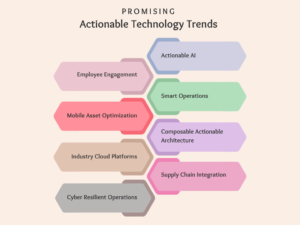
    As technology continues to evolve, our lives become increasingly intertwined with emerging tech trends. The Metaverse and AI have the potential to transform the world, much like the internet did, providing unparalleled opportunities for nimble businesses to gain an edge. Sustainable technology, AI, wireless engineering, cloud platforms, and other technologies have been at the forefront of technological innovation this year. The focus in the time ahead lies in tech innovation. It will be paramount that more immersive and experiential tech trends will be shaping the future.