Tag: #internet #technology #data

  • Ultimate guide to RPA and the industry response

    Ultimate guide to RPA and the industry response

    Robotic process automation, or RPA, is a crucial component of the digital transformation for corporations and business organisations regardless of their location or function. To comprehend why automation is so beneficial, let’s delve into this brand-new universe.

    • RPA Services: What Are They?
    • How do RPA Services function?
    • RPA – the best solutions for enterprises
    • RPA process benefits

    How do RPA Services work?

    Robotic process automation, or RPA, is a technology that enables businesses to automate some repetitive processes.

    RPA software uses a mix of cognitive processes, automation, and modern technologies (such machine learning and automation). It can be used to carry out straightforward operations like sending an email automatically as well as sophisticated ones that thousands of bots can carry out simultaneously.

    Robotic process automation as a service, or RPAaaS, is a cloud-based, outsourced service that involves the deployment of software robots to handle such repetitive operations without any input from the clients.

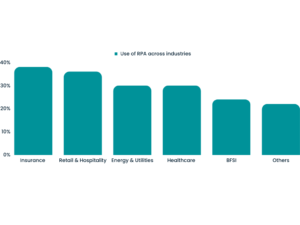
    According to recent data on the status of RPA implementation, 78% of those who have previously done so anticipate much more investment in RPA over the following three years. There is obviously a lot to do, and there is a big demand. Let’s examine why.
    How are RPA Services implemented?

    RPA services significantly influence how businesses change and grow. Software robots can navigate systems, identify data, and carry out a wide range of tasks that resemble those carried out by humans. They can complete jobs more quickly and reliably than humans since they are robots, which also don’t make mistakes, get weary, or need breaks. They don’t get side tracked by social media, and they don’t require extra encouragement to get things done.

    RPA technology boosts efficiency, productivity, and accuracy in many corporate operations thanks to these benefits. This is why it became so important for organisations that want to grow, expand, or improve their effectiveness.

    Benefits of RPA processes for businesses

    It is far preferable to adapt RPA and use it in daily work than to hire new workers to perform simple tasks or to assign highly competent employees to repetitive activities and so waste their expertise. Employees who are relieved of monotonous and simple tasks can concentrate on bringing innovation to the company and coming up with fresh ideas to increase its success.

    The main benefits of RPA processes for enterprises include:

    • increase in effectiveness
    • efficiency
    • productivity
    • client satisfaction
    • cost savings
    • revenue growth
    • work quality and quantity improvement
    • improved compliance
    • faster pace of digitalization are all desirable outcomes

    The best solutions for large enterprises involves RPA

    53% of various firms use RPA services internationally, according to research. Depending on their demands, size, and industry, it is predicted that almost all businesses will use some form of automation within the next five years.

    Interested in learning more RPA?

    Consider putting it into practise in your business to advance it. Get in contact with our experts; we’d be pleased to assist you!


  • An introduction to Blockchain Technology and its potential uses

    An introduction to Blockchain Technology and its potential uses

    Even while blockchain technology is still in its nascent stages today, it is finding increasing use in important industries outside of the realm of digital currencies. Through the upkeep of immutable distributed ledgers in thousands of nodes, blockchain is the primary technology utilised to produce the digital currency, Bitcoin. The 21st century will see a huge impact from this disruptive technology on institutional operations, company operations, education, and our daily lives.  It has the power to alter the current Internet from “The Internet of Information Sharing” to “The Internet of Value Exchange.”

    Blockchain technology is anticipated to fundamentally alter how business, industry, and education operate while also accelerating the worldwide transition to a knowledge-based economy. This ground-breaking technology has numerous potential uses because of its immutability, transparency, and integrity for all transactions carried out in a blockchain network.

    The following structure illustrates a sample blockchain transaction flow. A peer-to-peer blockchain network is used by User A to start a transaction with User B. The network uses a cryptographic proof of identification (a set of public and private keys) to specifically identify users A and B. The transaction will then be published to the blockchain network’s memory pool while awaiting transaction validation and verification. Reaching consensus is the process of getting a predetermined number of approved nodes to create a new block. Following a consensus, a brand-new “block” is created across the entire blockchain network, and each node updates its individual copy of the blockchain ledger. All of the transactions that took place during this time are contained in this block.

    Advantages of blockchain technology

    Reliability: because blockchain networks are decentralised, the databases of all transaction records have changed from being closed, centralised ledgers maintained by a small number of recognised institutions to being open, distributed ledgers maintained by tens of thousands of nodes.

    Trust: blockchain network also decentralises trust. With organised ledgers, blockchain networks serve as new trust bearers. A group of tamper-proof nodes form a network that shares these ledgers.

    Security: the one-way hash function, a mathematical operation that transforms a variable-length input text into a fixed-length binary sequence, is used by the blockchain network. There is no obvious connection between the input and the output.

    Efficiency: every piece of data is automatically put through pre-defined processes. Blockchain technology can therefore both dramatically lower labour costs and increase productivity. Blockchain technology may hasten the clearing and settlement of some financial transactions, resulting in a quicker and more effective reconciliation procedure.

    Applications using blockchain technology

    • Blockchain offers a number of advantages in the financial and banking sectors in terms of improved record-keeping, security, and transparency. It makes it the ideal option for banking needs like fraud protection, client onboarding, and anti-money laundering.
    • By 2025, the worldwide blockchain market for healthcare is expected to reach $5.61 billion. Using blockchain technology could help resolve expensive and urgent issues in the healthcare sector. Such as inconsistent records, patient data loss or theft, banking information, and test results.
    • Blockchain can be a great solution for the insurance industry and aid in the reduction of underwriting, the identification of fraud, and the enhancement of cyber insurance plans. By 2023, the global insurance blockchain industry might reach $1.39 billion.
    • Businesses that spend a lot of money protecting themselves against breaches are also concerned about cyber security, not only SMEs. Blockchain system nodes automatically compare the data and warn any information that is falsified.
    • Blockchain technology is being used in education by some colleges and institutions, and the majority of them do so to support academic degree management and assumptive evaluation for learning outcomes.
    • Supply chain management can be challenging and involves a lot of data. Data storage using blockchain-based systems would guarantee quick access and strong security because altering the data would be impossible without reporting it as a result.
  • How technology is making our everyday better

    How technology is making our everyday better

    All technologies that have emerged and thrived thus far have been invented to meet the needs of society, as it is rightly said that necessity is the mother of invention. Without a doubt, technology has made our lives easier over the last two decades. Technology has made our lives better in a number of ways, from communicating with people around the world from the convenience of your home to operating a full-fledged business without a physical site.

    We live in a capitalist society, which means that many technological advances are made by businesses looking to improve their products/services or their ability to market their offerings. Over the years, new technology has emerged with the goal of making business operations more beneficial and effective.

    Business Efficiency

    The business world is being swept away by a tidal wave of exponential technological progress. Today’s marketplace provides numerous opportunities to improve, adapt, and advance using available technology. The use of business analytics has proven to be beneficial in improving the customer experience. Such technology-powered business tools have propelled various aspects of business to new heights. Personalized messaging and user behavior analysis have also assisted businesses in establishing a fruitful presence in the market.

    Fast track Communication

    The only certain answer to how technology has improved our lives is that it has changed the way we communicate with one another dramatically. It has resulted in the development of several modes of electronic communication, including smartphone communication and social media. Now that civilization has advanced, instantaneous, error-free communication is widely accessible. Speed is undeniably the most significant advancement that technology has made in communication. We can now converse quickly and effortlessly from the convenience of our homes.

    Advanced Lifestyle

    Throughout history, societies have been reshaped by technology. Technology has had a significant impact on how humans behave and operate in the world. Technological advancements all around us are ongoing. New innovations are appearing, and they are undoubtedly influencing our way of life. Because of technological advancements, our lives are now vastly different from those of previous generations Transportation, agriculture, and education are just a few areas where technology is present and having an impact. On the other hand, the Internet of Things (IoT) has greatly simplified our lives. Through the medium of IoT, smart homes and advanced electronic gadgets have significantly improved our daily routines. It has simplified many aspects of life.

    Superior Trade

    Transactions are much simpler and more efficient than they were previously. On the consumer side, innovations such as the credit card and the rise of e-commerce have made it easier than ever for businesses to sell goods and services to customers at their leisure. However, transactions on a large scale are much easier on a B2B level. Foreign transactions like these are now much easier – and they may become even easier as blockchain, an emerging technology, gains traction.

    Information Accessibility

    Technology has had a significant impact on how we transfer and access information. Nowadays, we can get any information we want at the touch of a button. We are constantly searching the internet for answers and gathering information. If one learns how to surf more skillfully, technology is readily available to us, both in terms of authenticity and relevancy.

    We’ve gotten to the point where it’s difficult to imagine life without technology. The quality of life for people has considerably increased. Technology has altered our behavior and operations by infiltrating every aspect of our lives. Technology has made our lives better in a number of areas, including networking, healthcare, and communication.

  • All you should know about Smart Spaces and its future impact

    All you should know about Smart Spaces and its future impact

    What are Smart Spaces?   

    Smart spaces are facilities or public areas outfitted with sensors to collect data that can be used to generate insights about its environmental conditions, the services it provides, and how occupants interact with their environment. These smart spaces insights can be captured in real-time and from historical data, and then used in improving safety, operations, and the experiences of the people using the space.

    When enabled by technologies like IoT and 5G wireless, which are now capable of monitoring municipal operations using real-time data to bring a level of service to citizens with uncharacteristic efficiency, smart space paradigms are also shared across regions, extending over cities.

    Use of Technology in creating smart spaces

    We can classify smart enabling technologies according to their purpose using this multi-layered approach to smart space environments (virtual, physical, and human levels).

    Virtual Computing Environment — This layer gives smart devices access to private network services or the internet, which enables them to connect to other components of the distributed systems that run the smart space environment.

    Physical Environment – The most diverse layer of smart spaces is the physical environment layer, which contains the embedded sensors, microprocessors, tracking tags, and other tangible components of the smart space.

    Human Environment — This layer is made up of gadgets that people use in conjunction with their environment, such as pacemakers, wearable smart devices, and smartphones. This means that humans can develop smart space environments using cell towers, cell networks, and smartphones to create a virtual, physical, and human environment that can be thought of as a large area smart space, similar to how route-planning apps can be used to create smart spaces.

    Benefits of Smart Spaces

    The deep integration of these technologies into our daily lives demonstrates how successfully they have achieved their general goals of enhancing efficiency, security, and safety.

    Any measurable aspect of efficiency is improved by smart space technology. Smart technology often focuses on lowering overall operational expenses of buildings by avoiding resource and utility waste. Meters for electricity or water may readily be equipped with sensors, making them prime candidates for smart monitoring.

    In places where there are risks of danger or accidents, smart spaces promote safety and risk mitigation. Smart technology, such as the use of intelligent robots in industrial applications, can replace human workers performing dangerous activities. By replacing humans with these robots in numerous tedious and repetitive jobs like moving inventory palettes, productivity has grown.

    Smart environments improve user experience by automating many of our daily “clerical” duties, including checking the lighting, that were previously performed by humans. Using smart space technology is now driven by the desire to enhance the experience of occupants within a space for business purposes. These buildings are becoming more collaborative, informative, and effective thanks to smart office technologies that can connect remote workers, smart conference rooms, scheduling systems, and sensors covering every component of the facility. Several manufacturers advertise a sizable central wall display that serves as a focal point for business activities and shows real-time information. For example, a hospital could use this display to show which doctors are present, which operations are planned, or which rooms are filled.

    Common technologies used in these are:

    • Artificial Intelligence and Machine Learning
    • Computer Vision
    • Speech Recognition
    • Blockchain
    • Cloud computing / Distributed systems
    • Wireless Connectivity
    • Motion and proximity sensors
    • Climate sensors (temperature, humidity, pressure)
    • Accelerometers and gyroscopic sensors
    • Optical and thermal sensors
    • Gas and level sensors
    • RFID tagging
    • Microprocessors
    • Smartphones, tablets, watches
    • Closed-loop insulin delivery systems
    • Ingestible sensors
    • Smart inhalers
    • Smart pacemakers


  • Best security tips to avoid a cyber breach

    Best security tips to avoid a cyber breach

    Preventing cyber data breaches is the best defense against the nightmare and expense that comes with them. Nevertheless, you must first identify them in order to be able to stop a data breach. The sorts and costs of data breaches you could experience as a small- to medium-sized business owner are described below, along with tips on how to avoid them.

    When hackers gain access to data and sensitive information, data breaches occur. These breaches are very expensive. According to a data report, the average cost of a data breach is around $3.86 million that too in addition to the irreparable harm to an organization’s reputation. It costs time as well. The identifying of the cause and reprimanding it usually takes up to 280 days.

    You can use a variety of high-level security techniques, such as AI and prepared incident response teams, to stop a data breach. Let’s dig deep into that!

    Limit access to your valuable data –

    Every employee used to have access to all of the files on their computer back in the day. Companies today are discovering the hard way how important it is to restrict access to their most important data. A mailroom employee has no need to see a customer’s financial information, after all. By limiting who is permitted to read specific papers, you reduce the number of workers who might unintentionally click on a hazardous link. Expect to see all records partitioned off as organisations go into the future so that only those who specifically require access will have it. One of those obvious fixes that businesses probably ought to have implemented sooner rather than later.

    Security policy with third party vendors –

    Every firm interacts with a variety of outside vendors. The need to understand who these people are has never been greater. Even permitting visitors onto their property might expose businesses to legal action. It’s necessary to restrict the kinds of documents that these vendors can access.

    Although taking such steps can be a bother for the IT department, the alternative could be a data breach that costs millions of dollars. Demand transparency from the businesses that are permitted to access your sensitive information. Don’t just assume that they are abiding by privacy regulations; verify it. Request background checks for any outside contractors entering your business.

    Employee awareness training –

    Employees are the weakest link in the data security chain, according to recent research. Despite training, workers read dubious emails with the potential to download malware every day. Employers make the error of assuming that one cybersecurity training session is sufficient. Schedule frequent sessions every quarter or even monthly if you’re serious about protecting your crucial data.

    According to marketing studies, the majority of consumers must hear the same message at least seven times before their behaviour starts to change.

    Update Software Regularly–

    Experts advise routinely updating all operating systems and application software. When patches are available, install them. When programmes aren’t constantly patched and updated, your network is exposed. Baseline Security Analyzer, a software from Microsoft, may now be used to periodically check that all programmes are patched and current. This is a simple and affordable solution to fortify your network and thwart attacks before they start.

    Develop a cyber breach response plan –

    What would you do if you discovered a data breach when you arrived to work the following day? Surprisingly few businesses have a reliable breach response strategy in place. Both the company and the employees can understand the potential losses by creating a thorough breach preparedness strategy. Employees want to know the truth; therefore, an employer should be very open about the extent of the violation. A sound response strategy can reduce lost productivity and stop bad press.

    Setting strong passwords –

    One thing that security professionals will emphasise when they visit your organisation to train your staff is the importance of routinely changing all passwords. The majority of people are now aware of how crucial it is to make passwords challenging to crack. We have mastered the use of capital letters, numbers, and special characters when creating passwords, even on our home PCs. Make it as difficult as you can for hackers to enter and steal your belongings.


  • A complete guide on Cloud Computing

    A complete guide on Cloud Computing

    One of the technologies influencing how we work and play is cloud computing. The cloud helps businesses eliminate IT problems and promotes security, productivity, and efficiency. It also enables small enterprises to utilize cutting-edge computing technologies at a significantly lesser cost. Here is what you need to know about the cloud and how it can benefit your company.

    On-Demand Computing

    The term “cloud” describes online-accessible servers and software that anyone can use. You are spared from hosting and managing your hardware and software as a result. Additionally, it implies that you can use these systems from any location where you have internet access.

    Every day, you encounter cloud computing. You are accessing data that is kept on a server somewhere in the world whenever you check your Gmail inbox, look at a photo on your Dropbox account, or watch your favorite shows on Netflix. Even though the emails, videos, or other files you require are not physically present on your computer, you may quickly, simply, and affordably access them owing to contemporary cloud computing technology.

    Public, Private, and Hybrid Cloud

    Private, public, and hybrid deployment strategies are the three main types of cloud computing. In the end, all three models will give customers access to their business-critical documents and software from any location, at any time. It all depends on how they approach the task. The kind of cloud you should use for your company depends on several variables, including the purposes for which you intend to use it, applicable laws on data storage and transmission, and other aspects.

    Private Cloud

    A single entity is served via private clouds. While some companies construct and manage their ecosystems, others rely on service providers to do so. In either case, private clouds are expensive and hostile to the cloud’s advantages for the economy and IT labor productivity. Private clouds, however, are their sole choice because certain organizations are subject to greater data privacy and regulatory constraints than others.

    Public Cloud

    Distributed across the open internet, public clouds are hosted by cloud service providers. Customers can avoid having to buy, operate, and maintain their own IT infrastructure by using the most widely used and least-priced public clouds.

    Hybrid Cloud

    A hybrid cloud combines one or more public clouds with private clouds. Imagine you operate in a sector where data privacy laws are extremely rigorous. While you don’t want to host legally required data in the cloud, you do want to be able to access it there. To access data saved in your private cloud, you also want to deploy your CRM in the cloud. Using a hybrid cloud is the most sensible choice under these circumstances.

    Everything as a Service

    The cloud “stack” is made up of numerous levels. The collection of frameworks, tools and other elements that make up the infrastructure supporting cloud computing is referred to as a stack. Software as a Service (SaaS), Platform as a Service (PaaS), and Infrastructure as a Service (IaaS) components are included in this. Customers that use these services have varied degrees of control and accountability over their cloud environment.


    Infrastructure as a Service

    The customer oversees managing everything with IaaS, including the OS, middle-ware, data, and applications. Other duties, including virtualization, servers, storage, and networking obligations, are handled by the service provider. Customers are charged by how many resources, including CPU cycles, memory, bandwidth, and others, they consume. Microsoft Azure and Amazon Web Services are two examples of IaaS products.

    Platform as a Service

    Customers can create, test, and host their applications using PaaS solutions. The consumer oversees managing their software and data; otherwise, the service provider takes care of everything. You don’t have to be concerned about operating systems, software upgrades, or storage requirements if you use PaaS solutions. Customers of PaaS pay for any computing resources they use. Google App Engine and SAP Cloud are a couple of examples of PaaS technologies.

    Software as a Service

    Customers acquire licenses to utilize an application hosted by the provider under the SaaS model. Customers often buy annual or monthly subscriptions per user instead of how much of a certain computer resource they consumed, unlike IaaS and PaaS models. Microsoft 365, Dropbox, and DocuSign are a few popular SaaS products. Small firms that lack the capital or IT resources to implement the most cutting-edge technologies would benefit greatly from SaaS solutions.

    Benefits of the Cloud

    Reduced IT costs: By using cloud computing services, recurrent costs for monitoring and maintaining an IT infrastructure can be greatly decreased.

    Scalability: When necessary, developers can increase storage and processing capability by using cloud services. Additionally, development teams do not have to spend time or money upgrading cloud computing services.

    Collaboration efficiency: For the agile technology sector, cooperation has always been a need. Professionals from all around the world may work and collaborate using current cloud services. With these functionalities, teams may communicate with clients or other teams online while collaborating in real-time and sharing resources.

    Flexibility: Cloud computing can provide a great deal of flexibility in addition to helping to lower operational costs. Developers and other key stakeholders now have easier access to crucial data metrics at any time and from any location.

    Automatic updates: Teams may use the most recent resources available while managing and meeting IT standards thanks to automatic updates. Cloud computing is a popular technology because it allows users to access the newest tools and resources without having to spend a fortune.