Tag: IOT

  • Need your business to thrive? Learn about key benefits of Data Analysis

    Need your business to thrive? Learn about key benefits of Data Analysis

    Today’s global marketplaces revolve on data, making sense of that data is essential to a company’s success. Failing to do so can result in a company falling behind.

    On its own, raw data doesn’t have much value. To leverage data to their advantage, businesses must apply data analytics, a discipline that systematically examines data in order to discover insights, patterns, and trends. Most businesses are aware of the potential rewards of investing in big data analytics, which promise to increase productivity, reduce costs, and improve decision-making. A recent survey by Micro Strategy found that businesses all across the world use their data for:

    • According to 90% of the business users who took part, their organization’s digital transformation strategies revolve around data and analytics
    • To increase their operations’ cost-effectiveness and process efficiency by up to 60%
    • 57% of businesses say they use data analytics to inform strategy and transformation
    • 52% of businesses use business analytics to track and enhance their financial performance

    What is Data Analysis?

    As a broad phrase, the processing of unstructured data to discover business insights is referred to as data analytics. It makes use of a variety of methods, procedures, statistics, and models. By definition, it is essentially a procedure for looking into raw data in order to derive significant insights. However, the development of AI and ML has caused the area of data analytics to advance at a rapid rate, reaching new heights.

    Usually, the purpose of data analytics is to give a business operational insights. This procedure entails reviewing historical data before applying the lessons discovered within to address the challenging business issues of the present.

    Despite the fact that big data analytics delivers value in a variety of ways, the following are some of its main advantages:

    • Quicker and wiser decision-making: businesses may quickly analyse massive amounts of data and come to wise judgements.
    • Cost savings: using big data technology, businesses can find better methods to conduct their operations and offer a cost-effective data storage solution.
    • A deeper comprehension of customer’s needs: big data reveals insights that assist businesses in identifying customer requirements and assessing satisfaction. This provides businesses with the knowledge they require to create long-lasting client relationships and provide higher-quality goods and services.
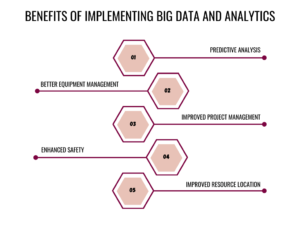
    The current state of Data Analysis & Business Intelligence

    For businesses to succeed in the digital economy, data is becoming more and more important. Up to 80% of businesses rely on data for a variety of operations, including product management, fraud detection, finance, human resources, and manufacturing. Data dashboards and visualisations are common in the modern workplace, enabling users to quickly follow performance measures using pre-built reports and filters.

    Organisations could find a wealth of potential hidden in their current systems with the use of data integration technologies. There is a lot of friction in analytics right now. Spreadsheets are frequently used by data workers, who typically utilise four to seven different applications to manage data. This takes a lot of time and increases the risk of errors and data compliance problems. Organisations must find a solution that unifies all data-related activities into a single platform, provides end-to-end data protection and traceability, and is simple for employees to use if they are to reap the greatest benefits from big data.

    How to select right data analytic tools for your business?

    Due to innovative methods like machine learning algorithms, the field of data analytics is expanding to unprecedented heights. Four categories of business analytics currently are:

    • Descriptive analytics
    • Diagnostic analytics
    • Predictive analytics
    • Prescriptive analytics

    It’s challenging to compile a comprehensive list of selection criteria for big data because it applies to such a wide range of use cases, applications, and industries. Build your toolset around the main objectives by focusing on the few business issues or opportunities that will have the most impact, such as real-time asset monitoring or a deeper comprehension of what your customers want.

    Big Data integration tools assist businesses in dismantling data ecosystem silos. When working with data gathered from a variety of IoT endpoints, apps, and data kinds, they are an essential tool for managing and storing data clusters. Although data integration solutions occasionally include stream analytics functionality, they are typically more appropriate for data management.

    It is possible to transform new data into actions. Partner with us to know more about best practices in data analysis. To contact us visit SCS Tech India.

  • All you should know about Smart Spaces and its future impact

    All you should know about Smart Spaces and its future impact

    What are Smart Spaces?   

    Smart spaces are facilities or public areas outfitted with sensors to collect data that can be used to generate insights about its environmental conditions, the services it provides, and how occupants interact with their environment. These smart spaces insights can be captured in real-time and from historical data, and then used in improving safety, operations, and the experiences of the people using the space.

    When enabled by technologies like IoT and 5G wireless, which are now capable of monitoring municipal operations using real-time data to bring a level of service to citizens with uncharacteristic efficiency, smart space paradigms are also shared across regions, extending over cities.

    Use of Technology in creating smart spaces

    We can classify smart enabling technologies according to their purpose using this multi-layered approach to smart space environments (virtual, physical, and human levels).

    Virtual Computing Environment — This layer gives smart devices access to private network services or the internet, which enables them to connect to other components of the distributed systems that run the smart space environment.

    Physical Environment – The most diverse layer of smart spaces is the physical environment layer, which contains the embedded sensors, microprocessors, tracking tags, and other tangible components of the smart space.

    Human Environment — This layer is made up of gadgets that people use in conjunction with their environment, such as pacemakers, wearable smart devices, and smartphones. This means that humans can develop smart space environments using cell towers, cell networks, and smartphones to create a virtual, physical, and human environment that can be thought of as a large area smart space, similar to how route-planning apps can be used to create smart spaces.

    Benefits of Smart Spaces

    The deep integration of these technologies into our daily lives demonstrates how successfully they have achieved their general goals of enhancing efficiency, security, and safety.

    Any measurable aspect of efficiency is improved by smart space technology. Smart technology often focuses on lowering overall operational expenses of buildings by avoiding resource and utility waste. Meters for electricity or water may readily be equipped with sensors, making them prime candidates for smart monitoring.

    In places where there are risks of danger or accidents, smart spaces promote safety and risk mitigation. Smart technology, such as the use of intelligent robots in industrial applications, can replace human workers performing dangerous activities. By replacing humans with these robots in numerous tedious and repetitive jobs like moving inventory palettes, productivity has grown.

    Smart environments improve user experience by automating many of our daily “clerical” duties, including checking the lighting, that were previously performed by humans. Using smart space technology is now driven by the desire to enhance the experience of occupants within a space for business purposes. These buildings are becoming more collaborative, informative, and effective thanks to smart office technologies that can connect remote workers, smart conference rooms, scheduling systems, and sensors covering every component of the facility. Several manufacturers advertise a sizable central wall display that serves as a focal point for business activities and shows real-time information. For example, a hospital could use this display to show which doctors are present, which operations are planned, or which rooms are filled.

    Common technologies used in these are:

    • Artificial Intelligence and Machine Learning
    • Computer Vision
    • Speech Recognition
    • Blockchain
    • Cloud computing / Distributed systems
    • Wireless Connectivity
    • Motion and proximity sensors
    • Climate sensors (temperature, humidity, pressure)
    • Accelerometers and gyroscopic sensors
    • Optical and thermal sensors
    • Gas and level sensors
    • RFID tagging
    • Microprocessors
    • Smartphones, tablets, watches
    • Closed-loop insulin delivery systems
    • Ingestible sensors
    • Smart inhalers
    • Smart pacemakers


  • A complete guide on Cloud Computing

    A complete guide on Cloud Computing

    One of the technologies influencing how we work and play is cloud computing. The cloud helps businesses eliminate IT problems and promotes security, productivity, and efficiency. It also enables small enterprises to utilize cutting-edge computing technologies at a significantly lesser cost. Here is what you need to know about the cloud and how it can benefit your company.

    On-Demand Computing

    The term “cloud” describes online-accessible servers and software that anyone can use. You are spared from hosting and managing your hardware and software as a result. Additionally, it implies that you can use these systems from any location where you have internet access.

    Every day, you encounter cloud computing. You are accessing data that is kept on a server somewhere in the world whenever you check your Gmail inbox, look at a photo on your Dropbox account, or watch your favorite shows on Netflix. Even though the emails, videos, or other files you require are not physically present on your computer, you may quickly, simply, and affordably access them owing to contemporary cloud computing technology.

    Public, Private, and Hybrid Cloud

    Private, public, and hybrid deployment strategies are the three main types of cloud computing. In the end, all three models will give customers access to their business-critical documents and software from any location, at any time. It all depends on how they approach the task. The kind of cloud you should use for your company depends on several variables, including the purposes for which you intend to use it, applicable laws on data storage and transmission, and other aspects.

    Private Cloud

    A single entity is served via private clouds. While some companies construct and manage their ecosystems, others rely on service providers to do so. In either case, private clouds are expensive and hostile to the cloud’s advantages for the economy and IT labor productivity. Private clouds, however, are their sole choice because certain organizations are subject to greater data privacy and regulatory constraints than others.

    Public Cloud

    Distributed across the open internet, public clouds are hosted by cloud service providers. Customers can avoid having to buy, operate, and maintain their own IT infrastructure by using the most widely used and least-priced public clouds.

    Hybrid Cloud

    A hybrid cloud combines one or more public clouds with private clouds. Imagine you operate in a sector where data privacy laws are extremely rigorous. While you don’t want to host legally required data in the cloud, you do want to be able to access it there. To access data saved in your private cloud, you also want to deploy your CRM in the cloud. Using a hybrid cloud is the most sensible choice under these circumstances.

    Everything as a Service

    The cloud “stack” is made up of numerous levels. The collection of frameworks, tools and other elements that make up the infrastructure supporting cloud computing is referred to as a stack. Software as a Service (SaaS), Platform as a Service (PaaS), and Infrastructure as a Service (IaaS) components are included in this. Customers that use these services have varied degrees of control and accountability over their cloud environment.


    Infrastructure as a Service

    The customer oversees managing everything with IaaS, including the OS, middle-ware, data, and applications. Other duties, including virtualization, servers, storage, and networking obligations, are handled by the service provider. Customers are charged by how many resources, including CPU cycles, memory, bandwidth, and others, they consume. Microsoft Azure and Amazon Web Services are two examples of IaaS products.

    Platform as a Service

    Customers can create, test, and host their applications using PaaS solutions. The consumer oversees managing their software and data; otherwise, the service provider takes care of everything. You don’t have to be concerned about operating systems, software upgrades, or storage requirements if you use PaaS solutions. Customers of PaaS pay for any computing resources they use. Google App Engine and SAP Cloud are a couple of examples of PaaS technologies.

    Software as a Service

    Customers acquire licenses to utilize an application hosted by the provider under the SaaS model. Customers often buy annual or monthly subscriptions per user instead of how much of a certain computer resource they consumed, unlike IaaS and PaaS models. Microsoft 365, Dropbox, and DocuSign are a few popular SaaS products. Small firms that lack the capital or IT resources to implement the most cutting-edge technologies would benefit greatly from SaaS solutions.

    Benefits of the Cloud

    Reduced IT costs: By using cloud computing services, recurrent costs for monitoring and maintaining an IT infrastructure can be greatly decreased.

    Scalability: When necessary, developers can increase storage and processing capability by using cloud services. Additionally, development teams do not have to spend time or money upgrading cloud computing services.

    Collaboration efficiency: For the agile technology sector, cooperation has always been a need. Professionals from all around the world may work and collaborate using current cloud services. With these functionalities, teams may communicate with clients or other teams online while collaborating in real-time and sharing resources.

    Flexibility: Cloud computing can provide a great deal of flexibility in addition to helping to lower operational costs. Developers and other key stakeholders now have easier access to crucial data metrics at any time and from any location.

    Automatic updates: Teams may use the most recent resources available while managing and meeting IT standards thanks to automatic updates. Cloud computing is a popular technology because it allows users to access the newest tools and resources without having to spend a fortune.


  • Key Role of Internet of Things Technology in Digital Transformation

    Key Role of Internet of Things Technology in Digital Transformation

    IoT solutions have already started to act as a game player in modern enterprises. Every year, more entrepreneurs tend to jump on the IoT bandwagon to leverage the benefits of this rapidly evolving technology.

    As per reports, there will be 75.44 billion connected devices globally by the year 2025. In such a scenario, it is interesting to see how IoT plays a role in accelerating enterprise digital transformation.

    In this article, we are going to see the impact of IoT on digital transformation. But, before moving forward, let’s understand the significance of enterprise digital transformation for your business.

    Importance of Digital Transformation in Modern Enterprise

    The State of Digital Transformation research has revealed that market pressure is one of the major factors for implementing digital transformation as market leaders also compete with technologically advanced and agile businesses.

    There is no exaggeration in mentioning that digital transformation is the best way to make your enterprise ready for the future while keeping it ready to face technological disruption.

    As customer requirements and expectations keep on changing rapidly, it is imperative for enterprises to change their traditional business processes with the help of advancements in emerging technologies.

    Be it handling internal processes or offering personalized customer experience, enterprise digital transformation has remained highly useful. Here are the top business benefits of digital transformation.

    Key Benefits of Enterprise Digital Transformation

    As mentioned above, digital transformation can assist entrepreneurs to improve their services and enhance customer experience significantly.

    Improved Customer Experience

    Today, tech-savvy customers want advanced and real-time assistance to resolve their queries. They always remain in search of advanced tools that make their lives more comfortable. As a result, enterprises need to come up with digital solutions based on updated technologies that can give their customers a better experience.

    Enhanced Efficiency

    Inventive tools and technologies can automate various processes in the company and as a result, you can improve efficiency over the period. Digital transformation solutions also bring cost savings and reduction in manual effort in the business over the period.

    Higher Security

    As compared to traditional processes, digital processes are more secure and robust. Organizations can secure their confidential and valuable data more effectively and securely using digital transformation solutions. It can help them keep the data safe and gain the customer’s trust over the period.

    Better Decision-making

    Digital transformation is designed to bring actionable insights to make informed decisions. In this data-driven age, all tools and techniques related to data analysis can assist companies to track performance metrics and better insights. It further assists in providing a better result.

    All digital transformation initiatives need a combination of emerging technologies including IoT, AI, and AR. Out of them, IoT plays a crucial role in making digital transformation solutions highly useful and user-friendly. Let’s go through the impact of IoT in digital transformation.

    Five Ways IoT Impacts Enterprise Digital Transformation Solution

    We can mention many benefits of IoT in modern enterprises. Numerous startups have built their entire business model around IoT technology. You can transform processes digitally using IoT solutions. Here are some of the major business benefits of IoT in digital transformation.

    Meaningful Customer Experience

    When it comes to improving customer experience based on their interests and expectations, connected devices can remain handy for enterprises. Thanks to IoT solutions, organizations can get deep insights into their customers’ behavior and shopping pattern.

    Entrepreneurs can customize customer experiences based on this data. In a way, enterprises can transform their processes digitally while keeping customers in the focus.

    More Efficiency in Business

    An IoT app development company can enable modern enterprises to merge rich data experiences using autonomous sensors. IoT-powered apps can improve productivity by bringing automation to various business processes. These apps can share useful data with AI or ML-based systems for effective and accurate analysis.

    Enterprises can streamline various processes including logistic and supply chain management, security, energy management, and stock management with the help of a proper data analysis.

    Reduced Operational Costs

    Process automation can eventually reduce operational costs while enabling entrepreneurs to use resources in a wise manner. IoT in digital transformation aims at improving utility consumption, waste disposal, and other ways to reduce various costs in modern enterprises.

    Optimized use of water and other natural resources also contribute to saving big for companies. Such reduction in operational costs can eventually increase ROI for your enterprise.

    Improved Employee Productivity

    A reputed mobile app development company integrates various features based on futuristic technologies. Talking about IoT technology, it can assist your company to keep your staff engaged while offering better experiences. It also makes the system available for employees in real-time from anywhere.

    Smart sensors can keep employees connected with one another all time and they can easily convey their experiences instantly. All such aspects can improve the employee’s productivity.

    Scope for Innovation

    IoT devices can fetch the user’s data including user behavior. This data can assist enterprises to understand the requirements, interests, preferences, and expectations of their customers more effectively. As a result, they can come up with innovative products over the period to cater to a huge customer base.

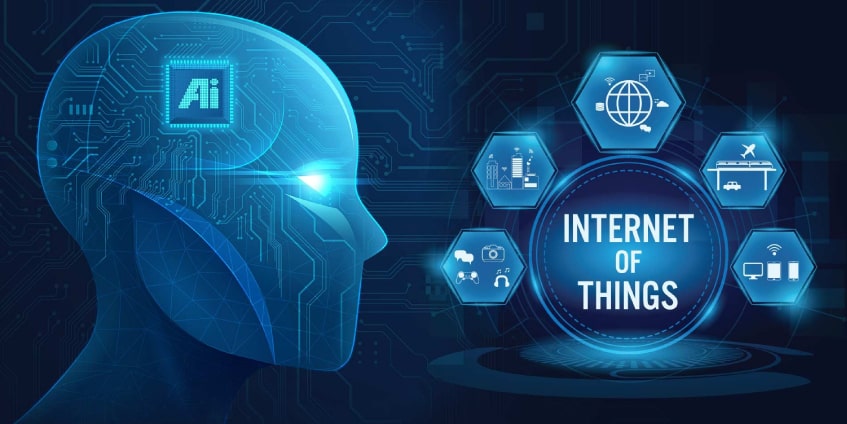
    Another key characteristic of IoT technology is it can readily combine with advancements of AI, AR, and Blockchain. Altogether, this technology opens the doors of creativity and innovation for enterprises. All you need to consult a reputed and reliable IoT app development company to come up with innovative app solutions.

    All these and several other benefits of IoT technology drive digital transformation in enterprises and increase the demand for IoT app development globally.

    Concluding Lines

    Simply put, the Internet of Things concept has a significant impact on digital transformation. On one hand, IoT solutions can enhance the customer’s purchasing experiences and on the other hand, they can enable businesses to remain connected to customers and employees on a 24/7 basis. We can certainly expect that IoT will enhance digital transformation in the coming years.

    Scs Tech is a leading enterprise mobility solutions that integrates features based on technological advancements in enterprise-level apps. We assist our global corporate clientele to make the most of digital transformation by developing robust and advanced solutions.

  • Smart Factory: the Way to Smarter Manufacturing

    Smart Factory: the Way to Smarter Manufacturing

    What is a smart factory?

    The National Institute of Standards and Technology of the United States of America (NIST) defines smart manufacturing as “fully-integrated, collaborative manufacturing systems that respond in real time to meet changing demands and conditions in the factory, in the supply network, and in customer needs”.

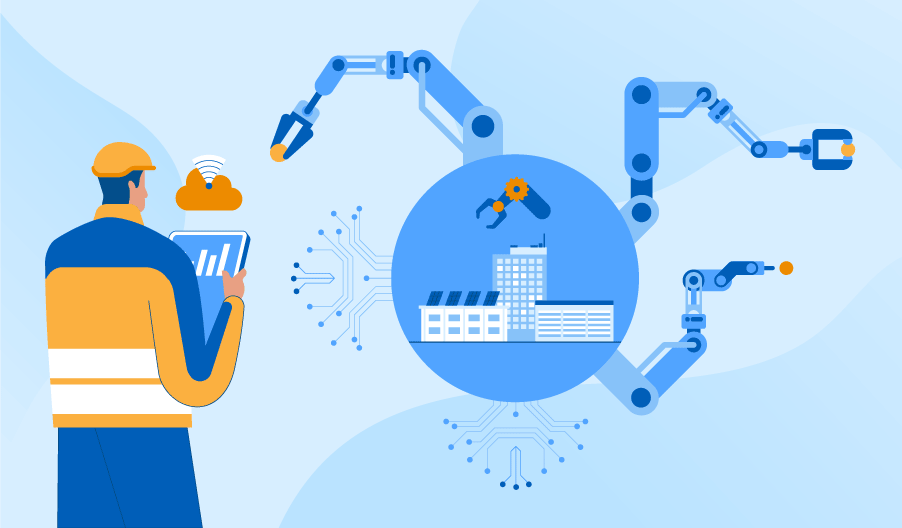
    A smart factory is a product of Industry 4.0, the fourth industrial revolution, where technologies like big data, Industrial Internet of Things (IIoT), and AI/machine learning are the driving force of digital manufacturing changes. A smart factory is the end goal of digitization in manufacturing.

    Smart factories are characterized by a high degree of complex manufacturing automation, which entails running manufacturing processes with minimal or no human intervention. Such automation is powered by industrial IoT technologies comprising hardware (sensors, actuators) and software (big data, machine learning tools).

    Benefits of a smart factory

    • Agile production process

    A smart factory allows manufacturers to quickly adapt to changing client needs, budget, product quality requirements, due to the connectivity of multiple systems, (e.g., an IIoT solution, ERP, MES, SCM) and powerful data analytics capabilities.

    • Improved efficiency of manufacturing operations

    The network of sensors allows for collecting data about the production process, environment, and equipment. This data is analyzed by the cloud software in near-real time, allowing manufacturers to make quick adjustments, for example, in equipment operating parameters. Further analysis of sensor-generated data helps spot trends and improvement opportunities through the entire production process.

    • Improved reliability of manufacturing operations

    In smart factories, the probability of human error in manufacturing operations is reduced due to high-level automation.

    • Improved product quality

    In smart factories, AI technologies are used for quality control. For example, cameras with computer vision algorithms can detect defects immediately, and advanced analytics software can help identify the cause of a problem.

    • Improved visibility into shop floor operations

    IIoT provides greater visibility into shop floor operations by providing manufacturers with continuous real-time updates on production operations and the status of industrial assets.

    • Information security

    Data security is ensured with the help of at-rest and in-transit data encryption, access control, AI-powered detection of abnormal user activity within a smart factory, and more

    • Predictive maintenance

    With the help of IIoT, data on various equipment parameters determining its health and performance is transmitted to the cloud in near-real time. There, combined with metadata, it is fed to machine learning algorithms, which help determine abnormal patterns. Thus, it becomes possible to predict potential equipment breakdown and take timely measures.

    • Improved worker safety

    Robots can replace human workers for dangerous tasks.

    Technologies used in a smart factory

    • Cloud computing

    Popular cloud platforms (e.g., AWS, Azure) allow processing, storing, and analyzing large amounts of data securely.

    • Radio Frequency Identification (RFID)

    RFID can help track industrial equipment and machinery, inventory, finished goods as well as objects and workers in smart factories.

    • Big data

    This technology is used for continuous collecting, storing, and analyzing large amounts of production-related data.

    • Artificial intelligence (AI) and machine learning (ML)

    AI and ML are employed for end-to-end automation of the production process, equipment monitoring, and more. What’s more, these technologies enable advanced analytics insights (e.g., predictive maintenance, detection of quality improvement opportunities)

    Make your manufacturing process smarter

    Switching to the smart factory model is an ambitious initiative that requires substantial time and money investments. To make the transformation smooth and get value early, SCS Tech suggests going in iterations. For example, it may be viable to start with introducing a cloud-based big data storage that will later become the basis for enterprise-wide analytics and provide insights for production planning and management, industrial asset management, and more. If you need advice on where to start or if you are ready to embark on the digital transformation journey, SCS Tech team is always ready to help.