Tag: #iot #internetofthings #internet

  • What Happens When GIS Meets IoT: Real-Time Mapping for Smarter Cities

    What Happens When GIS Meets IoT: Real-Time Mapping for Smarter Cities

    Urban problems like traffic congestion and energy wastage are on the increase as cities get more connected. 

    While the Internet of Things (IoT) generates a great deal of data, it often lacks spatial awareness, so cities cannot respond in an effective manner. In practice, 74% of IoT projects are considered to fail, often due to issues like integration challenges, insufficient skills, and poorly defined business cases. 

    Including Geographic Information Systems (GIS) with IoT offers cities location-based real-time intelligence to make traffic, energy, and safety management decisions more informed. The integration of GIS with IoT is the key to transforming urban data into actionable intelligence that maximizes city operations.

    The Impact of IoT Without GIS Mapping: Why Spatial Context Matters

    In today’s intelligent cities, IoT devices are amassing enormous quantities of data regarding traffic, waste disposal, energy consumption, and others. Yet without the indispensable geographic context of GIS, such data can stay disconnected, rendering cities with siloed, uninterpretable data. 

    IoT data responds to the query of “what” is occurring, yet GIS responds to the all-important question of “where” it is occurring—and spatial awareness is fundamental for informed, timely decision-making.

    Challenges faced by cities without GIS mapping:

    • Limited Understanding of Data Location: IoT sensors can sense problems, such as an increase in traffic jams, but without GIS, one does not know where precisely the issue lies. Is it a concentrating bottleneck or a city-wide problem? Without geospatial context, deciding which routes to upgrade is a shot in the dark.
    • Inefficiency in Response Time: If the whereabouts of a problem are not known, it will take longer to respond to it. For example, waste collection vehicles can receive information about a full bin, but without GIS, it is not known which bin to service first. This can cause inefficiencies and delays.
    • Difficult Pattern Discovery: It’s difficult for urban planners to determine patterns if data isn’t geographically based. For instance, crime areas within a neighborhood won’t reveal themselves until you put crime data on top of traffic flow maps, retail maps, or other IoT maps.
    • Blind Data: Context-less data is worthless. IoT sensors are tracking all sorts of metrics, but without GIS to organize and visualize that data on a geographic basis, it’s often overwhelming and worthless. Cities may be tracking millions of data points with no discernible plan about how to react to them.

    By integrating GIS with IoT, cities can shift from reactive to proactive management, ensuring that urban dynamics are continuously improved in real-time.

    How Real-Time GIS Mapping Enhances Urban Management
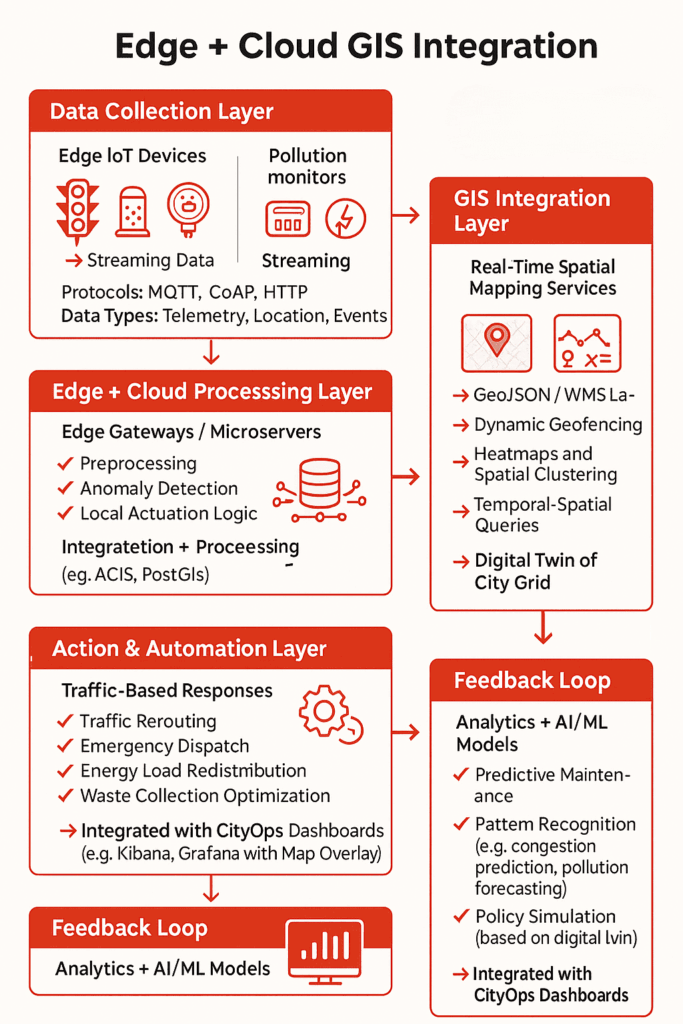
    Edge + GIS Mapping

    IoT devices stream real-time telemetry—air quality levels, traffic flow, water usage—but without GIS, this data lacks geospatial context.

    GIS integrates these telemetry feeds into spatial data layers, enabling dynamic geofencing, hotspot detection, and live mapping directly on the city’s grid infrastructure. This allows city systems to trigger automated responses—such as rerouting traffic when congestion zones are detected via loop sensors, or dispatching waste trucks when fill-level sensors cross geofenced thresholds.

    Instead of sifting through unstructured sensor logs, operators get geospatial dashboards that localize problems instantly, speeding up intervention and reducing operational lag.

    That’s how GIS mapping services transform isolated IoT data points into a unified, location-aware command system for real-time, high-accuracy urban management.

    In detail, here’s how real-time GIS mapping improves urban management efficiency:

    1. Real-Time Decision Making

    With GIS, IoT data can be overlaid on a map, modern GIS mapping services enable cities to make on-the-fly decisions by integrating data streams directly into live, spatial dashboards, making responsiveness a built-in feature of urban operations. Whether it’s adjusting traffic signal timings based on congestion, dispatching emergency services during a crisis, or optimizing waste collection routes, real-time GIS mapping provides the spatial context necessary for precise, quick action.

    • Traffic Management: Real-time traffic data from IoT sensors can be displayed on GIS maps, enabling dynamic route optimization and better flow management. City officials can adjust traffic lights or divert traffic in real time to minimize congestion.
    • Emergency Response: GIS mapping enables emergency responders to access real-time data about traffic, weather conditions, and road closures, allowing them to make faster, more informed decisions.

    2. Enhanced Urban Planning and Resource Optimization

    GIS allows cities to optimize infrastructure and resources by identifying trends and patterns over time. Urban planners can examine data in a spatial context, making it easier to plan for future growth, optimize energy consumption, and reduce costs.

    • Energy Management: GIS can track energy usage patterns across the city, allowing for more efficient allocation of resources. Cities can pinpoint high-energy-demand areas and develop strategies for energy conservation.
    • Waste Management: By combining IoT data on waste levels with GIS, cities can optimize waste collection routes and schedules, reducing costs and improving service efficiency.

    3. Improved Sustainability and Liveability

    Cities can use real-time GIS mapping to make informed decisions that promote sustainability and improve liveability. With a clear view of spatial patterns, cities can address challenges like air pollution, water management, and green space accessibility more effectively.

    • Air Quality Monitoring: With real-time data from IoT sensors, GIS can map pollution hotspots and allow city officials to take corrective actions, like deploying air purifiers or restricting traffic in affected areas.
    • Water Management: GIS can help manage water usage by mapping areas with high consumption or leakage, ensuring that water resources are used efficiently and wastefully high-demand areas are addressed.

    4. Data-Driven Policy Making

    Real-time GIS mapping provides city officials with a clear, data-backed picture of urban dynamics. By analyzing data in a geographic context, cities can create policies and strategies that are better aligned with the actual needs of their communities.

    • Urban Heat Islands: By mapping temperature data in real-time, cities can identify areas with higher temperatures. This enables them to take proactive steps, such as creating more green spaces or installing reflective materials, to cool down the environment.
    • Flood Risk Management: GIS can help cities predict flood risks by mapping elevation data, rainfall patterns, and drainage systems. When IoT sensors detect rising water levels, real-time GIS data can provide immediate insight into which areas are at risk, allowing for faster evacuation or mitigation actions.

    Advancements in GIS-IoT Integration: Powering Smarter Urban Decisions

    The integration of GIS and IoT isn’t just changing urban management—it’s redefining how cities function in real time. At the heart of this transformation lies a crucial capability: spatial intelligence. Rather than treating it as a standalone concept, think of it as the evolved skill set cities gain when GIS and IoT converge.

    Spatial intelligence empowers city systems to interpret massive volumes of geographically referenced data—on the fly. And with today’s advancements, that ability is more real-time, accurate, and actionable than ever before. As this shift continues, GIS companies in India are playing a critical role in enabling municipalities to implement smart city solutions at scale.

    What’s Fueling This Leap in Capability?

    Here’s how recent technological developments are enhancing the impact of real-time GIS in urban management:

    • 5G Connectivity: Ultra-low latency enables IoT sensors—from traffic signals to air quality monitors—to stream data instantly. This dramatically reduces the lag between problem detection and response.
    • Edge Computing: By processing data at or near the source (like a traffic node or waste disposal unit), cities avoid central server delays. This results in faster analysis and quicker decisions at the point of action.
    • Cloud-Enabled GIS Platforms: Cloud integration centralizes spatial data, enabling seamless, scalable access and collaboration across departments.
    • AI and Predictive Analytics in GIS: With machine learning layered into GIS, spatial patterns can be not only observed but predicted. For instance, analyzing pedestrian density can help adjust signal timings before congestion occurs.
    • Digital Twins of Urban Systems: Many cities are now creating real-time digital replicas of their physical infrastructure. These digital twins, powered by GIS-IoT data streams, allow planners to simulate changes before implementing them in the real world.

    Why These Advancements Matter Now

    Urban systems are more complex than ever—rising populations, environmental stress, and infrastructure strain demand faster, smarter decision-making. What once took weeks of reporting and data aggregation now happens in real time. Real-time GIS mapping isn’t just a helpful upgrade—it’s a necessary infrastructure for:

    • Preemptively identifying traffic bottlenecks before they paralyze a city.
    • Monitoring air quality by neighborhood and deploying mobile clean-air units.
    • Allocating energy dynamically based on real-time consumption patterns.

    Rather than being an isolated software tool, GIS is evolving into a live, decision-support system. It is an intelligent layer across the city’s digital and physical ecosystems.

    For businesses involved in urban infrastructure, SCS Tech provides advanced GIS mapping services that take full advantage of these cutting-edge technologies, ensuring smarter, more efficient urban management solutions.

    Conclusion

    Smart cities aren’t built on data alone—they’re built on context. IoT can tell you what’s happening, but without GIS, you won’t know where or why. That’s the gap real-time mapping fills.

    When cities integrate GIS with IoT, they stop reacting blindly and start solving problems with precision. Whether it’s managing congestion, cutting energy waste, or improving emergency response, GIS and IoT are indeed gamechangers.

    At SCS Tech, we help city planners and infrastructure teams make sense of complex data through real-time GIS solutions. If you’re ready to turn scattered data into smart decisions, we’re here to help.

  • The Role of GIS Companies in Smart City Initiatives

    The Role of GIS Companies in Smart City Initiatives

    With over 55% of the world’s population now living in urban areas, the success and sustainability of these regions depend heavily on how well cities can manage their resources and address contingencies. GIS technology provides the backbone for these efforts, offering comprehensive solutions for urban planning, infrastructure management, environmental monitoring, and public safety. 

    Geographical Information Systems (GIS) technology is a cornerstone of modern urban development and management. GIS companies in India leverage this sophisticated technology to undertake a wide array of critical tasks—from designing and planning new urban spaces to the redevelopment of heritage cities. 

    In this blog, we discuss the multifaceted roles of GIS companies in India, emphasizing their contributions to smart city development and the extensive benefits they offer to urban environments. From economic growth and business support to transportation management and disaster response, GIS technology is revolutionizing how cities operate and thrive in an increasingly complex world.

    Significance of GIS Companies in the Smart City Framework

    Both small and large GIS companies in India offer essential tools and services for smart city development. Smaller firms might focus on specific tasks like traffic management, while larger organizations provide a comprehensive range of services from a central hub. 

    The Geographical information system software technology enables the use of locational data to make informed decisions, significantly contributing to smart city initiatives.

    Supporting Local Businesses

    GIS technology assists local businesses in maintaining visibility to potential customers, thereby boosting the economic prosperity of cities. When combined with public utility, topographic, environmental, and demographic data, GIS becomes a powerful tool for various industries. 

    Image Source:

    Applications like Google Maps exemplify how GIS can update information on demographics, public utilities, networks, roads, and local businesses, aiding decision-making processes.

    Environmental Sustainability and Monitoring

    Smart cities strive to be environmentally sustainable, and GIS companies play a crucial role in this by providing environmental monitoring services. The different methods to predict natural disasters used by GIS companies are as follows: 

    • Managing natural resources
    • Tracking changes in green areas
    • Mapping pollution levels

    Additionally, GIS aids in planning water conservation, waste management, and renewable energy projects, fostering healthier urban environments.

    Tracking the Water Sources

    A city’s underground and overground water sources are known as the lifeline of its people. Instead of utilizing the invasive process, the GIS companies in India use remote sensors to track down the water flow in the city. This helps identify whether or not a drought or impending flood occurs because of construction work.

    Response to Emergencies and Public Safety

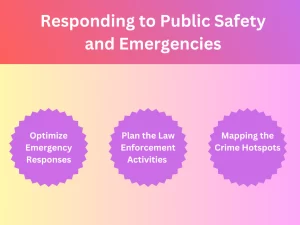
    GIS-based tools enhance public safety and emergency response capabilities by integrating spatial data with incident management systems. GIS companies enable authorities to: 

    • Optimizing the emergency responses
    • Planning out the law enforcement-related activities
    • Mapping all the crime hotspots

    If there is a natural disaster, the GIS companies in India will use the incident command system in disaster management to coordinate rescue efforts, resource allocation, and damage assessment. This will lead to an efficient and instant response, aid recovery, and reduce loss.

    Economic Developments

    Through a detailed spatial analysis, companies can use GIS technology to find the best opportunities for economic development. Cities can pull in businesses by displaying their market potential, demographic trends, and real estate.

    GIS will also help in supporting tourism as it can point out all the amenities and attractions in a city, which will contribute towards economic growth.

    Transportation and Traffic

    For all the smart cities, managing traffic is highly essential. GIS companies can use the GIS system to analyze traffic patterns, manage public transportation systems, and optimize routes.

    These companies will also be able to integrate the GIS devices into the GIS platforms to deliver live updates on the traffic. This will enhance mobility and alleviate congestion.

    Urban Development and Planning

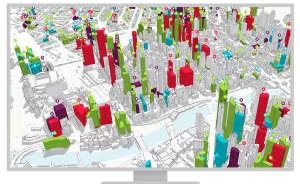
    Image Source:

    With the help of GIS technology, companies can help with the interpretation of spatial data, analysis, and visualization. All these things are compulsory for urban planning.

    Many planners utilize this particular technology to map the present infrastructure, model upcoming developments, and assess land usage.

    By doing so, planners can make correct decisions on environmental management, public-related services, and zoning the transportation networks.

    Understanding the Benefits of GIS Technology

    The GIS technology is equipped with countless advantages, and the table below will give you detailed information on them.

    GIS Technology Benefits The Description
    Disaster Management Emergency planning and risk assessment can improve response and preparedness during natural disasters.
    Market Analysis  Analysis of spatial data and demographics will help support the marketing approaches and business locations.
    Visualization Offering a visual representation with maps can improve communication and understanding. 
    Agriculture Provides support for crop management and accurate farming and helps monitor all agricultural activities.
    Education Helps in offering various tools for teaching environmental science, geography and many other fields.
    Crime Mapping Aids in analyzing all the crime patterns to improve public safety and law enforcement.
    Utility Management Helps in managing the infrastructure with numerous utilities like gas, electricity and water.
    Historical Preservation Enables the management and preservation of all the cultural heritages and historical locations. 

    Final Thoughts

    The GIS companies in India play a completely multifaceted part In the smart city industries. The GIS-based devices and tools that they have in store are compulsory for creating livable, sustainable, and efficient cities. This will make the GIS companies indispensable partners in the smart city environment. 

    Furthermore, at SCS Tech India PVT Ltd, we offer GIS-based solutions and services across the globe. Leveraging avant-garde technology, our offerings include enterprise solutions, cloud computing, eGoverance, blockchain solutions, IT infrastructure, digital transformation, and utility and energy solutions. 

    Our innovative services and solutions establish a robust digital foundation in today’s transformed world. Take advantage of our services across diverse sectors, including agriculture, education, finance, and healthcare. Get in touch with us to learn more!

  • Technology and Innovation – an update to encapsulate 2023

    Technology and Innovation – an update to encapsulate 2023

    Looking forward is never easy, but the New Year is a great time to revaluate your strategy and determine where to concentrate your efforts, particularly in technology. However, there are many regulatory incentives that could drive innovation and expansion in the coming years. In order to survive and prosper, tech businesses must recommit to enhancing their supply operations, upgrading infrastructure, and capitalizing on opportunities for growth.

    Embracing Technological Advancements: a response to global instability
    In the face of pandemics, inflation, geopolitical turmoil, supply problems, blockades, and other global uncertainties, it’s crucial to adapt the way we conduct business. This challenging landscape provides an opportunity to adopt new technology solutions that can help companies overcome these obstacles and transform them into a competitive edge. To stay ahead of the curve, let’s take a closer look at the technological advancements that have revolutionized the business landscape in 2023.

    Establishing a robust competitive position to ensure future success

    The pandemic has not only affected the world as a whole but also accelerated digital transformation and transformed work models, which has proven beneficial to the technology industry. However, in 2023, the tech industry is projected to face challenges concerning supply chains, workforce, and innovation, which are now compounded by significant macroeconomic and global uncertainties.

    In 2020-21, tech stocks performed exceptionally well during the pandemic. However, in 2022, the sector faced significant stock market declines. Now, the focus for tech companies will be to manage a potential economic slowdown by cutting costs, improving efficiency, and boosting revenue. Simultaneously, they will likely be searching for ways to remain innovative and establish a solid competitive footing for the future.

    Major Themes of 2023 and beyond-

    • Leading in Times of Macroeconomic Uncertainty

    In the face of economic challenges such as softening consumer spending, lower product demand, and falling market capitalizations, technology companies are pressured to improve margins and expand revenues.

    Here are some approaches that companies can take to address these challenges:

    • Streamlining business processes to improve efficiency
    • Increasing reliance on intelligent automation
    • Modernizing legacy architectures
    • Considering strategic mergers and acquisitions (M&A)

    These solutions can help overcome economic hurdles and ensure business continuity.

    • Strategies for Confronting Global Uncertainties in Technology Companies

    To reduce risks and improve system resilience, tech companies must navigate existing global challenges. Leaders should make strategic decisions regarding their choice of partners, location, and production methods.

    • The Tech Industry’s Impact on Other Sectors

    The technology sector is collaborating with other industries to identify new revenue streams and support innovation. By leveraging digital advancements, tech companies are striving to enhance efficiency and encourage innovation in sectors such as manufacturing, real estate, and retail, which are prime for transformation.

    • The Impact of New Regulations on Tech Companies

    As technology continues to evolve, our lives become increasingly intertwined with emerging tech trends. The Metaverse and AI have the potential to transform the world, much like the internet did, providing unparalleled opportunities for nimble businesses to gain an edge. Sustainable technology, AI, wireless engineering, cloud platforms, and other technologies have been at the forefront of technological innovation this year. The focus in the time ahead lies in tech innovation. It will be paramount that more immersive and experiential tech trends will be shaping the future.

  • The new era of energy industry empowered by technology

    The new era of energy industry empowered by technology


    Table of Content

    • Introduction
    • Innovation & Changes
    • Technical Empowerment
    • Renewable Resources

    An era of change

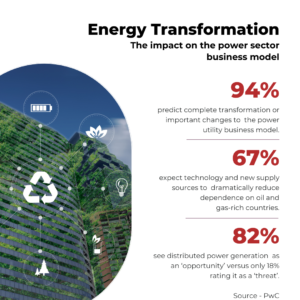
    The energy industry is going through a significant technological transition that will push the limits of the traditional energy delivery systems. In place of conventional fossil fuels, the new wave of technology is offering workable solutions that can maximise how much we use natural resources.

    These innovative options offer intelligent and data-driven solutions that encourage the development of smart infrastructure. These solutions include built-in digital intelligence that is changing how energy is produced, distributed, managed, and stored.

    The establishment of a new consumer model known as “Prosumer”—which depicts a situation where customers produce and consume energy while living outside of direct subsidy—came about as a result of consideration over efficient energy usage and consumer habits.

    The innovation that prompted the advent of energy 4.0

    The energy sector adopted rising tech trends including Internet of Things (IoT), Big Data, Blockchain, Machine Learning, Cloud Computing, and the Digital Twin technology without hesitation after realising the power of cutting-edge technology in other industries.

    The ways in which energy and utility businesses conduct business, connect with their customer bases, and engage with them have all being reinvented by the aforementioned technology. Technically speaking, it has greatly improved operation flow, performance optimisation, and the development of smart grids, better managed renewable energy sources, and cogently distributed power. These technological advancements have consequently led to a fresh round of ideas for integrating technology and the systems that enable it into (new) business models and strategies.

    “Simultaneously, hardware manufacturers and software development companies have been gathering experience in creating and integrating business-driven solutions with huge corporate systems, with an emphasis on internal reliability and ecological safety. As of now, with costs decreasing and technologies growing at an exponential pace, digitalization presents opportunities for Energy 4.0 companies to establish new business models and sustainable strategies of producing and delivering energy” – is stated in a research study conducted by MobiDev.

    The technological empowerment within the industry

    The idea of IoT and its capabilities have been extensively debated during the last ten years. The physical environment may be integrated with computer systems thanks to this intelligent “network of physical devices” that includes sensors, electronics, actuators, and connection resources.

    Energy 4.0 is the adoption of technologies like big data, artificial intelligence, and machine learning to take advantage of sensor data, automation, and machine-to-machine (M2M) communication to enhance operational performance. The industry is well on its way to transforming its operations into a global network of linked, standalone devices that are all delivering digital data to a platform that can gather, process, and share it in real time.

    Transparency within a platform that executes and records transactions is one of a ledger technology’s most potent advantages. Given how frequently assets change hands before a settlement is made, it is also useful for tracking ownership. As all parties are using the same platform, blockchain technology enables transactions like energy trading to be recorded and settled at the minute, without the need for an intermediary and with little to no requirement for reconciliation.

    The use of digital twins is expanding quickly and is becoming increasingly popular as an innovation trend. A digital twin is a depiction of a real-world thing or process that mimics it digitally without really replacing it. The digital twin allows for real-time KPI monitoring by utilising the data collected by an IoT system connected to its physical twin.

    Future energy will be renewable

    We are well on our way to a future where social innovation will integrate renewables into smart grids and produce clean and dependable energy sources, made possible by the digital transformation of the energy sector.

    Consumers are increasingly favouring renewable energy sources, which encourages the energy business to invest in more environmentally friendly technology. Greater opportunities are presented by digital innovation for businesses, consumers, and society as a whole since it motivates them to engage in environmentally friendly energy solutions that lower prices and give them more control over their energy use.


  • IoT the next big thing or already is? In perspective of Industry 4.O

    IoT the next big thing or already is? In perspective of Industry 4.O

    One of the key technology foundations of Industry 4.0 is the Internet of Things. The ability of machines to independently communicate with one another allows them to solve issues that would previously require human intervention.

    It is anticipated that the use of industrial IoT for predictive maintenance and a rise in the number of data centres would present sizable market expansion prospects. Additionally, the government’s promotion of industrial automation and the demand for high productivity & efficiency are the main factors propelling the growth of this market.

    The majority of firms have acquired a high degree of IoT maturity, and through 2024, enterprises from all industry sectors intend to invest an average of $2.8 million in IoT. Businesses anticipate spending 10% of their IT budgets on IoT initiatives during the next three years, up from the average 7% of an organization’s IT expenditure between 2017 and 2020.

    However, there are observable differences in the expected IoT investment levels across various business sectors. Over the next three years, oil and gas companies plan to invest the most in IoT ($3.2 million on average), followed by electrical utilities ($3.1 million), transportation and logistics ($3 million), mining operators ($2.7 million), and finally, agricultural industries ($2 million).

    Latest research conducted by Inmarsat Enterprise reveals IoT is now the primary Industry 4.0 technology in which companies are investing over the next three years. IoT is becoming a company investment priority, and businesses expect it to save them an increasing amount of money in the next years. This shows how well-established an industry IoT has become globally. Despite the fact that IoT adoption is already accelerating quickly, Covid-19 has stressed the value of Industry 4.0 technologies like IoT for maintaining business continuity. Companies who create digital twins of their supply chains and share data are reaping the rewards as the world’s manufacturing and supply chains become more integrated and digitalized.

    In the Indian Landscape –

    India is a hive of IoT provider potential, and the nation’s IoT ecosystem is anticipated to keep expanding to generate entirely new sources of income. To stay ahead of the curve and meet the growing demand for IoT solutions, vendors should collaborate with other members of the value ecosystem to take advantage of cutting-edge technologies like Big Data analytics, AI and machine learning, new connectivity protocols, and blockchain.

    Private long-term evolution for improved security: Indian tech organizations should concentrate on promoting the advantages of P-LTE to raise awareness and approach businesses with solutions tailored to specific verticals.

    Real-time operational intelligence for improved risk and compliance management: To deliver brand-neutral IoT solutions, suppliers must create hardware and software that is interoperable and pre-integrated.

    Visual matrix solutions for better CX: IoT providers should collaborate with OEMs of visual surveillance systems to offer in-store, real-time consumer analytics in addition to core security solutions.

    IoT as a Service for Smart Diagnostic Laboratories: By starting with open source IoT solutions, expenses can be significantly cut, which will promote the use of smart laboratories as a service.

    By using our global knowledge and top-class IoT solutions, we can assist your business with our digital transformation and automation services. If you’re looking for understanding partners which can deliver results, contact us now.