Tag: #ITinfrastructure

  • Embracing Hybrid Cloud IT Infrastructure Solutions as the New Norm

    Embracing Hybrid Cloud IT Infrastructure Solutions as the New Norm

    In today’s world, where data breaches are becoming alarmingly frequent, how can companies strike the right balance between ensuring robust security and maintaining the scalability required for growth?

    Well, hybrid cloud architectures might just be the answer to this! They provide a solution by enabling sensitive data to reside in secure private clouds while leveraging the expansive resources of public clouds for less critical operations.

    As hybrid cloud becomes the norm, it empowers organizations to optimize their IT infrastructure solutions, ensuring they remain competitive and agile in a continuously ever-changing digital landscape.

    This blog is about the importance of hybrid cloud solutions as the new norm in IT infrastructure solutions.

    Embracing Hybrid Cloud IT Infrastructure Solutions as the New Norm
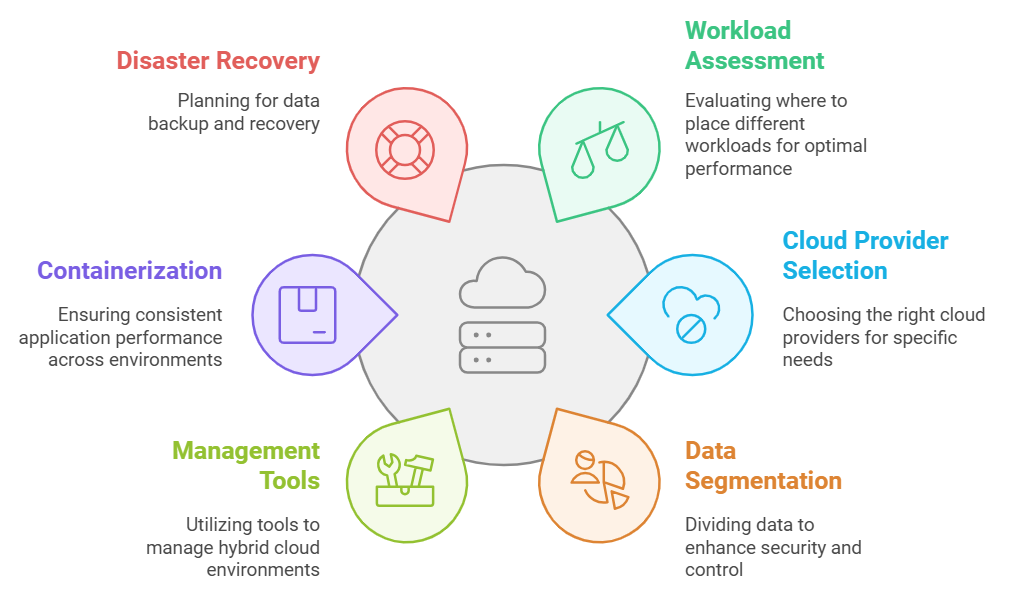
     

    Hybrid cloud IT infrastructure solutions
    Hybrid cloud IT infrastructure solutions

    1. Evaluating Organizational Needs and Goals

    • Assess Workloads: Determine which workloads best suit public clouds, private clouds, or on-premises environments. For example, latency-sensitive applications may remain on-premises, while scalable web applications thrive in public clouds.
    • Set Objectives: Define specific goals such as cost reduction, enhanced security, or improved scalability to effectively guide the hybrid cloud strategy.

    2. Designing a Tailored Architecture

    • Select Cloud Providers: Select public and private cloud providers based on features such as scalability, global reach, and compliance capabilities.
    • Integrate Platforms: Use orchestration tools or middleware to integrate public and private clouds with on-premises systems for smooth data flow and operations.

    3. Data Segmentation

    • Data Segmentation: Maintain sensitive data on private clouds or on-premises systems for better control.
    • Unified Security Policies: Define detailed frameworks for all environments, including encryption, firewalls, and identity management systems.
    • Continuous Monitoring: Utilize advanced monitoring tools to identify and mitigate threats in real-time.

    4. Embracing Advanced Management Tools

    • Hybrid Cloud Management Platforms: Solutions such as VMware vRealize, Microsoft Azure Arc, or Red Hat OpenShift make it easier to manage hybrid clouds.
    • AI-Driven Insights: Utilize AI & ML services to optimize resource utilization, avoid waste, and predict potential failures.

    5. Flexibility through Containerization

    • Containers: Docker and Kubernetes ensure that applications operate uniformly across different environments.
    • Microservices: Breaking an application into smaller, independent components allows for better scalability and performance optimization.

    6. Disaster Recovery and Backup Planning

    • Distribute Backups: Spread the backups across public and private clouds to prevent data loss during outages.
    • Failover Mechanisms: Configure the hybrid cloud with automatic failover systems to ensure business continuity.

    7. Audits and Updates

    • Audit Resources: Regularly assess resource utilization to remove inefficiencies and control costs.
    • Ensure Compliance: Periodically review data handling practices to comply with regulations like GDPR, HIPAA, or ISO standards.

    Emerging Trends Shaping the Future of Hybrid Cloud

    1. AI and Automation Integration

    Artificial Intelligence (AI) and automation are changing hybrid cloud environments to make them more innovative and efficient.

    • Automated Resource Allocation: AI dynamically adjusts resources according to the workload’s real-time demands for better performance. For example, AI & ML services can automatically reroute resources during traffic spikes to prevent service disruptions.
    • Predictive Analytics: Historical time series data analysis to predict potential failures to avoid faults and reduce downtime.
    • Improved monitoring: The AI-driven tools enable granular views of performance metrics, usage patterns, and cost analysis to help better make decisions.
    • AI for Security: AI detects anomalies, responds to potential threats, and strengthens hybrid environments’ security.

    2. Edge computing is on the rise

    Edging involves processing data near its sources; it combines well with hybrid cloud strategies, particularly in IoT and real-time applications.

    • Real-time Processing: Autonomous vehicles will benefit through edge computing, where sensor data is computed locally for instantaneous decisions.
    • Optimized Bandwidth: It conserves bandwidth as the critical data is processed locally, and the necessary information alone is sent to the cloud.
    • Better Resilience: With hybrid environments and edge devices, distributed workloads are more resilient when networks break.
    • Support for Emerging Tech: Hybrid systems use low-latency edge computing, especially for implementing AR and Industry 4.0 technologies.

    3. Sustainability Focus

    Hybrid cloud solutions would be crucial in aligning IT operations with and supporting environmental sustainability goals.

    • Effective utilization of resources: Hybrid could shift workloads into low-carbon environments like a public cloud provider powered by renewable sources.
    • Dynamic scaling: By scaling resources on demand through hybrid clouds, they keep energy wastage down over periods of low use
    • Green data centers: Harnessing sustainable IT infrastructure solutions by AWS and Microsoft Azure providers reduces carbon footprints.
    • Carbon Accounting: Analytics tools in hybrid platforms give accurate carbon emission measures, which allows organizations to reduce their carbon footprint.

    4. Unified Security Frameworks

    Hybrid cloud environments require consistent and robust security measures to protect distributed data.

    • Policy Enforcement: Unified frameworks apply security policies across all environments, ensuring consistency.
    • Integrated Tools: Data protection is enhanced by features like encryption, multi-factor authentication, and identity access management (IAM).
    • Threat Detection: Machine learning algorithms detect and prevent real-time threats, reducing vulnerability.
    • Compliance Simplification: Unified frameworks provide built-in auditing and reporting capabilities that simplify compliance with regulations.

    5. Hybrid Cloud and Multicloud Convergence

    Increasingly, hybrid cloud strategies are being used with multi-cloud to maximize flexibility and efficiency.

    • Diversification of vendors: Reduced dependency on one vendor can ensure resilience and help build more robust services.
    • Optimized Costs: Strategically spreading workloads across IT infrastructure solution providers can help leverage cost efficiencies and unique features.
    • Improved Interoperability: Tools such as Kubernetes ensure smooth operations across diverse cloud environments, thus enhancing flexibility and collaboration.

    Conclusion

    The future of hybrid cloud IT infrastructure solutions is shaped by transformative trends emphasizing agility, scalability, and innovation. As organizations embrace AI and automation, edge computing, sustainability, and unified security frameworks, they get better prepared to thrive in a fast-changing digital world.

    Proactively dealing with these trends can help achieve operational excellence and bring long-term growth and resilience in the age of digital transformation. SCS Tech enables businesses to navigate this evolution seamlessly, offering cutting-edge solutions tailored to modern hybrid cloud needs.

  • Why Robust IT Infrastructure Solutions Are the Backbone of Successful Enterprises?

    Why Robust IT Infrastructure Solutions Are the Backbone of Successful Enterprises?

    As per Harvard Business Review, almost forty percent of companies view IT infrastructure solutions as a leading reason for overall enterprise efficiency gain in order for businesses to stand out from one another in the marketplace.

    In the modern world of digitalization, an effective IT structure solution is no longer a luxury but a necessity for any enterprise that has to compete for its existence in the market. In this blog, we will define what it means to integrate IT infrastructure solutions into business processes, as well as strategies to develop sound IT infrastructure solutions.

    Comprehensive Insight on Benefits of IT Infrastructure Solutions for Enterprise Success

    Improved Operational Efficiency

    A robust IT infrastructure helps in improving operational efficiency by utilizing the resources optimally, reducing errors, and downtime.

    Listed below are key factors of an IT infrastructure solution that contribute to improved operational efficiency:

    • IT infrastructure solutions help streamline business processes by automating the business workflow, resulting in a reduction in manual tasks and errors.
    • A robust IT infrastructure solution enhances work collaboration through various cloud-based platforms so employees can access real-time data, share documents, and seamlessly collaborate on projects.
    • For strategic decision-making, IT infrastructure solutions offer advanced solutions for data storage via cloud storage and database management systems.
    • Integrating data analytics tools like Power BI, Google Data Studio, QlikSense, etc. for making timely decisions according to operational and market changes.

    Robust Security and Compliance

    A strong IT infrastructure not only improves operational efficiency but also makes sure the valuable assets of the organization are safeguarded from having network security solutions to data encryption solutions. Below listed are key IT infrastructure solutions that facilitate security and compliance:

    • To safeguard from potential disruption resulting from cyber-attacks or technical failures, IT infrastructure solutions offer a comprehensive recovery plan that includes data backup, testing and drills, business impact analysis, and re-establishing networking connectivity.
    • Network security solutions like virtual private networks, firewalls, intrusion detection and prevention systems (IDPS), etc., act as key solutions for enhancing data security.
    • A robust IT infrastructure solution integrates data encryption solutions through tools like BitLocker (for Windows) or FileVault (for Mac) and a public key infrastructure solution for safeguarding digital certificates and encryption keys.
    • Other key security and compliance solutions include identity and access management solutions, compliance management solutions, including data governance tools to make sure the business is securing and managing data as per regulatory compliance, endpoint security solutions, and more.

    Cost Efficiency

    Cost efficiency plays a crucial role in an enterprise’s long-term success, which can be achieved by integrating IT infrastructure solutions that can eliminate waste, streamline business operations, and allocate resources effectively.

    Below listed are the benefits offered by robust IT infrastructure solutions to achieve cost efficiency.

    • Automation of routine tasks helps enterprises utilize the skills of employees in more effective areas.
    • Helps in effective resource management by removing underutilized assets and automated scaling through tools like Microsoft Azure’s Virtual Machine Scale Sets, AWS Autoscaling, etc., so resources are allocated based on demand, resulting in reduced cost.
    • IT infrastructure management tools help in better cost visibility through 3 key aspects:
      • Energy consumption reduction by optimizing power usage
      • Storage optimization by integrating techniques like tiering, deduplication, and compression.
      • Cost savings via server consolidation, where underutilized servers can be identified and consolidated, reducing hardware costs and energy consumption.

    Improved Customer Experience

    In the evolving market, the shift towards enhancing the customer experience has become a key parameter, and enterprises can integrate the following IT infrastructure solutions to improve customer experience:

    • Streamline communication and service by adding automated response services like Chatbot or voice-enabled technology solutions.
    • Add advanced data analytics tools that can evaluate customer preferences and offer personalized customer interaction.
    • IT infrastructure solutions like CDNs (Content Delivery Networks) can be implemented to increase reliability by offering faster load time. It helps businesses in scaling as a high volume of traffic can be managed with high performance.

    Fosters Gaining Edge in Competitive Market by Constant Innovation

    Investing in IT infrastructure solutions is a backbone to drive success given market changes and the evolving landscape of technologies. Listed below are a few advantages enterprises can gain from integrating innovative approaches to IT infrastructure solutions in their business processes:

    • IT infrastructure solutions help businesses with scalable and cost-effective solutions so businesses can respond to sudden market demands and offer seamless delivery.
    • Supports cutting-edge technologies like artificial intelligence, machine learning, and the Internet of Things (IoT).
    • Improves agility and speed so businesses can rapidly deploy new services/applications and grab the right market opportunity.
    • Helps in digital transformation by integrating ERP systems like SAP, CRM software like Hubspot, and collaboration tools like Microsoft Teams.
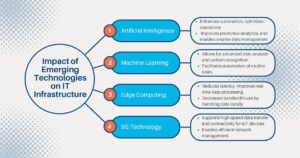
    • The digital transformation is also achieved by deploying innovative applications like AI-powered analytics (Tableau, Power BI) and IoT platforms (AWS IoT, Google Cloud IoT).Impact of emerging technologies on IT infrastructure

      Tips on Building a Robust IT Infrastructure Solutions

      • Understand business requirements and evaluate pain points to align IT infrastructure strategies.
      • Focus on scalability and flexibility through cloud-based solutions and modular design for long-term growth.
      • Improve network reliability by removing redundant systems and investing in high-speed connectivity for seamless communication.
      • Invest in advanced monitoring and management tools like SolarWinds and focus on centralized management.
      • Partner with reliable IT infrastructure solutions partner like SCS Tech India for comprehensive services like infrastructure management, cloud services, cybersecurity, etc.

      Conclusion

      Robust IT infrastructure solutions are crucial for successful enterprises, ensuring seamless operations and driving innovation. A well-structured IT structure enhances scalability and improves productivity, leading to a competitive advantage. At SCS Tech India, we understand the importance of this parameter and offer tailored services like cloud computing integration and cybersecurity to meet these needs.

      Our expertise in IoT consulting, IoT application development, wearable app development, voice-enabled technology solutions, and IT implementation and support helps enterprises build a robust IT infrastructure. Enterprises can achieve agility and efficiency by integrating these services and sustaining long-term in the market.

      FAQs

      1. What is the role of IT infrastructure in API management?

      IT infrastructure in API management focuses on seamless communication between applications and services, enabling businesses to create, manage, and track the performance of API along with detecting issues.

      1. What IT infrastructure solutions does SCS Tech India specialize in?

      SCS Tech India provides IT infrastructure solutions like network design, cloud computing, data center management, and cybersecurity services.

      1. What best practices can enterprises follow to design a robust IT infrastructure?

      Enterprises can focus on practices like scalability, assessing business needs, cloud integration, strong security measures, solid backup systems to remove redundancy, and more.

    (more…)

  • Transform Your Business with Cutting-Edge IT Infrastructure Solutions

    Transform Your Business with Cutting-Edge IT Infrastructure Solutions

    Did you know that 85% of businesses report increased efficiency and competitive advantage after upgrading their IT infrastructure? With such a significant impact, isn’t it time your company explored these advancements too?

    Advanced IT infrastructure solutions are no longer optional—they’re essential for maintaining a competitive edge and boosting operational efficiency. 

    But what makes modern IT infrastructure so revolutionary?

    At its core, IT infrastructure integrates hyper-converged systems, cloud computing, and edge computing, reshaping traditional business models. These innovations drive powerful cybersecurity measures, seamless data integration, and real-time analytics, ensuring businesses operate with unmatched stability and agility. Moreover, embracing these cutting-edge solutions simplifies remote work, lays the groundwork for future technological advancements, and supports scalability.

    Read on as we delve deeper into how these IT infrastructure solutions are enhancing business operations. 

    Improving Operational Efficiency: Best IT Solutions to Opt For

    Image Source:

    You will come across many IT solutions that can aid in improving the functional efficiency of your business. In this section, you will receive a detailed explanation of the most crucial and popular IT infrastructure solutions.

    Git [Bitbucket, Gitlab, GitHub]

    Git, along with other platforms like Bitbucket, GitHub, and GitLab, is known as the cornerstone of proper source code management. It will do the following:

    • Code modification history maintenance
    • Change the tracking
    • Provide smooth collaboration.

    All these things are extremely vital for IT infrastructure services to become powerful so that they can help all types of businesses.

    Maven

    This is an important DevOps tool that can simplify project management and also create automation. From reporting and documentation to managing builds, Maven can easily boost the reliability and efficiency of all IT infrastructure services.

    Amazon Web Services Global Infrastructure

    AWS [Amazon Web Services] offers a network of data centers across the globe, which, in return, delivers a myriad range of cloud computing services. Through its worldwide data centers, AWS provides over 200 services.

    From storage solutions to virtual services, Amazon Web Service’s infrastructure is created to support the requirements of various businesses. These IT solutions will also offer businesses both scalability and flexibility, which is needed to meet all their IT-related demands.

    The presence of AWS infrastructure across the globe ensures high availability and less latency. For these reasons, AWS stands out as an exceptional choice for corporations with a global footprint. At present, AWS infrastructure is 245 nations and territories, 36 local zones, and 33 regions worldwide.

    AppDynamics

    This particular IT infrastructure solution provides all the important DevOps tools that can enhance observability and prompt delivery. The “Cloud Native App Observability” from AppDynamics will allow comprehensive monitoring, and it’s vital for preserving the best IT infrastructure services.

    Splunk Cloud

    Image Source:

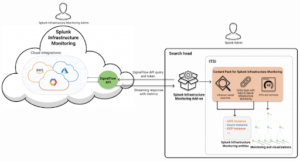
    This is one of the best IT solutions that offers automation solutions for all DevOps processes, which includes deployment automation. Splunk Cloud’s Automated Deployment Helper can streamline deployments and improve the efficiency of IT infrastructure solutions.

    Cisco Meraki

    This IT infrastructure solution delivers a diverse range of management solutions, which include:

    • Wireless access points
    • Switches
    • Cloud-managed routers

    All these solutions can facilitate network management and improve security. This will enable all businesses to manage the network infrastructure across the globe. Cisco Meraki has a centralised dashboard that offers visibility into the network performance in real-time, which will make it much easier for all businesses to address and detect various problems.

    VMWare Global Infrastructure

    With the help of VMWare, businesses will get many visualisation solutions that can assist them in optimising their respective IT infrastructure. From virtual desktops to servers, the solutions from VMWare are created to enhance security, reduce expenses, and improve the system effectively.

    For this reason, Broadcom declared an acquisition deal of $61 million with VMWare in 2022. Apart from that, VMWare global infrastructure is an ideal option for businesses that aim to modernise their IT infrastructure.

    Besides that, its solution will also let businesses transfer all their workloads between the cloud and on-premises environments, offering both scalability and flexibility.

    IT Infrastructure: Getting to Know It’s Primary Components

    An outstanding IT infrastructure stands out as the backbone of a modern-day business and has some important components. Look at the table below to discover what these components are:

    Components Description
    Storage and Security Robust servers and high capacity and reliable storage solutions are compulsory for managing massive amounts of information and running complicated applications without lag or downtime. This includes options like Storage Area Network and Network Attached Storage.
    Virtualisation Efficiently using computing resources via virtual environments and machines will let all businesses run countless operating applications and systems on one physical server. This will help lessen the cost and improve the scalability.
    Network Powerful networking can simplify data transfer and communication outside and inside the company. Reliable and high-speed network connections will support real-time collaboration, remote access, and cloud services.
    Remote Access Efficient and safe remote working abilities will allow employees to gain access to all the important resources whenever they want. In return, it will improve flexibility and productivity. Solutions, such as VPN and SASE, will offer secure connections to remote user
    Security Exceptional security measures can shield all systems and data from cyber-related threats. This includes providing security updates, intrusion detection systems, firewalls, and encryption. A multi-layered security approach can identify and prevent attacks.
    Disaster Recovery Making sure all the data is properly backed up and retrieved easily during emergencies can prevent data loss. It will also allow the business to continue operating, and periodic off-site and on-site backups are essential for maintaining data integrity.

    Conclusion

    IT solutions play a pivotal role in enhancing global business operations, driving efficiency, and optimizing overall IT infrastructure. Businesses seeking robust IT infrastructure solutions can benefit from experts at SCS Tech India Pvt Ltd, who deliver exceptional solutions to our customers.

    In addition to IT infrastructure, we specialize in cybersecurity, eGovernance, AI/ML services, and digital transformation. Our expertise extends across diverse sectors including agriculture, education, oil and gas, urban development, and critical infrastructure, ensuring tailored solutions that meet specific business needs.