Tag: #machinelearning #ml

  • How AI & ML Are Transforming Digital Transformation in 2026

    How AI & ML Are Transforming Digital Transformation in 2026

    Digital transformation has evolved from a forward-looking strategy into a fundamental requirement for operational success. As India moves deeper into 2026, organizations across industries are recognizing that traditional digital transformation approaches are no longer enough. What truly accelerates transformation today is the integration of Artificial Intelligence (AI) and Machine Learning (ML) into core business systems.

    Unlike earlier years, where AI was viewed as an advanced technology reserved for innovation labs, it is now embedded in everyday operational workflows. Whether it’s streamlining supply chains, automating customer interactions, predicting equipment failures, or enhancing cybersecurity, AI and ML are enabling organizations to move from reactive functioning to proactive, intelligent operations.

    In this blog, we explore how AI and ML are reshaping digital transformation in 2026, what trends are driving adoption, and how enterprises in India can leverage these technologies to build a future-ready business.

    AI & ML: The Foundation of Modern Digital Transformation

    AI and ML have become the backbone of digital transformation because they allow organizations to process large amounts of data, identify patterns, automate decisions, and optimize workflows in real time. Companies are no longer implementing AI as an “optional enhancement” — instead, AI is becoming the central engine of digital operations.

    At its core, AI-powered digital transformation enables companies to achieve what previously required human intervention, multiple tools, and considerable resources. Now, tasks that once took hours or days can be completed within minutes, and with far higher accuracy.

    AI & ML empower enterprises to:

    • Improve decision-making through real-time insights

    • Understand customer behavior with greater precision

    • Optimize resources and reduce operational waste

    • Enhance productivity through intelligent automation

    • Strengthen cybersecurity using predictive intelligence

    This shift toward AI-first strategies is defining the competitive landscape in 2026.

    Key AI & ML Trends Driving Digital Transformation in 2026

    AI capabilities are expanding rapidly, and these advancements are shaping how organizations modernize their digital ecosystems. The following trends are particularly influential this year.

    a) Hyper-Automation as the New Operational Standard

    Hyper-automation integrates AI, ML, and RPA to automate complex business processes end-to-end. Organizations are moving beyond basic automation to create fully intelligent workflows that require minimal manual oversight.

    Many enterprises are using hyper-automation to streamline back-office operations, accelerate service delivery, and reduce human errors. For instance, financial services companies can now process loan applications, detect fraud, and verify customer documents with near-perfect accuracy in a fraction of the usual time.

    Businesses rely on hyper-automation for:

    • Smart workflow routing

    • Automated document processing

    • Advanced customer onboarding

    • Predictive supply chain operations

    • Real-time process optimization

    The efficiency gains are substantial, often reducing operational costs by 20–40%.

    b) Predictive Analytics for Data-Driven Decision Making

    Data is the most valuable asset of modern enterprises — but it becomes meaningful only when organizations can interpret it accurately. Predictive analytics enables businesses to forecast events, trends, and behaviors using historical and real-time data.

    In 2026, predictive analytics will be used across multiple functions. Manufacturers rely on it to anticipate machine breakdowns before they occur. Retailers use it to forecast demand fluctuations. Financial institutions apply it to assess credit risks with greater accuracy.

    Predictive analytics helps organizations:

    • Reduce downtime

    • Improve financial planning

    • Understand market movements

    • Personalize customer experiences

    • Prevent operational disruptions

    Companies that adopt predictive analytics experience greater agility and competitiveness.

    c) AI-Driven Cybersecurity and Threat Intelligence

    As organizations expand digitally, cyber threats have grown more complex. With manual monitoring proving insufficient, AI-based cybersecurity solutions are becoming essential.

    AI enhances security by continuously analyzing network patterns, identifying anomalies, and responding to threats instantly. This real-time protection helps organizations mitigate attacks before they escalate.

    AI-powered cybersecurity enables:

    • Behavioral monitoring of users and systems

    • Automated detection of suspicious activity

    • Early identification of vulnerabilities

    • Prevention of data breaches

    • Continuous incident response

    Industries such as BFSI, telecom, and government depend heavily on AI-driven cyber resilience.

    d) Intelligent Cloud Platforms for Scalability and Efficiency

    The cloud is no longer just a storage solution — it has become an intelligent operational platform. Cloud service providers now integrate AI into the core of their services to enhance scalability, security, and flexibility.

    AI-driven cloud systems can predict demand, allocate resources automatically, and detect potential failures before they occur. This results in faster applications, reduced costs, and higher reliability.

    Intelligent cloud technology supports digital transformation by enabling companies to innovate rapidly without heavy infrastructure investments.

    e) Generative AI for Enterprise Productivity

    Generative AI (GenAI) has revolutionized enterprise workflows. Beyond creating text or images, GenAI now assists in tasks such as documentation, coding, research, and training.

    Instead of spending hours creating technical manuals, training modules, or product descriptions, employees can now generate accurate drafts within minutes and refine them as needed.

    GenAI enhances productivity through:

    • Automated content generation

    • Rapid prototyping and simulations

    • Code generation and debugging

    • Data summarization and analysis

    • Knowledge management

    Organizations using GenAI report productivity improvements of 35–60%.
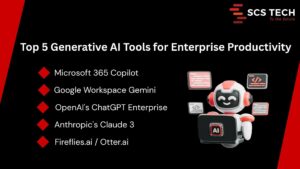
    Generative AI Tools for Enterprise Productivity

    How AI Is Transforming Key Industries in India

    AI adoption varies across industries, but the impact is widespread and growing. Below are some sectors experiencing notable transformation.

    Healthcare

    AI is revolutionizing diagnostics, patient management, and clinical decision-making in India.
    Hospitals use AI-enabled tools to analyze patient records, medical images, and vital signs, helping doctors make faster and more accurate diagnoses.

    Additionally, predictive analytics helps healthcare providers anticipate patient needs and plan treatments more effectively. Automated hospital management systems further improve patient experience and reduce administrative workload.

    Banking & Financial Services (BFSI)

    The BFSI sector depends on AI for security, customer experience, and operational efficiency.
    Banks now use AI-based systems to detect fraudulent transactions, assess creditworthiness, automate customer service, and enhance compliance.

    With the rise of digital payments and online banking, AI enables financial institutions to maintain trust while delivering seamless customer experiences.

    Manufacturing

    Manufacturers in India are integrating AI into production lines, supply chain systems, and equipment monitoring.
    AI-driven predictive maintenance significantly reduces downtime, while computer vision tools perform real-time quality checks to maintain consistency across products.

    Digital twins — virtual replicas of physical systems — allow manufacturers to test processes and optimize performance before actual deployment.

    Retail & E-Commerce

    AI helps retail companies understand customer preferences, forecast demand, manage inventory, and optimize pricing strategies.
    E-commerce platforms use AI-powered recommendation engines to deliver highly personalized shopping experiences, leading to higher conversion rates and increased customer loyalty.

    Government & Smart Cities

    Smart city initiatives across India use AI for traffic management, surveillance, GIS mapping, and incident response.
    Government services are becoming more citizen-friendly by automating workflows such as applications, approvals, and public queries.

    Benefits of AI & ML in Digital Transformation

    AI brings measurable improvements across multiple aspects of business operations.

    Key benefits include:

    • Faster and more accurate decision-making

    • Higher productivity through automation

    • Reduction in operational costs

    • Enhanced customer experiences

    • Stronger security and risk management

    • Increased agility and innovation

    These advantages position AI-enabled enterprises for long-term success.

    Challenges Enterprises Face While Adopting AI

    Despite its potential, AI implementation comes with challenges.

    Common barriers include:

    • Lack of AI strategy or roadmap

    • Poor data quality or fragmented data

    • Shortage of skilled AI professionals

    • High initial implementation costs

    • Integration issues with legacy systems

    • Concerns around security and ethics

    Understanding these challenges helps organizations plan better and avoid costly mistakes.

    How Enterprises Can Prepare for AI-Powered Transformation

    Organizations must take a structured approach to benefit fully from AI.

    Steps to build AI readiness:

    • Define a clear AI strategy aligned with business goals

    • Invest in strong data management and analytics systems

    • Adopt scalable cloud platforms to support AI workloads

    • Upskill internal teams in data science and automation technologies

    • Start small—test AI in pilot projects before enterprise-wide rollout

    • Partner with experienced digital transformation providers

    A guided, phased approach minimizes risks and maximizes ROI.

    Why Partner with SCS Tech India for AI-Led Digital Transformation?

    SCS Tech India is committed to helping organizations leverage AI to its fullest potential. With expertise spanning digital transformation, AI/ML engineering, cybersecurity, cloud technology, and GIS solutions, the company delivers results-driven transformation strategies.

    Organizations choose SCS Tech India because of:

    • Proven experience across enterprise sectors

    • Strong AI and ML development capabilities

    • Scalable and secure cloud and data solutions

    • Deep expertise in cybersecurity

    • Tailored transformation strategies for each client

    • A mature, outcome-focused implementation approach

    Whether an enterprise is beginning its AI journey or scaling across departments, SCS Tech India provides end-to-end guidance and execution.

    Wrapping Up!

    AI and Machine Learning are redefining what digital transformation means in 2026. These technologies are enabling organizations to move faster, work smarter, and innovate continuously. Companies that invest in AI today will lead their industries tomorrow.

    Digital transformation is no longer just about adopting new technology — it’s about building an intelligent, agile, and future-ready enterprise. With the right strategy and partners like SCS Tech India, businesses can unlock unprecedented levels of efficiency, resilience, and growth.

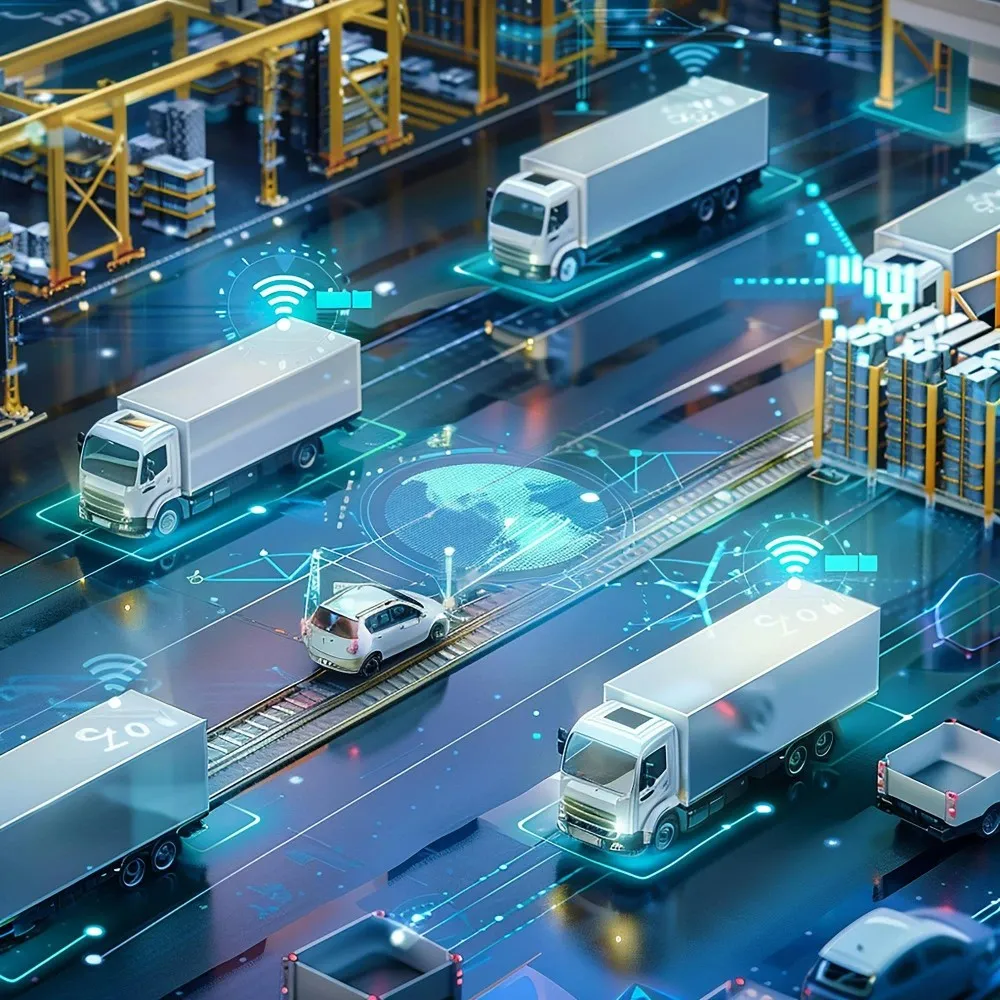
  • Logistics Firms Are Slashing Fuel Costs with AI Route Optimization—Here’s How

    Logistics Firms Are Slashing Fuel Costs with AI Route Optimization—Here’s How

    Route optimization that are based on static data and human choice tend to fall short of possibilities to save money, resulting in inefficiencies and wasted fuel use.

    Artificial intelligence route optimization fills the gap by taking advantage of real-time data, predictive algorithms, and machine learning that dynamically alter routes in response to current conditions, including changes in traffic and weather. Using this technology, logistics companies can not only improve delivery time but also save huge amounts of fuel—lessening costs as well as environmental costs.

    In this article, we’ll dive into how AI-powered route optimization is transforming logistics operations, offering both short-term savings and long-term strategic advantages.

    What’s Really Driving the Fuel Problem in Logistics Today?

    Per gallon of gasoline costs $3.15. But that’s not the problem logistics are dealing with. The problem is the inefficiency at multiple points in the delivery process. 

    Here’s a breakdown of the key contributors to the fuel problem:

    • Traffic and Congestion: Delivery trucks idle almost 30% of the time in traffic conditions in urban regions. Static route plans do not take into consideration real-time traffic congestion, which results in excess fuel consumption and late delivery.
    • Idling and Delays: Cumulative waiting times at the delivery points or loading/unloading stations. Idling raises the fuel consumption level and lowers productivity overall.
    • Inefficient Rerouting: Drivers often have to rely on outdated route plans, which fail to adapt to sudden changes like road closures, accidents, or detours, leading to inefficient rerouting and excess fuel use.
    • Poor Driver Habits: Poor driving habits—like speeding, harsh braking, or rapid acceleration—can reduce fuel efficiency by as much as 30% on highways and 10 – 40% in city driving.
    • Static Route Plans: Classical planning tends to presume that the first route is the optimal route, without considering actual-time environmental changes.

    While traditional route planning focuses solely on distance, the modern logistics challenge is far more complex.

    The problem isn’t just about distance—it’s about the time between decision-making moments. Decision latency—the gap between receiving new information (like traffic updates) and making a change—can have a profound impact on fuel usage. With every second lost, logistics firms burn more fuel.

    Traditional methods simply can’t adapt quickly enough to reduce fuel waste, but with the addition of AI, decisions can be automated in real-time, and routes can be adjusted dynamically to optimize the fuel efficiency.

    The Benefits of AI Route Optimization for Logistic Companies

    AI Route Optimization for Logistics Companies

    1. Reducing Wasted Miles and Excessive Idling

    Fuel consumption is heavily influenced by wasted time. 

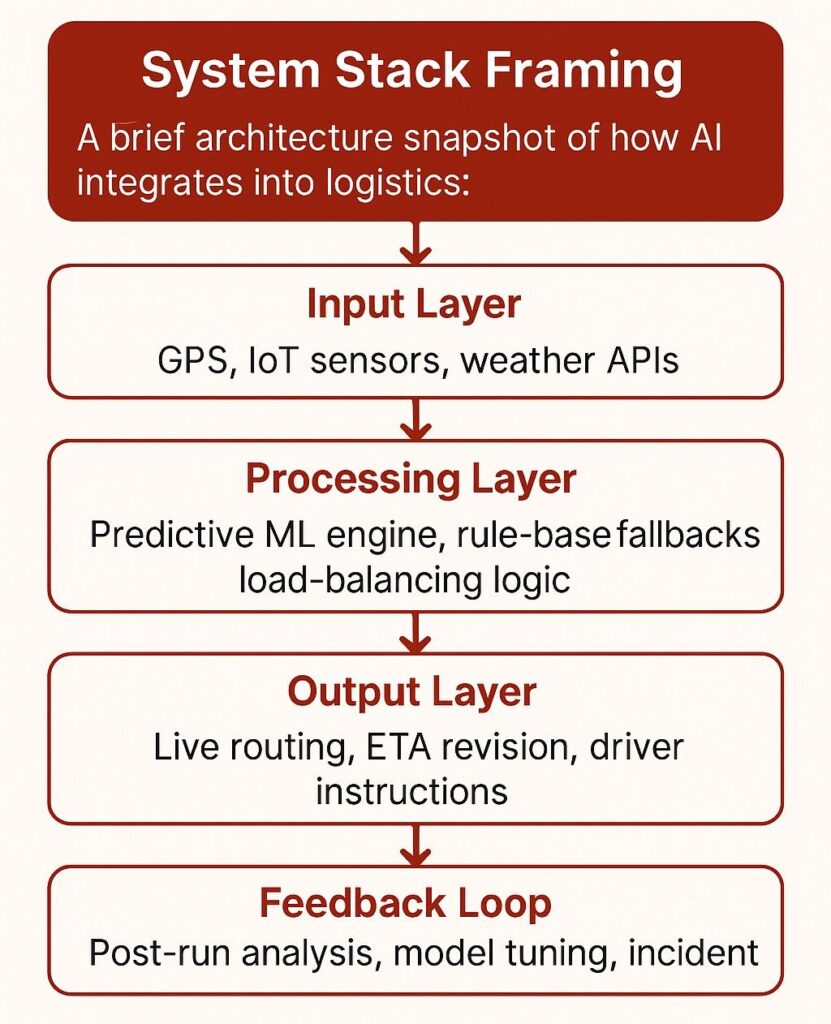
    Unlike traditional systems that rely on static waypoints or historical averages, AI models are fed with live inputs from GPS signals, driver telemetry, municipal traffic feeds, and even weather APIs. These models use predictive analytics to detect emerging traffic patterns before they become bottlenecks and reroute deliveries proactively—sometimes before a driver even encounters a slowdown.

    What does this mean for logistics firms?

    • Fuel isn’t wasted reacting to problems—it’s saved by anticipating them.
    • Delivery ETAs stay accurate, which protects SLAs and reduces penalty risks.
    • Idle time is minimized, not just in traffic but at loading docks, thanks to integrations with warehouse management systems that adjust arrival times dynamically.

    The AI chooses the smartest options, prioritizing consistent movement, minimal stops, and smooth terrain. Over hundreds of deliveries per day, these micro-decisions lead to measurable gains: reduced fuel bills, better driver satisfaction, and more predictable operational costs.

    This is how logistics firms are moving from reactive delivery models to intelligent, pre-emptive routing systems—driven by real-time data, and optimized for efficiency from the first mile to the last.

    1. Smarter, Real-Time Adaptability to Traffic Conditions

    AI doesn’t just plan for the “best” route at the start of the day—it adapts in real time. 

    Using a combination of live traffic feeds, vehicle sensor data, and external data sources like weather APIs and accident reports, AI models update delivery routes in real time. But more than that, they prioritize fuel efficiency metrics—evaluating elevation shifts, average stop durations, road gradient, and even left-turn frequency to find the path that burns the least fuel, not just the one that arrives the fastest. This level of contextual optimization is only possible with a robust AI/ML service that can continuously learn and adapt from traffic data and driving conditions.

    The result?

    • Route changes aren’t guesswork—they’re cost-driven.
    • On long-haul routes, fuel burn can be reduced by up to 15% simply by avoiding high-altitude detours or stop-start urban traffic.
    • Over time, the system becomes smarter per region—learning traffic rhythms specific to cities, seasons, and even lanes.

    This level of adaptability is what separates rule-based systems from machine learning models: it’s not just a reroute, it’s a fuel-aware, performance-optimized redirect—one that scales with every mile logged.

    1. Load Optimization for Fuel Efficiency

    Whether a truck is carrying a full load or a partial one, AI adjusts its recommendations to ensure the vehicle isn’t overworking itself, driving fuel consumption up unnecessarily. 

    For instance, AI accounts for vehicle weight, cargo volume, and even the terrain—knowing that a fully loaded truck climbing steep hills will consume more fuel than one carrying a lighter load on flat roads. 

    This leads to more tailored, precise decisions that optimize fuel usage based on load conditions, further reducing costs.

    What Does AI Route Optimization Actually Work?

    AI route optimization is transforming logistics by addressing the inefficiencies that traditional routing methods can’t handle. It moves beyond static plans, offering a dynamic, data-driven approach to reduce fuel consumption and improve overall operational efficiency. Here’s a clear breakdown of how AI does this:

    Predictive vs. Reactive Routing

    Traditional systems are reactive by design: they wait for traffic congestion to appear before recalculating. By then, the vehicle is already delayed, the fuel is already burned, and the opportunity to optimize is gone.

    AI flips this entirely.

    It combines:

    • Historical traffic patterns (think: congestion trends by time-of-day or day-of-week),
    • Live sensor inputs from telematics systems (speed, engine RPM, idle time),
    • External data streams (weather services, construction alerts, accident reports),
    • and driver behavior models (based on past performance and route habits)

    …to generate routes that aren’t just “smart”—they’re anticipatory.

    For example, if a system predicts a 60% chance of a traffic jam on Route A due to a football game starting at 5 PM, and the delivery is scheduled for 4:45 PM, it will reroute the vehicle through a slightly longer but consistently faster highway path—preventing idle time before it starts.

    This kind of proactive rerouting isn’t based on a single event; it’s shaped by millions of data points and fine-tuned by machine learning models that improve with each trip logged. With every dataset processed, an AI/ML service gains more predictive power, enabling it to make even more fuel-efficient decisions in future deliveries. Over time, this allows logistics firms to build an operational strategy around predictable fuel savings, not just reactive cost-cutting.

    Real-Time Data Inputs (Traffic, Weather, Load Data)

    AI systems integrate:

    • Traffic flow data from GPS providers, municipal feeds, and crowdsourced platforms like Waze.
    • Weather intelligence APIs to account for storm patterns, wind resistance, and road friction risks.
    • Vehicle telematics for current load weight, which affects acceleration patterns and optimal speeds.

    Each of these feeds becomes part of a dynamic route scoring model. For example, if a vehicle carrying a heavy load is routed into a hilly region during rainfall, fuel consumption may spike due to increased drag and braking. A well-tuned AI system reroutes that load along a flatter, dryer corridor—even if it’s slightly longer in distance—because fuel efficiency, not just mileage, becomes the optimized metric.

    This data fusion also happens at high frequency—every 5 to 15 seconds in advanced systems. That means as soon as a new traffic bottleneck is detected or a sudden road closure occurs, the algorithm recalculates, reducing decision latency to near-zero and preserving route efficiency with no human intervention.

    Vehicle-Specific Considerations

    Heavy-duty trucks carrying full loads can consume up to 50% more fuel per mile than lighter or empty ones, according to the U.S. Department of Energy. That means sending two different trucks down the same “optimal” route—without factoring in grade, stop frequency, or road surface—can result in major fuel waste.

    AI takes this into account in real time, adjusting:

    • Route incline based on gross vehicle weight and torque efficiency
    • Stop frequency based on vehicle type (e.g., hybrid vs. diesel)
    • Fuel burn curves that shift depending on terrain and traffic

    This level of precision allows fleet managers to assign the right vehicle to the right route—not just any available truck. And when combined with historical performance data, the AI can even learn which vehicles perform best on which corridors, continually improving the match between route and machine.

    Automatic Rerouting Based on Traffic/Data Drift

    AI’s real-time adaptability means that as traffic conditions change, or if new data becomes available (e.g., a road closure), the system automatically reroutes the vehicle to a more efficient path. 

    For example, if a major accident suddenly clogs a key highway, the AI can detect it within seconds and reroute the vehicle through a less congested arterial road—without the driver needing to stop or call dispatch. 

    Machine Learning: Continuous Improvement Over Time

    The most powerful aspect of AI is its machine learning capability. Over time, the system learns from outcomes—whether a route led to a fuel-efficient journey or created unnecessary delays. 

    With this knowledge, it continuously refines its algorithms, becoming better at predicting the most efficient routes and adapting to new challenges. AI doesn’t just optimize based on past data; it evolves and gets smarter with every trip.

    Bottom Line

    AI route optimization is not just a technological upgrade—it’s a strategic investment. 

    Firms that adopt AI-powered planning typically cut fuel expenses by 7–15%, depending on fleet size and operational complexity. But the value doesn’t stop there. Reduced idling, smarter rerouting, and fewer detours also mean less wear on vehicles, better delivery timing, and higher driver output.

    If you’re ready to make your fleet leaner, faster, and more fuel-efficient, SCS Tech’s AI logistics suite is built to deliver exactly that. Whether you need plug-and-play solutions or a fully customised AI/ML service, integrating these technologies into your logistics workflow is the key to sustained cost savings and competitive advantage. Contact us today to learn how we can help you drive smarter logistics and significant cost savings.

  • Why AI/ML Models Are Failing in Business Forecasting—And How to Fix It

    Why AI/ML Models Are Failing in Business Forecasting—And How to Fix It

    You’re planning the next quarter. Your marketing spend is mapped. Hiring discussions are underway. You’re in talks with vendors for inventory.

    Every one of these moves depends on a forecast. Whether it’s revenue, demand, or churn—the numbers you trust are shaping how your business behaves.

    And in many organizations today, those forecasts are being generated—or influenced—by artificial intelligence and machine learning models.

    But here’s the reality most teams uncover too late: 80% of AI-based forecasting projects stall before they deliver meaningful value. The models look sophisticated. They generate charts, confidence intervals, and performance scores. But when tested in the real world—they fall short.

    And when they fail, you’re not just facing technical errors. You’re working with broken assumptions—leading to misaligned budgets, inaccurate demand planning, delayed pivots, and campaigns that miss their moment.

    In this article, we’ll walk you through why most AI/ML forecasting models underdeliver, what mistakes are being made under the hood, and how SCS Tech helps businesses fix this with practical, grounded AI strategies.

    Reasons AI/ML Forecasting Models Fail in Business Environments

    Let’s start where most vendors won’t—with the reasons these models go wrong. It’s not technology. It’s the foundation, the framing, and the way they’re deployed.

    1. Bad Data = Bad Predictions

    Most businesses don’t have AI problems. They have data hygiene problems.

    If your training data is outdated, inconsistent, or missing key variables, no model—no matter how complex—can produce reliable forecasts.

    Look out for these reasons: 

    • Mixing structured and unstructured data without normalization
    • Historical records that are biased, incomplete, or stored in silos
    • Using marketing or sales data that hasn’t been cleaned for seasonality or anomalies

    The result? Your AI isn’t predicting the future. It’s just amplifying your past mistakes.

    2. No Domain Intelligence in the Loop

    A model trained in isolation—without inputs from someone who knows the business context—won’t perform. It might technically be accurate, but operationally useless.

    If your forecast doesn’t consider how regulatory shifts affect your cash flow, or how a supplier issue impacts inventory, it’s just an academic model—not a business tool.

    At SCS Tech, we often inherit models built by external data teams. What’s usually missing? Someone who understands both the business cycle and how AI/ML models work. That bridge is what makes predictions usable.

    3. Overfitting on History, Underreacting to Reality

    Many forecasting engines over-rely on historical data. They assume what happened last year will happen again.

    But real markets are fluid:

    • Consumer behavior shifts post-crisis
    • Policy changes overnight
    • One viral campaign can change your sales trajectory in weeks
    • AI trained only on the past becomes blind to disruption.

    A healthy forecasting model should weigh historical trends alongside real-time indicators—like sales velocity, support tickets, sentiment data, macroeconomic signals, and more.

    4. Black Box Models Break Trust

    If your leadership can’t understand how a forecast was generated, they won’t trust it—no matter how accurate it is.

    Explainability isn’t optional. Especially in finance, operations, or healthcare—where decisions have regulatory or high-cost implications—“the model said so” is not a strategy.

    SCS Tech builds AI/ML services with transparent forecasting logic. You should be able to trace the input factors, know what weighted the prediction, and adjust based on what’s changing in your business.

    5. The Model Works—But No One Uses It

    Even technically sound models can fail because they’re not embedded into the way people work.

    If the forecast lives in a dashboard that no one checks before a pricing decision or reorder call, it’s dead weight.

    True forecasting solutions must:

    • Plug into your systems (CRM, ERP, inventory planning tools)
    • Push recommendations at the right time—not just pull reports
    • Allow for human overrides and inputs—because real-world intuition still matters

    How to Improve AI/ML Forecasting Accuracy in Real Business Conditions

    Let’s shift from diagnosis to solution. Based on our experience building, fixing, and operationalizing AI/ML forecasting for real businesses, here’s what actually works.


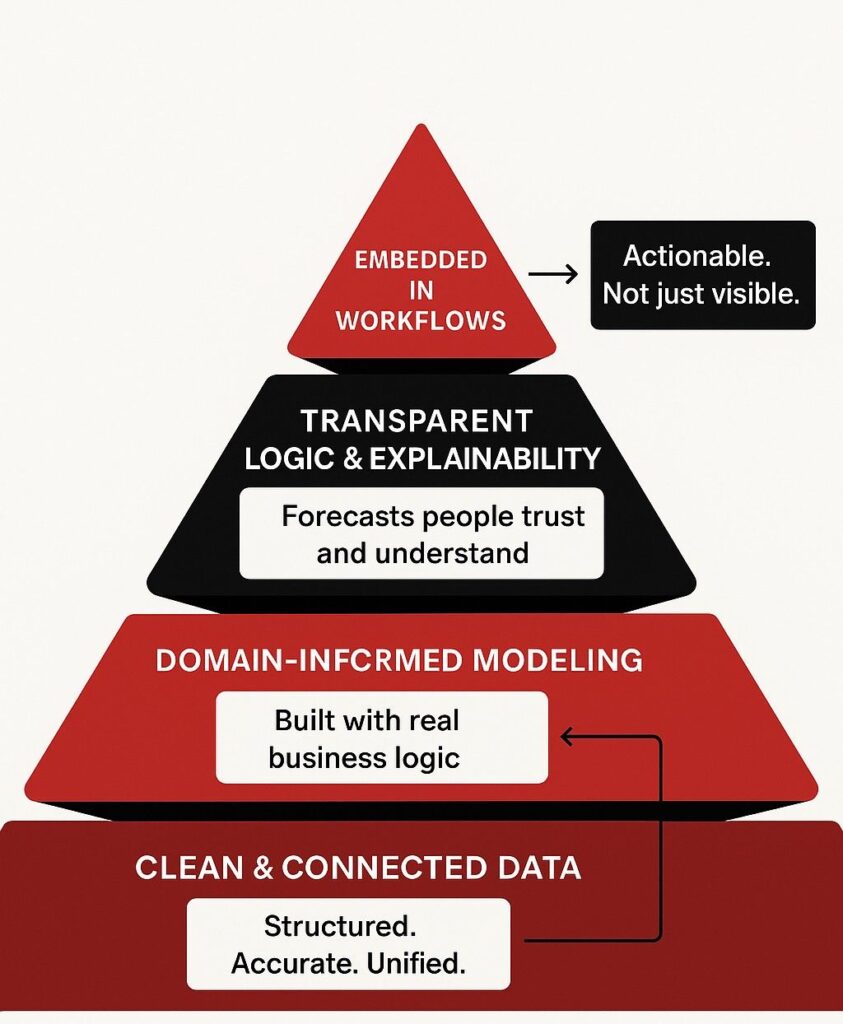
    How to Improve AI/ML Forecasting Accuracy

    Focus on Clean, Connected Data First

    Before training a model, get your data streams in order. Standardize formats. Fill the gaps. Identify the outliers. Merge your CRM, ERP, and demand data.

    You don’t need “big” data. You need usable data.

    Pair Data Science with Business Knowledge

    We’ve seen the difference it makes when forecasting teams work side by side with sales heads, finance leads, and ops managers.

    It’s not about guessing what metrics matter. It’s about modeling what actually drives margin, retention, or burn rate—because the people closest to the numbers shape better logic.

    Mix Real-Time Signals with Historical Trends

    Seasonality is useful—but only when paired with present conditions.

    Good forecasting blends:

    • Historical performance
    • Current customer behavior
    • Supply chain signals
    • Marketing campaign performance
    • External economic triggers

    This is how SCS Tech builds forecasting engines—as dynamic systems, not static reports.

    Design for Interpretability

    It’s not just about accuracy. It’s about trust.

    A business leader should be able to look at a forecast and understand:

    • What changed since last quarter
    • Why the forecast shifted
    • Which levers (price, channel, region) are influencing results

    Transparency builds adoption. And adoption builds ROI.

    Embed the Forecast Into the Flow of Work

    If the prediction doesn’t reach the person making the decision—fast—it’s wasted.

    Forecasts should show up inside:

    • Reordering systems
    • Revenue planning dashboards
    • Marketing spend allocation tools

    Don’t ask users to visit your model. Bring the model to where they make decisions.

    How SCS Tech Builds Reliable, Business-Ready AI/ML Forecasting Solutions

    SCS Tech doesn’t sell AI dashboards. We build decision systems. That means:

    • Clean data pipelines
    • Models trained with domain logic
    • Forecasts that update in real time
    • Interfaces that let your people use them—without guessing

    You don’t need a data science team to make this work. You need a partner who understands your operation—and who’s done this before. That’s us.

    Final Thoughts

    If your forecasts feel disconnected from your actual outcomes, you’re not alone. The truth is, most AI/ML models fail in business contexts because they weren’t built for them in the first place.

    You don’t need more complexity. You need clarity, usability, and integration.

    And if you’re ready to rethink how forecasting actually supports business growth, we’re ready to help. Talk to SCS Tech. Let’s start with one recurring decision in your business. We’ll show you how to turn it from a guess into a prediction you can trust.

    FAQs

    1. Can we use AI/ML forecasting without completely changing our current tools or tech stack?

    Absolutely. We never recommend tearing down what’s already working. Our models are designed to integrate with your existing systems—whether it’s ERP, CRM, or custom dashboards.

    We focus on embedding forecasting into your workflow, not creating a separate one. That’s what keeps adoption high and disruption low.

    1. How do I explain the value of AI/ML forecasting to my leadership or board?

    You explain it in terms they care about: risk reduction, speed of decision-making, and resource efficiency.

    Instead of making decisions based on assumptions or outdated reports, forecasting systems give your team early signals to act smarter:

    • Shift budgets before a drop in conversion
    • Adjust production before an oversupply
    • Flag customer churn before it hits revenue

    We help you build a business case backed by numbers, so leadership sees AI not as a cost center, but as a decision accelerator.

    1. How long does it take before we start seeing results from a new forecasting system?

    It depends on your use case and data readiness. But in most client scenarios, we’ve delivered meaningful improvements in decision-making within the first 6–10 weeks.

    We typically begin with one focused use case—like sales forecasting or procurement planning—and show early wins. Once the model proves its value, scaling across departments becomes faster and more strategic.

  • How Artificial Intelligence in Disaster Management Software Is Saving Lives?

    How Artificial Intelligence in Disaster Management Software Is Saving Lives?

    What if we could turn chaos into clarity during disasters? Since 1990, floods have caused $50 billion in damages and impacted millions in India. Knowing about a disaster before it strikes could give communities time to prepare and respond effectively. That’s where Artificial Intelligence is turning this possibility into a reality. From issuing early warnings for hurricanes to guiding rescue operations during floods, AI is revolutionizing disaster management.

    In this blog, let’s explore how AI in disaster management software transforms predictions, responses, and recovery efforts to save lives.

    How Artificial Intelligence in Disaster Management Software Is Saving Lives?

    AI in disaster management software enhancing life-saving efforts
    AI in disaster management software enhancing life-saving efforts

    Artificial Intelligence (AI) revolutionizes disaster management by permitting more accurate predictions, speedy responses, and efficient recoveries. AI enables advanced algorithms, and real-time data is fed to disaster management software to soften the impact of natural and artificial disasters.

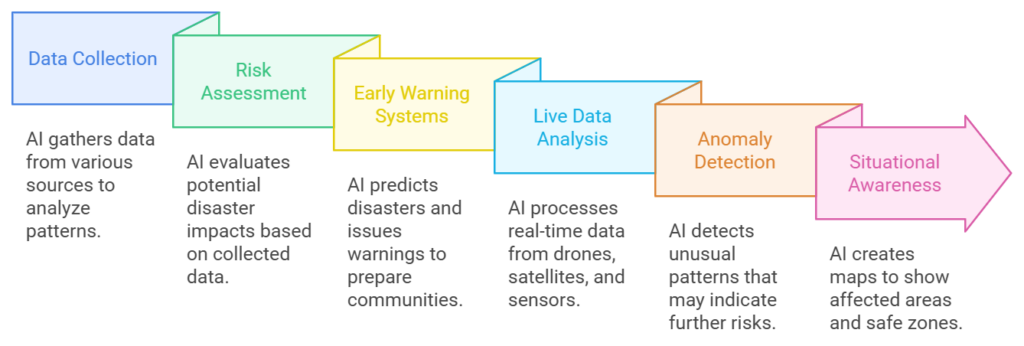
    1. Disaster forecasting through AI

    AI has come as one of the significant transformations that AI has undergone to improve disaster management systems. Through analyzing vast amounts of data and finding patterns, the chances of predicting and, thus, preparing for any disaster are primarily enhanced.

    Data Collection by AI

    AI collects data from different sources, and this includes:

    • Weather data, which can track storms, hurricanes, and cyclones
    • A seismic activity record is used to identify the initial seismic signals of an earthquake.
    • Historical data to identify trends of disaster recurrences in certain areas.

    This integrated analysis helps accurately predict when and where disasters might occur. For instance, AI can scan satellite images to monitor ocean temperatures and predict the cyclone’s formation.

    Risk Assessment

    AI evaluates the potential damage caused by disasters by assessing:

    • Population density: Determining areas where the disaster would impact the most people.
    • Infrastructure weaknesses: This highlights the weak points such as bridges, dams, or flood-prone neighborhoods.
    • Environmental factors: These are natural features such as forests or water bodies that may affect the intensity of disasters.

    This helps governments and agencies to plan better and provide more resources to high-risk areas.

    Early Warning Systems

    Machine learning models are trained on historical data, predicting disaster patterns and providing early warnings. These warnings:

    • Give communities enough time to evacuate or prepare.
    • Allowing authorities to preposition emergency supplies, including food, water, and medical kits.

    For instance, AI-based flood prediction systems use rainfall, river levels, and soil saturation data to predict floods days ahead of time. This helps save lives and reduce property damage.

    2. Real-Time Monitoring of Disasters

    When disasters occur, the difference between life and death can be a matter of having accurate information in real-time. AI shines in monitoring unfolding events and guiding responders in real-time.

    Live Data Analysis

    AI processes live feeds from sources like:

    • Drones: Taking aerial views of disaster-stricken areas to identify damage and locate stranded individuals.
    • Satellites: Offering large-scale images to track the spread of disasters such as wildfires or floods.
    • IoT Sensors: Track water levels, air quality, and structural strength in disaster areas.

    Processing this information in real-time, AI provides actionable insight to the emergency teams to determine the nature of the situation and plan for it.

    Anomaly Detection

    AI constantly monitors the critical parameters and detects anomalies that might lead to further deterioration. Such anomalies could be:

    • Rising water levels above flood safety levels.
    • Rapidly rising temperatures in a forested area potentially indicate wildfires.
    • Gas leaks in earthquake-damaged industrial areas.

    The detection alerts the responders, who can take prompt action before further damage is done.

    Situational Awareness

    AI-based GIS creates comprehensive maps that outline the following:

    • Storm-inundated areas
    • Affected areas due to wildfires and landslides
    • Safe zones for evacuation or relief operations.

    These maps enable better resource allocation so that aid would first reach the most vulnerable areas. For instance, AI-enhanced drones can identify stranded victims and direct rescue boats to that area during floods.

    3. Response Automation

    With AI able to automate critical tasks in the response function, emergency operations become swift and efficient with fewer chances of delay and error.

    Optimized Dispatch

    AI orders distress calls according to priority and determines their urgency and location. It may be demonstrated as below:

    • Calls from severely affected areas will be prioritized over other less urgent requests.
    • AI systems scan traffic conditions to route emergency vehicles to destinations as quickly as possible.

    This ensures that ambulances, fire trucks, and rescue teams reach the victims in need much faster, even in the most chaotic environment.

    Traffic Management

    In evacuations, traffic congestion is one of the biggest threats to lives. AI systems scan traffic patterns in real-time and recommend:

    • Alternative routes to avoid gridlocks.
    • Safe evacuation routes for big crowds.

    AI will give the safest route to avoid danger zones during a wildfire, ensuring civilians and emergency responders stay safe.

    The Future of AI in Disaster Management Software

    The use of AI in disaster management is getting stronger with every passing day. Here’s what might be in store:

    • Improved Predictive Models: AI will predict disasters even more accurately with better algorithms and data.
    • Real-Time Adaptation: AI systems would change responses dynamically in response to real-time updates to be efficient.
    • Collaboration Tools: Future AI systems enable easy data exchange among government agencies, NGOs, and AI technology companies.
    • Integration with IoT: AI-based incident management systems work with IoT devices like smart sensors to monitor critical parameters like water level and air quality in real-time.

    For instance, in flood-prone areas, AI, in conjunction with IoT sensors, can facilitate real-time updates that inform people in advance to evacuate in time.

    Conclusion

    Artificial Intelligence changes the face of disaster management software by saving lives through accurate predictions, swift reactions, and intelligent resource allocation. AI ensures people obtain information immediately by sending early warnings and real-time updates.

    In countries with frequent natural disasters, we must use AI-driven tools to reduce damage and protect communities. These tools do not only help us prepare but also respond better during emergencies. Companies like SCS Tech drive these innovations to build safer and more resilient communities and tap into the power of technology to save lives.


  • How AI Technology Companies Power Security Operation Centers (SOC) to Enhance Threat Detection?

    How AI Technology Companies Power Security Operation Centers (SOC) to Enhance Threat Detection?

    What if the security system could foresee threats even before they arise?

    That is the power artificial intelligence brings to Security Operation Centers. The role of AI in SOCs is transforming how businesses start to detect and respond to cybersecurity.

    The statistical growth of AI adoption in significant sectors of India has already touched 48% in FY24, a clear pointer to AI’s role in today’s security landscape. This transformation is a trend and redefines cybersecurity for industries with better cyber threat countermeasures.

    This blog will explain to you how AI technology companies enable SOCs to improve in threat detection. We will also demystify some of the significant AI/ML service and trends that are helping improve efficiency in a SOC.

    How do AI Technology Companies help Improve Security Operation Centers Improve Threat Detection?

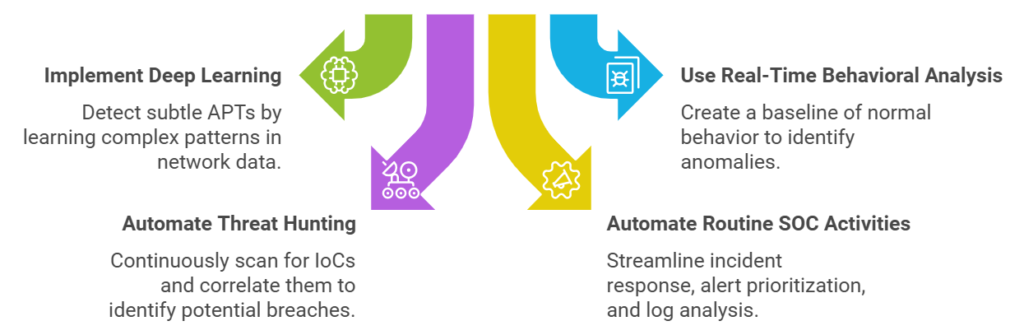
    Ways AI Technology Companies Improve Security Operation Centers Improve Threat Detection

    Deep Learning for Anomaly Detection

    AI technologies and intense learning are game changers in the identification of cyber threats. Traditional techniques do not typically detect the subtlest advanced persistent threats (APTs) because they mimic regular network traffic.

    Deep learning, particularly neural networks, can catch the latent patterns. For instance, CNNs represent one specific type of deep learning that processes network data as an image, thereby learning complex patterns associated with cyber attacks.

    This technology detects unusual network behavior that would otherwise escape the standard observation methods. Preventive detection made possible by AI technology companies will reveal exfiltration of data or lateral movements within the network, this is crucial in preventing breaches.

    Real-Time Behavioral Analysis

    Another powerful feature offered by AI & ML services for SOCs is real-time behavioral analysis. This technique creates a “normal” baseline of users and devices operating on the network so that AI can identify anomalies that could indicate a potential threat.

    These features help SOCs efficiently discover compromised accounts as well as insider threats. This is done through anomaly detection algorithms, User and Entity Behavior Analytics (UEBA), and Security Information and Event Management (SIEM) systems.

    Automating Threat Hunting

    Threat hunting by AI technology companies scans continuously for IoCs, which may indicate a compromise of unusual IP addresses or malware signatures from a feed from the threat intelligence.

    AI may be able to correlate IoCs across internal logs, identify potential breaches before they escalate, and then automatically create an alert for the SOCs.

    As a result, SOCs can proactively identify threats, reducing response time and improving the organization’s overall cybersecurity posture.

    Automation of Routine SOC Activities

    AI is crucial to automating routine SOC activities while allowing SOC analysts to focus on the most critical threats.

    Key areas in which IT infrastructure solution providers excel at automation include:

    • Automated Incident Response: AI can initiate incident response activities automatically. In case of malware detection on an endpoint, AI may lock the compromised device, notify the concerned people, and initiate forensic logging without a human’s intervention.
    • Intelligent Alert Prioritization: AI algorithms categorize alerts based on the threats’ potential impact and context. In this respect, SOC analysts face high-risk threats before discussing lesser-priority issues.
    • Log Correlation and Analysis: AI can correlate logs from multiple sources- say firewalls and intrusion detection systems in real time and discover patterns that unveil complex attacks. AI technology companies can correlate failed login attempts with successful ones from other locations to detect credential-stuffing attacks.

    These automation techniques make SOCs operate much more efficiently and keep on top of what matters in security without tedious work.

    Predictive Analytics for Threat Anticipation

    AI enables SOCs to predict threats even before they take place with predictive analytics.

    Based on the analysis of historical data and recent trends of threats, AI predicts possible attacks and takes proactive defenses.

    • Machine Learning for Predictive Threat Prediction: Machine learning models rely on past data to recognize earlier trends in the events in the system. These then predict vulnerabilities later in the organization’s infrastructure.
    • Risk Scoring Models: The AI generates risk scores for the assets, allotting relevant exposure and vulnerability levels. The higher the scores, the more attention is required from SOCs.
    • Threat Landscape Monitoring: AI monitors reports from external sources, such as news and social media, on emerging threats. If discussion over a new cyber exploit gains popularity over the Internet, AI has been poised to alert SOC teams to take precautionary measures long in advance.

    Predictive analytics enable SOCs always to be ahead of attackers, which drives overall cybersecurity resilience.

    Enabling AI Technology that Transforms the Capability of a SOC

    Some of the advanced AI & ML services, such as reinforcement learning, graph analytics, and federated learning, have far more capabilities for a SOC.

    • Reinforcement Learning: In reinforcement learning, AI discovers the best responses by simulating cyberattack scenarios. SOCs can leverage it to try out strategies for incident response and develop quicker response times.
    • Graph Analytics: Graph analytics helps visualize complicated relationships in a network by showing the connections between users, devices, and accounts. Thus, this can help SOCs identify previously latent threats that the traditional monitoring fails to perceive.
    • Federated Learning: Federated learning allows organizations to collaborate over training machine learning models without exposing sensitive data. This will enable SOCs to enhance their precision of the threats through gathered knowledge in a manner that ensures data privacy.

    These technologies equip SOCs with all the capabilities required to rapidly, accurately, and effectively react to emerging threats.

    Strategies for Effective Implementation of AI in a SOC

    While AI technology companies offer several benefits, the implementation of a SOC requires careful planning.

    Organizations will consider the following strategies:

    • Develop Data Strategy: An appropriate data collection, normalization, and storage strategy should be done. SOCs would necessitate a centralized logging solution for the AI model to appropriately parse data from disparate sources.
    • Testing and Verification of Model Before Deployment: The accuracy of the AI models must be tested before they are deployed. Repeated feedback from SOC analysts about their relative performance must be integrated into those models.
    • Cross-Functional Collaboration: Cross-functional collaboration between cybersecurity teams and data scientists is the best way to implement AI. Cross-functional teams ensure that AI models are developed with both technical expertise and security objectives in mind.

    Key Challenge Consideration for AI Adoption

    While the benefits are many, integrating AI in SOCs introduces several other challenges, like quality issues, ethical concerns, and compatibility issues related to already established infrastructures.

    • Data Quality: AI models require accurate data; hence, poor data quality may degrade the ability of the model to make precise or correct detections. Organizations should validate and ensure log completeness across all systems.
    • Ethical Considerations: AI systems must respect privacy rights and avoid bias. Regular audits can ensure that AI-driven decisions are fair and aligned with organizational values.
    • Complexity of Integration of AI: The integration of AI in existing SOCs is not that simple. In many cases, a phased rollout would be more effective as this does not disturb the workplace and allows compatibility problems to be efficiently resolved.

    Future of AI in SOCs

    AI at work in SOCs holds great promise, with the trend indicating:

    • Autonomous Security Operations: SOCs may get better at automation, handling specific incidents by themselves, human intervention being needed only according to requirement, and speeding up response times.
    • Integrate with Zero Trust Architectures: Ensuring continuous and ever-changing verification of the identity of users at access points, which thus reduces the possibility of unauthorized access.
    • Advanced sharing of Threat Intelligence: AI-powered applications may enable organizations to securely share any findings related to developed threats. These applications enhance collective defense beyond the boundaries of industries.

    Conclusion

    AI technology companies empower SOCs. SOCs can now do better, detect, and respond to advanced cyber threats through real-time analysis, automation, deep learning, and predictive analytics.

    With the constant evolution of AI, SOCs will get even better. This means businesses will feel more confident in securing their data and operations in a world of digitization.

    SCS Tech stands at the cutting edge in providing organizations with AI-driven solutions and improving their cybersecurity capabilities.

  • How do AI and ML Services Improve Defence Operations?

    How do AI and ML Services Improve Defence Operations?

    According to Polaris Research, the global AI in the military market is predicted to grow at a compound annual growth rate (CAGR) of 11.8% from 2023 to 2032, reaching approximately USD 21.56 billion by 2032. This uptrend mirrors the significant paradigm shift in how defense sectors worldwide are using AI/ML to enhance situational awareness, automate processes, and facilitate predictive capabilities. As this demand grows, providers of machine learning solutions in India are emerging as key contributors to advancing defense technologies globally.

    Read ahead to know how AI and ML services are changing the game for defense operations.

    What Is the Role of AI and ML in Defence?

    The concept of AI and ML was once a hallucination in the world of defense systems, but that is no longer the case now. It is now transforming military strategies as we speak. AI’s sense of processing millions of datasets in a matter of seconds and making decisions in real-time with the ML sense that learns from experience and improvements across times have made them very important to various applications within modern militaries. These technologies not only accelerate the speed and accuracy associated with operations but also tend to reduce human intervention, thus allowing defense personnel to focus on more critical decision-making under pressure.

    How Autonomous Systems in Warfare Use AI and ML Services

    One of the most visible applications of AI and ML services in warfare is autonomous systems, ranging from drones to uncrewed vehicles. They use sophisticated algorithms in AI to perform tasks that are too dangerous, repetitive, or time-consuming for a human.

    • Reconnaissance and Surveillance: AI drones with autonomous navigation in hostile environments allow for gathering real-time intelligence without putting human lives at risk. Using machine learning algorithms enables drones to adapt to changing environmental factors, recognize patterns, and identify actual threats more accurately.
    • Combat Engagement: AI-controlled autonomous weapons systems can engage targets based on predefined rules and thus improve operational speed and reduce soldiers’ exposure to risks. There are autonomous drones, the swarms whereby multiple autonomous drones are coordinated to work together for efficient assessment and attack targets with minimal human intervention. These swarms communicate with each other to ensure more coordinated and effective strikes.

    Despite the ongoing discussion on ethical concerns, autonomous systems are still very sure of their safety, efficiency, and operational reach.

    The Enhancing Strategic Decisions With AI and ML Services

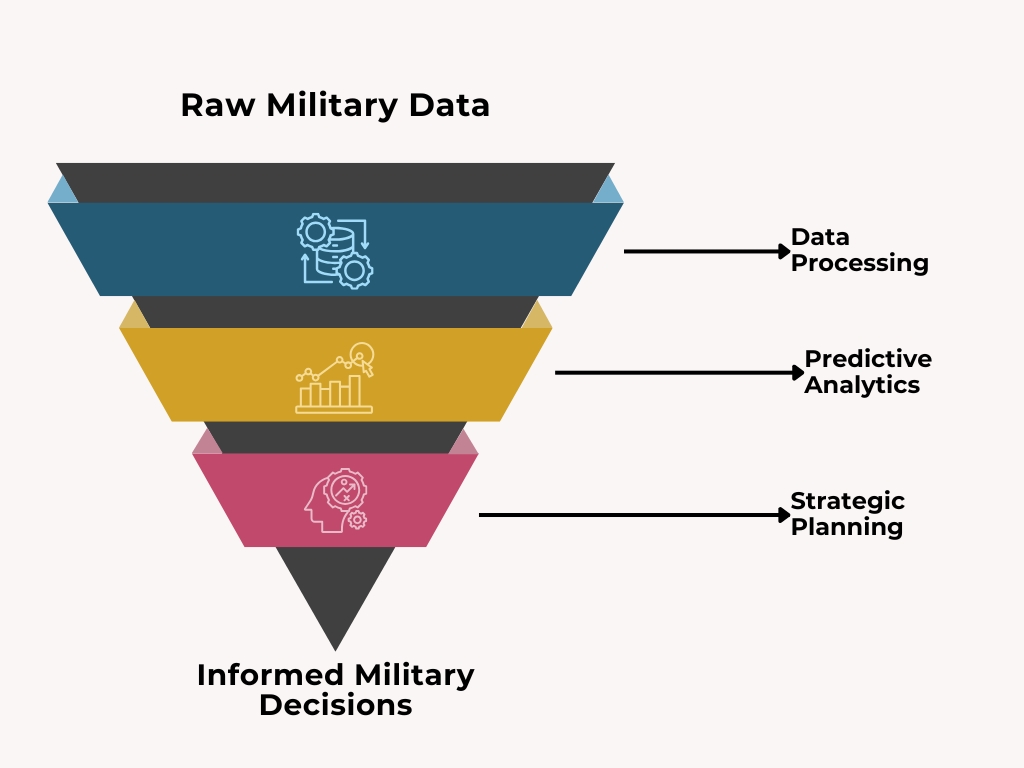
    The advent of artificial intelligence heralded a change agent in military decision-making processes. The only way to make choices in high-pressure situations is to do so promptly, based on factual data. AI technology companies systems can process volumes of information from satellites, drones, and intelligence reports to give commanders actionable insights.

    • Data Processing: AI scans such massive datasets to spot any patterns, correlations, and deviations that may occur and which a human analyst may fail to identify. Such predictive ability is essential for forecasting an enemy’s movements, understanding the battle’s dynamics, and forecasting possibilities of success in a mission.
    • Simulations and Predictive Analytics: AI and ML services can simulate multiple scenarios in millions of ways, predict the possible result, and evaluate the outcome. This enables military strategists to feel more confident about planning and executing operations. Generative AI models can even provide strategic suggestions based on past data with maximum precision and make decisions faster.

    It can make military leaders better informed, faster, and safer in decision-making, especially in dynamic battle situations.

    AI and ML-based Cybersecurity for Defence Operations

    Cyber threats are on an upsurge in this present age. Defense systems are the main field where AI and ML services are indispensable for safeguarding all military information and defense infrastructure. Military systems, which have become easy targets for state and non-state actors, require strengthened cybersecurity to be safe.

    • Real-Time Threat Detection: AI algorithms monitor traffic in real time, detecting patterns of attacks or unusual activity more effectively than traditional systems. In addition, ML learns from previous attacks and continuously enhances detection capabilities.
    • Automated Response: Once a threat has been identified, AI can activate automated countermeasures such as isolating affected systems or blocking suspicious activity, thus minimizing the period to conduct a response action and minimizing the damage that can be caused.

    With rising cyber warfare, military reliance on AI and ML-based cybersecurity will only grow, thus covering more critical infrastructure and secret information from malicious attacks.

    Future Training Simulations through AI and ML Services

    AI and ML change how military training is conducted into real-time, adaptive, and budget-friendly simulations. Traditional training methods are expensive and sometimes risky because they rely on physical assets and live exercises. AI-driven simulations are cost-effective, safety-wise.

    • Customized training programs: AI tracks the soldier’s performance during the exercise, detects the weak spots, and develops modules to improve soldier skills. In this way, soldiers will be prepared to face challenges in life as applied in combat.
    • Realistic Combat Simulations: AI can emulate dynamic battlefield scenarios in training soldiers in decision-making, coordination, and various tactics in a controlled environment. The simulations change dynamically based on participants’ actions to become more realistic and engaging.

    AI integration into military training will enhance readiness by significantly reducing operational, financial, and risk-based costs compared to traditional training exercises.

    Predictive Maintenance and Logistics with AI and ML Services

    Predictive maintenance and logistics are two of the most subtle and impactful applications of AI and ML services in defense. Military operations consume equipment and machinery from aircraft and tanks to vehicles and systems of weapons, many of which are hard to replace in the short term. The ability to keep equipment at optimal operation affects mission success.

    • Predictive Maintenance: These systems, based on AI, monitor performance in real time, recognize signs of wear and tear beforehand, and provide the appropriate maintenance time. This ensures that critical failures do not occur and equipment failures do not cause expensive downtime during critical operations.
    • Efficient Logistics: AI enables the study of terrain and weather, among other things, to optimize supply chains. Autonomous vehicles powered by AI technology companies can transport supplies to the most remote and dangerous locations, avoiding risks to human personnel and resources when available to troops.

    AI in military logistics utilizes the efficiencies of enhancement in efficiency, reduction in operating costs, and ensuring that such mission-critical assets remain combat-ready.

    Improving Command and Control through AI and ML Services

    AI and ML services are transforming command and control systems to make decisions better and communicate and coordinate among military forces.

    • Real-Time Data Processing: AI gathers data from different sources in real time, thus giving commanders a fuller view of the battlefield to make judgments even more judiciously.
    • Improved Coordination: AI-based C2 systems enhance communication between the military branches, thus allowing for effective collaboration and coordination in operations.

    The real-time data used to evaluate the outcomes of action options relieves the cognitive burden and enables more rapid and accurate responses to pressures. AI in C2 systems can enhance situational awareness and operational effectiveness for military leaders in highly dynamic environments to make timely decisions.

    Key Takeaways

    With the ever-increasing evolution of AI and ML services, impacts on defense operations will surely increase. These technologies, from IT infrastructure solution providers, right from autonomous systems and strategic decision-making to cybersecurity, training simulations, logistics, and command and control, fundamentally change how military operations are conducted.

    SCS Tech, a leader in AI and ML services, is at the forefront of this transformation, providing advanced solutions that enhance military efficiency, improve decision-making, and support predictive capabilities in complex environments.

  • AI in Transport and Logistics: Enhancing Fleet Management and Reducing Costs

    AI in Transport and Logistics: Enhancing Fleet Management and Reducing Costs

    Have you ever wondered how your packages could be delivered even faster, at lower costs, and with incredible accuracy? As expectations for speedy, cost-efficient deliveries rise, traditional fleet management is falling behind. That’s where artificial intelligence (AI) and ML development services come in as revolutionary tools, transforming fleet management by adopting the latest technologies that effectively promote cost reduction and operational efficiency.

    AI is not just transforming the way goods move across the world—it’s reshaping the entire transport and logistics industry. In fact, a recent report by NASSCOM states that the successful adoption of AI in supply chains, logistics, and transportation can contribute up to $50 billion in value to the Indian economy by 2025.  To know more about it, let’s dive into how the advancement of AI is positively impacting the transport and logistics sector while discussing its future potential.

    How AI & ML Services Have Enhanced the Transport and Logistics Industry?

    Artificial intelligence (AI) and machine learning (ML) services have significantly transformed the logistics and transportation industry by prioritizing unparalleled efficiency, minimization of costs, and robustness. Traditionally, logistics were solely dependent on human decision-making and outdated data, which resulted in complexities in supply chains, delayed deliveries, and operational inefficiencies.

    However, now companies can use AI to optimize and monitor supply chain management, ensuring timely deliveries, decreasing transportation costs, and improving customer satisfaction.

    Let’s understand the substantial changes that artificial intelligence has introduced in improving logistics and fleet management:

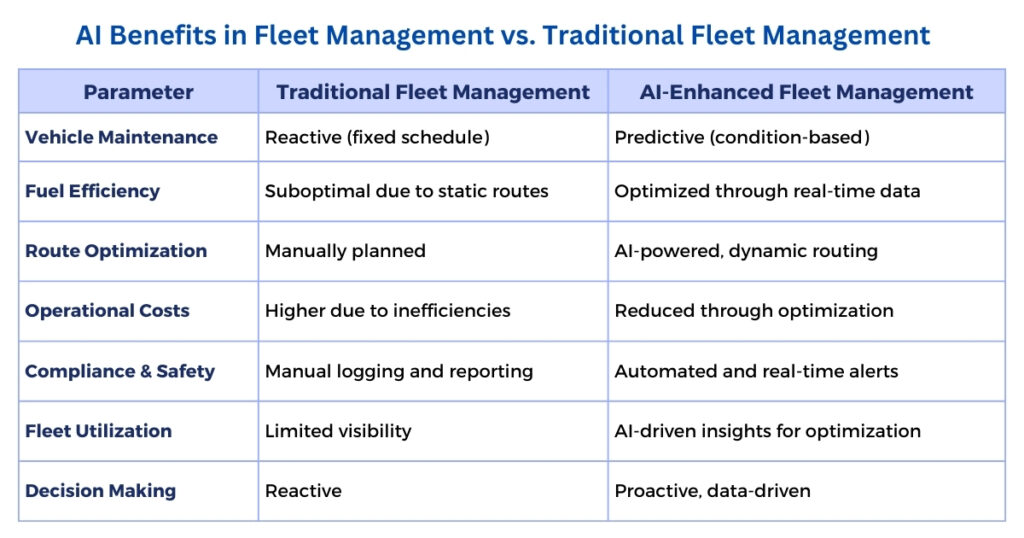
    1. AI-powered route optimization: Route optimization is one of the major contributions that AI has made to significantly enhance fleet management by examining weather and road conditions in real-time to deduce the best routes. This ensures less fuel consumption and better delivery times by determining the shortest and most efficient routes.
    2. Enhancing safety and compliance: Fleet management heavily prioritizes safety, and artificial intelligence provides the same by observing both driver and vehicle conditions. These vehicles are well equipped with cameras and sensors and, in certain cases, also employ semi-autonomous technologies like advanced driver assistance systems (ADAS), which provide real-time updates into the vehicle’s surroundings and the driver’s actions.
    3. Improving efficiency with predictive maintenance: Traditional fleet management engages in vehicle maintenance based on mileage and time, which can often lead to unexpected failures and over-maintenance. However, AI employs sensors that promote productivity by furnishing real-time data on the need for vehicle maintenance.
    4. Role of AI in fleet management: AI technologies such as machine learning, predictive analysis, and the Internet of Things (IoT) have majorly transformed fleet management by reducing costs, increasing operational productivity, and enhancing the safety of drivers while always prioritizing on-time deliveries and customer satisfaction.
    5. Less operational costs with AI: Operational costs in fleet management have been majorly reduced by the introduction of AI, which provides calculated insights about timely vehicle maintenance and fuel efficiency, which promotes effective fleet management. Also, identifying inefficient and risky behavior of drivers reduces the chances of incurring losses through accidents while reducing insurance premiums and repair costs.
    6. AI-driven data analytics for decision-making: Traditional fleet management involves manual data entries and static data, which can cause inefficiencies, causing delayed decision-making. AI records real-time data, which offers accurate insights about future demand and fleet deployment, which encourages informed decisions that are in sync with long-term business goals.
    7. Asset management and fleet utilization with AI: AI uses IoT sensors, cameras, GPS, and AI-powered software to optimally monitor the performance and status of vehicles, which ensures maximum utilization of resources, better vehicle allocation, and minimizing operational costs. These technologies encourage fleet managers to utilize the assets to their full potential, which again results in an improvement in overall performance.

    Comparison of AI Benefits in Fleet Management and Traditional Fleet Management

    What is the Future of Artificial Intelligence (AI) in Transport and Logistics?

    The future of AI in logistics and transport is quite bright and is set to transform the world of fleet management and supply chain in such a positive manner that it is going to play a pivotal role in promoting efficiency, cost reduction, and augmenting the complete performance of transportation and logistics operations.

    Let us look at the future trends of AI in transport and logistics:

    1. AI-driven supply chain optimization: AI will be employed to oversee inventories and predict future demands and potential obstacles effectively. By utilizing real-time insights, AI will help businesses anticipate and acknowledge any major changes swiftly and flexibly.
    2. AI-powered warehouse automation: In recent times, warehouses have introduced the use of artificial intelligence to proficiently manage inventory, complete orders, and supervise packing and shipping. Effective use of AI will ensure smooth operations, fewer errors, and improved speed and efficiency.
    3. Human AI collaboration: Successful collaboration of humans and AI shortly will result in better use of human capabilities to complete pivotal tasks efficiently, by freeing human resources through automation of the mundane, repetitive, and time-consuming processes.
    4. AI-driven customer experience: AI has transformed customer experiences by providing chatbots and virtual assistants along with personalized delivery experiences that promote transparency and clear communication.
    5. AI for sustainability in logistics: By mitigating fuel consumption, optimizing shorter and better routes, and improving fleet utilization, AI can sincerely reduce the carbon footprints of logistics operations while simultaneously encouraging organizations to switch to greener alternatives like electric vehicles (EVs) and renewable energy resources.

    Conclusion

    The integration of AI & ML services in logistics and transport has caused a major shift in the outlook of fleet management. These technologies are reinventing the industry by improving fleet management, diminishing costs significantly, and providing transformative benefits to promote operational efficiency.

    Businesses that embrace these technologies will have a competitive advantage as compared to others while acquiring operational effectiveness and adaptability in an ever-expanding market.

    By collaborating with skilled and experienced professionals like SCS Tech, enterprises will be in a competitive position to find lucrative opportunities to upgrade and innovate their operational environment as well as position themselves for a successful future in transport and logistics.

    FAQs

    • What are some disadvantages of implementing AI in fleet management?

    Some of the cons that occur while using AI in fleet management include extensive initial costs, safeguarding data privacy, streamlining with existing systems, and experts with appropriate skills to effectively resolve AI-related challenges.

    • How does AI influence supply chain resilience?

    AI provides real-time insights that help businesses anticipate and identify potential risks and fluctuations and mitigate them effectively by responding with quicker solutions.

    • Can small and medium enterprises benefit from AI in logistics?

    Yes, SMEs can fairly gain from the use of AI in logistics by implementing the solutions provided by AI to encourage cost reduction, operational growth, and inventory management.

    (more…)

  • How AI Technology Companies Can Drive Digital Transformation in Enterprises

    How AI Technology Companies Can Drive Digital Transformation in Enterprises

    Is your business ready to capitalize on the AI revolution?

    In 2023, the artificial intelligence market was valued at USD 196.63 billion and is expected to grow at a CAGR of 36.6% from 2024 to 2030. This expeditious growth reflects the role of digital transformation and its significance for organizations to remain competitive in the market to survive and grow exponentially. As companies adapt to this evolving landscape, AI technology providers are emerging as pivotal players in facilitating smooth digital transitions.

    Artificial intelligence (AI) technology companies are providing the resources and expertise according to their specifications and requirements and establishing a smooth integration with the current systems of the organizations. This blog focuses on how these AI technology companies promote digital transformation and their significant impact on various industries.

    Understanding Digital Transformation

    Digital transformation involves incorporating digital technology in all facets of the business, which directly impacts the services provided to the customers and the day-to-day business operations.

    The significance of digital transformation cannot be underestimated because technological developments are happening at quite a fast pace. Such drastic advancements can be easily introduced in enterprises through digital transformation, which in turn enables fulfillment of customer expectations, streamlining business operations, taking data-focused decisions, and designing personalized experiences for the customers. However, implementing digital transformation has its shortcomings, which can be eliminated through artificial intelligence.

    The Role of AI in Digital Transformation

    Artificial intelligence is a great tool to enhance an enterprise’s efficiency, productivity, data management, and decision-making while also encouraging innovations and relevancy, further supporting growth and the creation of new opportunities across various industries, which can be seen as:

    1. Customer Service: AI is rebuilding customer service by providing AI-powered 24/7 ChatBot, to enhance customer experience and satisfaction.
    2. Automation: AI-driven automation decreases the time and effort to complete various tasks, thus reducing the human efforts to focus on strategic tasks and other complicated workflows.
    3. Data Analytics: Data is the new oil, and AI-driven data analytics helps businesses extract the best information to foresee trends and improve decision-making, playing a major role in industries like healthcare, finance, and retail.
    4. Predictive Maintenance: The manufacturing and logistics sectors benefit from AI as it helps in the maintenance of systems and machinery by forecasting the likelihood of failure through data sensors and other sources, which promotes timely preventative measures.

    How AI Technology Companies are Acting as a Catalyst

    AI technology companies act as catalysts because they have the resources, tools, and expertise for the successful integration of AI in enterprises. Here are some ways that AI technology companies are promoting digital transformation:

    1. Creating AI Ecosystems: AI technology companies are building ecosystems of partners, clients, and customers, which results in a network of creativity and teamwork, thus promoting the age of digital transformation.
    2. Providing Advanced AI Tools and Platforms: AI technology companies develop and provide such advanced resources to utilize the full potential of AI as well as promote smooth integration of AI in business operations.
    3. Providing Customized Solutions: AI caters to the distinctive objectives and challenges of each business and delivers appropriate solutions by closely administering those problems.
    4. Educating and Training Enterprise Teams: Correct knowledge and skills are equally significant as technology to implement AI effectively. AI technology companies organize various workshops and training sessions for such teams to advance their AI expertise.

    Key AI Technologies Promoting Digital Transformation

    Let us understand various AI technologies and their impact as a driving force in digital transformation:

    1. Computer Vision: This technology enables computers to comprehend visual information, just like human vision, from the external world and successfully streamline operations that depend on visual input. For example, facial recognition and quality checks in manufacturing units.
    2. Robotic Process Automation (RPA): This technology eliminates human error by automating redundant tasks such as data entry, etc., thus promoting accuracy and directing those extra efforts toward building customer satisfaction and innovation.
    3. Machine Learning and Predictive Analysis: This technology forecasts outcomes based on large datasets, which helps businesses predict future trends, resulting in enhanced decision-making, efficiency, and a notable competitive advantage.
    4. Natural Language Processing: This AI technology interprets human language, which enables the enterprise to transform its customer service by closely analyzing their comments, reviews, and sentiments, which further promotes clear communication and a better understanding of customer expectations.

     AI-powered trends

    Conclusion

    AI technology companies are a major driving force in bridging the gap between human capabilities and technological innovations by engaging employees in various training and development programs to enhance their AI skills, thus cultivating an environment of continuous learning and innovation within the organization.

    In this age of digital transformation, SCS Tech India brings forth the right kind of opportunities, knowledge, and assistance to develop such effective AI systems that not only benefit the company’s goals but also focus on developing fair, transparent, and trustworthy systems that directly help in building and attracting a genuine and solid clientele and materialize lucrative opportunities.

    FAQs

    Do AI technology companies offer ethical AI integration?
    Yes, they strictly follow the laid down guidelines and practices which ultimately protect them from any legal or reputational hazards.

    Which sector benefits the most from digital transformation fueled by AI?
    It can be an excellent transformation for any sector but is favorable for the manufacturing, healthcare, finance, retail, and logistics sectors.

    What are the shortcomings that organizations face while implementing AI?
    Enterprises frequently encounter obstacles, including data integration, insufficient knowledge of AI, exorbitant implementation expenses, and worries about data ethics and privacy.

  • Smart Cities and e Governance Solutions: The Role of Advanced AI and ML Services in Urban Development

    Smart Cities and e Governance Solutions: The Role of Advanced AI and ML Services in Urban Development

    In recent years, the concept of “smart cities” has captured the imagination of urban planners and technologists alike. Today, such cities are the way of living.

    With investments in smart city technology expected to reach 65% by 2040, the impact is undeniable.

    But what exactly makes a city “smart”? At its core, a smart city leverages advanced technologies like Al and ML to enhance the quality of life for its citizens, improve efficiency in public services, and promote sustainable urban development.

    This article explores how smart cities leverage Al and ML to address urban challenges and drive sustainable development.

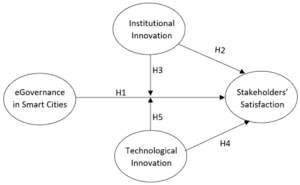
    Governance in Smart Cities: Who are the Stakeholders?

    Image Source:

    All stakeholders participate in the development of industries, decision-making, and planning work, and they resolve issues collaboratively with the correct technology. These smart cities have many stakeholders, such as:

    • Private sectors
    • Citizens
    • Public sectors
    • Government

    Understanding the Value of AI Technology for Smart Cities

    AI is not just a profitable sector but also has the power to improve cities. Due to the quick process of modern-day connectivity, growing demand for IoT (Internet of Things) technology, and the birth of 5G, AI software for smart cities has turned into a massive business.

    Back in 2019, the AI sector had a value of $673.8 million, but in 2025, those figures will stand at $4.9 billion. But it has become much easier for all the AI programs to process and analyze all the information because of the:

    • Interconnected data banks
    • 5G connectivity
    • Modern-day smart technologies

    All these things have helped in resolving various issues in city management. Having AI technology can also assist all cities in opting for the correct changes at an efficient and quick pace. 

    How to Handle the Development of Smart Cities?

    Image Source:

    Urban development is a challenging task, and all developments must be properly designed, tested, and researched to satisfy various stakeholders. When you plan to handle smart city development, you have to conduct many studies and check several boxes. 

    At times, the bureaucracy stands in front of effective problem-solving. For instance, German officials in Berlin declared that it took them several years to install a proper bicycle lane in the city.

    But these days, if APIs (Application Programming Interfaces), heat maps, and AI all together, the government will gain entry to an enormous amount of information. The government can use the information to make accurate changes and informed decisions to improve city life.

    How ML and AI Technologies Revolutionise Urban Settings?

    The AI ML services have a massive potential to revolutionize the urban setting, which can lead to transformative advancements in many areas of city life. Take a look at the table below to gain more information:

    Pointers Description
    Allowing Smart Services and Governance Both ML and AL can change the public and governance services within urban settings. AI-powered intelligent systems can enhance the decision-making process, citizen engagement, and virtual assistance. For instance, virtual assistants and chatbots can offer efficient and personalized egovernance solutions to all citizens by addressing all their needs and queries. The AI algorithm will analyse massive sets of information to help with making data-driven decisions in areas like policy formulation and urban planning.
    Encouraging the Resilient and Sustainable Cities Both machine learning and artificial intelligence can aid in making resilient and sustainable cities. The ML algorithms will examine the sensor data, historical records, and climatic changes that will help support the disaster response and environmental control adequately.  With the help of ML and AL, cities can easily improve the usage of resources, optimize waste management methods, and lessen the environmental influence.
    Improve the Urban Infrastructure Artificial intelligence and machine learning technologies can optimize urban infrastructure. It can do so by improving resource administration, sustainability, and efficacy. The ML algorithms will analyze the information from different sources to optimize the environmental impact of energy consumption at smart grips and even lessen the expenses. Besides that, AI techniques can be easily applied to optimize the flow of traffic and intelligent conveyance systems, reduce congestion, and improve mobility.
    Advancing Public Security and Safety ML and AI technologies can improve the safety of the general public in various urban settings. AI algorithms will use intelligent monitoring methods to analyze the video feeds and identify all the real-time suspicious activities or threats. Training the machine learning models will assist law enforcement and predict crime patterns in bold crime deterrence effectively.
    Improvements in the Healthcare Industry AI technologies provide many possibilities for the healthcare sector. It will allow you to manage all the medical records, check the bed status, schedule online appointments in private and government hospitals, use smart inventory handling of medical supplies, and offer surgical assistance. AI technologies will not just aid in curing various health ailments but also stop them via early predictions and detections.

    Wrapping Up

    Both AI and ML technologies play pivotal roles in advancing smart city development, impacting critical areas such as traffic monitoring, advanced security systems, waste management, and urban governance. Collaborating with innovators and startups across private and public sectors is essential for creating effective IT solutions that enhance societal enjoyment, safety, comfort, and livability.

    SCS Tech India Pvt Ltd excels in delivering top-tier IT infrastructure solutions tailored for urban planning and development. Additionally, the company offers a comprehensive range of services, including enterprise solutions, e-governance, robotic process automation, and geographic information systems (GIS), reinforcing its commitment to shaping sustainable and efficient urban environments.

  • Leveraging AI and ML Services to Enhance Business Efficiency

    Leveraging AI and ML Services to Enhance Business Efficiency

    In an environment where market conditions are volatile and customer preferences are ever-changing, AI and ML services offer advanced automation, predictive analytics, and enhanced customer experiences. 

    These technologies improve decision-making, operational efficiency, and customer satisfaction. As the AI and ML market continues to grow, choosing the right service provider becomes critical. Future trends in AI and ML, such as edge technology, collaborative learning, and ethical AI, promise to further drive innovation and resilience in the market.

    In this blog, we will discuss the benefits, future implications, and the role of AI and ML services in business operations in detail.

    Understanding AI and ML

    Artificial Intelligence (AI) involves creating smart systems capable of performing tasks that typically require human intelligence, such as problem-solving, learning, decision-making, and understanding language. Machine Learning (ML), a subset of AI, focuses on developing algorithms that enable systems to learn from data and improve over time without explicit programming.

    Understanding the distinction between AI and ML is crucial for appreciating their unique contributions to business operations. Machine learning applications span various sectors, with customer-centric use cases being particularly prevalent. According to a study, 57% of respondents identify customer experience as the primary use case for AI and ML.

    Source

    Below are the differences between Artificial Intelligence (AI) and Machine Learning (ML) in the context of business operations:

    Aspect Artificial Intelligence (AI) Machine Learning (ML)
    Scope Encompasses a wide range of technologies including ML, natural language processing, robotic process automation, and more. Specifically focused on using data to train models and make predictions or decisions without explicit programming.
    Application in Business Can automate complex tasks, provide advanced analytics, enhance decision-making processes, and improve customer interactions. Primarily used for predictive analytics, customer segmentation, recommendation systems, and anomaly detection.
    Data Dependency Can operate with rules-based systems and logical operations, not always data-dependent. Highly dependent on large datasets for training and improving model accuracy.
    Example Use Cases Chatbots, autonomous vehicles, fraud detection, virtual assistants, and personalized marketing. Sales forecasting, customer churn prediction, recommendation engines, and image recognition.
    Implementation Complexity Often more complex to implement, requiring integration of multiple technologies and larger computational resources. Typically involves implementing specific algorithms and models, which can be simpler in scope compared to full AI systems.
    Human Intervention Can function with less human intervention once fully developed, especially in autonomous systems. Requires ongoing human oversight for model training, tuning, and validation.
    Output Interpretation Can provide more comprehensive and context-aware outputs, often mimicking human-like understanding. Outputs are generally predictions or classifications, often requiring human interpretation.
    Adaptability Designed to adapt to a wide range of scenarios and environments, often with built-in learning mechanisms. Adaptability is limited to the scope of the trained data; new scenarios require re-training or additional data.
    Ethical Considerations Broader ethical implications including job displacement, decision transparency, and bias. Primarily concerns around data privacy, algorithmic bias, and the integrity of the training data.

    Benefits of AI and ML on Business Operations

    The adoption of AI and ML services brings numerous benefits to businesses-

    Enhanced Decision-Making

    AI and ML enable organizations to analyze vast datasets in real-time, uncovering patterns and trends that would otherwise remain unnoticed. This capability empowers businesses to make more informed decisions, fostering proactive planning rather than reactive responses.

    Improved Customer Experiences

    Personalization is paramount in today’s customer-centric landscape. Advanced AI algorithms enable businesses to understand customer preferences and behaviors, facilitating tailored recommendations and support. This personalized approach enhances customer satisfaction, loyalty, and ultimately, profitability.

    Operational Efficiency

    AI-driven automation streamlines workflows, ensuring timely delivery of goods and services, predicting potential failures, and detecting fraudulent activities. Such efficiencies minimize costs, reduce errors, and optimize overall business performance.

    Facilitating Innovation

    AI ML technologies facilitate rapid prototyping and market prediction, enabling businesses to identify new opportunities and develop innovative products and services that resonate with dynamic market demands.

    Factors To Consider While Selecting the Right AI ML Services Provider

    The global machine learning market has exhibited robust growth, valued at $15.44 billion in 2021 and projected to reach $209.91 billion by 2029, reflecting a notable compound annual growth rate (CAGR) of 38.8%, as reported by Fortune Business Insights. Additionally, the machine learning platforms market is expected to hit $31.36 billion by 2028, according to Proficient Market Insights.

    Businesses aiming to enhance their operations and productivity must carefully choose their AI ML services provider. Several key factors must be considered:

    • Skills and Knowledge

    Businesses should prioritize providers with deep expertise in their industry and relevant use cases. Experience in executing successful projects can provide valuable insights and customized solutions.

    • Flexibility and Adaptability

    Providers must demonstrate the ability to scale AI and Machine Learning solutions effectively, accommodating future growth and adapting to evolving business needs seamlessly.

    • Maintaining Compliance with Safety

    Ensuring data security and compliance with industry regulations are paramount. Businesses should verify that prospective providers adhere strictly to safety protocols and privacy laws.

    Future implications of AI and ML

    AI and ML have transcended futuristic concepts to become integral in everyday applications, offering solutions to diverse challenges. Yet, the evolution of AI ML services continues, with several future implications:

    • Edge Tech

    Edge technology processes data closer to its source, revolutionizing AI and ML applications by minimizing latency, enhancing real-time analysis, and facilitating decentralized AI and IoT solutions. The global market for Edge AI Tech is valued at approximately $20.39 billion as of 2023.

    • Group Learning

    Collaborative learning methodologies enable teams to train models using decentralized data sources while maintaining privacy and security, fostering innovation in AI model development.

    • Improving AI Ethics

    The growing prominence of AI necessitates a heightened focus on ethical considerations. Organizations must prioritize transparency, accountability, fairness, and bias reduction in AI development and deployment to build public trust and ensure responsible usage of AI services.

    Initiatives like AlgorithmWatch exemplify efforts in promoting explainable and ethical AI practices, ensuring accountable algorithmic decision-making.

    Conclusion

    AI ML services help businesses succeed. They are not just tools but change how businesses work. AI & ML can open new doors and create better things for customers.  At SCS Tech India Pvt, we provide effective AI ML solutions and consultations. We also offer ML development, AI-led applications, and Data support. With our top-notch AI ML services, businesses can expect process automation, improved customer interactions, and enhanced analytics. Contact us to make your business stand out and withstand the impacts of a dynamic market.