Tag: #machinelearning #ml

  • Role of AI in Agriculture & Technology – An Expert Overview!

    Role of AI in Agriculture & Technology – An Expert Overview!

    Agriculture, an indispensable pillar of our civilization, stands at a pivotal crossroad, brimming with opportunity amidst escalating challenges of nourishing billions and navigating the constraints of limited resources and climate changes. The Food and Agriculture Organization (FAO) projects that food production must double by 2050 to sustain an anticipated 9.1 billion people.

    In response to this staggering demand, the agricultural sector is embracing cutting-edge innovations, particularly in the realm of technology. At the forefront of this transformation is Artificial Intelligence (AI), driving the evolution of Precision Agriculture. AI’s advanced capabilities offer practical solutions to longstanding agricultural challenges, enhancing efficiency, sustainability, and productivity.

    This expert blog will delve into the pivotal role of AI in agriculture & technology, highlighting how this technology is reshaping farming practices and setting the stage for a more resilient and prosperous agricultural future.

    Power of AI in Precision Agriculture

    Artificial Intelligence (AI) in agriculture represents a significant leap forward in farm management and decision-making. AI encompasses advanced computer systems capable of learning, predicting, and optimizing to meet specific objectives. For farmers, this means unprecedented levels of insight and control over their operations.

    Here’s how AI is revolutionizing precision agriculture:

    Data-Driven Decision Making

    AI can retrieve a lot of information from different sources, such as weather, the state of the soil, and crops, through sensors. It assists in defining some pivotal characteristics in farming, for instance, when it is the best time to plant something, when it is possible to water the fields, and what concentrations of fertilizers have to be used.

    Enhanced Crop Monitoring and Disease Detection

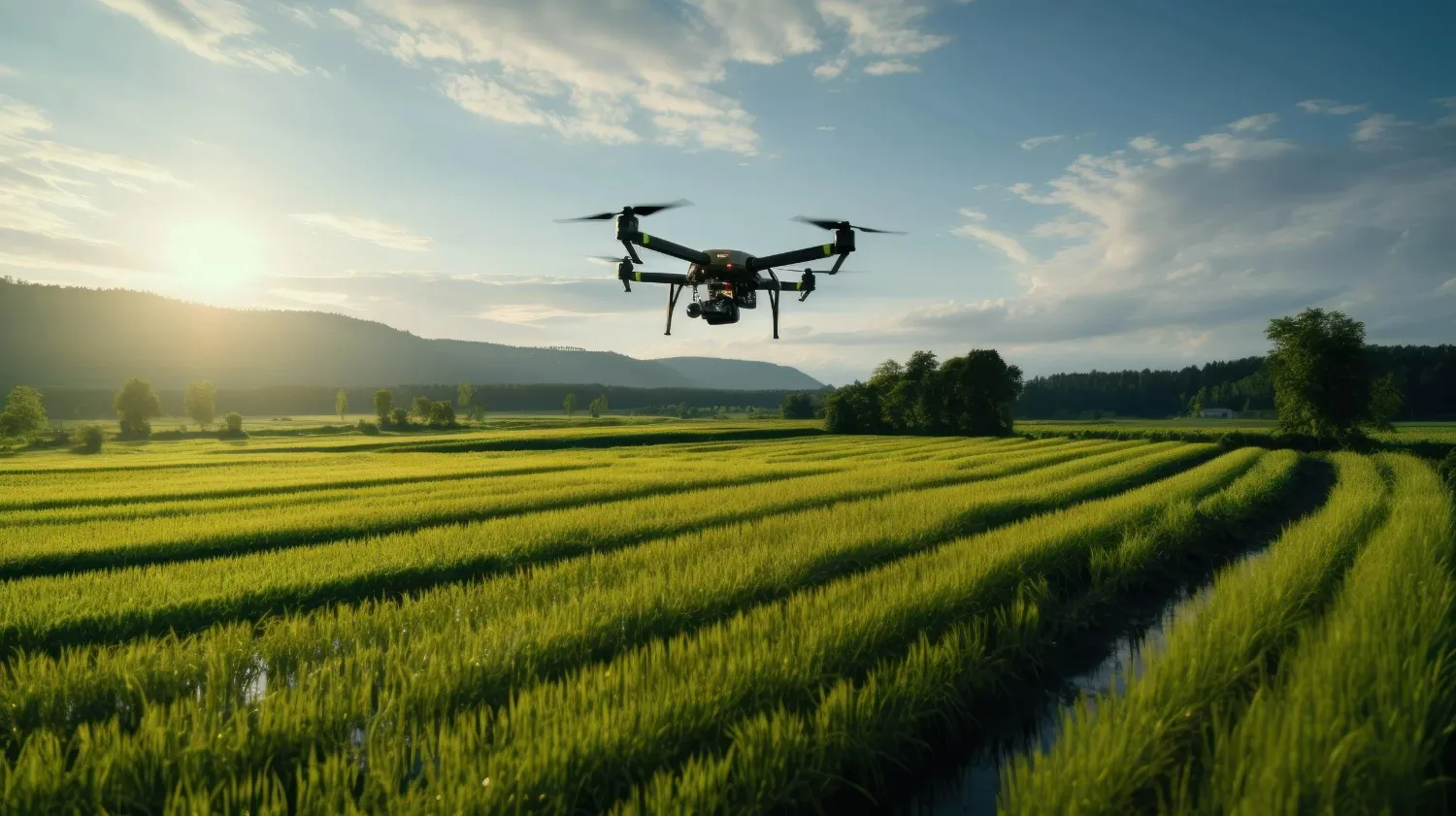
    Some examples of the application of AI services in progressive agriculture methods would be image identification through imagery captured by drones or satellites that signals the early signs of diseases or pests. This becomes possible for the management of pests and thereby minimizes crop losses, as well as the utilization of wide-spectrum insecticides.

    Precision Irrigation Techniques

    Today, there are some possibilities for regulating irrigation systems with the assistance of real measurements of humidity and local prognosis of the weather. This is an advantage since it ensures that crops will only require the right amount of water to grow, and this reduces the wastage of this resource.

    Yield Prediction and Risk Management

    AI models are in a position to help you analyze the data and the condition to predict the yield outcome. It enables farmers to organize themselves more effectively, especially in the storage, transportation, and marketing of the produce. Also, it makes it possible to determine probable risks, which are connected with weather events, and make recommendations, which would help to minimize the impact of potential risks.

    One of the real-world examples to showcase the transformative potential of AI in precision agriculture is The Bayer FieldView Platform, which involves combining data from different platforms and a set of AI-generated analytics to present the farmers with essential information concerning soil quality, crop quality, and prevailing weather conditions. This makes it easy for them to manage efficiencies at the production in a data-driven manner.

    Beyond Efficiency: The Ripple Effect of AI in Agriculture

    The benefits of AI services in precision agriculture extend far beyond increased efficiency and yield:

    Improved Sustainability

    AI promotes the optimum use of resources by reducing the use of water, chemical fertilizer, and pesticides. This, in turn, leads to the improvement of farming technology and, at the same time, encourages environmentally friendly methods of farming.

    Reduced Food Waste

    With the help of artificial intelligence, farmers can find out when they should harvest their crops properly and store them in storage and transportation; this will help reduce wastage. This is because only food that meets the required quality standards is allowed to get to the consumer, and therefore, there is enhanced food security in the world.

    Empowering Smallholder Farmers

    Artificial intelligence is now trending and scalable to even smallholder farmers to capture the benefits of this type of technology. This may help them come to an informed decision, increase their yield, and get better access to markets.

    Creating a Data-Driven Future

    If one then considers the progression of AI services in agriculture & technology, it is critical to acknowledge the fact that the agricultural industry will benefit from a large amount of extremely valuable data. It, therefore, can be utilized to enhance the performance of AI models, which, with time, will help come up with even better solutions to future problems.

    The Future of Agriculture is Intelligent: A Call to Action

    The application of AI in farming is not the work of the distant future but rather the future that is already on the way. Thus, it is essential to acknowledge the possibilities of applying AI services to identify issues in the field of agriculture and construct a foundation for innovative and effective farming. Using the convergence of agriculture & technology will pave the way for a more prosperous and sustainable farming future.

    Are you looking to join the bandwagon of AI transforming agricultural operations? Contact us today to discuss your unique needs and learn how our AI solutions can boost your farm’s efficiency and profitability.

  • What Sets Leading Machine Learning Companies Apart in Today’s Market?

    What Sets Leading Machine Learning Companies Apart in Today’s Market?

    In today’s rapidly evolving business landscape, integrating machine learning technologies has become paramount for companies striving to stay ahead of the curve. Machine learning, a subset of artificial intelligence (AI), empowers systems to learn from data and make predictions or decisions with minimal human intervention. As businesses increasingly grasp the transformative potential of machine learning, the demand for proficient and innovative machine learning companies has surged.

    In this blog post, we’ll explore machine learning and what sets leading companies apart in today’s competitive market. From expertise and innovation to customized solutions and a commitment to quality, we’ll uncover the key factors that distinguish top-tier machine learning companies.

    AI in business

    Expertise and Innovation in Machine Learning

    Leading machine learning companies stand out due to their unparalleled expertise and commitment to innovation. With seasoned professionals skilled in algorithms, data analysis, and software development, these companies tackle complex challenges with precision.

    Innovation is a hallmark of top-tier machine learning firms. These companies invest in research, collaborate with academia, and engage in knowledge-sharing communities to pioneer new solutions. By staying abreast of trends and anticipating market needs, these companies spearhead transformative change in AI services and machine learning.

    Range of AI/ML Services Offered

    Leading machine learning companies provide various ai services tailored to meet diverse client needs. These firms provide comprehensive solutions, spanning from predictive analytics to natural language processing and computer vision. They enable businesses to glean insights, automate processes, and make data-driven decisions.

    Focusing on continuous innovation, these companies stay ahead of emerging challenges and opportunities, empowering clients to thrive in the digital age.

    Customized Solutions for Business Needs

    Leading machine learning companies excel in providing tailored solutions to meet each client’s unique requirements. These firms design solutions that drive tangible business outcomes by conducting thorough assessments and understanding specific challenges. With a focus on scalability and flexibility, they ensure their solutions adapt to evolving needs, fostering long-term success.

    Commitment to Quality and Performance

    Top-tier machine learning companies prioritize delivering high-quality solutions that exceed client expectations. They maintain rigorous standards throughout development, ensuring accuracy, reliability, and scalability.

    By leveraging robust testing methodologies and quality assurance protocols, these companies validate the performance of their solutions and identify any potential issues or optimizations. This commitment to quality ensures that clients receive reliable and efficient machine-learning solutions that meet their business objectives.

    Furthermore, leading machine learning companies are dedicated to ongoing performance optimization. They continuously monitor and analyze solution performance, identifying opportunities for improvement and innovation. By staying proactive and responsive, these companies ensure that their solutions remain at the forefront of technological advancements and deliver optimal client results.

    Client Success Stories and Testimonials

    Leading machine learning companies showcase their expertise and effectiveness through client success stories and testimonials. These stories highlight real-world applications of their solutions, demonstrating their tangible benefits to businesses across various industries.

    Top-tier machine learning companies offer prospective clients valuable insights into the effectiveness and reliability of their services by sharing success stories and testimonials.Clients’ firsthand accounts of the impact of machine learning solutions on their operations serve as compelling endorsements, instilling confidence in potential clients and reinforcing the company’s credibility.

    Furthermore, success stories and testimonials are powerful marketing tools, enabling machine learning companies to differentiate themselves from competitors and attract new clients. They demonstrate a track record of delivering results and showcase the company’s ability to address diverse challenges and deliver measurable outcomes.

    Conclusion

    In conclusion, leading machine learning companies set themselves apart in today’s market through their expertise, innovation, commitment to quality, and client-eccentric approach. These companies drive business success and foster innovation across industries by leveraging cutting-edge technologies and customized solutions.

    As businesses navigate the complexities of AI services and machine learning, partnering with a trusted and reliable machine learning company becomes essential. By focusing on factors like expertise, innovation, and dedication to quality, businesses can select a partner that aligns with their objectives and enables them to leverage the complete potential of machine learning.

    In an era increasingly defined by digitalization and data, machine-learning companies are pivotal in propelling innovation and shaping the future of business. By embracing AI services and machine learning’s capabilities, businesses can unlock new opportunities, drive efficiency, and stay competitive in today’s dynamic market landscape.

    Ready to harness the power of machine learning for your business? Explore SCS Tech India’s AI/ML services and discover how we can help you achieve your goals. Contact us today to schedule a consultation!


  • A go to guide on Conversational AI & it applications

    A go to guide on Conversational AI & it applications

    The conversational AI industry is anticipated to reach $1.3 billion by 2025, increasing at a 24% CAGR. Conversational AI capabilities have significantly improved in the 2020s. New generation chatbots are more successful than first generation conversational technologies. As a result, they may successfully improve both internal and external consumer experiences.

    What is conversational AI?

    Conversational AI (artificial intelligence) refers to systems such as virtual assistants or chatbots that can “talk” to people (answer questions, for example).

    Conversational AI apps are frequently utilised in customer support. They are available on websites, online retailers, and social media platforms. AI technology can significantly improve the speed and efficiency with which consumer inquiries are answered and routed. The ultimate goal of conversational AI is to become indistinguishable from a human being or a computer.

    How does it work?

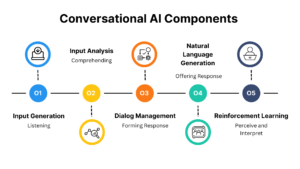
    Conversational AI is essentially powered by two functions. The first of these is machine learning. Simply said, machine learning means that the technology “learns” and improves as it is used. It gathers data from its own exchanges. It then uses that knowledge to develop itself over time.

    The second is known as natural language processing, or NLP. This is the method by which artificial intelligence comprehends language. It can progress to natural language generation after learning to recognise words and phrases. This is how it communicates with your customers.

    Structures that provide specified outputs to specific inputs are the most basic example of conversational platforms. Conversational platforms, on the other hand, can handle a broader range of queries thanks to machine learning. Furthermore, conversational AI systems can take into account the context (i.e. the remainder of the conversation) when determining the users’ intent and reaction.

    The top 5 benefits of using conversational AI tools

    1. Save time

    In the ideal scenario, every one of your clients would receive comprehensive customer service. However, some consumers will come to you with significantly simpler questions than others. A chatbot or virtual assistant is an excellent approach to ensure that everyone’s demands are met without overburdening yourself and your staff.

    1. Increased accessibility

    You cannot be available to your customers 24 hours a day, seven days a week. This issue can be solved by equipping your social media platform with conversational AI. If a consumer requires assistance outside of typical business hours, a chatbot can assist them. It solves a logistical issue and contributes to how chatbots can save time, but there’s more to it.

    While a virtual assistant cannot fix every problem, conversational AI allows clients like these to get the assistance they require.

    1. No more language barriers

    One underappreciated feature of conversational AI is that it removes language boundaries. The majority of chatbots and virtual assistants include language translation software. This enables them to recognise, interpret, and produce nearly any language with ease. As a result, no customer service encounter is hampered by language limitations. A multilingual chatbot makes your company more inviting and accessible to a broader range of clients.

    1. Versatility

    It is widely considered that conversational assistants are only employed for customer service. The potential of conversational AI allows businesses to cover a wide range of areas, from customer interactions to sales and marketing activities.

    1. Personalization

    Conversational assistants record every interaction, allowing for more precise customer behaviour analysis. As a result, the organisation is more educated about the demands of each group of its target audience and is able to personalise customer interactions.

    Applications of Conversational AI

    • Financial Services

    Financial institutions are unquestionably among the leaders in conversation AI adoption. Given the multiple areas for improvement that AI-powered technology can address, the desire for conversational AI chatbots and assistants in the BFSI sector is unsurprising.

    • Human resource management

    Conversational AI chatbots, although suitable to businesses, became HR managers’ helpers, managing employee inquiries and turning monotonous chores like on boarding, ticket generation, and data updates into self-service.

    • Learning

    Conversational AI chatbots can also be used to improve staff education by providing a more structured and personalised experience for each participant. Conversational AI may track employee performance, keep track of their overall course progress, and provide performance reports.

    • Healthcare

    Patients also anticipate spending less time dealing with issues such as scheduling visits, verifying insurance, and keeping medical papers. Using the analytical data obtained from conversational AI chatbots, healthcare practitioners may determine which experts to recruit more of, which equipment to purchase, and which procedures are in great demand.