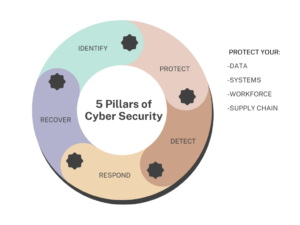
Cybersecurity has become a cornerstone of modern business strategy, essential for safeguarding assets, maintaining trust, and ensuring continuity. That’s where cybersecurity solution groups come in, ready to swoop in with their expertise, resources, and proactive strategies to shield your business from all sorts of cyber threats. With them by your side, you can navigate the digital landscape with confidence, knowing your business is in good hands.
The current cybersecurity landscape
Cybercriminals are constantly innovating, employing tactics to exploit vulnerabilities and gain unauthorized access to sensitive information. The consequences of cyber attacks can be severe, ranging from financial losses and legal liabilities to damage to brand reputation and customer trust.
According to reports, the global cost of cybercrime is projected to reach $10.5 Trillion Annually By 2025 (source), with businesses of all sizes and industries falling victim to attacks. Furthermore, the rise of remote work and cloud computing has expanded the attack surface, creating new challenges for organizations to secure their digital assets effectively.
Now that we’ve got a grasp on the broader cybersecurity landscape, let’s narrow our focus and delve into some specific threats that businesses encounter in the digital realm.
Common Cyber Threats Facing Businesses
- Malware: Malicious software designed to infiltrate and damage computer systems or steal sensitive information. Common types of malware include viruses, worms, trojans, and ransomware.
- Phishing: Phishing attacks involve fraudulent attempts to trick individuals into revealing sensitive information, such as login credentials or financial details, by masquerading as legitimate entities via email, text messages, or phone calls.
- Ransomware: Ransomware is a type of malware that encrypts files or locks users out of their systems, with attackers demanding payment (usually in cryptocurrency) to restore access. It can cause significant disruption and financial losses for businesses.
- DDoS Attacks: Distributed Denial of Service (DDoS) attacks aim to disrupt the availability of online services by overwhelming targeted systems or networks with a flood of traffic, rendering them inaccessible to legitimate users.
The Role of Cybersecurity Solution Groups: How do they protect your business
With cyber threats on the rise, businesses are increasingly relying on cybersecurity solution groups to strengthen their defenses and protect their digital assets. These specialized organizations offers a wide range of services such as
- Threat Detection and Prevention: Cybersecurity solution groups employ advanced technologies and methodologies to detect and prevent cyber threats before they can inflict harm. This includes monitoring network traffic, analyzing patterns and anomalies, and implementing proactive measures to thwart potential attacks.
- Incident Management software: Incident Management software helps In the event of a cyber attack or security breach, cybersecurity solution groups provide rapid incident response capabilities to mitigate the impact and minimize disruption.
- Vulnerability Management: Cybersecurity solution groups conduct comprehensive assessments of organizations’ IT infrastructure to identify vulnerabilities and weaknesses that could be exploited by cyber attackers. They then develop strategies and recommendations to remediate these vulnerabilities and strengthen defenses against potential threats.
- Security Consulting and Advisory Services: Beyond technical solutions, cybersecurity solution groups offer strategic guidance and advisory services to help businesses develop and implement robust cybersecurity strategies. This may include risk assessments, policy development, compliance assistance,etc.
Benefits of Working with Cybersecurity Solution Groups
Partnering with cybersecurity solution groups offers numerous advantages for businesses seeking to enhance their cybersecurity posture and protect their digital assets. Here are some key benefits:
- Expertise and Specialized Knowledge: Cybersecurity solution groups bring deep expertise and specialized knowledge, including emerging threats, best practices, and industry standards. By leveraging their experience and insights, businesses can gain valuable guidance and support in navigating the complexities of cybersecurity.
- Comprehensive Solutions: Cybersecurity solution groups offer comprehensive solutions tailored to the specific needs and requirements of businesses. From threat detection and incident response to vulnerability management and security consulting, these groups provide a wide range of services
- Proactive Threat Detection and Response: One of the primary advantages of partnering with cybersecurity solution groups is proactive threat detection and response. These groups employ advanced technologies and methodologies to identify and mitigate cyber threats before they can cause significant damage
Conclusion
Investing in cybersecurity solutions isn’t just a smart move—it’s crucial for safeguarding assets, fostering trust, and maintaining seamless business operations in our interconnected world. But selecting the right cybersecurity solutions Groups is crucial. It’s not just about following the crowd with the latest security trends—it’s about finding solutions that fit your business goals and objectives.
So, invest time in assessing your requirements, scrutinizing service providers, and teaming up with reliable partners. With SCSTech India, you gain access to a comprehensive suite of cybersecurity services tailored to your specific needs and requirements.
So don’t wait until it’s too late. Take proactive steps to protect your business with SCSTech India’s trusted cybersecurity solutions.