
In recent years, the concept of “smart cities” has captured the imagination of urban planners and technologists alike. Today, such cities are the way of living.
With investments in smart city technology expected to reach 65% by 2040, the impact is undeniable.
But what exactly makes a city “smart”? At its core, a smart city leverages advanced technologies like Al and ML to enhance the quality of life for its citizens, improve efficiency in public services, and promote sustainable urban development.
This article explores how smart cities leverage Al and ML to address urban challenges and drive sustainable development.
Governance in Smart Cities: Who are the Stakeholders?
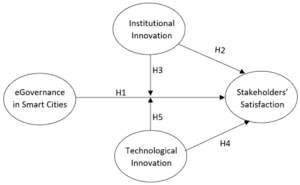
All stakeholders participate in the development of industries, decision-making, and planning work, and they resolve issues collaboratively with the correct technology. These smart cities have many stakeholders, such as:
- Private sectors
- Citizens
- Public sectors
- Government
Understanding the Value of AI Technology for Smart Cities
AI is not just a profitable sector but also has the power to improve cities. Due to the quick process of modern-day connectivity, growing demand for IoT (Internet of Things) technology, and the birth of 5G, AI software for smart cities has turned into a massive business.
Back in 2019, the AI sector had a value of $673.8 million, but in 2025, those figures will stand at $4.9 billion. But it has become much easier for all the AI programs to process and analyze all the information because of the:
- Interconnected data banks
- 5G connectivity
- Modern-day smart technologies
All these things have helped in resolving various issues in city management. Having AI technology can also assist all cities in opting for the correct changes at an efficient and quick pace.
How to Handle the Development of Smart Cities?
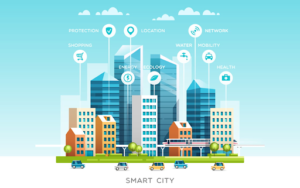
Urban development is a challenging task, and all developments must be properly designed, tested, and researched to satisfy various stakeholders. When you plan to handle smart city development, you have to conduct many studies and check several boxes.
At times, the bureaucracy stands in front of effective problem-solving. For instance, German officials in Berlin declared that it took them several years to install a proper bicycle lane in the city.
But these days, if APIs (Application Programming Interfaces), heat maps, and AI all together, the government will gain entry to an enormous amount of information. The government can use the information to make accurate changes and informed decisions to improve city life.
How ML and AI Technologies Revolutionise Urban Settings?
The AI ML services have a massive potential to revolutionize the urban setting, which can lead to transformative advancements in many areas of city life. Take a look at the table below to gain more information:
| Pointers | Description |
| Allowing Smart Services and Governance | Both ML and AL can change the public and governance services within urban settings. AI-powered intelligent systems can enhance the decision-making process, citizen engagement, and virtual assistance. For instance, virtual assistants and chatbots can offer efficient and personalized egovernance solutions to all citizens by addressing all their needs and queries. The AI algorithm will analyse massive sets of information to help with making data-driven decisions in areas like policy formulation and urban planning. |
| Encouraging the Resilient and Sustainable Cities | Both machine learning and artificial intelligence can aid in making resilient and sustainable cities. The ML algorithms will examine the sensor data, historical records, and climatic changes that will help support the disaster response and environmental control adequately. With the help of ML and AL, cities can easily improve the usage of resources, optimize waste management methods, and lessen the environmental influence. |
| Improve the Urban Infrastructure | Artificial intelligence and machine learning technologies can optimize urban infrastructure. It can do so by improving resource administration, sustainability, and efficacy. The ML algorithms will analyze the information from different sources to optimize the environmental impact of energy consumption at smart grips and even lessen the expenses. Besides that, AI techniques can be easily applied to optimize the flow of traffic and intelligent conveyance systems, reduce congestion, and improve mobility. |
| Advancing Public Security and Safety | ML and AI technologies can improve the safety of the general public in various urban settings. AI algorithms will use intelligent monitoring methods to analyze the video feeds and identify all the real-time suspicious activities or threats. Training the machine learning models will assist law enforcement and predict crime patterns in bold crime deterrence effectively. |
| Improvements in the Healthcare Industry | AI technologies provide many possibilities for the healthcare sector. It will allow you to manage all the medical records, check the bed status, schedule online appointments in private and government hospitals, use smart inventory handling of medical supplies, and offer surgical assistance. AI technologies will not just aid in curing various health ailments but also stop them via early predictions and detections. |
Wrapping Up
Both AI and ML technologies play pivotal roles in advancing smart city development, impacting critical areas such as traffic monitoring, advanced security systems, waste management, and urban governance. Collaborating with innovators and startups across private and public sectors is essential for creating effective IT solutions that enhance societal enjoyment, safety, comfort, and livability.
SCS Tech India Pvt Ltd excels in delivering top-tier IT infrastructure solutions tailored for urban planning and development. Additionally, the company offers a comprehensive range of services, including enterprise solutions, e-governance, robotic process automation, and geographic information systems (GIS), reinforcing its commitment to shaping sustainable and efficient urban environments.