Tag: #trends

  • Best security tips to avoid a cyber breach

    Best security tips to avoid a cyber breach

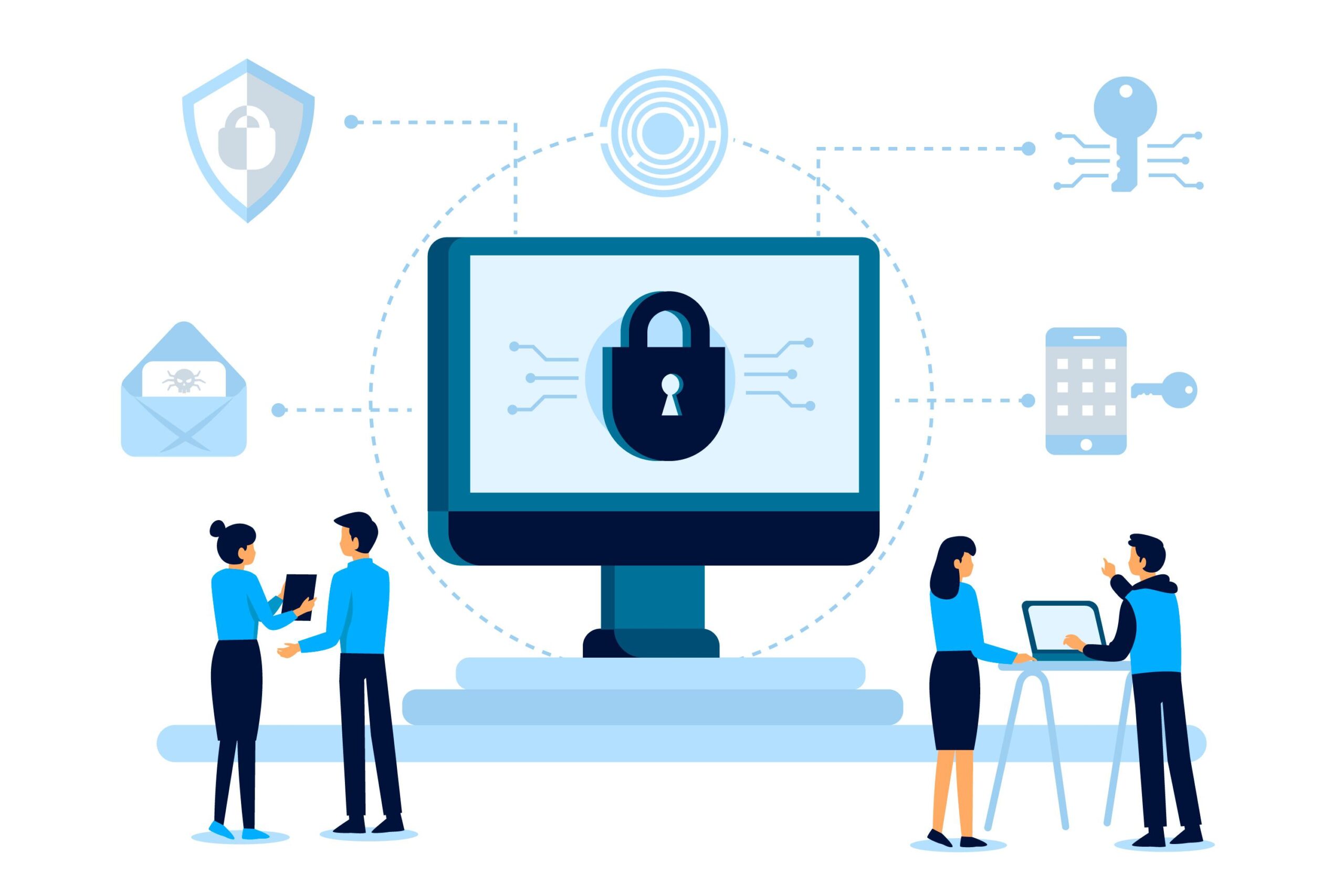
    Preventing cyber data breaches is the best defense against the nightmare and expense that comes with them. Nevertheless, you must first identify them in order to be able to stop a data breach. The sorts and costs of data breaches you could experience as a small- to medium-sized business owner are described below, along with tips on how to avoid them.

    When hackers gain access to data and sensitive information, data breaches occur. These breaches are very expensive. According to a data report, the average cost of a data breach is around $3.86 million that too in addition to the irreparable harm to an organization’s reputation. It costs time as well. The identifying of the cause and reprimanding it usually takes up to 280 days.

    You can use a variety of high-level security techniques, such as AI and prepared incident response teams, to stop a data breach. Let’s dig deep into that!

    Limit access to your valuable data –

    Every employee used to have access to all of the files on their computer back in the day. Companies today are discovering the hard way how important it is to restrict access to their most important data. A mailroom employee has no need to see a customer’s financial information, after all. By limiting who is permitted to read specific papers, you reduce the number of workers who might unintentionally click on a hazardous link. Expect to see all records partitioned off as organisations go into the future so that only those who specifically require access will have it. One of those obvious fixes that businesses probably ought to have implemented sooner rather than later.

    Security policy with third party vendors –

    Every firm interacts with a variety of outside vendors. The need to understand who these people are has never been greater. Even permitting visitors onto their property might expose businesses to legal action. It’s necessary to restrict the kinds of documents that these vendors can access.

    Although taking such steps can be a bother for the IT department, the alternative could be a data breach that costs millions of dollars. Demand transparency from the businesses that are permitted to access your sensitive information. Don’t just assume that they are abiding by privacy regulations; verify it. Request background checks for any outside contractors entering your business.

    Employee awareness training –

    Employees are the weakest link in the data security chain, according to recent research. Despite training, workers read dubious emails with the potential to download malware every day. Employers make the error of assuming that one cybersecurity training session is sufficient. Schedule frequent sessions every quarter or even monthly if you’re serious about protecting your crucial data.

    According to marketing studies, the majority of consumers must hear the same message at least seven times before their behaviour starts to change.

    Update Software Regularly–

    Experts advise routinely updating all operating systems and application software. When patches are available, install them. When programmes aren’t constantly patched and updated, your network is exposed. Baseline Security Analyzer, a software from Microsoft, may now be used to periodically check that all programmes are patched and current. This is a simple and affordable solution to fortify your network and thwart attacks before they start.

    Develop a cyber breach response plan –

    What would you do if you discovered a data breach when you arrived to work the following day? Surprisingly few businesses have a reliable breach response strategy in place. Both the company and the employees can understand the potential losses by creating a thorough breach preparedness strategy. Employees want to know the truth; therefore, an employer should be very open about the extent of the violation. A sound response strategy can reduce lost productivity and stop bad press.

    Setting strong passwords –

    One thing that security professionals will emphasise when they visit your organisation to train your staff is the importance of routinely changing all passwords. The majority of people are now aware of how crucial it is to make passwords challenging to crack. We have mastered the use of capital letters, numbers, and special characters when creating passwords, even on our home PCs. Make it as difficult as you can for hackers to enter and steal your belongings.




  • A complete guide on Cloud Computing

    A complete guide on Cloud Computing

    One of the technologies influencing how we work and play is cloud computing. The cloud helps businesses eliminate IT problems and promotes security, productivity, and efficiency. It also enables small enterprises to utilize cutting-edge computing technologies at a significantly lesser cost. Here is what you need to know about the cloud and how it can benefit your company.

    On-Demand Computing

    The term “cloud” describes online-accessible servers and software that anyone can use. You are spared from hosting and managing your hardware and software as a result. Additionally, it implies that you can use these systems from any location where you have internet access.

    Every day, you encounter cloud computing. You are accessing data that is kept on a server somewhere in the world whenever you check your Gmail inbox, look at a photo on your Dropbox account, or watch your favorite shows on Netflix. Even though the emails, videos, or other files you require are not physically present on your computer, you may quickly, simply, and affordably access them owing to contemporary cloud computing technology.

    Public, Private, and Hybrid Cloud

    Private, public, and hybrid deployment strategies are the three main types of cloud computing. In the end, all three models will give customers access to their business-critical documents and software from any location, at any time. It all depends on how they approach the task. The kind of cloud you should use for your company depends on several variables, including the purposes for which you intend to use it, applicable laws on data storage and transmission, and other aspects.

    Private Cloud

    A single entity is served via private clouds. While some companies construct and manage their ecosystems, others rely on service providers to do so. In either case, private clouds are expensive and hostile to the cloud’s advantages for the economy and IT labor productivity. Private clouds, however, are their sole choice because certain organizations are subject to greater data privacy and regulatory constraints than others.

    Public Cloud

    Distributed across the open internet, public clouds are hosted by cloud service providers. Customers can avoid having to buy, operate, and maintain their own IT infrastructure by using the most widely used and least-priced public clouds.

    Hybrid Cloud

    A hybrid cloud combines one or more public clouds with private clouds. Imagine you operate in a sector where data privacy laws are extremely rigorous. While you don’t want to host legally required data in the cloud, you do want to be able to access it there. To access data saved in your private cloud, you also want to deploy your CRM in the cloud. Using a hybrid cloud is the most sensible choice under these circumstances.

    Everything as a Service

    The cloud “stack” is made up of numerous levels. The collection of frameworks, tools and other elements that make up the infrastructure supporting cloud computing is referred to as a stack. Software as a Service (SaaS), Platform as a Service (PaaS), and Infrastructure as a Service (IaaS) components are included in this. Customers that use these services have varied degrees of control and accountability over their cloud environment.


    Infrastructure as a Service

    The customer oversees managing everything with IaaS, including the OS, middle-ware, data, and applications. Other duties, including virtualization, servers, storage, and networking obligations, are handled by the service provider. Customers are charged by how many resources, including CPU cycles, memory, bandwidth, and others, they consume. Microsoft Azure and Amazon Web Services are two examples of IaaS products.

    Platform as a Service

    Customers can create, test, and host their applications using PaaS solutions. The consumer oversees managing their software and data; otherwise, the service provider takes care of everything. You don’t have to be concerned about operating systems, software upgrades, or storage requirements if you use PaaS solutions. Customers of PaaS pay for any computing resources they use. Google App Engine and SAP Cloud are a couple of examples of PaaS technologies.

    Software as a Service

    Customers acquire licenses to utilize an application hosted by the provider under the SaaS model. Customers often buy annual or monthly subscriptions per user instead of how much of a certain computer resource they consumed, unlike IaaS and PaaS models. Microsoft 365, Dropbox, and DocuSign are a few popular SaaS products. Small firms that lack the capital or IT resources to implement the most cutting-edge technologies would benefit greatly from SaaS solutions.

    Benefits of the Cloud

    Reduced IT costs: By using cloud computing services, recurrent costs for monitoring and maintaining an IT infrastructure can be greatly decreased.

    Scalability: When necessary, developers can increase storage and processing capability by using cloud services. Additionally, development teams do not have to spend time or money upgrading cloud computing services.

    Collaboration efficiency: For the agile technology sector, cooperation has always been a need. Professionals from all around the world may work and collaborate using current cloud services. With these functionalities, teams may communicate with clients or other teams online while collaborating in real-time and sharing resources.

    Flexibility: Cloud computing can provide a great deal of flexibility in addition to helping to lower operational costs. Developers and other key stakeholders now have easier access to crucial data metrics at any time and from any location.

    Automatic updates: Teams may use the most recent resources available while managing and meeting IT standards thanks to automatic updates. Cloud computing is a popular technology because it allows users to access the newest tools and resources without having to spend a fortune.


  • Top IT Trends to look out for in 2023

    Top IT Trends to look out for in 2023

    Technology is still one of the main drivers of global change. Technology advancements give businesses more opportunities to increase efficiency and develop new products. Business leaders can make better plans for the future by keeping an eye on the development of new technologies, foreseeing how businesses might use them, and comprehending the factors that influence innovation and adoption. Keep reading to know about the new tech innovation and trends which will become a critical force for change in the world.

    Artificial Intelligence  

    Artificial intelligence has long been the subject of hype. If you are a tech professional, you might not enjoy how pervasive artificial intelligence has become. For both creative and routine activities, AI has already proven its brilliance in navigation apps, cell phones, and more. The buzz surrounding AI won’t go away anytime soon. It will become more accessible because of the expanding ecosystem of as-a-service platforms and low-code or no-code AI systems.

    Synthetic content is a promising area of AI to keep an eye on. It involves using the AI’s imagination to produce brand-new, unprecedented sights, sounds, or data. We can anticipate seeing the development of AI that is useful in both business and entertainment in 2023. Precedence Research predicts that by 2030, the global AI market would be worth $1,597.1 billion. We may anticipate new opportunities in programming, development, testing, and many other sectors as AI becomes more prevalent in a variety of industries.

    Metaverse

    Metaverse can now be classified as “a more digital environment.” Within the next five years, it is anticipated that the experience of immersive online environments and next-level user experiences will develop significantly. The phrase “metaverse” is used to refer to a highly immersive 3D virtual world that is created by combining AR, VR, and MR technologies by developing a virtual environment in which users can engage in social interaction, play games, do commerce, and more. The online experience is enhanced by the metaverse platform.

    The metaverse has the potential to open doors to new artistic, social, and professional opportunities in 2023. In the next five years, the tech giant Facebook plans to add 10,000 new, highly trained jobs for the metaverse. Talented metaverse engineers, marketers, architects, and visionaries will have more opportunities as a result.

    Blockchain

    Blockchain technology has become more and more popular, and many sizable firms are headed in that direction. As a result, there is a huge need for developers in the field of blockchain technology. The network’s decentralization, security, and data privacy are among blockchain’s advantages. Applications for blockchain technology go well beyond digital currency like bitcoin. Blockchain’s worth will significantly rise, reaching $176 billion by 2025 and $3.1 trillion by 2030, as predicted by Gartner. Whether they are little businesses or established corporations, everyone wants a piece of the blockchain industry.

    Quantum Computing

    There is a contemporary competition taking place on a worldwide basis to develop quantum computing. Quantum computing, which uses subatomic particles to develop new ways to process and store data, is expected to make it possible for computers to be a trillion times faster than the fastest regular processors currently available. The concern around quantum computing is that it might make our current encryption methods obsolete.

    Therefore, any country that makes significant investments in the development of quantum computing will have the ability to decrypt the encryption used by other countries, corporations, security systems, and other entities. In 2023, keep an eye on this development as nations including the US, UK, China, and Russia invest heavily in the creation of quantum computing technology.

    Hyper-automation

    Hyper-automation enables the automatic completion of repetitive tasks without manual or human input. It modifies both new and existing gear and processes using robotic process automation (RPA), machine learning, and artificial intelligence (AI). By using digital transformation to improve cost and resource efficiency, a business can prosper in a more competitive world. To succeed in the current market, businesses must increase production, cut costs, and run more effectively. With the aid of hyper-automation services, you can advance.

    Datafication

    The transition of all the physical items in our lives into data-driven digital gadgets is known as datafication. In conclusion, it converts labor-intensive, manual processes into data-driven technologies. Data has been a part of everything for longer than we can remember, from our cell phones to our workplace software, industrial machinery, and AI-powered products.

    As a result, handling our data in a secure and safe manner has become a sought-after skill in our sector. Datafication can turn unprocessed data into knowledge if done correctly. This has already been advantageous to numerous businesses.

    Industry Cloud Platforms

    Businesses can increase the flexibility of their workload management by using industrial cloud platforms. They can expedite adjustments to data analysis, corporate operations, and compliance processes. To enhance adaptability, quicken time to value, and meet the demands of vertical industry sectors, they combine platforms, software, and infrastructure as a service.

    Sustainable Tech

    In the future, we’ll start to see a move toward sustainable technology. We all rely on technology, including computers, cell phones, and tablets, but where are the parts needed to make these devices come from? The public will be more interested in where rare earth materials come from and how we use them. Additionally, we use cloud services like Netflix and Spotify, which continue to operate in big data centers that use a lot of electricity. As consumers demand energy-efficient goods and services supported by more sustainable technologies, efforts to boost supply chain transparency will probably continue in 2023.