Category: Emergency / Disaster Management

  • 7 Key Features to Look for in Disaster Management Software for Urban Development

    7 Key Features to Look for in Disaster Management Software for Urban Development

    With expansion and growth comes an increase in the possibility of disaster occurrence, both natural and anthropogenic. There must be a designated focus on preparing cities for whatever nature brings. Leveraging technologies like natural disaster prediction can play a critical role in minimizing risks and enhancing preparedness. According to the Global Assessment Report (UNISDR, 2015), disasters cost an estimated $314 billion annually in the built environment alone.

    That’s where disaster management software steps into the scene, a crucial tool that helps cities plan, respond, and recover quickly in the face of crisis. But with so many out there, knowing what matters is what counts. Continue reading to learn the 7 essential characteristics to look for to deploy the most robust disaster management software for urban development.

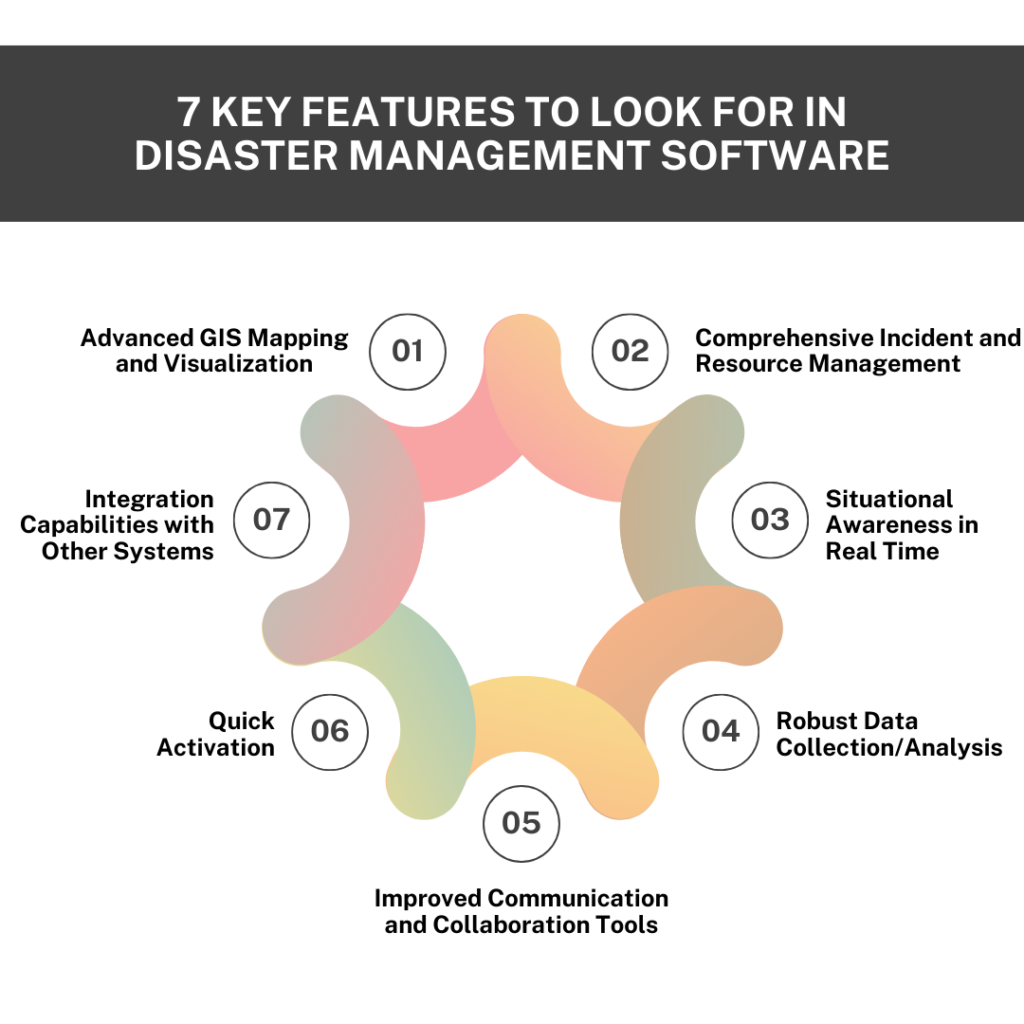
    Here are 7 Key Features to Look for in Disaster Management Software
    7 Key Features to Look for in Disaster Management Software

    #1. Advanced GIS Mapping and Visualization

    The fundamental capabilities of disaster management software are GIS mapping services and visualization. The GIS functionalities provide a real-time view of affected areas, evacuation routes, and resources required in a disaster scenario.

    • Dynamic Mapping: The package will feature dynamic hotspot updates, enabling real-time tracking of disaster changes. It will support layered mapping, allowing users to visualize different data layers such as infrastructure, hazard zones, and population density on the provided maps.
    • Interactive and 3D Maps: Zoom, pan, and click on maps for more information with detailed views of the area. 3D visualization is particularly helpful in urban environments to assess the impacts of disasters such as floods or landslides on buildings and terrain.
    • Scenario Simulations: Software that simulates scenarios allows the user to model possible disaster situations. This feature is crucial for city planners while trying to predict the aftereffects of an inevitable disaster that could affect the infrastructure.

    #2. Comprehensive Incident and Resource Management

    The tracking of an incident and the management of resources effectively become crucial during a disaster response situation. Comprehensive incident management ensures that the responders are well-informed and that the procedure is carried out as quickly as possible to cause minimal damage.

    • Incident Logging: Incident management software should be logged in real time. In ideal ones, there should be standardized reporting templates for logging critical incident information, such as location, severity, and nature of the disaster. Attachments of multimedia photos and videos help enhance situational awareness.
    • Resource Tracking: Real-time tracking of resources like workforce, equipment, and supplies. More sophisticated systems will be able to geolocate all resources accurately so that positioning can be determined with high precision. The system will track the availability and status of critical assets, such as medical equipment, ambulances, or rescue people.
    • Task Management: The automation of task assignment through the skills available from responders ensures that the right personnel handle appropriate challenges. Features for tracking progress allow users to gauge the completion of tasks in real time, which increases coordination.

    #3. Situational Awareness in Real Time

    Situational awareness during disaster scenes is essential. The disaster management software must integrate live feeds of data from various sources so that updated information is gotten across to teams for appropriate decision-making.

    • Data Feeds Integration: The software should search for information from meteorological services, emergency broadcasts, and social media monitoring. Real-time weather updates and public sentiment tracking will help define emerging issues early.
    • Impact Assessment Tools: One can assess the immediate effects of a disaster if such capability is available. This includes modules that look into damage assessment from satellite or drone imagery and community impact metrics that quantify how populations are affected.
    • Alerts: Best disaster management software should automatically send alerts upon predetermined thresholds. Additionally, it should also allow for multi-language communication to respond to different communities’ multifaceted diversity appropriately.

    #4. Robust Data Collection/Analysis

    Effective decision-making in a disaster situation strictly depends on proper and integrated data collection. Incident management software must present flexible tools customized to suit data collection/analysis.

    • Self-Customizable Data Forms: It should allow the users to create their own data forms with any configuration suitable to the needs of the information required for the incident. First responders can use the field data collection app to enter their information on-site.
    • Predictive Analytics: It should provide advanced capabilities and methods to predict natural disasters or resource needs based on historical analysis. Trending analysis reports and the database on lessons learned track past performances to provide insight into future planning.

    #5. Improved Communication and Collaboration Tools

    Communication during a disaster may either save or consume lives. The disaster management software should ensure multi-channel communication and involve safe collaboration environments.

    • Multi-Channel Communication: Alerts and updates should be duly sent through SMS, email, and push notifications to reach as many people as possible. The social media integration with the software will enable teams to give news about updates to people quickly.
    • Secure Messaging Platforms: There is communication between teams; sensitive information has to be encrypted and only accessible to authorized personnel. Role-based access control (RBAC) ensures that information only reaches the right people.
    • Collaboration Workspaces: When disaster strikes, responders need immediate sharing of documents, images, and plans. Therefore, collaboration workspaces, with real-time editing features, allow teams to make decisions and make vital changes without delay.

    #6. Quick Activation

    Time is of the essence in disaster management. Rapid activation of the emergency personnel and response plans would make all the difference between quick and non-responsive organisations to a disaster. Incident management software should enable rapid deployment of emergency operations centres and allow teams to activate pre-configured response plans with a button.

    • Pre-Configured Action Plans: The software should enable organizations to establish and implement pre-configured action plans for different situations, reducing response delay.
    • Predefined Interfaces According to Role: The predefined interfaces, according to the role, will allow the responders to quickly access the tools and information they need, meaning fast and effective mobilization.

    That means that teams hit the ground running and are on time to make things effective in terms of the mobilization of resources.

    #7. Integration Capabilities with Other Systems

    Disaster management software needs to integrate with existing systems to be operational seamlessly.

    • API Support: The application should offer APIs to interface with existing emergency management systems, GIS platforms, and municipal databases. This helps ease data flow between different agencies involved in disaster management.
    • Data Migration Tools: Such software/systems should provide handy data migration tools to support the importing of historical data into the new system, and compliance with interoperability standards is maintained to ensure that the systems interoperate with national and regional emergency management frameworks.

    Key Takeaways

    Urban disaster management requires a tailored approach. By developing essential features such as advanced GIS mapping, real-time resource tracking, data collection, training simulations, and more, organizations can better prepare themselves for disasters and respond more quickly.

    The disaster management software selects the right opportunity for ready cities to face the growing urban development challenges. The most essential characteristics of cities using SCS Tech disaster management software include proactive preparation, rapid response, and quick recovery.
  • Can Disaster Management Software Protect Your Business from Unexpected Crises?

    Can Disaster Management Software Protect Your Business from Unexpected Crises?

    As per the Industry Growth Insight Report, the global emergency disaster management software market is expected to grow at a CAGR of 10.8% from 2018 to 2030. The global emergency disaster management software is divided into two segments, i.e., local deployment and cloud-based.

    As per the report, the cloud-based segment is expected to grow at a faster rate during the forecast year due to increased concerns in enterprises for potential crises that may occur due to natural disasters like hurricanes, earthquakes, and cyber attacks, which can result in severe damage and business losses.

    As businesses have started to understand the need to be prepared for the unexpected, the question arises: Can disaster management software predict natural disasters and shield your businesses from unanticipated catastrophes? This blog sheds light upon its various uses, advantages, disadvantages, and how disaster management software can play a significant role in safeguarding during times of crisis.

    Understanding Disaster Management Software 

    Disaster management software is a great tool to prepare, respond, and recover from situations of crisis by emphasizing decreased levels of risks, clear communication, synchronizing emergency responses, and supervising recovery efforts efficiently. It essentially serves as a unified platform for administering all aspects of crisis management.

    The key aspects of disaster management software comprise of:

    • Risk Assessment: Disaster management software offers tools and techniques for risk assessment like qualitative and quantitative assessment, risk mapping, scenario analysis, failure mode and effects analysis (FEMA), SWOT analysis, and more. Listed below are crucial steps integrated into disaster management software for risk assessment:
    • Threat Identification
    • Vulnerability Analysis
    • Risk Analysis and Score Generation
    • Visualization and Risk Mapping
    • Forecasting and Scenario Analysis
    • Risk Mitigation Planning
    • Monitoring and Alert Generation
    • Reporting and Compliance
    • Emergency Response Planning: This aspect focuses on creating and implementing strategies to manage the disaster effectively through customizable templates so the organization can plan out the action as per the scenario, simulation, drills, incident management software integration, plan adaptation, real-time updates, and focusing on post-incident review for identifying areas of improvement.
    • Communication Tools: Disaster management software includes various communication tools like mass notification systems, GIS for disaster management based communication, incident management platforms, etc., that help mitigate the risk by sharing real-time information and coordinating effectively.
    • Recovery Management: The software helps in reducing the intensity of damage and restarting the operations by adding supporting recovering management features that integrate the following solutions and tools:
    • Business Continuity Planning Tools
    • Resource Management Tools
    • Data Recovery and Backup Solutions
    • Recovery Point Objective (RPO) Tracking
    • Recovery Time Objective (RTO)

    Benefits of Disaster Management Software

    Disaster management software extends various advantages that are vital in maintaining the continuity of business operations, which are discussed below:

    • Efficient Response and Recovery: Disaster management software helps simplify the response and recovery phase by utilizing pre-defined response plans and related resources to subjugate any crisis successfully.
    • Compliance and Reporting: Several industries demand compliance with certain regulations concerning the management and reporting of crises. Disaster management software acts as an aid in the fulfillment of these requirements in reporting, documentation, and auditing.
    • Enhanced Communication: Disaster management software provides the necessary communication tools to ensure clear and consistent communication, which eliminates the risk of delayed response, thus resulting in a unified and collectively coordinated response.
    • Proactive Risk Management: This involves the engagement of advanced analytics and data visualization tools to recognize potential risks involved before they develop into a major crisis.  This approach promotes the advanced implementation of risk alleviation strategies.

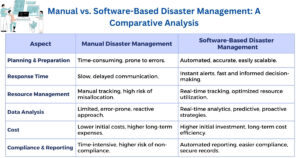
     Comparison of Manual vs. Software based disaster management

    Challenges And Limitations Of Disaster Management Software

    Let us understand the limitations of disaster management software that have a significant impact on the business’s decision-making ability and its implementation:

    • Human Factor: Human errors such as wrong data entry, misinterpreted information, etc. are a major risk in diminishing the efficacy of disaster management software. Therefore, businesses must ensure timely and appropriate training to employees to ensure a smoother resolution of the crisis involved.
    • Initial Costs and Implementation: The initial execution of this software can be costly for enterprises with budget constraints. These costs include integration, customization, and regular maintenance of the software.
    • Complexity and Training: Disaster management software emphasizes proper training of their employees to harness their true potential to the advantage of the organization. However, the complexity of this software often results in employees sticking to the old traditional ways to resolve crises.
    • Dependence on Technology: Technology is a powerful tool, but it can lead to various risks. Heavily relying on disaster management software can be concerning if all the software gets jeopardized. To avoid such difficult scenarios, businesses must have detailed backup plans to ensure smooth functioning.

    Future of Disaster Management Software

    Artificial intelligence (AI) and the Internet of Things (IoT) are becoming a crucial part of the evolving landscape of disaster management software due to the unique features they offer.

    AI helps in improving risk assessment by easy dissemination of large sets of data, which helps in predicting and preventing potential crises that may occur shortly. On the other hand, IoT devices offer the collection of real-time data which promotes quick and accurate responses.

    Businesses can expect to increase their potential manifold through the successful integration of these latest technologies into disaster management software.

    Conclusion

    Any enterprise can struggle with unexpected crises that can negatively impact its business operations. Disaster management software acts as a savior in navigating through such crises successfully by providing the necessary resources and solutions to safeguard assets and ensure the continuity of business operations, along with quick and informed decision-making.

    Partnering with a technology provider like SCS Tech India can significantly amplify your benefits of disaster management software while ensuring that the organizations are provided with innovative solutions and required tools to handle any unforeseen emergencies successfully, whilst focusing on speedy recovery and business continuity.

    FAQs

    Is disaster management software suitable for small businesses?
    Yes, disaster management software is suitable for businesses of all sizes, including small businesses.

    Does GIS help in natural disaster management?
    Yes, GIS in disaster management as it helps in giving real-time data, so efficient resource allocation can be done by mapping out the prone areas, predicting the impact level, and creating a recovery plan.

    How does disaster management software integrate with other systems?
    It is integrated into businesses through human resources, information technology, and communication platforms.

    (more…)

  • Evaluating Incident Management Software: Features and Performance Metrics

    Evaluating Incident Management Software: Features and Performance Metrics

    Downtime isn’t just a nuisance—it’s a costly affair. 

    With system downtime costing companies an average of $300,000 per hour in lost revenue, employee productivity, and maintenance charges, the financial impact is staggering. 

    For instance, an e-commerce giant facing a server outage during a major sale event can experience frustrated customers and significant revenue loss. This is one among the many situations that underscores the critical need for efficient incident management software.

    In this blog, we will delve into the essential features and performance metrics that define top-tier incident management software, helping you make informed decisions to safeguard your business operations.

    Incident Management Software: A Brief Overview

    With Incident management software, corporations can efficiently respond to and manage all kinds of incidents. The software can collaborate on resolutions, simplify the interaction with the stakeholders and track down all incidents.

    Furthermore, it can also automate various tasks like incident escalation and alerting. Besides that, the necessity of this particular software leans on the complexity and scale of your business operations and IT infrastructure.

    Small IT frameworks and SMEs with simple operations can manage all incidents without software. However, bigger and more complicated IT setups need powerful incident response systems to handle all incidents effectively.

    The Features of Incident Management Software

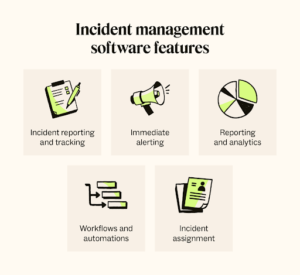
    Image Source:

    Before you choose an ideal Incident management software for your business, it’s crucial to understand all its features. Checking out the features beforehand will certainly help you make a smart choice. The features are:

    • Customisable Workflows: The software offers workflow customisation so that you can align incident management with the company’s certain procedures.
    • Intuitive User Interface: Having a user-friendly interface will lead to instant incident resolution. Incident management software comes with a minimal learning curve and uncomplicated navigation.
    • Collaboration Tools: This type of software comes with real-time collaboration and communication features so that you can take a unified approach when it comes to handling all sorts of incidents.
    • Automated Capabilities: Having a powerful automation feature can lessen human errors and speed up response times during severe incidents.
    • Multiple Channel Alerting: This software also has the multi-channel alerting feature to make sure no incidents go unnoticed by you and your team.
    • Scalability: The software will scale the business growth and also increase the demand and the complexity along with it.
    • Comprehensive Analytics and Reporting: The powerful analytics and reporting tools can give insights into the performance and various incident trends.
    • Mobile Accessibility: Many Incident management software come with a mobile accessibility feature so that you can receive responses on time regardless of your location.
    • Integration Capabilities: This software can integrate perfectly with all your current platforms and tools. The feature can stop information silos.
    • Incident Response Tool: The incident management system comes with an outstanding incident response feature, which makes the entire platform quite powerful.
    • Security Measures and Compliance: Incident management systems meet all the compliance standards of the industry and also have robust security measures to keep all sensitive information secure.

    Value of Incident Management Software for the IT Sector

    Incident management software plays a vital part in many sectors, including Information Technology (IT). Using this software in an IT setting can help you take a systematic approach to managing all unexpected emergencies, incidents, and events. There are other reasons that prove this software is important for the IT industry. Check out the table below:

    The Pointers The Reasons
    Analysing the Root Cause Simplifies the entire analysis of various incidents to detect all the underlying issues for long-term enhancements.
    Reducing the Downtime Assist in smoothly resolving all cyber-related attacks and system failures. This helps reduce all the software disruptions.
    SLAs [Service Level Assessments] Tracks down the incident resolution times to maintain customer satisfaction and guarantee SLA compliance.

    The Performance Metrics of Incident Management Software

    The Incident management software has many performance metrics, and you will find out about the important ones in this section.

    Uptime

    This metric is known as the percentage of times a system functions correctly. Uptime is extremely straightforward as it will show you how reliable the service can be. If the uptime is close to 100%, it means your customers are happy. Based on the industry standards, an uptime of 99.9% is viewed as pretty good, but 99.99% is considered excellent. Even though perfection is not possible, try to keep this particular number higher.

    MTTR [Mean Time to Resolution]

    This metric is known as the average time taken to resolve or respond to a specific incident. Mean Time to Resolution will show you how fast your team resolves or responds to various problems that take place.

    First Touch Resolution Rate

    This is a rate at which all incidents get resolved without repeat alerts when they take place for the first time. The First Touch Resolution Rate displays how effective the management system has become over time. A first touch and high-resolution rate means the system is mature and properly configured.

    MTTA [Mean Time to Acknowledge]

    MTTA is known as the average time between the team member who acknowledges the problem and the system alert. This metric will show you how effectively and instantly your team members respond and manage the latest system alerts.

    Conclusion

    Incident management software is crucial not only for the marketing and healthcare sectors but also for the IT, power, gas, oil and various other incident-prone industries. It enables swift responses and system alerts and enhances team collaboration effectively.

    Implementing such software enables proactive incident detection and timely response to unforeseen events. For tailored incident management solutions for your business, consider consulting experts at SCS Tech India Pvt Ltd.

    SCS Tech India Pvt Ltd specializes in delivering cutting-edge IT solutions globally, including Cyber Security, Blockchain Solutions, and Enterprise Solutions. Serving diverse sectors such as Agriculture, Finance, Education, and Healthcare, they are committed to providing innovative IT-based solutions to meet varied client needs.

  • What Makes Incident Management Software a Must-Have in Today’s Business Environment?

    What Makes Incident Management Software a Must-Have in Today’s Business Environment?

    In today’s fast-paced business environment, the ability to quickly and effectively respond to unexpected incidents is crucial for maintaining business continuity. Whether it’s a cybersecurity breach, a natural disaster, or an operational glitch, incidents can disrupt operations, impact customer satisfaction, and have significant financial implications.

    Incident management software has become an indispensable tool for modern businesses. It provides a systematic approach to managing and resolving incidents, ensuring that they are identified, analyzed, and addressed promptly.

    By streamlining the incident response process, this software helps minimize the impact of incidents on business operations and reduces the risk of similar events occurring in the future.

    Moreover, incident management software is not just about reacting to incidents; it’s also about proactivity. With features like real-time monitoring, automated alerts, and detailed reporting, businesses can stay one step ahead, identifying potential issues before they escalate into major incidents.

    The Evolution of Incident Management

    Incident management has come a long way from its early days when responses were primarily manual and often reactive. Initially, incident management practices revolved around basic procedures and protocols, with limited use of technology.

    Teams relied on manual record-keeping, physical communication tools, and ad-hoc response strategies, which often resulted in delayed reactions and fragmented information sharing.

    However, the advent of technology has dramatically transformed these traditional approaches. The introduction of incident management software marked a significant turning point. This software brought automation, real-time data analysis, and centralized communication platforms to the forefront of incident response.

    With features like automated alerting systems, incident tracking, and integrated communication channels, these tools have enabled organizations to respond to incidents more swiftly and effectively.

    Key Features of Incident Management Software


    Real-Time Monitoring and Alerting Systems:

    • Continuous scanning for potential threats or anomalies.
    • Prompt detection of unusual activity.
    • Customizable alerts based on severity levels.
    • Alerts delivered through various channels (email, SMS, in-app notifications).

    Automated Incident Detection and Response Capabilities:

    • Automation of incident detection and initial response.
    • Reduced reliance on manual intervention.
    • Faster response times and minimized impact.
    • Automatic classification and assignment of incidents.

    Integration with Existing IT Infrastructure and Systems:

    • Seamless integration with a wide range of IT systems and infrastructure.
    • Holistic approach to incident management.
    • Comprehensive view of incidents through data aggregation.
    • Triggering actions in other systems as part of the response process

    The Incident Command System in Disaster Management

    The Incident Command System (ICS) is a standardized approach to the command, control, and coordination of emergency response efforts. It provides a common hierarchy within which responders from multiple agencies can be effective.

    ICS is designed to enable effective and efficient incident management by integrating a combination of facilities, equipment, personnel, procedures, and communications operating within a common organizational structure.

    Importance of ICS in Disaster Management:

    • Unified Command Structure: ICS establishes a clear command structure that helps to ensure clear communication and decision-making processes during emergencies. This structure is crucial for coordinating the efforts of multiple agencies and ensuring that everyone is working towards the same objectives.
    • Scalability and Flexibility: The ICS framework is designed to be scalable and flexible, allowing it to be adapted to incidents of any size or complexity. This means it can be used for small-scale incidents as well as large-scale disasters.
    • Resource Allocation: ICS provides a systematic approach to resource allocation, ensuring that resources are used efficiently and effectively during an emergency. This helps to prevent duplication of efforts and ensures that resources are available where they are needed most.
    • Incident Action Planning: ICS emphasizes the importance of developing an Incident Action Plan (IAP) that outlines the objectives, strategies, and tactics for responding to the incident. This plan helps to ensure that all responders are working towards the same goals and that their efforts are coordinated.

    Support of Incident Management Software in ICS:

    Incident management software plays a critical role in supporting the ICS framework, particularly in terms of coordination and communication:

    • Real-Time Information Sharing: Incident management software provides a platform for real-time information sharing among all stakeholders involved in the response efforts. This ensures that everyone has access to the same information and can make informed decisions based on the latest data.
    • Resource Tracking: The software can track the availability and deployment of resources, ensuring that they are allocated efficiently and effectively according to the priorities established in the IAP.
    • Communication and Collaboration: Incident management software facilitates communication and collaboration among different agencies and response teams. It provides tools for messaging, sharing documents, and coordinating actions, which are essential for effective incident management.
    • Incident Documentation: The software helps in documenting all aspects of the incident and the response efforts. This documentation is crucial for after-action reviews, lessons learned, and future planning.

    Future Trends in Incident Management Software

    Artificial Intelligence (AI) and Machine Learning:

    • Predictive analytics for anticipating incidents.
    • Pattern recognition for identifying vulnerabilities.
    • Continuous improvement in detection and response through machine learning.

    Automation and Orchestration:

    • Streamlined response processes with automated workflows.
    • Coordinated actions across systems and teams for synchronized response.

    Integration with Internet of Things (IoT) Devices:

    • Real-time monitoring of connected IoT devices.
    • Quick detection and response to IoT-related incidents.


    In today’s fast-paced and unpredictable business environment, being prepared for the unexpected is not just advisable; it’s essential. Incident management software has emerged as a crucial tool for businesses to effectively manage and respond to incidents, ensuring minimal disruption and maintaining operational continuity.

    Adopting incident management software is a proactive step towards safeguarding your business. It enables real-time monitoring, automated incident detection, and swift response capabilities, allowing you to address issues before they escalate.Don’t wait for the next incident to catch you off guard. Take the first step towards a more secure and resilient future for your business. Explore the comprehensive incident management solutions offered by SCS Tech and discover how you can stay prepared in an ever-changing business landscape.

  • Emergency / Disaster Management

    Emergency / Disaster Management

    SCS Tech is a leading provider of emergency management services, including disaster response and recovery. We have the experience, expertise, and resources to assist both public and private sector clients in addressing the entire continuum of devastating impacts of manmade and natural events. Our expertise includes preparedness, mitigation, response, and recovery.

    Pre-disaster support

    Our disaster preparedness strategies during steady-state conditions include:

    • Developing and applying technology to better inform clients about the wide array of hazards they face
    • Prioritizing, scoping, and implementing projects designed to mitigate risks
    • Planning, training, and exercising public safety professionals to enhance their readiness to respond
    • Engaging communities and conducting public relations
    Post-disaster management support

    SCS Tech develops and uses advanced technologies to provide fast, efficient, and cost-effective solutions to recovering communities.

    Preparedness

    • Disaster-specific response planning
    • General population and functional needs evacuation and shelter planning
    • Flood warning and emergency evacuation planning
    • Emergency management training for multiple public safety disciplines
    • Emergency operations drills and table-top and full-scale exercises
    • Access and functional needs consulting
    • Threat Hazard Identification and Risk Assessment (THIRA) development
    • Incident Command System (ICS) Training
    • Strategic communications planning

    Mitigation

    • Hazard mitigation planning
    • Loss avoidance studies
    • Floodplain management studies and analyses
    • Levee and dam inspection and management
    • Climate adaptation planning
    • Public outreach via events, TV, radio, and digital platforms
    • Comprehensive and master community planning
    • Land use and zoning policy and plan development

    Response

    • Disaster operations staff augmentation (Emergency Operations Center [EOC] or field support)
    • Debris management and monitoring
    • Environmental and spill response
    • Time-critical critical infrastructure repair (e.g., water, wastewater, energy, utility, and transportation systems)
    • Incident action planning
    • Common operating picture development
    • Incident command system report
    • Media and community relations and crisis communications

    Short-term Recovery

    • Infrastructure and residential damage assessment
    • FEMA Public Assistance grant administration and consulting
    • Hazard Mitigation Grant Program (HMGP) application and program administration
    • Economic redevelopment program planning
    • Community engagement to develop implementation strategies and build operational capacity
    • Housing and Urban Development (HUD) Community Development Block Grant-Disaster Recovery (CDBG-DR) consulting (program management, environmental review, eligibility analysis, and reporting)

    Long-term Recovery

    • Water and wastewater infrastructure design and construction
    • Flood control and green infrastructure design and construction
    • Public safety facility design and construction
    • Structural elevation design and implementation
    • Transportation system design and construction
    • Facilitation of public workshops with community planners, architects, and developers
    • Property buyout program administration