Category: Internet

  • How Digital Transformation Services Are Reinventing Customer Experiences

    How Digital Transformation Services Are Reinventing Customer Experiences

    In today’s digital era, businesses are undergoing transformative changes fueled by digital technologies. Central to this shift is digital transformation – a strategic approach that integrates digital tools to enhance operations and customer experiences. In this blog, we’ll explore how digital transformation services are revolutionizing customer experiences, empowering businesses to create personalized, seamless interactions that drive loyalty and growth.

    1. Understanding Digital Transformation:
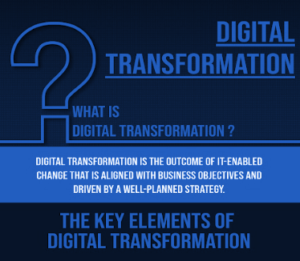
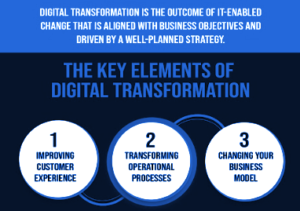
    Digital transformation goes beyond technology upgrades; it’s a holistic approach to redefining how businesses operate and engage with customers. It involves embracing innovation and agility to adapt to the evolving digital landscape.

    Think of it as more than just upgrading your software or implementing new tools. It’s about embracing a mindset of innovation and agility, where businesses continuously evolve to meet the changing needs and expectations of customers in the digital age.

    By leveraging technologies like AI and data analytics, businesses streamline operations, gain insights, and deliver personalized experiences. Digital transformation is about staying ahead, embracing change, and meeting customer expectations in a digital world.

    2. The Evolution of Customer Experiences:

    In the digital age, customer expectations have undergone a significant transformation. Gone are the days of traditional interactions; today’s consumers expect seamless, personalized experiences across all touch points. This shift is driven by advancements in technology and the widespread adoption of digital channels, which have empowered customers with greater choice and convenience.

    Businesses must adapt to this new reality by embracing digital transformation to meet the evolving needs of their customers. By leveraging data insights and technology-driven IT solutions, businesses can create tailored experiences that resonate with their audience, fostering loyalty and long-term relationships.

    3. Leveraging Digital Transformation Services:

    Digital transformation services play a pivotal role in helping businesses navigate the complexities of the digital landscape and elevate their customer experiences. These services encompass a wide range of capabilities, including data analytics, AI-driven personalization, and omnichannel integration, designed to enhance customer engagement and satisfaction.

    By partnering with digital transformation service providers, businesses gain access to expertise and technologies that enable them to deliver seamless, personalized experiences across all touch points. From analyzing customer data to automating processes, these services empower businesses to stay ahead of the competition and meet the ever-changing demands of their customers.

    4. Personalization and Customer Insights:

    Personalization has become a cornerstone of modern customer experiences, and digital transformation services enable businesses to deliver tailored interactions that resonate with their audience. By harnessing the power of data analytics and AI, businesses can gain valuable insights into customer behavior and preferences, allowing them to create hyper-targeted campaigns and offers.

    Furthermore, digital transformation companies enable businesses to go beyond surface-level personalization by anticipating customer needs and proactively addressing them. Whether it’s recommending products based on past purchases or providing relevant content at the right time, personalized experiences foster deeper connections and drive customer loyalty.

    5. Seamless Omnichannel Experiences:

    In today’s digital landscape, customers expect a seamless experience across all channels, whether they’re browsing online, using a mobile app, or visiting a physical store. Digital transformation services enable businesses to integrate these channels into a cohesive omnichannel strategy, ensuring consistency and continuity throughout the customer journey.

    By leveraging omnichannel capabilities, businesses can provide customers with the flexibility to interact with their brand wherever and whenever they choose. Whether it’s starting a transaction online and completing it in-store or receiving personalized recommendations across multiple touchpoints, seamless omnichannel experiences foster customer satisfaction and loyalty.

    6. Enhancing Customer Engagement and Satisfaction:

    Digital transformation companies empower businesses to engage with customers in meaningful ways, fostering stronger relationships and driving satisfaction. Through innovative strategies such as interactive content, chatbots, and social media listening, businesses can connect with customers on a deeper level, addressing their needs and preferences in real-time.

    Furthermore, these services enable businesses to gather feedback and insights from customers, allowing them to continually refine and improve their offerings. By actively listening to customer feedback and responding promptly, businesses can demonstrate their commitment to customer satisfaction and build a loyal customer base.

    Conclusion:

    In today’s digital landscape, customer experiences play a pivotal role in shaping the success of businesses. Digital transformation services have emerged as a key enabler in redefining these experiences, empowering businesses to deliver personalized, seamless interactions that drive satisfaction and loyalty.

    By leveraging advanced technologies and data-driven insights, businesses can gain a competitive edge and stay ahead in the ever-evolving market. As we look to the future, the importance of digital transformation services in enhancing customer experiences will only continue to grow, driving innovation and fueling business growth.

    Ready to transform your customer experiences with digital transformation services? Contact us today to learn how SCS Tech India’s tailored IT solutions can help elevate your business in the digital age!

     

  • What Sets Leading Machine Learning Companies Apart in Today’s Market?

    What Sets Leading Machine Learning Companies Apart in Today’s Market?

    In today’s rapidly evolving business landscape, integrating machine learning technologies has become paramount for companies striving to stay ahead of the curve. Machine learning, a subset of artificial intelligence (AI), empowers systems to learn from data and make predictions or decisions with minimal human intervention. As businesses increasingly grasp the transformative potential of machine learning, the demand for proficient and innovative machine learning companies has surged.

    In this blog post, we’ll explore machine learning and what sets leading companies apart in today’s competitive market. From expertise and innovation to customized solutions and a commitment to quality, we’ll uncover the key factors that distinguish top-tier machine learning companies.

    AI in business

    Expertise and Innovation in Machine Learning

    Leading machine learning companies stand out due to their unparalleled expertise and commitment to innovation. With seasoned professionals skilled in algorithms, data analysis, and software development, these companies tackle complex challenges with precision.

    Innovation is a hallmark of top-tier machine learning firms. These companies invest in research, collaborate with academia, and engage in knowledge-sharing communities to pioneer new solutions. By staying abreast of trends and anticipating market needs, these companies spearhead transformative change in AI services and machine learning.

    Range of AI/ML Services Offered

    Leading machine learning companies provide various ai services tailored to meet diverse client needs. These firms provide comprehensive solutions, spanning from predictive analytics to natural language processing and computer vision. They enable businesses to glean insights, automate processes, and make data-driven decisions.

    Focusing on continuous innovation, these companies stay ahead of emerging challenges and opportunities, empowering clients to thrive in the digital age.

    Customized Solutions for Business Needs

    Leading machine learning companies excel in providing tailored solutions to meet each client’s unique requirements. These firms design solutions that drive tangible business outcomes by conducting thorough assessments and understanding specific challenges. With a focus on scalability and flexibility, they ensure their solutions adapt to evolving needs, fostering long-term success.

    Commitment to Quality and Performance

    Top-tier machine learning companies prioritize delivering high-quality solutions that exceed client expectations. They maintain rigorous standards throughout development, ensuring accuracy, reliability, and scalability.

    By leveraging robust testing methodologies and quality assurance protocols, these companies validate the performance of their solutions and identify any potential issues or optimizations. This commitment to quality ensures that clients receive reliable and efficient machine-learning solutions that meet their business objectives.

    Furthermore, leading machine learning companies are dedicated to ongoing performance optimization. They continuously monitor and analyze solution performance, identifying opportunities for improvement and innovation. By staying proactive and responsive, these companies ensure that their solutions remain at the forefront of technological advancements and deliver optimal client results.

    Client Success Stories and Testimonials

    Leading machine learning companies showcase their expertise and effectiveness through client success stories and testimonials. These stories highlight real-world applications of their solutions, demonstrating their tangible benefits to businesses across various industries.

    Top-tier machine learning companies offer prospective clients valuable insights into the effectiveness and reliability of their services by sharing success stories and testimonials.Clients’ firsthand accounts of the impact of machine learning solutions on their operations serve as compelling endorsements, instilling confidence in potential clients and reinforcing the company’s credibility.

    Furthermore, success stories and testimonials are powerful marketing tools, enabling machine learning companies to differentiate themselves from competitors and attract new clients. They demonstrate a track record of delivering results and showcase the company’s ability to address diverse challenges and deliver measurable outcomes.

    Conclusion

    In conclusion, leading machine learning companies set themselves apart in today’s market through their expertise, innovation, commitment to quality, and client-eccentric approach. These companies drive business success and foster innovation across industries by leveraging cutting-edge technologies and customized solutions.

    As businesses navigate the complexities of AI services and machine learning, partnering with a trusted and reliable machine learning company becomes essential. By focusing on factors like expertise, innovation, and dedication to quality, businesses can select a partner that aligns with their objectives and enables them to leverage the complete potential of machine learning.

    In an era increasingly defined by digitalization and data, machine-learning companies are pivotal in propelling innovation and shaping the future of business. By embracing AI services and machine learning’s capabilities, businesses can unlock new opportunities, drive efficiency, and stay competitive in today’s dynamic market landscape.

    Ready to harness the power of machine learning for your business? Explore SCS Tech India’s AI/ML services and discover how we can help you achieve your goals. Contact us today to schedule a consultation!


  • The Role of GIS in Natural Disaster Management

    The Role of GIS in Natural Disaster Management

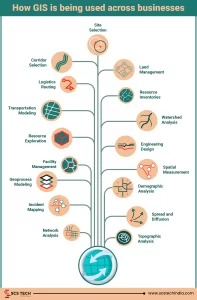
    For business owners, preparing for natural disasters is paramount to safeguarding their operations and employees. That’s where Geographic Information Systems (GIS) come into play.

    In this blog, we’ll explore how geographical information system software, especially the solutions offered by companies in India, plays a vital role in disaster management. It provides invaluable support, from predicting where disasters might strike to guiding emergency responses.

    Join us as we uncover how GIS can empower businesses to protect their assets and ensure continuity during natural calamities.

    Understanding GIS and Its Applications in Natural Disaster Management

    Natural disasters can have devastating effects on communities and businesses alike. However, geographical information system software offers a powerful tool set to help mitigate these risks and manage the aftermath more effectively.

    What is GIS?

    At its core, GIS is a technology that captures, analyzes, and presents spatial or geographical data. This includes information such as maps, satellite imagery, and geographic coordinates.

    Applications in Disaster Management

    GIS plays a crucial role in various stages of disaster management:

    1. Prevention and Preparedness: Geographical information system software helps authorities identify risks and develop mitigation strategies by mapping potential hazards, vulnerable areas, and critical infrastructure. For example, it can be used to map flood zones, earthquake fault lines, and areas prone to wildfires.
    2. Response and Relief: it enables real-time monitoring and coordination of response efforts during a disaster. Emergency responders can use GIS to track the movement of a hurricane, identify affected areas, and deploy resources where needed most. GIS also helps establish temporary shelters, evacuation routes, and medical facilities.
    3. Recovery and Reconstruction: After the disaster has passed, it plays a vital role in assessing damages and planning reconstruction efforts. By mapping out the extent of destruction, it helps prioritize areas for recovery and allocate resources effectively. Additionally, it aids in monitoring environmental impacts, such as soil erosion or pollution, and planning restoration projects.

    GIS Methods to Predict Natural Disasters

    GIS technology is crucial in predicting and forecasting and in natural disaster management, enabling proactive decision-making and resource allocation.

    1. Remote Sensing and Satellite Imagery: geographical information system software utilizes satellite imagery to monitor environmental changes and indicators of impending disasters.
    2. Modelling and Simulation: it models analyze historical data and environmental factors to forecast hurricanes, floods, and landslides.
    3. Early Warning Systems: it integrates real-time data to develop early warning systems for timely alerts and proactive measures.

    Real-Time Monitoring and Response with GIS

    Timely response to natural disasters is critical for minimizing damage and saving lives. GIS technology enables real-time monitoring and coordinated response efforts.

    1. Data Integration: GIS platforms integrate real-time data from various sources, providing up-to-date insights into evolving disaster scenarios.
    2. Situational Awareness: it visualizes critical information on interactive maps, enhancing situational awareness for emergency response teams.
    3. Resource Allocation: it helps prioritize response efforts by efficiently identifying areas at the most significant risk and allocating resources.
    4. Coordination: it facilitates collaboration among multiple agencies, ensuring a unified and effective disaster response.

    GIS Companies in India: Leading in Disaster Management

    India boasts several GIS companies specializing in disaster management solutions. These companies offer tailored expertise and innovative technologies to effectively predict, monitor, and respond to natural disasters management.

    1. Expert Solutions: GIS companies in India provide cutting-edge solutions for flood mapping, landslide prediction, and more, enhancing disaster resilience.
    2. Government Collaboration: They collaborate closely with government agencies, integrating GIS into disaster management frameworks to streamline response efforts.
    3. Capacity Building: These companies offer training programs to equip officials and responders with GIS skills, empowering communities to mitigate disaster impact.
    4. Community Engagement: Through outreach programs, they raise awareness and promote preparedness measures among local communities.
    5. Innovation: These companies are leaders in innovation. They invest in research to develop new disaster prediction and response technologies.

    Conclusion

    In conclusion, geographical information system software(GIS) play a pivotal role in every phase of disaster management, from prediction to recovery. Through advanced technologies and innovative solutions, GIS empowers communities and authorities to anticipate, monitor, and respond to natural disasters precisely and efficiently. GIS companies in India are at the forefront of this effort in India, offering expertise, solutions, and collaboration to enhance disaster resilience nationwide.

    As businesses navigate the complexities of disaster management, leveraging GIS technology becomes increasingly essential. By partnering with GIS companies in India and embracing innovative solutions, businesses can strengthen their disaster preparedness, protect their assets, and contribute to the safety and well-being of their communities.

    Visit SCS Tech India’s website today to explore how its GIS solutions can support your disaster management initiatives.

    Together, let us harness the power of GIS to build a safer, more resilient future for all.

  • Why Are IT Solutions Critical for Modern Business Success?

    Why Are IT Solutions Critical for Modern Business Success?

    In today’s digital age, IT solutions are indispensable for business success. They drive digital transformation, enhance efficiency, and secure data. Let’s explore the critical importance of IT solutions for modern businesses and their role in shaping the future of business.

    The Role of IT Solutions in Digital Transformation

    1. Navigating the Digital Landscape: Digital transformation companies act as guides, helping businesses navigate the complex terrain of the digital landscape. They offer a suite of services, from cloud computing to data analytics, tailored to each business’s unique needs.
    2. Empowering Adaptability: It empowers businesses to adapt to changing market conditions, customer demands, and technological advancements. This agility allows companies to seize new opportunities and stay ahead of the curve.
    3. Driving Innovation: Innovation is at the heart of digital transformation. IT solutions provide the tools and platforms necessary for innovation to flourish. Whether it’s developing new products, streamlining processes, or enhancing customer experiences,
    4. Enhancing Collaboration and communication: Collaboration is essential for driving digital transformation. It facilitates collaboration by breaking down silos, enabling seamless communication and information sharing across departments and teams.

    Leveraging IT Solutions for Enhanced Efficiency and Productivity

    1. Automation of Repetitive Tasks: IT solutions automate routine tasks, giving employees more time to concentrate on strategic activities.
    2. Streamlining Workflows: it enables smoother and more efficient operations by digitizing workflows and eliminating paper-based processes.
    3. Real-Time Data Insights:  it uses data analytics tools to provide real-time insights into business performance, allowing for informed decision-making.
    4. Integration of Business Functions: Enterprise resource planning (ERP) systems consolidate different business functions, such as finance, HR, and supply chain management, into one unified platform.

    Enhancing Customer Experience through IT Solutions

    1. Personalized Interactions: IT solutions enable businesses to personalize customer interactions based on preferences, purchase history, and behaviour.
    2. Streamlined Communication Channels: Omnichannel communication platforms allow businesses to communicate with customers seamlessly across multiple channels, including email, social media, and live chat.
    3. Centralized Customer Data: Customer relationship management (CRM) systems centralize customer data, offering a comprehensive view of each customer’s interactions and history.
    4. Tailored Services: With insights from data analytics tools, businesses can offer tailored services and recommendations to meet individual customer needs.

    Securing Business Data and Assets with IT Solutions

    1. Cybersecurity Solutions: IT solution providers offer a range of cybersecurity solutions, including network security, endpoint protection, and threat intelligence, to protect against cyber threats.
    2. Data Encryption Technologies: Data encryption technologies safeguard data during transmission and storage, thwarting unauthorized access and preserving confidentiality.
    3. Mitigating Risks: By deploying robust IT security measures, businesses can mitigate the risks linked with cyber threats, preserving their reputation, customer trust, and competitive edge.

    Future Trends and Opportunities in IT Solutions

    As technology progresses, IT solutions are evolving rapidly, opening up new avenues for business growth and innovation. Cloud computing offers scalable data storage, while AI and machine learning streamline automation and data analysis. The Internet of Things facilitates real-time data collection by connecting devices. In this digital landscape, partnering with IT infrastructure solution providers becomes vital for businesses to adapt and capitalize on these trends, ensuring their competitiveness in the digital realm.

    Choosing the Right IT Infrastructure Solution Provider

    Choosing the correct IT infrastructure solution provider is vital for the success of your digital transformation journey. Consider the following factors when choosing a provider:

    1. Expertise and Experience: Seek out an IT infrastructure solutions provider with a demonstrated history of successfully implementing IT solutions and leading digital transformation efforts.
    2. Range of Services: Consider a provider that offers a broad spectrum of digital transformation companies, encompassing cloud computing, cybersecurity, data analytics, and enterprise software solutions.
    3. Reputation and Client Testimonials: Research the provider’s reputation in the industry and seek feedback from past clients to ensure reliability and quality of service.
    4. Alignment with Business Goals: Select a provider that understands your business objectives and can tailor solutions to meet your needs and requirements.
    5. Industry Experience: Look for providers with industry experience. They’ll have a deeper understanding of your specific challenges and opportunities.

    Conclusion

    In conclusion, IT solutions are indispensable for modern businesses. They drive digital transformation, enhance efficiency, and secure data assets. With their help, companies can streamline operations, improve customer experiences, and stay competitive. Emerging trends like cloud computing, AI, and IoT offer exciting growth opportunities. To navigate these changes effectively, businesses must partner with reliable IT infrastructure solution providers to unlock their full potential in the digital age.

    Ready to take your business to the next level with cutting-edge IT solutions? Explore a range of services and solutions at SCS Tech India, your trusted IT infrastructure partner.


  • Transforming Today’s Business Landscape: The Impact of Blockchain Technology

    Transforming Today’s Business Landscape: The Impact of Blockchain Technology

    In the new digital era, businesses seek essential new technologies for their survival. Digital transformation enables strategic decision-making, streamlining of business processes, and the adoption of new business models through the use of disruptive technologies in the market.

    Blockchain stands out as a pivotal technology driving business evolution. While blockchain has gained significant traction in the market in connection with cryptocurrencies like Bitcoin, there is still confusion surrounding the terminology. Many individuals mistakenly view blockchain as synonymous with Bitcoin and use the terms interchangeably.

    This confusion leads to the misconception that blockchain for business solely revolves around cryptocurrencies. However, blockchain for business is established on a permissioned distributed ledger technology that fosters trust among partners. Operating on a peer-to-peer network, it enhances transaction transparency, data resilience, and security, while reducing operational costs.

    Ways Blockchain Can Enhance the Current Business Model

    Blockchain technology offers numerous benefits to businesses, offering fresh opportunities to transform current business models by cutting costs, reducing intermediary involvement, and fostering greater trust within an ecosystem. Here are ten ways that businesses can incorporate blockchain into their digital transformation efforts.

    • Smart contracts are self-executing contracts stored on a blockchain network, executing terms and conditions automatically. They eliminate the need for intermediaries in legal actions, promoting efficient business operations.
    • Blockchain technology simplifies payment processes by connecting parties on the same platform, allowing direct communication between healthcare facilities and insurance providers. This transparency enhances efficiency by providing immediate access to patient information and payment details, streamlining cash flow for businesses.
    • Blockchain in Supply Chain Management enables SMEs to track products/services from manufacturing to delivery, ensuring transparency, combating counterfeiting, and enhancing security. Example: Walmart uses blockchain to track pork items’ provenance and condition, ensuring transparency in its food supply chain.
    • Blockchain technology enhances hiring by preventing fake documents, saving time in verification, and prompting companies to engage with blockchain development firms for innovative business applications.
    • Blockchain technology enhances marketing campaigns by allowing real-time tracking of client information and behaviour. This empowers marketers to create effective campaigns, increase ROI, and authenticate traffic for better outcomes.
    • Blockchain technology in business offers robust security through decentralization, transparency, and lower cyber-attack risks. It enables digital identity protection and control over information access and usage for users.
    • Blockchain technology in business boosts customer engagement by empowering users, ensuring transparency, enabling quick transactions, and helping identify loyal customers.
    • Blockchain technology offers improved speed and efficiency by automating processes, reducing human errors, and enabling transactions to be completed in seconds.
    • Businesses seek cost-effective solutions and improved processes. Blockchain adoption reduces costs by eliminating third-party vendor expenses, central players, and the need for extensive transaction validation. This makes blockchain crucial for financial management.
    • Blockchain adoption allows businesses to raise capital through Initial Token Offerings (ITOs), where investors can buy tokens representing equity or revenue share. ITOs offer a viable capital-raising alternative for businesses of all sizes.

    The Future of Blockchain in the Business World

    Blockchain introduces a distributed ledger system that enhances the media supply chain and reduces copyright violations by providing security, data analysis, and control. The significance of blockchain is on the rise as various sectors such as healthcare, logistics, manufacturing, and IT are adopting this technology to address and predict real-time challenges.

    Blockchain technology holds immense promise in shaping the future of business. It has the potential to introduce new ideas, integrate existing concepts, and provide a comprehensive understanding of the market landscape. The impact of blockchain on small and large businesses hinges on how effectively we leverage its capabilities in our economic ecosystem.


  • Tech enabled workplace – The futuristic view

    Tech enabled workplace – The futuristic view

    As we consider the future of the workplace, and more especially, the post-pandemic office experience, it is obvious that technology will play a key role in what these spaces provide, how they appear, and how they operate. Workspaces provide more than just a place to sit and work; they also foster a sense of belonging to the organisation. Sitting alongside co-workers and brainstorming new ideas develops a sense of belonging, which leads to increased productivity and commitment.

    In this article, we explore the future of the workplace and what it means for tech-enabled spaces.

    Exploring the Concept of the “Office of the Future”

    The future of work is heavily influenced by technology. With tech-enabled workspaces, offices are becoming more advanced and secure. After a prolonged period of remote work, technology has been utilized for everything from communication to work to shopping to emergency commutes. As a result, a whole new world of possibilities has opened up regarding where people work and new methods of working that we hadn’t foreseen before. It’s no longer enough to simply show up, do your job, go home, and repeat the process.

    A Glimpse into the Future of Technology-Driven Workspaces

    The introduction of tech-enabled workspaces is disrupting the traditional workplace, bringing about a significant shift in work culture. With technological advancements, the possibilities are endless, and it’s easy to see how they can positively impact various areas of business emphasis. These areas include productivity, sustainability, cost efficiency, employee satisfaction, and overall well-being.

    Technological Advancements and Their Influence on Future Workspaces

    According to a study by Harvard Business Review, up to 65% of tasks are expected to be automated by 2025. As a result, technology will have a significant impact on the future of workspaces. Here are some key areas where technology is expected to revolutionize workspaces:

    • Augmented Reality (AR) and Virtual Reality (VR): These technologies will facilitate virtual meetings, training sessions, and simulations, making it easier for teams to collaborate and learn together, regardless of their physical locations.
    • Internet of Things (IoT) Integration: The integration of IoT devices into workspaces will enable better automation, data collection, and analysis. Smart office systems will optimize energy consumption, monitor equipment performance, and enhance employee comfort.
    • Artificial Intelligence (AI) and Automation: AI will increasingly take over repetitive and mundane tasks, freeing up employees to focus on more creative and strategic aspects of their jobs. Robotic process automation (RPA) will become more prevalent in various industries, streamlining workflows and improving efficiency.
    • Flexible and Modular Workspaces: Office designs will become more flexible, with modular furniture and adaptable layouts. Technology will play a role in creating versatile spaces that can be easily reconfigured to suit different work styles and needs.
    • Collaboration and Communication Tools: Communication and collaboration tools will become even more sophisticated, enabling seamless information sharing, real-time collaboration, and project management across distributed teams.
    • Cloud Computing: Cloud-based services will continue to dominate the workplace, offering secure storage, accessibility, and scalability. This will facilitate remote work and allow teams to access data and applications from anywhere with an internet connection.
    • Remote Monitoring and Surveillance: With the increasing adoption of remote work, companies may rely more on monitoring and surveillance technologies. These may include tracking employee performance, attendance, and behaviour, raising concerns about privacy and ethics.
    • Enhanced Cyber security Measures: As workspaces become more digital and distributed, cyber security will be of paramount importance. Advanced security measures will be implemented to protect sensitive data and networks from cyber threats.
    • Data-Driven Decision Making: Technology will enable better data collection and analysis, empowering businesses to make informed decisions based on real-time insights and trends.


  • Technology and Innovation – an update to encapsulate 2023

    Technology and Innovation – an update to encapsulate 2023

    Looking forward is never easy, but the New Year is a great time to revaluate your strategy and determine where to concentrate your efforts, particularly in technology. However, there are many regulatory incentives that could drive innovation and expansion in the coming years. In order to survive and prosper, tech businesses must recommit to enhancing their supply operations, upgrading infrastructure, and capitalizing on opportunities for growth.

    Embracing Technological Advancements: a response to global instability
    In the face of pandemics, inflation, geopolitical turmoil, supply problems, blockades, and other global uncertainties, it’s crucial to adapt the way we conduct business. This challenging landscape provides an opportunity to adopt new technology solutions that can help companies overcome these obstacles and transform them into a competitive edge. To stay ahead of the curve, let’s take a closer look at the technological advancements that have revolutionized the business landscape in 2023.

    Establishing a robust competitive position to ensure future success

    The pandemic has not only affected the world as a whole but also accelerated digital transformation and transformed work models, which has proven beneficial to the technology industry. However, in 2023, the tech industry is projected to face challenges concerning supply chains, workforce, and innovation, which are now compounded by significant macroeconomic and global uncertainties.

    In 2020-21, tech stocks performed exceptionally well during the pandemic. However, in 2022, the sector faced significant stock market declines. Now, the focus for tech companies will be to manage a potential economic slowdown by cutting costs, improving efficiency, and boosting revenue. Simultaneously, they will likely be searching for ways to remain innovative and establish a solid competitive footing for the future.

    Major Themes of 2023 and beyond-

    • Leading in Times of Macroeconomic Uncertainty

    In the face of economic challenges such as softening consumer spending, lower product demand, and falling market capitalizations, technology companies are pressured to improve margins and expand revenues.

    Here are some approaches that companies can take to address these challenges:

    • Streamlining business processes to improve efficiency
    • Increasing reliance on intelligent automation
    • Modernizing legacy architectures
    • Considering strategic mergers and acquisitions (M&A)

    These solutions can help overcome economic hurdles and ensure business continuity.

    • Strategies for Confronting Global Uncertainties in Technology Companies

    To reduce risks and improve system resilience, tech companies must navigate existing global challenges. Leaders should make strategic decisions regarding their choice of partners, location, and production methods.

    • The Tech Industry’s Impact on Other Sectors

    The technology sector is collaborating with other industries to identify new revenue streams and support innovation. By leveraging digital advancements, tech companies are striving to enhance efficiency and encourage innovation in sectors such as manufacturing, real estate, and retail, which are prime for transformation.

    • The Impact of New Regulations on Tech Companies

    As technology continues to evolve, our lives become increasingly intertwined with emerging tech trends. The Metaverse and AI have the potential to transform the world, much like the internet did, providing unparalleled opportunities for nimble businesses to gain an edge. Sustainable technology, AI, wireless engineering, cloud platforms, and other technologies have been at the forefront of technological innovation this year. The focus in the time ahead lies in tech innovation. It will be paramount that more immersive and experiential tech trends will be shaping the future.

  • The new era of energy industry empowered by technology

    The new era of energy industry empowered by technology


    Table of Content

    • Introduction
    • Innovation & Changes
    • Technical Empowerment
    • Renewable Resources

    An era of change

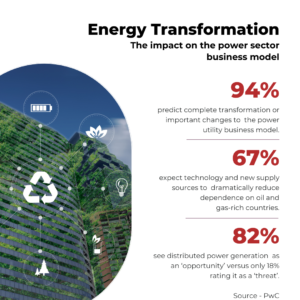
    The energy industry is going through a significant technological transition that will push the limits of the traditional energy delivery systems. In place of conventional fossil fuels, the new wave of technology is offering workable solutions that can maximise how much we use natural resources.

    These innovative options offer intelligent and data-driven solutions that encourage the development of smart infrastructure. These solutions include built-in digital intelligence that is changing how energy is produced, distributed, managed, and stored.

    The establishment of a new consumer model known as “Prosumer”—which depicts a situation where customers produce and consume energy while living outside of direct subsidy—came about as a result of consideration over efficient energy usage and consumer habits.

    The innovation that prompted the advent of energy 4.0

    The energy sector adopted rising tech trends including Internet of Things (IoT), Big Data, Blockchain, Machine Learning, Cloud Computing, and the Digital Twin technology without hesitation after realising the power of cutting-edge technology in other industries.

    The ways in which energy and utility businesses conduct business, connect with their customer bases, and engage with them have all being reinvented by the aforementioned technology. Technically speaking, it has greatly improved operation flow, performance optimisation, and the development of smart grids, better managed renewable energy sources, and cogently distributed power. These technological advancements have consequently led to a fresh round of ideas for integrating technology and the systems that enable it into (new) business models and strategies.

    “Simultaneously, hardware manufacturers and software development companies have been gathering experience in creating and integrating business-driven solutions with huge corporate systems, with an emphasis on internal reliability and ecological safety. As of now, with costs decreasing and technologies growing at an exponential pace, digitalization presents opportunities for Energy 4.0 companies to establish new business models and sustainable strategies of producing and delivering energy” – is stated in a research study conducted by MobiDev.

    The technological empowerment within the industry

    The idea of IoT and its capabilities have been extensively debated during the last ten years. The physical environment may be integrated with computer systems thanks to this intelligent “network of physical devices” that includes sensors, electronics, actuators, and connection resources.

    Energy 4.0 is the adoption of technologies like big data, artificial intelligence, and machine learning to take advantage of sensor data, automation, and machine-to-machine (M2M) communication to enhance operational performance. The industry is well on its way to transforming its operations into a global network of linked, standalone devices that are all delivering digital data to a platform that can gather, process, and share it in real time.

    Transparency within a platform that executes and records transactions is one of a ledger technology’s most potent advantages. Given how frequently assets change hands before a settlement is made, it is also useful for tracking ownership. As all parties are using the same platform, blockchain technology enables transactions like energy trading to be recorded and settled at the minute, without the need for an intermediary and with little to no requirement for reconciliation.

    The use of digital twins is expanding quickly and is becoming increasingly popular as an innovation trend. A digital twin is a depiction of a real-world thing or process that mimics it digitally without really replacing it. The digital twin allows for real-time KPI monitoring by utilising the data collected by an IoT system connected to its physical twin.

    Future energy will be renewable

    We are well on our way to a future where social innovation will integrate renewables into smart grids and produce clean and dependable energy sources, made possible by the digital transformation of the energy sector.

    Consumers are increasingly favouring renewable energy sources, which encourages the energy business to invest in more environmentally friendly technology. Greater opportunities are presented by digital innovation for businesses, consumers, and society as a whole since it motivates them to engage in environmentally friendly energy solutions that lower prices and give them more control over their energy use.


  • Need your business to thrive? Learn about key benefits of Data Analysis

    Need your business to thrive? Learn about key benefits of Data Analysis

    Today’s global marketplaces revolve on data, making sense of that data is essential to a company’s success. Failing to do so can result in a company falling behind.

    On its own, raw data doesn’t have much value. To leverage data to their advantage, businesses must apply data analytics, a discipline that systematically examines data in order to discover insights, patterns, and trends. Most businesses are aware of the potential rewards of investing in big data analytics, which promise to increase productivity, reduce costs, and improve decision-making. A recent survey by Micro Strategy found that businesses all across the world use their data for:

    • According to 90% of the business users who took part, their organization’s digital transformation strategies revolve around data and analytics
    • To increase their operations’ cost-effectiveness and process efficiency by up to 60%
    • 57% of businesses say they use data analytics to inform strategy and transformation
    • 52% of businesses use business analytics to track and enhance their financial performance

    What is Data Analysis?

    As a broad phrase, the processing of unstructured data to discover business insights is referred to as data analytics. It makes use of a variety of methods, procedures, statistics, and models. By definition, it is essentially a procedure for looking into raw data in order to derive significant insights. However, the development of AI and ML has caused the area of data analytics to advance at a rapid rate, reaching new heights.

    Usually, the purpose of data analytics is to give a business operational insights. This procedure entails reviewing historical data before applying the lessons discovered within to address the challenging business issues of the present.

    Despite the fact that big data analytics delivers value in a variety of ways, the following are some of its main advantages:

    • Quicker and wiser decision-making: businesses may quickly analyse massive amounts of data and come to wise judgements.
    • Cost savings: using big data technology, businesses can find better methods to conduct their operations and offer a cost-effective data storage solution.
    • A deeper comprehension of customer’s needs: big data reveals insights that assist businesses in identifying customer requirements and assessing satisfaction. This provides businesses with the knowledge they require to create long-lasting client relationships and provide higher-quality goods and services.

    The current state of Data Analysis & Business Intelligence

    For businesses to succeed in the digital economy, data is becoming more and more important. Up to 80% of businesses rely on data for a variety of operations, including product management, fraud detection, finance, human resources, and manufacturing. Data dashboards and visualisations are common in the modern workplace, enabling users to quickly follow performance measures using pre-built reports and filters.

    Organisations could find a wealth of potential hidden in their current systems with the use of data integration technologies. There is a lot of friction in analytics right now. Spreadsheets are frequently used by data workers, who typically utilise four to seven different applications to manage data. This takes a lot of time and increases the risk of errors and data compliance problems. Organisations must find a solution that unifies all data-related activities into a single platform, provides end-to-end data protection and traceability, and is simple for employees to use if they are to reap the greatest benefits from big data.

    How to select right data analytic tools for your business?

    Due to innovative methods like machine learning algorithms, the field of data analytics is expanding to unprecedented heights. Four categories of business analytics currently are:

    • Descriptive analytics
    • Diagnostic analytics
    • Predictive analytics
    • Prescriptive analytics

    It’s challenging to compile a comprehensive list of selection criteria for big data because it applies to such a wide range of use cases, applications, and industries. Build your toolset around the main objectives by focusing on the few business issues or opportunities that will have the most impact, such as real-time asset monitoring or a deeper comprehension of what your customers want.

    Big Data integration tools assist businesses in dismantling data ecosystem silos. When working with data gathered from a variety of IoT endpoints, apps, and data kinds, they are an essential tool for managing and storing data clusters. Although data integration solutions occasionally include stream analytics functionality, they are typically more appropriate for data management.

    It is possible to transform new data into actions. Partner with us to know more about best practices in data analysis. To contact us visit SCS Tech India.

  • Ultimate guide to RPA and the industry response

    Ultimate guide to RPA and the industry response

    Robotic process automation, or RPA, is a crucial component of the digital transformation for corporations and business organisations regardless of their location or function. To comprehend why automation is so beneficial, let’s delve into this brand-new universe.

    • RPA Services: What Are They?
    • How do RPA Services function?
    • RPA – the best solutions for enterprises
    • RPA process benefits

    How do RPA Services work?

    Robotic process automation, or RPA, is a technology that enables businesses to automate some repetitive processes.

    RPA software uses a mix of cognitive processes, automation, and modern technologies (such machine learning and automation). It can be used to carry out straightforward operations like sending an email automatically as well as sophisticated ones that thousands of bots can carry out simultaneously.

    Robotic process automation as a service, or RPAaaS, is a cloud-based, outsourced service that involves the deployment of software robots to handle such repetitive operations without any input from the clients.

    According to recent data on the status of RPA implementation, 78% of those who have previously done so anticipate much more investment in RPA over the following three years. There is obviously a lot to do, and there is a big demand. Let’s examine why.

    How are RPA Services implemented?

    RPA services significantly influence how businesses change and grow. Software robots can navigate systems, identify data, and carry out a wide range of tasks that resemble those carried out by humans. They can complete jobs more quickly and reliably than humans since they are robots, which also don’t make mistakes, get weary, or need breaks. They don’t get side tracked by social media, and they don’t require extra encouragement to get things done.

    RPA technology boosts efficiency, productivity, and accuracy in many corporate operations thanks to these benefits. This is why it became so important for organisations that want to grow, expand, or improve their effectiveness.

    Benefits of RPA processes for businesses

    It is far preferable to adapt RPA and use it in daily work than to hire new workers to perform simple tasks or to assign highly competent employees to repetitive activities and so waste their expertise. Employees who are relieved of monotonous and simple tasks can concentrate on bringing innovation to the company and coming up with fresh ideas to increase its success.

    The main benefits of RPA processes for enterprises include:

    • increase in effectiveness
    • efficiency
    • productivity
    • client satisfaction
    • cost savings
    • revenue growth
    • work quality and quantity improvement
    • improved compliance
    • faster pace of digitalization are all desirable outcomes

    The best solutions for large enterprises involves RPA

    53% of various firms use RPA services internationally, according to research. Depending on their demands, size, and industry, it is predicted that almost all businesses will use some form of automation within the next five years.

    Interested in learning more RPA?

    Consider putting it into practise in your business to advance it. Get in contact with our experts; we’d be pleased to assist you!